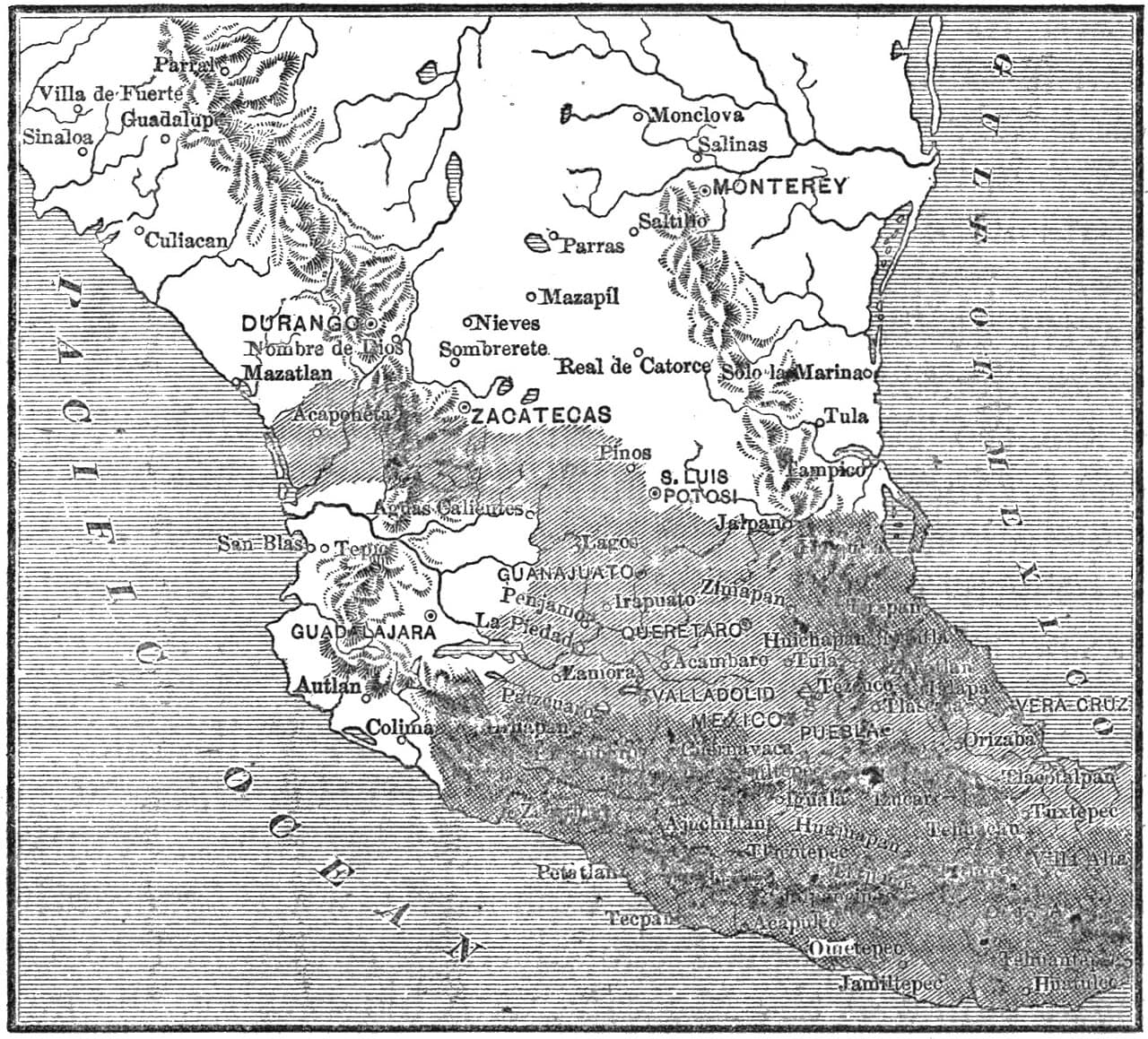
The Mexican Revolution (1910–1920) was a massive armed conflict that overthrew the 35-year dictatorship of Porfirio Díaz and fundamentally transformed Mexico's political, social, and economic structure. Triggered by deep inequalities in land ownership, rampant poverty among peasants, and the suppression of political opposition, the revolution drew in over one million combatants and caused an estimated 1–2 million deaths. It produced the Mexican Constitution of 1917—one of the most progressive documents of the 20th century—and established the framework of the modern Mexican state.
What Caused the Mexican Revolution?
The roots of the revolution lie in the Porfiriato, the era of President Porfirio Díaz's authoritarian rule from 1876 to 1911. Díaz modernised Mexico's economy by inviting massive foreign investment from the United States and Britain, building over 15,000 miles of railroad track, and expanding mining and agriculture exports. However, this growth came at an enormous human cost. By 1910, roughly 1% of the Mexican population controlled nearly 97% of the land, while 90% of rural villagers owned nothing. Indigenous communities lost ancestral lands to wealthy hacienda owners under the Ley Lerdo and subsequent legislation that dissolved communal landholdings. Political freedom was virtually non-existent: Díaz rigged elections, imprisoned opponents, and used the feared rural police force known as the rurales to suppress dissent. A global economic downturn in 1907–1908 tightened credit and caused widespread unemployment, deepening popular anger. When Díaz, in a famous 1908 interview with American journalist James Creelman, suggested Mexico was ready for democracy, opposition figures took him at his word—and were brutally disappointed when he jailed his primary challenger, Francisco I. Madero, before the 1910 election and declared himself the winner yet again.
Who Were the Key Leaders of the Mexican Revolution?
The revolution produced a remarkable and often violently competing cast of leaders. Francisco I. Madero, a wealthy northern landowner educated at Berkeley and the Sorbonne, became the revolution's first figurehead. After escaping jail, he issued the Plan de San Luis Potosí on October 5, 1910, calling for an armed uprising on November 20—the date now celebrated as the official start of the revolution. Madero championed political democracy but was reluctant to pursue the radical land reform that peasants demanded. Emiliano Zapata, a small-scale farmer and local leader from Morelos, embodied the agrarian cause. His Plan de Ayala (November 1911) demanded the immediate return of stolen village lands and the phrase 'Tierra y Libertad' (Land and Liberty) became the battle cry of his Ejército Libertador del Sur (Liberation Army of the South). Pancho Villa, a charismatic former bandit from Chihuahua whose real name was José Doroteo Arango Arámbula, led the División del Norte—at its peak the most powerful military force in Mexico, boasting nearly 40,000 fighters. Villa was a brilliant cavalry commander who captured Ciudad Juárez twice, in 1911 and 1913. Venustiano Carranza, a Coahuila senator and landowner, led the Constitutionalist faction after Madero's assassination, ultimately emerging as president and the architect of the 1917 constitution. Álvaro Obregón, Carranza's most gifted general, defeated Villa's Division of the North at the Battle of Celaya in April 1915—deploying barbed wire and machine guns in tactics reminiscent of contemporaneous World War I trench warfare.
How Did the Revolution Begin and What Were the Early Battles?
Armed resistance began even before Madero's November 20 deadline. On November 18, 1910, Aquiles Serdán and his family fought Díaz's police in Puebla in what became the revolution's first skirmish. In the north, Pascual Orozco and a young Pancho Villa launched guerrilla raids against federal troops. The decisive early blow came on May 10, 1911, when Orozco and Villa captured Ciudad Juárez—strategically vital because it sat on the US border, providing revolutionaries access to American arms and supplies. The fall of the border city shocked Díaz's government. Within weeks, Díaz signed the Treaty of Ciudad Juárez on May 21, 1911, agreeing to resign and go into exile in France, where he died in 1915. Madero entered Mexico City on June 7, 1911, to enormous popular celebration. However, he made the fatal mistake of keeping most of Díaz's old federal army intact, trusting it to maintain order—a decision that would cost him his life.
Why Did the Revolution Continue After Díaz Was Overthrown?
Madero's presidency (1911–1913) satisfied almost no one. Zapata broke with him immediately over the pace of land reform, issuing the Plan de Ayala in November 1911. Conservatives considered Madero dangerously radical; radicals thought him insufficiently bold. The decisive rupture came during the Decena Trágica (Ten Tragic Days) of February 9–18, 1913, when conservative generals including Victoriano Huerta—backed covertly by US Ambassador Henry Lane Wilson—launched a coup in Mexico City. Fighting killed approximately 2,000 civilians. On February 19, Huerta had Madero arrested, and on February 22–23, Madero and Vice President José María Pino Suárez were shot while allegedly trying to 'escape'—a transparent murder. Huerta's usurpation reunited the revolutionary factions: Carranza issued the Plan de Guadalupe on March 26, 1913, refusing to recognise Huerta's government. Villa, Zapata, and Obregón all fought against what they called the 'Porfirista reaction.' New US President Woodrow Wilson refused to recognise Huerta and in April 1914 ordered the occupation of Veracruz—Mexico's main port—cutting off Huerta's arms supply. By July 1914, the Constitutionalists had Huerta surrounded; he resigned and fled to Europe on July 15, 1914.
How Did the Revolutionary Factions Fight Each Other?
With Huerta gone, the revolutionary coalition collapsed into civil war. The Convention of Aguascalientes (October–November 1914) attempted to forge a unified government among Villa, Zapata, and Carranza but failed catastrophically. Villa and Zapata briefly occupied Mexico City together in December 1914—a famous photograph of them sitting together in the National Palace remains one of the revolution's iconic images. However, Obregón's military genius proved decisive. At the twin Battles of Celaya on April 6–7 and April 13–15, 1915, Obregón's Constitutionalist forces dug trenches, laid barbed wire, and used concentrated machine-gun fire to annihilate Villa's cavalry charges. Villa lost roughly 4,000 killed and 5,000 captured in a single engagement. The United States recognised Carranza's government in October 1915, allowing him to receive arms through the border while denying them to Villa. In a furious response, Villa raided Columbus, New Mexico, on March 9, 1916, killing 18 Americans—the only armed attack on US soil by a foreign force between the War of 1812 and Pearl Harbor. The US dispatched General John 'Black Jack' Pershing with 10,000 troops on a 'Punitive Expedition' into Mexico to capture Villa. Despite an 11-month pursuit, Pershing never caught him. Villa survived until 1923, when he was assassinated in Hidalgo del Parral—ambushed by gunmen firing 40 bullets into his car.
What Did the Mexican Constitution of 1917 Establish?
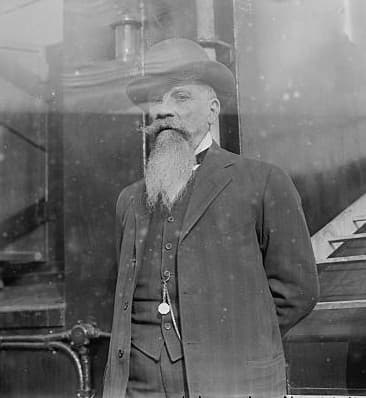
Promulgated on February 5, 1917, the Constitution of Querétaro was the revolution's most enduring achievement and one of the world's first modern social constitutions. Article 27 declared that all natural resources—land, water, and subsoil minerals—belonged to the Mexican nation, allowing land redistribution and, crucially, laying the legal groundwork for the 1938 nationalisation of foreign oil companies under President Lázaro Cárdenas. Article 123 established sweeping labour rights including an eight-hour workday, a six-day work week, minimum wages, the right to strike, and prohibition of child labour—rights not codified in most industrialised democracies until decades later. Article 3 guaranteed free, secular, compulsory public education. Article 130 severely restricted the power of the Catholic Church, barring clergy from voting or holding office and nationalising Church property—provisions that would later spark the deadly Cristero War (1926–1929). The constitution remained in force, though substantially amended, for over a century before a new discussion began in the 2020s.
| Leader | Faction | Region | Fate |
|---|---|---|---|
| Porfirio Díaz | Federal Government | National | Died in exile, Paris, 1915 |
| Francisco I. Madero | Anti-Reeleccionista | National | Assassinated February 1913 |
| Emiliano Zapata | Ejército Libertador del Sur | Morelos / South | Assassinated April 1919 |
| Pancho Villa | División del Norte | Chihuahua / North | Assassinated July 1923 |
| Victoriano Huerta | Huertista (Counterrevolution) | National | Died in US custody, 1916 |
| Venustiano Carranza | Constitutionalists | Coahuila / National | Assassinated May 1920 |
| Álvaro Obregón | Constitutionalists | Sonora / National | Became president 1920; assassinated 1928 |
How Did the Revolution End and What Was Its Human Cost?
The revolution's conventional end date is 1920, when General Álvaro Obregón ousted and orchestrated the assassination of Carranza in May of that year and won the presidential election. The Plan de Agua Prieta (April 1920), backed by Sonoran generals Obregón, Plutarco Elías Calles, and Adolfo de la Huerta, effectively ended the armed phase of the revolution. Zapata had already been lured into an ambush and killed by Carranza's forces on April 10, 1919—shot 17 times at the Chinameca hacienda in Morelos. The human toll of the decade-long conflict was staggering: historians estimate between 1 and 2 million deaths from combat, disease, and famine. Mexico's population actually declined from approximately 15.2 million in 1910 to 14.3 million in 1921—a demographic collapse almost unparalleled in modern Latin American history. Hundreds of thousands more fled to the United States, beginning migration patterns that persist to this day.
What Was the Long-Term Legacy of the Mexican Revolution?
The revolution's legacy permeated virtually every dimension of Mexican life for the rest of the 20th century. Politically, it gave birth to the Partido Nacional Revolucionario (PNR) in 1929, later renamed the Partido Revolucionario Institucional (PRI), which governed Mexico without interruption for 71 years until 2000—one of the world's longest-running single-party governments. Land reform under successive presidents redistributed over 100 million hectares of land to peasant ejidos (communal farms) by the 1980s, fundamentally altering rural Mexico. The revolution sparked a cultural renaissance: muralists Diego Rivera, José Clemente Orozco, and David Alfaro Siqueiros painted sweeping public frescoes celebrating indigenous heritage and revolutionary heroes that redefined Mexican national identity. Writers like Mariano Azuela, whose novel Los de Abajo (The Underdogs, 1915) is considered the first great novel of the revolution, gave literary voice to its chaos and contradictions. The oil nationalisation of March 18, 1938—still celebrated as a national holiday—was the direct fulfilment of the constitution's Article 27. The revolution's imagery, from Zapata's white horse to Villa's División del Norte, remains central to Mexican political discourse, invoked by movements as varied as the Zapatista uprising of 1994, which deliberately launched on January 1—the day NAFTA took effect—to assert that the revolution's promises remained unfulfilled.
Why Does the Mexican Revolution Still Matter Today?
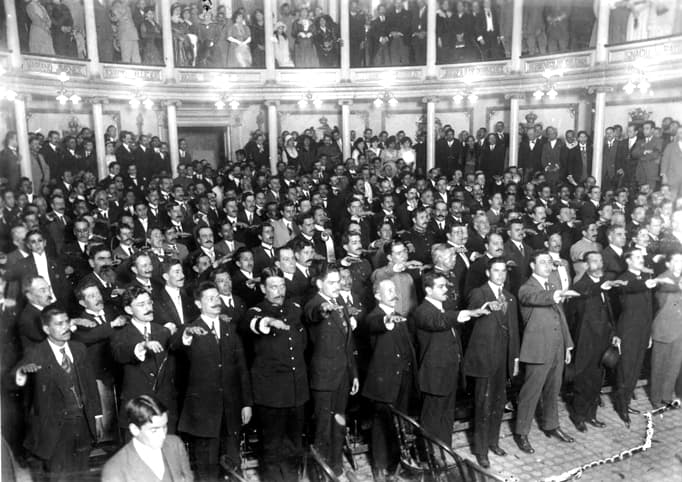
The Mexican Revolution set precedents that rippled far beyond Mexico's borders. Its constitution of 1917 influenced subsequent social constitutions in Weimar Germany (1919), the Soviet Union, and across Latin America. The revolution demonstrated that popular agrarian movements could topple entrenched oligarchies even without ideological coherence—a lesson absorbed by revolutionary movements from China to Cuba. Inside Mexico, November 20 is a national holiday, and the revolution's figures are omnipresent in public life: Zapata's image appears on banknotes, stadiums, murals, and protest banners. The unresolved tensions the revolution exposed—between land rights and capital investment, between indigenous autonomy and central authority, between political democracy and social justice—remain live debates in 21st-century Mexico. The 2024 election of Claudia Sheinbaum as Mexico's first female president came under the banner of the Morena party, whose full name is Movimiento Regeneración Nacional—a name that consciously echoes the language of revolutionary regeneration first used in 1910.