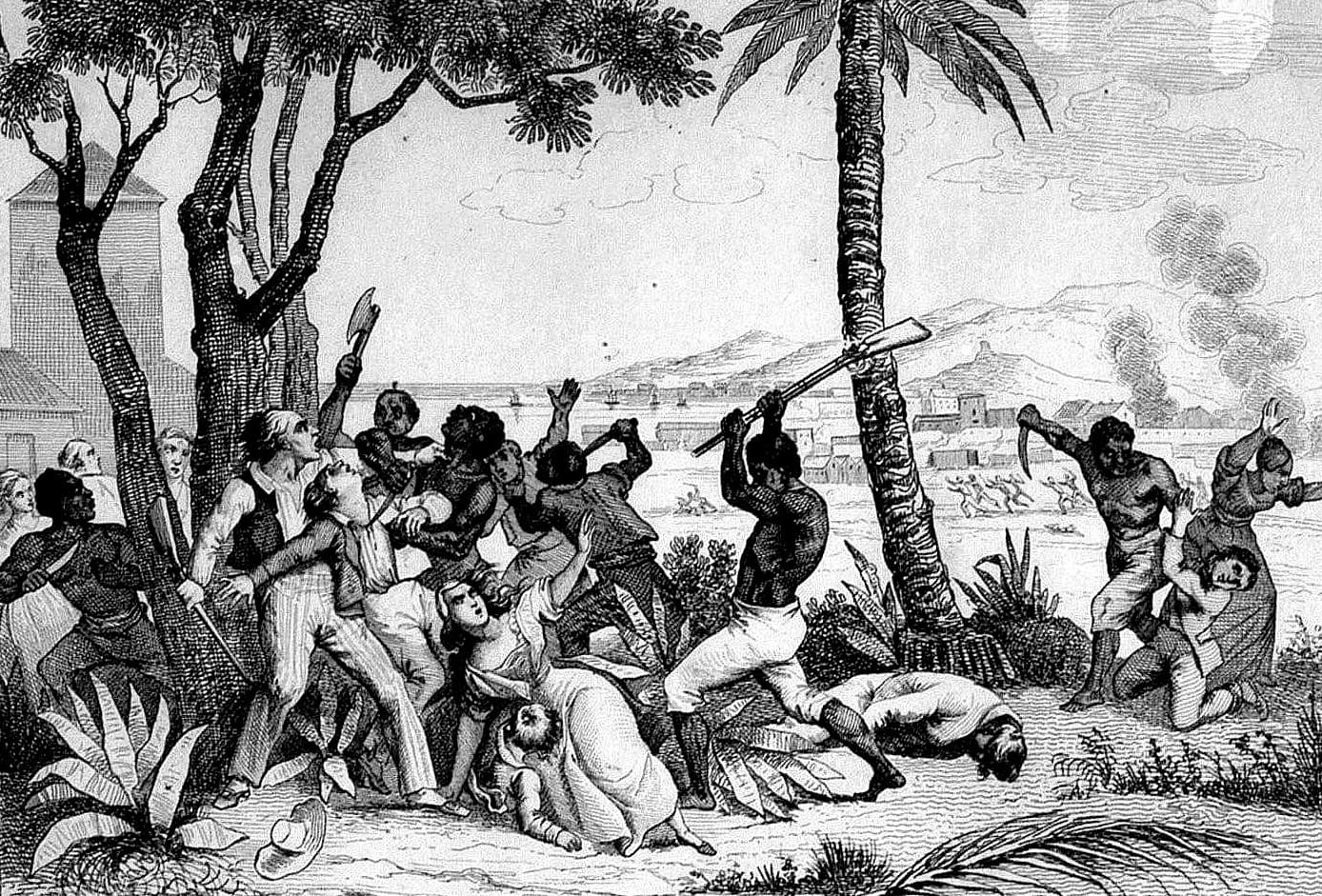
The Haitian Revolution (1791–1804) was the only slave revolt in history to successfully overthrow a colonial government and establish an independent nation. Enslaved Africans and free people of color in the French colony of Saint-Domingue rose up against one of the most brutally profitable plantation systems in the world, defeating not only their local oppressors but also the armies of France, Britain, and Spain. The result was the Republic of Haiti, declared on January 1, 1804 — the first Black republic in the world and the second independent nation in the Western Hemisphere after the United States.
What Was Saint-Domingue Before the Revolution?
By the late eighteenth century, Saint-Domingue — the French-controlled western third of the island of Hispaniola — was the single most profitable colony on earth. It produced roughly 40% of Europe's sugar and more than 50% of its coffee, making it more valuable to France than all of Britain's Caribbean colonies combined. This staggering wealth rested entirely on the backs of enslaved people. By 1789, approximately 500,000 enslaved Africans lived in Saint-Domingue, outnumbering white colonists (roughly 40,000) and free people of color (about 30,000) by enormous margins. Enslaved workers faced some of the most savage conditions in the Atlantic world: life expectancy on the sugar plantations was so low that the colony required the continuous importation of around 40,000 new enslaved Africans every year just to maintain its labor force. Disease, overwork, and deliberate violence killed tens of thousands annually. This demographic reality — a vastly outnumbered enslaved majority with nothing to lose — would prove revolutionary.
What Were the Main Causes of the Haitian Revolution?
The revolution emerged from a volatile collision of local grievances and global ideological currents. First, the radical inequality of Saint-Domingue's social hierarchy created explosive tensions. White colonists (grands blancs and petits blancs) monopolized political power; free people of color (affranchis), many of whom were wealthy plantation owners themselves, were denied basic legal rights despite their property; and the enslaved majority lived under a regime of terror codified in the Code Noir. Second, the ideas of the French Enlightenment and the 1789 French Revolution destabilized the old order. The Declaration of the Rights of Man and of the Citizen, adopted by France in August 1789, raised an uncomfortable question: did those rights extend to enslaved people and free people of color? When the French National Assembly refused to grant equal rights to affranchis in 1790, Vincent Ogé led a short-lived armed uprising in October of that year. He was defeated and publicly executed in February 1791, but his revolt signaled that the old order was cracking. Third, the broader geopolitical context — France at war with Britain and Spain — would repeatedly redirect the revolution's course and invite foreign intervention, creating both dangers and opportunities for the insurgents.
How Did the Revolution Begin: The Ceremony at Bois Caïman
On the night of August 14, 1791, enslaved leaders gathered at a forest clearing called Bois Caïman in the northern province. According to historical accounts recorded in the following decades, a Vodou ceremony was conducted — a spiritual act that bound the conspirators together and invoked African religious power against their oppressors. The presiding figures included Dutty Boukman, a Jamaican-born enslaved man who served as a coachman and was known for his commanding presence and literacy. Cecile Fatiman, a Vodou priestess, reportedly played a central spiritual role. Eight days later, on August 22, 1791, approximately 100,000 enslaved people rose simultaneously across the northern plain. Within weeks, they had burned over 1,000 plantations and killed several hundred white colonists. The shock to the colonial world was immense. Dutty Boukman was killed in November 1791, but the uprising he helped spark could not be stopped.
Who Were the Key Leaders of the Haitian Revolution?
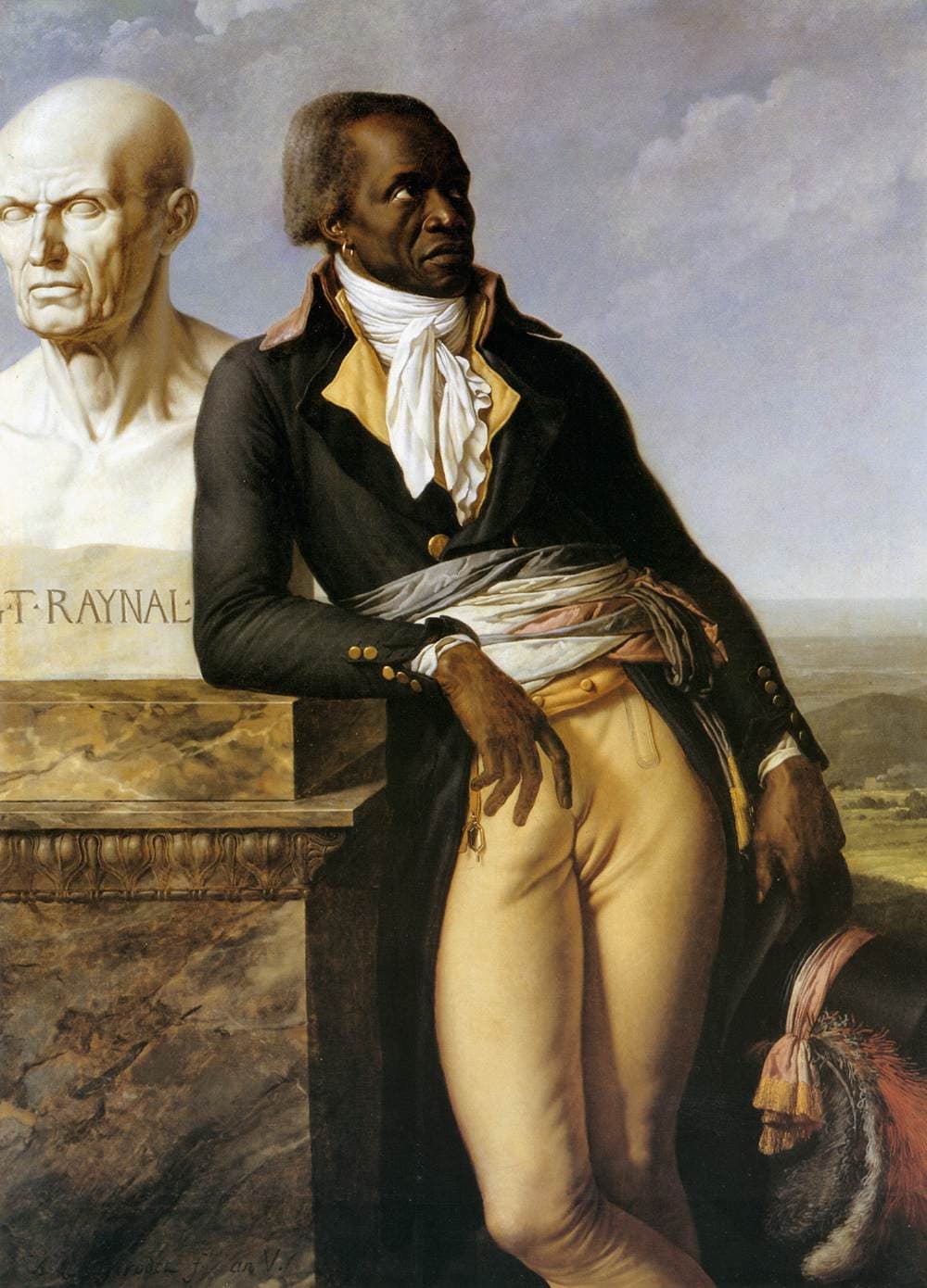
The revolution produced a remarkable generation of military and political leaders, many of them born into slavery. Toussaint Louverture is the towering figure of the conflict. Born enslaved around 1743, he was freed in the 1770s and had accumulated some property and literacy by the time the revolution began. He initially fought for the Spanish (who occupied the eastern portion of Hispaniola) before switching allegiance to France in 1794 after France abolished slavery. His military genius and political acumen allowed him to dominate the colony by 1801, when he promulgated a constitution making himself governor-for-life. Napoleon Bonaparte, threatened by Louverture's growing autonomy, sent his brother-in-law General Charles Leclerc with 20,000–40,000 French troops in January 1802 to reassert French control and reinstate slavery. Louverture was lured into negotiations, arrested, and transported to Fort de Joux in the French Alps, where he died of pneumonia and mistreatment on April 7, 1803. Jean-Jacques Dessalines, a former enslaved man of African-born parentage who had served under Louverture and was known for his uncompromising ferocity, took command of the independence struggle after Louverture's capture. Henri Christophe, another crucial commander, later became king of northern Haiti. Alexandre Pétion led republican forces in the south and eventually became president. Together, these men forged a new nation from the ruins of colonial slavery.
How Did Haiti Defeat Napoleon's Army?
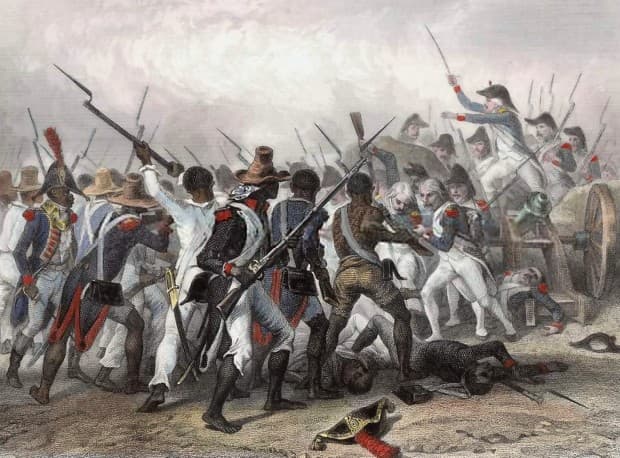
The defeat of Napoleon's expedition to Saint-Domingue stands as one of the most remarkable military upsets in modern history. General Leclerc's force of between 20,000 and 40,000 troops — veterans of the Napoleonic Wars — initially made significant gains, forcing Louverture's surrender in May 1802. However, several factors turned the tide decisively against the French. Yellow fever ravaged the European troops with catastrophic efficiency: by November 1802 Leclerc himself was dead, along with roughly 50,000 French soldiers. News that France had reinstated slavery in Martinique and Guadeloupe in May 1802 convinced Black and mixed-race commanders who had negotiated with the French — including Dessalines — that the French could never be trusted. They switched sides and renewed the fight. The Battle of Vertières on November 18, 1803, near Cap-Haïtien, proved decisive. Dessalines's forces defeated the remnants of the French army under General Rochambeau, who surrendered and withdrew on November 19. On January 1, 1804, Dessalines declared the independent Republic of Haiti, renaming the country using the indigenous Taíno word for the island. He deliberately tore the white stripe from the French tricolor, sewing the blue and red together — a symbol of the unity of Black and mixed-race Haitians against white colonial rule.
| Key Figure | Role | Fate |
|---|---|---|
| Dutty Boukman | Led the Bois Caïman ceremony; early military commander | Killed in battle, November 1791 |
| Toussaint Louverture | Supreme military and political leader; governor-for-life | Arrested by French, died in prison April 7, 1803 |
| Jean-Jacques Dessalines | Commander-in-chief; declared independence Jan 1, 1804 | Assassinated October 17, 1806 |
| Henri Christophe | Key general; later King Henri I of northern Haiti | Died by suicide October 8, 1820 |
| Alexandre Pétion | Commander of southern forces; later president of Haiti | Died of natural causes March 29, 1818 |
| Vincent Ogé | Led 1790 free-colored uprising preceding the main revolt | Publicly executed February 25, 1791 |
What Were the Immediate Consequences for Haiti After Independence?
Independence brought freedom but also catastrophic burdens. Dessalines declared himself Emperor Jacques I in 1804, and his authoritarian rule ended with his assassination on October 17, 1806. Haiti then split into two states: a northern kingdom under Christophe and a southern republic under Pétion, reunified only in 1820. The human cost of the revolution was staggering: of Saint-Domingue's roughly 500,000 enslaved people, as many as 200,000 had died during the thirteen years of conflict. The plantation economy that had made the colony fabulously wealthy was largely destroyed. Most devastatingly, in 1825 France threatened a naval blockade and military reconquest unless Haiti agreed to pay 150 million francs (later reduced to 90 million) as 'compensation' to former French colonists for their 'lost property,' including enslaved people. Haiti accepted, borrowing from French banks at punishing interest rates. This indemnity — which Haiti continued repaying until 1947 — consumed a significant portion of the new nation's revenues for over a century and is widely cited by historians as a primary structural cause of Haiti's persistent poverty.
How Did the Haitian Revolution Impact the Rest of the World?
The reverberations of the Haitian Revolution were felt across the Atlantic world and far beyond. In the United States, the revolution caused panic among slaveholding states in the American South, where legislators quickly passed laws restricting the immigration of free Black people from Haiti and censoring information about the uprising. President Thomas Jefferson, himself a slaveholder, imposed a trade embargo on Haiti in 1806 and the United States refused to recognize Haitian independence until 1862. Yet paradoxically, the revolution also accelerated American territorial expansion: Napoleon's failure in Saint-Domingue convinced him to abandon his Louisiana ambitions, leading directly to the Louisiana Purchase of 1803, in which the United States acquired 828,000 square miles of territory for $15 million. In Latin America, the revolution inspired independence movements: Simón Bolívar received crucial military and financial support from Haitian President Pétion between 1816 and 1817, in exchange for a promise to abolish slavery in liberated territories. The revolution also sharpened global debates about slavery and abolition. British abolitionists used Saint-Domingue as evidence that slavery bred rebellion and instability, supporting arguments that would lead to the abolition of the British slave trade in 1807. In the longer arc of history, the Haitian Revolution fundamentally challenged Enlightenment hypocrisy, forcing a confrontation with the contradiction between the universal declaration of human rights and the practice of chattel slavery.
Why Is the Haitian Revolution Considered Historically Unique?
No other slave revolt in recorded history achieved what the Haitian Revolution accomplished. Spartacus's revolt in Rome (73–71 BC) came closest in scale but was crushed. Nat Turner's rebellion in Virginia (1831) and countless other uprisings were suppressed with mass executions. The Haitian Revolution is unique for three reasons. First, it was the only slave revolt to successfully overthrow a colonial government and create an independent state. Second, it defeated the armies of three European superpowers — France, Britain, and Spain — successively and simultaneously. British forces occupied parts of Saint-Domingue from 1793 to 1798, losing an estimated 60,000 soldiers to combat and disease before withdrawing. Spain ceded the eastern portion of Hispaniola to France in 1795. France lost its entire Caribbean jewel. Third, the revolution produced the world's first Black-led republic at a moment when slavery was the foundation of the Atlantic economy, making it an ideological earthquake felt in every slaveholding society on earth. Scholars like C.L.R. James, whose 1938 masterwork 'The Black Jacobins' rescued the revolution from historical obscurity, have argued that the Haitian Revolution was the most radical political event of the eighteenth century — more thoroughgoing in its implications than the American or French revolutions, which both preserved or tolerated slavery.
What Is the Legacy of the Haitian Revolution Today?
The Haitian Revolution's legacy is simultaneously triumphant and tragic. It proved that enslaved people could organize, strategize, and defeat the most powerful military forces of their era. It inspired abolitionist movements globally and accelerated the end of the Atlantic slave trade. The nation it created, however, was punished economically and diplomatically for its audacity: the French indemnity, combined with political instability, foreign intervention (including a United States military occupation from 1915 to 1934), and the deliberate exclusion of Haiti from international trade networks, entrenched cycles of poverty. The 2010 earthquake, which killed over 200,000 people, and Hurricane Matthew in 2016 compounded these structural vulnerabilities. Yet Haiti's symbolic importance remains immense. Its flag is flown at civil rights rallies; its revolution is taught in universities worldwide as a foundational moment in the history of human freedom. Monuments to Toussaint Louverture stand in Paris and Port-au-Prince. The Bois Caïman ceremony is commemorated annually. And in an era of renewed global reckoning with the legacies of slavery and colonialism, the Haitian Revolution stands as the most radical answer yet given to the question of what freedom truly demands.