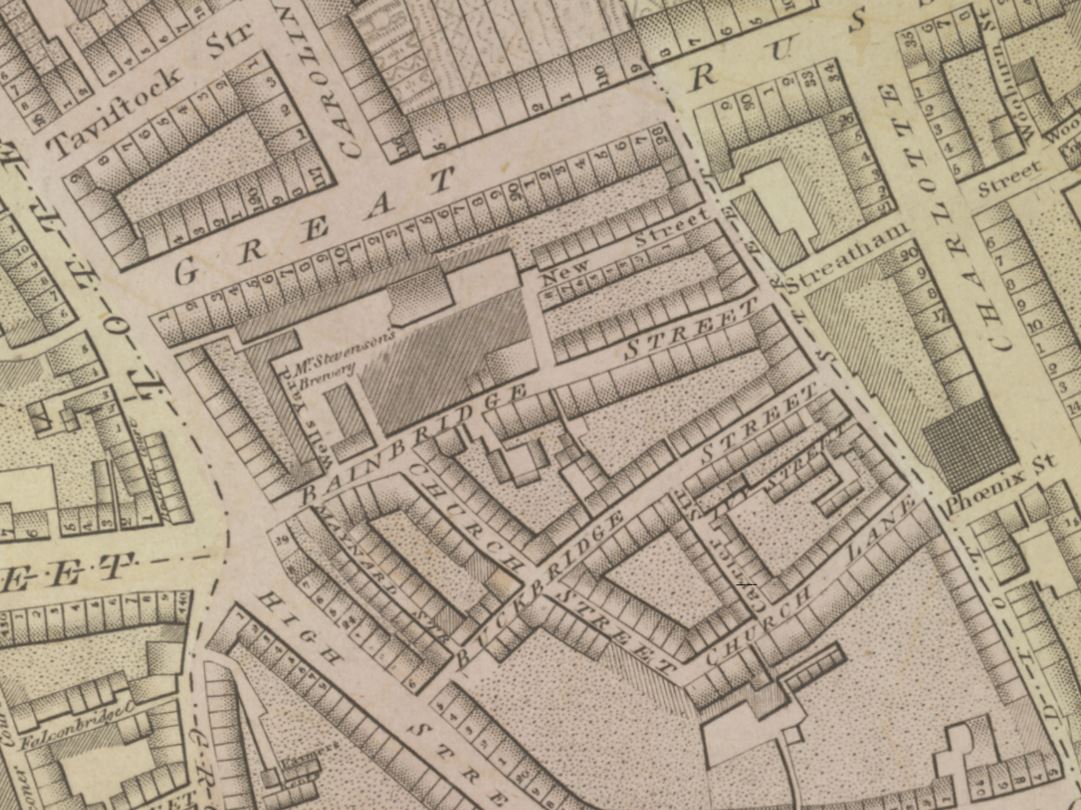
On 17 October 1814, a massive fermentation vat at the Meux and Company Brewery on Tottenham Court Road in London ruptured, triggering a chain reaction that released an estimated 100,000 gallons of porter beer into the crowded St. Giles rookery. The resulting flood killed at least eight people — most of them women and children — destroyed two houses, and became one of the most bizarre industrial accidents in British history.
What Caused the London Beer Flood?
The disaster originated in the brewery's storehouse, where enormous wooden fermentation vats held vast quantities of maturing porter. The critical vat stood over 22 feet tall and was held together by large iron hoops. At around 5:30 p.m., one of those hoops snapped — a fault that workers had noticed earlier that day but had not considered urgent. The pressure released by that first vat caused neighbouring vats to burst in sequence, and the torrent of beer burst through the brewery's back wall. The St. Giles rookery directly behind the brewery was one of London's most densely packed slums, where impoverished families lived in cellars and ground-floor rooms. Those basement dwellings offered no escape from a wave of liquid that contemporary reports described as several feet high. Eight people died: five were killed by the flood itself, and three more perished from injuries or, in at least one disputed account, from alcohol poisoning after drinking the spilled beer.
Who Were the Victims and How Did Victorian London React?
The dead included Eleanor Cooper, aged 3; Hannah Banfield, aged 4; and several adult women who were holding a wake for an infant in a basement room when the wave struck. The tragedy briefly became a grim spectacle: the bodies of victims were reportedly displayed by their families who charged neighbours a penny a viewing to raise money, until authorities intervened. Meux and Company faced a coroner's inquest, but the jury returned a verdict of 'accidental death,' and no criminal charges were brought. The company successfully petitioned the government for a refund of the excise duty already paid on the lost beer — a detail that outraged many contemporaries and has fascinated historians ever since.

Legacy and Historical Significance of the 1814 Beer Flood
The London Beer Flood accelerated debate about industrial safety in Georgian Britain and highlighted the dangerous conditions in which urban breweries operated alongside densely populated neighbourhoods. The Meux brewery eventually closed in 1921, and the site is now occupied by the Dominion Theatre. The disaster remains a staple of London history precisely because it sits at the intersection of industrial recklessness, urban poverty, and the dark absurdity of death by beer. It predates the more famous industrial disasters of the Victorian era but belongs to the same grim tradition of unregulated industry claiming working-class lives.
| Detail | Figure |
|---|---|
| Date | 17 October 1814 |
| Brewery | Meux and Company, Tottenham Court Road |
| Beer released | ~100,000 gallons of porter |
| Deaths confirmed | 8 |
| Neighbourhood affected | St. Giles rookery, London |
| Legal outcome | Accidental death; no prosecution |