
The Black Death was a plague pandemic that occurred in Europe from 1346 to 1353. It was one of the most fatal pandemics in human history, leading to the death of up to 50 million people, or 50% of Europe's 14th-century population. The disease is caused by the bacterium Yersinia pestis and is spread by fleas and through the air. One of the most significant events in European history, the Black Death had far-reaching population, economic, and cultural effects. It was the beginning of the second plague pandemic. The plague created religious, social, and economic upheavals, with profound effects on the course of European history.
The Black Death was the second great natural disaster to strike Europe during the Late Middle Ages (the first one being the Great Famine of 1315–1317) and is estimated to have killed 30% to 60% of the European population and approximately 33% of the Middle Eastern population. There were further outbreaks throughout the Late Middle Ages. Due to the crisis of the late Middle Ages, the European population did not regain its 14th century level until the 16th century. Outbreaks of the plague recurred around the world until the early 19th century.
Names
European writers contemporary with the plague described the disease in Latin as pestis or pestilentia, 'pestilence'; epidemia, 'epidemic'; mortalitas, 'mortality'. In English prior to the 18th century, the event was called the "pestilence" or "great pestilence", "the plague" or the "great death". Subsequent to the pandemic "the furste moreyn" (first murrain) or "first pestilence" was applied, to distinguish the mid-14th century phenomenon from other infectious diseases and epidemics of plague.

The 1347 pandemic plague was not referred to specifically as "black", at the time, in any European language. The expression "black death" had occasionally been applied to other fatal or dangerous diseases. In English, "Black death" was not used to describe this plague pandemic, however, until the 1750s; the term is first attested in 1755, where it translated Danish: den sorte død, lit. 'the black death'.
This expression – as a proper name for the pandemic – had been popularized by Swedish and Danish chroniclers in the 15th and early 16th centuries, and in the 16th and 17th centuries, it was transferred to other languages as a calque: Icelandic: svarti dauði, German: der schwarze Tod, and French: la mort noire. Previously, most European languages had named the pandemic a variant or calque of the Latin: magna mortalitas, lit. 'Great Death'.
The phrase 'black death' – describing Death as black – is very old. Homer used it in the Odyssey to describe the monstrous Scylla, with her mouths "full of black Death" (Ancient Greek: πλεῖοι μέλανος Θανάτοιο, romanized: pleîoi mélanos Thanátoio). Seneca the Younger may have been the first to describe an epidemic as 'black death' (Latin: mors atra), but only in reference to the acute lethality and dark prognosis of disease. The 12th–13th century French physician Gilles de Corbeil had already used atra mors to refer to a "pestilential fever" (febris pestilentialis) in his work On the Signs and Symptoms of Diseases (De signis et symptomatibus aegritudium). The phrase mors nigra, 'black death', was used in 1350 by Simon de Covino (or Couvin), a Belgian astronomer, in his poem "On the Judgement of the Sun at a Feast of Saturn" (De judicio Solis in convivio Saturni), which attributes the plague to an astrological conjunction of Jupiter and Saturn. His use of the phrase is not connected unambiguously with the plague pandemic of 1347 and appears to refer to the fatal outcome of disease.

The historian Elizabeth Penrose, writing under the pen-name "Mrs Markham", described the 14th-century outbreak as the "black death" in 1823. The historian Cardinal Francis Aidan Gasquet wrote about the Great Pestilence in 1893 and suggested that it had been "some form of the ordinary Eastern or bubonic plague". In 1908, Gasquet said use of the name atra mors for the 14th-century epidemic first appeared in a 1631 book on Danish history by J. I. Pontanus: "Commonly and from its effects, they called it the black death" (Latin: Vulgo & ab effectu atram mortem vocitabant).
Previous plague epidemics
Research from 2017 suggests plague first infected humans in Europe and Asia in the Late Neolithic to Early Bronze Age. Research in 2018 found evidence of Yersinia pestis in an ancient Swedish tomb, which may have been associated with the "Neolithic decline" around 3000 BCE, in which European populations fell significantly. This Y. pestis may have been different from more modern types, with bubonic plague transmissible by fleas first known from Bronze Age remains near Samara.
The symptoms of bubonic plague are first attested in a fragment of Rufus of Ephesus preserved by Oribasius; these ancient medical authorities suggest bubonic plague had appeared in the Roman Empire before the reign of Trajan, six centuries before arriving at Pelusium in the reign of Justinian I. In 2013, researchers confirmed earlier speculation that the cause of the plague of Justinian (541–549, with recurrences until 750) was Y. pestis. This is known as the first plague pandemic. In 610, the Chinese physician Chao Yuanfang described a "malignant bubo" "coming in abruptly with high fever together with the appearance of a bundle of nodes beneath the tissue." The Chinese physician Sun Simiao who died in 652 also mentioned a "malignant bubo" and plague that was common in Lingnan (Guangzhou). Ole Jørgen Benedictow believes that this indicates it was an offshoot of the first plague pandemic which made its way eastward to Chinese territory by around 600.
Origin
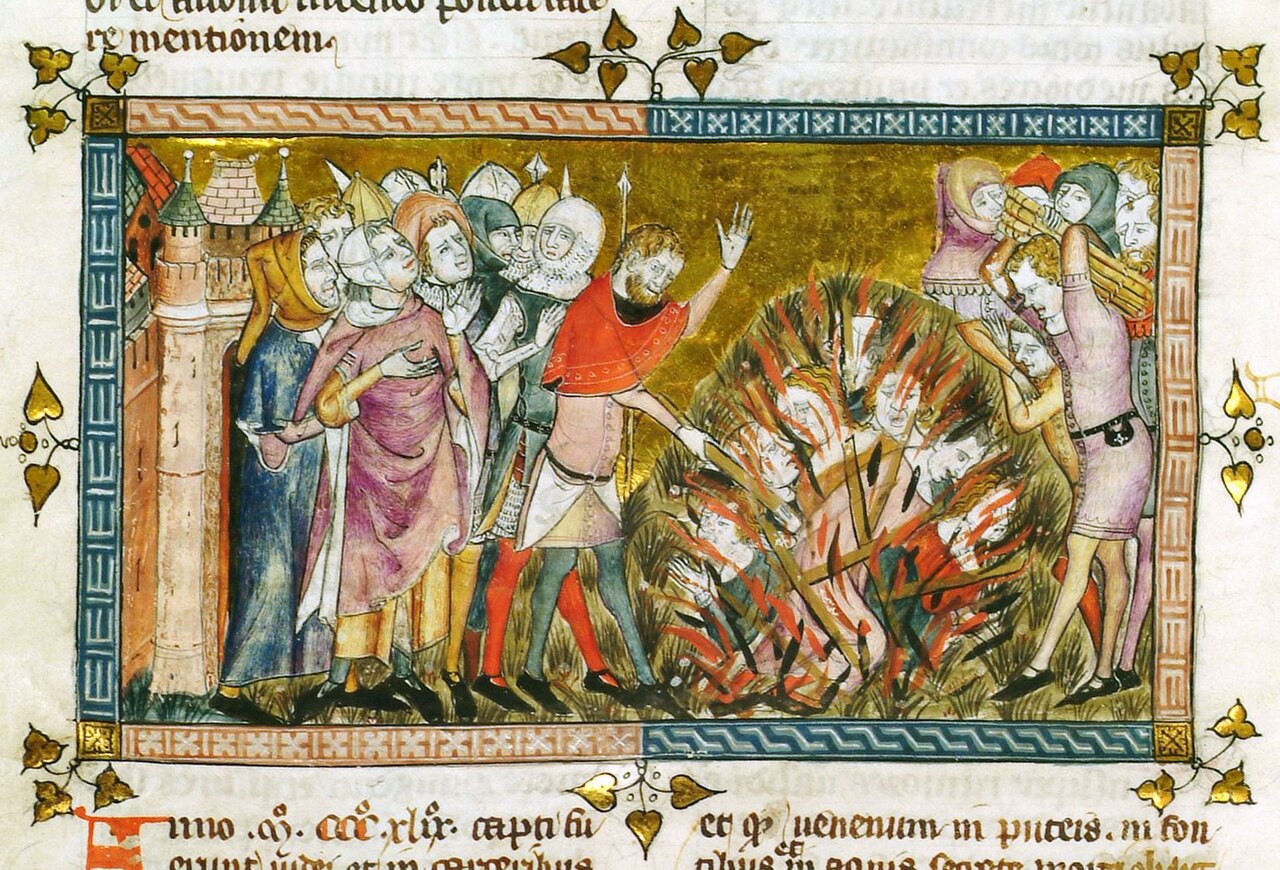
The origin of the Black Death is disputed. Genetic analysis suggests Yersinia pestis bacteria evolved approximately 7,000 years ago, at the beginning of the Neolithic, with flea-mediated strains emerging around 3,800 years ago during the late Bronze Age. The immediate territorial origins of the Black Death and its outbreak remain unclear, with some evidence pointing towards Central Asia, China, the Middle East, and Europe. The pandemic was reportedly first introduced to Europe during the siege of the Genoese trading port of Caffa in Crimea by the Golden Horde army of Jani Beg in 1347. From Crimea, it was most likely carried by fleas living on the black rats that travelled on Genoese ships, spreading through the Mediterranean Basin and reaching North Africa, West Asia, and the rest of Europe via Constantinople, Sicily, and the Italian Peninsula. There is evidence that once it came ashore, the Black Death mainly spread from person-to-person as pneumonic plague, thus explaining the quick inland spread of the epidemic, which was faster than would be expected if the primary vector was rat fleas causing bubonic plague.
A 2026 study published in Nature identified the oldest known evidence of plague outbreaks in human remains, finding traces of Yersinia pestis DNA in the teeth of 18 ancient hunter-gatherers from four cemeteries near Lake Baikal in Siberia. Carbon dating revealed two outbreaks, with the earliest cases dating to approximately 5,500 years ago — some 200 years earlier than previously established. Researchers concluded the disease likely spread initially from marmots through contact with raw organs or infected hides, and also transmitted between people through respiratory means. Many victims were young children, with three young girls buried side by side among the dead.
Patient zero
There has been a quest to find "patient zero", the earliest known victim(s) with evidence of the Black Death. In 2022, in an article called "The source of the Black Death in fourteenth-century central Eurasia", researchers pointed to the earliest victims of the plague found at two cemeteries in the Chüy Valley near Lake Issyk-Kul in modern Kyrgyzstan. Here graves had tombstones with Syriac inscription, providing the name of the deceased, year of death and often the cause of death, showing a spike due to "pestilence" in 1338–1339. The article reported DNA data to provide genetic evidence from the teeth of seven individuals from the two cemeteries at Kara-Djigach and Burana finding evidence of Yersinia pestis. This confirms that the Yersinia pestis strain found in Kyrgyzstan predates and was the direct ancestor of the Black Death strains that devastated Europe and the Middle East starting in 1346–1347.

14th-century plague
Causes
Early theory
A report by the Medical Faculty of Paris stated that a conjunction of planets had caused "a great pestilence in the air" (miasma theory). Some Muslim doctors cautioned against trying to prevent or treat a disease sent by God. Others adopted preventive measures and treatments for plague used by Europeans. These Muslim doctors also depended on the writings of the ancient Greeks.
Predominant modern theory
Due to climate change in Asia, rodents began to flee the dried-out grasslands to more populated areas, spreading the disease. The plague disease, caused by the bacterium Yersinia pestis, is enzootic (commonly present) in populations of fleas carried by ground rodents, including marmots, in various areas, including Central Asia, Kurdistan, West Asia, North India, Uganda, and the western United States.
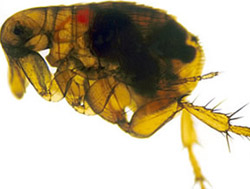
Y. pestis was discovered by Alexandre Yersin, a pupil of Louis Pasteur, during an epidemic of bubonic plague in Hong Kong in 1894; Yersin also proved this bacterium was present in rodents and suggested the rat was the main vehicle of transmission. The mechanism by which Y. pestis is usually transmitted was established in 1898 by Paul-Louis Simond and was found to involve the bites of fleas whose midguts had become obstructed by replicating Y. pestis several days after feeding on an infected host. This blockage starves the fleas, drives them to aggressive feeding behaviour, and causes them to try to clear the blockage via regurgitation, resulting in thousands of plague bacteria flushing into the feeding site and infecting the host. The bubonic plague mechanism was also dependent on two populations of rodents: one resistant to the disease, which act as hosts, keeping the disease endemic, and a second that lacks resistance. When the second population dies, the fleas move on to other hosts, including people, thus creating a human epidemic.
DNA evidence
Definitive confirmation of the role of Y. pestis arrived in 2010 with a publication in PLOS Pathogens by Haensch et al. They assessed the presence of DNA/RNA with polymerase chain reaction (PCR) techniques for Y. pestis from the tooth sockets in human skeletons from mass graves in northern, central and southern Europe that were associated archaeologically with the Black Death and subsequent resurgences. The authors concluded that this new research, together with prior analyses from the south of France and Germany, "ends the debate about the cause of the Black Death, and unambiguously demonstrates that Y. pestis was the causative agent of the epidemic plague that devastated Europe during the Middle Ages". In 2011 these results were further confirmed with genetic evidence derived from Black Death victims in the East Smithfield burial site in England. Schuenemann et al. concluded in 2011 "that the Black Death in medieval Europe was caused by a variant of Y. pestis that may no longer exist".
Later in 2011, Bos et al. reported in Nature the first draft genome of Y. pestis from plague victims from the same East Smithfield cemetery and indicated that the strain that caused the Black Death is ancestral to most modern strains of Y. pestis.
Later genomic papers have further confirmed the phylogenetic placement of the Y. pestis strain responsible for the Black Death as both the ancestor of later plague epidemics—including the third plague pandemic—and the descendant of the strain responsible for the Plague of Justinian. In addition, plague genomes from prehistory have been recovered.

DNA taken from 25 skeletons from 14th-century London showed that plague is a strain of Y. pestis almost identical to that which hit Madagascar in 2013. Further DNA evidence also proves the role of Y. pestis and traces the source to the Tian Shan mountains in Kyrgyzstan.
Alternative explanations
Researchers are hampered by a lack of reliable statistics from this period. Most work has been done on the spread of the disease in England, where estimates of overall population at the start of the plague vary by over 100%, as no census was undertaken in England between the time of publication of the Domesday Book of 1086 and the poll tax of the year 1377. Estimates of plague victims are usually extrapolated from figures for the clergy.
Mathematical modelling is used to match the spreading patterns and the means of transmission. In 2018 researchers suggested an alternative model in which "the disease was spread from human fleas and body lice to other people". The second model claims to better fit the trends of the plague's death toll, as the rat-flea-human hypothesis would have produced a delayed but very high spike in deaths, contradicting historical death data. The Oriental rat flea has poor survival in cooler climates and reevaluation suggests the human flea was the principal vector of plague epidemics in Northern Europe.
Lars Walløe argued that these authors "take it for granted that Simond's infection model, black rat → rat flea → human, which was developed to explain the spread of plague in India, is the only way an epidemic of Yersinia pestis infection could spread". Similarly, Monica Green has argued that greater attention is needed to the range of (especially non-commensal) animals that might be involved in the transmission of plague.
Archaeologist Barney Sloane has argued that there is insufficient evidence of the extinction of numerous rats in the archaeological record of the medieval waterfront in London, and that the disease spread too quickly to support the thesis that Y. pestis was spread from fleas on rats; he argues that transmission must have been person to person. This theory is supported by research in 2018 which suggested transmission was more likely by body lice and fleas during the second plague pandemic.
Summary
Academic debate continues, but no single alternative explanation for the plague's spread has achieved widespread acceptance. Many scholars arguing for Y. pestis as the major agent of the pandemic suggest that its extent and symptoms can be explained by a combination of bubonic plague with other diseases, including typhus, smallpox, and respiratory infections. In addition to the bubonic infection, others point to additional septicemic and pneumonic forms of plague, which lengthen the duration of outbreaks throughout the seasons and help account for its high mortality rate and additional recorded symptoms. In 2014, Public Health England announced the results of an examination of 25 bodies exhumed in the Clerkenwell area of London, as well as of wills registered in London during the period, which supported the pneumonic hypothesis. Currently, while osteoarcheologists have conclusively verified the presence of Y. pestis bacteria in burial sites across northern Europe through examination of bones and dental pulp, no other epidemic pathogen has been discovered to bolster the alternative explanations.
Transmission
Territorial origins
According to a team of medical geneticists led by Mark Achtman, Yersinia pestis "evolved in or near China" over 2,600 years ago. Later research by a team led by Galina Eroshenko placed its origins more specifically in the Tian Shan mountains on the border between Kyrgyzstan and China. However more recent research notes that the previous sampling contained East Asian bias and that sampling since then has discovered strains of Y. pestis in the Caucasus region previously thought to be restricted to China. There is also no physical or specific textual evidence of the Black Death in 14th century China. As a result, China's place in the sequence of the plague's spread is still debated to this day. According to Charles Creighton, records of epidemics in 14th-century China suggest nothing more than typhus and major Chinese outbreaks of epidemic disease post-date the European epidemic by several years. The earliest Chinese descriptions of the bubonic plague do not appear until the 1640s.
Nestorian gravesites dating from 1338 to 1339 near Issyk-Kul have inscriptions referring to plague, which has led some historians and epidemiologists to think they mark the outbreak of the epidemic; this is supported by recent direct findings of Y. pestis DNA in teeth samples from graves in the area with inscriptions referring to "pestilence" as the cause of death. Epidemics killed an estimated 25 million across Asia during the fifteen years before the Black Death reached Constantinople in 1347.
The evidence does not suggest, at least at present, that these mortality crises were caused by plague. Although some scholars, including McNeill and Cao, see the 1333 outbreak as a prelude to the outbreaks in Europe from the late 1340s to the early 1350s, scholars of the Yuan and Ming periods remain skeptical about such an interpretation. Nonetheless, the remarkably high mortality rates during the Datong mortality should discourage us from rejecting the possibility of localized/regional outbreaks of plague in different parts of China, albeit differing in scale from, and unrelated to, the pandemic mortality of the Black Death. What we lack is any indication of a plague pandemic that engulfed vast territories of the Yuan Empire and later moved into western Eurasia through Central Asia.
According to John Norris, evidence from Issyk-Kul indicates a small sporadic outbreak characteristic of transmission from rodents to humans with no wide-scale effect. According to Achtman, the dating of the plague suggests that it was not carried along the Silk Road, and its widespread appearance in that region probably postdates the European outbreak. Additionally, the Silk Road had already been heavily disrupted before the spread of the Black Death; Western and Middle Eastern traders found it difficult to trade on the Silk Road by 1325 and impossible by 1340, making its role in the spread of plague less likely. There are no records of the symptoms of the Black Death from Mongol sources or writings from travelers east of the Black Sea prior to the Crimean outbreak in 1346.
Others still favor an origin in China. The theory of Chinese origin implicates the Silk Road, the disease possibly spreading alongside Mongol armies and traders, or possibly arriving via ship—however, this theory is still contested. It is speculated that rats aboard Zheng He's ships in the 15th century may have carried the plague to Southeast Asia, India, and Africa.
Research on the Delhi Sultanate and the Yuan dynasty shows no evidence of any serious epidemic in 14th-century India and no specific evidence of plague in 14th-century China, suggesting that the Black Death may not have reached these regions. Ole Benedictow argues that since the first clear reports of the Black Death come from Kaffa, the Black Death most likely originated in the nearby plague focus on the northwestern shore of the Caspian Sea.
Demographic historians estimate that China's population fell by at least 15 per cent, and perhaps as much as a third, between 1340 and 1370. This population loss coincided with the Black Death that ravaged Europe and much of the Islamic world in 1347–52. However, there is a conspicuous lack of evidence for pandemic disease on the scale of the Black Death in China at this time. War and famine – and the diseases that typically accompanied them – probably were the main causes of mortality in the final decades of Mongol rule.
Monica Green suggests that other parts of Eurasia outside the west do not contain the same evidence of the Black Death, because there were actually four strains of Yersinia pestis that became predominant in different parts of the world. Mongol records of illness such as food poisoning may have been referring to the Black Death. Another theory is that the plague originated near Europe and cycled through the Mediterranean, Northern Europe and Russia before making its way to China. Other historians, such as John Norris and Ole Benedictaw, believe the plague likely originated in Europe or the Middle East, and never reached China. Norris specifically argues for an origin in Kurdistan rather than Central Asia.
European outbreak
Plague was reportedly first introduced to Europe via Genoese traders from their port city of Kaffa in the Crimea in 1347. During a protracted siege of the city in 1345–1346, the Mongol Golden Horde army of Jani Beg—whose mainly Tatar troops were suffering from the disease—catapulted infected corpses over the city walls of Kaffa to infect the inhabitants, though it is also likely that infected rats travelled across the siege lines to spread the epidemic to the inhabitants. As the disease took hold, Genoese traders fled across the Black Sea to Constantinople, where the disease first arrived in Europe in summer 1347.
The epidemic there killed the 13-year-old son of the Byzantine emperor, John VI Kantakouzenos, who wrote a description of the disease modelled on Thucydides's account of the 5th century BCE Plague of Athens, noting the spread of the Black Death by ship between maritime cities. Nicephorus Gregoras, while writing to Demetrios Kydones, described the rising death toll, the futility of medicine, and the panic of the citizens. The first outbreak in Constantinople lasted a year, but the disease recurred ten times before 1400.
Carried by twelve Genoese galleys, plague arrived by ship in Sicily in October 1347; the disease spread rapidly all over the island. Galleys from Kaffa reached Genoa and Venice in January 1348, but it was the outbreak in Pisa a few weeks later that was the entry point into northern Italy. Towards the end of January, one of the galleys expelled from Italy arrived in Marseilles.
From Italy, the disease spread northwest across Europe, striking France, Spain, Portugal, and England by June 1348, then spreading east and north through Germany, Scotland and Scandinavia from 1348 to 1350. It was introduced into Norway in 1349 when a ship landed at Askøy, then spread to Bjørgvin (modern Bergen). Finally, it spread to northern Russia in 1352 and reached Moscow in 1353. Plague was less common in parts of Europe with less-established trade relations, including the majority of the Basque Country, isolated parts of Belgium and the Netherlands, and isolated Alpine villages throughout the continent.
According to some epidemiologists, periods of unfavorable weather decimated plague-infected rodent populations, forcing their fleas onto alternative hosts, inducing plague outbreaks which often peaked in the hot summers of the Mediterranean and during the cool autumn months of the southern Baltic region. Among many other culprits of plague contagiousness, pre-existing malnutrition weakened the immune response, contributing to an immense decline in European population.
West Asian and North African outbreak
The disease struck various regions in the Middle East and North Africa during the pandemic, leading to serious depopulation and permanent change in both economic and social structures.
By autumn 1347, plague had reached Alexandria in Egypt, transmitted by sea from Constantinople via a single merchant ship carrying slaves. By late summer 1348, it reached Cairo, capital of the Mamluk Sultanate, cultural center of the Islamic world, and the largest city in the Mediterranean Basin; the Bahriyya child sultan an-Nasir Hasan fled and more than a third of the 600,000 residents died. The Nile was choked with corpses despite Cairo having a medieval hospital, the late 13th-century bimaristan of the Qalawun complex. The historian al-Maqrizi described the abundant work for grave-diggers and practitioners of funeral rites; plague recurred in Cairo more than fifty times over the following one and a half centuries.
During 1347, the disease travelled eastward to Gaza by April; by July it had reached Damascus, and in October plague had broken out in Aleppo. That year, in the territory of modern Lebanon, Syria, Israel, and Palestine, the cities of Ascalon, Acre, Jerusalem, Sidon, and Homs were all infected. In 1348–1349, the disease reached Antioch. The city's residents fled to the north, but most of them ended up dying during the journey.
The pandemic spread westwards from Alexandria along the African coast, while in April 1348 Tunis was infected by ship from Sicily. Tunis was then under attack by an army from Morocco; this army dispersed in 1348 and brought the contagion with them to Morocco, whose epidemic may also have been seeded from the Islamic city of Almería in al-Andalus.
Mecca became infected in 1348 by pilgrims performing the Hajj. In 1351 or 1352, the Rasulid sultan of the Yemen, al-Mujahid Ali, was released from Mamluk captivity in Egypt and carried plague with him on his return home. During 1349, records show the city of Mosul suffered a massive epidemic, and the city of Baghdad experienced a second round of the disease.
Signs and symptoms
Bubonic plague
Symptoms of the plague include fever of 38–41 °C (100–106 °F), headaches, painful aching joints, nausea and vomiting, and a general feeling of malaise. Left untreated, 80% of victims die within eight days.