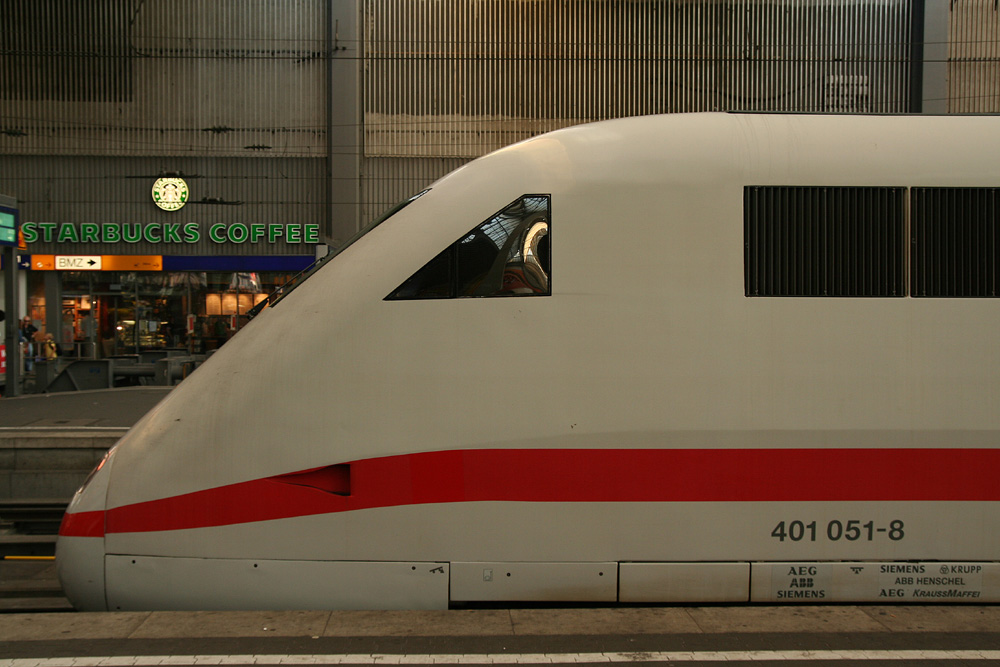
The Eschede train disaster occurred on 3 June 1998 near the village of Eschede in Lower Saxony, Germany, when an InterCity Express (ICE) train travelling at 200 km/h (124 mph) derailed after a fatigued wheel tire shattered, killing 101 people and injuring 88. It remains the deadliest high-speed rail accident in history and the worst railway disaster in post-war Germany. The catastrophic failure exposed fatal design flaws in Deutsche Bahn's rubber-cushioned wheels and triggered sweeping reforms across European rail safety.
What Caused the Eschede Train Disaster?
ICE train number 884 'Wilhelm Conrad Röntgen' was operating on the Hamburg–Munich route using Series 1 ICE rolling stock fitted with a controversial rubber-cushioned wheel design, introduced in 1992 to reduce passenger noise and vibration. Each wheel consisted of a steel tire bonded to a hub with a rubber insert. Unknown to inspectors, a metal fatigue crack had been slowly propagating through the tire of wheel number 3 on the first axle of car number 4. At 10:58 a.m., roughly 6 km south of Celle, the tire finally snapped free at full speed. The loose tire struck a switch mechanism on the track, flipping it and diverting the rear carriages onto a diverging track. Car number 4 slammed into a concrete road bridge at full velocity, bringing it down onto the carriages behind. The bridge collapse crushed three carriages instantly, piling wreckage up to 7 metres high. Investigators later found Deutsche Bahn had received internal warnings about micro-cracking in the rubber-cushioned wheels as early as 1997 but had not yet withdrawn the design from service.
Key Facts and Scale of the Disaster
| Detail | Figure |
|---|---|
| Date | 3 June 1998 |
| Location | Eschede, Lower Saxony, Germany |
| Train speed at derailment | 200 km/h (124 mph) |
| Passengers on board | ~287 |
| Deaths | 101 |
| Injuries | 88 |
| Carriages destroyed | 3 (with 3 more severely damaged) |
| Bridge collapse weight | Approx. 300 tonnes of concrete |
Rescue Operation and Aftermath
More than 1,000 emergency responders arrived at the scene within hours, including fire brigades, military units, and medical teams using helicopters to evacuate survivors. Rescue workers had to cut through compacted wreckage for over 12 hours. The site was so devastated that body recovery continued for days. Deutsche Bahn immediately withdrew all Series 1 ICE trains from service and replaced the rubber-cushioned wheel design with solid monobloc steel wheels across the entire fleet — a retrofit costing hundreds of millions of euros. Six Deutsche Bahn engineers and managers faced criminal charges of negligent homicide; the trial concluded in 2003 with acquittals for most defendants and a modest fine for one manager, a verdict widely criticised as insufficient. Germany subsequently tightened inspection cycles for rolling stock and the European Union accelerated work on harmonised high-speed rail safety standards.