Along the fertile banks of the Yellow River, more than seven thousand years ago, small farming communities planted the seeds of what would become one of the greatest civilizations in human history. Ancient China did not emerge from a single dramatic moment but through millennia of innovation, conflict, philosophical awakening, and imperial ambition. Its legacy — in writing, governance, philosophy, science, and art — continues to shape the modern world in ways both visible and profound.
The Cradle: Neolithic Beginnings
The story of ancient China begins in earnest around 5000 BC with the Yangshao culture of the Yellow River valley. These early people cultivated millet, raised pigs, and produced strikingly beautiful painted pottery. To their east, the Dawenkou culture developed contemporaneously, and by 3000 BC, the Longshan culture had emerged — characterized by thin-walled black pottery so refined it could be turned on a fast wheel, and by walled settlements that suggest organized social hierarchy and the early stirrings of statecraft. Meanwhile, in the Yangtze River delta, the Hemudu and later Liangzhu cultures cultivated rice and built sophisticated ceremonial centers adorned with jade artifacts of remarkable craftsmanship. China's Neolithic era was not a single story but a mosaic of parallel cultures, each contributing threads to the eventual fabric of Chinese civilization.
The Three Dynasties: Myth Meets History
Chinese historical tradition speaks of the Three Dynasties — the Xia, Shang, and Zhou — as the foundational epochs of civilized rule. For centuries, Western scholars dismissed the Xia dynasty (traditionally dated c. 2070–1600 BC) as pure legend, the invention of later propagandists. Excavations at Erlitou in Henan province beginning in the 1950s challenged that assumption. Erlitou revealed a sophisticated bronze-working civilization with palatial structures, craft workshops, and a network of elite goods distribution that strongly suggests a state-level society. Whether Erlitou represents the Xia precisely remains debated, but it confirms that organized complex society preceded the Shang in China's heartland.
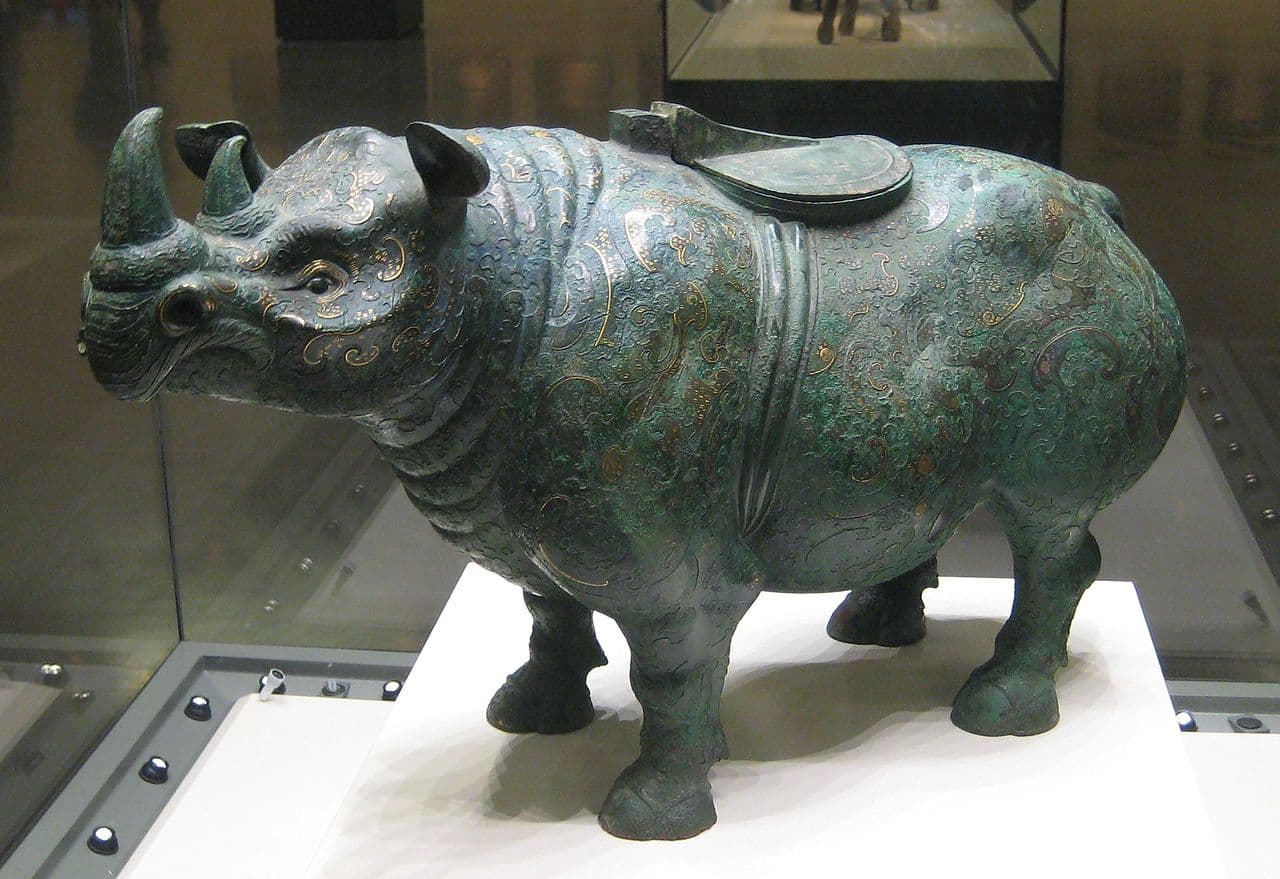
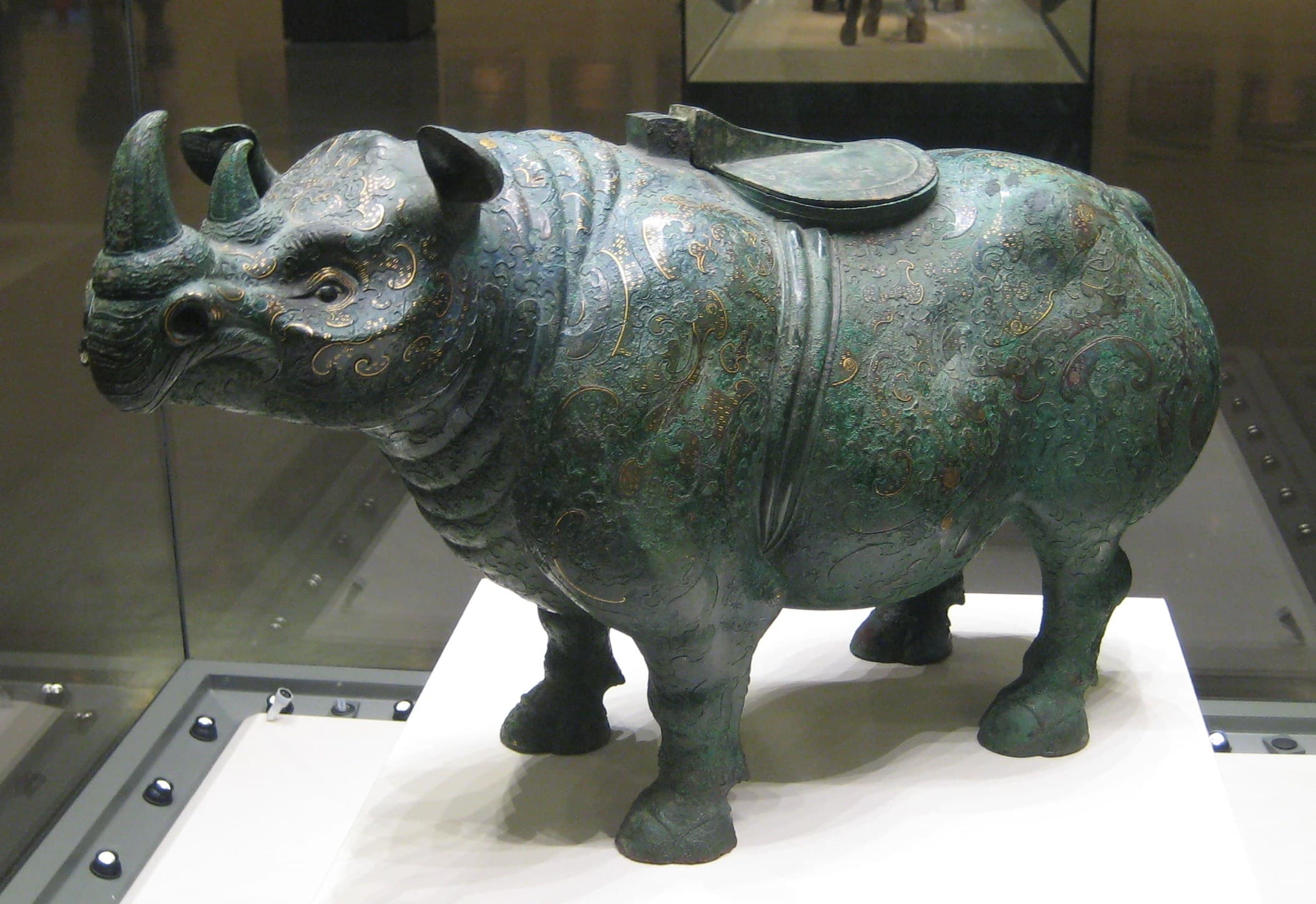
The Shang dynasty (c. 1600–1046 BC) stands on far firmer historical ground. Oracle bones — animal shoulder blades and turtle shells inscribed with questions posed to royal ancestors and then heated to produce prophetic cracks — were discovered near Anyang in the late 19th century. These thousands of inscribed bones constitute the earliest confirmed Chinese writing and reveal a royal court obsessed with ritual, warfare, and divination. Shang kings commanded vast resources, constructing enormous earthen tomb complexes where royal burials were accompanied by bronze vessels of extraordinary artistry and, disturbingly, hundreds of sacrificed human beings. The Shang bronze-smiths achieved technical mastery unmatched anywhere in the ancient world, casting ritual vessels of astonishing intricacy using sophisticated piece-mold techniques.
The Zhou: China's Longest Dynasty and Its Intellectual Golden Age
In 1046 BC, a coalition led by the Zhou people overthrew the last Shang king at the Battle of Muye, inaugurating a dynasty that would, in name at least, persist for nearly eight centuries — the longest ruling house in Chinese history. The early Zhou, known as the Western Zhou, established a feudal-style system in which the king parceled out territories to relatives and allies, who governed as lords while acknowledging the Zhou king's ritual supremacy through the concept of the 'Mandate of Heaven' — the idea that Heaven conferred legitimacy on virtuous rulers and withdrew it from the corrupt, providing divine justification for both the Zhou conquest and any future dynastic change.
When nomadic Rong peoples sacked the Zhou capital in 771 BC, the dynasty relocated eastward, beginning the Eastern Zhou period. Paradoxically, political fragmentation gave birth to extraordinary intellectual vitality. As dozens of competing states vied for survival and supremacy through the Spring and Autumn period and the brutal Warring States era, thinkers proliferated in what Chinese tradition calls the 'Hundred Schools of Thought.' Confucius (551–479 BC) articulated a vision of social harmony rooted in filial piety, ritual propriety, and benevolent governance. The Daoist tradition, attributed to the semi-legendary Laozi, offered a contrasting path of harmony with the natural order. Legalist thinkers such as Han Fei argued that only strict law and harsh punishment could bind a state together. Mohists preached universal love and opposition to aggressive warfare. This era of competing philosophies, born from crisis, would define Chinese intellectual life for the next two thousand years.
The Warring States and the Birth of Empire
From the 5th century BC onward, the Warring States period saw seven major kingdoms locked in increasingly total warfare, deploying mass infantry armies of hundreds of thousands, developing iron weapons and sophisticated siege technology, and implementing sweeping administrative reforms. The western state of Qin, adopting Legalist principles with ruthless efficiency, systematically absorbed its rivals. In 221 BC, King Zheng of Qin completed his conquest of all rival states, proclaimed himself Qin Shi Huang — the First Emperor — and set about unifying China in ways that would prove astonishingly durable. He standardized weights, measures, coinage, and written script across his realm, abolished feudal fiefdoms in favor of centrally appointed administrators, and began connecting existing walls in the north into what would evolve into the Great Wall. To guard him in death, he commissioned an army of over eight thousand life-sized terracotta soldiers — discovered by farmers near Xi'an in 1974 — one of the most spectacular archaeological finds of the 20th century.
Innovations That Changed the World
Ancient China's contribution to human technology was staggering. During the Han dynasty (206 BC–220 AD), which followed the brief but transformative Qin, China produced paper, refined the crossbow, developed cast iron centuries before Europe, and made significant advances in astronomy, mathematics, and medicine. The Silk Road, formalized under Han Emperor Wu, connected China's markets to Central Asia, Persia, and eventually Rome, facilitating not only commerce but the exchange of ideas, religions, and disease across the ancient world. Chinese silk, porcelain, and lacquerware were objects of wonder and desire across Eurasia.
A Civilization Written in Continuity
What distinguishes ancient Chinese civilization above almost all others is its remarkable continuity. The writing system that evolved from Shang oracle bones remains — in evolved form — the script used by over a billion people today. Confucian values shaped Chinese bureaucracy, family structure, and social ethics for over two millennia. The Mandate of Heaven justified both obedience and revolution across dozens of dynasties. Ancient China was not merely a chapter in world history; it was the foundation of an unbroken living tradition. To study it is to understand not only the distant past, but the cultural logic of the world's most populous nation in the present.
| Dynasty | Approximate Dates | Key Contribution |
|---|---|---|
| Xia (legendary/proto-historic) | c. 2070–1600 BC | First state-level society in Chinese tradition |
| Shang | c. 1600–1046 BC | Oracle bone script; bronze-casting mastery |
| Western Zhou | 1046–771 BC | Mandate of Heaven; feudal governance |
| Eastern Zhou (Spring & Autumn / Warring States) | 771–221 BC | Hundred Schools of Thought; Confucius, Daoism, Legalism |
| Qin | 221–206 BC | First unified empire; Great Wall; standardization |
| Han | 206 BC–220 AD | Paper; Silk Road; Confucian state ideology |