
Ancient Egypt was a cradle of civilization concentrated along the lower reaches of the Nile River in the eastern part of North Africa. It emerged from prehistoric Egypt around 3150 BC (according to conventional Egyptian chronology), when Upper and Lower Egypt were united by Menes, who is believed by the majority of Egyptologists to have been the same person as Narmer. The history of ancient Egypt unfolded as a series of stable kingdoms interspersed by the "Intermediate Periods" of relative instability. These stable kingdoms existed in one of three periods: the Old Kingdom of the Early Bronze Age; the Middle Kingdom of the Middle Bronze Age; or the New Kingdom of the Late Bronze Age.
The pinnacle of ancient Egyptian power was achieved during the New Kingdom, which extended its rule to much of Nubia and a considerable portion of the Levant. After this period, Egypt entered an era of slow decline. Over the course of its history, it was invaded or conquered by a number of foreign civilizations, including the Hyksos, the Kushites, the Assyrians, the Persians, and the Greeks and then the Romans. The end of ancient Egypt is variously defined as occurring with the end of the Late Period during the Wars of Alexander the Great in 332 BC or with the end of the Greek-ruled Ptolemaic Kingdom during the Roman conquest of Egypt in 30 BC. In AD 642, the Arab conquest of Egypt brought an end to the region's millennium-long Greco-Roman period.
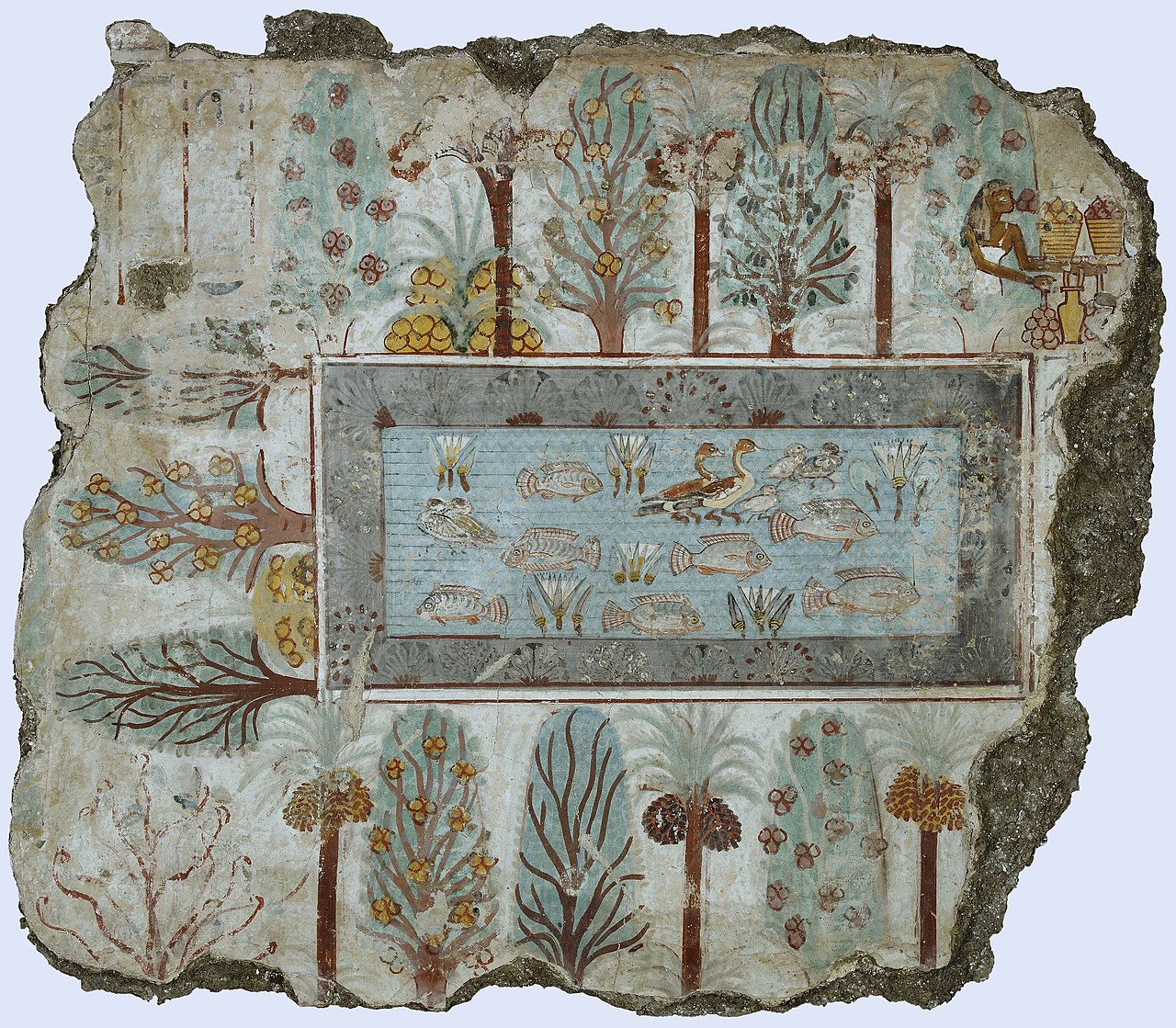
The success of ancient Egyptian civilization came partly from its ability to adapt to the Nile's conditions for agriculture. The predictable flooding of the Nile and controlled irrigation of its fertile valley produced surplus crops which supported a more dense population and thereby substantial social and cultural development. With resources to spare, the administration sponsored the mineral exploitation of the valley and its surrounding desert regions, the early development of an independent writing system, the organization of collective construction and agricultural projects, trade with other civilizations, and a military to assert Egyptian dominance throughout the Near East. Motivating and organizing these activities was a bureaucracy of elite scribes, religious leaders, and administrators under the control of the reigning pharaoh, who ensured the cooperation and unity of the Egyptian people in the context of an elaborate system of religious beliefs.
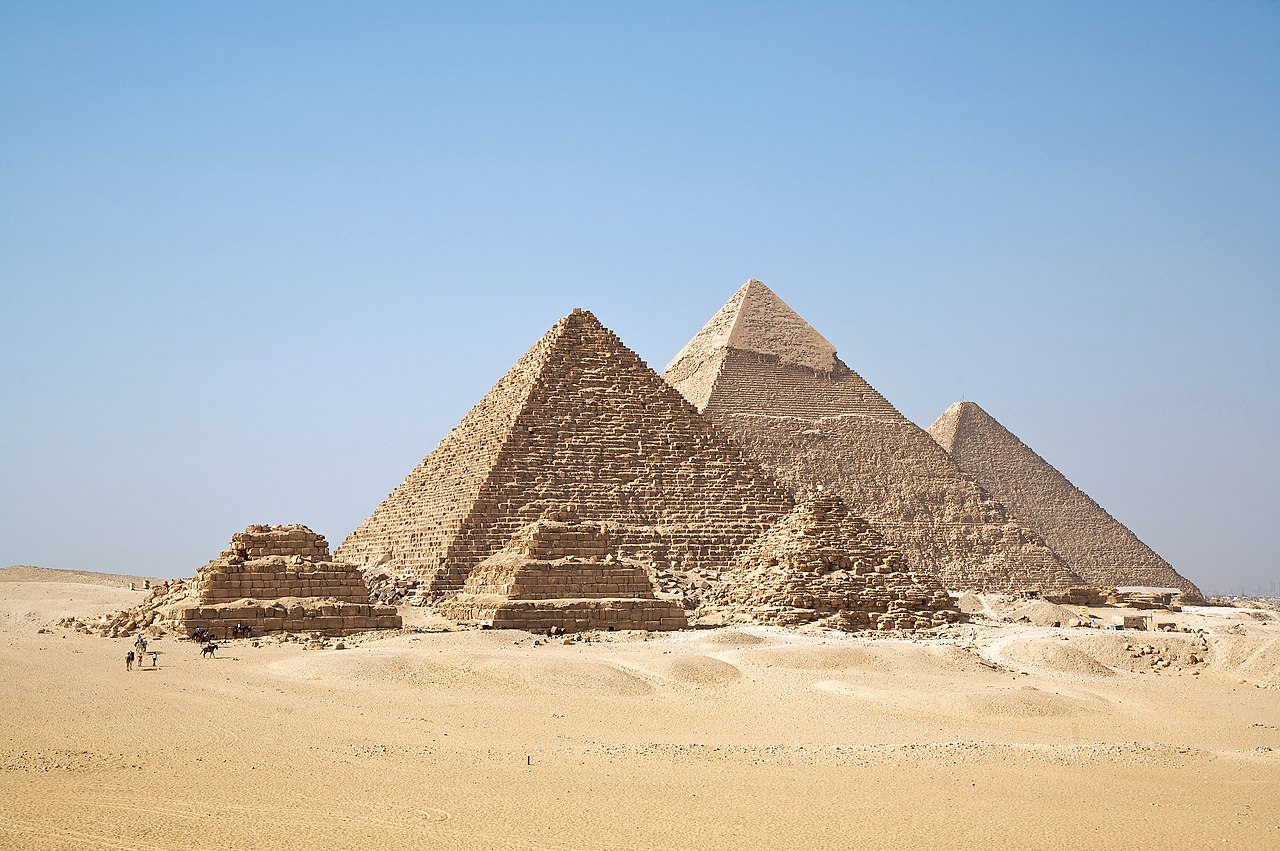
Among the many achievements of ancient Egypt are: the quarrying, surveying, and construction techniques that supported the building of monumental pyramids, temples, and obelisks; a system of mathematics; a practical and effective system of medicine; irrigation systems and agricultural production techniques; the first known planked boats; Egyptian faience and glass technology; new forms of literature; and the earliest known peace treaty, which was ratified with the Anatolia-based Hittite Empire. Its art and architecture were widely copied and its antiquities were carried off to be studied, admired, or coveted in the far corners of the world. Likewise, its monumental ruins inspired the imaginations of travelers and writers for millennia. A newfound European and Egyptian respect for antiquities and excavations that began in earnest in the early modern period has led to much scientific investigation of ancient Egypt and its society, as well as a greater appreciation of its cultural legacy.
History
The Nile has been the lifeline of its region for much of human history. The fertile floodplain of the Nile gave humans the opportunity to develop a settled agricultural economy and a more sophisticated, centralized society that became a cornerstone in the history of human civilization.
Predynastic period
In Predynastic and Early Dynastic times, the Egyptian climate was much less arid than it is today. Large regions of Egypt were savanna and traversed by herds of grazing ungulates. Foliage and fauna were far more prolific in all environs, and the Nile region supported large populations of waterfowl. Hunting would have been common for Egyptians, and this is also the period when many animals were first domesticated.

By about 5500 BC, small tribes living in the Nile valley had developed into a series of cultures demonstrating firm control of agriculture and animal husbandry, and identifiable by their pottery and personal items, such as combs, bracelets, and beads. The largest of these early cultures in upper (Southern) Egypt was the Badarian culture, which probably originated in the Western Desert; it was known for its high-quality ceramics, stone tools, and its use of copper.
The Badari was followed by the Naqada culture: the Naqada I (Amratian), the Naqada II (Gerzeh), and Naqada III (Semainean). These brought a number of technological improvements. As early as the Naqada I Period, predynastic Egyptians imported obsidian from Ethiopia, used to shape blades and other objects from flakes. Mutual trade with the Levant was established during Naqada II (c. 3600–3350 BC); this period was also the beginning of trade with Mesopotamia, which continued into the early dynastic period and beyond. Over a period of about 1,000 years, the Naqada culture developed from a few small farming communities into a powerful civilization whose leaders were in complete control of the people and resources of the Nile valley. Establishing a power center at Nekhen, and later at Abydos, Naqada III leaders expanded their control of Egypt northwards along the Nile. They also traded with Nubia to the south, the oases of the western desert to the west, and the cultures of the eastern Mediterranean and Near East to the east.
The Naqada culture manufactured a diverse selection of material goods, reflective of the increasing power and wealth of the elite, as well as societal personal-use items, which included combs, small statuary, painted pottery, high quality decorative stone vases, cosmetic palettes, and jewelry made of gold, lapis, and ivory. They also developed a ceramic glaze known as faience, which was used well into the Roman Period to decorate cups, amulets, and figurines. During the last predynastic phase, the Naqada culture began using written symbols that eventually were developed into a full system of hieroglyphs for writing the ancient Egyptian language.

Early Dynastic Period (c. 3150–2686 BC)
The Early Dynastic Period was approximately contemporary to the early Sumerian-Akkadian civilization of Mesopotamia and of ancient Elam. The third-century BC Egyptian priest Manetho grouped the long line of kings from Menes to his own time into 30 dynasties, a system still used today. He began his official history with the king named "Meni" (or Menes in Greek), who was believed to have united the two kingdoms of Upper and Lower Egypt.
The transition to a unified state happened more gradually than ancient Egyptian writers represented, and there is no contemporary record of Menes. Some scholars now believe, however, that the mythical Menes may have been the king Narmer, who is depicted wearing royal regalia on the ceremonial Narmer Palette, in a symbolic act of unification. In the Early Dynastic Period, which began about 3000 BC, the first of the Dynastic kings solidified control over Lower Egypt by establishing a capital at Memphis, from which he could control the labor force and agriculture of the fertile delta region, as well as the lucrative and critical trade routes to the Levant. The increasing power and wealth of the kings during the early dynastic period was reflected in their elaborate mastaba tombs and mortuary cult structures at Abydos, which were used to celebrate the deified king after his death. The strong institution of kingship developed by the kings served to legitimize state control over the land, labor, and resources that were essential to the survival and growth of ancient Egyptian civilization.
Old Kingdom (2686–2181 BC)
Major advances in architecture, art, and technology were made during the Old Kingdom, fueled by the increased agricultural productivity and resulting population growth, made possible by a well-developed central administration. Some of ancient Egypt's crowning achievements, the Giza pyramids and Great Sphinx, were constructed during the Old Kingdom. Under the direction of the vizier, state officials collected taxes, coordinated irrigation projects to improve crop yield, and drafted peasants to work on construction projects.
With the rise of central administration in Egypt, a new class of educated scribes and officials emerged and were granted estates by the king as payment for their services. Kings also made land grants to their mortuary cults and local temples, to ensure that these institutions had the resources to worship the king after his death. Scholars believe that five centuries of these practices slowly eroded the economic vitality of Egypt, and that the economy could no longer afford to support a large centralized administration. As the power of the kings diminished, regional governors called nomarchs began to challenge the supremacy of the office of king. This, coupled with severe droughts between 2200 and 2150 BC, is believed to have caused the country to enter the 140-year period of famine and strife known as the First Intermediate Period.
First Intermediate Period (2181–2055 BC)
After Egypt's central government collapsed at the end of the Old Kingdom, the administration could no longer support or stabilize the country's economy. The ensuing food shortages and political disputes escalated into famines and small-scale civil wars. Yet despite difficult problems, local leaders, owing no tribute to the king, used their new-found independence to establish a thriving culture in the provinces. Once in control of their own resources, the provinces became economically richer—which was demonstrated by larger and better burials among all social classes.
Free from their loyalties to the king, local rulers began competing with each other for territorial control and political power. By 2160 BC, rulers in Herakleopolis controlled Lower Egypt in the north, while a rival clan based in Thebes, the Intef family, took control of Upper Egypt in the south. As the Intefs grew in power and expanded their control northward, a clash between the two rival dynasties became inevitable. Around 2055 BC the northern Theban forces under Nebhepetre Mentuhotep II finally defeated the Herakleopolitan rulers, reuniting the Two Lands. They inaugurated a period of economic and cultural renaissance known as the Middle Kingdom.

Middle Kingdom (2134–1690 BC)
The kings of the Middle Kingdom restored the country's stability, which saw a resurgence of art and monumental building projects, and a new flourishing of literature. Mentuhotep II and his Eleventh Dynasty successors ruled from Thebes, but the vizier Amenemhat I, upon assuming the kingship at the beginning of the Twelfth Dynasty around 1985 BC, shifted the kingdom's capital to the city of Itjtawy, located in Faiyum. From Itjtawy, the kings of the Twelfth Dynasty undertook a far-sighted land reclamation and irrigation scheme to increase agricultural output in the region. Moreover, the military reconquered territory in Nubia that was rich in quarries and gold mines, while laborers built a defensive structure in the Eastern Delta, called the "Walls of the Ruler", to defend against foreign attack.
With the kings having secured the country militarily and politically and with vast agricultural and mineral wealth at their disposal, the nation's population, arts, and religion flourished. The Middle Kingdom displayed an increase in expressions of personal piety toward the gods. Middle Kingdom literature featured sophisticated themes and characters written in a confident, eloquent style. The relief and portrait sculpture of the period captured subtle, individual details that reached new heights of technical sophistication.
Second Intermediate Period (1674–1549 BC) and the Hyksos
Around 1785 BC, as the power of the Middle Kingdom kings weakened, a Western Asian people called the Hyksos, who had already settled in the Delta, seized control of Egypt and established their capital at Avaris, forcing the former central government to retreat to Thebes. The king was treated as a vassal and expected to pay tribute. The Hyksos ('foreign rulers') retained Egyptian models of government and identified as kings, thereby integrating Egyptian elements into their culture.

After retreating south, the native Theban kings found themselves trapped between the Canaanite Hyksos ruling the north and the Hyksos' Nubian allies, the Kushites, to the south. After years of vassalage, Thebes gathered enough strength to challenge the Hyksos in a conflict that lasted more than 30 years, until 1555 BC. Ahmose I waged a series of campaigns that permanently eradicated the Hyksos' presence in Egypt. He is considered the founder of the Eighteenth Dynasty, and the military became a central priority for his successors, who sought to expand Egypt's borders and attempted to gain mastery of the Near East.
New Kingdom (1549–1069 BC)
The New Kingdom pharaohs established a period of unprecedented prosperity by securing their borders and strengthening diplomatic ties with their neighbours, including the Mitanni Empire, Assyria, and Canaan. Military campaigns waged under Thutmose I and his grandson Thutmose III extended the influence of the pharaohs to the largest empire Egypt had ever seen.
Between their reigns, Hatshepsut, a queen who established herself as pharaoh, launched many building projects, including the restoration of temples damaged by the Hyksos, and sent trading expeditions to Punt and the Sinai. When Tuthmosis III died in 1425 BC, Egypt had an empire extending from Niya in north west Syria to the Fourth Cataract of the Nile in Nubia, cementing loyalties and opening access to critical imports such as bronze and wood.
The New Kingdom pharaohs began a large-scale building campaign to promote the god Amun, whose growing cult was based in Karnak. They also constructed monuments to glorify their own achievements, both real and imagined. The Karnak temple is the largest Egyptian temple ever built.
Around 1350 BC, the stability of the New Kingdom was threatened when Amenhotep IV ascended the throne and instituted a series of radical and chaotic reforms. Changing his name to Akhenaten, he touted the previously obscure sun deity Aten as the supreme deity, suppressed the worship of most other deities, and moved the capital to the new city of Akhetaten (modern-day Amarna). He was devoted to his new religion and artistic style. After his death, the cult of the Aten was quickly abandoned and the traditional religious order restored. The subsequent pharaohs, Tutankhamun, Ay, and Horemheb, worked to erase all mention of Akhenaten's heresy, now known as the Amarna Period.
Around 1279 BC, Ramesses II, also known as Ramesses the Great, ascended the throne, and went on to build more temples, erect more statues and obelisks, and sire more children than any other pharaoh in history. A bold military leader, Ramesses II led his army against the Hittites in the Battle of Kadesh (in modern Syria) and, after fighting to a stalemate, finally agreed to the first recorded peace treaty, around 1258 BC.
Egypt's wealth, however, made it a tempting target for invasion, particularly by the Libyan Berbers to the west, and the Sea Peoples, a conjectured confederation of seafarers from the Aegean Sea. Initially, the military was able to repel these invasions, but Egypt eventually lost control of its remaining territories in southern Canaan, much of it falling to the Assyrians. The effects of external threats were exacerbated by internal problems such as corruption, tomb robbery, and civil unrest. After regaining their power, the high priests at the temple of Amun in Thebes accumulated vast tracts of land and wealth, and their expanded power splintered the country during the Third Intermediate Period.
Third Intermediate Period (1069–653 BC)
Following the death of Ramesses XI in 1078 BC, Smendes assumed authority over the northern part of Egypt, ruling from the city of Tanis. The south was effectively controlled by the High Priests of Amun at Thebes, who recognized Smendes in name only. During this time, Libyans had been settling in the western delta, and chieftains of these settlers began increasing their autonomy. Libyan princes took control of the delta under Shoshenq I in 945 BC, founding the so-called Libyan or Bubastite dynasty that would rule for some 200 years. Shoshenq also gained control of southern Egypt by placing his family members in important priestly positions. Libyan control began to erode as a rival dynasty in the delta arose in Leontopolis, and Kushites threatened from the south.
Around 727 BC the Kushite king Piye invaded northward, seizing control of Thebes and eventually the Delta, which established the 25th Dynasty. During the 25th Dynasty, Pharaoh Taharqa created an empire nearly as large as the New Kingdom's. Twenty-fifth Dynasty pharaohs built, or restored, temples and monuments throughout the Nile valley, including at Memphis, Karnak, Kawa, and Jebel Barkal. During this period, the Nile valley saw the first widespread construction of pyramids (many in modern Sudan) since the Middle Kingdom.
Egypt's far-reaching prestige declined considerably toward the end of the Third Intermediate Period. Its foreign allies had fallen into the Assyrian sphere of influence, and by 700 BC war between the two states became inevitable. Between 671 and 667 BC the Assyrians began the Assyrian conquest of Egypt. The reigns of both Taharqa and his successor, Tanutamun, were filled with frequent conflict with the Assyrians. Ultimately, the Assyrians pushed the Kushites back into Nubia, occupied Memphis, and sacked the temples of Thebes.
Late Period (653–332 BC)
The Assyrians left control of Egypt to a series of vassals who became known as the Saite kings of the Twenty-Sixth Dynasty. By 653 BC, the Saite king Psamtik I was able to oust the Assyrians with the help of Greek mercenaries, who were recruited to form Egypt's first navy. Greek influence expanded greatly as the city-state of Naucratis became the home of Greeks in the Nile Delta. The Saite kings based in the new capital of Sais witnessed a brief but spirited resurgence in the economy and culture, but in 525 BC, the Persian Empire, led by Cambyses II, began its conquest of Egypt, eventually defeating the pharaoh Psamtik III at the Battle of Pelusium. Cambyses II then assumed the formal title of pharaoh, but ruled Egypt from Iran, leaving Egypt under the control of a satrap. A few revolts against the Persians marked the 5th century BC, but Egypt was unable to overthrow the Persians until the end of the century.
Following its annexation by Persia, Egypt was joined with Cyprus and Phoenicia in the sixth satrapy of the Achaemenid Persian Empire. This first period of Persian rule over Egypt, also known as the Twenty-Seventh Dynasty, ended in 402 BC, when Egypt regained independence under a series of native dynasties. The last of these dynasties, the Thirtieth, proved to be the last native royal house of ancient Egypt, ending with the kingship of Nectanebo II. A brief restoration of Persian rule, sometimes known as the Thirty-First Dynasty, began in 343 BC, but shortly after, in 332 BC, the Persian ruler Mazaces handed Egypt over to Alexander the Great without a fight.
Ptolemaic period (332–30 BC)
In 332 BC, Alexander the Great conquered Egypt with little resistance from the Persians and was welcomed by the Egyptians as a deliverer. The administration established by Alexander's successors, the Macedonian Ptolemaic Kingdom, was based on an Egyptian model and based in the new capital city of Alexandria. The city showcased the power and prestige of Hellenistic rule, and became a centre of learning and culture that included the famous Library of Alexandria and the Mouseion. The Lighthouse of Alexandria lit the way for the many ships that kept trade flowing through the city—as the Ptolemies made commerce and revenue-generating enterprises, such as papyrus manufacturing, their top priority.
Hellenistic culture did not supplant native Egyptian culture, as the Ptolemies supported time-honored traditions in an effort to secure the loyalty of the populace. They built new temples in Egyptian style, supported traditional cults, and portrayed themselves as pharaohs. Some traditions merged, as Greek and Egyptian gods were syncretized into composite deities, such as Serapis, and classical Greek forms of sculpture influenced traditional Egyptian motifs. Despite their efforts to appease the Egyptians, the Ptolemies were challenged by native rebellion, bitter family rivalries, and frequent mob violence in Alexandria. In addition, as Rome relied more heavily on imports of grain from Egypt, the Romans took great interest in the political situation in the country. Continued Egyptian revolts, ambitious politicians, and powerful opponents from the Near East made this situation unstable, leading Rome to send forces to secure the country as a province of its empire.
Roman period (30 BC – AD 642)
Egypt became a province of the Roman Empire in 30 BC, following the defeat of Mark Antony and Ptolemaic Queen Cleopatra VII by Octavian (later Emperor Augustus) in the Battle of Actium. The Romans relied heavily on grain shipments from Egypt, and the Roman army, under the control of a prefect appointed by the emperor, quelled rebellions, strictly enforced the collection of heavy taxes, and prevented attacks by bandits, which had become a notorious problem during the period. Alexandria became an increasingly important center on the trade route with the orient, as exotic luxuries were in high demand in Rome.
Upper Egypt frequently operated with a degree of de facto independence due to its distance from Alexandria, its strong local priesthoods, and active resistance to Roman rule, like the Revolt of Thebes (c. 30–29 BC), which took place immediately following the war. The region near the southern border maintained a unique position, acting as a bridge to Nubia, with local elites sometimes exerting control over the Eastern Desert.
Although the Romans had a more hostile attitude than the Greeks towards the Egyptians, some traditions such as mummification and worship of the traditional gods continued. The art of mummy portraiture flourished, and some Roman emperors had themselves depicted as pharaohs, though not to the extent that the Ptolemies had. The former lived outside Egypt and did not perform the ceremonial functions of Egyptian kingship. Local administration became Roman in style and closed to native Egyptians.
From the mid-first century AD, Christianity took root in Egypt and it was originally seen as another cult that could be accepted. However, it was an uncompromising religion that sought to win converts from the pagan Egyptian and Greco-Roman religions and threatened popular religious traditions. This led to the persecution of converts to Christianity, culminating in the great purges of Diocletian starting in 303, but eventually Christianity won out. In 391, the Christian emperor Theodosius I introduced legislation that banned pagan rites and closed temples. Alexandria became the scene of great anti-pagan riots with public and private religious imagery destroyed. As a consequence, Egypt's native religious culture was continually in decline. While the native population continued to speak their language, the ability to read hieroglyphic writing slowly disappeared as the role of the Egyptian temple priests and priestesses diminished. The temples themselves were sometimes converted to churches or abandoned to the desert.
Government and economy
Administration and commerce
The pharaoh was the absolute monarch of the country and, at least in theory, wielded complete control of the land and its resources. The king was the supreme military commander and head of the government, who relied on a bureaucracy of officials to manage his affairs. In charge of the administration was his second in command, the vizier, who acted as the king's representative and coordinated land surveys, the treasury, building projects, the legal system, and the archives. At a regional level, the country was divided into as many as 42 administrative regions called nomes each governed by a nomarch, who was accountable to the vizier for his jurisdiction. The temples formed the backbone of the economy. Not only were they places of worship, but were also responsible for collecting and storing the kingdom's wealth in a system of granaries and treasuries administered by overseers, who redistributed grain and goods.
Much of the economy was centrally organized and strictly controlled. Although the ancient Egyptians did not use coinage until the Late period, they did use a type of money-barter system, with standard sacks of grain and the deben, a weight of roughly 91 g (3 oz) of copper or silver, forming a common denominator. Workers were paid in grain: A simple laborer might earn 5+1⁄2 sacks or ca. 200 kg (440 lb) of grain per month, while a foreman might earn 7+1⁄2 sacks or roughly 250 kg (550 lb). Prices were fixed across the country and recorded in lists to facilitate trading; for example a shirt cost five copper deben, while a cow cost 140 deben. Grain could be traded for other goods, according to the fixed price list. During the fifth century BC coined money was introduced into Egypt from abroad. At first the coins were used as standardized pieces of precious metal rather than true money, but in the following centuries international traders came to rely on coinage.
Social status
Egyptian society was highly stratified, and social status was expressly displayed. Farmers made up the bulk of the population, but agricultural produce was owned directly by the state, temple, or noble family that owned the land. Farmers were also subject to a labor tax and were required to work on irrigation or construction projects in a corvée system. Artists and craftsmen were of higher status than farmers, but they were also under state control, working in the shops attached to the temples and paid directly from the state treasury. Scribes and officials formed the upper class in ancient Egypt, known as the "white kilt class" in reference to the bleached linen garments that served as a mark of their rank. The upper class prominently displayed their social status in art and literature. Below the nobility were the priests, physicians, and engineers with specialized training in their field. It is unclear whether slavery as understood today existed in ancient Egypt; there is difference of opinions among authors.
The ancient Egyptians viewed men and women, including people from all social classes, as essentially equal under the law, and even the lowliest peasant was entitled to petition the vizier and his court for redress. Although slaves were mostly used as indentured servants, they were able to buy and sell their servitude, work their way to freedom or nobility, and were usually treated by doctors in the workplace. Both men and women had the right to own and sell property, make contracts, marry and divorce, receive inheritance, and pursue legal disputes in court. Married couples could own property jointly and protect themselves from divorce by agreeing to marriage contracts, which stipulated the financial obligations of the husband to his wife and children should the marriage end. Compared with their counterparts in ancient Greece, Rome, and even more modern places around the world, ancient Egyptian women had a greater range of personal choices, legal rights, and opportunities for achievement. Women such as Hatshepsut and Cleopatra VII even became pharaohs, while others wielded power as Divine Wives of Amun. Despite these freedoms, ancient Egyptian women did not often take part in official roles in the administration, aside from the royal high priestesses, apparently served only secondary roles in the temples (not much data for many dynasties), and were less likely to be as educated as men.
Legal system
The head of the legal system was officially the pharaoh, who was responsible for enacting laws, delivering justice, and maintaining law and order, a concept the ancient Egyptians referred to as Ma'at. Although no legal codes from ancient Egypt survive, court documents show that Egyptian law was based on a common-sense view of right and wrong that emphasized reaching agreements and resolving conflicts rather than strictly adhering to a complicated set of statutes. Local councils of elders, known as Kenbet in the New Kingdom, were responsible for ruling in court cases involving small claims and minor disputes. More serious cases involving murder, major land transactions, and tomb robbery were referred to the Great Kenbet, over which the vizier or pharaoh presided. Plaintiffs and defendants were expected to represent themselves and were required to swear an oath that they had told the truth. In some cases, the state took on both the role of prosecutor and judge, and it could torture the accused with beatings to obtain a confession and the names of any co-conspirators. Whether the charges were trivial or serious, court scribes documented the complaint, testimony, and verdict of the case for future reference.
Punishment for minor crimes involved either imposition of fines, beatings, facial mutilation, or exile, depending on the severity of the offense. Serious crimes such as murder and tomb robbery were punished by execution, carried out by decapitation, drowning, or impaling the criminal on a stake. Punishment could also be extended to the criminal's family. Beginning in the New Kingdom, oracles played a major role in the legal system, dispensing justice in both civil and criminal cases. The procedure was to ask the god a "yes" or "no" question concerning the right or wrong of an issue. The god, carried by a number of priests, rendered judgement by choosing one or the other, moving forward or backward, or pointing to one of the answers written on a piece of papyrus or an ostracon.
Agriculture
A combination of favorable geographical features contributed to the success of ancient Egyptian culture, the most important of which was the rich fertile soil resulting from annual inundations of the Nile River. The ancient Egyptians were thus able to produce an abundance of food, allowing the population to devote more time and resources to cultural, technological, and artistic pursuits. Land management was crucial in ancient Egypt because taxes were assessed based on the amount of land a person owned.