
The Phoenicians were an ancient Semitic-speaking civilization based along the eastern Mediterranean coast — roughly modern Lebanon, northern Israel, and coastal Syria — who flourished from around 1500 BC to 300 BC. They are best known for spreading the world's first widely used alphabetic writing system, which directly gave rise to Greek, Latin, and ultimately every modern Western alphabet. As master mariners and merchants, they built a commercial empire stretching from the Levant to the Atlantic coast of Africa and Spain, founding colonies including Carthage in 814 BC, and connecting the ancient world through trade in cedar wood, glass, textiles, and their legendary Tyrian purple dye.
Who Were the Phoenicians? Origins and Identity
The Phoenicians never called themselves by that name — it was a label applied by the Greeks, likely derived from the Greek word 'phoinix,' meaning purple-red, a reference to their famed purple dye. They identified instead with their individual city-states: Tyre, Sidon, Byblos (Gebal), Arwad, and Beirut. Genetically and culturally, they were Canaanites — the indigenous Semitic population of the Levant — who had inhabited the region since at least the 3rd millennium BC. Their civilization crystallized into a distinct cultural identity around 1200 BC, following the catastrophic Bronze Age Collapse that destroyed the Hittite Empire and severely weakened Egypt and Mycenean Greece. While their neighbors crumbled, the Phoenician city-states, protected by the Lebanon Mountains to the east and the sea to the west, survived and adapted, inheriting the trade vacuum left by the collapse. Byblos, the oldest of the Phoenician cities with continuous habitation dating back to 8000 BC, was already a major trade hub long before the Phoenician golden age began.
What Made Phoenician City-States So Powerful?
The Phoenicians were never a unified empire. Their political structure was a collection of independent, oligarchic city-states, each ruled by a king whose authority was balanced by councils of wealthy merchants. This decentralized model made them resilient — the fall of one city did not destroy the others. Tyre, situated on a small island just off the coast (connected to the mainland only by a causeway built by Alexander the Great in 332 BC), was perhaps the most powerful city-state, dominating trade from roughly 1000 to 750 BC under kings like Hiram I (reigned c. 969–936 BC), who famously supplied King Solomon of Israel with cedar timber and craftsmen for the construction of the First Temple in Jerusalem. Sidon rivaled Tyre and was the older of the two great cities, renowned for its glass and metalworking. The Phoenicians' geographic position — at the crossroads of Africa, Asia, and the Mediterranean — combined with their mastery of cedarwood shipbuilding from the forests of Lebanon, gave them an unmatched advantage in long-distance commerce. Their ships, including the iconic bireme galley, could carry heavy cargo across open seas, making voyages that contemporaries considered extraordinarily daring.
How Did Phoenician Trade Work? Goods, Routes, and Networks
Phoenician trade was the economic engine of the ancient Mediterranean world for nearly five centuries. Their merchant ships sailed fixed seasonal routes, exploiting the Mediterranean's predictable summer winds, and established a network of trading posts — called 'emporia' — along coastlines from Cyprus and Rhodes to Sicily, Sardinia, Malta, North Africa, Spain (ancient Hispania), and even through the Strait of Gibraltar into the Atlantic. Their most prized export was Tyrian purple dye, extracted from the mucus glands of sea snails (primarily Murex trunculus and Murex brandaris). Producing just one gram of the dye required approximately 10,000 snails, making it extraordinarily expensive — purple became the color of royalty and divinity across the ancient world, a symbolism that persisted into the Byzantine era and beyond. Beyond purple, the Phoenicians traded Lebanese cedar (essential for shipbuilding and monumental architecture across the Near East), blown glass, ivory carvings, silver and copper from Iberia, tin from Britain (traded via intermediaries), papyrus from Egypt, grain, wine, olive oil, linen, and slaves. Archaeological evidence from shipwrecks like the Uluburun wreck (c. 1300 BC, off modern Turkey) and the Cape Gelidonya wreck confirms the cosmopolitan nature of Late Bronze Age Levantine trade. By 800 BC, the Phoenicians had effectively created the first globalized economy within the Mediterranean basin.
| City-State | Modern Location | Peak Period | Key Export / Specialty |
|---|---|---|---|
| Byblos (Gebal) | Jbeil, Lebanon | 3000–1200 BC | Timber, papyrus trade, earliest inscriptions |
| Sidon | Saida, Lebanon | 1200–700 BC | Glass, purple dye, metalwork |
| Tyre | Sur, Lebanon | 1000–332 BC | Purple dye, maritime trade, Carthage founder |
| Arwad | Arwad Island, Syria | 900–64 BC | Naval power, copper trade |
| Carthage | Near Tunis, Tunisia | 814–146 BC | Western Mediterranean dominance, silver, grain |
The Phoenician Alphabet: How It Changed the World
The single most consequential legacy of Phoenician civilization is the alphabet. By approximately 1050 BC, the Phoenicians had refined an abjad — a consonant-only writing system of 22 characters — derived from earlier Proto-Sinaitic and Canaanite scripts. Unlike the cumbersome cuneiform of Mesopotamia (which required hundreds of signs) or Egyptian hieroglyphics, the Phoenician alphabet could be learned quickly, recorded on portable materials like papyrus and wax tablets, and was ideally suited to merchant record-keeping. The earliest confirmed Phoenician alphabetic inscription is on the sarcophagus of King Ahiram of Byblos, dated to approximately 1000 BC. As Phoenician traders spread across the Mediterranean, their alphabet spread with them. The Greeks adopted it before 800 BC — adding vowels to produce the first true alphabet — and the Greek alphabet in turn gave birth to Latin by the 7th century BC, from which English, French, Spanish, Italian, and dozens of other languages descend. The Phoenician script also fathered Hebrew, Arabic, Aramaic, and Syriac. In effect, almost every alphabetic writing system used on Earth today traces its origins to Phoenician merchants writing commodity lists on the docks of Tyre and Sidon.
Phoenician Colonization: From Carthage to Spain
Faced with a narrow, resource-limited homeland and growing pressure from Assyrian expansion, the Phoenicians systematically planted colonies throughout the Mediterranean and beyond from roughly 900 BC onward. Their colonization strategy differed from the Greek model: Phoenician colonies were primarily commercial staging posts rather than independent political entities, typically situated on small islands, peninsulas, or promontories that were easily defended and accessible by sea. The most significant of these colonies was Carthage (Qart-Hadasht, 'New City'), founded by settlers from Tyre around 814 BC on the North African coast near modern Tunis, according to the legendary account involving Queen Dido (Elissa). Carthage grew to become the dominant power in the western Mediterranean, controlling a population of perhaps 700,000 by the 3rd century BC and engaging in the three Punic Wars (264–146 BC) against Rome — the last existential struggle of Phoenician culture. Other major Phoenician colonies included Gadir (modern Cádiz, Spain, founded c. 1104 BC according to tradition — making it one of Europe's oldest cities), Utica in Tunisia, and dozens of settlements across Sicily, Sardinia, Malta, and Morocco. Spanish colonial sites like Lixus (Morocco) and the mines of Rio Tinto (Huelva, Spain) — rich in silver, copper, and gold — fueled Phoenician wealth for centuries.

Phoenician Religion, Art, and Culture
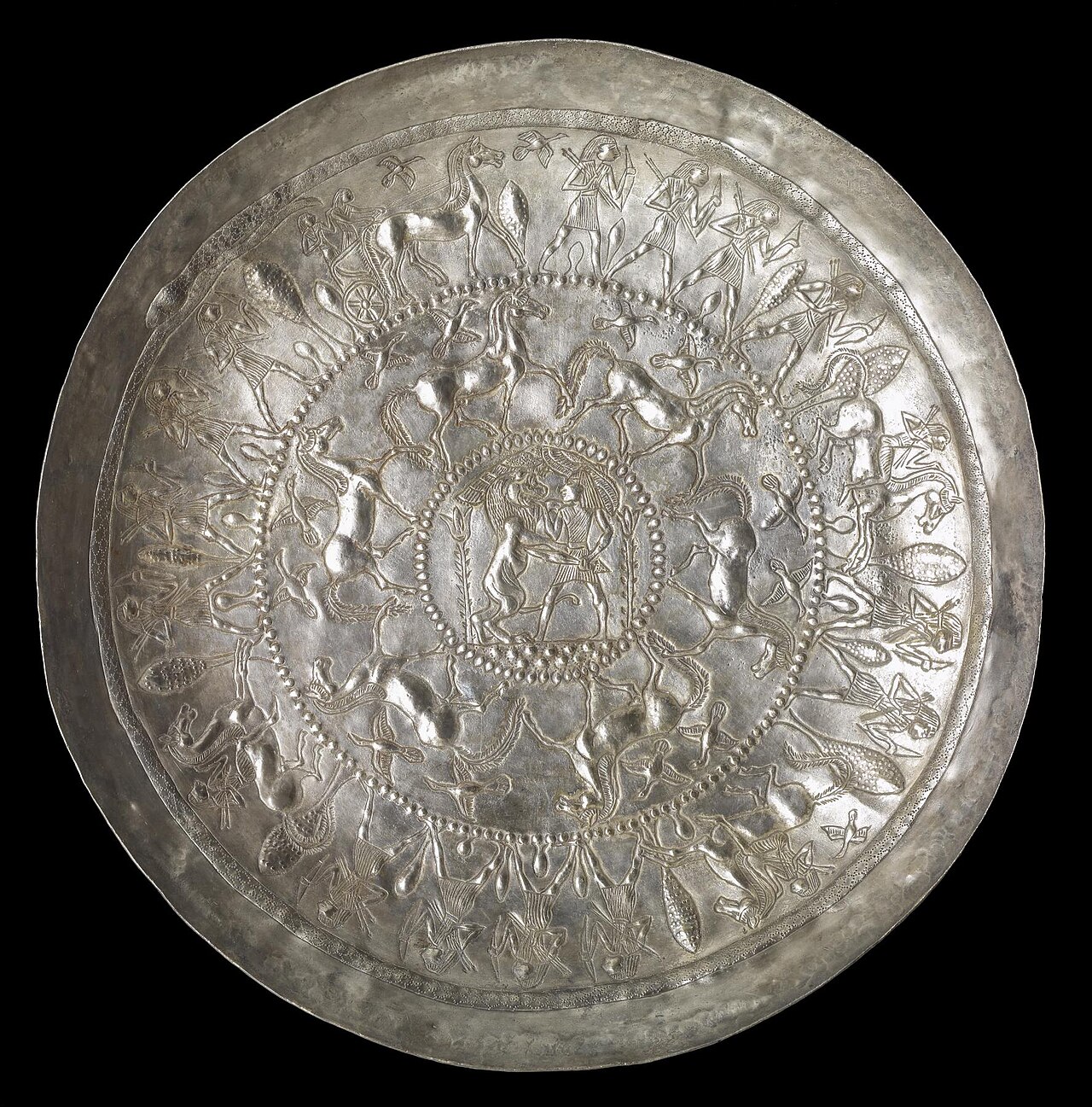
Phoenician religion was polytheistic, centered on a pantheon of Canaanite deities. The chief god was El (the father of the gods), but in practice individual cities venerated specific patron deities: Baal Melqart was the patron of Tyre, worshipped with great ceremony and associated with Hercules by the Greeks; Astarte (equivalent to Ishtar or Aphrodite) was the goddess of love and fertility, worshipped throughout the Phoenician world; and Eshmun was the god of healing, whose temple at Sidon was a major pilgrimage site. The most controversial aspect of Phoenician religion, recorded by ancient sources including Diodorus Siculus and Cleitarchus, is the alleged practice of child sacrifice — known as 'tophet' offerings — in which infants were burned as offerings to Baal Hammon and Tanit, particularly in Carthage. Archaeological evidence from tophets (ritual precincts containing urns of cremated remains) at Carthage, Motya (Sicily), and other sites has generated intense scholarly debate: some researchers argue the urns contain child sacrifices, while others contend they are primarily burial grounds for children who died of natural causes. The debate remains unresolved. Phoenician art was characteristically syncretic and cosmopolitan — absorbing Egyptian, Assyrian, and Aegean motifs and blending them into a distinctive style seen in carved ivory panels (found as luxury goods in Assyrian palaces), gold and silver jewelry, faience amulets, carved ostrich eggs, and elaborate glassware. Phoenician craftsmen were among the most sought-after artisans in the ancient world.
How Did Assyrian and Persian Conquest Affect Phoenicia?
The Phoenician city-states, despite their commercial power, were rarely military powers on land. From the 9th century BC onward, they fell under the suzerainty of successive empires while retaining substantial autonomy and their commercial networks. Assyria under Ashurnasirpal II (reigned 883–859 BC) extracted tribute from Phoenician cities and under Tiglath-Pileser III (745–727 BC) began exerting tighter control. Tyre successfully resisted a 5-year siege by Shalmaneser V (727–722 BC) and later a 13-year siege by Nebuchadnezzar II of Babylon (585–572 BC), though it eventually capitulated. Under the Achaemenid Persian Empire (from 539 BC), Phoenicia became a critical strategic asset: Phoenician navies formed the backbone of the Persian fleet that fought Greece at Salamis in 480 BC. Persian rule was generally light-handed — the Phoenicians maintained their kings, institutions, and commerce. The decisive rupture came with Alexander the Great's siege of Tyre in 332 BC. After a seven-month siege, during which Alexander built a causeway from the mainland to the island city, Tyre fell. Alexander reportedly killed 8,000 Tyrians in battle, crucified 2,000 on the beach, and sold 30,000 inhabitants into slavery. This event effectively ended Tyre's independence and marked the beginning of the end for Phoenician cultural autonomy.
Why Did Phoenician Civilization Decline and What Is Its Legacy?
The decline of Phoenician civilization was not a single event but a gradual absorption. Alexander's conquest Hellenized the Levant, imposing Greek language, culture, and institutions over the city-states. Byblos, Sidon, and the rebuilt Tyre became Hellenistic cities. The final destruction came in 146 BC, when Rome razed Carthage to the ground at the end of the Third Punic War, killing or enslaving its entire population and — according to legend, though probably apocryphal — salting the earth so nothing would grow. Yet Phoenician civilization's legacy is immeasurable. Their alphabet is perhaps the most influential technological invention in human history, underpinning virtually all written communication in the modern world. Their trade routes established the economic geography of the Mediterranean for millennia. Purple dye's association with royalty persisted from ancient Tyre through the Roman emperors (who reserved 'imperial purple' for themselves) to medieval European monarchs. Lebanon's flag still features the cedar tree — a symbol of Phoenician prosperity. Modern genetic studies, including a landmark 2017 National Geographic/Genographic Project analysis of a 2,500-year-old Phoenician man from Carthage, have traced Phoenician genetic signatures across Lebanon, Tunisia, Malta, and Iberia. The Phoenicians may have lacked the literary tradition of their contemporaries — ironically, writing on perishable papyrus meant their own documents rarely survived — but their impact on civilization is written into every line of text you read today.
