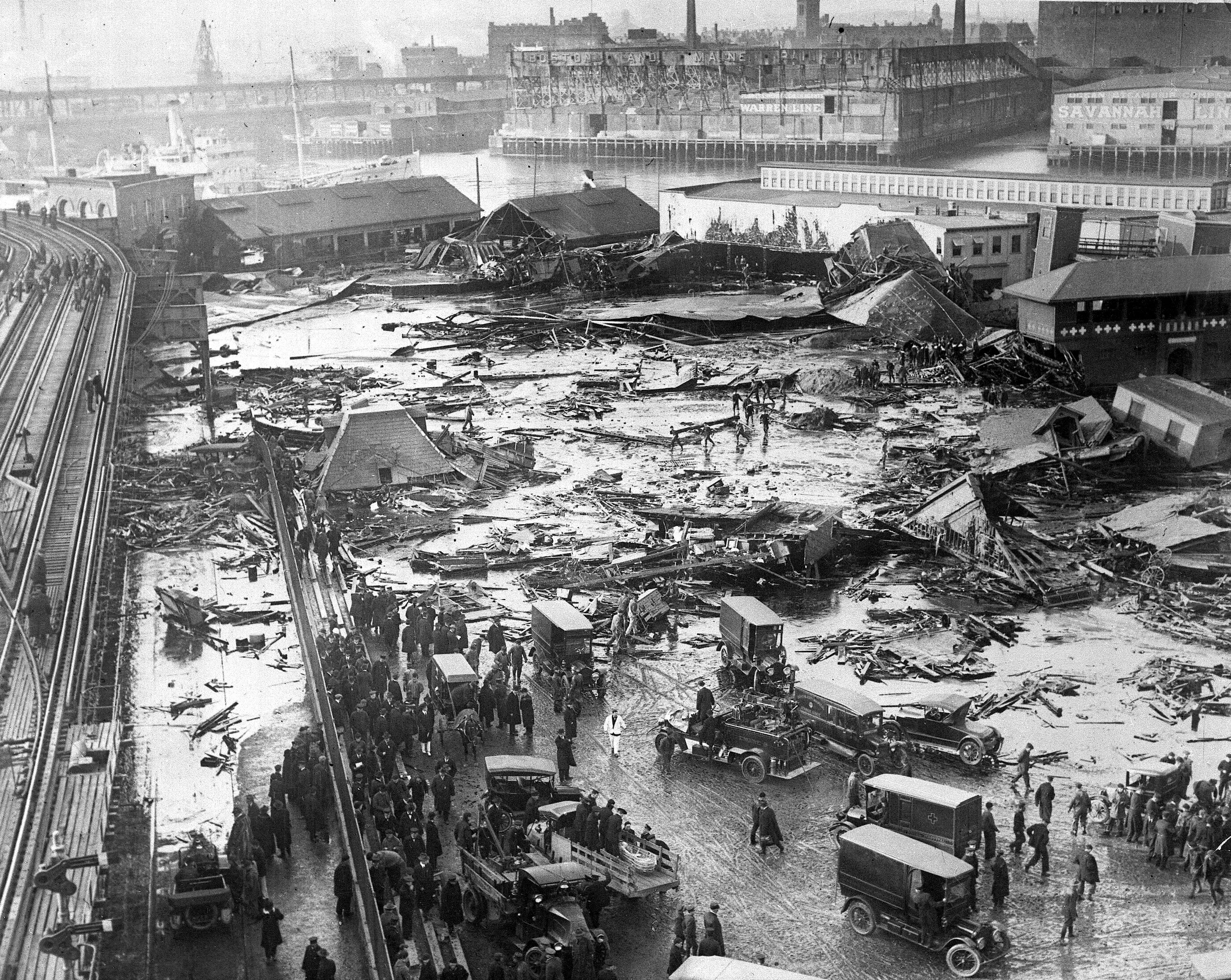
The Boston Molasses Disaster occurred on January 15, 1919, when a massive storage tank owned by the United States Industrial Alcohol Company (USIA) ruptured in the North End neighborhood, unleashing approximately 2.3 million gallons of molasses through the streets. The resulting wave — estimated at 25 feet high and traveling at 35 mph — killed 21 people and injured 150 more, making it one of the strangest and deadliest industrial accidents in American history. The disaster exposed serious corporate negligence and helped shape modern standards for engineering oversight and corporate liability.
What Caused the Great Molasses Flood?
The 50-foot-tall, 90-foot-wide steel tank had been hastily constructed in 1915 to store molasses used in the production of industrial alcohol — a key ingredient in munitions during World War I. Engineers and local residents had warned from the start that the tank was poorly built: it groaned and creaked under pressure, and molasses visibly seeped through its seams. USIA reportedly painted the tank brown to hide the leaks rather than repair them. On the day of the disaster, the tank had been freshly filled to near capacity following a shipment from Puerto Rico. A combination of factors — thin steel plates, faulty rivets, rapid fermentation increasing internal gas pressure, and an unusually warm winter day (temperatures had climbed to 40°F after days of freezing cold) — caused catastrophic structural failure just after 12:30 p.m.
How Did the Disaster Unfold on January 15, 1919?
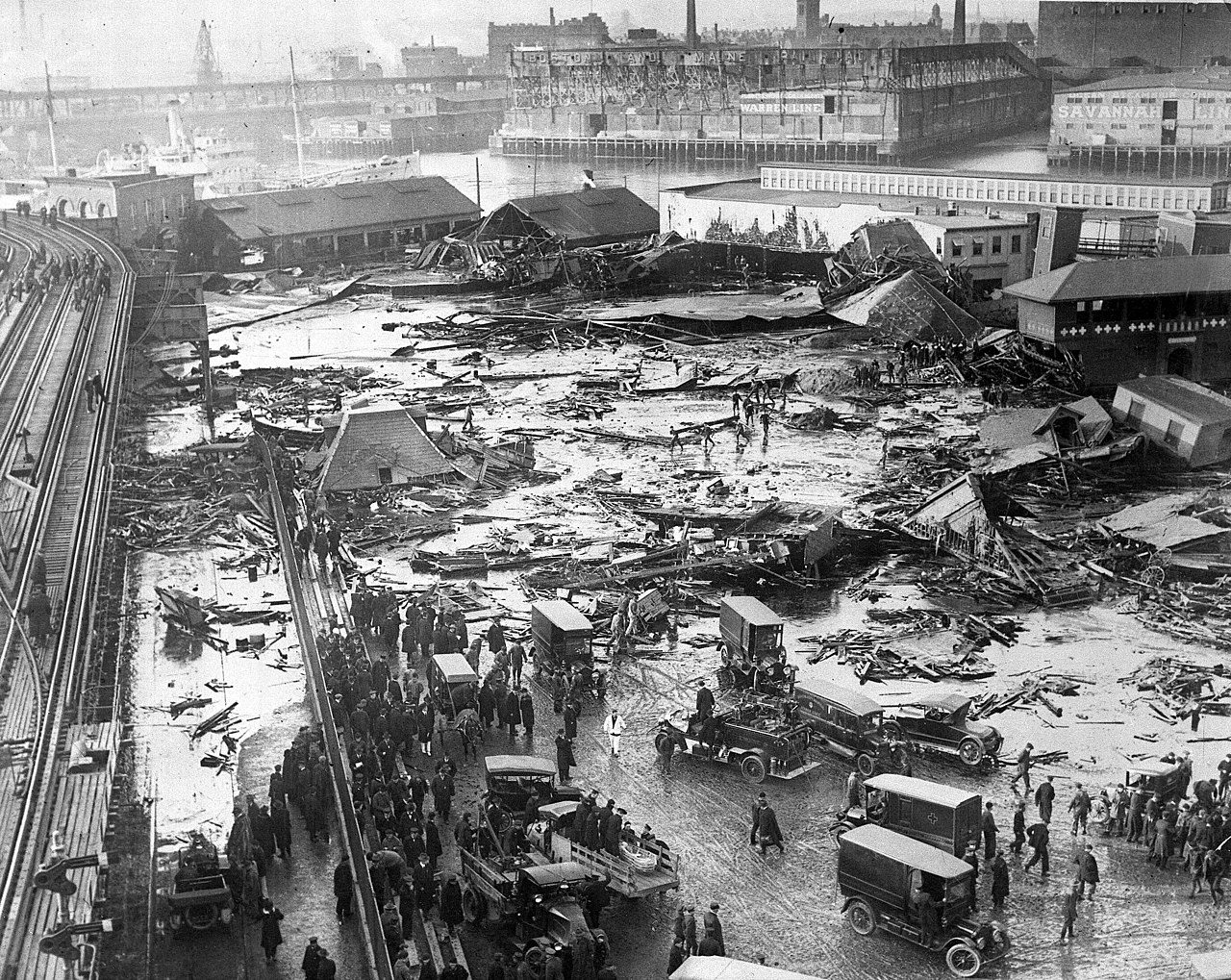
A low rumble followed by a sound witnesses described as a machine-gun-like rattle of rivets preceded the tank's total collapse. A dark brown wall of molasses surged through Commercial Street, sweeping away horses, wagons, and people. The viscous flood demolished a section of the elevated railway support structure, collapsed a firehouse, and crushed wooden tenement buildings. First responders — including Boston police, Red Cross nurses, and sailors from a nearby Navy yard — struggled for hours in the knee-deep, hardening syrup to reach victims. The cleanup took weeks; 87,000 hours of labor were logged, and Boston Harbor reportedly ran brown with molasses well into summer.
What Was the Legacy of the Boston Molasses Disaster?
Victims and the city of Boston filed more than 100 lawsuits against USIA. After a landmark six-year legal battle, a court-appointed auditor ruled in 1925 that USIA's negligence was to blame, and the company paid out roughly $628,000 in settlements (equivalent to about $11 million today). The case was a pivotal moment in American tort law, establishing that corporations could be held liable for ignoring structural warnings. It also contributed to Massachusetts adopting stricter building and engineering codes requiring licensed engineers to certify construction projects — a regulatory precedent that spread nationwide. Today the site near Copps Hill is a public park, and local legend holds that on hot summer days, you can still smell molasses rising from the ground.
| Detail | Figure |
|---|---|
| Date | January 15, 1919 |
| Location | Commercial Street, North End, Boston |
| Molasses Released | ~2.3 million gallons |
| Wave Height (estimated) | 25 feet |
| Wave Speed (estimated) | 35 mph |
| Deaths | 21 |
| Injuries | 150 |
| Legal Settlement | ~$628,000 (≈$11M today) |
