Stonehenge is a prehistoric stone circle monument located on Salisbury Plain in Wiltshire, England, constructed in multiple phases between approximately 3000 BC and 1500 BC. Built by Neolithic and Bronze Age peoples whose identities remained a mystery for centuries, it is now understood to have served as a ceremonial and burial site, an astronomical calendar, and likely a place of ancestor veneration. With some stones weighing up to 25 tonnes and transported from sources over 150 miles away, Stonehenge remains one of the greatest engineering achievements of the ancient world.
What Is Stonehenge and Where Is It Located?
Stonehenge stands on Salisbury Plain, approximately 2 miles (3.2 km) west of Amesbury and 8 miles (13 km) north of Salisbury in Wiltshire, England. At its core are two types of stone: the larger sarsen stones, which form the iconic trilithons (two upright stones capped by a horizontal lintel), and the smaller bluestones. The site sits at the centre of the densest complex of Neolithic and Bronze Age monuments in England, including burial mounds, processional avenues, and enclosures, all together designated a UNESCO World Heritage Site in 1986. The monument itself is roughly circular, measuring about 110 metres (360 feet) in outer diameter at the earthwork boundary, while the inner stone circle spans approximately 30 metres (100 feet) across.
Who Built Stonehenge? The People Behind the Monument
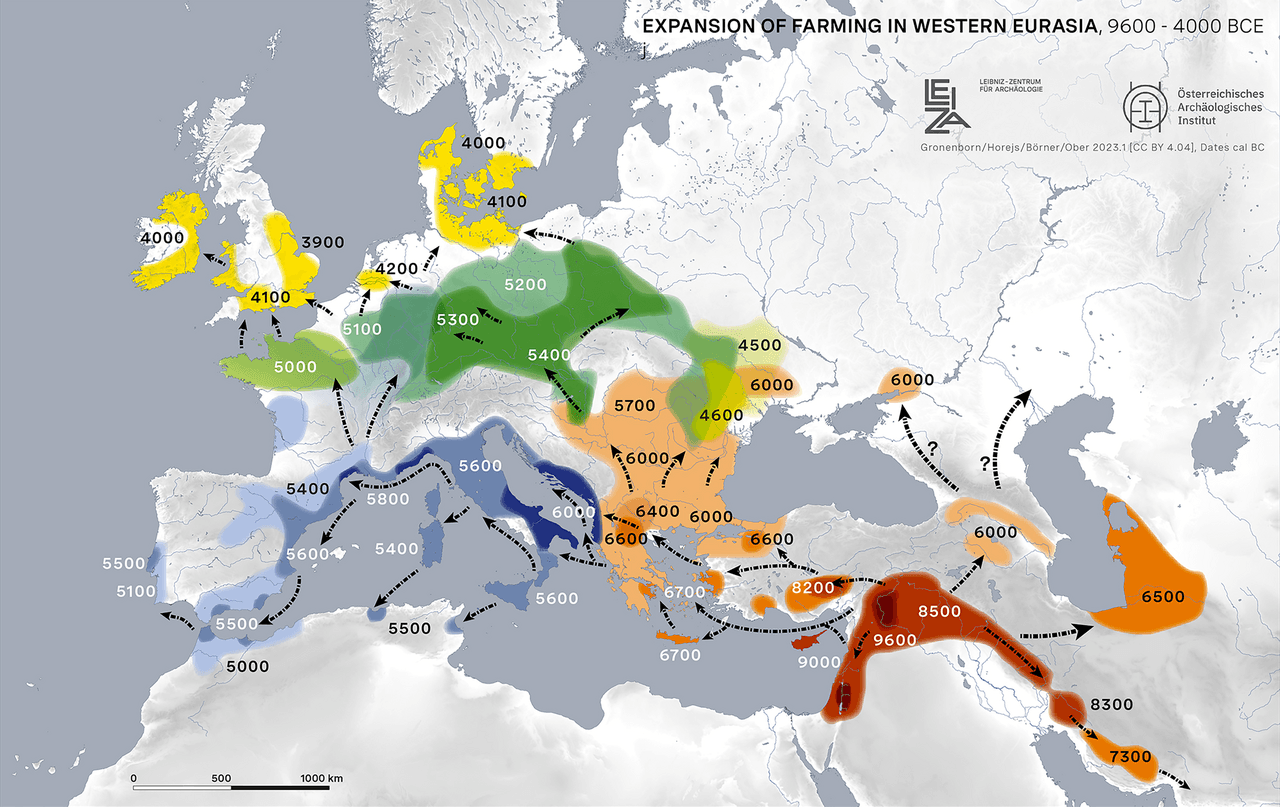
Stonehenge was not built by a single group but by successive generations spanning roughly 1,500 years. The earliest phase, around 3000 BC, was the work of Neolithic farmers who had settled in Britain after migrating from Anatolia (modern Turkey) via continental Europe. Archaeological evidence, including DNA analysis of remains found near the site published in the journal Nature in 2019, confirms these builders were largely of Aegean descent and had largely replaced the indigenous hunter-gatherer population. By the time the iconic sarsen trilithons were erected around 2500 BC, a new population — linked to the 'Beaker culture' from continental Europe — had arrived in Britain, bringing new technologies including metalworking. Far from the romantic Victorian myth of Druids building Stonehenge, the monument predates the Celtic Druid tradition by at least 1,000 years. The Druids, Iron Age priests, would not appear in Britain until around 300 BC. Roman-era writers such as Julius Caesar documented Druidic practices, but no credible connection to Stonehenge's construction exists.
How Was Stonehenge Built? The Engineering Marvel Explained
The construction of Stonehenge required extraordinary logistical and engineering skill for a society without wheeled vehicles, metal tools, or written language. The monument's two main stone types came from vastly different sources. The bluestones — around 80 stones each weighing 2 to 5 tonnes — were quarried from the Preseli Hills in Pembrokeshire, Wales, approximately 150 to 160 miles (240 to 250 km) away. Research published in 2019 by geologists at University College London pinpointed two specific quarry sites: Carn Goedog and Rhosyfelin. How the bluestones were transported remains debated, but most archaeologists favour a combination of rafts, sledges, and human labour over land and along coastal waterways. The larger sarsen stones, the tallest of which stands 9.1 metres (30 feet) high and weighs around 25 tonnes, were sourced from Marlborough Downs, about 25 miles (40 km) to the north near West Woods in Wiltshire — a source confirmed by geochemical analysis in 2020. To move them, builders likely used wooden sledges pulled by hundreds of workers along prepared trackways, possibly greased with animal fat or running over wooden rollers. At the construction site, stones were shaped using harder sarsen hammerstone tools — an estimated 30 million hammer strikes were needed to dress the surfaces. The upright stones were raised by digging a pit with a sloped side, tipping the stone in, then hauling it upright using ropes and a wooden A-frame. The lintels were raised using a crib of timber, incrementally levered upward, and locked into place with carefully carved ball-and-socket and tongue-and-groove joints — techniques more familiar from woodworking than stonework.
What Are the Construction Phases of Stonehenge?
Stonehenge evolved dramatically across its 1,500-year building history, and archaeologists have identified at least five major construction phases. Phase 1 (c. 3000 BC) involved the creation of a circular earthwork — a ditch and bank enclosure roughly 110 metres in diameter — with 56 pits around the inner edge known as the Aubrey Holes, named after 17th-century antiquarian John Aubrey who first identified them. These holes held cremated human remains, making this the largest Late Neolithic cremation cemetery known in Britain. Phase 2 (c. 2900–2600 BC) saw continued use for cremation burials. Phase 3 (c. 2600–2400 BC) marked the first stone construction, when the bluestones were initially arranged, possibly in a double arc. Phase 4 (c. 2500 BC) is the most architecturally dramatic: the great sarsen circle and central trilithons were erected, along with the Station Stones and the positioning of the Heel Stone at the entrance of the avenue. Phase 5 (c. 2280–1500 BC) involved multiple rearrangements of the bluestones into their current horseshoe and circle configurations. By 1500 BC, construction activity had ceased.
| Phase | Approximate Date | Key Construction Activity | Builders |
|---|---|---|---|
| Phase 1 | c. 3000 BC | Circular earthwork ditch and bank; 56 Aubrey Holes dug | Neolithic farmers |
| Phase 2 | c. 2900–2600 BC | Cremation burials intensify; timber posts erected | Neolithic farmers |
| Phase 3 | c. 2600–2400 BC | Bluestones transported from Wales; first stone arrangement | Late Neolithic people |
| Phase 4 | c. 2500 BC | Sarsen trilithons and outer circle erected; Heel Stone placed | Late Neolithic / early Beaker people |
| Phase 5 | c. 2280–1500 BC | Bluestones rearranged into horseshoe and circle; final modifications | Early Bronze Age Beaker people |
What Was the Purpose of Stonehenge? Theories Examined
No single theory fully explains Stonehenge's purpose, and most archaeologists now believe it served multiple overlapping functions across its long history. The most widely accepted interpretation is that Stonehenge was a place of ancestor veneration and burial. Over 50,000 cremated bone fragments representing at least 150 individuals have been found within the Aubrey Holes and nearby, with burials dating from 3000 BC to 2000 BC. Many of the interred appear to have been high-status individuals, suggesting Stonehenge was an elite mortuary site. A second compelling function relates to its precise astronomical alignment. At the summer solstice (around June 21), the rising sun aligns perfectly with the Heel Stone and illuminates the central altar stone. At the winter solstice (around December 21), the setting sun aligns with the opposite axis of the monument. This deliberate solar alignment suggests Stonehenge functioned as a monumental calendar, possibly used to mark the seasons for agricultural or ritual purposes. The Stonehenge Riverside Project, led by Professor Mike Parker Pearson of University College London and running from 2003 to 2009, proposed a compelling dual-monument theory: Stonehenge was the domain of the ancestral dead, while the nearby timber circle at Durrington Walls (just 2 miles away) was the realm of the living. The two were connected by a ceremonial avenue to the River Avon. A smaller body of evidence supports theories of Stonehenge as a healing sanctuary — a British Lourdes of the ancient world. Excavations have revealed skeletal remains showing signs of trauma and disease from individuals who may have travelled from as far as the Mediterranean, possibly seeking miraculous cures at a sacred site.
What Recent Discoveries Have Changed Our Understanding of Stonehenge?
The 21st century has produced a revolution in Stonehenge research, largely driven by advances in geochemical analysis, ancient DNA, and ground-penetrating radar. In 2008, archaeologists Mike Parker Pearson and his team confirmed through radiocarbon dating that Stonehenge was used as a cremation cemetery from its very first phase, fundamentally reshaping its perceived primary purpose. In 2020, geochemical 'fingerprinting' by a team including Dr. David Nash at the University of Brighton traced the source of the sarsen stones with precision to West Woods in Wiltshire — answering a question that had puzzled researchers for decades. One anomalous sarsen (Stone 58) came from a different source, suggesting not all stones came from the same quarry run. Also in 2020, the Stonehenge Hidden Landscapes Project, using ground-penetrating radar, identified a previously unknown ring of large shafts — each up to 10 metres wide and 5 metres deep — arranged in a circle roughly 2 kilometres in diameter around the nearby Durrington Walls henge. Dating to approximately 2500 BC, this 'super-henge' circuit represents the largest prehistoric monument known in Britain and suggests the entire Stonehenge landscape was far more monumentally organised than previously thought. In 2023, researchers confirmed that the Altar Stone at the very centre of Stonehenge — long assumed to be Welsh sandstone — is actually a type of sandstone from northern Scotland, possibly Orkney, representing a transport journey of over 700 miles. This single finding indicates that Stonehenge drew materials and, by extension, people and ideas from across the entirety of the British Isles.
Why Is Stonehenge Important? Cultural and Historical Legacy
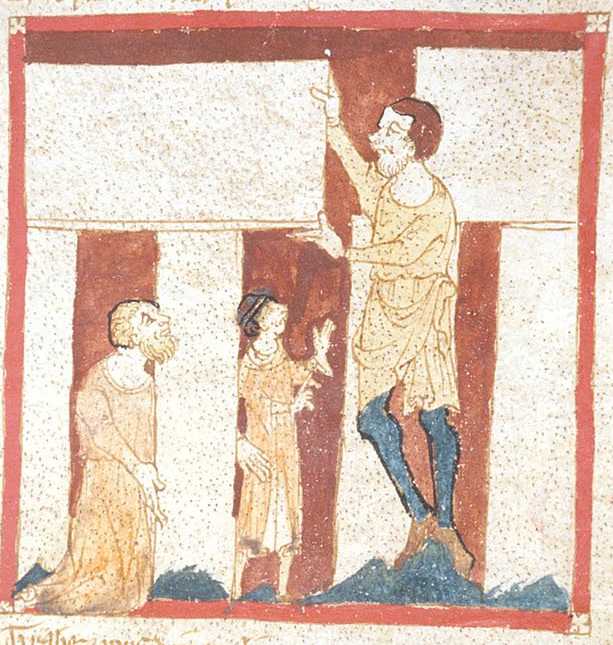
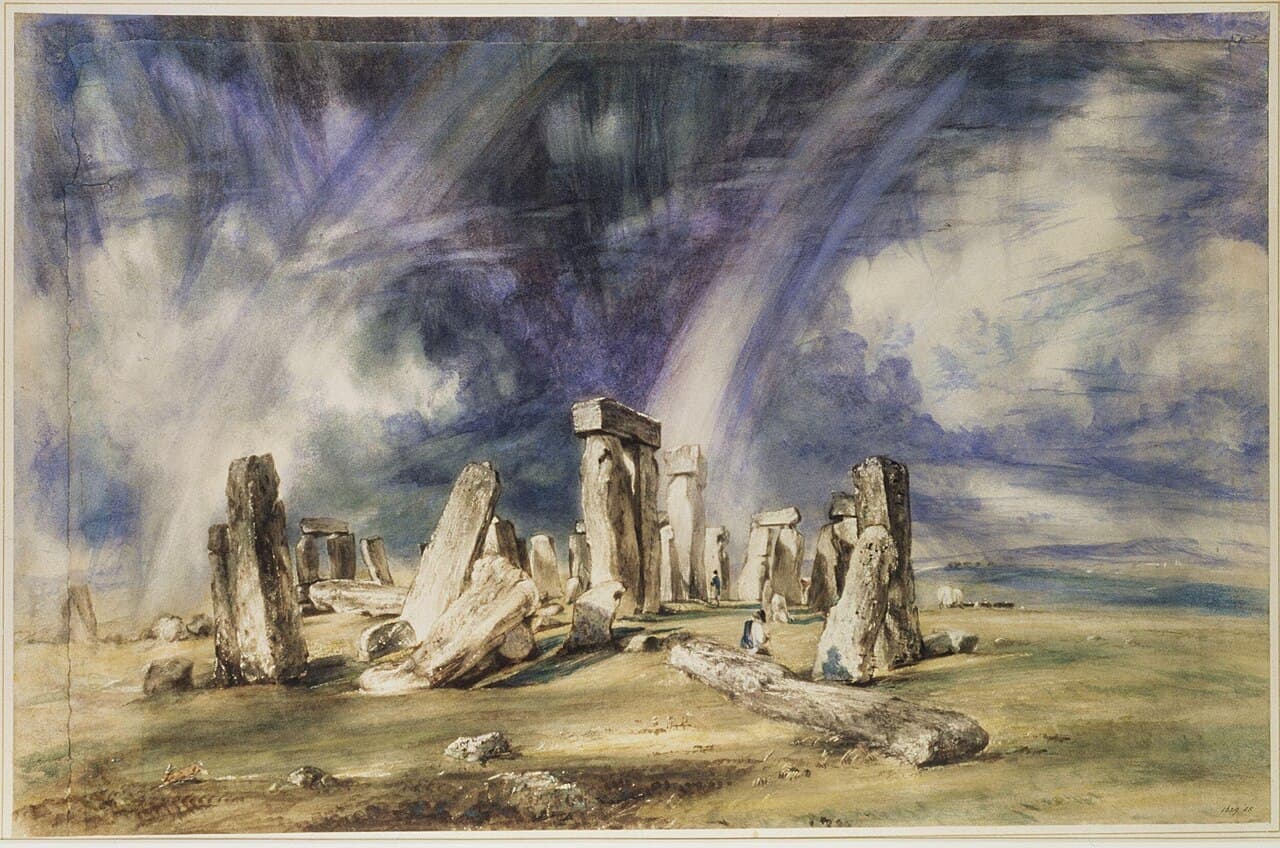
Stonehenge occupies a unique position in human history as both an archaeological site of global significance and a living cultural symbol. For prehistoric peoples, it represented the focal point of a sacred landscape encompassing hundreds of burial mounds, processional routes, and satellite monuments across a 20-square-kilometre area. In the medieval period, Geoffrey of Monmouth's 12th-century Historia Regum Britanniae attributed Stonehenge to the wizard Merlin, who supposedly transported the stones magically from Ireland — a myth that persisted for centuries. During the 17th and 18th centuries, antiquarians including John Aubrey and William Stukeley conducted early systematic surveys, with Stukeley controversially linking the monument to the Druids in his 1740 publication Stonehenge: A Temple Restored to the British Druids — an association that, though archaeologically wrong, has proven extraordinarily durable in popular culture. Today, Stonehenge attracts approximately 1.5 million visitors per year and remains a focal point for modern Druids, Pagans, and New Age practitioners, who gather at the monument for solstice celebrations — a tradition that has been permitted by English Heritage since 2000. The site is managed jointly by English Heritage (the inner stone circle) and the National Trust (the surrounding landscape). The monument's cultural footprint extends from Turner's 1827 watercolour painting to Stanley Kubrick-era science fiction, and it continues to generate several major peer-reviewed studies every year.
How Does Stonehenge Compare to Other Prehistoric Monuments?
While Stonehenge is the world's most famous prehistoric stone circle, it exists within a broader tradition of megalithic monument-building that stretched across Western Europe from roughly 4500 BC to 1500 BC. Avebury, just 17 miles north of Stonehenge, contains a stone circle so large (331 metres in diameter) that an entire village sits within it. Newgrange in County Meath, Ireland, predates Stonehenge by about 500 years (c. 3200 BC) and features a passage tomb illuminated by the winter solstice sunrise with extraordinary precision. The Carnac stones in Brittany, France, comprise thousands of standing stones arranged in parallel rows stretching for over 4 kilometres, dated to around 4500–2500 BC. What sets Stonehenge apart is the unique sophistication of its trilithon architecture — the only prehistoric stone circle in the world to feature horizontally lintelled uprights with precision-carved jointing — and the extraordinary distance over which its stones were transported. No other monument of comparable age demonstrates this combination of architectural ambition and logistical complexity.
Can You Visit Stonehenge Today? Essential Visitor Information
Stonehenge is open to visitors year-round and is managed by English Heritage, which operates a modern visitor centre approximately 1.5 miles from the stones, opened in December 2013 at a cost of £27 million. As of 2024, adult admission costs £26.50 for pre-booked tickets. Visitors walk around the outer perimeter of the stone circle on a pathway about 15 metres from the stones; direct access to the stones is restricted to protect them from wear, though 'inner circle' access can be booked for special early-morning and evening visits outside standard opening hours. The site is best reached by car (A360 road) or by shuttle from Salisbury train station. The surrounding World Heritage Site landscape, managed by the National Trust, is freely accessible on foot, allowing visitors to explore the nearby Avenue, the Cursus (a Neolithic enclosure), and dozens of Bronze Age burial mounds. For the solstice celebrations in June and December, English Heritage opens the monument free of charge through the night, drawing crowds of up to 10,000 people.