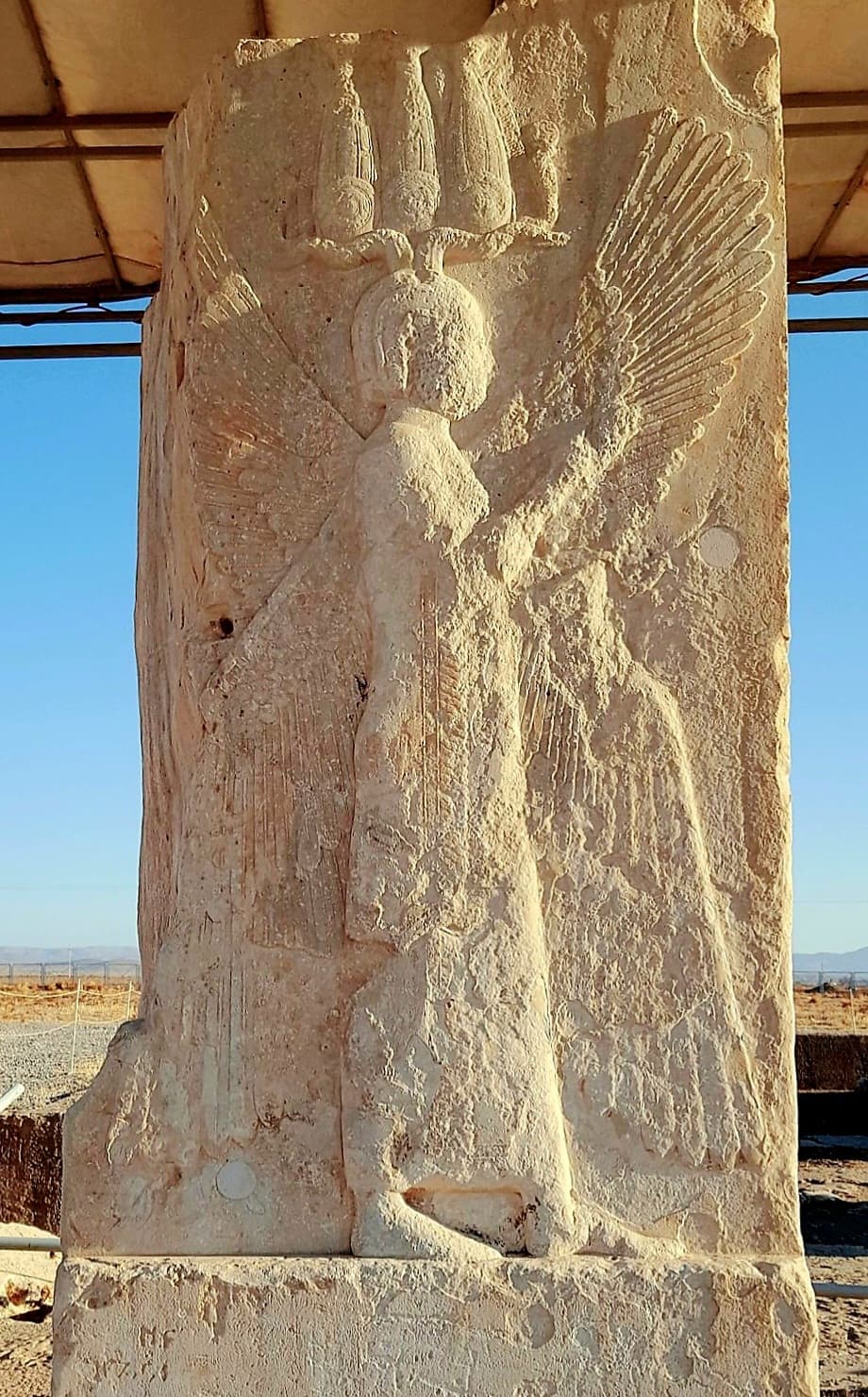
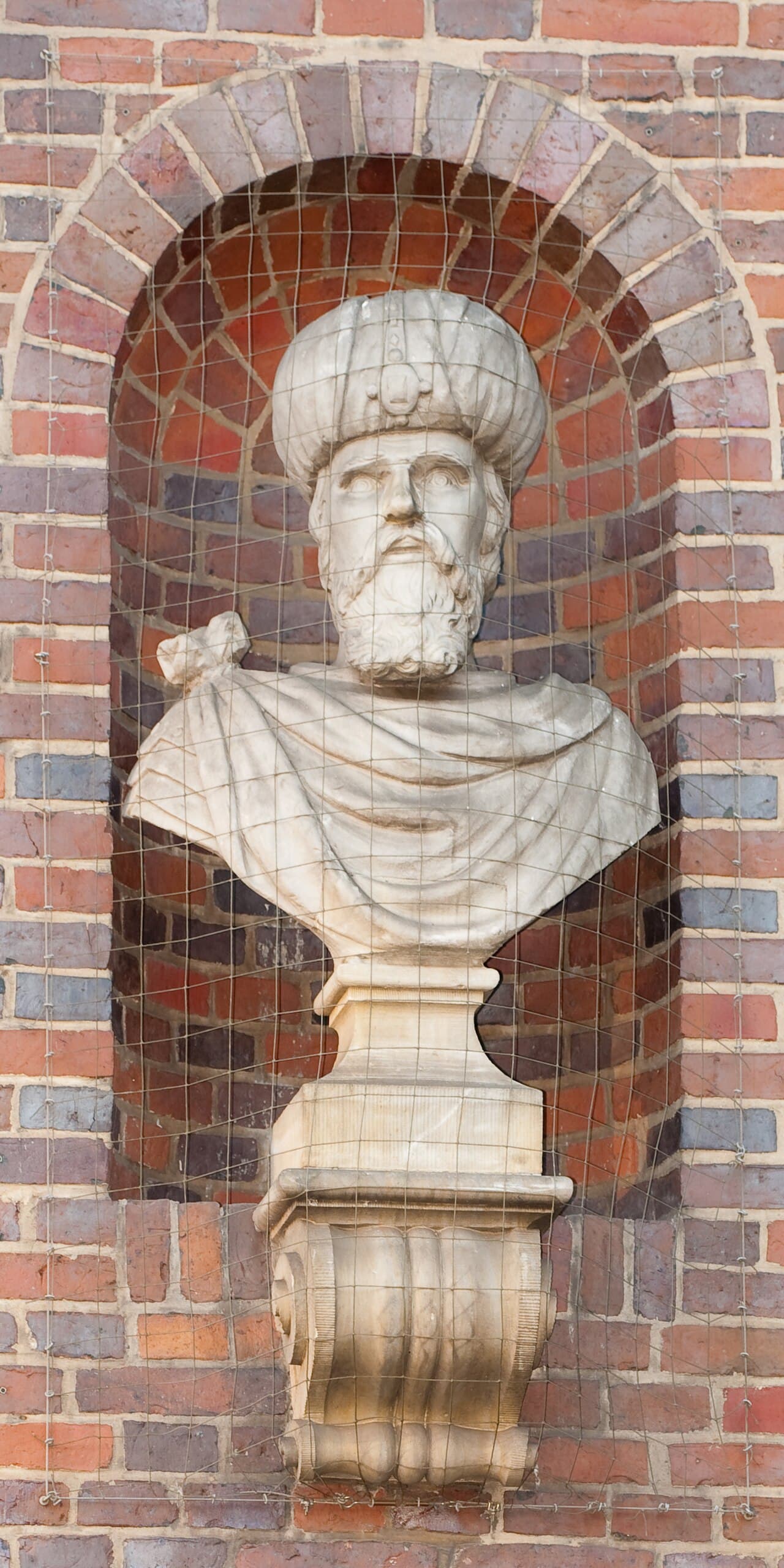
Cyrus the Great (c.600–530 BC) was the founder of the Achaemenid Empire, the first Persian Empire, and one of the most consequential rulers in world history. Rising from the small kingdom of Anshan in modern-day Iran, he unified the Iranian peoples, conquered Babylon without a battle in 539 BC, and ruled over a domain stretching from the Aegean Sea to the Indus River — the largest empire the ancient world had yet seen. Unlike most ancient conquerors, Cyrus governed through tolerance and respect for local customs, earning a reputation for mercy that made him celebrated not only by Persians but by Greeks, Jews, and Babylonians alike.
Who Was Cyrus the Great? Origins and Early Life
Cyrus II was born around 600 BC, though some scholars place his birth closer to 590 BC. He was a member of the Achaemenid dynasty, named after the legendary ancestor Achaemenes. His father, Cambyses I, was king of Anshan, a vassal state under the Median Empire in the Zagros Mountains of southwestern Iran. His mother, Mandane, was reportedly a daughter of Astyages, the Median king — making Cyrus both a subject and a grandson of the ruler he would eventually overthrow. Ancient sources, including the Greek historian Herodotus, record a dramatic legend in which Astyages ordered the infant Cyrus killed after dreaming that his grandson would one day supplant him. A courtier named Harpagus failed to carry out the order; the child survived, was raised by a herdsman, and eventually came to the Median court. While the story is likely mythologized, it underscores the political tension between Media and Anshan that would define Cyrus's rise. By around 559 BC, Cyrus had inherited the throne of Anshan and began building the coalitions that would transform a minor Persian chieftaincy into a world empire.
How Did Cyrus the Great Build the Persian Empire?
Cyrus's imperial career unfolded in three decisive campaigns over roughly two decades. The first and most personally charged was the conquest of Media. Around 553 BC, Cyrus launched a rebellion against his grandfather Astyages. The Median army mutinied and handed Astyages over to Cyrus in 550 BC, ending Media's dominance over the Iranian plateau without a prolonged war. Cyrus treated Astyages with remarkable leniency, sparing his life — a harbinger of the diplomatic approach he would use throughout his reign. With Media absorbed, Cyrus inherited its territories in Anatolia and Central Asia, instantly doubling his realm. His second great campaign targeted Lydia, the wealthy kingdom in western Anatolia ruled by Croesus, famous throughout the ancient world for his extraordinary gold reserves. After the oracle at Delphi famously told Croesus that if he attacked Persia 'a great empire would be destroyed' — a prophecy he misread — Croesus crossed the Halys River in 547 BC. Cyrus met him at the Battle of Pteria, a grueling engagement that ended inconclusively. When Croesus retreated to his capital Sardis for the winter, Cyrus pursued him with surprising speed, defeating the Lydian cavalry in the Battle of Thymbra by deploying camels whose smell panicked the Lydian horses. Sardis fell in 546 BC, and with it the entire Greek coastline of Ionia came under Persian control. The third and most celebrated campaign was the conquest of Babylon in 539 BC — arguably the single most important event of Cyrus's reign.
Why Did Babylon Fall to Cyrus the Great in 539 BC?
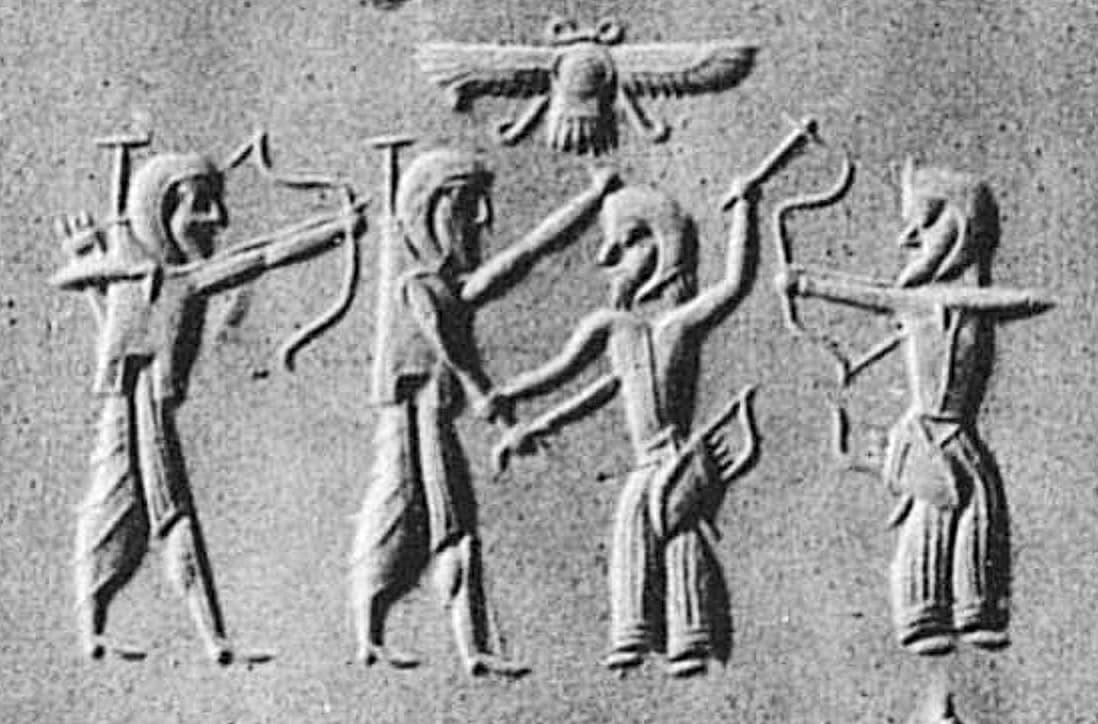
The fall of Babylon, the greatest city in the ancient world with a population estimated at 200,000, was as much a political collapse as a military one. Nabonidus, the last Neo-Babylonian king, had alienated his subjects by neglecting the cult of the supreme god Marduk and relocating to the oasis of Tayma in Arabia for roughly a decade, leaving his son Belshazzar in charge. Priestly elites, merchants, and the broader population were deeply disaffected. Cyrus masterfully exploited this discontent through propaganda, presenting himself as the chosen instrument of Marduk come to restore proper worship. On October 12, 539 BC, Persian forces under the general Ugbaru diverted the Euphrates River, lowered its level, and entered Babylon along the riverbed beneath the city's massive walls while the population reportedly slept or celebrated a festival. The city fell with almost no bloodshed. The Cyrus Cylinder, a clay barrel inscription discovered in Babylon in 1879 and now housed in the British Museum, records Cyrus's entry into the city as a liberator: he restored temples, returned cult statues stolen by Nabonidus, and permitted deported peoples to return to their homelands. Modern scholars debate the cylinder's propagandistic nature, but its account of a peaceful, religiously respectful conquest is broadly supported by other contemporary records.
What Is the Cyrus Cylinder and Why Does It Matter?
The Cyrus Cylinder, created around 539–538 BC, is a baked clay barrel approximately 23 centimetres long inscribed in Akkadian cuneiform. It was discovered by Hormuzd Rassam at the Esagila temple complex in Babylon in 1879. The text describes Cyrus's bloodless conquest, his respect for Marduk, his restoration of deported peoples and their sanctuaries, and his general policy of religious toleration. In 1971, the United Nations had the text translated into all official UN languages, and many scholars and political figures — including former UN Secretary-General U Thant — have called it the world's first charter of human rights. Academic historians are more cautious, noting it is standard Mesopotamian royal propaganda rather than a modern legal document, and that Cyrus's policies were pragmatic as much as principled. Nevertheless, it represents an extraordinary departure from the practices of Assyrian kings like Ashurbanipal, who recorded their conquests in terms of mass deportation and mutilation. The cylinder's legacy endures: a replica has stood in UN headquarters in New York since 1971, and it remains a foundational symbol of Iranian national identity.
How Did Cyrus the Great Treat Conquered Peoples?
Cyrus's administrative philosophy was revolutionary by ancient standards. Where Assyrian rulers had routinely deported entire populations to prevent rebellion, Cyrus pursued a policy of repatriation and cultural autonomy. His most famous act of tolerance was the Edict of Cyrus issued around 538 BC, recorded in the Hebrew Bible in the books of Ezra and Isaiah, which permitted the Jews who had been exiled to Babylon by Nebuchadnezzar II since 597 BC to return to Judah and rebuild the Temple in Jerusalem. He reportedly returned the 5,400 gold and silver vessels Nebuchadnezzar had taken from Solomon's Temple. This act earned him an extraordinary honour in the Hebrew scriptures: Cyrus is the only non-Jewish figure in the entire Bible referred to as 'mashiach' — messiah, or anointed one — in Isaiah 45:1. Beyond Judah, Cyrus allowed Babylonian priests to resume their rites, permitted Lydian aristocrats to retain their social standing, and governed newly acquired Greek cities in Ionia through local tyrants rather than Persian governors where feasible. He maintained existing administrative structures, adopting the bureaucratic machinery of Media and Babylon rather than dismantling it. This pragmatic tolerance was not merely idealism; it made his vast empire governable and reduced the cost of occupation by keeping local populations cooperative. His satrap system — dividing the empire into provinces each governed by a regional administrator — became the template for Persian rule for the next two centuries.
| Campaign | Date | Opponent | Outcome | Significance |
|---|---|---|---|---|
| Conquest of Media | 553–550 BC | Astyages of Media | Median army mutinies; Astyages captured | Unified Iranian peoples; inherited vast Median territories |
| Conquest of Lydia | 547–546 BC | Croesus of Lydia | Battle of Thymbra; Sardis captured | Gained western Anatolia and Ionian Greek cities |
| Conquest of Babylon | 539 BC | Nabonidus of Babylon | Babylon taken without major battle | Absorbed richest city in the ancient world; freed Jewish exiles |
| Central Asian Campaigns | c.545–530 BC | Various eastern tribes | Extended empire to Oxus and Jaxartes rivers | Secured eastern frontier; reached borders of India |
| Campaign against the Massagetae | 530 BC | Queen Tomyris | Persian army defeated; Cyrus killed | Death of Cyrus; eastern frontier remained contested |
How Large Was the Achaemenid Empire Under Cyrus?
At its greatest extent under Cyrus, the Achaemenid Empire encompassed approximately 2.9 million square kilometres, making it the largest political entity in human history up to that point. It stretched from the Aegean coast of Anatolia and parts of Thrace in the west to Bactria (modern Afghanistan) and Sogdia (modern Uzbekistan) in the east, and from the Caucasus Mountains in the north to the borders of Egypt in the south. The empire contained an estimated 35–50 million people, representing roughly 44% of the world's total population at the time — a proportion no empire before or since has matched, according to some demographic historians. The Persian Royal Road, stretching 2,699 kilometres from Sardis to Susa, served as the empire's administrative spine, enabling royal couriers to travel the entire route in roughly seven days using relay stations. Cyrus established Pasargadae in modern Fars Province, Iran, as his capital. Construction began around 546 BC and included his famous audience hall, residential palaces, and what would become his tomb — a simple gabled stone structure that still stands today and was designated a UNESCO World Heritage Site in 2004.
How Did Cyrus the Great Die?
Cyrus died in 530 BC, but the exact circumstances remain disputed across ancient sources. The most dramatic and widely repeated account comes from Herodotus, who describes a campaign against the Massagetae, a nomadic Scythian people living east of the Caspian Sea, led by their warrior-queen Tomyris. According to Herodotus, Cyrus initially defeated a Massagetae force led by Tomyris's son Spargapises, who then took his own life in captivity. Enraged, Tomyris amassed her full army and annihilated the Persian force in a ferocious battle; Cyrus was killed and Tomyris allegedly plunged his severed head into a skin filled with blood, declaring: 'I warned you I would quench your thirst for blood, and so I shall.' Other sources, including Ctesias and Xenophon, offer different accounts — Xenophon's Cyropaedia describes a peaceful deathbed scene. Modern historians generally accept that Cyrus died on an eastern campaign around 530 BC, most likely fighting nomadic peoples near the Syr Darya (Jaxartes) River. His body was reportedly returned to Pasargadae, where he was interred in the tomb that Alexander the Great visited nearly two centuries later and reportedly found to contain only a golden couch, a table of drinking vessels, and inscriptions. Alexander reportedly ordered repairs to the tomb out of respect.
What Was Cyrus the Great's Legacy and Historical Impact?
Cyrus the Great's legacy reverberates across politics, religion, and governance to this day. He was succeeded by his son Cambyses II, who conquered Egypt in 525 BC, and then by Darius I, who expanded and codified the Achaemenid Empire into the most sophisticated administrative state the ancient world had produced. But it was Cyrus who laid every foundation. His model of multi-ethnic, multi-religious imperial governance influenced Alexander the Great, who admired him deeply and carried a copy of Xenophon's Cyropaedia — a fictionalized biography of Cyrus — throughout his own campaigns. The Roman republic's founders also cited Cyrus as an ideal ruler. In Jewish tradition, the reverence for Cyrus encoded in the Hebrew Bible shaped centuries of theological thought about the relationship between divine providence and secular power. The Edict of Cyrus is considered among the earliest examples of state-sponsored religious tolerance and has been cited in modern discussions of refugee rights and cultural repatriation. In modern Iran, Cyrus remains a towering symbol of national pride and pre-Islamic Persian identity; Pasargadae attracts thousands of Iranian visitors on October 29, 'Cyrus Day,' each year. His full name — Cyrus II of Persia, Kurosh-e Bozorg in Persian — means 'sun' or possibly 'like the sun,' an etymology debated but fitting for a ruler whose influence proved so enduring.

Why Is Cyrus the Great Called the 'Father of Human Rights'?
The designation stems primarily from the Cyrus Cylinder and the documented policy of repatriating exiled peoples, including the Jews, and restoring their religious institutions. Proponents argue that codifying religious freedom and freedom from forced displacement in royal decree — however propagandistic its framing — represents a conceptual leap beyond any earlier recorded state policy. Critics, including many classical historians, caution that Cyrus practiced slavery, conducted military campaigns that caused significant death and destruction, and that the cylinder reflects standard Mesopotamian legitimation rhetoric rather than universal principles. The truth lies between these positions: Cyrus did not articulate anything resembling modern human rights law, but his consistent practice of cultural tolerance and repatriation, repeated across multiple conquered peoples over 29 years of rule, represented a governing philosophy meaningfully distinct from his contemporaries. Whether one accepts the 'father of human rights' title or not, Cyrus's approach to empire — ruling through consent and integration as much as force — made him one of antiquity's most influential political innovators.