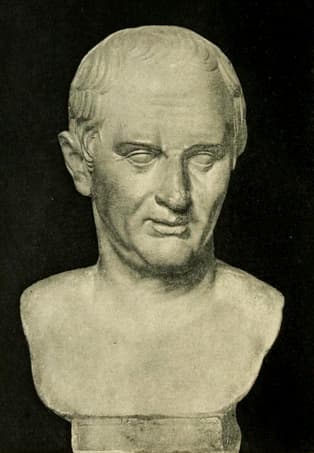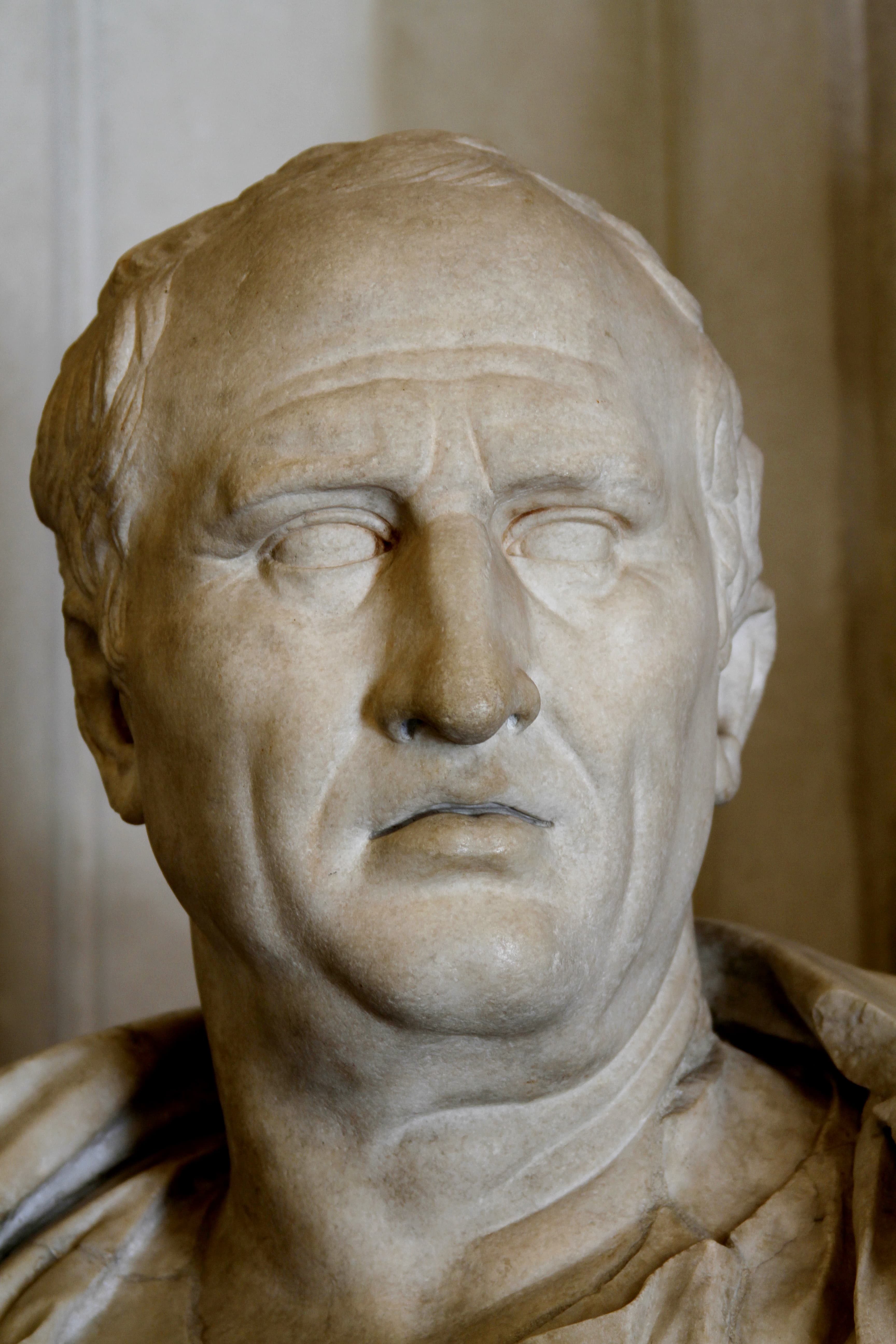
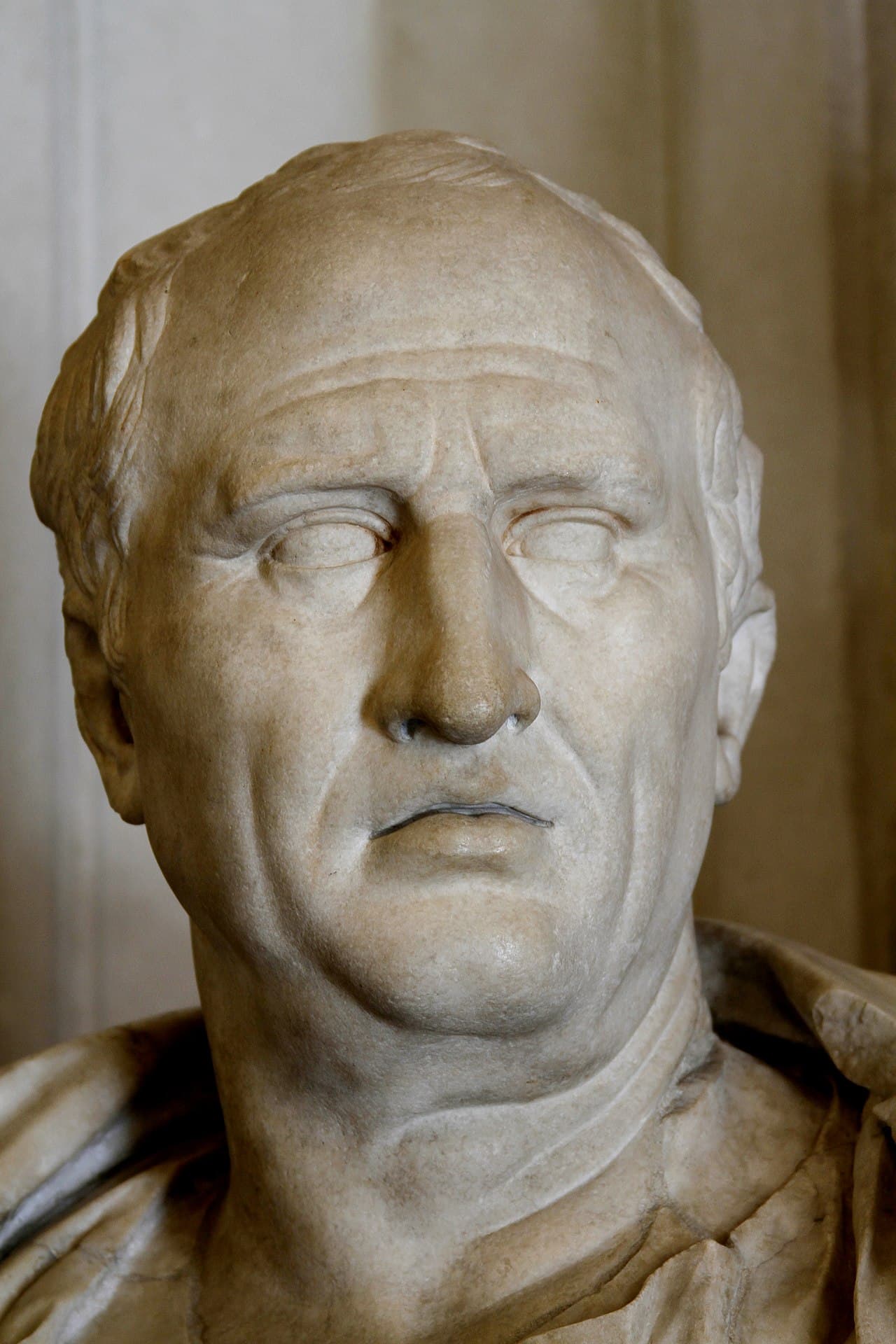
Marcus Tullius Cicero (106–43 BC) was a Roman statesman, lawyer, philosopher, and orator widely regarded as the greatest prose stylist in Latin history. Born outside the Roman aristocracy, he rose through sheer intellectual brilliance to become consul of Rome in 63 BC, saved the Republic from an armed coup, and left behind a body of writing so influential that the Renaissance humanists credited him with single-handedly reviving classical learning. His execution on 7 December 43 BC, ordered by Mark Antony, marked both a personal tragedy and a symbolic death knell for the Roman Republic itself.
Who Was Cicero? Origins and Early Life
Cicero was born on 3 January 106 BC in Arpinum, a hill town roughly 100 kilometres southeast of Rome, into a wealthy equestrian family. The name 'Cicero' derives from the Latin word for chickpea (cicer), reportedly a reference to a wart on an ancestor's nose — a detail Cicero himself refused to abandon, claiming he would make the name glorious. His father, also Marcus Tullius Cicero, was a prosperous landowner with literary interests, and he ensured his two sons received the finest education Rome could offer. Moving to Rome as a teenager, Cicero studied under the great jurist Quintus Mucius Scaevola, absorbed Greek philosophy from the Epicurean Phaedrus and the Stoic Diodotus, and trained in rhetoric under Lucius Licinius Crassus, then considered Rome's best speaker. He also spent time in Athens in 79 BC studying under the philosopher Antiochus of Ascalon, and in Rhodes under the rhetorician Apollonius Molon, who reportedly wept after hearing him speak, lamenting that Greece's greatest glory — oratory — was passing to Rome. This cosmopolitan education fused Roman law, Greek philosophy, and practical rhetoric into the unique intellectual package that defined Cicero's career.
How Did Cicero Rise to Political Power as a 'New Man'?
Cicero faced a fundamental obstacle: he was a novus homo, a 'new man' with no senatorial ancestors in an aristocratic system that prized lineage above almost everything. His weapons were his voice and his legal acumen. His first notable case came in 80 BC, defending Sextus Roscius of Ameria against a trumped-up charge of parricide backed by allies of the dictator Sulla — a politically dangerous move that demonstrated his courage as much as his skill. He won. In 75 BC he served as quaestor in Sicily, earning a reputation for scrupulous honesty rare among Roman administrators. This Sicilian connection proved decisive in 70 BC when he agreed to prosecute Gaius Verres, the corrupt former governor who had systematically looted the island's art, temples, and citizens over three years. Against the renowned advocate Hortensius Hortalus, Cicero gathered so much evidence and presented it so devastatingly in his Actio Prima that Verres fled into exile before the defence could even respond. The published Verrine Orations — seven speeches totalling over 200,000 words — established Cicero as Rome's pre-eminent orator overnight. He ascended the cursus honorum, Rome's ladder of offices, at the minimum legal age for each position: praetor in 66 BC and consul in 63 BC, an extraordinary achievement for a man without noble blood.
What Was the Catilinarian Conspiracy and How Did Cicero Defeat It?
Cicero's consulship in 63 BC produced the defining crisis of his political life. Lucius Sergius Catilina (Catiline), a dissolute patrician twice denied the consulship, secretly organized an armed insurrection: he planned to massacre leading senators, burn Rome, and seize power with an army assembled in Etruria. Cicero, tipped off by informants and through surveillance of Catiline's associates, confronted him directly in the Senate on 8 November 63 BC. The resulting speech — 'Quo usque tandem abutere, Catilina, patientia nostra?' ('How long, O Catiline, will you abuse our patience?') — is arguably the most famous opening line in Latin literature. Catiline fled to join his army. Cicero arrested five of the chief conspirators remaining in Rome, and after a heated Senate debate in which Julius Caesar argued for imprisonment while Cato the Younger demanded death, Cicero ordered their execution without trial on 5 December 63 BC. The crisis was over; Catiline died in battle in January 62 BC. The Senate hailed Cicero as 'pater patriae' — Father of the Fatherland — the highest honour ever bestowed on a Roman civilian. But the extrajudicial execution would haunt him for the rest of his life, giving his enemies a permanent legal weapon.
Why Was Cicero Exiled and How Did He Return?
The political tide turned swiftly. In 60 BC, Julius Caesar, Pompey, and Crassus formed the First Triumvirate, a private alliance that effectively bypassed the Senate. Caesar tried to recruit Cicero but was refused. In 58 BC, Cicero's enemy Publius Clodius Pulcher — a tribune he had testified against years earlier — pushed through a law retroactively condemning anyone who had executed Roman citizens without trial, targeting Cicero directly. Facing prosecution, Cicero went into voluntary exile rather than fight the charge, an emotional collapse that surprised many who admired his courage. He spent fifteen miserable months in Thessalonica and Dyrrachium, writing anguished letters to his friend Atticus. His house on the Palatine Hill was demolished and the land consecrated to the goddess Libertas as a final humiliation. The political pendulum swung back in 57 BC: the Senate voted 416 to 1 for his recall, and his return journey through Italy became a triumphal procession, with crowds lining the roads to cheer him. Though he never regained the political dominance of his consulship, the exile deepened his philosophical perspective and accelerated his shift toward writing as his primary legacy.
What Were Cicero's Greatest Philosophical and Rhetorical Works?
Between the chaos of the late Republic's final decades, Cicero produced an astonishing volume of work. His rhetorical treatises — De Oratore (55 BC), Brutus (46 BC), and Orator (46 BC) — systematized Greek rhetorical theory for Roman audiences and remained the definitive texts on public speaking for 1,500 years. His philosophical works, written in a burst of activity after the death of his beloved daughter Tullia in 45 BC, introduced Greek philosophy to the Latin-speaking world: De Republica and De Legibus adapted Platonic political theory; the Tusculan Disputations explored how to achieve happiness despite misfortune; De Natura Deorum examined the existence and nature of the gods; De Officiis (On Duties), written in just a few weeks in 44 BC, became one of the most widely read ethical texts of antiquity and the Middle Ages, second only to the Bible in some medieval curricula. His surviving correspondence — over 900 letters to Atticus alone — constitutes the most intimate and historically valuable private archive from the ancient world, revealing the backroom machinations of Rome's political class in unguarded detail. Scholars estimate that roughly one-third of everything Cicero wrote survives, an extraordinary preservation rate for a classical author.
| Work | Date | Category | Significance |
|---|---|---|---|
| Verrine Orations | 70 BC | Legal speeches | Established Cicero as Rome's leading advocate; cornerstone of Latin prose style |
| Catilinarian Orations | 63 BC | Political speeches | Four speeches exposing Catiline's coup; among the most studied Latin texts ever written |
| De Oratore | 55 BC | Rhetoric | Definitive ancient treatise on the ideal orator; influenced Renaissance humanism |
| De Republica | 54–51 BC | Political philosophy | Adapts Plato's Republic to Roman experience; source of 'Scipio's Dream' |
| De Officiis | 44 BC | Ethics | Moral philosophy guide read continuously from antiquity to the present day |
| Tusculan Disputations | 45 BC | Philosophy | Five books on overcoming fear of death and finding happiness; Stoic-inflected |
| Letters to Atticus | 68–44 BC | Correspondence | Over 400 surviving letters; the most detailed personal archive from ancient Rome |
How Did Cicero React to Julius Caesar's Dictatorship?
When civil war broke out between Caesar and Pompey in 49 BC, Cicero agonised for months before joining Pompey's Senatorial cause in Greece — a decision driven by republican principle rather than personal loyalty. After Pompey's defeat at Pharsalus in 48 BC, Cicero accepted Caesar's pardon and returned to Italy, withdrawing largely from public life into philosophical writing. He deeply resented Caesar's one-man rule but chose pen over sword. When Caesar was assassinated on the Ides of March, 15 March 44 BC, Cicero was not among the conspirators — he had not been trusted with the secret, a slight he felt keenly — but he rejoiced openly, calling the deed the most glorious act in history. He quickly became the de facto leader of the Senatorial resistance to Mark Antony, Caesar's lieutenant who was attempting to seize power. Between September 44 BC and April 43 BC, Cicero delivered fourteen ferocious speeches attacking Antony — the Philippics, named after Demosthenes' speeches against Philip of Macedon. They are masterpieces of political invective. In the Second Philippic, Cicero eviscerated Antony's entire life with surgical contempt. But Cicero fatally miscalculated: he backed the young Octavian (the future Emperor Augustus) as a counterweight to Antony, writing that Octavian should be 'praised, honoured, and then discarded.' Octavian never forgot the insult.
How and Why Was Cicero Killed?
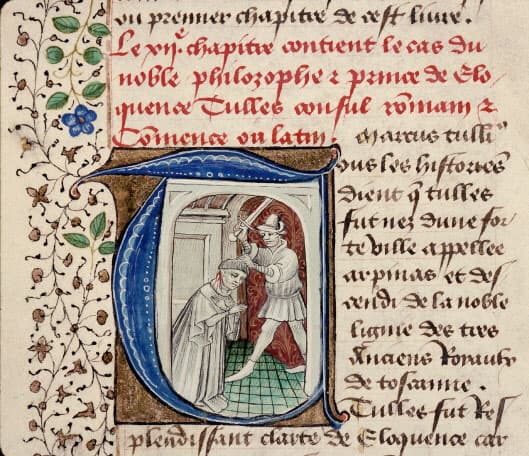
In October 43 BC, Octavian, Mark Antony, and Lepidus formed the Second Triumvirate and immediately drew up proscription lists — rosters of political enemies to be hunted down and killed, their property confiscated. Antony insisted Cicero be included. Octavian, reportedly, resisted for two days before agreeing. Cicero, at his Tusculan villa, learned of his fate and attempted to flee to Macedonia by sea. His slaves loyally carried his litter toward the coast, but on 7 December 43 BC, near Formiae, soldiers commanded by a centurion named Herennius caught up with him. According to Plutarch and other ancient sources, Cicero looked at his killers calmly, pushed aside a slave who tried to defend him, and stretched his neck from the litter to make the blow easier. He was 63 years old. Herennius severed his head and hands — the hands that had written the Philippics. Antony had the head and right hand nailed to the Rostra, the speaker's platform in the Roman Forum, where Cicero had delivered so many famous speeches. Antony's wife Fulvia allegedly drove hairpins through Cicero's tongue in revenge for his oratory. Rome's greatest voice had been silenced, and with it, effectively, the Roman Republic.
What Is Cicero's Legacy and Why Does He Still Matter Today?
Cicero's influence on Western civilisation is almost impossible to overstate. In the centuries immediately after his death, his Latin prose became the gold standard: Quintilian declared him not merely a man but the very embodiment of eloquence. Saint Augustine, writing in the late 4th century AD, credited Cicero's Hortensius (now lost) with inspiring his conversion to philosophy — and later to Christianity. Petrarch rediscovered Cicero's letters to Atticus in Verona in 1345, sparking the Renaissance's engagement with classical antiquity. Erasmus, Montaigne, and countless humanist scholars modelled their prose on his. The American Founding Fathers — Jefferson, Adams, Madison — read Cicero extensively; the concepts of natural law, the social contract, and civic virtue in the Declaration of Independence and Constitution owe a measurable debt to De Republica, De Legibus, and De Officiis. John Adams declared: 'All the ages of the world have not produced a greater statesman and philosopher combined.' In modern times, Cicero's letters remain invaluable primary sources for historians of the late Republic. His oratorical techniques — arrangement, rhythm, emotional appeal, the periodic sentence — are still taught in law schools and rhetoric courses worldwide. He also holds the distinction of being the only Roman author whose complete surviving works have been continuously in print since the invention of the printing press: De Officiis was among the first books printed by Gutenberg's press in Mainz in 1465.