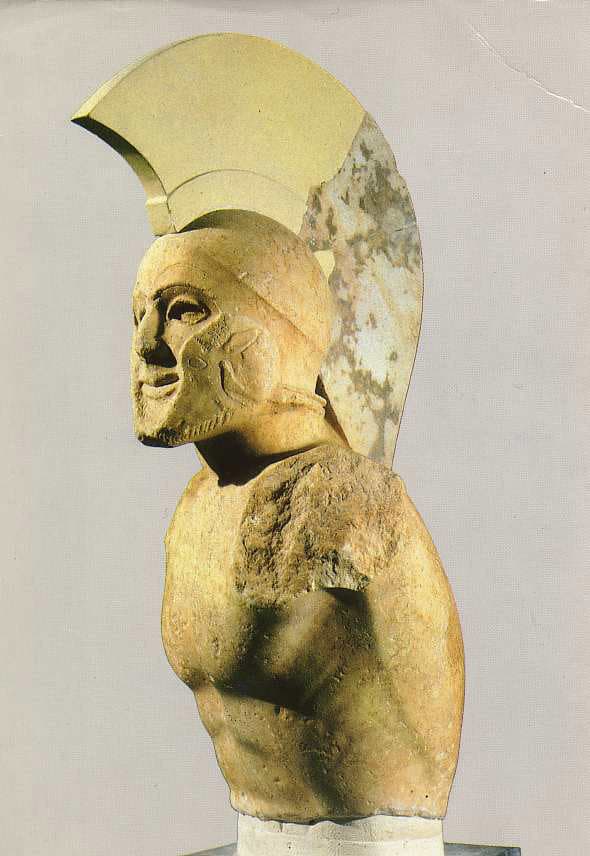
Leonidas I was the king of Sparta who led a legendary last stand against the Persian army of Xerxes I at the Battle of Thermopylae in 480 BC, dying in combat alongside his 300 royal guardsmen. His sacrifice — holding the narrow coastal pass for three days against an invading force historians estimate at between 100,000 and 300,000 soldiers — bought the Greek city-states crucial time to mount a successful defence that ultimately repelled the Persian invasion. Today, Leonidas I remains one of antiquity's most celebrated military figures, a symbol of courage, duty, and self-sacrifice against overwhelming odds.
Who Was Leonidas I? Origins and Early Life
Leonidas I was born around 540 BC in Sparta, the dominant military polis of ancient Greece, into the Agiad dynasty — one of Sparta's two royal houses, which claimed descent from the demigod Heracles (Hercules). His father was King Anaxandridas II, and Leonidas was the third of four sons. Because he was not the eldest son, Leonidas was not initially groomed for kingship, which meant he underwent the full agoge — Sparta's brutal state-run education and military training program that began at age seven and lasted until a young man was 30. The agoge subjected boys to extreme physical hardship, hunger, combat training, and harsh discipline designed to forge soldiers of unparalleled toughness. Unlike heirs apparent, who were sometimes exempted, Leonidas endured every stage of this process, making him arguably the most battle-hardened Spartan king in the city-state's history. He married Gorgo, daughter of the previous king Cleomenes I, cementing his royal credentials and producing at least one son, Pleistarchus, who would succeed him. Ancient sources, including Herodotus, describe Gorgo as exceptionally intelligent — she is credited with advising Spartan leaders and reportedly deciphering a secret message about Xerxes' invasion plans scratched beneath wax on a wooden tablet.
How Did Leonidas Become King of Sparta?
Leonidas ascended to the Spartan throne around 490 BC under dramatic circumstances. His oldest brother Dorieus had died attempting to found colonies in Sicily and North Africa, and his immediate predecessor Cleomenes I — the dominant Spartan king of the late 6th century BC — died in 490 BC under mysterious circumstances, possibly by suicide while imprisoned, though foul play was suspected. Because Cleomenes left no male heir, the throne passed to Leonidas as the next eligible Agiad male. He was approximately 50 years old when he became king. As one of two Spartan kings (the other being Leotychidas II of the Eurypontid line), Leonidas shared executive power and commanded one of Sparta's two royal armies. He ruled for roughly ten years before the Persian Wars brought him his place in history.
What Was the Political Context Before Thermopylae?
The Persian Wars grew from the conflict between the expanding Achaemenid Persian Empire and the fiercely independent Greek city-states. In 490 BC, Darius I launched the first major Persian invasion of Greece, which ended in Persian defeat at the Battle of Marathon. His son Xerxes I spent nearly a decade planning a second, vastly larger invasion. By 481 BC, Xerxes had assembled an extraordinary multinational army and a fleet of around 1,207 triremes — figures recorded by Herodotus, though modern estimates place the actual numbers somewhat lower. Facing this existential threat, Athens and Sparta set aside their long rivalry to lead the Hellenic League, a coalition of approximately 31 Greek city-states. The Greeks needed to choose a defensive strategy: the mountainous terrain of northern Greece offered natural choke points that could neutralize Persia's numerical advantage. The Isthmus of Corinth and, crucially, the narrow pass of Thermopylae — 'the Hot Gates,' named for nearby sulphur springs — became central to Greek planning.
Why Did Leonidas Choose to Fight at Thermopylae?
The Pass of Thermopylae, located on the eastern coast of central Greece in what is now Phthiotis, measured at its narrowest point only about 15 metres wide between steep cliffs and the sea. This geography was decisive: in such confined terrain, a small, disciplined force could hold indefinitely against an army of any size that could not flank it. In August 480 BC, the Hellenic League dispatched an advance force to hold the pass while the main Greek fleet engaged the Persian navy at the nearby Battle of Artemisium. Leonidas commanded an allied Greek force of approximately 7,000 men drawn from various city-states, including Thespians, Thebans, Phocians, and others, alongside his 300 Spartan royal guardsmen — the Hippeis. Sparta's religious calendar complicated matters: the sacred festival of Carneia prohibited full military mobilisation, meaning the 300 represented a vanguard, not Sparta's full fighting strength. Leonidas reportedly selected warriors who had already fathered sons, suggesting he understood the mission might be fatal. The Greek strategy hinged on simultaneous land and naval resistance, and Thermopylae was the essential linchpin.
How Did the Battle of Thermopylae Unfold? Day-by-Day Account
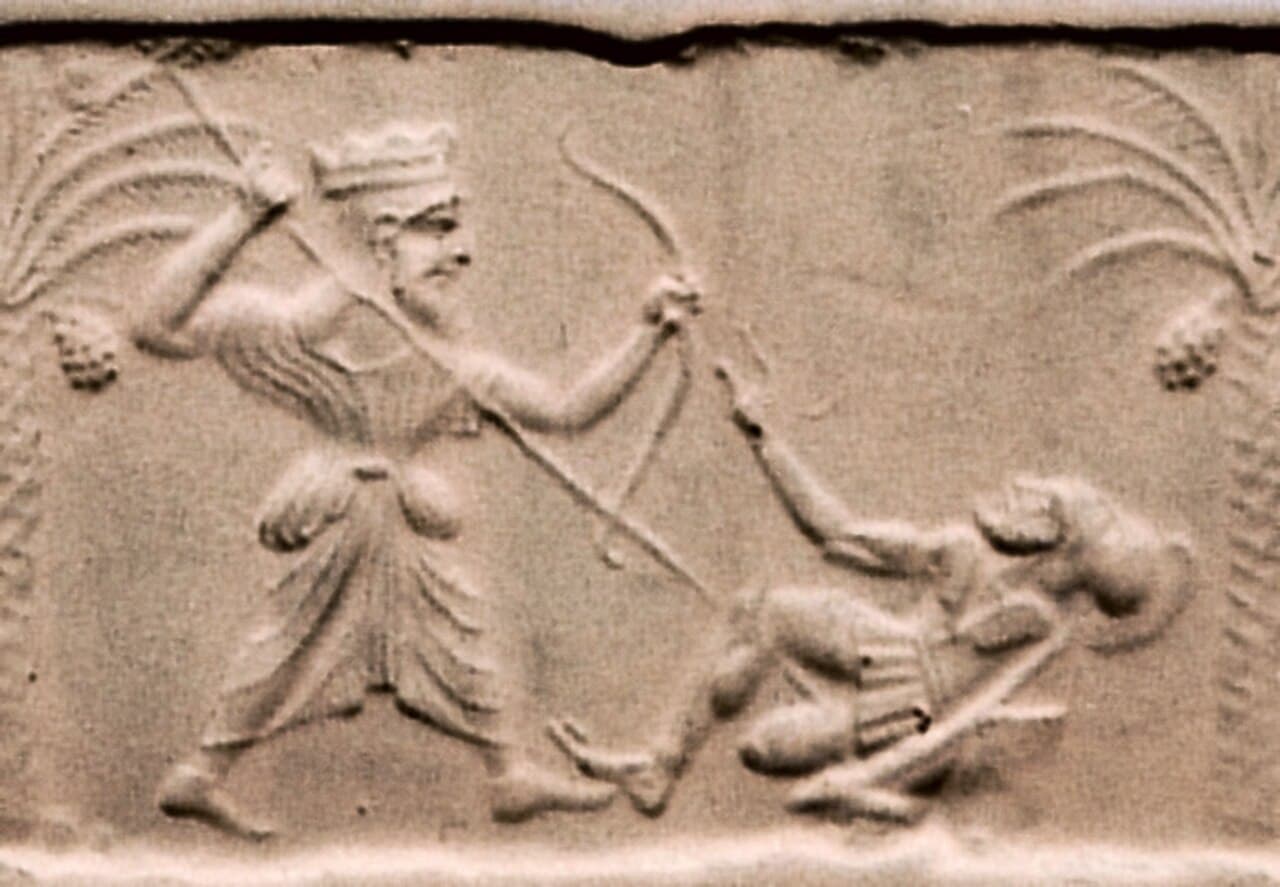
The Battle of Thermopylae was fought over three days in late August or early September 480 BC. On Day 1, Xerxes sent waves of infantry — including the elite Medes and Kissians — against the Greek phalanx. The Greeks, fighting in tightly interlocked formation with their longer spears and heavier armour, devastated each Persian assault. The pass's narrowness prevented the Persians from using their numbers, and casualties were catastrophic on the Persian side. Xerxes then unleashed his celebrated Immortals — his 10,000-strong elite guard — but they too were repulsed. On Day 2, the pattern repeated: Persian attacks were broken on the Greek shield wall, while Greek casualties remained minimal. The situation changed catastrophically on the night between Day 2 and Day 3. A local Greek resident named Ephialtes of Trachis approached Xerxes and revealed the existence of the Anopaea mountain path — a goat track that circled behind the Greek position. Xerxes immediately dispatched the Immortals along this route. A detachment of 1,000 Phocian troops guarding the path was surprised and retreated uphill rather than holding it. Greek scouts brought Leonidas the news in the early hours of Day 3. Facing encirclement, Leonidas dismissed the bulk of the allied Greek contingents. Whether this was a rational military decision — preserving Greek fighting strength for future battles — or a sacrifice knowingly embraced, the result was that Leonidas remained with his 300 Spartans, around 700 Thespians (who refused to leave under their leader Demophilus), and 400 Thebans who may have been held as hostages. On Day 3, the Greek remnant advanced beyond the wall and fought in the open, reportedly trying to kill Xerxes himself. Ancient sources record that two of Xerxes' brothers — Abrocomes and Hyperanthes — died in the fighting. Leonidas fell in the mêlée. A fierce struggle reportedly erupted over his body. The surviving Greeks retreated to a low hill and were killed by Persian arrows when their spears and swords broke. The battle was over.
| Force | Commander | Estimated Strength | Outcome |
|---|---|---|---|
| Spartan royal guard (Hippeis) | Leonidas I | 300 men | All killed at Thermopylae |
| Thespian volunteers | Demophilus | ~700 men | All killed at Thermopylae |
| Theban contingent | Unknown | ~400 men | Surrendered to Persians |
| Other allied Greeks | Various | ~6,000 men | Dismissed before Day 3 |
| Persian Imperial Army | Xerxes I / Hydarnes | 100,000–300,000 (ancient); est. 100,000–200,000 (modern) | Victory; suffered heavy losses |
| Persian Immortals | Hydarnes | 10,000 men | Flanked the pass via Anopaea path |
What Happened to Leonidas's Body After the Battle?
Herodotus records that after the Greek defeat, Xerxes, enraged by the losses his army had suffered, ordered the body of Leonidas decapitated and crucified — an act considered a grave dishonour in both Persian and Greek culture, suggesting deep personal fury rather than calculated policy. The head of Leonidas was placed on a stake. Decades later, around 440 BC, the Spartans retrieved what were believed to be his bones and repatriated them to Sparta, where he was reburied with full honours and hero cult worship was established in his name. Pausanias, writing in the 2nd century AD, records that annual speeches were held at the tomb of Leonidas in Sparta, and athletic competitions were held in his honour. A grand monument was eventually erected at Thermopylae itself, bearing the epitaph composed by the lyric poet Simonides of Ceos: 'Go, tell the Spartans, stranger passing by, that here, obedient to their laws, we lie.' This inscription, recorded by Herodotus, became one of antiquity's most celebrated epigrams.
Why Was the Battle of Thermopylae Strategically Important?
Although Thermopylae was a military defeat, it proved strategically invaluable. The three-day delay allowed the Athenian fleet under Themistocles to complete preparations and ultimately destroy the Persian fleet at the Battle of Salamis in September 480 BC — arguably the most consequential naval engagement in ancient history. Without a secure supply line across the Aegean, Xerxes withdrew the bulk of his army, leaving a reduced force under general Mardonius that was annihilated at the Battle of Plataea in 479 BC. The Persian invasion collapsed. Had Thermopylae fallen on the first day without resistance, the trajectory of Western civilisation — its philosophy, democracy, science, and art — might have been irrevocably altered. Historian Victor Davis Hanson and others have argued that Greek victory in the Persian Wars created the conditions for the Athenian Golden Age of Pericles, the works of Plato and Aristotle, and the eventual spread of Hellenic culture. Thermopylae also demonstrated the effectiveness of terrain-based defensive tactics, a lesson studied by military commanders from the Roman legions to modern special operations doctrine.
How Is Leonidas I Remembered? Legacy and Cultural Impact
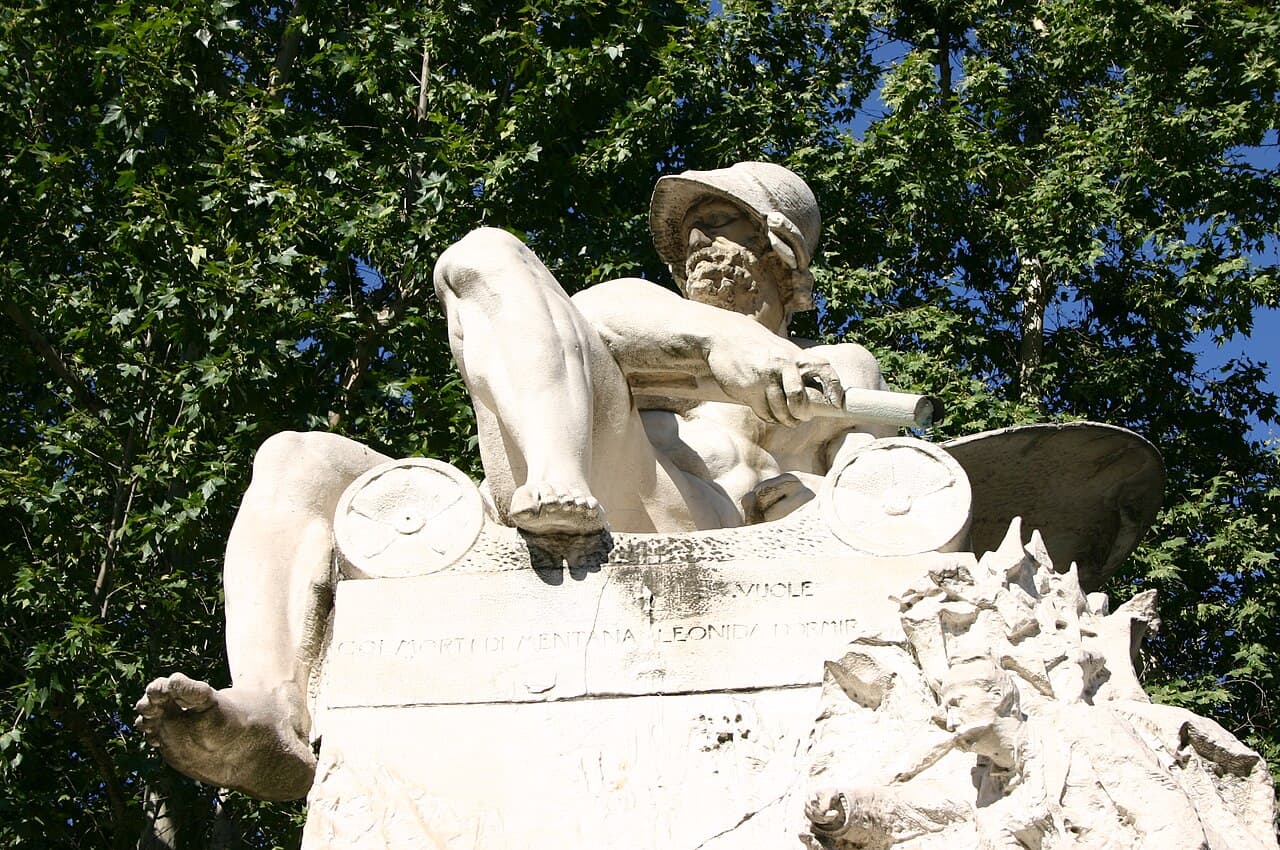
Leonidas I has been commemorated continuously from antiquity to the present day. In ancient Sparta, he was venerated as a hero-god. Later Hellenistic and Roman writers, including Diodorus Siculus, Plutarch, and Cicero, celebrated Thermopylae as the supreme example of patriotic self-sacrifice. The Renaissance rediscovered the story through Herodotus's Histories, and Enlightenment philosophers invoked Leonidas as an archetype of civic virtue. In modern times, the battle inspired Jacques-Louis David's 1814 painting Leonidas at Thermopylae, and it became a touchstone for revolutionary movements across 19th-century Europe. Frank Miller's 1998 graphic novel 300 and Zack Snyder's 2007 film adaptation brought the story to global popular audiences, though with significant historical liberties. A modern bronze statue of Leonidas stands at the site of Thermopylae today, bearing the defiant inscription attributed to him by Plutarch — his reply to Xerxes' demand to surrender his weapons: 'Molon labe' ('Come and take them'). This phrase has been adopted by military and civil liberties advocates worldwide. In Greece, Leonidas remains a national symbol: his image appears on the Spartan euro coin, and the Laconia region celebrates his memory annually.
What Do Ancient Sources Tell Us About Leonidas's Character?
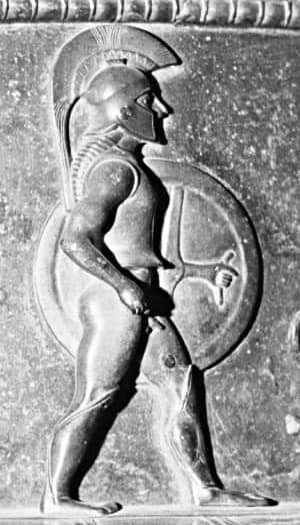
Primary sources on Leonidas are limited but telling. Herodotus, writing within living memory of the battle (his Histories were composed c. 450–420 BC), provides the most detailed account and portrays Leonidas as a calculating, brave leader who understood the strategic stakes of his sacrifice. Plutarch, writing some 600 years later in his Moralia and Lives, preserves numerous 'Laconic' aphorisms — the terse, witty one-liners for which Spartans were famous — attributed to Leonidas. When Xerxes sent a message demanding the Greeks lay down their arms, Leonidas reportedly replied 'Molon labe.' When a Persian envoy warned that Persian arrows would block out the sun, a Spartan warrior named Dieneces replied, 'Then we will fight in the shade.' Whether historically verbatim or literary embellishment, these exchanges capture the Spartan ethos Leonidas embodied. He is consistently portrayed as a man who prized duty to Sparta and the Greek cause above personal survival — a posture his agoge training had been designed to produce. Modern historians debate whether Leonidas knowingly undertook a suicide mission or genuinely believed relief forces would arrive in time; the ambiguity itself has only deepened his legend.