
The fall of the Western Roman Empire, also called the fall of the Roman Empire or the fall of Rome, was the loss of central political control in the Western Roman Empire, a process in which the Empire failed to enforce its rule, and its vast territory was divided among several successor polities. The Roman Empire lost the strengths that had allowed it to exercise effective control over its Western provinces; modern historians posit factors including the effectiveness and numbers of the army, the health and numbers of the Roman population, the strength of the economy, the competence of the emperors, the internal struggles for power, the religious changes of the period, and the efficiency of the civil administration. Increasing pressure from invading peoples outside Roman culture also contributed greatly to the collapse. Climatic changes and both endemic and epidemic diseases drove many of these immediate factors. The reasons for the collapse are major subjects of the historiography of the ancient world and they inform much modern discourse on state failure.
In 376, a large migration of Goths and other non-Roman people, fleeing from the Huns, entered the Empire. Roman forces were unable to exterminate, expel or subjugate them (as was their normal practice). In 395, after winning two destructive civil wars, Theodosius I died. He left a collapsing field army, and the Empire divided between the warring ministers of his two incapable sons. Goths and other non-Romans became a force that could challenge either part of the Empire. Further barbarian groups crossed the Rhine and other frontiers. The armed forces of the Western Empire became few and ineffective, and despite brief recoveries under able leaders, central rule was never again effectively consolidated.
By 476, the position of Western Roman Emperor wielded negligible military, political, or financial power, and had no effective control over the scattered Western domains that could still be described as Roman. Barbarian kingdoms had established their own power in much of the area of the Western Empire. In 476, the Germanic barbarian king Odoacer deposed the last emperor of the Western Roman Empire in Italy, Romulus Augustulus, and the Senate sent the imperial insignia to the Eastern Roman emperor Zeno.

While its legitimacy lasted for centuries longer and its cultural influence remains, the Western Empire never had the strength to rise again. The Eastern Roman, or Byzantine, Empire, survived and remained for centuries an effective power of the Eastern Mediterranean, although it lessened in strength. While the loss of political unity and military control is universally acknowledged, the fall of Rome is not the only unifying concept for these events; the period described as late antiquity emphasizes the cultural continuities throughout and beyond the political collapse.
Historical approaches and modern syntheses
Since 1776, when Edward Gibbon published the first volume of his The History of the Decline and Fall of the Roman Empire, Decline and Fall has been the theme around which much of the history of the Roman Empire has been structured. "From the eighteenth century onward," historian Glen Bowersock wrote, "we have been obsessed with the fall: it has been valued as an archetype for every perceived decline, and, hence, as a symbol for our own fears."
Another paradigm of the period
From at least the time of Henri Pirenne (1862–1935), scholars have described a continuity of Roman culture and political legitimacy long after 476. Pirenne postponed the demise of classical civilization to the 8th century. He challenged the notion that Germanic barbarians had caused the Western Roman Empire to end, and he refused to equate the end of the Western Roman Empire with the end of the office of emperor in Italy. He pointed out the essential continuity of the economy of the Roman Mediterranean even after the barbarian invasions, and suggested that only the Muslim conquests represented a decisive break with antiquity.
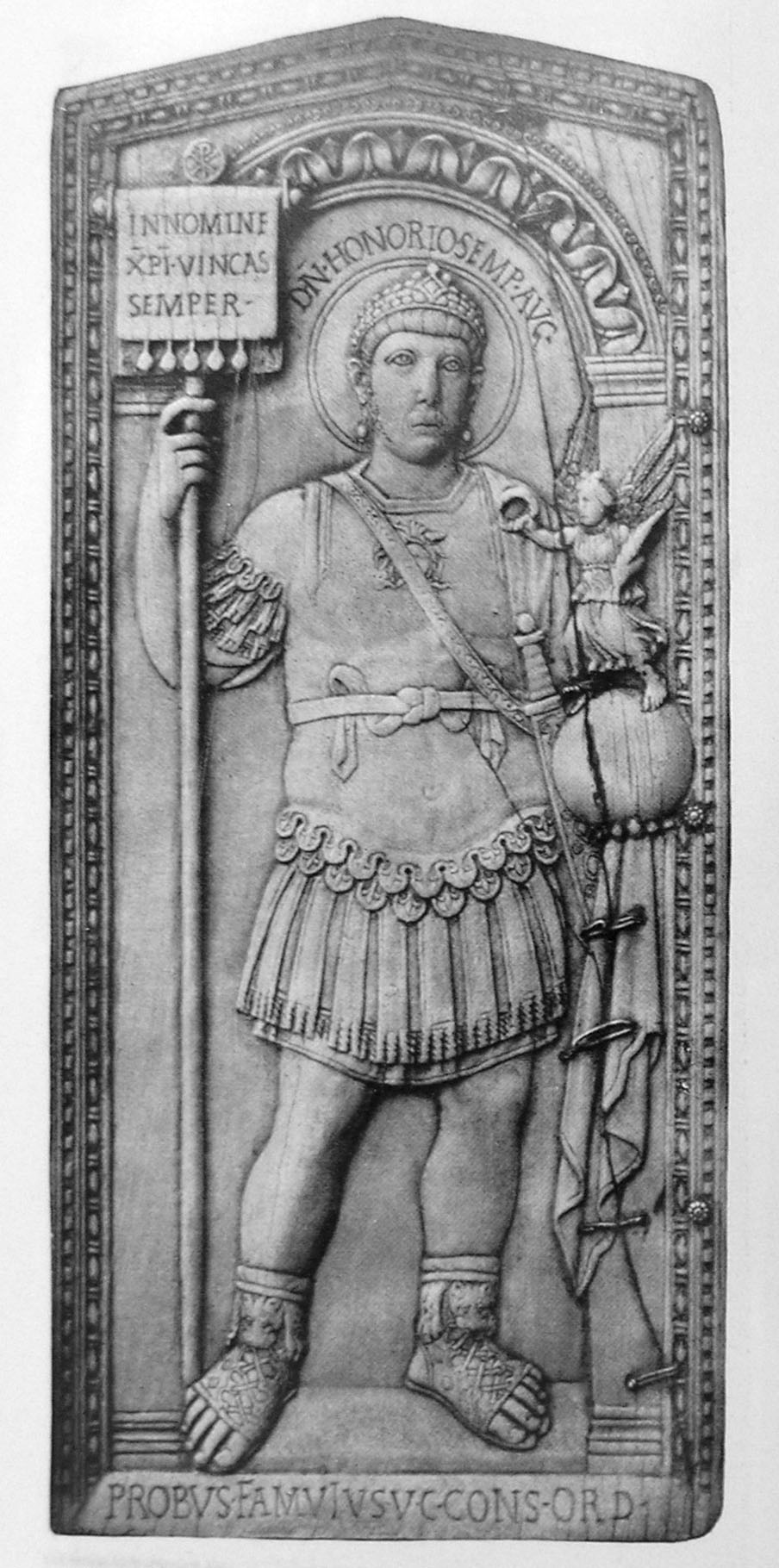
The more recent formulation of a historical period characterized as "Late antiquity" emphasizes the transformations of ancient to medieval worlds within a cultural continuity. In recent decades archaeologically based argument even extends the continuity in material culture and in patterns of settlement as late as the eleventh century. Observing the political reality of lost control (and the attendant fragmentation of commerce, culture, and language), but also the cultural and archaeological continuities, the process has been described as a complex cultural transformation, rather than a fall. "The perception of Late antiquity has significantly changed: the period is no longer seen as an era of decline and crisis but as an epoch of metamorphosis in the Mediterranean region".
Major phases
A synthesis by Harper (2017) gave four decisive turns of events in the transformation from the height of the empire to the early Middle Ages:
The Antonine Plague that ended a long period of demographic and economic expansion, weakening but not toppling the empire.

The Crisis of the Third Century, in which natural climate change, renewed pandemic disease, and internal and external political instability led to the near-collapse of the imperial system. Its reconstitution included a new basis for the currency, an expanded professional government apparatus, emperors further distanced from their people, and, shortly, the rise of Christianity, a proselytizing, exclusive religion that anticipated the imminent end of the world.
The military and political failure of the West, in which mass migration from the Eurasian Steppe overcame and dismembered the western part of an internally weakened empire. The eastern empire rebuilt itself again and began the reconquest of the West.
In the lands around the Mediterranean, the Late Antique Little Ice Age and the Plague of Justinian created one of the worst environmental cataclysms in recorded history. The imperial system crumbled in the next couple of generations and then lost vast territories to the armies of Islam, a new proselytizing, exclusive religion that also looked forward to an imminent end time. The diminished and impoverished Byzantine rump state survived amid perpetual strife between and among the followers of Christianity and Islam.
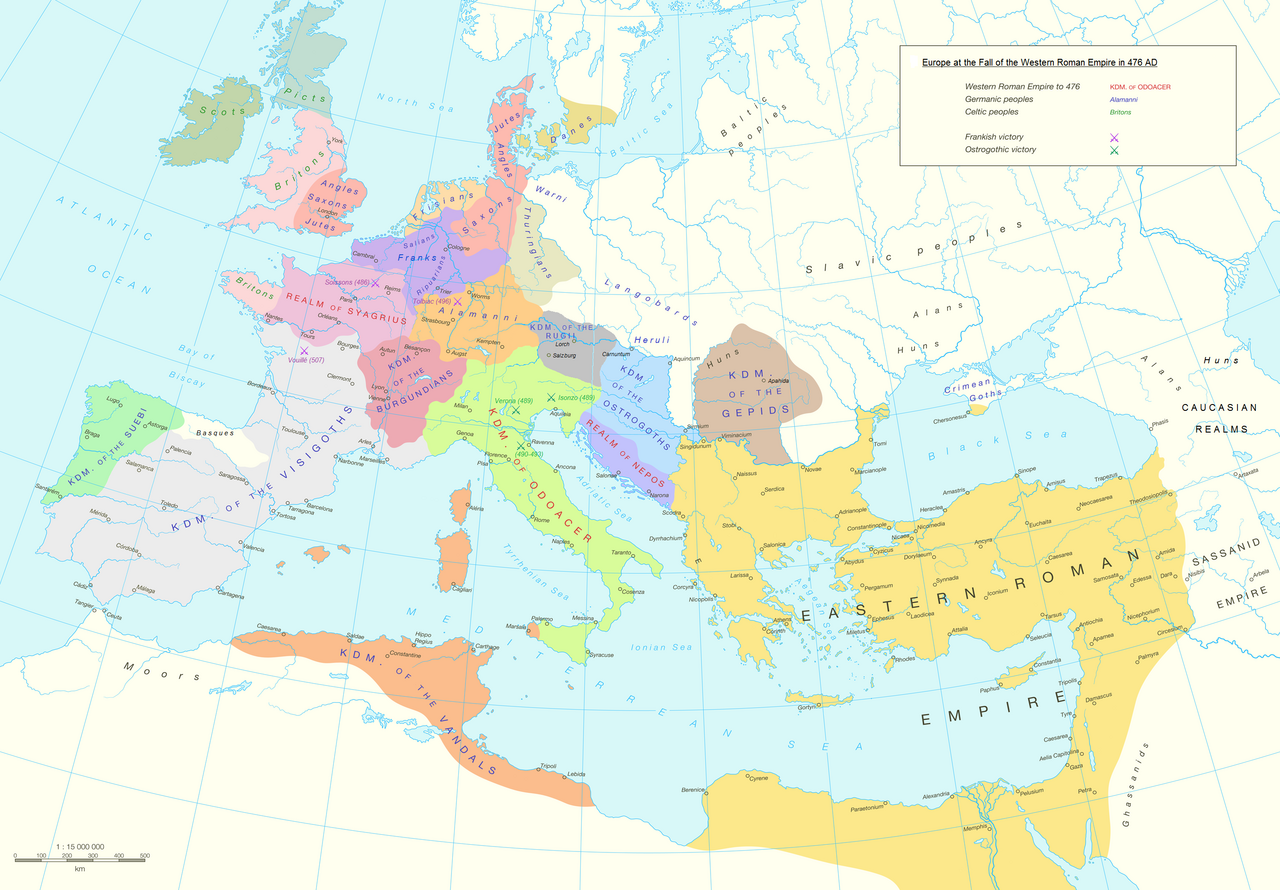
The loss of centralized political control over the West, and the lessened power of the East, are universally agreed, but the theme of decline has been taken to cover a much wider time span than the hundred years from 376. For Cassius Dio, the accession of the emperor Commodus in 180 CE marked the descent "from a kingdom of gold to one of rust and iron". Since the age of humanism, the process of the Fall has been thought to have begun with Constantine the Great, or with the soldier emperors who seized power through command of the army from 235 through 284, or with Commodus, or even with Augustus.
Gibbon was uncertain about when decline began. "In the first paragraph of his text, Gibbon wrote that he intended to trace the decline from the golden age of the Antonines"; later text has it beginning about A.D. 180 with the death of Marcus Aurelius; while in chapter 7, he pushes the start of the decline to about 52 B.C., the time of Julius Caesar and Pompey and Cicero. Gibbon placed the western empire's end with the removal of the man Gibbon referred to as "the helpless Augustulus" in 476.
Arnold J. Toynbee and James Burke argue that the entire Imperial era was one of steady decay of institutions founded in republican times. Theodor Mommsen excluded the imperial period from his Nobel Prize-winning History of Rome (1854–1856). As one convenient marker for the end, 476 has been used since Gibbon, but other key dates for the fall of the Roman Empire in the West include the Crisis of the Third Century, the Crossing of the Rhine in 406 (or 405), the sack of Rome in 410, and the death of Julius Nepos in 480.

Causes, according to Gibbon (1776–1789)
When Gibbon published his landmark work, it quickly became the standard text. Peter Brown has written that "Gibbon's work formed the peak of a century of scholarship which had been conducted in the belief that the study of the declining Roman Empire was also the study of the origins of modern Europe". Gibbon was the first to attempt an explanation of causes of a fall of empire. Like other Enlightenment thinkers and British citizens of the age steeped in institutional anti-Catholicism, Gibbon held in contempt the Middle Ages as a priest-ridden, superstitious Dark Age. It was not until his own era, the "Age of Reason", with its emphasis on rational thought, it was believed, that human history could resume its progress.
He began an ongoing controversy about the role of Christianity, but he gave great weight to other causes of internal decline and to attacks from outside the Empire. The story of its ruin is simple and obvious; and, instead of inquiring why the Roman empire was destroyed, we should rather be surprised that it had subsisted so long. The victorious legions, who, in distant wars, acquired the vices of strangers and mercenaries, first oppressed the freedom of the republic, and afterwards violated the majesty of the purple. The emperors, anxious for their personal safety and the public peace, were reduced to the base expedient of corrupting the discipline which rendered them alike formidable to their sovereign and to the enemy; the vigour of the military government was relaxed, and finally dissolved, by the partial institutions of Constantine; and the Roman world was overwhelmed by a deluge of Barbarians.
After a diligent inquiry, I can discern four principal causes of the ruin of Rome, which continued to operate in a period of more than a thousand years. I. The injuries of time and nature. II. The hostile attacks of the Barbarians and Christians. III. The use and abuse of the materials. And, IV. The domestic quarrels of the Romans.
Contemporary scholarship
Modern historiography diverges from Gibbon, though his ideas are foundational to later discourse. The modern synthesis integrates information that Gibbon did not have, from sciences such as archaeology, epidemiology, climatic history, and genetics.
While Alexander Demandt enumerated 210 different theories on why Rome fell, twenty-first century scholarship classifies the primary possibilities more concisely:
Climatic crisis
A recent summary interprets disease and climate change as important drivers of the political collapse of the empire. There was a Roman climatic optimum from about 200 BCE to 150 CE, when lands around the Mediterranean were generally warm and well-watered. This made agriculture prosperous, army recruitment easy, and the collection of taxes straightforward. From about 150, the climate became on average somewhat worse for most of the inhabited lands around the Mediterranean. After about 450, the climate worsened further in the Late Antique Little Ice Age that may have directly contributed to the variety of factors that caused Rome to collapse.
The Roman Empire was built on the fringes of the tropics. Its roads and seas, which produced an abundance of trade, also unknowingly created an interconnected disease ecology that unleashed the evolution and spread of pathogens. Pandemics contributed to massive demographic changes, economic crises, and food shortages in the crisis of the third century. Heavy mortality in 165–180 from the Antonine Plague seriously impaired attempts to repel Germanic invaders, but the legions generally held or at least speedily re-instated the borders of the Empire.
Migrational crisis
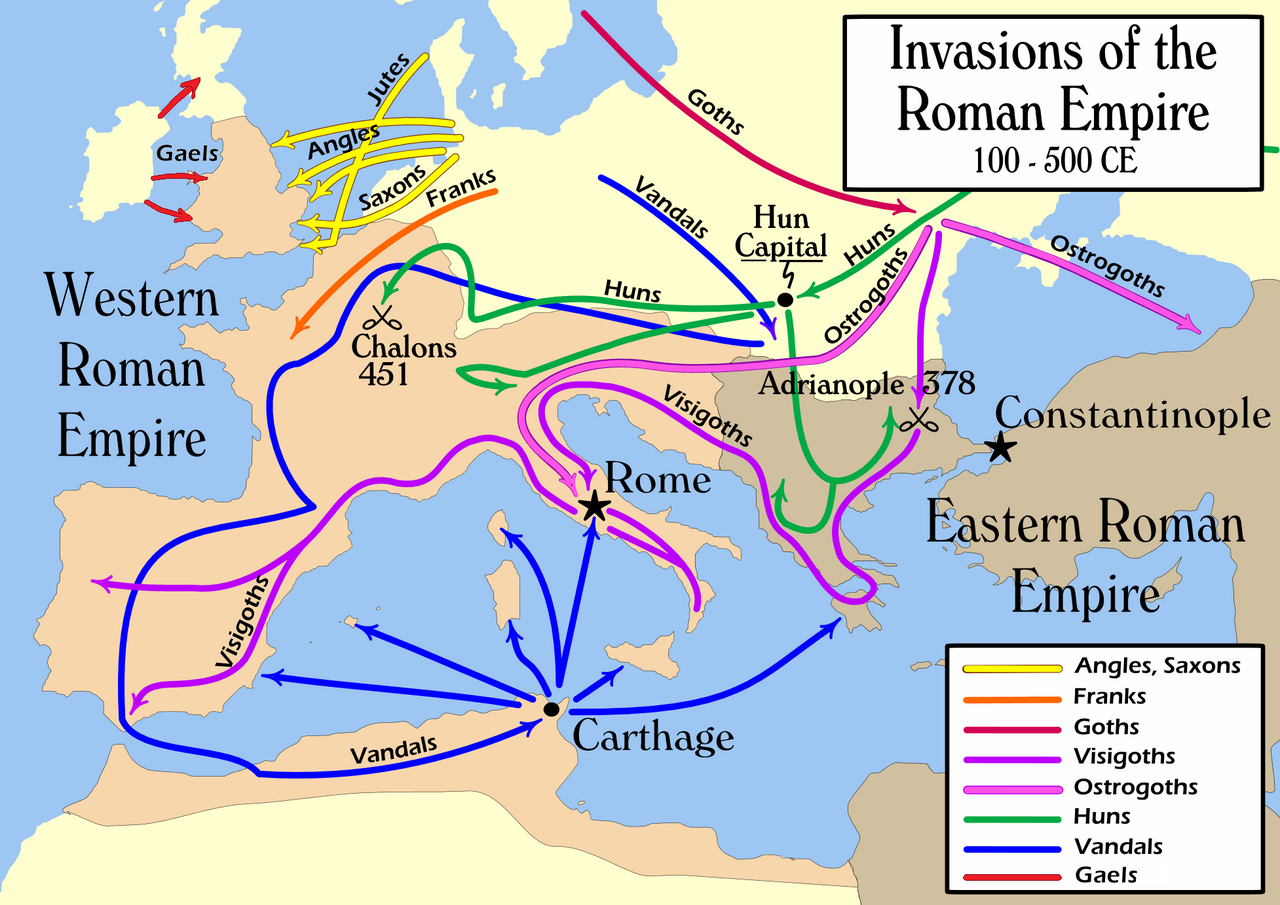
From 376, massive populations moved into the Empire, driven by the Huns who themselves may have been driven by climate change in the Eurasian steppe. These barbarian invasions led ultimately to barbarian kingdoms over much of the former territory of the Western Empire. But the final blow came only with the Late Antique Little Ice Age and its aftermath, when Rome was already politically fragmented and materially depleted.
Political crisis
Aurelian reunited the empire in 274, and from 284 Diocletian and his successors reorganized it with more emphasis on the military. John the Lydian, writing over two centuries later, reported that Diocletian's army at one point totaled 389,704 men, plus 45,562 in the fleets, and numbers may have increased later. With the limited communications of the time, both the European and the Eastern frontiers needed the attention of their own supreme commanders. Diocletian tried to solve this problem by re-establishing an adoptive succession with a senior (Augustus) and junior (Caesar) emperor in each half of the Empire, but this system of tetrarchy broke down within one generation, and the biological families of emperors again became the expected successors to the throne, with generally unfortunate results. Thereafter civil war was the main method of establishing new imperial regimes. Although Constantine the Great (in office 306 to 337) again re-united the Empire, his sons' generation fought destructive civil wars between themselves and with usurpers. Towards the end of the fourth century the need for division was generally accepted. From then on, the Empire existed in constant tension between the need for two emperors and their mutual mistrust.
Until late in the fourth century, the united Empire retained sufficient power to launch powerful attacks against its enemies in Germania and in the Sasanian Empire. Receptio of barbarians became widely practised: imperial authorities admitted potentially hostile groups into the Empire, split them up, and allotted to them lands, status, and duties within the imperial system. In this way many groups provided unfree workers for Roman landowners, and recruits ("laeti") for the Roman army. Sometimes their leaders became military officers or civil office holders. Normally, the Romans managed the process carefully, with sufficient military force on hand to ensure compliance. Cultural assimilation, into the ways of Rome and the expectations of its citizenry, followed—typically over the next generation or two.
Financial crisis
The Empire suffered multiple serious crises during the third century. The rising Sasanian Empire inflicted three crushing defeats on Roman field armies and remained a potent threat for centuries. Other disasters included repeated civil wars, barbarian invasions, and more mass-mortality in the Plague of Cyprian (from 250 onwards). For a short period, the Empire split into a Gallic Empire in the West (260–274), a Palmyrene Empire in the East (260–273), and a central Roman rump state; in 271, Rome abandoned the province of Dacia on the north of the Danube. The Rhine/Danube frontier also came under more effective threats from larger barbarian groupings, which had developed improved agriculture and increased their populations. The average stature of the population in the West suffered a serious decline in the late second century; the population of Northwestern Europe did not recover, though the Mediterranean regions did.
The Empire survived the "Crisis of the Third Century", directing its economy successfully towards defense, but survival came at the price of a more centralized and bureaucratic state. Excessive military expenditure, coupled with civil wars due to unstable succession, caused increased taxes to the detriment of the industry. Under Gallienus (Emperor from 253 to 268) the senatorial aristocracy ceased joining the ranks of the senior military commanders. Its typical members lacked interest in military service, and showed incompetence at command.
Under Constantine, the cities lost their revenue from local taxes, and under Constantius II (r. 337–361) their endowments of property. This worsened the existing difficulty in keeping the city councils up to strength, and the services provided by the cities were scamped or abandoned. Public building projects had declined since the second century. There is no evidence of state participation in, or support for, restoration and maintenance of temples and shrines; rather, restorations had to be funded and accomplished privately, which limited what was done. A further financial abuse was Constantius's habit of granting to his immediate entourage the estates of persons condemned for treason and other capital crimes. This practice reduced future, though not immediate, income; those close to the emperor also gained a strong incentive to encourage his suspicion of conspiracies.
Corruption, in this context the diversion of finance from the needs of the army, may have contributed greatly to the Fall. The rich senatorial aristocrats in Rome itself became increasingly influential during the fifth century; they supported armed strength in theory, but did not wish to pay for it or to offer their own workers as army recruits. They did, however, pass large amounts of money to the Christian Church.
Social crisis
The new supreme rulers disposed of the legal fiction of the early Empire (seeing the emperor as but the first among equals); emperors from Aurelian (r. 270–275) onwards openly styled themselves as dominus et deus, "lord and god", titles appropriate for a master-slave relationship. An elaborate court ceremonial developed, and obsequious flattery became the order of the day. Under Diocletian, the flow of direct requests to the emperor rapidly reduced, and soon ceased altogether. No other form of direct access replaced them, and the emperor received only information filtered through his courtiers. However, as Sabine MacCormack described, the court culture that developed with Diocletian was still subject to pressure from below. Imperial proclamations were used to stress the traditional limitations of the imperial office, while imperial ceremonies "left room for consensus and popular participation".
Official cruelty, supporting extortion and corruption, may also have become more commonplace; one example being Constantine's law that slaves who betrayed their mistress's confidential remarks should have molten lead poured down their throats. While the scale, complexity, and violence of government were unmatched, the emperors lost control over their whole realm insofar as that control came increasingly to be wielded by anyone who paid for it. Meanwhile, the richest senatorial families, immune from most taxation, engrossed more and more of the available wealth and income while also becoming divorced from any tradition of military excellence. At a local level, from the early fourth century, the town councils lost their property and their power, which often became concentrated in the hands of a few local despots beyond the reach of the law. One scholar identifies a great increase in the purchasing power of gold, two and a half fold from 274 to the later fourth century. This may be an index of growing economic inequality between a gold-rich elite and a cash-poor peasantry. "Formerly, says Ammianus, Rome was saved by her austerity, by solidarity between rich and poor, by contempt for death; now she is undone by her luxury and greed (Amm. xxxi. 5. 14 and xxii. 4.). Salvianus backs up Ammianus by affirming that greed (avaritia) is a vice common to nearly all Romans". However, Lucius Calpurnius Piso Frugi (consul 133 BC) had already dated the start of Rome's moral decline to 154 BCE.
Within the late Roman military, many recruits and even officers had barbarian origins. Soldiers are recorded as using possibly-barbarian rituals, such as elevating a claimant on shields. Some scholars have seen this as an indication of weakness. Others disagree, seeing neither barbarian recruits nor new rituals as causing any problem with the effectiveness or loyalty of the army, at least while that army was effectively led, disciplined, trained, paid, and supplied by officers who identified as Roman.
Geography
A. H. M. Jones has pointed out that the earlier scholarly views are Western. Most of the weaknesses discussed by scholars were "common to both halves of the empire", with Christianity even more prevalent in the East than the West. Religious disputes were bitter, bureaucracy corrupt and extortionate, it had a caste system, and land fell out of use in the East just as it had in the West. Yet the East stood its ground in the fifth century, fought back in the sixth, and even recovered some territory in the seventh. The East had only one apparent advantage: geography. It was less vulnerable, strategically, than the West. The narrowest sea crossing to its core territories was protected from the northern barbarians by the fortifications and the sea and land forces of Constantinople, while the European frontier from the mouth of the Rhine to that of the Danube is some 2000 kilometres great-circle distance and could be crossed with much less difficulty. "The devastations of the barbarians impoverished and depopulated the [Western] frontier provinces, and their unceasing pressure imposed on the empire a burden of defense which overstrained its administrative machinery and its economic resources... [playing] a major part in the fall of the West".
Height of power, systematic weaknesses as direct causes
The Roman Empire reached its greatest geographical extent under Trajan (r. 98–117), who ruled a prosperous state that stretched from Armenia to the Atlantic Ocean. The Empire had large numbers of trained, supplied, and disciplined soldiers, drawn from a growing population. It had a comprehensive civil administration based in thriving cities with effective control over public finances. The literate elite considered theirs to be the only worthwhile form of civilization, giving the Empire ideological legitimacy and a cultural unity based on comprehensive familiarity with Greek and Roman literature and rhetoric. The Empire's power allowed it to maintain extreme differences of wealth and status. Its wide-ranging trade networks permitted even modest households to use goods made by professionals far away.
The empire had both strength and resilience. Its financial system allowed it to raise significant taxes which, despite endemic corruption, supported a large regular army with logistics and training. The cursus honorum, a standardized series of military and civil posts organised for ambitious aristocratic men, ensured that powerful noblemen had the opportunity to become familiar with military and civil command and administration. At a lower level within the army, connecting the aristocrats at the top with the private soldiers, a large number of centurions were well-rewarded, literate, and responsible for training, discipline, administration, and leadership in battle. City governments with their own properties and revenues functioned effectively at a local level; membership of city councils involved lucrative opportunities for independent decision-making, and, despite its obligations, became seen as a privilege. Under a series of emperors who each adopted a mature and capable successor, the Empire did not require civil wars to regulate the imperial succession. Requests could be submitted directly to the better emperors, and the answers had the force of law, putting the imperial power directly in touch with even humble subjects. The cults of polytheist religion were hugely varied, but none claimed that theirs was the only truth. Their followers displayed mutual tolerance, producing a polyphonous religious harmony. Religious strife was rare after the suppression of the Bar Kokhba revolt in 136, after which the devastated Judaea ceased to be a major centre for Jewish unrest.
Nevertheless, it remained a culture based on an early subsistence economy, with only ineffective inklings of a germ theory of disease. Despite its aqueducts, the water supply did not allow good hygiene. Sewage was disposed of on the streets, in open drains, or by scavenging animals. Even in the Roman Climatic Optimum, local harvest failures causing famines were always a possibility. And even in good times, Roman women needed to have, on average, six children each in order to maintain the population. Good nourishment and bodily cleanliness were privileges of the rich, advertised by their firm tread, healthy skin color, and lack of the "dull smell of the underbathed". Infant mortality was very high, and diarrhoeal diseases were a major cause of death. Malaria was endemic in many areas, notably in the city of Rome itself, possibly encouraged by the enthusiasm of rich Romans for water features in their gardens.
Rise of Christianity, possible decline of the armed forces
In 313, Constantine the Great declared official toleration of Christianity. This was followed over the ensuing decades by the search for a definition of Christian orthodoxy all could agree upon. Creeds were developed, but Christianity has never agreed upon an official version of its Bible or its doctrine; instead it has had many different manuscript traditions. Christianity's disputes may have effected decline. Official and private action was taken against heterodox Christians (heretics) from the fourth century up to the modern era. Limited action against pagans, who were mostly ignored, was based on the contempt that accompanied Christianity's sense of triumph after Constantine. Christianity opposed sacrifice and magic, and Christian emperors made laws that favored Christianity. Constantine's successors generally continued this approach, and by the end of the fourth century, Christianity had become the religion of any ambitious civil official.
The wealth of the Christian Church increased dramatically in the fifth century. Immense resources, both public and private, were used for building churches, storage barns for the grain used for charity, new hospitals for the poor, and in support of those in religious life without other income. Bishops in wealthy cities were thus able to offer patronage in the long-established manner of Roman aristocrats. Ammianus described some who "enriched from the offerings of matrons, ride seated in carriages, wearing clothing chosen with care, and serve banquets so lavish that their entertainments outdo the tables of kings".
But the move to Christianity probably had no significant effects on public finances. The large temple complexes, with professional full-time priests, festivals, and large numbers of sacrifices (which became free food for the masses), had also been expensive to maintain. They had already been negatively impacted by the empire's financial struggles in the third century. The numbers of clergy, monks, and nuns increased to perhaps half the size of the actual army, and they have been considered as a drain on limited manpower.
The numbers and effectiveness of the regular soldiers may have declined during the fourth century. Payrolls were inflated, so that pay could be diverted and exemptions from duty sold. The soldiers' opportunities for personal extortion were multiplied by residence in cities, while their effectiveness was reduced by concentration on extortion instead of military exercises. However, extortion, gross corruption, and occasional ineffectiveness were not new to the Roman army. There is no consensus whether its effectiveness significantly declined before 376. Ammianus Marcellinus, himself a professional soldier, repeats longstanding observations about the superiority of contemporary Roman armies being due to training and discipline, not to individual size or strength. He also accuses Valentinian I of being the first emperor to increase the arrogance of the military, raising their rank and power to excess, severely punishing the minor crimes of the common soldiers, while sparing those of higher rank who felt able to commit shameful and monstrous crimes. Despite a possible decrease in the Empire's ability to assemble and supply large armies, Rome maintained an aggressive and potent stance against perceived threats almost to the end of the fourth century.
The Tetrarchy to Valentinian I: civil and foreign wars (317–375)
Constantine settled Franks on the lower left bank of the Rhine. Their communities required a line of fortifications to keep them in check, indicating that Rome had lost almost all local control. Under Constantius, bandits came to dominate areas such as Isauria, which were well within the empire. The tribes of Germania also became more populous and more threatening. In Gaul, which did not really recover from the invasions of the third century, there was widespread insecurity and economic decline in the 300s, perhaps worst in Armorica. By 350, after decades of pirate attacks, virtually all villas in Armorica were deserted. Local use of money ceased around 360. Repeated attempts to economize on military expenditure included billeting troops in cities, where they could less easily be kept under military discipline and could more easily extort from civilians. Except in the rare case of a determined and incorruptible general, these troops proved ineffective in action and dangerous to civilians. Frontier troops were often given land rather than pay. As they farmed for themselves, their direct costs diminished, but so did their effectiveness, and their pay gave much less stimulus to the frontier economy. However, except for the provinces along the lower Rhine, the agricultural economy was generally doing well.
On 18 January 350, the imperial magister officiorum gave a banquet in Augustodunum while his master, Western Emperor Constans, was away hunting. During the feast Magnus Magnentius, commander of the imperial household troops, appeared in an imperial purple toga and announced himself to be the new Emperor. Constans was soon murdered and Magnentius took over most of his western domains. He made peace overtures to Constantius in the East, but these failed. In the ensuing bloody civil war Magnentius marched against Constantius with as many troops as he could mobilize, stripping the Rhine frontier of its most effective troops. Magnentius died and so did many of his men. Meanwhile, Constantius sent messages to the German tribes east of the Rhine, inviting them to attack Gaul, which they did. In the next few years a strip some 64 kilometres (40 mi) wide to the west of the Rhine was occupied by the Germans, and a further 190 kilometres (120 mi) into Gaul the surviving population and garrisons had fled.
Julian (r. 360–363) won victories against Germans who had invaded Gaul. He launched a drive against official corruption, which allowed the tax demands in Gaul to be reduced to one-third of their previous amount, while all government requirements were still met. In civil legislation, Julian was notable for his pro-pagan policies. Julian lifted the ban on sacrifices, restored and reopened temples, and dismantled the privileged tax status and revenue concessions of the Christians. He gave generous tax remissions to the cities which he favored, and disfavor to those who remained Christian. Julian ordered toleration of varieties of Christianity banned as heretical by Constantius; possibly, he would not have been able to persecute effectively such a large and powerful group as Christians had now become.
Julian prepared for civil war against Constantius, who again encouraged the Germans to attack Gaul. However Julian's campaigns had been effective and only one small Alemannic raid, speedily dealt with by Julian, resulted. Constantius died before any serious fighting and Julian was acknowledged as master of the entire Empire. He launched an expensive campaign against the Sasanian Persians. He succeeded in marching to the Sasanian capital of Ctesiphon, but, at the suggestion of a Persian agent, burned his boats and supplies to show resolve in continuing operations. The Sasanians then burned crops so the Roman army had no food. Finding himself cut off without supplies in enemy territory, Julian began a land retreat, and during the Battle of Samarra, he was mortally wounded.
Julian's successor Jovian, acclaimed by a demoralized army, began his brief reign (363–364) while trapped in Mesopotamia without supplies. To purchase safe passage home, he had to concede areas of northern Mesopotamia, including the strategically important fortress of Nisibis. This fortress had been Roman since before the Peace of Nisibis in 299.
The brothers Valens (r. 364–378) and Valentinian I (r. 364–375) energetically tackled the threats of barbarian attacks on all the Western frontiers. They also tried to alleviate the burdens of taxation, which had risen continuously over the previous forty years; Valens in the East reduced the tax demand by half in his fourth year. Both of them were Christians, and re-confiscated the temple lands which Julian had restored. But they were generally tolerant of other beliefs. Valentinian in the West refused to intervene in Christian controversy. In the East, Valens had to deal with Christians who did not conform to his ideas of orthodoxy, and persecution formed part of his response. He tolerated paganism, even keeping some of Julian's associates in their trusted positions. He confirmed the rights and privileges of the pagan priests, and confirmed the right of pagans to be the exclusive caretakers of their temples.