
The Byzantine Empire, also known as the Eastern Roman Empire, was the continuation of the Roman Empire centred on Constantinople during late antiquity and the Middle Ages. Having survived the events that caused the fall of the Western Roman Empire in the 5th century AD, it endured until the fall of Constantinople to the Ottoman Empire in 1453. The term 'Byzantine Empire' was coined in the 5th century but dropped once the Western part collapsed and used again only after its demise; its citizens used the term 'Roman Empire' and called themselves 'Romans'.
During the early centuries of the Roman Empire, the western provinces were Latinised, but the eastern parts kept their Hellenistic culture. Constantine I (r. 324–337) legalised Christianity and moved the capital to Constantinople. Theodosius I (r. 379–395) made Christianity the state religion and Greek, which was referred to as the "language of the Romans" (Romaika) by the local inhabitants, gradually replaced Latin for official use. The empire adopted a defensive strategy and, throughout its remaining history, experienced recurring cycles of decline and recovery.
The Byzantine Empire reached its greatest extent under the reign of Justinian I (r. 527–565), who briefly reconquered much of Italy and the western Mediterranean coast. A plague began around 541, and a prolonged warfare with Persia placed fiscal and military strain on the empire, contributing to political and strategic challenges in the decades that followed. In the 630s and 640s the Arab conquests defeated Byzantine field armies in Syria and Egypt, resulting in the permanent loss of those provinces to the Rashidun Caliphate. In 698, Africa was lost to the Umayyad Caliphate, but the empire stabilised under the Isaurian dynasty. It expanded once more under the Macedonian dynasty, experiencing a two-century-long renaissance. Thereafter, periods of civil war and Seljuk incursion resulted in the loss of most of Asia Minor. The empire recovered during the Komnenian restoration, and Constantinople remained the largest and wealthiest city in Europe until the 13th century, when it was overtaken by Paris.
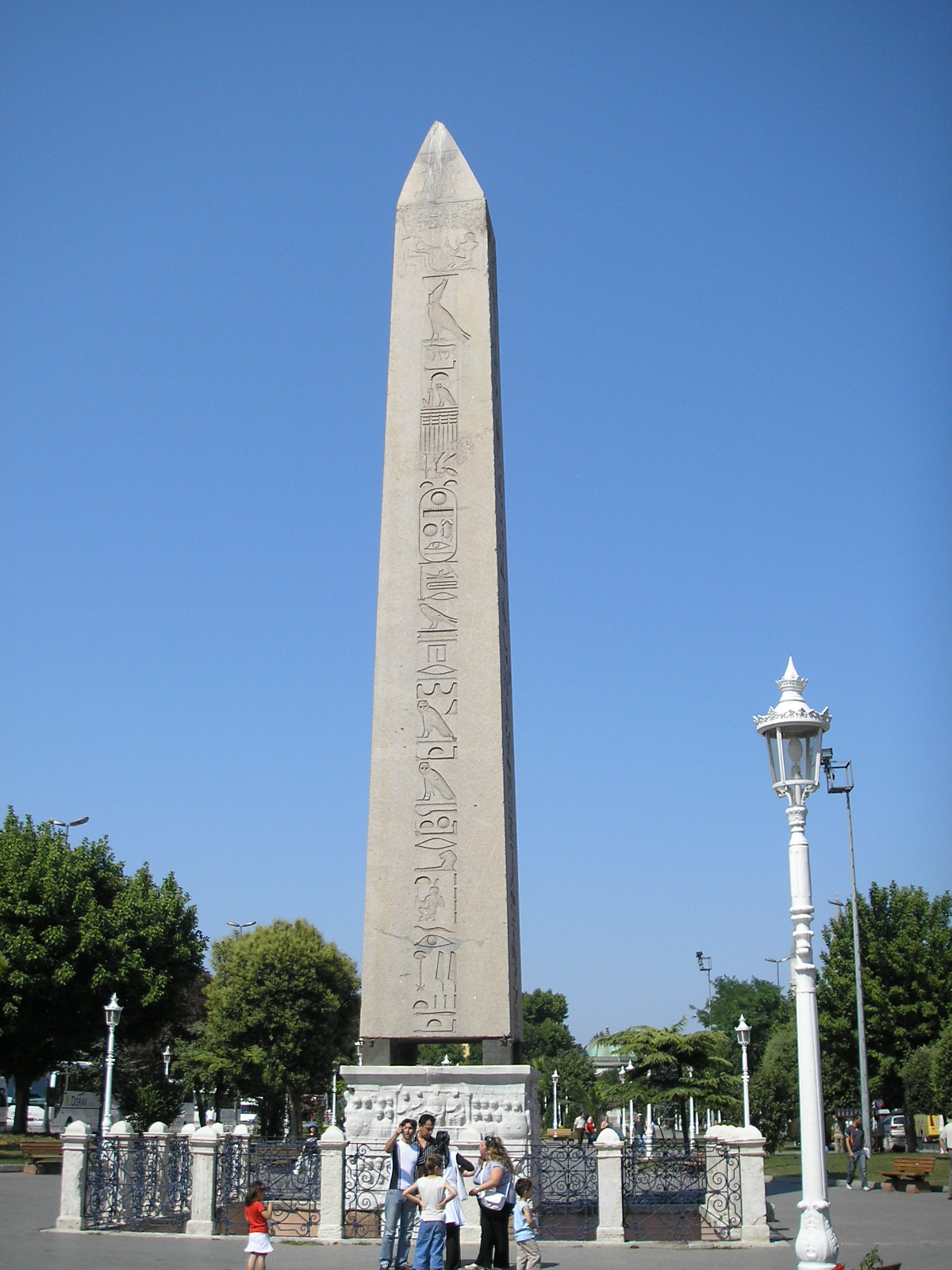
The empire was severely fragmented in 1204, following the sack of Constantinople during the Fourth Crusade; its former territories were then divided into competing Greek rump states and Latin realms. Despite the eventual recovery of Constantinople in 1261, the reconstituted empire wielded only regional power during its final two centuries. Its remaining territories were progressively annexed by the Ottomans in a series of wars fought in the 14th and 15th centuries. The fall of Constantinople to the Ottomans in 1453 brought the empire to an end.
Nomenclature
The empire's inhabitants, today generally known as Byzantines, regarded themselves as Romans (in Greek, Ῥωμαῖοι or Romaioi). Similarly, their Islamic contemporaries called their empire the "land of the Romans" (Bilād al-Rūm). After 800 AD, Western Europe called them "Greeks" (Graeci), a term that had negative connotations, as the Papacy and medieval German emperors regarded themselves as the true inheritors of Roman identity. The adjective "Byzantine", derived from Byzantion (Byzantium in Latin), the name of the Greek settlement Constantinople was established on, was only used to describe the inhabitants of the city; it did not refer to the empire, called Rhomanía (Ῥωμανία or "Romanland") by its citizens.
Following the empire's fall, early modern scholars referred to it by many names, including the "Eastern Empire", the "Low Empire", the "Late Empire", the "Empire of the Greeks", "Empire of Constantinople", and "Roman Empire". It seems that the term "Byzantine Empire" was first used by the Eastern Roman historians Priscus and Malchus, who wrote in Greek in the 5th century, as a way to differentiate the Eastern perspective from the Western one. Once the Western part fell, there was no longer any need to differentiate, and the term was dropped. Immediately after the Fall of Constantinople, Laonikos Chalkokondyles, a pupil of Pletho, employed the term "Byzantine" to denote the people of the empire as a whole, in an effort to give them a neo-Hellenic identity. His work was widely propagated by Hieronymus Wolf. "Byzantine" was used adjectivally alongside terms such as "Empire of the Greeks" until the 19th century. It is now the primary term, used to refer to all aspects of the empire; a minority of modern historians believe it should not be used because it was originally a prejudicial and inaccurate term.

History
Start date
Given the significant overlap in historiographical periodisations of Late Roman history, late antiquity, and Byzantine history, there is no consensus on a foundation date for the Byzantine Empire. Scholarship with links to Greece or Eastern Orthodoxy has customarily placed it in the early 300s. The growth of the study of "late antiquity" has led to some historians setting a start date in the seventh or eighth centuries. Others believe a "new empire" began during changes c. 300 AD. Geoffrey Greatrex believes that it is impossible to precisely date the foundation of the Byzantine Empire.
Pre-518: Constantinian, Theodosian, and Leonid dynasties
Between the 3rd and 1st centuries BC, the Roman Republic established hegemony over the eastern Mediterranean, while its government developed into the one-person rule of an emperor. The Roman Empire enjoyed a period of relative stability until the 3rd century AD, when external threats and internal crises caused it to splinter, as regional armies acclaimed their generals as "soldier-emperors". One of these, Diocletian (r. 284–305), recognised that the state was too big to be ruled by a single person. He instituted the Tetrarchy, a system which divided the empire into eastern and western halves. The Tetrarchy quickly failed, but the division of the empire proved an enduring concept.
Constantine I (r. 306–337) secured absolute power in 324. Over the next six years, he rebuilt the city of Byzantium as a new capital that he called "New Rome" (later named Constantinople). The old capital Rome was farther from the prosperous eastern provinces and in a less strategically important location; its esteem had already been somewhat lessened in the eyes of the "soldier-emperors", who ruled from the frontiers, and of the empire's population. Having been granted citizenship, the empire's subjects considered themselves just as Roman as those in the city of Rome. Constantine continued reforms of the empire's military and civil administration and instituted the gold solidus as a stable currency. He favoured Christianity and became an opponent of paganism. Constantine's dynasty prioritised a lengthy conflict against the comparably powerful Sasanid Persia and ended in 363 with the death of his nephew Julian. The reign of the short Valentinianic dynasty, marked by wars against the Goths, religious debates, and anti-corruption campaigns, ended in the East with the death of Valens at the Battle of Adrianople in 378.

Valens's successor, Theodosius I (r. 379–395), secured peace in the east by allowing the Goths to settle in Roman territory; he also twice intervened in the western half, defeating the usurpers Magnus Maximus and Eugenius in 388 and 394, respectively. He actively condemned paganism, confirmed the primacy of Nicene Orthodoxy over Arianism in the East, and established Christianity as the Roman state religion. He was the last emperor to rule both the western and eastern halves of the empire. After his death, the West was destabilised but the East thrived due to the civilian administrators who continued to hold power. Theodosius II (r. 408–450) largely left the rule of the East to officials such as Anthemius, who constructed the Theodosian Walls. Constantinople had now entrenched itself as the empire's capital.
Aside from Constantinople's walls, Theodosius' reign was also marked by the compilation of the Codex Theodosianus and the theological dispute over Nestorianism (a doctrine later deemed heretical). His reign also saw the arrival of Attila's Huns, who ravaged the Balkans, leading to a large tribute being exacted from the eastern empire. Attila switched his attention to the rapidly-deteriorating western empire, and his people fractured after his death in 453. Later, Leo I (r. 457–474) failed in his 468 attempt to reconquer the West. The warlord Odoacer deposed Romulus Augustulus in 476 and after the assassination of his titular successor Julius Nepos in 480, abolished the office of western emperor.
Through a combination of fortune and good political decisions, the Eastern Empire never experienced rebellious barbarian vassals or rule by barbarian warlords—the problems which ensured the downfall of the West. Zeno (r. 474–491) convinced the problematic Ostrogoth king Theodoric to take control of Italy from Odoacer; dying when the empire was at peace, he was succeeded by Anastasius I (r. 491–518). His belief in monophysitism brought occasional issues, but Anastasius was a capable administrator and instituted successful financial reforms including the abolition of the chrysargyron tax. He was the first emperor since Diocletian not to face any serious problems affecting the empire during his reign.

518–717: Justinian and Heraclian dynasties
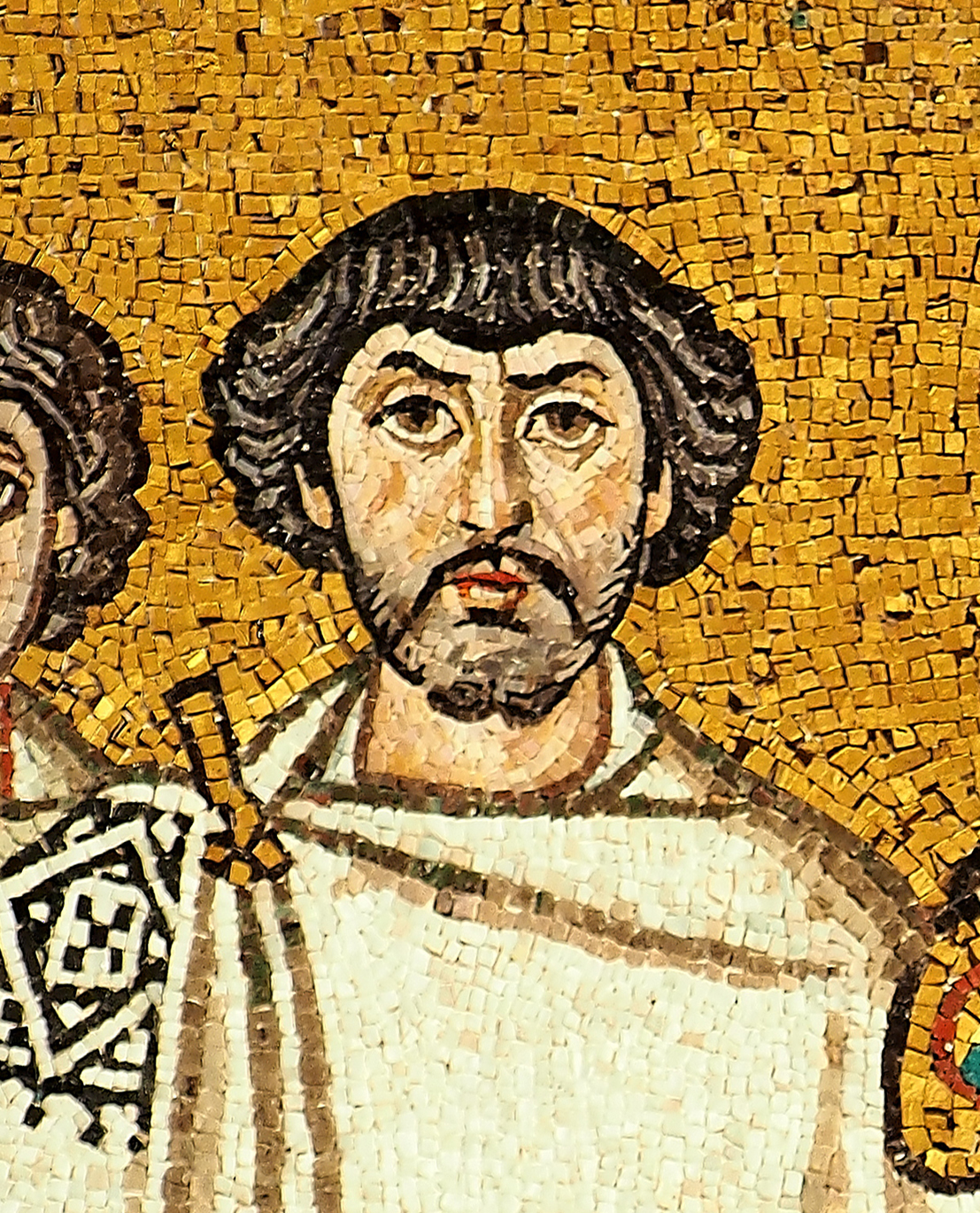
The reign of Justinian I was a high point in east Roman history. Following his accession in 527, the legal code was rewritten as the Corpus Juris Civilis, which streamlined Roman law across the empire; he reasserted imperial control over religion and morality through purges of pagans, heretics, and other "deviants"; and having ruthlessly subdued the 532 Nika revolt he rebuilt much of Constantinople, including the Hagia Sophia. Justinian I took advantage of the confusion, following Theoderic the Ostrogoth's death, to attempt the reconquest of Italy. The Vandal Kingdom in North Africa was subjugated in late 533 by the general Belisarius, who then invaded Italy; the Ostrogothic Kingdom mostly ended in 554.
In the 540s, Justinian began to suffer reversals on multiple fronts. Capitalising on Constantinople's preoccupation with the West, Khosrow I of the Sasanian Empire invaded Byzantine territory and sacked Antioch in 540. A devastating plague killed a large proportion of the population and severely reduced the empire's social and financial stability. The most difficult period of the Ostrogothic war, against their king Totila, came during this decade; while divisions among Justinian's advisors undercut the administration's response. He also did not fully heal the divisions in Chalcedonian Christianity, as the fifth ecumenical council failed to make a real difference. Justinian died in 565; his reign was more successful than any other emperor, yet he left behind an unstable empire.
Justin II (r. 565–578) inherited an empire stretched thin both financially and territorially. He was soon at war on many fronts. Fearing the aggressive Avars, the Lombards conquered much of northern Italy by 572. The Sasanian wars restarted in the same year, and would not conclude until 591; by this time, the Avars and Slavs had repeatedly invaded the Balkans, causing great instability. Maurice campaigned extensively in the region during the 590s, and although he re-established Byzantine control up to the Danube, he pushed his troops too far in 602—they mutinied, proclaimed an officer named Phocas as emperor, and executed Maurice. The Sasanians seized their moment and reopened hostilities; Phocas was unable to cope and soon faced a major rebellion led by Heraclius. Phocas lost Constantinople in 610 and was executed; this destructive civil war accelerated the empire's decline.
Under Khosrow II, the Sassanids occupied the Levant and Egypt and advanced into Asia Minor, and the Avars and Slavs raided in the Balkans. The Empire's control of Italy also weakened. After successfully repelling a siege of Constantinople in 626, Heraclius won a decisive victory at the Battle of Nineveh, eventually defeating the Sassanids later that year. The triumph would prove short-lived. The Arab conquests soon saw the conquest of the Levant, Egypt, and the Sassanid Empire by the newly formed Arab Rashidun Caliphate. By Heraclius' death in 641, the empire had been severely reduced economically and territorially—the loss of the wealthy eastern provinces had deprived the empire of as much as three-quarters of its revenue.
The next century is poorly documented. Arab raids into Asia Minor started quickly, and the Empire responded by holding fortified centres and avoiding battle wherever possible. Although Anatolia was invaded annually, it avoided permanent Arab occupation. The outbreak of the First Fitna in 656 gave the Empire breathing space, which it used sensibly: some order was restored in the Balkans by Constans II (r. 641–668) following his administrative reorganisation which over time evolved into the "theme system", a structure that allocated troops to defend specific provinces. Constantine IV (r. 668–685) repelled the Arab efforts to capture Constantinople in the 670s using Greek fire, but suffered a reversal against the Bulgars, who soon established an empire in the northern Balkans. Nevertheless, he had done enough to secure the empire's position, especially as the Umayyad Caliphate was undergoing another civil war.
Beginning in 695, when Constantine's son Justinian II was first deposed, the empire entered an era of political instability that lasted for the next 22 years. While Justinian had stabilised the situation with the divided Arabs, the threat of the reconstituted caliphate was met by Leo III when he repelled the 717–718 siege, the first serious challenge against Arab expansion.

718–867: Isaurian, Nikephorian, and Amorian dynasties
The emperors Leo III (r. 717–741) and Constantine V (r. 741–775) were very effective leaders, both in government and warfare. They withstood continued Arab attacks, as well as civil war and natural disasters. Constantine's success reestablished the state as a major regional power. Leo's reign produced the Ekloge ton nomon, a code of law that evolved that of Justinian I. He also continued to reform the theme system in order to lead offensive campaigns against the Muslims, culminating in a notable victory in 740. Constantine overcame an early civil war against his brother-in-law Artabasdos, created stability against the new Abbasid Caliphate, campaigned successfully against the Bulgars, and continued to make administrative and military reforms. Due to both emperors' support for the Byzantine Iconoclasm, where the use of religious icons was banned, they were later vilified by biased authors, creating issues that continue to impact modern scholarship; Constantine's reign also saw the loss of Ravenna to the Lombards, and the beginning of a split from the Roman papacy.
In 780, Empress Irene assumed power as regent for her son Constantine VI. Although she was a capable administrator who temporarily resolved the iconoclasm controversy, the empire was destabilised by her conflict with her son. The Bulgars and Abbasids inflicted numerous defeats on the Byzantine armies, and the papacy crowned Charlemagne as Roman emperor in 800. In 802, the unpopular Irene was overthrown by Nikephoros I; he reformed the empire's administration but died in battle against the Bulgars in 811. Military defeats and societal disorder, especially the resurgence of iconoclasm, characterised the next eighteen years.
Stability was somewhat restored during the reign of Theophilos (r. 829–842). He capitalised on economic growth to complete construction programmes, including rebuilding the sea walls of Constantinople, overhaul provincial governance, and wage inconclusive campaigns against the Abbasids. After his death, his empress Theodora, ruling on behalf of her son Michael III, permanently extinguished the iconoclastic movement; the empire prospered under their sometimes-fraught rule. Michael was posthumously vilified by historians loyal to the dynasty of his successor Basil I, who had him assassinated in 867 and was credited with his predecessor's achievements.
867–1081: Macedonian and Doukas dynasties
Basil I (r. 867–886) continued Michael's policies. His armies campaigned with mixed results in Italy but defeated the Paulicians of Tephrike. His successor Leo VI (r. 886–912) compiled and propagated a huge number of written works. These included the Basilika, a Greek translation of Justinian I's legal code incorporating over 100 new laws created by Leo; the Tactica, a military treatise; and the Book of the Eparch, a manual on Constantinople's trading regulations. In non-literary contexts Leo was less successful: the empire lost in Sicily and against the Bulgarians, and he provoked theological scandal by marrying four times in an attempt to father a legitimate heir.
The early reign of this heir, Constantine VII, was tumultuous, as his mother Zoe, his uncle Alexander, the patriarch Nicholas, the powerful Simeon I of Bulgaria, and other influential figures jockeyed for power. In 920, the admiral Romanos I used his fleet to secure power, crowning himself and demoting Constantine to the position of junior co-emperor. His reign, marked by the end of the war against Bulgaria and successes in the east under the general John Kourkouas, ended in 944 due to the machinations of his sons, whom Constantine then usurped. Constantine's ineffectual sole rule has often been construed as the zenith of Byzantine learning, but the works compiled were largely intended to legitimise and glorify the emperor's Macedonian dynasty. His son and successor died young; under two soldier-emperors, Nikephoros II (r. 963–969) and John I Tzimiskes (r. 969–976), the army claimed numerous military successes, including the conquest of Cilicia and Antioch, and a victory against Bulgaria and the Kievan Rus' in 971. John in particular was an astute administrator who reformed military structures and implemented effective fiscal policies.
After John's death, Constantine VII's grandsons Basil II and Constantine VIII ruled jointly for half a century, although the latter exercised no real power. Their early reign was occupied by conflicts against two prominent generals, Bardas Skleros and Bardas Phokas, which ended in 989 after the former's death and the latter's submission, and a power struggle against the eunuch Basileios, who was dismissed in 985. Basil, who never married or had children, subsequently refused to delegate any authority: he sidelined the military establishment by taking personal command of the army and promoting officers loyal to him. His reign witnessed the decades-long campaign against Bulgaria, which ended in total Byzantine victory at the Battle of Kleidion in 1014. Diplomatic efforts, critical for this success, also contributed to the annexation of several Georgian provinces in the 1020s and coexistence with the new Fatimid Caliphate. When he died in 1025, Basil's empire stretched from the Danube and Sicily in the west to the Euphrates in the east; his swift expansion was unaccompanied by administrative reforms.
After Constantine VIII's death in 1028, his daughters, the empresses Zoe (r. 1028–1050) and Theodora (r. 1042–1056), held the keys to power: four emperors (Romanos III, Michael IV, Michael V, and Constantine IX) ruled only because of their connection to Zoe, while Michael VI (r. 1056–1057) was selected by Theodora. This political instability, regular budget deficits, a series of expensive military failures, and other problems connected to over-extension led to substantial issues in the empire; its strategic focus moved from maintaining its hegemony to prioritising defence.
The empire soon came under sustained assault on three fronts, from the Seljuk Turks in the east, the Pecheneg nomads in the north, and the Normans in the west. The Byzantine army struggled to confront these enemies, who did not organise themselves as traditional states, and were thus untroubled by defeats in set-piece battles. In 1071 Bari, the last remaining Byzantine settlement in Italy, was captured by the Normans, while the Seljuks won a decisive victory at the Battle of Manzikert, taking the emperor Romanos IV Diogenes prisoner. The latter event sparked a decade-long civil war, and as a result the Seljuks took possession of Anatolia up to the Sea of Marmara.
1081–1204: Komnenos and Angelos dynasties
One prominent general, Alexios I, usurped the throne in 1081. In contrast to the prior turmoil, the three reigns of Alexios (r. 1081–1118), his son John II (r. 1118–1143), and his grandson Manuel I (r. 1143–1180) lasted a century and restored the empire's regional authority for the final time. Alexios immediately faced the Normans under Robert Guiscard and repelled them through warfare and diplomacy. He then targeted the Pechenegs and decisively defeated them in 1091 with help from the Cumans, who were in turn defeated three years later. Finally, looking to recover Asia Minor from the Seljuks, he approached Pope Urban II for help c. 1095. He did not anticipate the scale of western Christendom's response—the First Crusade led to the recapture of western Anatolia, although Alexios and its leaders soon fell out. The rest of his reign was spent dealing with the Normans and Seljuks, establishing a new, loyal aristocracy to ensure stability, and carrying out fiscal and ecclesiastical reforms.
Alexios' concentration of power in the hands of his Komnenos dynasty meant the most serious political threats came from within the imperial family—before his coronation, John II had to overcome his mother Irene and his sister Anna, and the primary threat during his reign was his brother Isaac. John campaigned annually and extensively—he fought the Pechenegs in 1122, the Hungarians in the late 1120s, and the Seljuks throughout his reign, waging large campaigns in Syria in his final years—but he did not achieve large territorial gains. In 1138, John raised the imperial standard over the Crusader Principality of Antioch to intimidate the city into allying with the Byzantines, but did not attack, fearing that it would provoke western Christendom to respond.
Manuel I used his father's overflowing imperial treasury in pursuit of his ambitions, and also to secure the empire's position in an increasingly multilateral geopolitical landscape. Through a combination of diplomacy and bribery, he cultivated a ring of allies and clients around the empire: the Turks of the Sultanate of Rum, the Kingdom of Hungary, the Cilician Armenians, Balkan princes, Italian and Dalmatian cities, and most importantly Antioch and the Crusader States, marrying one of their princesses in 1161. Manuel averted the threat of war during the tumultuous passage of the Second Crusade through Byzantine territories in 1147, but the campaign's failure was blamed on the Byzantines by western contemporaries. He was less successful militarily: an invasion of Sicily was decisively defeated by King William I in 1156, leading to tensions with Frederick Barbarossa, the Holy Roman Emperor; two decades later, an invasion of Anatolia was resoundingly defeated at the Battle of Myriokephalon.
Manuel's death left the empire rudderless and it soon came under intense pressure. His son Alexios II was too young to rule, and his troubled regency was overthrown by his uncle Andronikos I Komnenos: he was replaced by Isaac II in 1185. Centrifugal forces swirled at the borders as ambitious rulers seized their chance: Hungary and the Turks captured Byzantine territories, an exiled Komnenian prince seized Cyprus; and most injuriously, a revolt in 1185 caused the foundation of a resurrected Bulgarian state. Relations with the West deteriorated further after Constantinople allied with Saladin, the vanquisher of the Third Crusade, whose leaders also fought against Byzantium as they passed through its territory. In 1195, Isaac II was deposed by his brother Alexios III; this quarrel proved fatal.
The Fourth Crusade was originally intended to target Egypt, but amid strategic difficulties, Isaac II's son Alexios Angelos convinced the crusaders to restore his father to the throne in exchange for a huge tribute. They attacked Constantinople in 1203, reinstating Isaac II and his son to the throne. The new rulers swiftly grew unpopular and were deposed by Alexios V, an event used by the crusaders as a pretext to sack the city in April 1204, ransacking the wealth it had accumulated over nine centuries.
1204–1453: Palaiologos dynasty
Byzantine territories fragmented into competing political entities. The crusaders crowned Baldwin I as the ruler of a new Latin Empire in Constantinople; it soon suffered a crushing defeat against the Bulgarians in 1205. It also failed to expand west or east, where three Greek successor states had formed: the Empire of Nicaea and the Empire of Trebizond in Asia Minor, and the Despotate of Epirus on the Adriatic. The Venetians acquired many ports and islands, and the Principality of Achaea emerged in southern Greece. Trebizond lost the key port of Sinope in 1214 and thereafter was unable to affect matters away from the southeastern Black Sea. For a time, it seemed that Epirus was the one most likely to reclaim Constantinople from the Latins, and its ruler Theodore Doukas crowned himself emperor, but he suffered a critical defeat at the Battle of Klokotnitsa in 1230, and Epirote power waned.
Nicaea, ruled by the Laskarid dynasty and composed of a mixture of Byzantine refugees and native Greeks, blocked the Latins and the Seljuks of Rum from expanding east and west respectively. John III (r. 1221–1254) was a very capable emperor. His protectionist economic policies strongly encouraged Nicaean self-sufficiency, and he made many diplomatic treaties, especially after Mongol armies ravaged Bulgaria and defeated Rum between 1237 and 1243. This chaos was an opportunity for John, and he fought many successful campaigns against the states disrupted by the Mongol invasions. Soon after his death, his grandson was usurped by Michael VIII, founder of the Palaiologos dynasty, who recaptured Constantinople in 1261.
Michael desired to restore the empire's glory through a rebuilding programme in Constantinople, clever diplomatic alliances, and expansionist wars in Europe. He staved off the threatening Charles I of Anjou first by recognising papal primacy and certain Catholic doctrines at the 1274 Second Council of Lyon, and then by aiding the Sicilian Vespers against Charles in 1282. However, his religious concessions were despised by most of the populace, and were repudiated by his successor Andronikos II (r. 1282–1328). He and his grandson Andronikos III (r. 1328–1341) led several campaigns to restore imperial influence, succeeding in Epirus and Thessaly. They also made several critical mistakes, including dismissing the fleet in 1285, hiring the mercenary Catalan Company, who turned on the Byzantines, in the 1300s, and fighting each other between 1320 and 1328. A disastrous civil war between 1341 and 1354 caused long-term economic difficulties, while the Ottoman Turks gradually expanded.
The diminished and weak Byzantine state only survived for another century through effective diplomacy and fortunately timed external events. The Ottomans gradually subjugated Anatolia and simultaneously expanded into Europe from 1354, taking Philippopolis in 1363, Adrianopolis in 1369, and Thessalonica in 1387. Emperors were crowned and deposed at the whim of the Venetians, Genoese, and Ottomans. After Manuel II (r. 1391–1425) refused to pay homage to Sultan Bayezid I in 1394, Constantinople was besieged until the rampaging warlord Timur decisively defeated Bayezid in 1402, with the city perilously close to surrender.
Manuel II oversaw two decades of peace while the Ottomans convulsed in civil war. In 1421, his unsuccessful backing of the claimant Mustafa Çelebi led to a renewed Turkish assault. Although John VIII (r. 1425–1448) reconciled with the Catholic West at the Council of Florence, his empire steadily diminished. In 1452, Sultan Mehmed II resolved to capture Constantinople, and laid siege early the following year. On 29 May 1453, the city was captured, the last emperor, Constantine XI, died in battle, and the Byzantine Empire ended.
Structures of the state
Governance
Diocletian and Constantine's 4th-century reforms reorganised the empire's provinces into overarching Dioceses and then into Praetorian prefectures, separating the army from the civil administration. The central government, led by the emperor from the time of the earlier pax romana and into the late Palaiologan era, typically focused on the military, foreign relations, administering the law, and collecting taxes. A person usually ascended into the position of emperor after a ceremony. The senate evolved into a ceremonial body within the imperial court.
Cities had been a collection of self-governing communities with central government and church representatives from the 5th century. However, constant warfare significantly altered this, as regular raids and ongoing conflict led to power centralising due to the empire's fight for survival. After the 7th century, the prefectures were abandoned, and in the 9th century, the provinces were divided into administrative units called themes (or themata), governed solely by a military commander (strategos).
Law
Theodosius II (r. 408–450) formalised Roman law by appointing five jurists as principal authorities and compiling legislation issued since Constantine's reign into the Codex Theodosianus. This process culminated in the Corpus Juris Civilis under Justinian I (r. 527–565), who commissioned a complete standardisation of imperial decrees since Hadrian's time and resolved conflicting legal opinions of the jurists. The result became the definitive legal authority. This body of law covered civil matters and also public law, including imperial power and administrative organisation. After 534, Justinian issued the Novellae (New Laws) in Greek, which marked a transition from Roman to Byzantine law. Legal historian Bernard Stolte distinguishes Roman law as this because Western Europe inherited law through the Latin texts of the Corpus Juris Civilis only.
Zachary Chitwood argues that the Corpus Juris Civilis was largely inaccessible in Latin, particularly in the provinces. Following the 7th-century Arab conquests, people began questioning the development and application of law, leading to stronger ties between law and Christianity. This context influenced Leo III (r. 717–741) to develop the Ekloge ton nomon, which placed an emphasis on humanity. The Ekloge inspired practical legal texts like the Farmers' Law, Seamen's Law, and Soldiers' Law, which Chitwood suggests were used daily in the provinces as companions to the Corpus Juris Civilis. During the Macedonian dynasty, efforts to reform law began with the publication of the Procheiron and the Eisagoge, which aimed to define the emperor's power under prevailing laws, and to replace the Ekloge due to its association with iconoclasm. Leo VI (r. 886–912) completed a complete codification of Roman law in Greek through the Basilika, a work of 60 books which became the foundation of Byzantine law. In 1345, Constantine Harmenopoulos compiled the Hexabiblos, a six-volume law book derived from various Byzantine legal sources.
Christianity and the Church
Christianity, bolstered by Constantine's support, began shaping all aspects of life in the early Byzantine Empire. Despite the transition, the historian Anthony Kaldellis views Christianity as "bringing no economic, social, or political changes to the state other than being more deeply integrated into it". When the Roman state in the West collapsed politically, cultural differences began to divide the Christian churches of the East and West. Internal disputes within the Eastern churches led to the migration of monastic communities to Rome, exacerbating tensions between Rome and Constantinople. These disputes, particularly in Egypt and the eastern Mediterranean, eventually split the church into three branches: Chalcedonian, Monophysite (Coptic), and Nestorian. The Chalcedonian group maintained dominance within the empire's territories, while the Monophysite and Nestorian branches largely fell under Muslim rule in the 7th century.
Eastern patriarchs frequently sought the Papacy's mediation in doctrinal and practical matters, but the pope's authority was not universally acknowledged, even in nearby regions like Northern Italy. By 600, the Slavic settlement of the Balkans disrupted communication between Rome and Constantinople, further widening the divide. The Arab and Lombard invasions, and the increased Frankish presence, deepened this estrangement and intensified disputes over jurisdiction and authority between the two spiritual centres. Differences in ritual and theology, such as the use of unleavened bread and the Filioque clause, as well as divergences in ecclesiology—plenitudo potestatis versus the authority of Ecumenical Councils—and issues of mutual respect, contributed to the separation of Western Christianity from Eastern Christianity. This separation began by 597 and culminated in 1054 during the East–West Schism.
Warfare
Military evolution
In the late 6th century, following Justinian I's wars, seven mobile field armies called comitatenses, numbering around 150,000 troops, were deployed around the empire; they remained the finest armies in Europe. They were aided by twenty-five frontier garrisons of approximately 195,000 lower-quality limitanei troops. Additional troops included subsidised allied forces and imperial guard units like the Scholae Palatinae. Naval forces were limited: flotillas were based at key locations, while 30,000 oarsmen were assembled to row 500, mostly requisitioned, transports to support the Vandalic War in Africa in 533.
The losses suffered in the 7th-century Arab conquests led to fundamental changes. The field armies were withdrawn into the core Anatolian territories and assigned to settle in specific districts, which became known as themata and eventually replaced the old provinces. The thematic armies, supported by the proceeds of their districts, came to resemble a provincial militia with a small professional core, aided by foreign mercenaries and imperial regiments at Constantinople. To defend against its new Muslim enemy, the navy was similarly reorganised into several provincialised fleets. It became the dominant power in the eastern Mediterranean, with dromons equipped with Greek fire proving crucial on several occasions.
As the 8th-century empire stabilised, the thematic militias proved rebellious and only suitable for defensive operations. The professional tagmata regiments, first introduced in the mid-700s and consisting of native Byzantine units alongside foreign forces such as the Varangian Guard, had completely replaced them by the 11th century. The mobile tagmata, suitable for offensive warfare, evolved new tactical and strategic structures; the late 10th-century army, perhaps the highest-quality force the empire produced, numbered approximately 140,000, up from below 100,000 in the late 700s. However, its defensive capacities were neglected, especially during the 11th-century civil wars, leading to the loss of Anatolia to the Seljuks. The navy had also been reduced, as the empire increasingly relied on potentially hostile powers such as Venice.