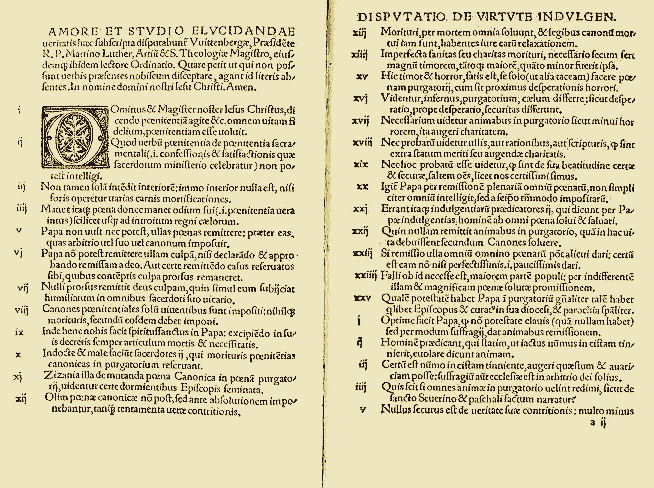
The Protestant Reformation was a seismic religious, political, and cultural movement that began on October 31, 1517, when German monk Martin Luther nailed his 95 Theses to the door of Wittenberg's Castle Church, challenging the Catholic Church's sale of indulgences and the authority of the pope. Within decades, the Reformation had permanently fractured Western Christianity, spawned entirely new denominations—Lutheran, Calvinist, Anglican, and Anabaptist—and reshaped the political map of Europe. Its consequences reached far beyond theology, fundamentally altering education, governance, literacy, and the very concept of individual conscience.
What Were the Root Causes of the Protestant Reformation?
The Reformation did not emerge from nowhere. By the early 16th century, deep structural tensions had been building within the Catholic Church for well over a century. Clerical corruption was rampant: many bishops and priests held multiple offices simultaneously (a practice called pluralism), rarely visited their parishes, and lived lavishly. Pope Alexander VI (r. 1492–1503) openly acknowledged his illegitimate children and used the papacy to enrich his Borgia family. The sale of indulgences—documents that promised remission of punishment for sins in exchange for money—had become a major revenue stream, most notoriously exploited by Johann Tetzel, a Dominican friar who sold them aggressively across Germany from 1516 to fund the rebuilding of St. Peter's Basilica in Rome. Theological discontent had earlier predecessors: John Wycliffe in England (1320s–1384) and Jan Hus in Bohemia (1369–1415) had already challenged papal supremacy and clerical abuses, and Hus was burned at the Council of Constance for heresy. The invention of the Gutenberg printing press around 1440 proved decisive: it enabled ideas to spread at unprecedented speed, meaning Luther's theses were reprinted across Germany within weeks of being posted. Humanism, championed by scholars like Erasmus of Rotterdam (1466–1536), had also cultivated a culture of returning to original Greek and Hebrew scriptural texts, exposing discrepancies between the Bible and Catholic doctrine. These converging forces—corrupt institutions, new communication technology, and intellectual ferment—created a powder keg that Luther's match ignited.
Who Was Martin Luther and What Did He Actually Argue?
Martin Luther (1483–1546) was an Augustinian friar and professor of theology at the University of Wittenberg in Saxony. Deeply troubled by the question of how a sinful human being could be justified before a righteous God, Luther arrived at his transformative doctrine of 'justification by faith alone' (sola fide) through intensive study of Paul's Letter to the Romans. His 95 Theses—formally titled Disputatio pro Declaratione Virtutis Indulgentiarum—were originally written in Latin and intended as an academic debate, but vernacular translations circulated rapidly. Luther argued that indulgences were theologically fraudulent: only genuine repentance and God's grace, not purchased certificates, could secure salvation. He further challenged the pope's authority over purgatory and insisted that scripture (sola scriptura) was the supreme authority in matters of faith, not Church tradition or papal decree. When summoned before the Diet of Worms in April 1521, Luther refused to recant, reportedly declaring, 'Here I stand, I can do no other.' Holy Roman Emperor Charles V declared him an outlaw under the Edict of Worms, but Luther was sheltered by Frederick III, Elector of Saxony, at Wartburg Castle, where he translated the New Testament into German in just 11 weeks—a work that standardised the German language and made scripture directly accessible to ordinary people. By 1530, Luther had articulated his theological framework in the Augsburg Confession, the foundational document of Lutheranism, presented to Emperor Charles V by German princes who had embraced the new faith.
How Did the Reformation Spread Across Europe?
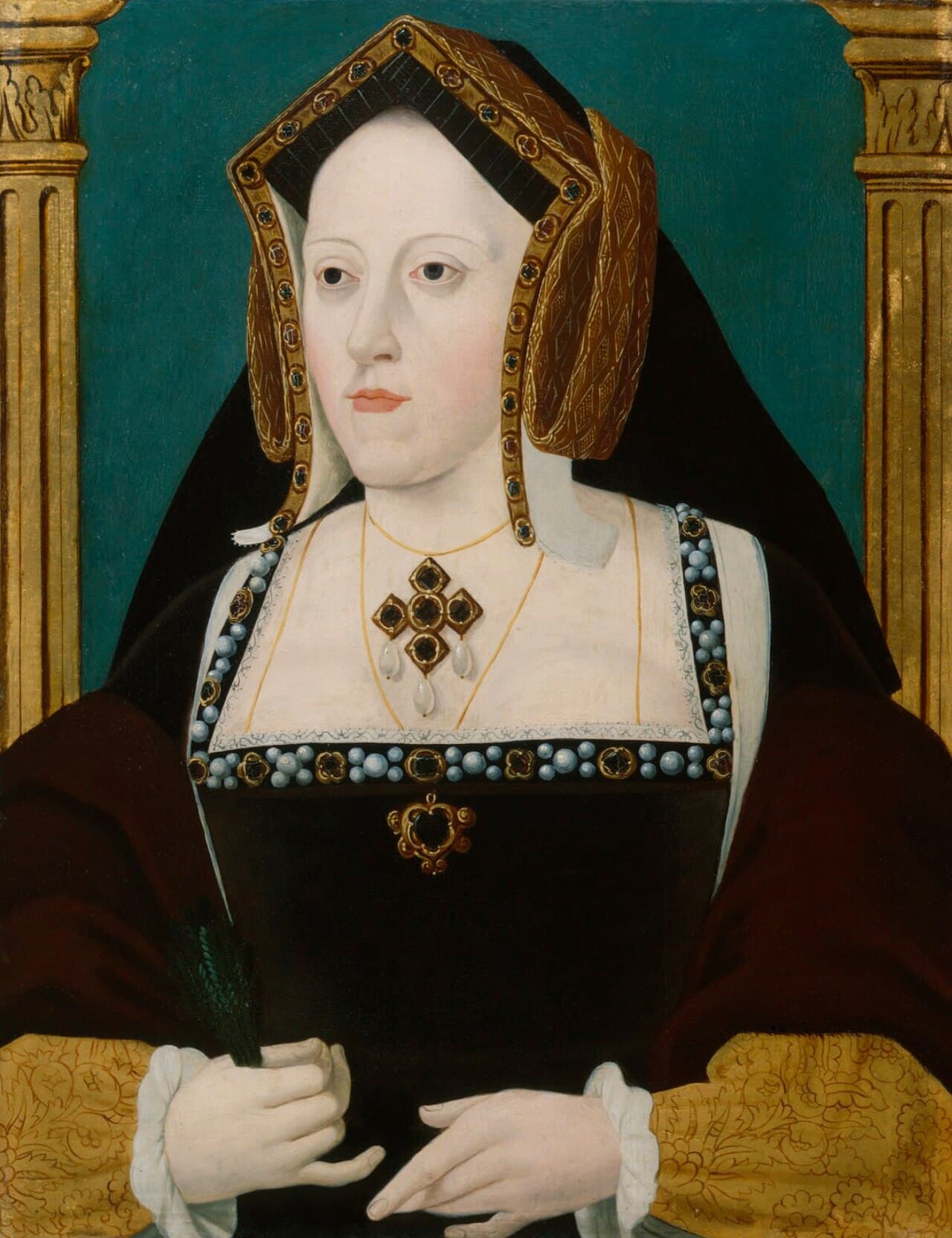
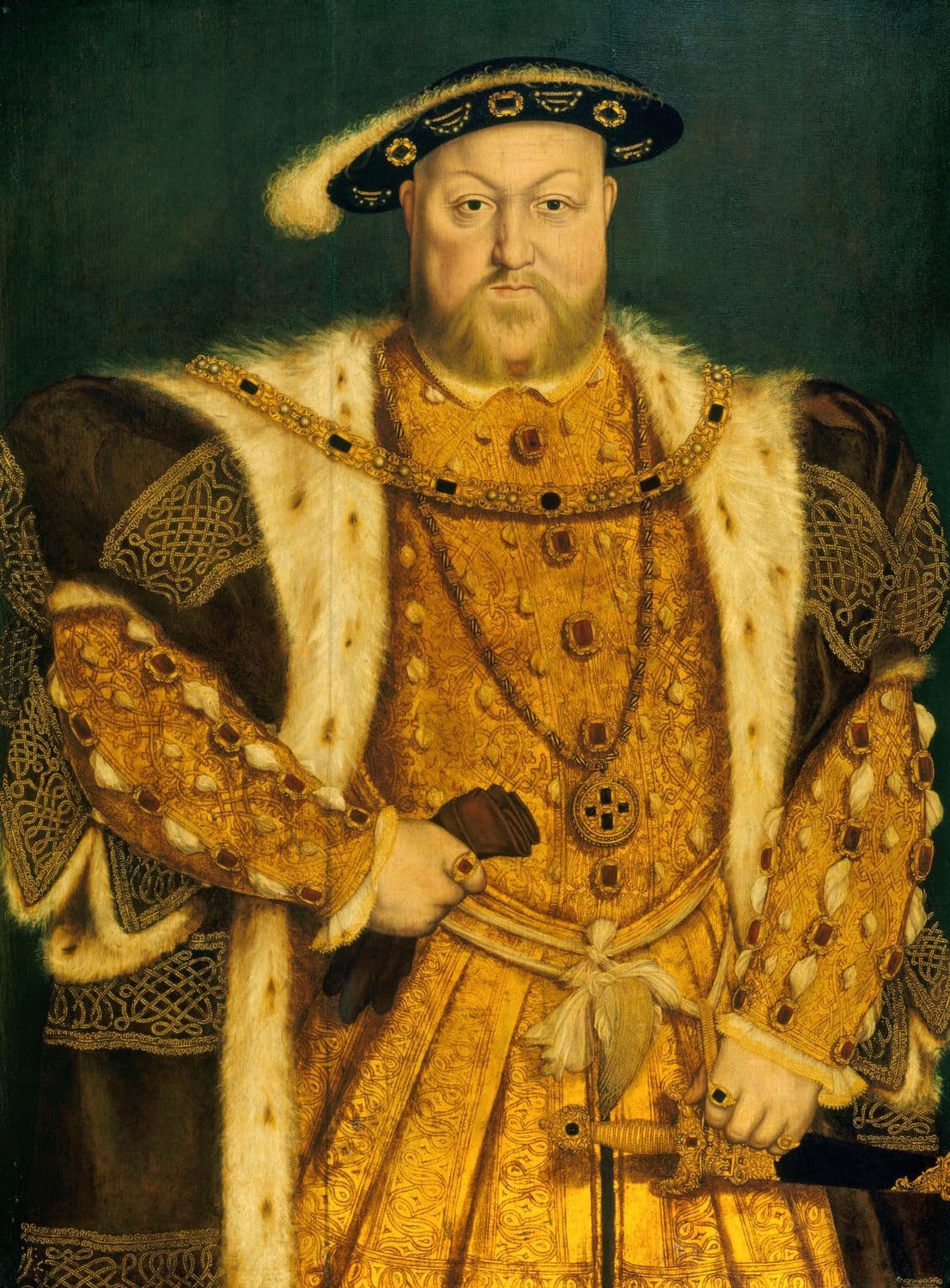
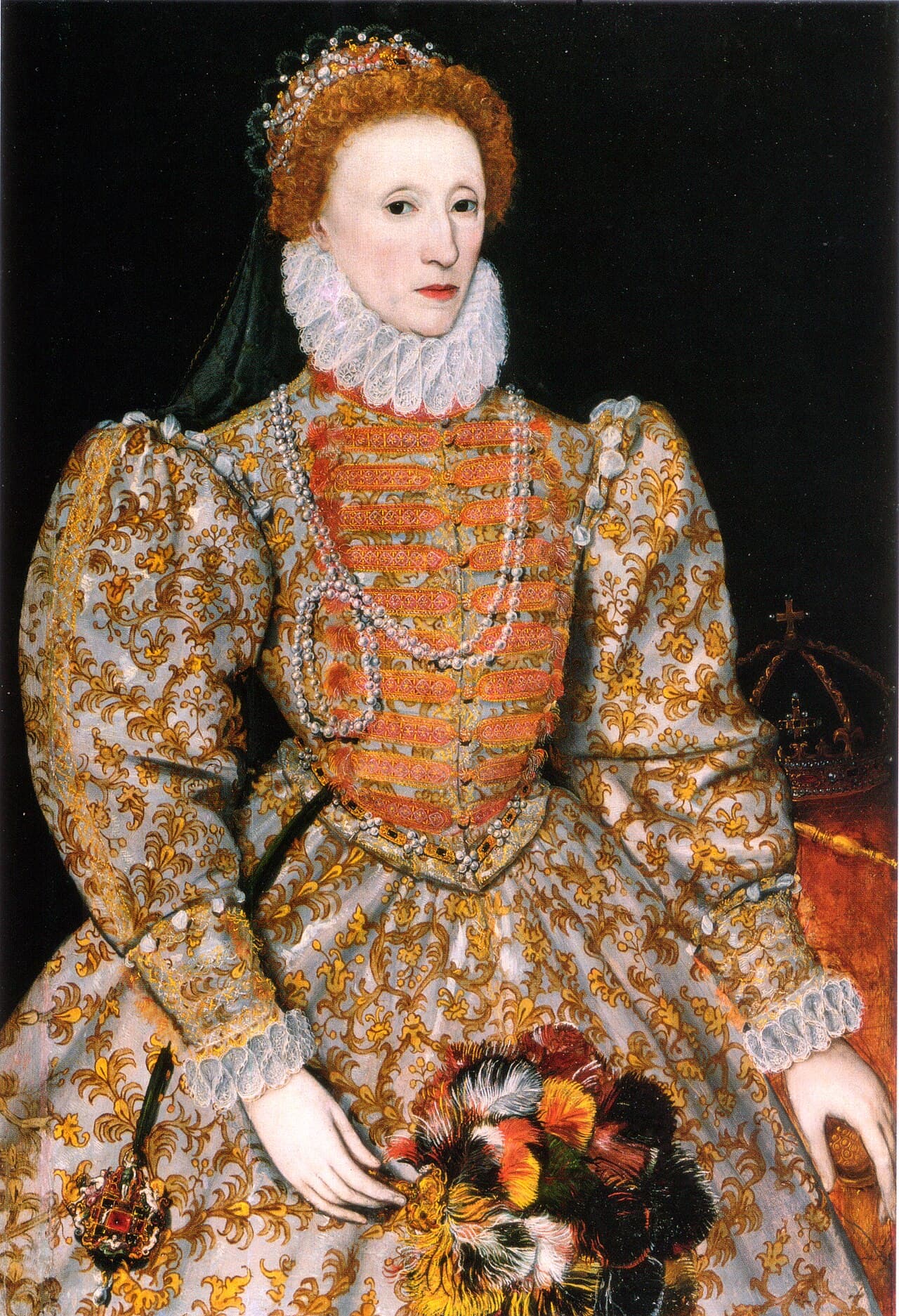
The Reformation spread with remarkable speed, adapting different theological flavours in different regions. In Switzerland, Huldrych Zwingli (1484–1531) led a parallel but distinct reform movement in Zürich from 1519, disagreeing sharply with Luther over the Lord's Supper—Zwingli rejected any physical presence of Christ in the Eucharist, while Luther maintained a form of real presence. Zwingli died in battle at Kappel in 1531 as Protestant and Catholic Swiss cantons clashed militarily. John Calvin (1509–1564), a French theologian who settled in Geneva, proved the most systematically influential reformer after Luther. His 1536 Institutes of the Christian Religion became the theological handbook of Reformed Protestantism, emphasising the absolute sovereignty of God and the doctrine of predestination—the idea that God had already determined who would be saved. Geneva under Calvin became a model theocratic city-state that inspired Reformed churches in France (Huguenots), Scotland (Presbyterians under John Knox), the Netherlands, and eventually New England. In England, the Reformation took a uniquely political turn. Henry VIII (r. 1509–1547) had initially defended Catholicism and earned the title 'Defender of the Faith' from Pope Leo X in 1521. But his desire to annul his marriage to Catherine of Aragon—which the pope refused—led him to break with Rome through the Act of Supremacy in 1534, declaring himself Supreme Head of the Church of England. The English Reformation was initially more about royal authority than theological revolution, though under Edward VI (r. 1547–1553) and later Elizabeth I (r. 1558–1603) a distinctly Protestant theology was consolidated in the Thirty-Nine Articles of 1563. The Anabaptists, active from the 1520s in Zurich and spreading through the Holy Roman Empire, took the most radical stance: rejecting infant baptism, insisting on believers' baptism, separating church from state entirely, and refusing to swear oaths or bear arms. They were persecuted violently by both Catholics and mainline Protestants—an estimated 2,000–5,000 Anabaptists were executed across Europe between 1525 and 1618.
What Was the Catholic Church's Response to the Reformation?
The Catholic Church's answer to Protestantism is known as the Counter-Reformation (or Catholic Reformation), a sustained effort to clarify doctrine, eliminate corruption, and recover lost ground. Its centrepiece was the Council of Trent, which met in three sessions between 1545 and 1563 in the northern Italian city of Trento. The Council reaffirmed the authority of tradition alongside scripture, defended the seven sacraments, upheld the Latin Vulgate Bible as authoritative, and issued sweeping reforms of clerical education and discipline—requiring bishops to reside in their dioceses and establishing seminaries for the proper training of priests. The Society of Jesus (Jesuits), founded by Ignatius of Loyola and formally approved by Pope Paul III in 1540, became the shock troops of Catholic renewal. Through rigorous education, missionary activity, and direct work at royal courts, the Jesuits helped reclaim Poland, much of southern Germany, and large parts of the Americas. The Roman Inquisition, reorganised in 1542, targeted heresy more systematically in southern Europe. The Index of Forbidden Books, established in 1559, catalogued works Catholics were prohibited from reading—including works by Luther, Calvin, and later Galileo. These measures stabilised Catholicism in southern Europe but could not dislodge Protestantism from the north.
How Did the Reformation Lead to Europe's Religious Wars?
Religious division translated almost immediately into political conflict. The German Peasants' War of 1524–1525, partly inspired by Lutheran ideas of Christian freedom, saw up to 300,000 peasants revolt against nobles and clergy before being crushed with Luther's own approval—an episode that cost him significant popular support among the lower classes. The Peace of Augsburg (1555) attempted to stabilise the Holy Roman Empire by establishing the principle of cuius regio, eius religio ('whose realm, his religion'), allowing German princes to determine the religion of their territory. But it excluded Calvinism and satisfied neither side permanently. The French Wars of Religion (1562–1598) killed an estimated two to four million people and included the St. Bartholomew's Day Massacre of August 23–24, 1572, in which approximately 3,000 Huguenots were killed in Paris alone and between 5,000 and 30,000 across France within weeks. The conflict ended with the Edict of Nantes (1598), which granted Huguenots limited rights. The most catastrophic conflict was the Thirty Years' War (1618–1648), which devastated Central Europe and killed roughly eight million people—through combat, famine, and disease—reducing the population of some German territories by up to a third. The Peace of Westphalia (1648) finally ended the war, recognising Lutheranism, Calvinism, and Catholicism as legitimate faiths and laying foundational principles for modern international relations and the concept of state sovereignty.
| Reformer | Country | Key Doctrine | Denomination Founded | Key Date |
|---|---|---|---|---|
| Martin Luther | Germany | Justification by faith alone; sola scriptura | Lutheranism | 1517 |
| Huldrych Zwingli | Switzerland | Symbolic Eucharist; scripture over tradition | Reformed/Zwinglian | 1519 |
| John Calvin | France/Switzerland | Predestination; God's absolute sovereignty | Calvinism (Reformed) | 1536 |
| Henry VIII / Thomas Cranmer | England | Royal supremacy; via media theology | Anglicanism | 1534 |
| Menno Simons | Netherlands | Believers' baptism; pacifism; church-state separation | Anabaptism/Mennonite | 1537 |
| John Knox | Scotland | Calvinist polity; presbyterian church government | Presbyterianism | 1560 |
Why Was the Printing Press So Critical to the Reformation's Success?
Without Johannes Gutenberg's movable-type printing press, invented around 1440, the Reformation would almost certainly have remained a regional dispute like the earlier movements of Wycliffe and Hus, both of which were suppressed before they could ignite lasting change. By 1500, approximately 20 million books had been printed across Europe. Between 1517 and 1520 alone, Luther's works sold an estimated 300,000 copies—a staggering figure for the era. Pamphlets, broadsheets, and illustrated woodcuts translated complex theological arguments into accessible popular language and imagery, reaching audiences who could not read Latin. The press also enabled Luther's German Bible (New Testament 1522, complete Bible 1534) to circulate widely, fostering both literacy and a direct personal engagement with scripture that undermined the Church's traditional role as sole interpreter of divine truth. Historians Elizabeth Eisenstein and Andrew Pettegree have argued that the printing press was not merely a tool the Reformation used—it was a fundamental reason the Reformation succeeded where earlier reform movements had failed.
What Was the Long-Term Legacy of the Protestant Reformation?
The Reformation's legacy permeates virtually every aspect of modern Western civilisation. Politically, by undermining the universal authority of the papacy and empowering secular rulers over religious affairs, it accelerated the development of the nation-state and contributed to the eventual separation of church and state. The Peace of Westphalia (1648), which ended the Thirty Years' War, is widely regarded as the founding document of the modern international order. Educationally, Luther's insistence that every Christian should read the Bible personally drove a massive push for universal literacy and public schooling, particularly in Protestant territories. Luther himself wrote an influential treatise in 1524 urging German cities to establish schools. Economically, sociologist Max Weber's landmark 1905 work The Protestant Ethic and the Spirit of Capitalism controversially argued that Calvinist theology—particularly the idea that worldly success might signal election—fostered the disciplined, rational approach to labour and accumulation that underpinned modern capitalism. While heavily debated, Weber's thesis highlights how thoroughly Reformation ideas intersected with economic development. Intellectually, the Reformation's emphasis on individual interpretation of scripture contributed to a culture of questioning authority that fed into the Scientific Revolution and the Enlightenment. Denominationally, the Reformation spawned a proliferation of Christian sects—today there are an estimated 45,000 Christian denominations worldwide, the vast majority of which trace their theological lineage to the 16th-century rupture. In terms of religious population, roughly 800 million of the world's 2.4 billion Christians today are Protestant, representing approximately one-third of global Christianity. The Reformation also profoundly shaped Western art, music (Johann Sebastian Bach composed within the Lutheran tradition), literature, and philosophy, making it one of the most consequential intellectual and spiritual upheavals in human history.
How Is the Reformation Remembered and Debated Today?
The 500th anniversary of Luther's 95 Theses in 2017 prompted extensive reflection across both Protestant and Catholic traditions. Pope Francis visited Lund, Sweden, in October 2016 to jointly mark the anniversary with the Lutheran World Federation—a striking symbol of ecumenical progress since the bitter mutual excommunications and wars of the 16th century. Scholarly debate continues over the Reformation's character: was it primarily a theological revolution, a political power struggle, a social movement, or a media phenomenon enabled by print? Historians like Eamon Duffy (in 'The Stripping of the Altars', 1992) have challenged the traditional Protestant narrative of a Church in total decay, arguing that late medieval Catholicism was vibrant and genuinely beloved by many ordinary people before reform movements disrupted it. Others emphasise that without the political ambitions of princes like Frederick the Wise and later Philip of Hesse, Luther's movement might have been extinguished as quickly as Hus's. The Reformation remains a defining watershed—the moment when the unity of Western Christendom that had prevailed since the fall of Rome became permanently, irrevocably, and arguably productively shattered.