On the morning of October 29, 1929, a date that would become forever known as Black Tuesday, the New York Stock Exchange collapsed in a frenzy of panic selling. Nearly 16 million shares changed hands as fortunes evaporated overnight. What followed was not merely a financial correction but the most devastating economic catastrophe in modern history — a decade-long crisis that would leave a quarter of Americans unemployed, topple governments across Europe, and fundamentally alter the relationship between citizens and the state.
The Roaring Twenties and the Seeds of Collapse
The Great Depression did not emerge from a vacuum. The 1920s had been a decade of extraordinary prosperity and reckless optimism in the United States. Industrial output soared, consumer credit exploded, and ordinary Americans poured their savings — and borrowed money — into a stock market that seemed destined to rise forever. By 1929, stock prices had swelled to levels entirely disconnected from underlying corporate earnings. Banks extended loans liberally, both to consumers and to speculators, while regulators stood largely idle. Agricultural communities, particularly in the rural South and Midwest, had never fully shared in the decade's prosperity; farm prices had been depressed throughout the 1920s, leaving millions of rural Americans already vulnerable when the broader collapse arrived.
The crash unfolded in stages. A sharp decline began in late October 1929, but many economists and politicians, including President Herbert Hoover, initially insisted the fundamentals of the American economy remained sound. They were catastrophically wrong. As banks began calling in loans, businesses cut production, workers lost jobs, and consumers stopped spending — a vicious cycle of contraction that proved almost impossible to break.
The Human Toll: Unemployment, Dust, and Despair
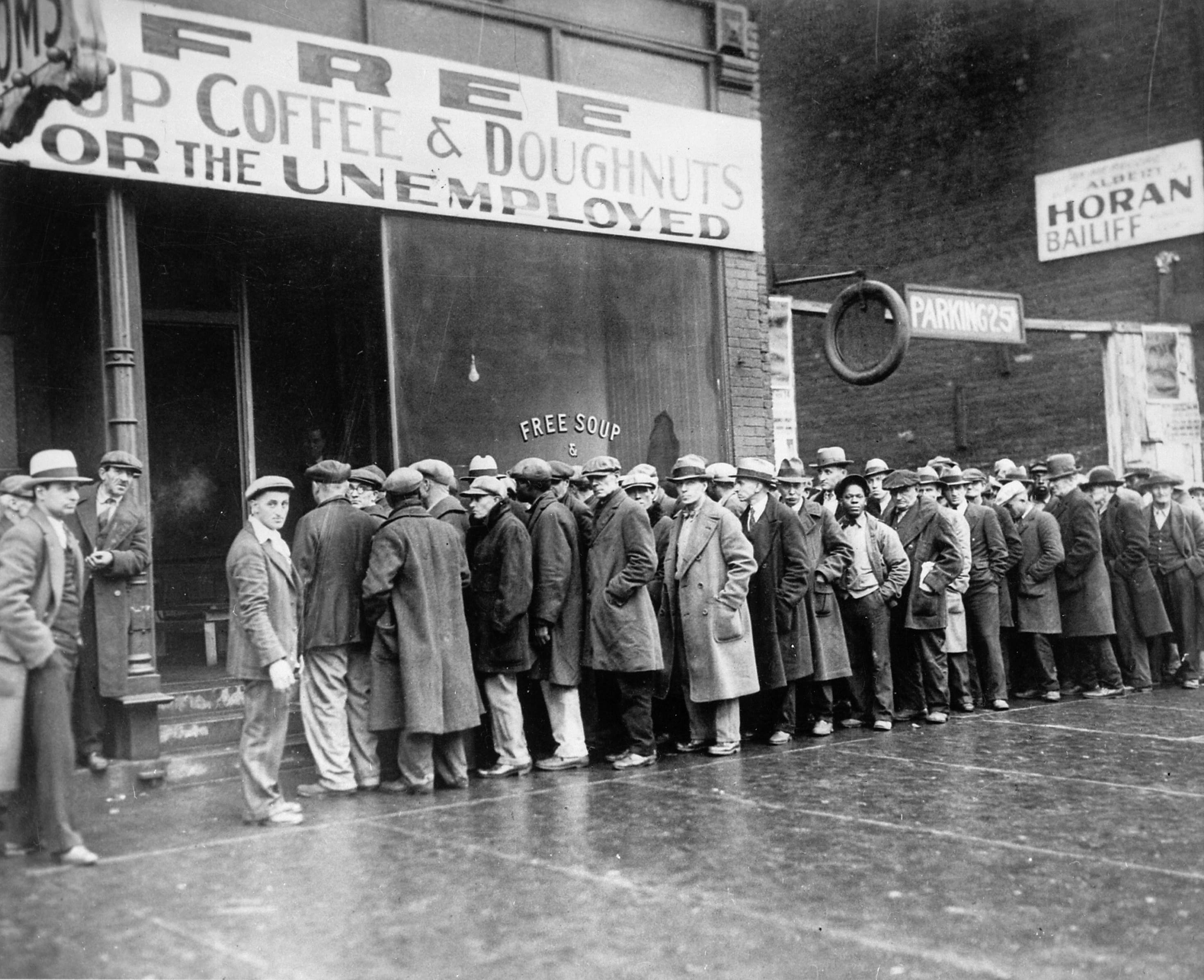
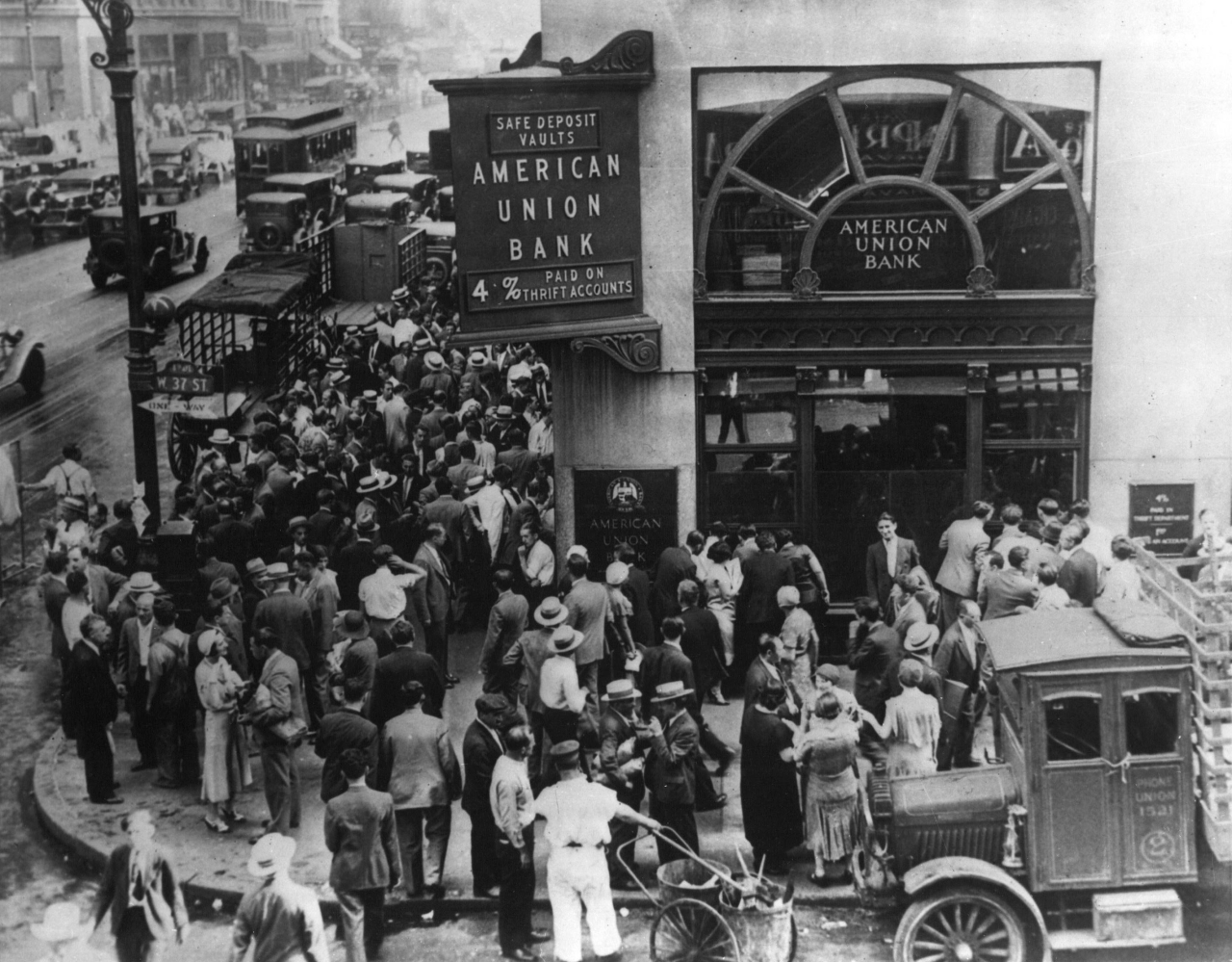
By 1933, unemployment in the United States had reached approximately 25 percent — roughly 13 million people out of work. Breadlines stretched around city blocks. Shantytowns, bitterly nicknamed 'Hoovervilles' after the president many blamed for inaction, sprang up on the outskirts of major cities. Families lost their homes to foreclosure; banks failed by the thousands, wiping out life savings without any deposit insurance to protect ordinary citizens.
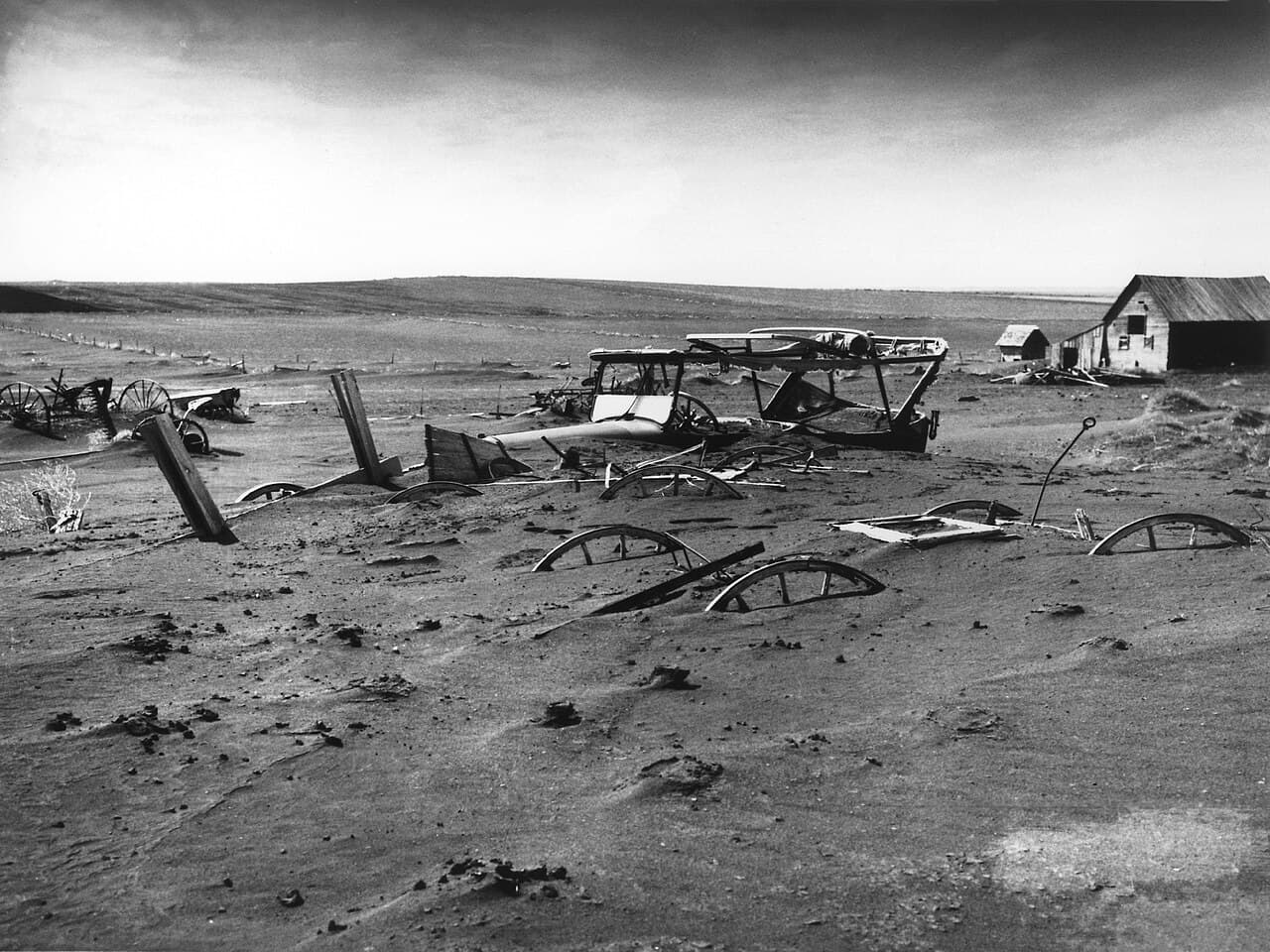
The misery was compounded dramatically in the early 1930s by an ecological catastrophe. Years of intensive farming and a prolonged drought transformed the Great Plains into the Dust Bowl. Massive black blizzards of topsoil swept across Oklahoma, Texas, Kansas, and neighboring states, burying farms and towns. Hundreds of thousands of 'Okies' — displaced farming families — loaded their possessions onto rattling automobiles and migrated west to California, only to find exploitation and hostility. Author John Steinbeck immortalized their plight in his 1939 novel 'The Grapes of Wrath,' one of the most powerful social documents in American literary history.
The Global Spread: A Crisis Without Borders
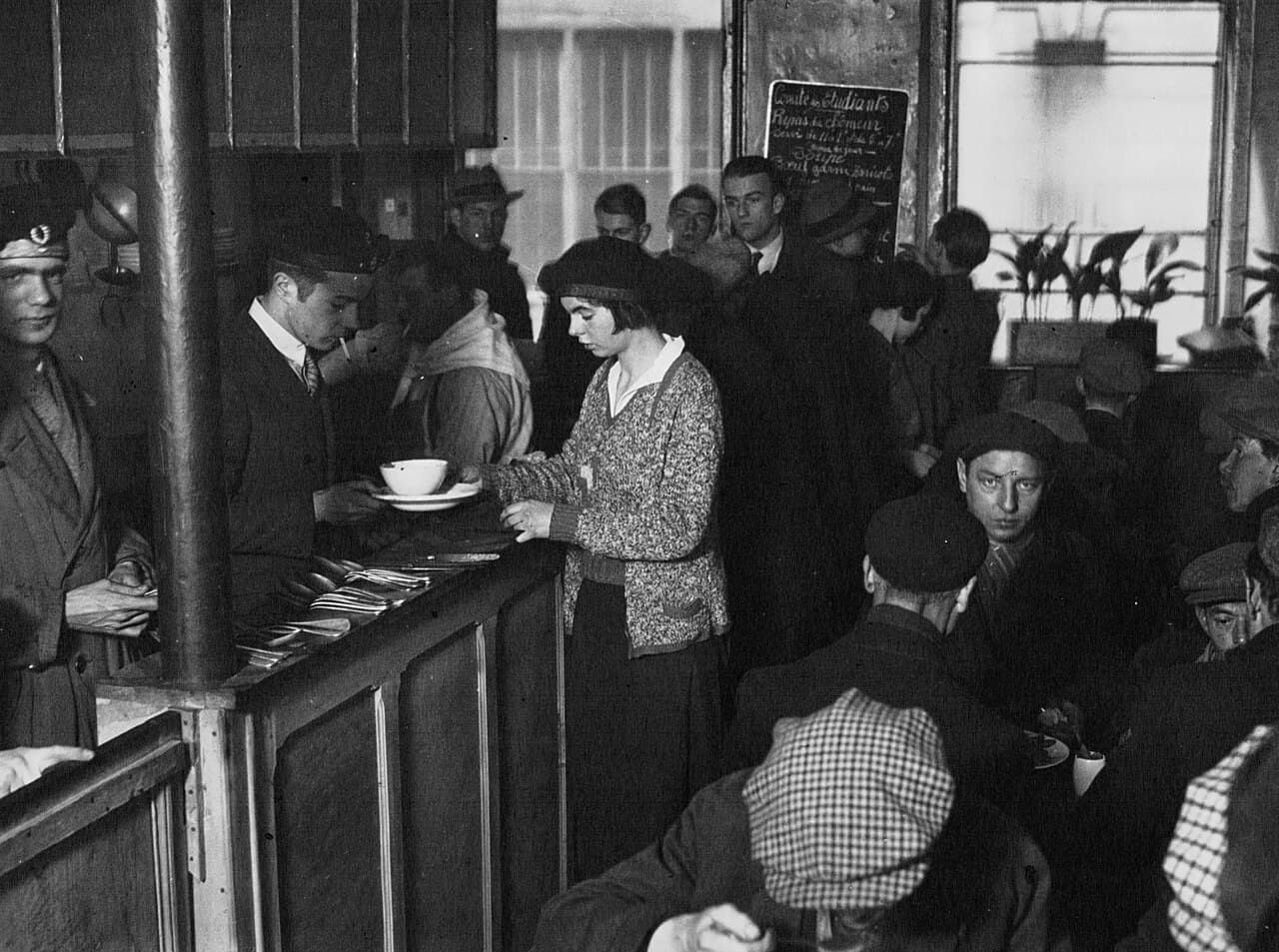
The Great Depression was emphatically not an American phenomenon alone. Because the United States had become the world's dominant creditor nation after World War I, its financial collapse reverberated globally with terrifying speed. American banks recalled loans from European nations, devastating economies still struggling to recover from the war. Germany, already burdened by the punishing reparations imposed by the Treaty of Versailles, suffered unemployment rates that rivaled or exceeded those in the United States. Britain, France, Australia, Canada, and Latin American nations all experienced severe contractions.
The international gold standard, which had forced countries to maintain tight monetary policy regardless of domestic conditions, acted as a transmission belt for the crisis. Nations that abandoned the gold standard earlier — such as Britain in 1931 — generally recovered sooner. The collapse of global trade, accelerated by protectionist legislation such as the American Smoot-Hawley Tariff Act of 1930, strangled international commerce and pushed the world deeper into economic nationalism.
Political Earthquake: From Roosevelt to Hitler
The Depression's political consequences were as profound as its economic ones. In the United States, the crisis delivered Franklin D. Roosevelt to the presidency in a landslide in 1932. Roosevelt's New Deal — a sweeping array of relief programs, financial reforms, and public works initiatives — did not end the Depression, but it fundamentally transformed the role of the federal government. Programs such as Social Security, the Federal Deposit Insurance Corporation (FDIC), the Securities and Exchange Commission (SEC), and the Civilian Conservation Corps created an institutional safety net that endures to this day.
In Europe, the consequences were far darker. The Depression discredited democratic governments that appeared helpless in the face of mass suffering. In Germany, economic desperation and political humiliation created fertile ground for Adolf Hitler and the National Socialist movement. Hitler was appointed Chancellor in January 1933 — the same month Roosevelt took office in America — and exploited the crisis to dismantle democracy entirely. Similar authoritarian movements gained strength across Spain, Italy, Hungary, and Romania. The Depression did not cause World War II, but it created the conditions in which fascism could flourish.
Recovery and Legacy: A World Transformed
Recovery was slow, uneven, and ultimately incomplete. The American economy did not fully escape the Depression until World War II mobilization generated massive government spending and absorbed millions of unemployed workers into military service and defense industries. Economists later debated fiercely what had prolonged the crisis — the Federal Reserve's catastrophic decision to tighten monetary policy in the early 1930s, the initial reluctance to embrace deficit spending, and the premature austerity of 1937 which triggered a sharp recession within the Depression.
The intellectual legacy of the Great Depression was immense. British economist John Maynard Keynes published his landmark 'General Theory of Employment, Interest and Money' in 1936, arguing that governments must actively manage aggregate demand during downturns. Keynesian economics would dominate Western economic policy for decades. The institutional reforms of the New Deal era — deposit insurance, financial regulation, social insurance programs — reflected a new consensus that unfettered capitalism required guardrails to prevent catastrophic failure.
Key Economic Indicators: The Depth of the Crisis
| Indicator | 1929 | 1933 |
|---|---|---|
| U.S. Unemployment Rate | 3.2% | 24.9% |
| U.S. GDP (billions, 1940 dollars) | $105.2 | $78.3 |
| U.S. Bank Failures (cumulative) | 659 | ~9,000 |
| Stock Market (Dow Jones) | 381 (Sept. peak) | 41.2 (July 1932 low) |
| Global Trade Volume | Baseline 100 | ~33 (fell ~67%) |
The Great Depression stands as a permanent reminder of the fragility of economic systems and the human cost of their failure. Its lessons — about the dangers of speculation, the necessity of financial regulation, the importance of social safety nets, and the political consequences of mass despair — remain urgently relevant nearly a century later. Every major economic crisis since, from the stagflation of the 1970s to the financial crash of 2008, has been understood and responded to in the long shadow cast by the 1930s.