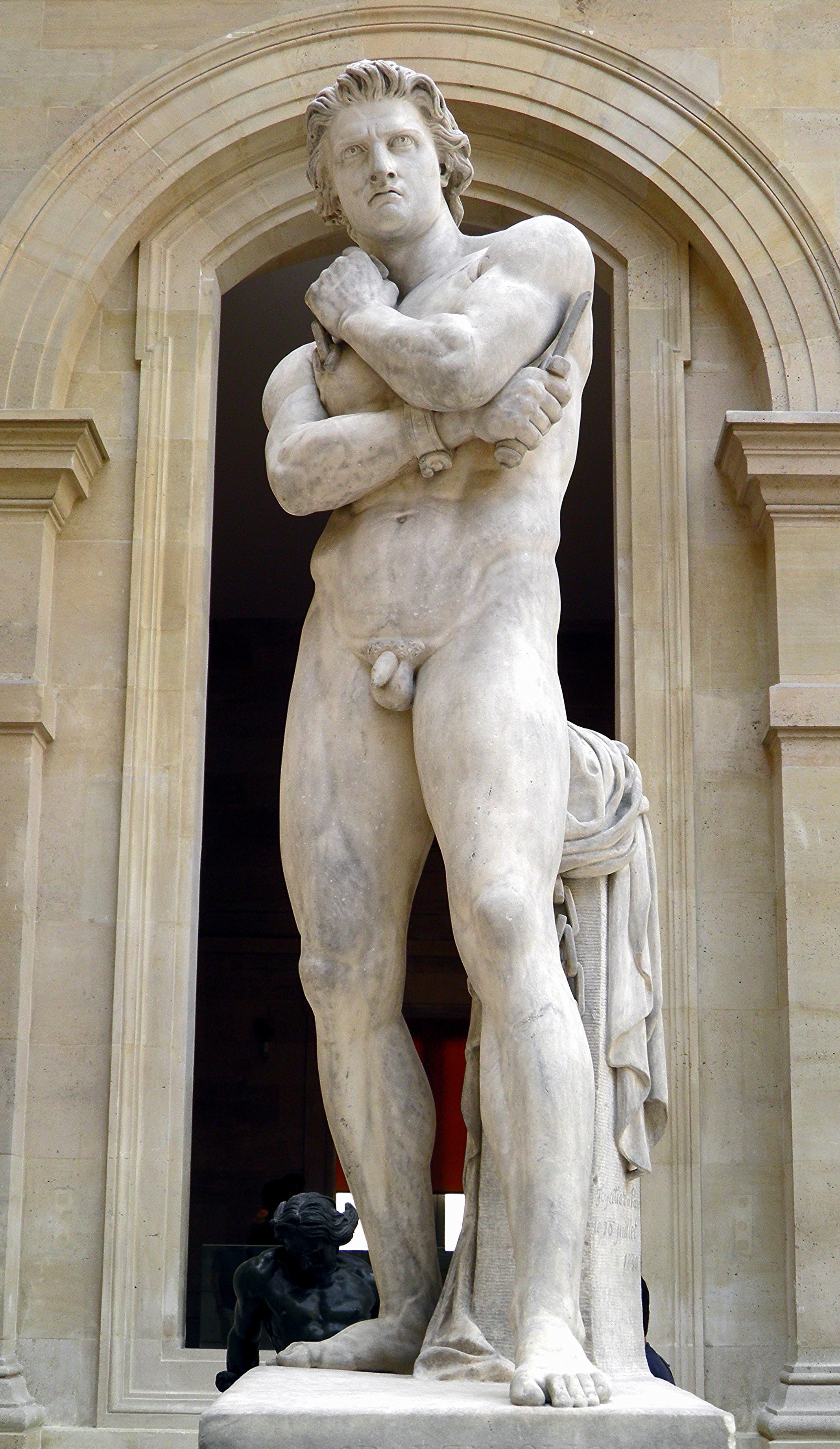
Spartacus was a Thracian gladiator who, in 73 BC, led the largest and most devastating slave uprising in Roman history — the Third Servile War. Escaping from a gladiatorial school in Capua with roughly 70 followers, he built an army of up to 120,000 enslaved people that repeatedly defeated Rome's professional legions over nearly three years. Though ultimately crushed by Marcus Licinius Crassus in 71 BC, Spartacus remains the most celebrated rebel slave in Western history, a symbol of resistance against oppression whose story has echoed through two millennia of politics, art, and culture.
Who Was Spartacus? Origins and Early Life
The historical record on Spartacus's early life is frustratingly thin, filtered almost entirely through Roman sources who had little interest in humanising their enemy. The ancient historian Plutarch describes him as 'a Thracian of Nomadic stock,' suggesting he came from one of the tribal confederacies in the region of modern Bulgaria. Appian, writing in the 2nd century AD, adds that he had once served as an auxiliary soldier in the Roman army — a detail that would explain his extraordinary grasp of Roman military tactics. At some point he either deserted or was captured, enslaved, and sold to Lentulus Batiatus, owner of a ludus (gladiatorial training school) at Capua, in the fertile Campania region of southern Italy. Plutarch notes that Spartacus was 'more like a Greek than a Thracian' in his intelligence and culture, a backhanded compliment that nonetheless signals contemporaries found him remarkably sophisticated. His wife, an unnamed prophetess from his own tribe, was enslaved alongside him; according to Plutarch, she prophesied at the time of his enslavement that 'a great and terrible power would attend him to a fortunate conclusion.' Whether legend or fact, the anecdote reveals how profoundly his eventual campaign unsettled Roman society.
How Did the Revolt Begin? The Escape from Capua (73 BC)
In the spring of 73 BC, approximately 200 gladiators at the ludus of Batiatus plotted to escape. The conspiracy was betrayed before it could be fully enacted, but around 70–78 men — armed with kitchen utensils, cleavers, and spits from the school's kitchens — broke out and fled. On the road they intercepted several wagons carrying gladiatorial weapons, which they seized and distributed. The escapees made for Mount Vesuvius, the great dormant volcano looming over the Bay of Naples, and established a fortified camp on its slopes. Slaves from surrounding estates poured into the camp in the following weeks, swelling the group rapidly. Rome's initial response was contemptuous: the praetor Gaius Claudius Glaber was sent with a 3,000-man militia force — not even a proper legion — to blockade the rebels on the mountain. Glaber established his camp at the single obvious path down the volcano, confident starvation would do the rest. Spartacus's response was inspired: his men wove ropes from wild vines, lowered themselves down the sheer cliff face on the opposite side of the volcano under cover of night, circled around, and attacked Glaber's camp from the rear. The Romans fled in panic. A second praetorian force under Publius Varinius met a similar fate. By the winter of 73 BC, the rebellion was no longer a policing problem. It was a war.
What Were the Key Battles of the Third Servile War?
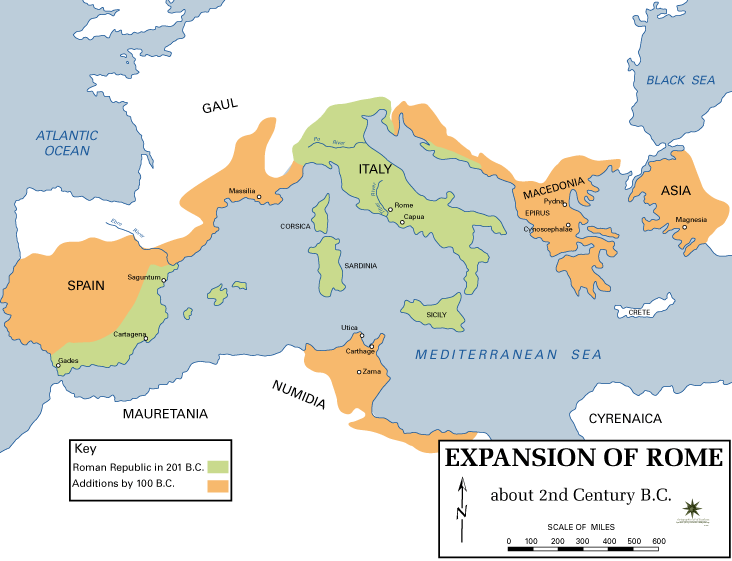
Over 73–71 BC, Spartacus's forces fought at least a dozen significant engagements, winning the majority of them. After routing the praetors at Vesuvius, the rebel army moved south through Lucania and then north into Apulia and Campania, living off the land and growing in numbers. By 72 BC the Senate, alarmed, dispatched two full consular armies under the consuls Lucius Gellius Publicola and Gnaeus Cornelius Lentulus Clodianus — a combined force of roughly 30,000–40,000 men. Spartacus's co-leader Crixus, a Gaul, had broken away with perhaps 30,000 followers and was defeated and killed by Gellius near Mount Garganus in Apulia. Spartacus then turned north and inflicted crushing defeats on both consular armies in succession near Picenum and Modena (Mutina). After defeating the proconsul Gaius Cassius Longinus near Mutina in northern Italy, the rebel army stood at the very foothills of the Alps — and freedom. Here the course of the revolt took its most mysterious turn.
Why Did Spartacus Turn Back South Instead of Crossing the Alps?
This is the central strategic puzzle of the revolt, and ancient sources do not fully resolve it. Plutarch claims that Spartacus wished to lead his followers over the Alps to freedom in Gaul and Thrace, but that his men — intoxicated by their victories and the wealth they had plundered — refused to leave Italy, preferring instead to continue raiding its rich countryside. Modern historians, including Barry Strauss in his 2009 study 'The Spartacus War,' suggest several additional possibilities: the army may have been too large and diverse (comprising Thracians, Gauls, Germans, and Italians) to hold together on a disciplined northern march; supplies across the Alps in winter were uncertain; and crucially, many enslaved people had families and communities in Italy they were unwilling to abandon. Some scholars also propose that Spartacus had ambitions beyond simply escaping — that he sought to destabilise or even threaten Rome itself. Whatever the reason, the decision to march south again proved fatal in the long run. The army plundered its way through central Italy and reached the straits of Messina, where Spartacus reportedly negotiated with Cilician pirates to ferry his forces to Sicily — intending to reignite the earlier Sicilian slave revolts. The pirates took his money and sailed away.
How Did Marcus Crassus Finally Defeat Spartacus?
After two years of humiliation, the Roman Senate turned to the richest man in Rome: Marcus Licinius Crassus, who in 72 BC received an extraordinary command and set about rebuilding the demoralised legions. Crassus was given eight legions — approximately 40,000 to 50,000 soldiers. His first act was to restore iron discipline: he revived the ancient and terrifying practice of decimation, executing one in every ten men of a 500-strong unit that had fled a rebel assault. The psychological impact was immediate and brutal. Crassus then pursued the rebel army into Bruttium (the toe of Italy's boot), and in a remarkable feat of military engineering, built a wall and ditch — roughly 55 kilometres long — across the entire toe of Italy to trap Spartacus against the sea. On a single winter night in early 71 BC, Spartacus's forces filled in a section of the ditch with earth and timber and broke through, escaping northward again. But dissension within the rebel ranks was now fatal: two large Gallic and German contingents broke away and were destroyed by Crassus in separate engagements. Spartacus's remaining forces, perhaps 60,000 strong, were cornered in Lucania. In the final battle near the Siler River in spring 71 BC, the rebels fought with desperate courage. According to Appian, Spartacus killed two Roman centurions before being killed himself. His body was never identified in the carnage. Crassus crucified approximately 6,000 surviving rebels along the Appian Way from Capua to Rome — a 200-kilometre corridor of crosses, a monument of terror designed to warn any slave who might contemplate future rebellion.
| Phase | Date | Key Event | Outcome for Spartacus |
|---|---|---|---|
| Escape | 73 BC Spring | Breakout from Capua ludus with ~78 men | Success — Vesuvius camp established |
| First Victories | 73 BC Summer–Autumn | Defeats of Praetors Glaber and Varinius | Success — army swells to ~70,000 |
| Consular War | 72 BC | Defeat of consuls Gellius and Lentulus | Success — marches to the Alps |
| Alpine Decision | 72 BC Summer | Army refuses to cross Alps; turns south | Strategic turning point |
| Sicilian Plan | 72 BC Autumn | Pirate negotiations fail at Messina Strait | Failure — trapped in Italy |
| Crassus's Wall | 71 BC Winter | 55 km ditch traps rebels in Bruttium | Temporary escape, then fragmentation |
| Final Battle | 71 BC Spring | Battle of the Siler River, Lucania | Defeat — Spartacus killed |
| Aftermath | 71 BC | 6,000 rebels crucified on Appian Way | Revolt extinguished |
What Did Spartacus Actually Want? Goals and Motivations
Roman sources, all written by elite men with every reason to misrepresent the rebels, are unanimous that Spartacus wanted freedom — but differ on whether he aimed beyond personal liberation to broader political goals. Florus calls him 'that most ruinous of men,' while Plutarch grants him honour and intelligence. Modern historians debate whether Spartacus sought to abolish slavery as an institution (almost certainly not — the concept was too deeply embedded in ancient thought, and there is no evidence of any such manifesto), escape from Italy, or simply sustain an army that had developed its own momentum. What is clear is that Spartacus maintained a remarkable degree of discipline and organisation in an army with no shared language, culture, or long-term unified leadership. He reportedly melted down gold and silver equally among his followers and refused to allow slave traders to accompany the army — a striking detail suggesting at least some ideological commitment to equality. The real Spartacus was almost certainly neither the romantic revolutionary of 19th-century imagination nor a mere opportunist, but something more complicated: a gifted military commander holding together a genuinely heterogeneous mass of desperate people through charisma, capability, and a series of improbable victories.
Why Did the Revolt Fail? Key Weaknesses of the Slave Army
Despite its astonishing successes, the rebel army suffered from structural weaknesses that ultimately sealed its fate. First, there was no political programme or unified goal: Gauls, Germans, and Thracians had radically different visions of what victory meant, and the repeated fragmentation of forces — Crixus breaking away in 72 BC, Gallic units separating in 71 BC — cost the rebels decisive mass at critical moments. Second, the rebels had no navy, leaving them permanently vulnerable to Roman coastal supply lines and unable to extend the war to other theatres. Third, the Italian slave population, though large — perhaps 35% of the peninsula's total population of 6–7 million — was too ethnically divided and geographically dispersed to rise as a unified force. Many urban slaves and skilled freedmen had no desire to join a dangerous military campaign. Fourth, and most practically, the rebel army could not sustainably produce food, weapons, or equipment at the scale required. They lived by raiding, which was spectacular in the short term but strategically exhausting. Finally, the eventual appointment of Crassus — ambitious, methodical, and politically motivated — provided Rome with the focused military leadership that had been absent through the first two years of the war.
What Was the Legacy of Spartacus? Impact on Rome and History
The immediate impact on Roman policy was paradoxical: the revolt did not end slavery — slave numbers actually increased in the following decades as Roman conquests accelerated under Pompey and Caesar — but it did traumatise the Roman aristocracy profoundly. The Senate became more cautious about concentrating large numbers of slaves in any single location, and gladiatorial schools were placed under tighter surveillance. The revolt also served as a launching pad for the political ambitions of Crassus and Pompey (who returned from Spain just in time to intercept 5,000 fleeing rebels and claimed undue credit for the victory), intensifying their rivalry with each other and with Julius Caesar in the years leading to the collapse of the Republic. In the longer sweep of history, Spartacus became an icon in the 18th and 19th centuries as Enlightenment and Marxist thinkers recast him as a proto-revolutionary. Voltaire praised him; Karl Marx called him 'the most splendid fellow in the whole of ancient history.' The Spartacist League — the radical socialist group founded by Rosa Luxemburg and Karl Liebknecht in Germany in 1916 — took his name deliberately. In the 20th century, Howard Fast's 1951 novel 'Spartacus,' written while Fast was imprisoned for refusing to cooperate with the House Un-American Activities Committee, and Stanley Kubrick's 1960 film starring Kirk Douglas, cemented his global cultural status. The real Spartacus — Thracian, enslaved, gifted, and ultimately doomed — has been repeatedly remade in each era's own image. That malleability is itself a measure of how deeply his story has struck at fundamental questions of freedom, justice, and the limits of power.
Spartacus in Popular Culture: From Kubrick to Netflix
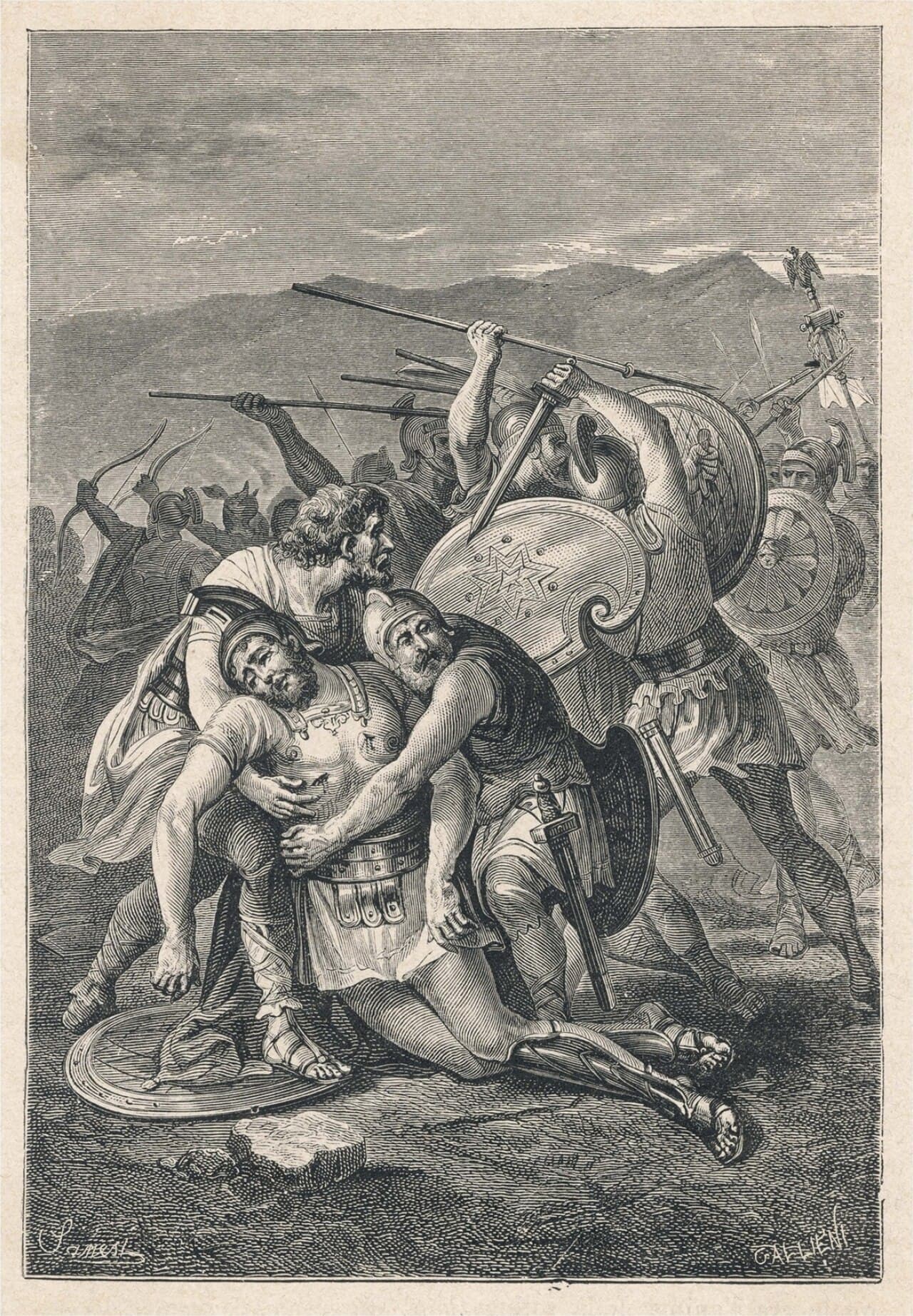
Stanley Kubrick's 1960 epic 'Spartacus,' produced by and starring Kirk Douglas, introduced the story to mass global audiences and won four Academy Awards. Douglas later said the film was his personal protest against McCarthyism — he credited blacklisted screenwriter Dalton Trumbo by name, a landmark moment in Hollywood history. The famous 'I am Spartacus' scene, though entirely invented, has become one of cinema's most quoted moments of solidarity. The Starz television series 'Spartacus' (2010–2013), while historically loose, sparked renewed academic interest in the revolt and drew millions of viewers to ancient Roman history. Video games, novels, and theatrical productions continue to draw on the legend. The story endures because it poses a question that never goes out of date: what does a person owe to a system that has enslaved them?