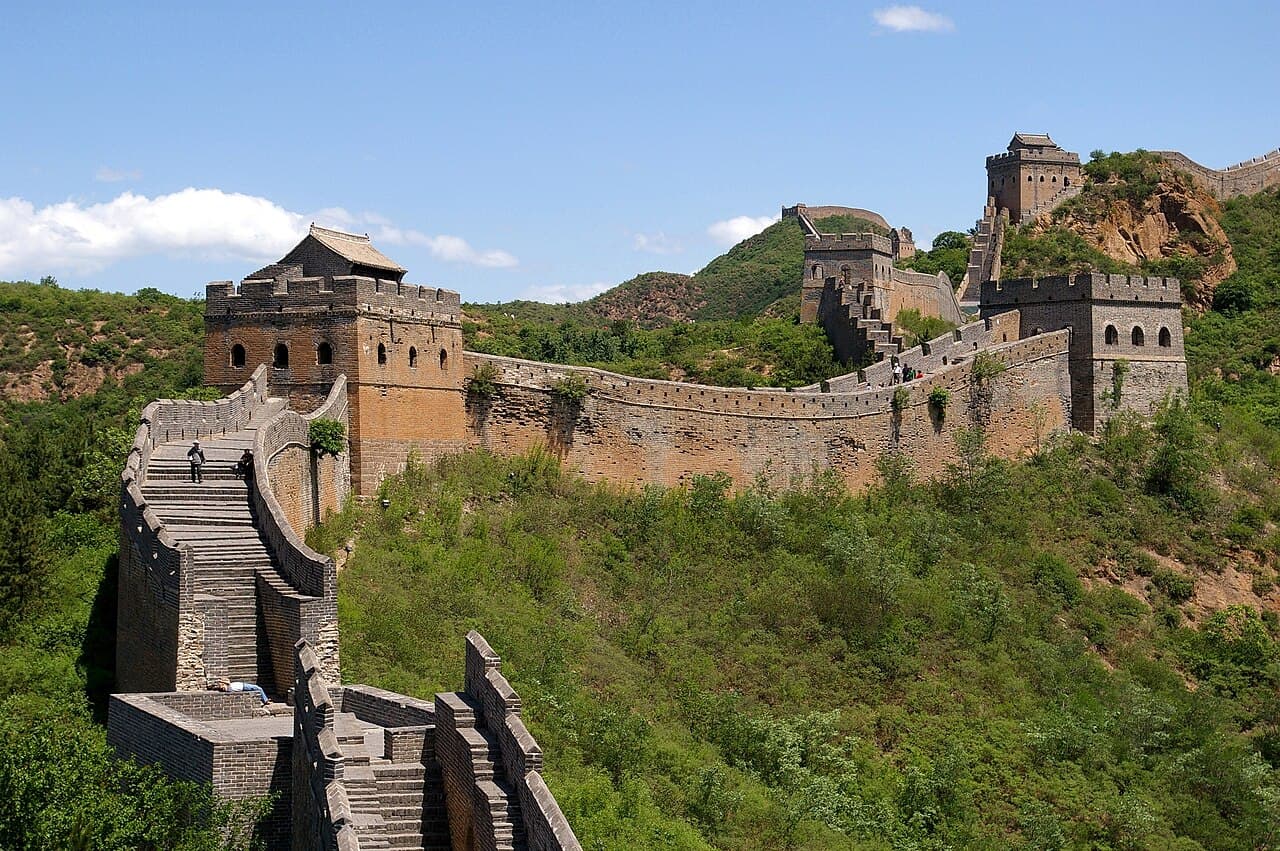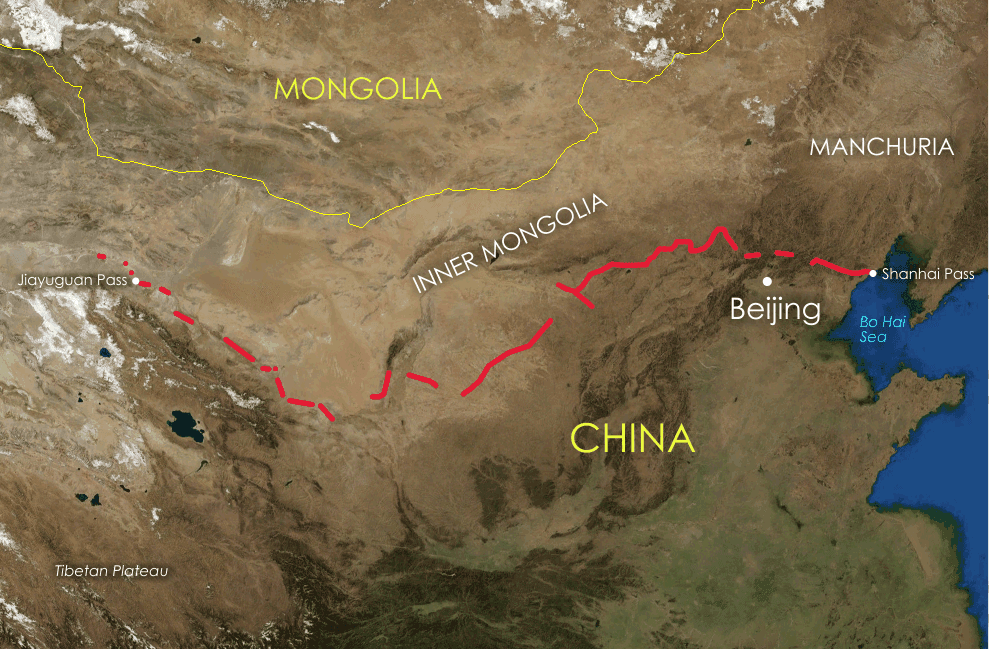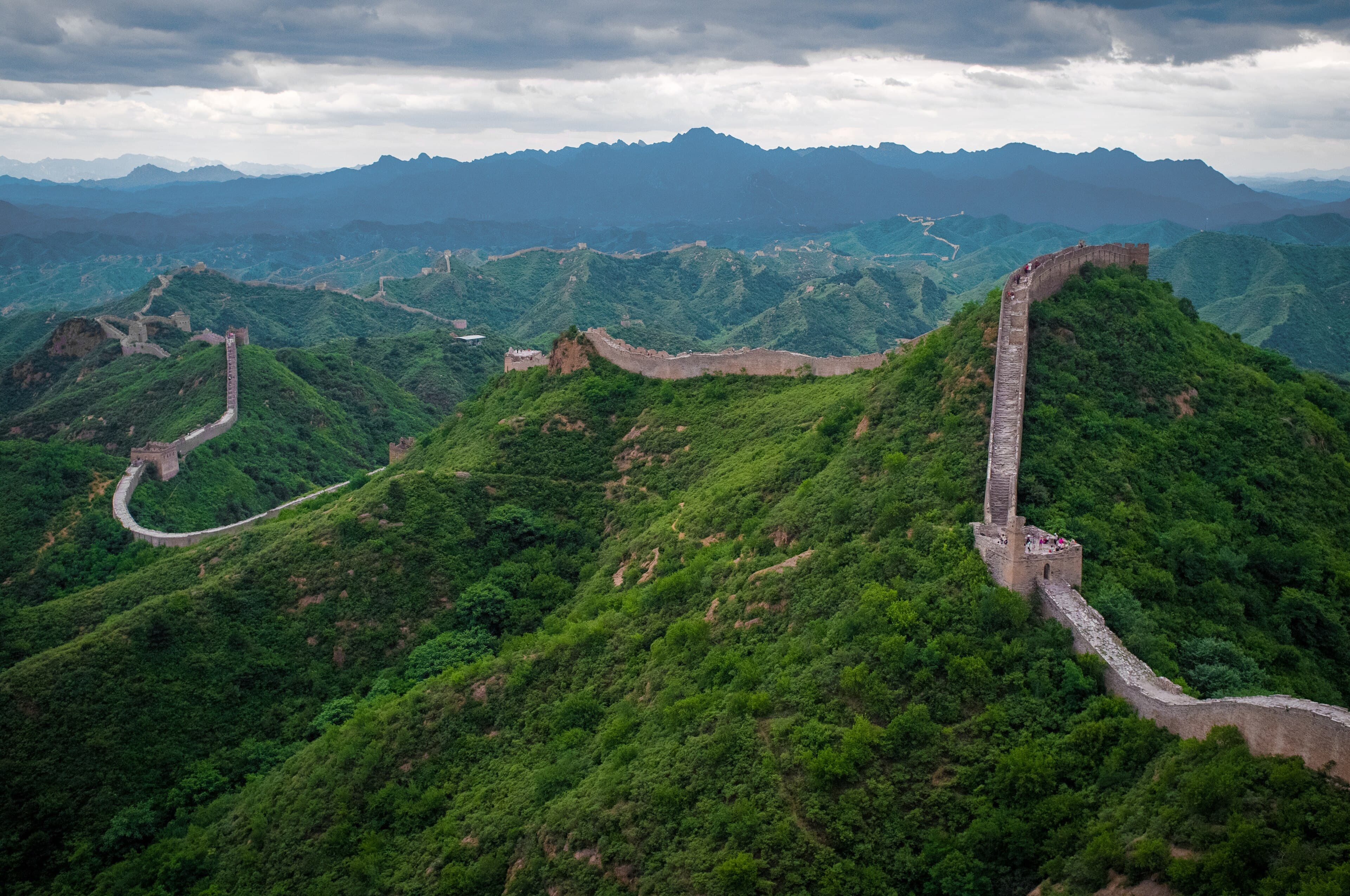
The Great Wall of China is a series of fortifications stretching over 13,170 miles (21,196 km) across northern China, built primarily to protect Chinese states and empires from nomadic invasions from the Eurasian Steppe. Construction began as early as the 7th century BC and continued in phases across multiple dynasties, with the most recognizable sections built during the Ming Dynasty (1368–1644 AD). Far from a single continuous wall, it is a network of walls, watchtowers, garrison stations, and signal beacons that represent over two millennia of labor, engineering ambition, and political will.
Why Was the Great Wall of China Built?
The Great Wall was constructed primarily as a military defense system against the persistent threat of nomadic peoples to China's north — chiefly the Xiongnu, Mongols, Jurchen, and other steppe confederacies who conducted devastating raids on Chinese agricultural settlements. Beyond military defense, the Wall served critical economic and administrative functions. It regulated trade along the Silk Road by controlling border crossings and taxing merchants. It enabled the rapid transmission of military intelligence through a chain of signal beacons — smoke by day, fire by night — that could relay a warning message across hundreds of miles within hours. It also acted as a psychological and political boundary, demarcating 'civilized' Chinese territory from the barbarian frontier, reinforcing imperial authority and cultural identity. Emperor Qin Shi Huang, who unified China in 221 BC, famously articulated the need for a permanent northern barrier after the general Meng Tian expelled the Xiongnu from the Ordos region, recognizing that without a fixed fortification, the nomads would simply return.
Who Built the Great Wall of China and When Did Construction Begin?
Construction of the Great Wall cannot be attributed to a single ruler or era. The earliest walls were built by individual Warring States — including Qi, Yan, Wei, Zhao, and Qin — beginning around the 7th century BC, each protecting their own borders from rivals and northern raiders. When Qin Shi Huang unified China in 221 BC, he ordered General Meng Tian to connect and extend these separate walls into a coherent defensive line along the northern frontier. This first imperial wall stretched roughly 3,000 miles and was constructed using rammed earth, wood, and stone, with an estimated 300,000 soldiers and up to 500,000 conscripted laborers working under brutal conditions. Many died and were reportedly buried within the wall itself, earning it the grim nickname 'the longest cemetery on Earth.' Successive dynasties — Han, Sui, Jin, and Ming — all built, repaired, or extended sections. The Han Dynasty (206 BC–220 AD) pushed the wall westward deep into the Gobi Desert to protect Silk Road trade routes, adding roughly 3,000 miles of new fortifications. It was the Ming Dynasty, however, that created the wall most tourists see today: a sophisticated system of brick and stone construction with crenellated parapets, watchtowers every 500 meters, and garrison fortresses at strategic passes.
How Long Is the Great Wall of China? Understanding the True Scale
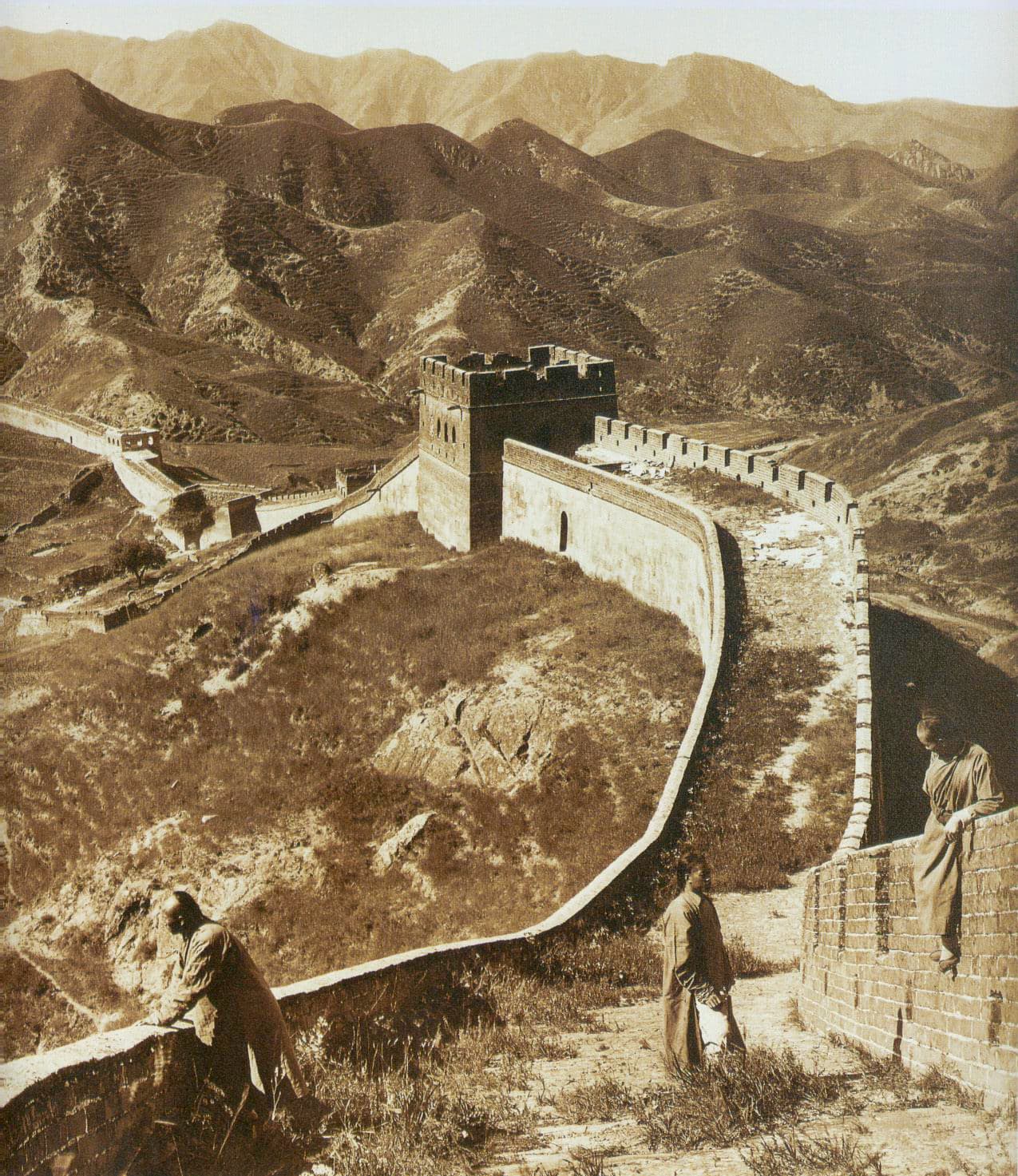
A 2012 archaeological survey by China's State Administration of Cultural Heritage determined the full length of all Wall sections across all dynasties to be 13,170 miles (21,196 km) — roughly half the circumference of the Earth. The Ming Dynasty wall alone measures approximately 5,500 miles (8,851 km). These figures shatter the popular misconception that the Wall is a single unbroken structure. In reality, it comprises thousands of individual segments, many separated by rivers, mountains, and gaps deliberately left open as controlled passes. The survey identified 43,721 individual heritage sites associated with the Wall. Of this immense total, only about 30% of the Ming Wall remains in good condition; 21.8% has disappeared entirely, eroded by weather, agriculture, and human removal of bricks for local construction projects over the centuries.
What Materials and Engineering Methods Were Used to Build the Great Wall?
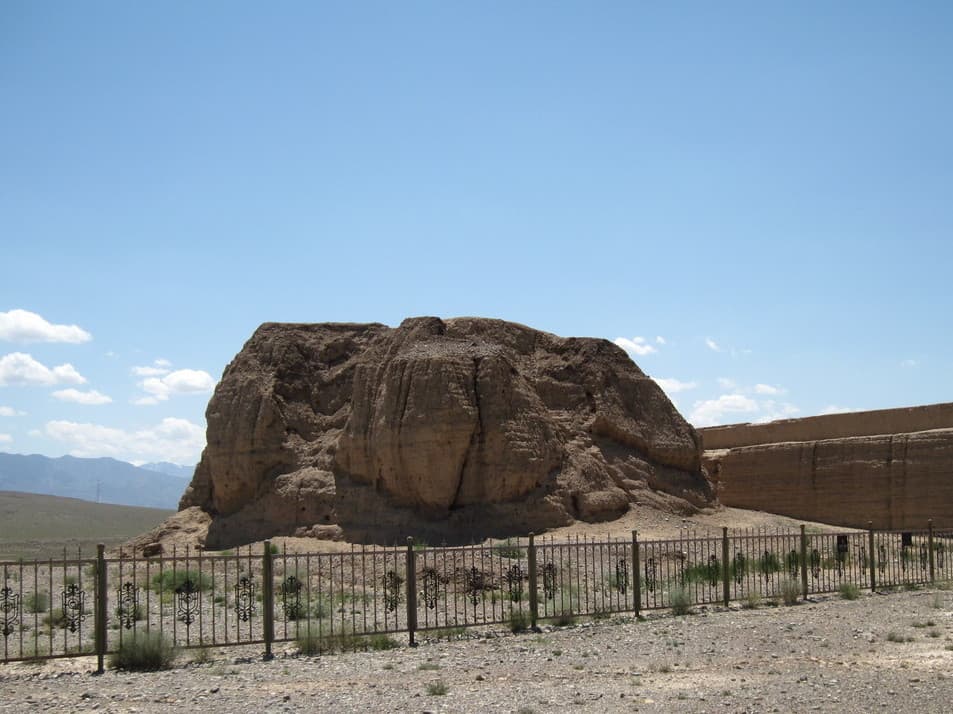
The construction methods and materials evolved dramatically across the Wall's 2,000-year building history, reflecting the technological capabilities of each era. The earliest Warring States walls were built from rammed earth (hangtu), a technique involving compacting layers of soil, gravel, and lime within wooden frames to create dense, load-bearing walls up to 30 feet high and 15 feet wide at the base. Qin and Han-era sections in the arid western regions used local materials such as reeds, tamarisk branches, and sand, as stone was scarce. Ming Dynasty builders elevated construction to new heights by using fired gray bricks bonded with a mortar made from rice flour mixed with slaked lime — a composite later found to have exceptional durability and even antimicrobial properties. Watchtowers were typically two stories tall, roughly 40 feet high, and spaced so that each was within visual signaling distance of the next. The Wall's average height ranges from 15 to 30 feet, with a width of 15 to 25 feet at the base tapering to 12 feet at the top — wide enough for five horses or ten soldiers to march abreast. Major passes such as Shanhaiguan ('First Pass Under Heaven') at the eastern terminus and Jiayuguan at the western end were fortified as self-contained fortress complexes with multiple gates, inner courtyards, and administrative buildings.
Key Dynasties and Their Contributions to the Great Wall
| Dynasty | Period | Key Contribution | Approximate Length Added |
|---|---|---|---|
| Warring States (various) | 7th–3rd century BC | First regional walls built by Qi, Yan, Zhao, Wei, Qin | ~3,000 miles (combined) |
| Qin Dynasty | 221–206 BC | First unified wall under Qin Shi Huang; connected existing sections | ~3,000 miles |
| Han Dynasty | 206 BC–220 AD | Extended wall westward to protect Silk Road; added beacon towers | ~3,700 miles |
| Northern Wei / Sui | 386–618 AD | Repaired existing walls; new sections in Inner Mongolia | ~1,000 miles |
| Jin Dynasty | 1115–1234 AD | Built 'Genghis Khan Wall' in northern Manchuria to resist Mongols | ~1,500 miles |
| Ming Dynasty | 1368–1644 AD | Most recognizable wall; brick-and-stone construction, advanced fortifications | ~5,500 miles |
Did the Great Wall of China Actually Stop Invasions?
The Wall's military effectiveness was mixed and hotly debated by historians. On one hand, it demonstrably deterred small-scale raiding parties, which lacked the siege equipment to breach fortified gates, and it provided early warning of larger incursions through its beacon signal network. The Wall also funneled enemy movements through predictable corridors where Chinese forces could concentrate. On the other hand, the Wall failed spectacularly against determined, large-scale invasions. The Mongols under Genghis Khan breached or bypassed northern walls and conquered much of northern China between 1211 and 1234 AD, eventually establishing the Yuan Dynasty. Most notably, in 1644, the Manchu forces of the Qing Dynasty entered China not by breaching the Wall but by passing through the Shanhaiguan gate — allegedly invited through by the Ming general Wu Sangui, who hoped to use them against the rebel Li Zicheng. The Qing subsequently regarded the Wall as unnecessary, allowing it to fall into disrepair. Modern historians like Arthur Waldron have argued that the Wall's true value was less as an impenetrable barrier and more as a managed border zone enabling negotiated trade and controlled migration.
Famous Sections and Landmarks of the Great Wall
Several sections of the Great Wall have achieved particular fame for their scenery, historical importance, or architectural quality. Badaling, 43 miles northwest of Beijing, was the first section restored for tourism in 1957 and remains the most visited, receiving more than 10 million visitors annually. It was here that U.S. President Richard Nixon walked the wall in February 1972, calling it 'a great wall — and it had to be built by a great people.' Mutianyu, about 45 miles northeast of Beijing, features a dense concentration of watchtowers and dramatic mountain scenery. Jinshanling and Simatai offer partially unrestored sections where original Ming brickwork, crumbling ramparts, and wild vegetation create an atmospheric sense of antiquity. Jiayuguan, at the western end of the Ming Wall in Gansu Province, is the best-preserved Ming-era fortress complex, featuring three concentric defensive rings. Shanhaiguan, where the Wall meets the Bohai Sea, bears the iconic inscribed plaque reading 'First Pass Under Heaven' and marks the boundary between the North China Plain and Manchuria.
Can You See the Great Wall of China From Space? Debunking the Myth
One of history's most persistent myths is that the Great Wall is visible from space with the naked eye. This claim has been definitively disproven. NASA scientists and astronauts, including Chinese astronaut Yang Liwei during China's first crewed spaceflight in October 2003, have confirmed that the Wall — typically only 15 to 30 feet wide — is far too narrow to be resolved by the unaided human eye from low Earth orbit (roughly 200 miles altitude), where even roads and runways are difficult to see. The confusion arises because under exceptional lighting conditions with optical aids, some astronauts have reported glimpsing it. The myth is often traced to a 1932 entry in Robert Ripley's 'Believe It or Not' column and was repeated in reference books for decades before being corrected.
The Great Wall's UNESCO Status, Modern Preservation, and Cultural Legacy
UNESCO inscribed the Great Wall as a World Heritage Site in 1987, describing it as 'an outstanding example of the defensive architecture of feudal China' that 'has had an immense influence on the culture of China.' Despite this recognition, preservation remains a serious challenge. The 2012 national survey found that nearly 1,200 miles of the Ming Wall have already vanished, eroded by wind and water or dismantled by farmers who repurposed its bricks. In 2016 a controversial restoration of a section in Liaoning Province — which replaced weathered original bricks with smooth concrete — sparked international outrage and became a watershed moment in Chinese heritage conservation debate. The Chinese government has since tightened regulations and earmarked billions of yuan for scientifically supervised restoration. Tourism, while economically vital, also places strain on accessible sections; Badaling alone installed crowd-control systems in 2019 after visitor numbers caused physical damage to walkways. Culturally, the Wall has become the defining symbol of Chinese civilization, appearing on the national emblem of the People's Republic of China, featuring in countless films, and standing as the most recognizable monument in East Asia. Estimates suggest it cost the equivalent of tens of billions of modern dollars and the lives of hundreds of thousands of workers across its long construction history — a monument purchased at an immense human price.