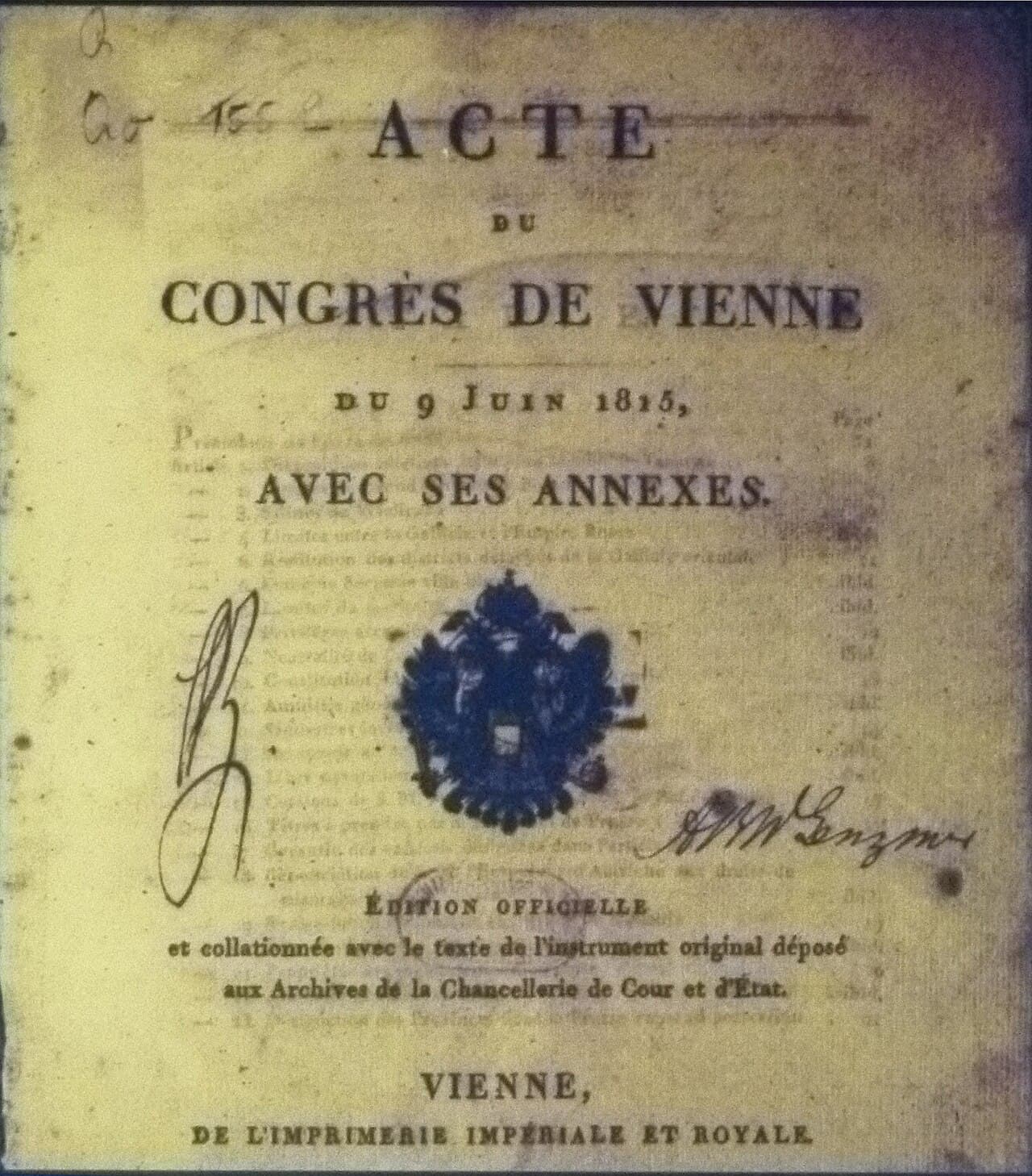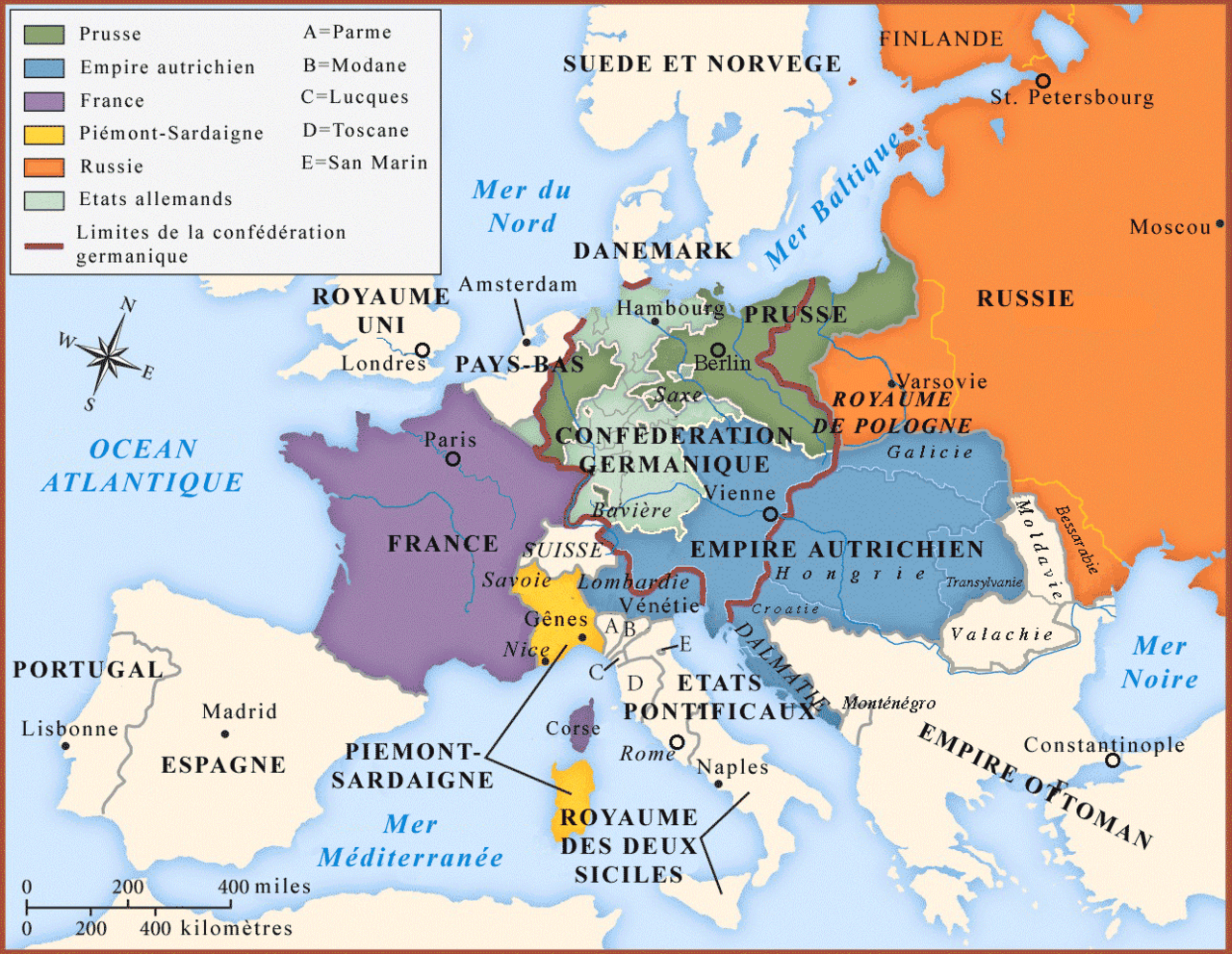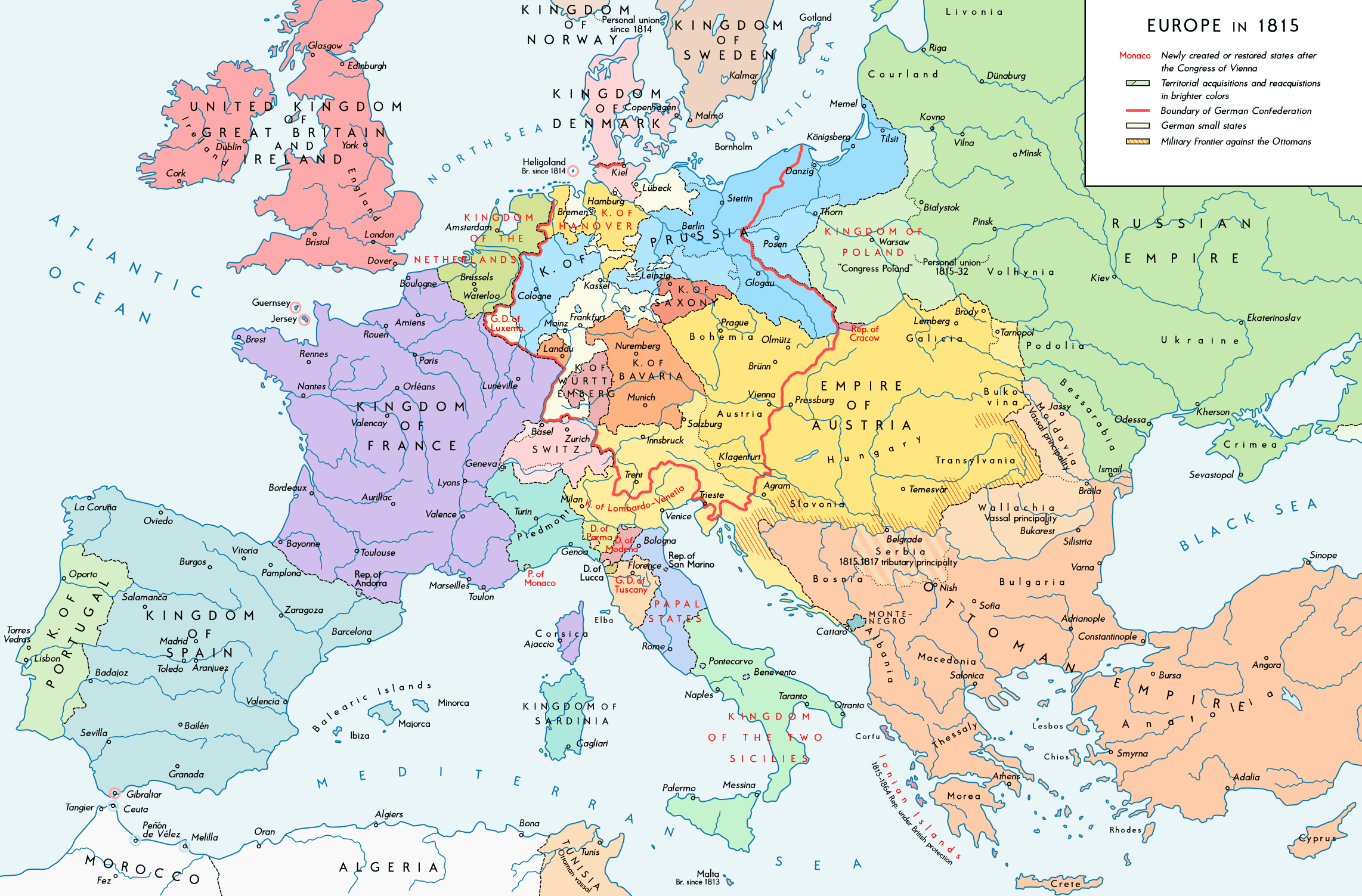
The Congress of Vienna (September 1814 – June 1815) was a landmark diplomatic conference that redrew the map of Europe following the Napoleonic Wars. Convened in Vienna, Austria, and dominated by the five great powers—Austria, Britain, Prussia, Russia, and France—it dismantled Napoleon Bonaparte's empire and established a new balance of power designed to prevent any single nation from dominating the continent again. The settlement it produced, often called the 'Concert of Europe,' maintained relative peace among the great powers for nearly 40 years and shaped European borders for a century.
What Was the Background to the Congress of Vienna?
The Congress was convened in the aftermath of more than two decades of nearly continuous warfare that had engulfed Europe since the French Revolutionary Wars began in 1792. Napoleon Bonaparte's campaigns had toppled monarchies, dissolved the Holy Roman Empire (formally abolished in 1806), redrew borders from Spain to Poland, and installed members of his own family on the thrones of nations including Spain, Naples, and Westphalia. By 1814, a coalition of Austria, Prussia, Russia, and Britain had defeated Napoleon and forced his abdication in April of that year. He was exiled to the island of Elba, and the Bourbon monarchy was restored in France under Louis XVIII. The victorious powers recognised that a durable peace required far more than military victory—it required a systematic diplomatic settlement to replace the revolutionary disorder. Austria's Foreign Minister Prince Klemens von Metternich proposed Vienna as the venue, and formal negotiations opened on 1 November 1814.
Who Attended the Congress of Vienna and Who Were the Key Players?
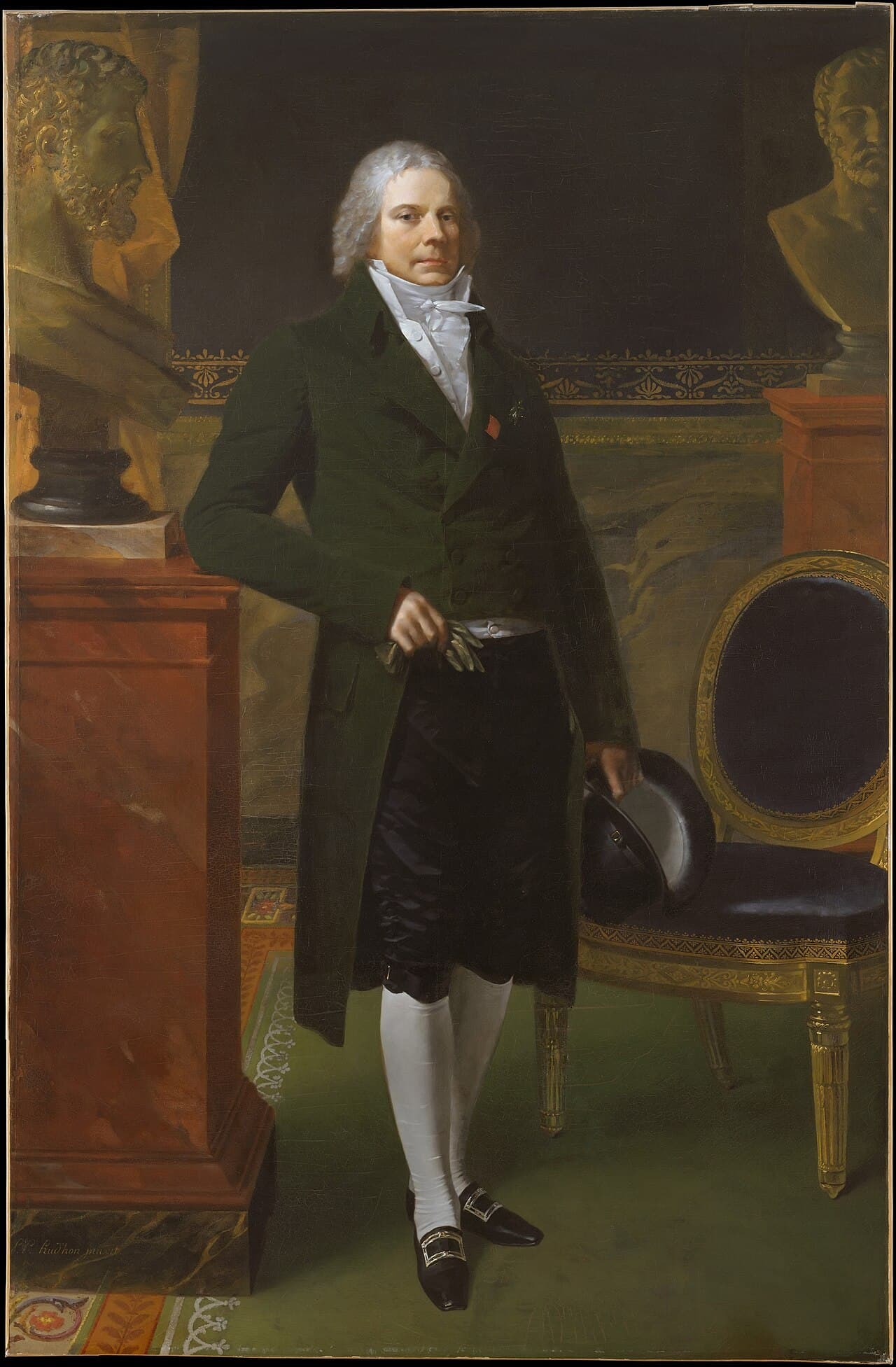
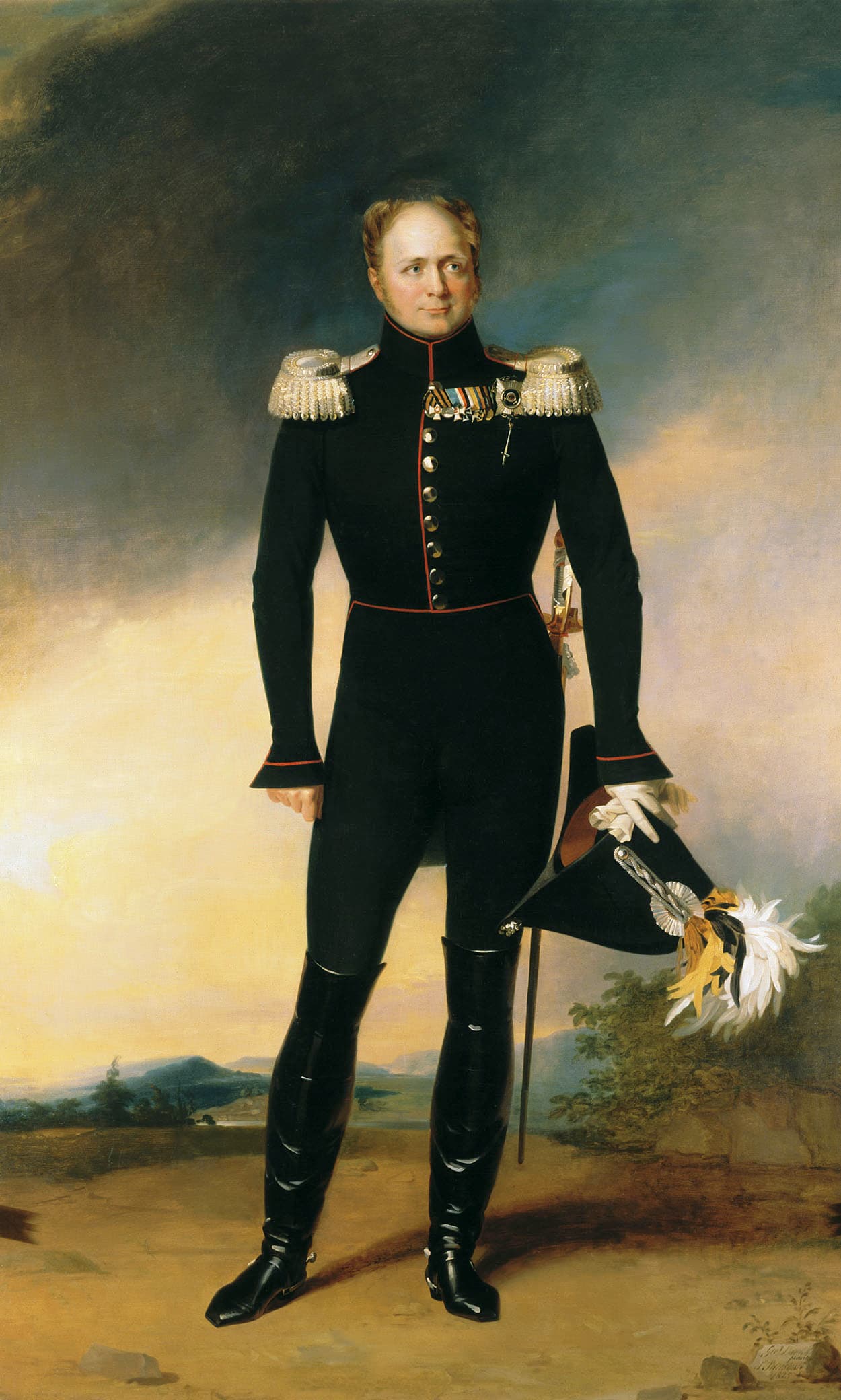
Approximately 200 sovereign princes, ministers, and diplomats from across Europe attended, making it the largest diplomatic gathering in European history to that point. The real decisions, however, were made by a small 'Committee of Eight' and, at its core, the representatives of the five great powers. Prince Klemens von Metternich of Austria served as the conference's president and its most influential architect, championing conservative order and the suppression of revolutionary and nationalist movements. Tsar Alexander I of Russia arrived personally and pushed for a dominant Russian sphere of influence in Poland. Viscount Castlereagh represented Britain, prioritising maritime supremacy and a balanced continental order rather than territorial acquisition. Prince Karl August von Hardenberg spoke for Prussia, which sought territorial compensation in Saxony and the Rhineland. Remarkably, France—though a defeated power—was represented with skill and cunning by Charles-Maurice de Talleyrand-Périgord, who leveraged the principle of 'legitimacy' to secure France an equal seat at the table. The social calendar in Vienna was as intense as the diplomatic one; Metternich organised a dazzling series of balls and receptions to keep delegations occupied and pliable, prompting the wit Prince Charles-Joseph de Ligne to quip that 'the Congress dances, but does not move forward.'
What Were the Four Guiding Principles of the Congress?
The statesmen at Vienna operated according to four broad principles that shaped every major decision. First, Legitimacy: the idea, championed by Talleyrand, that rightful monarchs displaced by revolutionary or Napoleonic upheaval should be restored to their thrones. This justified reinstating the Bourbons in France, Spain, and the Two Sicilies. Second, Compensation: great powers that had sacrificed blood and treasure in defeating Napoleon expected territorial rewards. This principle governed the redistribution of Polish territory, German states, and colonial possessions. Third, Balance of Power: no single state should be strong enough to dominate Europe as France had under Napoleon. Borders were drawn to ensure rough equilibrium among Austria, Britain, Prussia, and Russia. Fourth, Conservatism: Metternich in particular was determined to suppress liberalism and nationalism—the twin ideological products of the French Revolution—believing them to be existential threats to the established monarchical order.
How Did the Hundred Days Change the Congress's Outcome?
On 1 March 1815, Napoleon escaped from Elba and landed in southern France with approximately 1,000 soldiers. As he marched north, French troops defected to him en masse, and Louis XVIII fled Paris on 19 March. The news electrified Vienna. Rather than scatter the Congress, it galvanised the assembled powers into unprecedented unity: on 13 March 1815, the Congress issued a declaration outlawing Napoleon as an enemy of humanity—the first time in history a head of state had been collectively proscribed by an international body. The Final Act of the Congress was signed on 9 June 1815, just nine days before Napoleon's decisive defeat at the Battle of Waterloo on 18 June 1815. The episode actually hardened the terms imposed on France: the Second Treaty of Paris (20 November 1815) imposed an indemnity of 700 million francs, required an Allied occupation of northern France for up to five years, and stripped France of further border territories. Napoleon was exiled to the remote South Atlantic island of Saint Helena, where he died in 1821.
What Territorial Changes Did the Congress of Vienna Decide?
The Final Act contained more than 100 articles reshaping the European map. Russia received the lion's share of the Duchy of Warsaw, constituted as the Kingdom of Poland under the Tsar's personal rule, effectively extending Russia's frontier far into Central Europe. Prussia gained roughly two-fifths of Saxony and vitally, the Rhineland and Westphalia—industrial territories that would fuel German power throughout the 19th century. Austria relinquished the Austrian Netherlands (modern Belgium) but received Lombardy-Venetia in northern Italy, Salzburg, Galicia, and Illyria, consolidating its dominance in Central Europe. Britain retained key strategic acquisitions including Malta, Ceylon (modern Sri Lanka), the Cape Colony (South Africa), and Heligoland. The Netherlands and the former Austrian Netherlands were merged into the new Kingdom of the United Netherlands under William I of Orange. Norway was transferred from Denmark to Sweden. The 39 German states were organised into a loose German Confederation (Deutscher Bund) with a Federal Diet meeting in Frankfurt, replacing the Holy Roman Empire. Switzerland was recognised as a perpetually neutral state, a status confirmed internationally for the first time. The Papal States were restored to Pope Pius VII. The result was a Europe of conservative, dynastic states deliberately calibrated to restrain one another.
| Power | Key Territorial Gains | Key Concessions or Losses |
|---|---|---|
| Russia | Kingdom of Poland (most of the Duchy of Warsaw), Finland (1809) | Smaller Polish gains than Alexander I initially demanded |
| Prussia | Rhineland, Westphalia, two-fifths of Saxony, Swedish Pomerania | Lost some Polish territory to Russia |
| Austria | Lombardy-Venetia, Salzburg, Galicia, Illyria, Italian influence | Gave up Austrian Netherlands (Belgium), lost German pre-eminence |
| Britain | Malta, Ceylon, Cape Colony, Heligoland, Tobago, St. Lucia | Returned most French and Dutch colonies; no continental gains |
| France | Borders of 1 November 1792 largely restored | 700 million franc indemnity; 5-year Allied occupation after Waterloo |
| Netherlands | United Netherlands created including Belgium | Belgium broke away in Belgian Revolution of 1830 |
| Sweden | Norway transferred from Denmark to Sweden | Surrendered Swedish Pomerania to Prussia |
What Was the Concert of Europe and How Long Did It Last?
The Congress did not merely redraw borders—it created an ongoing system of great-power consultation known as the Concert of Europe. The Quadruple Alliance (Austria, Britain, Prussia, Russia), formalised on 20 November 1815, pledged to hold periodic congresses to address threats to the settlement. This produced a series of follow-up conferences: Aix-la-Chapelle (1818), Troppau (1820), Laibach (1821), and Verona (1822). Metternich used these forums to authorise military interventions against liberal revolts in Naples and Spain. Tsar Alexander I separately promoted the Holy Alliance—a vague, mystical pact among Christian monarchs—which Britain declined to join. The Concert of Europe was genuinely novel: it institutionalised great-power diplomacy and established the precedent that major states had collective responsibility for international order. Historians generally credit it with preventing a general European war between 1815 and the Crimean War of 1853–56, and certainly until the catastrophic breakdown of 1914. When the great powers did fight—the Crimean War, the Franco-Prussian War of 1870–71—the conflicts were limited in scope compared with the Napoleonic cataclysm they replaced.
What Were the Criticisms and Failures of the Congress of Vienna?
The Congress has been criticised on several counts, most powerfully for its deliberate suppression of nationalism and liberalism. The statesmen at Vienna divided peoples without consulting them: Poles, Italians, Germans, Belgians, and Norwegians were redistributed among empires with no reference to ethnic identity, language, or popular will. The German Confederation was so loosely structured that German nationalists regarded it as a profound disappointment. Italy remained, in Metternich's dismissive phrase, 'merely a geographical expression,' divided among Austria, papal, and Bourbon rulers. These unresolved tensions exploded in the revolutions of 1830 and 1848—the so-called 'Springtime of Nations'—when liberal and nationalist uprisings swept from Paris to Budapest to Rome. Belgium successfully broke from the Netherlands in 1830. Greece won independence from the Ottoman Empire (1821–1829), and by 1848, the entire framework Metternich had designed was shaking. Metternich himself was driven from office in the Vienna Revolution of March 1848 and fled to England. The settlement also ignored non-European peoples entirely: colonial redistribution was conducted purely for great-power convenience, with no consideration for African, Asian, or Caribbean populations affected. Finally, the Congress's commitment to dynastic legitimacy meant it restored deeply unpopular rulers—Ferdinand VII in Spain, Ferdinand I in Naples—whose autocratic rule generated decades of instability.
What Is the Historical Legacy and Modern Relevance of the Congress of Vienna?
Despite its limitations, the Congress of Vienna is widely regarded by historians as one of the most successful peace settlements in modern history. Henry Kissinger's 1957 doctoral dissertation, published as 'A World Restored,' argued that Metternich and Castlereagh had achieved something remarkable: a 'legitimate' international order that gave even the defeated power, France, a stake in the system's survival. Kissinger drew explicit lessons for post-World War II diplomacy. The Congress is also frequently cited as a forerunner of modern international institutions—the League of Nations (1919), the United Nations (1945), and the European Union—all of which echo its core insight that great powers must cooperate within a rule-based framework to manage conflict. The Congress's failure to address nationalism and democracy is equally instructive: it produced a settlement so resistant to change that legitimate aspirations for self-determination were forced into revolutionary channels, ultimately destabilising the very order the Congress sought to preserve. The tension between stability and justice—between balance-of-power realism and the democratic self-determination of peoples—that animated the Congress of Vienna has never been fully resolved, and it continues to define international relations to this day.