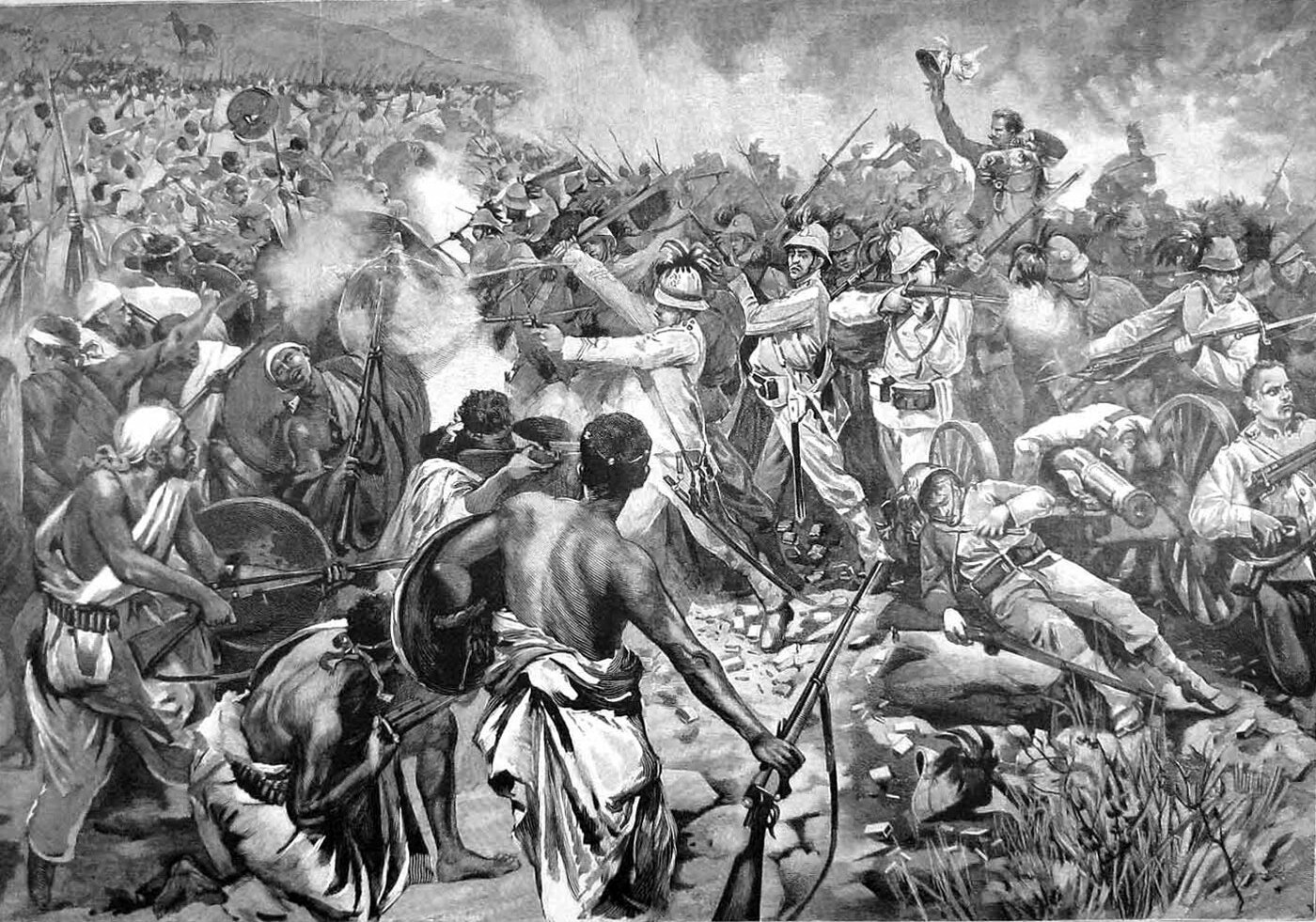
The Battle of Adwa, fought on 1 March 1896 in northern Ethiopia, was the decisive military clash in which Ethiopian Emperor Menelik II's forces annihilated an Italian army of roughly 17,700 men, killing or capturing more than 11,000. It was the most catastrophic defeat ever inflicted on a European colonial power by an African state, and it preserved Ethiopia's independence for the next four decades. The victory shocked Europe, reshaped the map of the continent, and became an enduring symbol of African sovereignty and resistance.
What Caused the Battle of Adwa?
The roots of Adwa lay in the 1889 Treaty of Wuchale, signed between Italy and the newly crowned Emperor Menelik II. Italy's Italian-language version of Article XVII declared Ethiopia an Italian protectorate; the Amharic version said nothing of the kind — it merely allowed Ethiopia to use Italian diplomatic services if it chose. When Menelik discovered the discrepancy in 1891, he repudiated the treaty entirely. Italy refused to accept this and, emboldened by the European 'Scramble for Africa,' began advancing troops from its colony of Eritrea southward into Ethiopian territory. General Oreste Baratieri commanded the Italian expeditionary force, which was ordered to bring Ethiopia to heel and secure Rome a lucrative East African empire.
How Did Ethiopia Win the Battle of Adwa?
Menelik's strategic and logistical preparations were extraordinary. He mobilised an army estimated at 100,000 warriors, supplied in part by weapons purchased from France and Russia — two powers hostile to Italian expansion. Empress Taytu Betul played a crucial role, personally commanding a unit and sustaining troop morale. On the night of 29 February 1896, Baratieri ordered a surprise night advance with four columns, but flawed maps and poor coordination caused the columns to separate. Ethiopian forces under generals Ras Mikael, Ras Makonnen, and Ras Gebeyehu struck each isolated column in turn. By midday on 1 March the Italian army had collapsed: approximately 6,200 Italian and Eritrean soldiers were killed and roughly 3,000 taken prisoner. General Vittorio Dabormida died in battle; Baratieri fled in disgrace. Ethiopia lost around 4,000–5,000 men, a steep price that nonetheless secured total victory.

| Side | Commander | Force Size | Casualties |
|---|---|---|---|
| Ethiopia | Emperor Menelik II | ~100,000 | ~4,000–5,000 killed |
| Italy | General Oreste Baratieri | ~17,700 | ~6,200 killed; ~3,000 captured |
What Were the Consequences of the Battle of Adwa?
The political fallout was immediate and far-reaching. Italy's Prime Minister Francesco Crispi resigned within days. The Treaty of Addis Ababa, signed in October 1896, forced Italy to recognise Ethiopia's full and unconditional independence — the first time a European power had formally acknowledged an African state's sovereignty under such circumstances. Ethiopia's borders were expanded and codified. Internationally, Adwa electrified anti-colonial movements: it was cited by pan-Africanists from W.E.B. Du Bois to Marcus Garvey, inspired Haiti and other nations, and later became a founding symbol for the Organisation of African Unity. When Benito Mussolini finally conquered Ethiopia in 1936, he framed it explicitly as revenge for Adwa — underscoring just how deeply the defeat had wounded Italian national pride.
Why Is the Battle of Adwa Still Important Today?
Adwa remains the defining event in Ethiopian national identity and is commemorated every year on 2 March as Adwa Victory Day. It stands as proof that African states could resist and defeat European military power through organisation, diplomacy, and determination. For the broader world, Adwa demonstrated that the colonial project was neither inevitable nor invincible — a lesson that reverberated through the independence movements of the 20th century across Asia and Africa alike.
