
The BBC World Service is a British public service broadcaster owned and operated by the BBC. It is the world's largest external broadcaster in terms of reception area, language selection and audience reach. It broadcasts radio news, speech and discussions in more than 40 languages to many parts of the world on analogue and digital shortwave platforms, internet streaming, podcasting, satellite, DAB, FM, LW and MW relays. In 2024, the World Service reached an average of 450 million people a week (via TV, radio and online).
BBC World Service English maintains eight regional feeds with several programme variations, covering, respectively, East and Southern Africa; West and Central Africa; Europe and Middle East; the Americas and Caribbean; East Asia; South Asia; Australasia; and the United Kingdom. There are also two online-only streams, a general one and the other more news-orientated, known as News Internet. The service broadcasts 24 hours a day.
The World Service states that its aim is to be "the world's best-known and most-respected voice in international broadcasting", and its operating agreement states that it retains a "balanced British view" of international developments. Former director Peter Horrocks visualised the organisation as fighting an "information war" of soft power against Russian and Chinese international state media, including RT. As such, the BBC has been banned in both Russia and China, the former following its 2022 invasion of Ukraine.

The director of the BBC World Service is Jonathan Munro. The controller of the BBC World Service in English is Jon Zilkha.
History
Early years
The BBC World Service began on 19 December 1932 (emitted from the Daventry transmitting station) as the Empire Short Wave Service, broadcasting on shortwave and aimed principally at English speakers across the British Empire. In his first Christmas Message (1932), King George V characterised the service as intended for "men and women, so cut off by the snow, the desert, or the sea, that only voices out of the air can reach them". First hopes for the Empire Service were low. The Director-General, Sir John Reith, said in the opening programme:
Don't expect too much in the early days; for some time we shall transmit comparatively simple programmes, to give the best chance of intelligible reception and provide evidence as to the type of material most suitable for the service in each zone. The programmes will neither be very interesting nor very good.
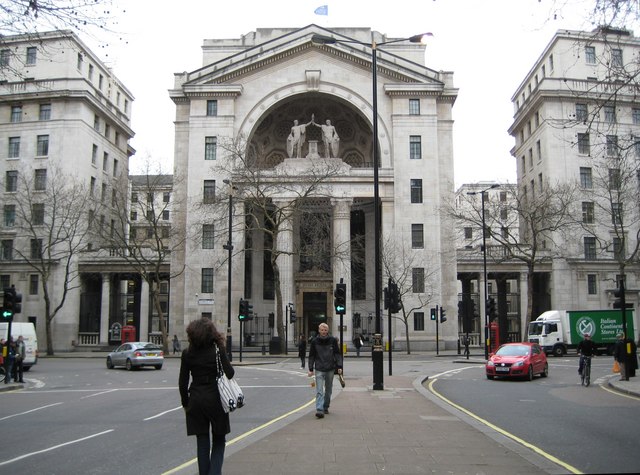
This address was read out five times as the BBC broadcast it live to different parts of the world.
World War II
The BBC would continue to claim independence from the Government during the war, but as Asa Briggs noted, a complete picture of the wartime BBC would have to include 'persistent references' to the various connected agencies of the government. Chiefly, the Political Warfare Executive, responsible for all broadcasts to Europe.
On 3 January 1938, the first foreign-language service was launched—in Arabic. Programmes in German, Italian and French began broadcasting on 27 September 1938 projecting the British quest for peace in the days prior to the conference on the Munich Agreement.
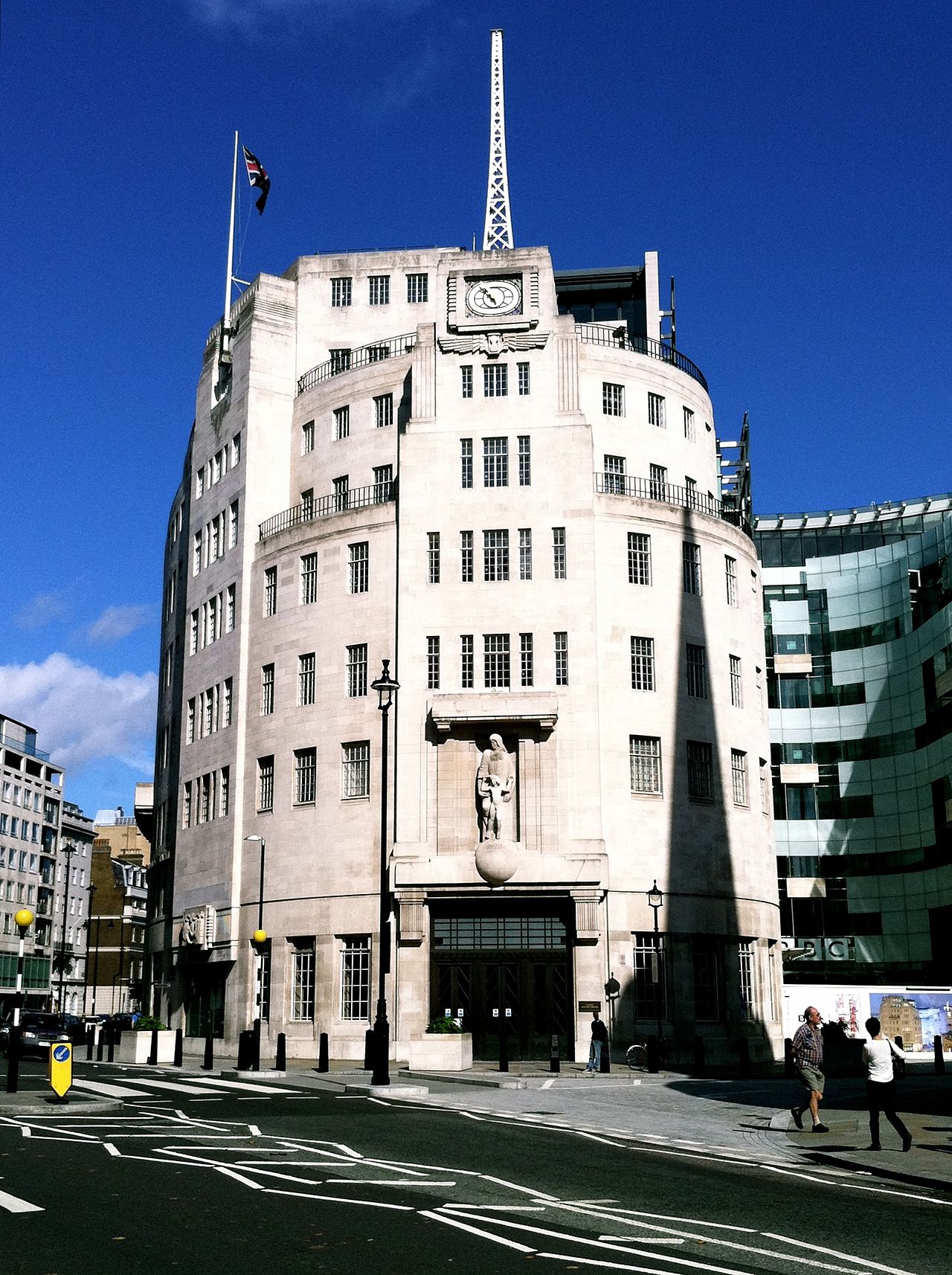
By the end of 1942, the BBC had started broadcasts in all major European languages. The Empire Service was renamed the BBC Overseas Service in November 1939, supplemented by the addition of a dedicated BBC European Service from 1941. Funding for these services—known administratively as the External Services of the BBC—came not from the domestic licence fee but from government grant-in-aid (from the Foreign Office budget).
The External Services broadcast propaganda during the Second World War, on the German-language service Londoner Rundfunk especially against Nazi rule, believed in the early days of the war at least to have weak support. Its French service Radio Londres also sent coded messages to the French Resistance. George Orwell broadcast many news bulletins on the Eastern Service during the Second World War. The Belgian government in exile broadcast from Radio Belgique.
Cold War
The 1956 Hungarian uprising held enormous implications for international radio broadcasting as it related to western foreign policy during the Cold War. Western broadcasts (especially the US's RFE) incited an expectation of support that had already been decided against by President Eisenhower. The BBC, unlike other broadcasters, did not lose credibility in the crisis. It showed sensitivity and acted as its own censor when diplomacy may have been jeopardised otherwise.

In stark contrast stood the BBC's reporting on the Suez Crisis of the same year. Although the British government tried to censor the BBC, it continued its even-handed reporting to both home as well as all foreign audiences. The row had the government seriously consider taking over the service when then prime minister Anthony Eden wanted to ensure that only the government line—that the British and French only invaded Egypt to keep peace and because its president Nasser was breaking international law—would reach the home (and international) audience.
By the end of the 1940s, the number of broadcast languages had expanded and reception had improved, following the opening of a relay in Malaya and of the Limassol relay in Cyprus in 1957.
Also in 1957, a number of foreign language services were discontinued, or reduced.
In 1962, the Foreign Office argued that the VOA's philosophy, as presented to it by its then director Henry Loomis, not to broadcast to fully-developed allied countries in their respective languages should be adopted by the BBC. The reluctance of the BBC to drop those services was predicted also.
On 1 May 1965, the service took its current name of BBC World Service. It expanded its reach with the opening of the Ascension Island relay in 1966, serving African audiences with a stronger signal and better reception, and with the later relay on the Island of Masirah in Oman.
In August 1985, the service went off-air for the first time when workers went on strike in protest at the British government's decision to ban a documentary featuring an interview with Martin McGuinness of Sinn Féin.
Subsequently, financial pressures decreased the number and the types of services offered by the BBC. Audiences in countries with wide access to Internet services have less need for terrestrial radio. Broadcasts in German ended in March 1999, after research showed that the majority of German listeners tuned into the English-language service. Broadcasts in Dutch, Finnish, French, Hebrew, Italian, Japanese and Malay stopped for similar reasons.
Twenty-first century
On 25 October 2005, the BBC announced that broadcasts in Bulgarian, Croatian, Czech, Greek, Hungarian, Kazakh, Polish, Slovak, Slovene and Thai would end by March 2006, to finance the launch in 2007 of television news services in Arabic and Persian. Additionally, Romanian broadcasts ceased on 1 August 2008.
In 2007, the last FM broadcast of BBC News Russian was discontinued at the order of the Russian government. Finam owned Bolshoye Radio, the last of three services to drop the BBC Russia broadcasts. A spokesman for the organisation claimed that 'any media which is government-financed is propaganda – it's a fact, it's not negative'. Reports put the development in the context of criticism of the Russian government for curbing media freedom ahead of the 2008 Russian presidential election. Reporters Without Borders condemned the move as censorship.
In 2011, BBC Kyrgyz service newsreader and producer Arslan Koichiev resigned from his BBC post after revelations and claims of involvement in the Kyrgyzstan revolution of April 2010. He had been based in London, but often travelled to Kyrgyzstan and used BBC resources to agitate against President Kurmanbek Bakiyev, appearing on a Kyrgyz radio station under a pseudonym with a disguised voice. One of the leaders of the revolution, Aliyasbek Alymkulov, named the producer as his mentor and claimed that they had discussed preparations for the revolution.
According to London newspaper the Evening Standard, "Mr Alymkulov claimed that Koichiev arranged secret meetings "through the BBC" and organised the march at the presidential palace on 7 April 2010"
In October 2010, the UK government announced that it was reducing the service's revenue funding by 16% and its capital funding by 52% by 2017. This necessitated over 650 staff leaving. Funding from the Foreign & Commonwealth Office would end in April 2014, when funding would mainly be from the television licence fee. From 2010, the service started transforming from a mainly radio-based operation to multi-media.
In January 2011, the closure of the Albanian, Macedonian, and Serbian, as well as English for the Caribbean and Portuguese for Africa, services was announced. The British government announced that the three Balkan countries had wide access to international information, and so broadcasts in the local languages had become unnecessary. This decision reflected the financial situation the Corporation faced following transfer of responsibility for the Service from the Foreign Office, so that it would in future have been funded from within licence-fee income. The Russian, Ukrainian, Mandarin Chinese, Turkish, Vietnamese and Spanish for Cuba services ceased radio broadcasting, and the Hindi, Indonesian, Kyrgyz, Nepali, Swahili, Kinyarwanda and Kirundi services ceased shortwave transmissions. As part of the 16% budget cut, 650 jobs were eliminated.
In 2012, London staff moved from Bush House to Broadcasting House, so co-located with other BBC News departments. About 35% of its 1,518 full-time equivalent staff in 2014 were based overseas at 115 locations. From 2014 the service became part of World Service Group under the Director of BBC News and Current Affairs.
From 2016, 1,100 additional staff were recruited as part of an expansion of the World Service, about a 70% increase, funded by the Foreign, Commonwealth & Development Office providing £254 million/year for five years, partly a reversal of the government decision that the television licence fee would fund the service from 2014. This was the biggest service expansion since World War II.
In 2022, a new London-based China unit was in development, described by the government as "focused on exposing the challenges and realities currently facing China and its fight for global influence".
Operation
The Service broadcasts from Broadcasting House in London, which is also headquarters of the corporation. It is located in the newer parts of the building, which contains radio and television studios for use by the overseas language services. The building also contains an integrated newsroom used by the international World Service, the international television channel BBC World News, the domestic television and radio BBC News bulletins, the BBC News Channel and BBC Online.
At its launch, the Service was located along with most radio output in Broadcasting House. However, following the explosion of a parachute mine nearby on 8 December 1940, it relocated to premises away from the likely target of Broadcasting House. The Overseas service relocated to Oxford Street while the European service moved temporarily to the emergency broadcasting facilities at Maida Vale Studios. The European services moved permanently into Bush House towards the end of 1940, completing the move in 1941, with the Overseas services joining them in 1958. Bush House subsequently became the home of the BBC World Service and the building itself has gained a global reputation with the audience of the service. However, the building was vacated in 2012 as a result of the Broadcasting House redevelopment and the end of the building's lease that year; the first service to move was the Burmese Service on 11 March 2012 and the final broadcast from Bush House was a news bulletin broadcast at 11.00GMT on 12 July 2012.
The BBC World Service encompasses an English 24-hour global radio network and separate services in 27 other languages. News and information is available in these languages on the BBC website, with many having RSS feeds and specific versions for use on mobile devices, and some also offer email notification of stories. In addition to the English service, 18 of the language services broadcast a radio service using the short wave, AM or FM bands. These are also available to listen live or can be listened to later (usually for seven days) over the Internet and, in the case of seven language services, can be downloaded as podcasts. News is also available from the BBC News 'app', which is available from both iTunes and the Google Play Store. In recent years, video content has also been used by the World Service: 16 language services show video reports on the website, and the Arabic and Persian services have their own television channels. TV is also used to broadcast the radio service, with local cable and satellite operators providing the English network (and occasionally some local language services) free to air. The English service is also available on digital radio in the UK and Europe.
Traditionally, the Service relied on shortwave broadcasts, because of their ability to overcome barriers of censorship, distance, and spectrum scarcity. The BBC has maintained a worldwide network of shortwave relay stations since the 1940s, mainly in former British colonies. These cross-border broadcasts have also been used in special circumstances for emergency messages to British subjects abroad, such as the advice to evacuate Jordan during the Black September incidents of September 1970. These facilities were privatised in 1997 as Merlin Communications, and later acquired and operated as part of a wider network for multiple broadcasters by VT Communications (now part of Babcock International Group). It is also common for BBC programmes to air on Voice of America or ORF transmitters, while their programming is relayed by a station located inside the UK. However, since the 1980s, satellite distribution has made it possible for local stations to relay BBC programmes.
BBC World Service is not regulated by Ofcom as the BBC generally is. Instead, the BBC is responsible for editorial independence and setting strategic direction. It defines the remit, scope, annual budget and main commitments of the World Service, and agrees "objectives, targets and priorities" with the British Foreign Secretary in a document named the BBC World Service Licence. The Chair of the BBC Board and the Foreign Secretary (or representatives) meet at least annually to review performance against these objectives, priorities and targets.
Funding
The World Service was funded for decades by grant-in-aid through the Foreign and Commonwealth Office until 1 April 2014. Since then it has been funded by a mixture of the United Kingdom's television licence fee, limited advertising, profits of BBC Studios, and Foreign, Commonwealth and Development Office (FCDO) funding.
From 2014, the service was guaranteed £289 million (allocated over a five-year period ending in 2020) from the UK government. In 2016, the government announced that the licence fee funding for the World Service would be £254 million/year for the five years from 2017. From 2016 to 2022, the FCDO contributed over £470 million to the World Service via its World 2020 Programme, about 80% of which is categorised as Overseas Development Assistance, amounting to about a quarter of the World Service budget. In November 2022, the government confirmed the continuing involvement of the FCDO in funding the World Service.
In 2025, the FCDO asked the BBC to draw up World Service budget cut options as input to the forthcoming spending review. In response, the government's new soft power council warned of the impact on British soft power around the world. Of the World Service's existing government funding, 80% was designated as official development assistance, which the government intended to cut by nearly half to increase defence spending. The BBC sought funding from the UK defence budget for the World Service, for example to cover media monitoring and anti-disinformation as contributing to British security activities. Ultimately, the government concluded the rise of global disinformation required countering, and the FCDO increased its funding by 8% for a three year period which was expected to be roughly the same as inflation, so in real terms no significant change.
Languages
This table lists the various language services operated by the BBC World Service with start and closure dates, where known/applicable.
Current services
Former services
Radio programming in English
The World Service in English mainly broadcasts news and analysis. The mainstays of the current schedule are Newsday, Newshour and The Newsroom. Daily science programmes include: Health Check, and Science in Action. Sportsworld, which often includes live commentary of Premier League football matches is broadcast at weekends. Other weekend sport shows include The Sports Hour and Stumped, a cricket programme co-produced with All India Radio and the Australian Broadcasting Corporation. On Sundays, the discussion programme The Forum is broadcast. Outlook is a human interest programme which was first broadcast in July 1966 and presented for more than thirty years by John Tidmarsh. Trending describes itself as "explaining the stories the world is sharing..." Regular music programmes were reintroduced with the autumn schedule in 2015. Many programmes, particularly speech-based ones, are also available as podcasts. Business Daily is a weekday live international business news programme, which broadcasts from 8:32:30am to 8:59:00am UK time from Broadcasting House in London.
Previous radio programming in English
Previous broadcasts included popular music programmes presented by John Peel and classical music programmes presented by Edward Greenfield. There have also been religious programmes, of mostly Anglican celebration and often from the Church of St. Martin in the Fields, weekly drama, English-language lessons, and comedy including Just A Minute. Other notable previous programmes include Letter from America by Alistair Cooke, which was broadcast for over fifty years; Off the Shelf with its daily reading from a novel, biography or history book; A Jolly Good Show, a music request programme presented by Dave Lee Travis; Waveguide, a radio reception guide; and The Merchant Navy Programme, a show for seafarers presented by Malcolm Billings; The Morning Show, Good Morning Africa and PM, all presented by Pete Myers in the 1960s and 1970s.
Since the late 1990s, the station has focused more on news, with bulletins added every half-hour following the outbreak of the Iraq War.
News
News is at the core of the scheduling. A five-minute bulletin is generally transmitted at 01 past the hour, with a two-minute summary at 30 past the hour. Sometimes these are separate from other programming, or alternatively made integral to the programme (such as with The Newsroom, Newshour or Newsday). In October 2024, it was announced that the bulletins would be broadcast on domestic BBC radio stations during the night. During such time slots as weeknights 11pm-12am GMT and that of Sportsworld, no news summaries are broadcast. As part of the BBC's policy for breaking news, the Service is the first to receive a full report for foreign news.
Availability
Americas
BBC World Service is available by subscription to Sirius XM's satellite radio service in the United States. Its Canadian affiliate, Sirius XM Canada, does the same in Canada. More than 300 public radio stations across the US carry World Service news broadcasts – mostly during the overnight and early-morning hours – over AM and FM radio, distributed by American Public Media (APM). Some public radio stations also carry the World Service in its entirety via HD Radio. The BBC and Public Radio International (PRI) co-produce the programme The World with WGBH Radio Boston, and the BBC was previously involved with The Takeaway morning news programme based at WNYC in New York City. BBC World Service programming also airs as part of CBC Radio One's CBC Radio Overnight schedule in Canada.
BBC shortwave broadcasts to this region were traditionally enhanced by the Atlantic Relay Station and the Caribbean Relay Company, a station in Antigua run jointly with Deutsche Welle. In addition, an exchange agreement with Radio Canada International gave access to their station in New Brunswick. However, "changing listening habits" led the World Service to end shortwave radio transmission directed to North America and Australasia on 1 July 2001. A shortwave listener coalition formed to oppose the change.
The BBC broadcasts to Central America and South America in several languages. It is possible to receive the Western African shortwave radio broadcasts from eastern North America, but the BBC does not guarantee reception in this area. It has ended its specialist programming to the Falkland Islands but continues to provide a stream of World Service programming to the Falkland Islands Radio Service.
Asia
For several decades, the World Service's largest audiences have been in Asia, the Middle East, Near East and South Asia. Transmission facilities in the UK and Cyprus were supplemented by the former BBC Eastern Relay Station in Oman and the Far Eastern Relay Station in Singapore, formerly in Malaysia. The East Asian Relay Station moved to Thailand in 1997 when Hong Kong was handed over to Chinese sovereignty. The relay station in Thailand was closed during January 2017, and in Singapore during July 2023; currently, a relay station in Masirah, Oman serves the Asian region. Together, these facilities have given the BBC World Service an easily accessible signal in regions where shortwave listening has traditionally been popular. The English shortwave frequencies of 6.195 (49m band), 9.74 (31m band), 15.31/15.36 (19m band) and 17.76/17.79 (16m band) were widely known. On 25 March 2018, the long-established shortwave frequency of 9.74 MHz was changed to 9.9 MHz.