
The West Bank is the larger of the two Palestinian territories (the other being the Gaza Strip) that make up Palestine. A landlocked territory located on the western bank of the Jordan River near the coast of the Mediterranean Sea in West Asia's Levant region, it is bordered by Jordan and the Dead Sea to the east, and by Israel (via the Green Line) to the south, west, and north. Since 1967, the territory has been under Israeli occupation, which is illegal under international law.
The territory first emerged in the wake of the 1948 Arab–Israeli War as a region occupied and subsequently annexed by Jordan. Jordan ruled the territory until the 1967 Six-Day War, when it was occupied by Israel. Since then, Israel has administered the West Bank (except for East Jerusalem, which was effectively annexed in 1980) as the Judea and Samaria Area. Jordan continued to claim the territory as its own until 1988. The mid-1990s Oslo Accords split the West Bank into three regional levels of Palestinian sovereignty, via the Palestinian National Authority (PNA): Area A (PNA), Area B (PNA and Israel), and Area C (Israel, comprising 60% of the West Bank). The PNA exercises total or partial civil administration over 165 Palestinian enclaves across the three areas.
The West Bank remains central to the Israeli–Palestinian conflict. The Palestinians consider it the heart of their envisaged state, along with the Gaza Strip. Right-wing and religious Israelis see it as their ancestral homeland, with numerous biblical sites. There is a push among some Israelis for partial or complete annexation of this land. Additionally, it is home to a rising number of Israeli settlers. Area C contains 230 Israeli settlements where Israeli law is applied. Under the Oslo Accords this area was to be mostly transferred to the PNA by 1997, but that did not occur. The international community considers Israeli settlements in the West Bank to be illegal under international law. Citing the 1980 law in which Israel claimed Jerusalem as its capital, the 1994 Israel–Jordan peace treaty, and the Oslo Accords, a 2004 advisory ruling by the International Court of Justice (ICJ) concluded that the West Bank, including East Jerusalem, remains Israeli-occupied territory. In 2024 the ICJ again ruled that Israel's occupation of the West Bank is unlawful, adding that its conduct also violates the international prohibition on racial segregation and apartheid.
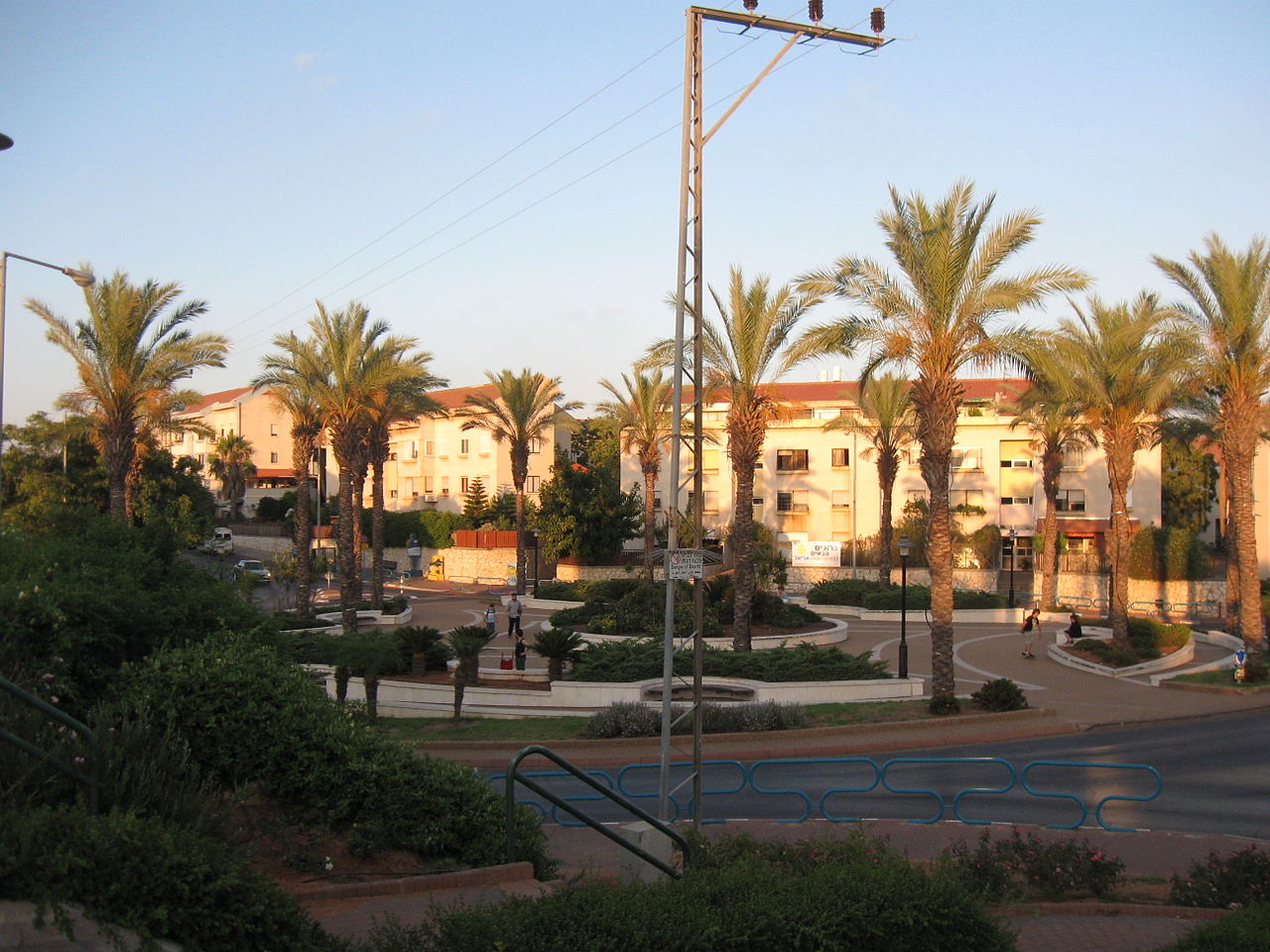
The West Bank has a land area of about 5,640 square kilometres (2,180 square miles). It has an estimated population of 2,747,943 Palestinians and over 670,000 Israeli settlers, of which approximately 220,000 live in East Jerusalem.
Terminology
The name West Bank emerged to refer to the territory that was occupied in 1948 and annexed in 1950 by the Hashemite Kingdom of Jordan, to distinguish it from Jordanian territory east of the Jordan River. It is a translation of the Arabic term aḍ-Ḍiffah al-Ġarbiyyah (Arabic: الضفة الغربية), "the Western Bank"; the Hebrew equivalent is Hebrew: הַגָּדָה הַמַּעֲרָבִית, romanized: Hagada HaMa'aravit. West Bank has much wider international recognition than Judea and Samaria, and has been used in international agreements including the Oslo Accords. It is also the internationally recognized term for the Israeli-occupied Palestinian territory west of the Jordan River. The neo-Latin name Cisjordan, meaning "on this side of the Jordan", is used in several Romance languages and sometimes in academic writing for territory west of the Jordan River.
The names Judea and Samaria refer to historical and biblical regions in the southern and northern parts of the central highlands, respectively. Following the Israeli occupation of the West Bank in 1967, the first two orders issued by the Israeli Military Governorate referred to the territory as the "Occupied West Bank"; in December 1967, beginning with military order no. 187, Israeli authorities used the term Judea and Samaria, and the Judea and Samaria Area is now Israel's official administrative designation for the West Bank, excluding East Jerusalem. The term Judea and Samaria is politically contested: according to Encyclopaedia Britannica, its use is associated with the Israeli right and with those who assert a historical right to settle and annex the West Bank, while supporters of a two-state solution continue to use West Bank as the internationally defined term. Ian Lustick argues that the modern West Bank is not identical to Judea and Samaria, whose historical boundaries do not align with the territory defined by the 1949 armistice line.
History
From 1517 to 1917, the area now known as the West Bank was under Turkish rule, as part of Ottoman Syria. In the early Ottoman period, much of the northern West Bank, including the area of Jenin, and the hill country north of Nablus, formed part of the Turabay Emirate, a semi-autonomous Bedouin polity centred at Lajjun. The Turabay clan administered wide territories on behalf of the Ottoman sultans from the sixteenth to the seventeenth century, collecting taxes and overseeing security along major trade routes. Their authority reflected the empire's reliance on local Arab elites to govern frontier districts, and the town of Lajjun became a regional administrative hub before its decline in the late seventeenth century.
In the late Ottoman period, the rural population of Palestine, including the West Bank hill country, expanded significantly. Villages grew in size, new hamlets were established, and peasants extended cultivation into previously marginal lands such as forests, marshes, and stony slopes. This process was part of a wider demographic recovery and agrarian commercialization in the region, which saw Palestinian peasants increasing grain production and integrating more fully into regional and international markets.
At the 1920 San Remo conference, the victorious Allies of World War I allocated the area to the British Mandate of Palestine (1920–1948). The San Remo Resolution, adopted on 25 April 1920, incorporated the Balfour Declaration of 1917. It and Article 22 of the Covenant of the League of Nations were the basic documents upon which the British Mandate of Palestine was constructed. The United Kingdom proclaimed Abdullah I as emir of the Emirate of Transjordan on 11 April 1921. He declared it an independent Hashemite kingdom on 25 May 1946.

Under the United Nations in 1947, it was designated as part of a proposed Arab state by the Partition Plan for Palestine. UN Resolution 181 recommended the splitting of the British Mandate into a Jewish state, an Arab state, and an internationally administered enclave of Jerusalem. A broader region of the modern-day West Bank was assigned to the Arab state. The resolution designated the territory described as "the hill country of Samaria and Judea", the area now known as the "West Bank", as part of the proposed Arab state. Following the 1948 Arab–Israeli War, this area was captured by Transjordan.
1948–1967: Jordanian West Bank
During the 1948 war, Israel occupied parts of what was designated in the UN partition plan as "Palestine". The 1949 Armistice Agreements defined the interim boundary between Israel and Jordan, essentially reflecting the battlefield after the war. Following the December 1948 Jericho Conference, Transjordan annexed the area west of the Jordan River in 1950, naming it "West Bank" or "Cisjordan", and designated the area east of the river as "East Bank" or "Transjordan". Jordan, as it was now known, ruled over the West Bank from 1948 until 1967. Jordan's annexation was never formally recognized by the international community, with the exception of the United Kingdom and Iraq. King Abdullah of Jordan was crowned King of Jerusalem by the Coptic Bishop on 15 November 1948. Palestinian Arabs in the West Bank, including East Jerusalem, were granted Jordanian citizenship and half of the Jordanian Parliament seats, thus enjoying equal opportunities in all sectors of the state.
Many refugees continued to live in camps and relied on UNRWA assistance for sustenance. Palestinian refugees constituted more than a third of the kingdom's population of 1.5 million. The last Jordanian elections in which West Bank residents voted were those of April 1967. Their parliamentary representatives continued in office until 1988, when West Bank seats were abolished. Palestinians enjoyed equal opportunities in all sectors of the state without discrimination. Agriculture remained the primary activity of the territory. The West Bank, despite its smaller area, contained half of Jordan's agricultural land.

In 1966, 43% of the labour force of 55,000 worked in agriculture, and 2,300 km2 were under cultivation. In 1965, 15,000 workers were employed in industry, producing 7% of the GNP. This number fell after the 1967 war and was not surpassed until 1983. The tourism industry played an important role. 26 branches of 8 Arab banks were present. The Jordanian dinar became legal tender and remains so until today. 80% of Jordan's fruit-growing land and 40% of its vegetables lay in the West Bank. With the onset of the occupation, the area could no longer produce export earnings.
On the eve of occupation, the West Bank accounted for 40% of Jordanian GNP, between 34% and 40% of its agricultural output, and almost half of its manpower, though only a third of Jordanian investment was allocated to it and mainly to the private housing construction sector. Even though its per-capita product was 10 times greater than that of the West Bank, the Israeli economy on the eve of occupation had experienced two years (1966–1967) of a sharp recession.
Immediately after the occupation, from 1967 to 1974, the economy boomed. In 1967, the Palestinian economy had a gross domestic product of $1,349 per capita for a million people. The West Bank's population was 585,500, of whom 18% were refugees, and was growing annually by 2%. West Bank growth, compared to Gaza (3%), had lagged, due to the effect of mass emigration of West Bankers seeking employment in Jordan. As agriculture gave way to industrial development in Israel, in the West Bank the former still generated 37% of domestic product, and industry a mere 13%.

The growth rate of the West Bank economy in the period of the Jordanian rule of the West Bank, before Israeli occupation, had risen at an annual rate of 6–8%. This rate of growth was indispensable if the post-war West Bank were to achieve economic self-reliance.
1967–present: Israeli Military Governorate and Civil Administration
In June 1967, the West Bank and East Jerusalem were captured by Israel as a result of the Six-Day War. With the exception of East Jerusalem and the former Israeli–Jordanian no man's land, the West Bank was not annexed by Israel. It remained under Israeli military control until 1982.
The 1974 Arab League summit resolution at Rabat designated the Palestine Liberation Organization (PLO) as the "sole legitimate representative of the Palestinian people". Jordan did not officially relinquish its claim to the area until 1988, when it severed all administrative and legal ties with the West Bank and eventually stripped West Bank Palestinians of Jordanian citizenship.

In 1982, as a result of the Egypt–Israel peace treaty, the direct military rule was transformed into a semi-civil authority, operating directly under the Israeli Ministry of Defense, taking control of civil matters of Palestinians from the IDF to civil servants in the Ministry of Defense. The Israeli settlements were administered as Judea and Samaria Area, directly by Israel.
Since the 1993 Oslo Accords, the Palestinian Authority officially controls a geographically non-contiguous territory comprising approximately 11% of the West Bank, known as Area A, which remains subject to Israeli incursions. Area B, approximately 28%, is subject to joint Israeli-Palestinian military and Palestinian civil control. Area C, approximately 61%, is under full Israeli control. Though 164 nations refer to the West Bank, including East Jerusalem, as "Occupied Palestinian Territory", the State of Israel quotes the UN that only territories captured in war from "an established and recognized sovereign" are considered occupied territories.
After the 2007 split between Fatah and Hamas, the West Bank areas under Palestinian control are an exclusive part of the Palestinian Authority. The Gaza Strip is ruled by Hamas.
According to Foreign Affairs magazine, Israelis rule the West Bank, and treat Palestinians as if they are of a lower class. There is significant water inequality in West Bank, where Israeli settlers consume on average about seven times more water than Palestinians, whose levels typically fall below the World Health Organization's (WHO) minimum recommendations.
Several Palestinian communities in the Jordan Valley and South Hebron Hills faced severe reductions in water access following settler takeovers of springs and restrictions on water infrastructure access. There have been an increasing number of attacks on Palestinian water infrastructure and access to water sources where according to United Nations Office for the Coordination of Humanitarian Affairs (OCHA), hundreds of settler violence incidents had involved targeting wells, springs, reservoirs, and related water infrastructure in 2025.
In the first 3 months of 2026, an unprecedented level of nearly 1,700 Palestinians were displaced due to settler attacks and access restrictions. Settler actions are described as largely unchallenged, and creating "coercive environments" that compel Palestineans to leave, which are often followed by establishment of new settler outposts. Sexual violence and threats against both women and children have reportedly been increasingly used to compel families to abandon their homes.
Beginning around the late 20th century, Israeli settler violence have been increasing in recent years with OCHA documenting over 1,800 settler attacks against Palestinians in 2025, marking the highest documented annual total and the ninth consecutive year of increase. Reports have described cases in which Israeli security forces were present during or near incidents and failing to intervene, with criticism from observers regarding enforcement and accountability. A 2026 Le Monde report noted that since 2020, Israeli courts have not given jail sentences to any Israeli settler found responsible for killing Palestinian civilians, and a 2026 The Times of Israel report documented over 99 percent of complaints made against Israeli soldiers by Palestinian civilians were closed without indictment in recent years.
As of 2026, there are reportedly around 750,000 Israeli settlers that live illegally in the West Bank, including East Jerusalem. Expansion of settlements, displacement trends, water inequality, and structural policy changes have led to some analysts to argue that Israel has disregarded its obligations as an occupying power by trying to unlawfully annex West Bank and transfer its own population to it, at the expense of long term regional peace.
Geography
The West Bank has an area of 5,628 or 5,640 square kilometres (2,173 or 2,178 square miles), which comprises 21.2% of former Mandatory Palestine (excluding Jordan) and has generally rugged mountainous terrain. The total length of the land boundaries of the region is 404 km (251 mi). The terrain is mostly rugged dissected upland, some vegetation in the west, but somewhat barren in the east. The elevation span between the shoreline of the Dead Sea at −408 m to the highest point at Mount Nabi Yunis, at 1,030 m (3,379 ft) above sea level. The West Bank is landlocked; its highlands are the main recharge area for Israel's coastal aquifers.
The West Bank has 220 km2 (85 sq mi) of water area, consisting of the northwestern quarter of the Dead Sea.
There are few natural resources in the area except the highly arable land, which comprises 27% of the land area of the region. It is mostly used as permanent pastures (32% of arable land) and seasonal agricultural uses (40%). Forests and woodland comprise just 1%, with no permanent crops.
Climate
The climate in the West Bank is mostly Mediterranean, slightly cooler at elevated areas compared with the shoreline, west to the area. In the east, the West Bank includes the Judean Desert and the shoreline of the Dead Sea – both with dry and hot climate.
In the most highly elevated areas in the northwest, annual rainfall is more than 27 inches (685 mm). This declines in the southwest and southeast to less than 4 inches (100 mm). Hilly terrains are used for sheep grazing and cultivating olives, cereals, and fruits. The Jordan River valley is also cultivated for various fruits and vegetables.
Government and politics
Political administration
Palestinian enclaves
The 1993 Oslo Accords declared the final status of the West Bank to be subject to a forthcoming settlement between Israel and the Palestinian leadership. Following these interim accords, Israel withdrew its military rule from some parts of the West Bank, which was divided into three Areas:
Area A, 2.7% of the West Bank under full civil control of the Palestinian Authority, comprises Palestinian towns and some rural areas away from Israeli settlements in the north (between Jenin, Nablus, Tubas, and Tulkarm), the south (around Hebron), and one in the centre south of Salfit. Area B, 25.2% of the area of the terriroty, adds what was the contemporary populated rural areas, many closer to the centre of the West Bank. Area C contains all the Israeli settlements (excluding settlements in East Jerusalem), roads that afford access to the settlements, buffer zones (near settlements, roads, strategic areas, and Israel), and almost all of the Jordan Valley and the Judean Desert.
Areas A and B are themselves divided among 227 separate areas (199 of which are smaller than 2 km2 (1 sq mi)) that are separated from one another by Israeli-controlled Area C. Areas A, B, and C cross the 11 governorates used as administrative divisions by the Palestinian National Authority, Israel, and the IDF and named after major cities. The mainly open areas of Area C, which contains all of the basic resources of arable and building land, water springs, quarries, and sites of touristic value needed to develop a viable Palestinian state, were to be handed over to the Palestinians by 1999 under the Oslo Accords as part of a final status agreement. This agreement was never achieved.
According to B'tselem, while the vast majority of the Palestinian population lives in areas A and B, the vacant land available for construction in dozens of villages and towns across the West Bank is situated on the margins of the communities and defined as area C. Less than 1% of area C is designated for use by Palestinians, who are also unable to legally build in their own existing villages in area C due to Israeli authorities' restrictions.
An assessment by the UN Office for the Coordination of Humanitarian Affairs in 2007 found that approximately 40% of the West Bank was taken up by Israeli infrastructure. The infrastructure, consisting of settlements, the barrier, military bases and closed military areas, Israeli-declared nature reserves, and the roads that accompany them is off-limits or tightly controlled to Palestinians.
In June 2011, the Independent Commission for Human Rights published a report that found that Palestinians in the West Bank and the Gaza Strip were subjected in 2010 to an "almost systematic campaign" of human rights abuse by the Palestinian Authority and Hamas, as well as by Israeli authorities, with the security forces of the PA and Hamas being responsible for torture, arrests, and arbitrary detentions.
Area annexed by Israel
Through the Jerusalem Law, Israel extended its administrative control over East Jerusalem. This has often been interpreted as tantamount to an official annexation, though Ian Lustick, in reviewing the legal status of Israeli measures, has argued that no such annexation ever took place. The Palestinian residents have legal permanent residency status. Rejecting the Jerusalem Law, the UN Security Council passed UN Security Council Resolution 478, declaring that the law was "null and void". Although permanent residents are permitted, if they wish, to receive Israeli citizenship if they meet certain conditions including swearing allegiance to the State and renouncing any other citizenship, most Palestinians did not apply for Israeli citizenship for political reasons. There are various possible reasons as to why the West Bank had not been annexed to Israel after its capture in 1967. The government of Israel has not formally confirmed an official reason; however, historians and analysts have established a variety of such, most of them demographic. Among those most commonly cited have been:
Reluctance to award its citizenship to an overwhelming number of a potentially hostile population whose allies were sworn to the destruction of Israel.
To ultimately exchange land for peace with neighbouring states
Fear that the population of ethnic Arabs, including Israeli citizens of Palestinian ethnicity, would outnumber the Jewish Israelis west of the Jordan River.
The disputed legality of annexation under the Fourth Geneva Convention
The importance of demographic concerns to some significant figures in Israel's leadership was illustrated when Avraham Burg, a former Knesset Speaker and former chair of the Jewish Agency for Israel, wrote in The Guardian in September 2003,
"Between the Jordan and the Mediterranean there is no longer a clear Jewish majority. And so, fellow citizens, it is not possible to keep the whole thing without paying a price. We cannot keep a Palestinian majority under an Israeli boot and at the same time think ourselves the only democracy in the Middle East. There cannot be democracy without equal rights for all who live here, Arab as well as Jew. We cannot keep the territories and preserve a Jewish majority in the world's only Jewish state – not by means that are humane and moral and Jewish."
Area C and Israeli settlements
As of 2022, there are over 450,000 Israeli settlers living in 132 Israeli settlements in the West Bank excluding East Jerusalem, with an additional 220,000 Jewish settlers residing in 12 settlements in East Jerusalem. In addition, there are over 140 Israeli outposts in the West Bank that are not recognized and are therefore illegal even under Israeli law, but which have nevertheless been provided with infrastructure, water, sewage, and other services by the authorities. They are colloquially known as "illegal outposts".
As a result of the application of Israeli law in the settlements ("Enclave law"), large portions of Israeli civil law are applied to Israeli settlements and to Israelis living in the Israeli-occupied territories.
The international consensus is that all Israeli settlements on the West Bank are illegal under international law. In 2002, the European Union as a whole found all Israeli settlement activities to be illegal. Significant portions of the Israeli public similarly oppose the continuing presence of Jewish Israelis in the West Bank and have supported the 2005 settlement relocation. The majority of legal scholars hold the settlements to violate international law; however, some others, including Julius Stone, Eugene Rostow, and Eugene Kontorovich, have argued that they are legal under international law.
Immediately after the 1967 war, Theodor Meron, legal counsellor of Israel's Foreign Ministry, advised Israeli ministers in a "top secret" memo that any policy of building settlements across occupied territories violated international law and would "contravene the explicit provisions of the Fourth Geneva Convention". Fifty years later, citing decades of legal scholarship on the subject, Meron reiterated his legal opinion regarding the illegality of Israeli settlements in the occupied territories.
The UN Security Council has issued several non-binding resolutions addressing the issue of the settlements. Typical of these is UN Security Council resolution 446 which states that the "practices of Israel in establishing settlements in the Palestinian and other Arab territories occupied since 1967 have no legal validity", and it calls on Israel "as the occupying Power, to abide scrupulously by the 1949 Fourth Geneva Convention".