
The Society of United Irishmen was a sworn association, formed in the wake of the French Revolution, to secure representative government in Ireland. Despairing of constitutional reform, and in defiance both of British Crown forces and of Irish sectarian division, in 1798 the United Irishmen instigated a republican rebellion. Their suppression was a prelude to the abolition of the Irish Parliament in Dublin and to Ireland's incorporation in a United Kingdom with Great Britain.
Espousing principles they believed had been vindicated by American independence and by the French Declaration of the Rights of Man, the Presbyterian merchants who formed the first United society in Belfast in 1791 vowed to make common cause with their Catholic-majority fellow countrymen. Their "cordial union" would upend the landed Anglican Ascendancy and hold government accountable to a reformed Parliament.
As it radiated out from Belfast and from Dublin, the society drew on the structure and ritual of freemasonry to recruit among tradesmen, artisans and tenant farmers, many of whom had been organised in their own clubs and secret fraternities. Following its proscription in 1794, its goals were restated in uncompromising terms. Catholic emancipation and parliamentary reform became the call for universal manhood suffrage and a republic. Sharing a common democratic programme, and trading on the prospect of French assistance, agents were active in organising "United" societies in Scotland and in England with whom it was hoped action might be co-ordinated.

Beginning in May 1798, martial-law seizures and arrests forced the conspiracy in Ireland into the open. The result was a series of local risings suppressed in advance of the landing, in August, of a small French expeditionary force.
In the wake of the rebellion, the British government pressed a union with Great Britain upon the Irish Parliament and transferred its unreformed, exclusively Protestant, representation to Westminster. In 1803, a renewed republican conspiracy, organised on strictly military lines, failed to elicit a response in what had been the United heartlands in the north, and misfired with an aborted rising in Dublin.
Exiles formed a United Irish society in the United States where, during the Quasi War with France, it attracted the hostile attention of the governing Federalist Party. There were reports of United Irish oath-taking as a prelude to mutinies in the British Navy, and in Newfoundland and New South Wales.

Since the rebellion's centenary in 1898, Ireland's major political traditions, unionist, nationalist and republican, have claimed and disputed the legacy of the United Irishmen, and of the union they sought to effect between Catholic, Protestant and Dissenter.
Background
Dissenters: "Americans in their hearts"
The Society was formed at a gathering in a Belfast tavern in October 1791. With the exception of Thomas Russell, a former India-service army officer from Cork, and Theobald Wolfe Tone, a Protestant secretary to the Catholic Committee in Dublin, the participants who resolved to reform the government of Ireland on "principles of civil, political and religious liberty" were Presbyterians. As Dissenters from the established Anglican (Church of Ireland) communion, they were conscious of sharing, in part, the civil and political disabilities of the Kingdom's dispossessed Roman Catholic majority.
Although open to them as Protestants, the Parliament in Dublin offered little opportunity for representation or redress. Two-thirds of the Irish House of Commons represented boroughs in the pockets of Lords in the Upper House or of the government itself. Belfast's two MPs were elected by the thirteen members of the corporation, all nominees of the Chichesters, Marquesses of Donegall. Swayed by Crown patronage, parliament, in any case, exercised little hold upon the executive, the Dublin Castle administration which through the office of the Lord Lieutenant continued to be appointed by the King's ministers in London. Ireland, the Belfast conferees observed, had "no national government". She was ruled "by Englishmen, and the servants of Englishmen"

Faced with the tithes, rack rents and sacramental tests of this Ascendancy, and with restrictions on Irish trade in the English interest, Presbyterians had been voting by leaving Ireland in ever greater numbers. From 1710 to 1775 over 200,000 sailed for the North American colonies. When the American Revolutionary War commenced in 1775, there were few Presbyterian households that did not have relatives in America, many of whom would take up arms against the Crown.
Most of the Society's founding members and leadership were members of Belfast's first three Presbyterian churches, all in Rosemary Street. The obstetrician William Drennan, who in Dublin composed the United Irishmen's first test or oath, was the son of the minister of the First Church; Samuel Neilson, owner of the largest woollen warehouse in Belfast, was in the Second Church; Henry Joy McCracken, born into the town's leading fortunes in shipping and linen-manufacture, was a Third Church member. Despite theological differences (the First and Second Churches did not subscribe to the Westminster Confession of Faith, and the Third sustained an Old Light evangelical tradition), their elected, Scottish-educated ministers inclined in their teaching toward conscience rather than doctrine. In itself, this did not imply political radicalism. But it could, and (consistent with the teachings at Glasgow of the Ulster divine Francis Hutcheson) did, lead to acknowledgement from the pulpit of a right of collective resistance to oppressive government. In Rosemary Street's Third Church, Sinclair Kelburn preached in the uniform of an Irish Volunteer, with his musket propped against the pulpit door.
Assessing security on the eve of the American War, the British Viceroy, Lord Harcourt, described the Presbyterians of Ulster as Americans "in their hearts".

The Volunteers and Parliamentary Patriots
For the original members of the Society, the Irish Volunteers were a further source of prior association. Formed to secure the Kingdom as the British garrison was drawn down for American service, Volunteer companies were often little more than local landlords and their retainers armed and drilled. But in Dublin, and above all in Ulster (where they convened provincial conventions), they mobilised a much wider section of Protestant society.
In April 1782, with Volunteer cavalry, infantry, and artillery posted on all approaches to the Parliament in Dublin, Henry Grattan, leader of the Patriot opposition, had a Declaration of Irish Rights carried by acclaim in the Commons. London conceded, surrendering its powers to legislate for Ireland. In 1783 Volunteers converged again upon Dublin, this time to support proposals to limit or abolish the proprietary boroughs and to extend the existing (Protestant) forty-shilling freehold county franchise. But the Volunteer moment had passed. Having accepted defeat in America, Britain could again spare troops for Ireland, and the limits of the Ascendancy's patriotism had been reached. Parliament refused to be intimidated.
In 1784, beginning in Belfast (the "Boston of Ireland"), disappointed Volunteers in Ulster began taking Catholics into their ranks to form "united" companies. Belfast's First Company acted in the firm conviction that "a general Union of all the inhabitants of Ireland is necessary to the freedom and prosperity of this kingdom". The town's Blue Company followed suit, and on 30 May 1784 both companies paraded before St Mary's Chapel, Belfast's first Catholic church, to mark its inaugural mass.

With the news in 1789 of revolutionary events in France enthusiasm for constitutional reform revived. In its Declaration of the Rights of Man and of the Citizen and Civil Constitution of the Clergy, the greatest of the Catholic powers, was seen to be undergoing its own Glorious Revolution. In his Reflections on the Revolution in France (1790), Edmund Burke had sought to discredit any analogy with 1688 in England. But on reaching Belfast in October 1791, Tone found that Thomas Paine's response to Burke, the Rights of Man (of which the new society was to distribute thousands of copies for as little as a penny apiece), had already moved debate beyond anglocentric constitutionalism. In "the light of Paine's democratic convictions", the French Revolution was being viewed in "fundamentally ideological terms".
Three months before, on 14 July, the second anniversary of the Fall of the Bastille was celebrated with a triumphal Volunteer procession through Belfast and a solemn Declaration to the Great and Gallant people of France: "As Irishmen, We too have a country, and we hold it very dear – so dear... that we wish all Civil and Religious Intolerance annihilated in this land." Bastille Day the following year was greeted with similar scenes and an address to the French National Assembly hailing the soldiers of the new republic as "the advance guard of the world".
Belfast and Dublin debates
First resolutions
It was in the midst of this enthusiasm for events in France that William Drennan proposed to his friends "a benevolent conspiracy — a plot for the people", the "Rights of Man and [employing the phrase coined by Hutcheson] the Greatest Happiness of the Greater Number its end — its general end Real Independence to Ireland, and Republicanism its particular purpose."
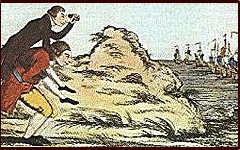
When Drennan's friends gathered in Belfast, they declared that in a "great era of reform, when unjust governments are falling in every quarter of Europe; ... when all government is acknowledged to originate from the people," the Irish people find themselves with "NO NATIONAL GOVERNMENT — we are ruled by Englishmen, and the servants of Englishmen whose object is the interest of another country". Such an injury could be remedied only by "a Cordial Union among ALL THE PEOPLE OF IRELAND" and "by a complete and radical reform of the Representation of the People in Parliament".
They urged their fellow countrymen to follow their example: to "form similar Societies in every quarter of the kingdom for the promotion of Constitutional knowledge, the abolition of bigotry in religion and policies, and the equal distribution of the Rights of Man through all Sects and Denominations of Irishmen".
The "conspiracy", which at Tone's suggestion called itself the Society of the United Irishmen, had moved beyond Flood's Protestant patriotism. English influence, exercised through the Dublin Castle Executive, would be checked constitutionally by a parliament in which "all the people" would have "an equal representation." Unclear, however, was whether the emancipation of Catholics was to be unqualified and immediate. The previous evening, witnessing a debate over the Catholic Question between the town's leading reformers (members of the Northern Whig Club) Tone had found himself "teased" by people agreeing in principle to Catholic emancipation, but then proposing that it be delayed or granted only in stages.
The Catholic Question
Thomas Russell had invited Tone to the Belfast gathering in October 1791 as the author of An Argument on behalf of the Catholics of Ireland. In honour of the reformers in Belfast, who arranged for the publication of 10,000 copies, this had been signed A Northern Whig. Being purportedly of French Huguenot descent, Tone may have had an instinctive empathy for the religiously persecuted, but he was "suspicious of the Catholics priests" and hostile to what he saw as "Papal tyranny". (In 1798 Tone applauded Napoleon's deposition and imprisonment of Pope Pius VI).
For Tone the argument on behalf of the Catholics was political. The "imaginary Revolution of 1782" had failed to secure a representative and national government for Ireland because Protestants had refused to make common cause with Catholics. In Belfast, the objections to doing so were rehearsed for him again by the Reverend William Bruce. Bruce spoke of the danger of "throwing power into hands" of Catholics who were "incapable of enjoying and extending liberty," and whose first interest would be to reclaim their forfeited lands.In his Argument Tone insisted that, as a matter of justice, men cannot be denied rights because an incapacity, whether ignorance or intemperance, for which the laws under which they are made to live are themselves responsible. History, in any case, was reassuring: when they had the opportunity in the Parliament summoned by James II in 1689, and clearer title to what had been forfeit not ninety but forty years before (in the Cromwellian Settlement), Catholics did not insist upon a wholesale return of their lost estates. As to the existing Irish Parliament "where no Catholic can by law appear", it was the clearest proof that "Protestantism is no guard against corruption".
Tone cited the examples of the American Congress and French National Assembly where "Catholic and Protestant sit equally" and of the Polish Constitution of May 1791 (also celebrated in Belfast) with its promise of amity between Catholic, Protestant and Jew. If Irish Protestants remained "illiberal" and "blind" to these precedents, Ireland would continue to be governed in the exclusive interests of England and of the landed Ascendancy.
The Belfast Catholic Society sought to underscore Tone's argument. Meeting in April 1792 they declared their "highest ambition" was "to participate in the constitution" of the kingdom, and disclaimed even "the most distant thought of [...] unsettling the landed property thereof".
On Bastille Day 1792 in Belfast, the United Irishmen (identified by the town's loyalists as "Croppies" for their hair cropped and un-powdered in the French style) had occasion to make their position clear. In a public debate on An Address to the People of Ireland, William Bruce and others proposed hedging the commitment to an equality of "all sects and denominations of Irishmen". They had rather anticipate "the gradual emancipation of our Roman Catholic brethren" staggered in line with Protestant concerns for security and with improving Catholic education. Samuel Neilson "expressed his astonishment at hearing... any part of the address called a Catholic question." The only question was "whether Irishmen should be free." William Steel Dickson, with "keen irony", wondered whether Catholics were to ascend the "ladder" to liberty "by intermarrying with the wise and capable Protestants, and particularly with us Presbyterians, [so that] they may amend the breed, and produce a race of beings who will inherit the capacity from us?"
The amendment was defeated, but the debate reflected a growing division in Ulster. The call for Catholic emancipation might find support in Belfast and surrounding Protestant-majority districts where already in 1784, admitting Catholics, Volunteers had begun to form "united companies". In the Plantation counties west of the River Bann, where a Protestant minority had bitter memories of the Catholic rebellion of 1641, veterans of the Volunteer movement were not as easily persuaded. The Armagh Volunteers, who had called a Volunteer Convention in 1779, boycotted a third in 1793. Under Ascendancy patronage they were already moving along with the Peep o' Day Boys, battling Catholic Defenders in rural districts for tenancies and employment, toward the formation in 1795 of the loyalist Orange Order.
Equal representation
In 1793, the Government itself breached the principle of an exclusively Protestant Constitution. Dublin Castle put its weight behind Grattan in the passage of a Catholic Relief Act. Catholics were admitted to the franchise (but not yet to Parliament itself) on the same terms as Protestants. This courted Catholic opinion, but it also put Protestant reformers on notice. Any further liberalising of the franchise, whether by expunging the pocket boroughs or by lowering the property threshold, would advance the prospect of a Catholic majority. Outside of Ulster and Dublin City, in 1793 the only popular resolution in favour of "a reform" of the Irish Commons to include "persons of all religious persuasion" was from freeholders gathered in Wexford town.
Beyond the inclusion of Catholics and a re-distribution of seats, Tone and Russell protested that it was unclear what members were pledging themselves to in Drennan's original "test": "an impartial and adequate representation of the Irish nation in parliament" was too vague and compromising. But within two years, the Dublin society had agreed on reforms that went beyond the dispensation they had celebrated in the French Constitution of 1791. In February 1794, they published, in the Dublin Evening Post and the Northern Star, a call for universal manhood suffrage. In the exercise of political rights, property, like religion, was to be excluded from consideration.
The new democratic programme was consistent with the transformation of the society into a broad popular movement. Thomas Addis Emmet recorded an influx of "mechanics [artisans, journeymen and their apprentices], petty shopkeepers and farmers". In Belfast, Derry, other towns in the North, and in Dublin, some of these had been maintaining their own Jacobin Clubs.
Writing to her brother, William Drennan, in 1795 Martha McTier describes the "Irish Jacobins" as an established democratic party in Belfast [they had issued an address calling for a universal franchise in December 1792] composed of "persons and rank long kept down" and [although joined in their proceedings by well-to-do United Irishmen such as the banker William Tennant],chaired by a "radical mechanick" (sic).
When April 1795 the new Lord Lieutenant, Earl Fitzwilliam, after publicly urging Catholic admission to parliament was recalled and replaced by Ascendancy hard-liner, Earl Camden, these low-ranked clubists entered United Irish societies in still greater numbers. With the Rev. Kelburn (much admired by Tone as a fervent democrat), they doubted that there "was any such thing" as Ireland's "much boasted constitution", and had urged their "fellow-citizens of every denomination in Ireland, England, and Scotland," to pursue "radical and complete Parliamentary reform" through national conventions. In May, delegates in Belfast representing 72 societies in Down and Antrim rewrote Drennan's test to pledge members to "an equal, full and adequate representation of all the people of Ireland", and to drop the reference to the Irish Parliament (with its Lords and Commons).
This Painite radicalism had been preceded by an upsurge in trade union activity. In 1792 the Northern Star reported a "bold and daring spirit of combination" (long in evidence in Dublin) appearing in Belfast and surrounding districts. Breaking out first among cotton weavers, it then communicated to the bricklayers, carpenters and other trades. In the face of "demands made in a tumultuous and illegal manner", Samuel Neilson (who had pledged his woollen business to the paper) proposed that the Volunteers assist the authorities in enforcing the laws against combination. James (Jemmy) Hope, a self educated weaver, who joined the Society in 1796, nonetheless was to account Neilson, along with Russell (who in the Star positively urged unions for labourers and cottiers), McCracken, and Emmet, the only United Irish leaders "perfectly" understood the real causes of social disorder and conflict: "the conditions of the labouring class".
Observing that property was "merely the collection of labour", in a handbill of March 1794 Dublin United Irishmen had argued that "the scattered labour of the lowest ranks" was "as real and ought to be as really represented" as the "fixed and solid property" that presently monopolised Parliament. In offering manhood suffrage, it made a direct appeal to these ranks, "the poorer classes of the community": Are you overloaded with burdens you are but little able to bear? Do you feel many grievances, which it would be too tedious, and might be unsafe, to mention? Believe us, they can be redressed by such reform as will give you your just proportion of influence in the legislature, AND BY SUCH A MEASURE ONLY. In the "explosion" of handbills, pamphlets and newspapers in 1790s, a small number of tracts "directly addressed economic inequalities". Union doctrine; or Poor man's catechism (1796?) proposed he confiscating the lands of the Established Church to finance care for pregnant women and the elderly, and education for the young.
As a body, however, United Irishmen did not propose the forms that such redress might take in a democratic national assembly. Operating on the principle that they should "attend those things in which we all agree, [and] to exclude those in which we differ", the Society did not itself tie the prospect of popular suffrage to an economic or social programme. Beyond the disclaimer of wholesale Catholic restitution, the Society advanced no scheme or principle of land reform; in Tone's recollection it never "entertained" ideas of "an agrarian law". Jemmy Hope might be clear that this should not be "a delusive fixity of tenure [that allows] the landlord to continue to draw the last potato out of the warm ashes of the poor man's fire".But for the great rural mass of the Irish people this was an existential question upon which neither he nor any central resolution spoke for the Society.
Women
As were the Presbyteries, Volunteer companies and Masonic lodges through which they recruited, the United Irishmen were a male fraternity. In serialising William Godwin's Enquiry Concerning political Justice (1793), the Northern Star had advised them of the moral and intellectual enlightenment found in an "equal and liberal intercourse" between men and women. The paper had also reviewed and commended Mary Wollstonecraft's A Vindication of the Rights of Woman (1792). But the call was not made for women's civic and political emancipation. In publishing excerpts from Wollstonecraft's work, the Star focussed entirely upon issues of female education.
In the rival News Letter, William Bruce argued that this was disingenuous: the "impartial representation of the Irish nation" the United Irishmen embraced in their test or oath implied, he argued, not only equality for Catholics but also that "every woman, in short every rational being shall have equal weight in electing representatives". Drennan did not seek to disabuse Bruce as to "the principle" – he had never seen "a good argument against the right of women to vote". But in a plea that recalled objections to immediate Catholic emancipation, he argued for a "common sense" reading of the test of which he was the author. It might be some generations, he proposed, before "habits of thought, and the artificial ideas of education" are so "worn out" that it would appear "natural" that women should exercise the same rights as men, and so attain their "full and proper influence in the world".
In Belfast Drennan's sister Martha McTier and McCracken's sister Mary-Ann, and in Dublin Emmett's sister Mary Anne Holmes and Margaret King, shared in the reading of Wollstonecraft and of other progressive women writers. As had Tone on behalf of Catholics, Wollstonecraft argued that the incapacities alleged to deny women equality were those that law and usage themselves impose. Mary Ann McCracken, in particular, was articulate in taking to heart the conclusion that women had to reject "their present abject and dependent situation" and secure the liberty without which they could "neither possess virtue or happiness".
Women formed associations within the movement. In October 1796 the Northern Star published a letter from the secretary of the Society of United Irishwomen. This blamed the English, who made war on the new republics, for the violence of the American and French Revolutions. Denounced as a "violent republican", Martha McTier was the immediate suspect, but denied any knowledge of the society. The true author may have been her friend Jane Greg, described by informants as "very active" in Belfast "at the head of the Female Societies" (and by General Lake as being "the most violent creature possible").
Mary Ann McCracken took Drennan's test but stood aloof from the "female societies." No women with "rational ideas of liberty and equality for themselves", she objected, could consent to a separate organisation. There could be "no other reason having them separate, but keeping the women in the dark" and making "tools of them".
In final months before the rising, the paper of the Dublin society, The Press, published two direct addresses to Irish women, both of which "appealed to women as members of a critically-debating public": the first signed Philoguanikos (probably the paper's founder, Arthur O'Connor), the second signed Marcus (Drennan).While both appealed to women to take sides, Philoguanikos was clear that women were being asked to act as political beings. He scorns those "brainless bedlams [who] scream in abhorrence of the idea of a female politician". Among those who took the Society test in response to the appeal were the writers Margaret King and Henrietta Battier (later hailed, by R. R. Madden, as "the Sappho" of the movement).
The letters of Martha McTier and Mary Ann McCracken testify to the role of women as confidantes, sources of advice and bearers of intelligence. R.R. Madden, one of the earliest historians of the United Irishmen, describes various of their activities in the person of an appropriately named Mrs. Risk. By 1797 the Castle informer Francis Higgins was reporting that "women are equally sworn with men" suggesting that some of the women assuming risks for the United Irish cause were taking places beside men in an increasingly clandestine organisation. Middle-class women, such as Mary Moore, who administered the Drennan's test to William James MacNeven, were reportedly active in the Dublin United Irishmen.
On the role in the movement of peasant and other working women there are fewer sources. But in the 1798 uprising they came forward in many capacities, some, as celebrated in later ballads (Betsy Gray and Brave Mary Doyle, the Heroine of New Ross), as combatants. Under the command of Henry Luttrell, Earl Carhampton (who, in a celebrated case in 1788, Archibald Hamilton Rowan had accused of child rape), troops treated women, young and old, with great brutality.
Spread and radicalisation
Jacobins, Masons and Covenanters
Jacques-Louis de Bougrenet de La Tocnaye, a French émigré who walked the length and breadth of Ireland in 1796–97, was appalled to encounter in a cabin upon the banks of the lower Bann the same "nonsense on which the people of France fed themselves before the Revolution". A young labourer treated him to a disposition on "equality, fraternity, and oppression", "reform of Parliament", "abuses in elections", and "tolerance", and such "philosophical discourse" as he had heard from "foppish talkers" in Paris a decade before. In 1793, a magistrate in that same area, near Coleraine, County Londonderry, had been complaining of "daily incursions of disaffected people... disseminating the most seditious principles".Until his arrest in September 1796, Thomas Russell (later celebrated in a popular ballad as The man from God-knows-where) was one such agitator. Recruiting for the Society, he ranged from Belfast as far as Counties Donegal and Sligo.
In recruiting the first societies among the tenant farmers and market-townsmen of north Down and Antrim, Jemmy Hope made conscious appeal to what he called "the republican spirit" of resistance "inherent in the principles of Presbyterian community". While presbyteries were divided politically, as they were theologically, leadership was found among church ministers and their elders, and not least from those who were foremost in championing the Scottish Covenanting tradition. Of those who – bowing to "no king but Jesus" – were elected to preach by the Reformed Presbytery in Ulster, it is estimated that half were implicated in the eventual rebellion. In Antrim thousands filled fields to hear the itinerant Reformed preacher William Gibson prophesy – in the tradition that saw the Antichrist defeated in the overthrow of the Catholic Church in France – the "immediate destruction of the British monarchy". On the pages of the Northern Star, which made a conscious appeal to the millenarianism of orthodox or Old Light Dissenters, Gibson was joined by Thomas Ledlie Birch of Saintfield who (while adhering to the Synod of Ulster) likewise anticipated the "overthrow of the Beast".
Allies were also found in the growing network of Masonic lodges. Although it was the rule that "no politics must be brought within the doors of the Lodge", masons were involved in the Volunteer movement and their lodges remained "a battleground for political ideas". As United Irishmen increasingly attracted the unwelcome attention of Dublin Castle and its network of informants, masonry did become both a cover and a model. Drennan, himself a mason, from the outset had anticipated that his "conspiracy" would have "much of the secrecy and somewhat of the ceremonial of Free-Masonry".
The New System
From February 1793, the Crown was at war with the French Republic. This led immediately to heightened tensions in Belfast. On 9 March, a body of dragoons rampaged through the town, purportedly provoked by taverns displaying the likenesses of Dumouriez, Mirabeau and Franklin. They withdrew to barracks when, as related by Martha McTier, about 1,000 armed countrymen came into the town and mustered at McCracken's Third Presbyterian. Further "military provocations" saw attacks on the homes of Neilson and others associated with the Northern Star (wrecked for the final time, and closed, in May 1797). Legislation impressed from Westminster banned extra-parliamentary conventions and suppressed the Volunteers, by then largely a northern movement. They were replaced by a paid militia, its ranks partially filled with conscripted Catholics, and by Yeomanry, an auxiliary force led by local gentry. In May 1794 the Society itself was proscribed.
The difficulties posed by the repression were "compounded" by the news from France. Increasingly, this persuaded liberal middle-class opinion of a link between "the march of democracy" and the guillotine.
Undaunted, those committed to the pro-French Painite line drafted a constitution for a "new system". Approved in May 1795 by a Belfast conference of Down and Antrim societies, it sought to reconcile the democratic principles of the republic to come with the requirements of a coordinated, clandestine, organisation. Local societies were to split and replicate so as to remain within a range of 7 to 35 members, and, through delegate conferences, to commission a new five-man provincial directory. Selection to this "committee of public welfare" was by ballot, but in order to preserve secrecy, returning officers were sworn to inform only those elected of the results. Together with directors' capacity to co-opt additional members, this implied an executive free to take its own counsel.