
The Huguenots ( HEW-gə-nots, UK also -nohz; French: [yɡ(ə)no]) are a religious group of French Protestants who held to the Reformed (Calvinist) tradition of Protestantism. The term, which may be derived from the name of burgomaster Besançon Hugues, who ironically defended Geneva from Catholic Savoy but then let it fall to Protestantism, was in common use by around 1550. Huguenot was frequently used in reference to those of the Reformed Church of France from the time of the Protestant Reformation. By contrast, the Protestant populations of eastern France, in Alsace, Moselle, and Montbéliard, were mainly Lutherans.
In his Encyclopedia of Protestantism, Hans Hillerbrand wrote that on the eve of the St. Bartholomew's Day massacre in 1572, the Huguenot community made up as much as 10% of the French population. By 1600, it declined to 7–8%, and was reduced further late in the century after the return of persecution under Louis XIV, who instituted the Dragonnades to forcibly convert Protestants, and then finally revoked all Protestant rights in his Edict of Fontainebleau of 1685. In 1686, Protestants comprised just 1% of the population.
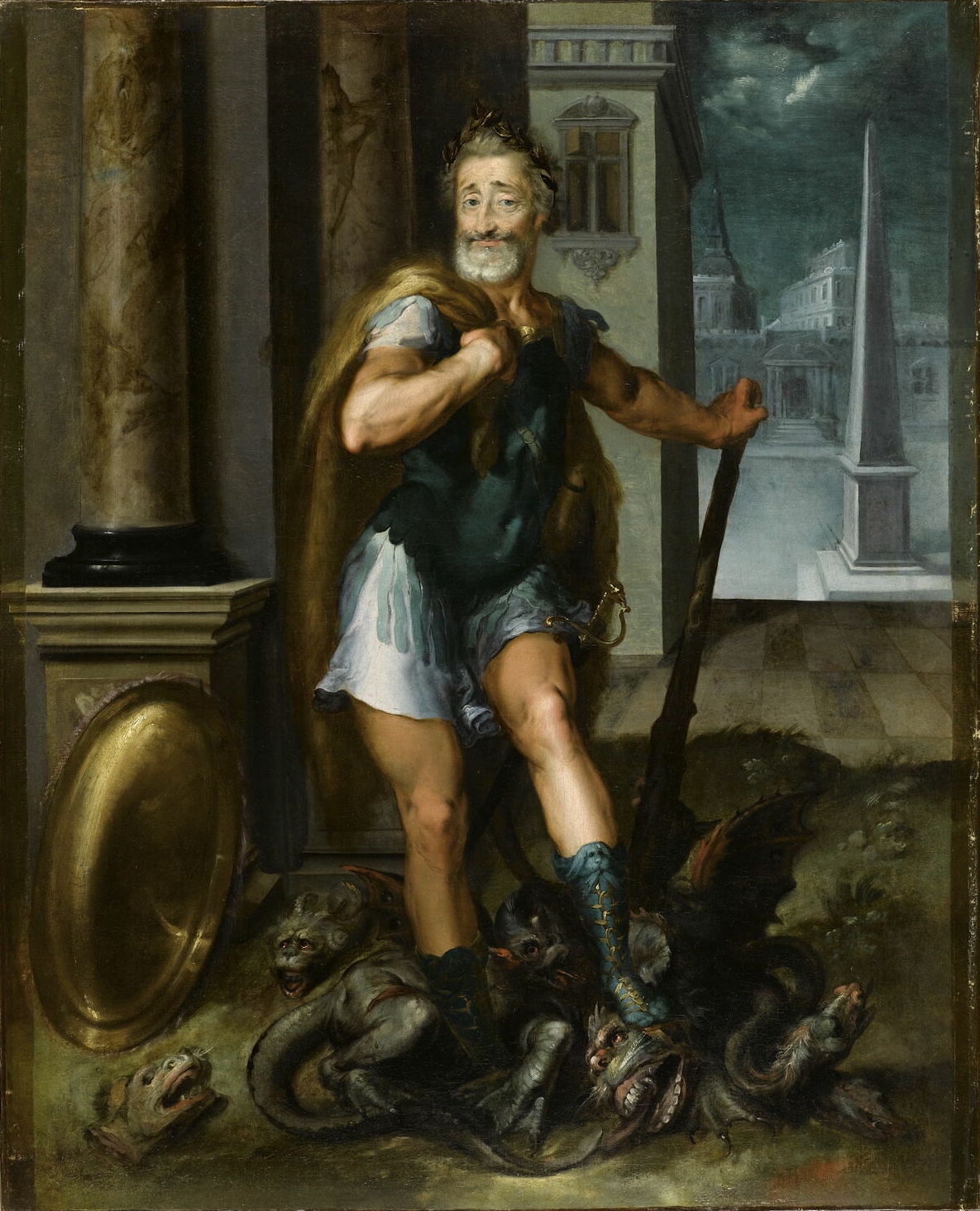
The Huguenots were concentrated in the southern and western parts of the Kingdom of France. As Huguenots gained influence and more openly displayed their faith, Catholic hostility grew. A series of religious conflicts followed, known as the French Wars of Religion, fought intermittently from 1562 to 1598. The Huguenots were led by Jeanne d'Albret; her son, the future Henry IV (who would later convert to Catholicism in order to become king); and the princes of Condé. The wars ended with the Edict of Nantes of 1598, which granted the Huguenots substantial religious, political and military autonomy.

Huguenot rebellions in the 1620s resulted in the abolition of their political and military privileges. They retained the religious provisions of the Edict of Nantes until the rule of Louis XIV, who gradually increased persecution of Protestantism until he issued the Edict of Fontainebleau (1685). This ended legal recognition of Protestantism in France and the Huguenots were forced to either convert to Catholicism (possibly as Nicodemites) or flee as refugees; they were subject to violent Dragonnades. Louis XIV claimed the French Huguenot population was reduced from about 900,000 or 800,000 adherents to just 1,000 or 1,500. He exaggerated the decline, but the Dragonnades were devastating for the French Protestant community. The exodus of Huguenots from France created a brain drain, as many of them had occupied important places in society.
The remaining Huguenots faced continued persecution under Louis XV. By the time of his death in 1774, Calvinism had been all but eliminated from France. Persecution of Protestants officially ended with the Edict of Versailles, signed by Louis XVI in 1787. Two years later, with the Revolutionary Declaration of the Rights of Man and of the Citizen of 1789, Protestants gained equal rights as citizens. The Reformed Church of France represented the main continuation of the Huguenot tradition in modern France. In 2013, it merged with the Evangelical Lutheran Church in France to form the United Protestant Church of France, which today represents the largest Protestant denomination in France and includes both Reformed (Calvinist) and Lutheran traditions descended in part from the Huguenots.
Etymology
A term used originally in derision, Huguenot has unclear origins. Various hypotheses have been promoted. The term may have been a combined reference to the Swiss politician Besançon Hugues (died 1532) and the religiously conflicted nature of Swiss republicanism in his time. It used a derogatory pun on the name Hugues by way of the Dutch word Huisgenoten (literally 'housemates'), referring to the connotations of a somewhat related word in German Eidgenosse ('Confederate' in the sense of 'a citizen of one of the states of the Swiss Confederacy').

In Geneva, John Calvin's adopted home and the centre of the Calvinist movement, Hugues, though Catholic, was a leader of the "Confederate Party", so called because it favoured independence from the Duke of Savoy. It sought an alliance between the city-state of Geneva and the Swiss Confederation. The label Huguenot was purportedly first applied in France to those conspirators (all of them aristocratic members of the Reformed Church) who were involved in the Amboise plot of 1560: a foiled attempt to wrest power in France from the influential and zealously Catholic House of Guise. This action would have fostered relations with the Swiss.
O. I. A. Roche promoted this idea among historians. He wrote in his book, The Days of the Upright, A History of the Huguenots (1965), that Huguenot is:
a combination of a Dutch and a German word. In the Dutch-speaking North of France, Bible students who gathered in each other's houses to study secretly were called Huis Genooten ("housemates") while on the Swiss and German borders they were termed Eid Genossen, or "oath fellows", that is, persons bound to each other by an oath. Gallicised into Huguenot, often used deprecatingly, the word became, during two and a half centuries of terror and triumph, a badge of enduring honour and courage.
Some disagree with such non-French linguistic origins. Janet Gray argues that for the word to have spread into common use in France, it must have originated there in French. The "Hugues hypothesis" argues that the name was derived by association with Hugues Capet, king of France, who reigned long before the Reformation. He was regarded by the Gallicians as a noble man who respected people's dignity and lives. Janet Gray and other supporters of the hypothesis suggest that the name huguenote would be roughly equivalent to 'little Hugos', or 'those who want Hugo'.
Paul Ristelhuber, in his 1879 introduction to a new edition of the controversial and censored, but popular 1566 work Apologie pour Hérodote, by Henri Estienne, mentions these theories and opinions, but tends to support a completely Catholic origin. As one legend holds, a gateway area in the streets of Tours was haunted by the ghosts of le roi Huguet (a generic term for these spirits), "because they were wont to assemble near the gate named after Hugon, a Count of Tours in ancient times, who had left a record of evil deeds and had become in popular fancy a sort of sinister and maleficent genius. This count may have been Hugh of Tours, who was disliked for his cowardice. Additionally, it is related, that, it was believed, (that of these spirits) instead of spending their time in Purgatory, came back to rattle doors and haunt and harm people at night. Protestants went out at nights to their lascivious conventicles, and so the priests and the people began to call them Huguenots in Tours and then elsewhere." The name, Huguenot, "the people applied in hatred and derision to those who were elsewhere called Lutherans, and from Touraine it spread throughout France." The prétendus réformés ('supposedly reformed') were said to gather at night at Tours, both for political purposes, and for prayer and singing psalms. Reguier de la Plancha (d. 1560) in his De l'Estat de France offered the following account as to the origin of the name, as cited by The Cape Monthly:
Reguier de la Plancha accounts for it [the name] as follows: "The name huguenand was given to those of the religion during the affair of Amboyse, and they were to retain it ever since. I'll say a word about it to settle the doubts of those who have strayed in seeking its origin. The superstition of our ancestors, to within twenty or thirty years thereabouts, was such that in almost all the towns in the kingdom they had a notion that certain spirits underwent their Purgatory in this world after death, and that they went about the town at night, striking and outraging many people whom they found in the streets. But the light of the Gospel has made them vanish, and teaches us that these spirits were street-strollers and ruffians. In Paris the spirit was called le moine bourré; at Orléans, le mulet odet; at Blois le loup garon; at Tours, le Roy Huguet; and so on in other places. Now, it happens that those whom they called Lutherans were at that time so narrowly watched during the day that they were forced to wait till night to assemble, for the purpose of praying God, for preaching and receiving the Holy Sacrament; so that although they did not frighten nor hurt anybody, the priests, through mockery, made them the successors of those spirits which roam the night; and thus that name being quite common in the mouth of the populace, to designate the evangelical huguenands in the country of Tourraine and Amboyse, it became in vogue after that enterprise."
Some have suggested the name was derived, with intended scorn, from les guenon de Hus (the 'monkeys' or 'apes of Jan Hus'). By 1911, there was still no consensus in the United States on this interpretation.
Symbol
The Huguenot cross is the distinctive emblem of the Huguenots (croix huguenote). It is now an official symbol of the Église des Protestants réformés (French Protestant church). Huguenot descendants sometimes display this symbol as a sign of reconnaissance (recognition) between them.
Demographics
The issue of demographic strength and geographical spread of the Reformed tradition in France has been covered in a variety of sources. Most of them agree that the Huguenot population reached as many as 10% of the total population, or roughly 2 million people, on the eve of the St. Bartholomew's Day massacre in 1572.

Links to nobility
The new teaching of John Calvin attracted sizeable portions of the nobility and urban bourgeoisie. After John Calvin introduced the Reformation in France, the number of French Protestants steadily swelled to ten percent of the population, or roughly 1.8 million people, in the decade between 1560 and 1570. During the same period there were some 1,400 Reformed churches operating in France. Hans J. Hillerbrand, an expert on the subject, in his Encyclopedia of Protestantism: 4-volume Set claims the Huguenot community reached as much as 10% of the French population on the eve of the St. Bartholomew's Day massacre in 1572, declining to 7–8% by around 1600, and further after heavy persecution began once again with the Revocation of the Edict of Nantes by Louis XIV in 1685. Among the nobles, Calvinism peaked on the eve of the St. Bartholomew's Day massacre. Since then, it sharply decreased as the Huguenots were no longer tolerated by both the French royalty and the Catholic masses. By around 1600, Huguenots constituted 7–8% of the whole population, or 1.2 million people. By the time Louis XIV revoked the Edict of Nantes in 1685, Huguenots accounted for 800,000 to 1 million people.
Huguenots controlled sizeable areas in southern and western France. In addition, many areas, especially in the central part of the country, were also contested between the French Reformed and Catholic nobles. Demographically, there were some areas in which the whole populations had been Reformed. These included villages in and around the Massif Central, as well as the area around Dordogne, which used to be almost entirely Reformed too. John Calvin was a Frenchman and himself largely responsible for the introduction and spread of the Reformed tradition in France. He wrote in French, but unlike the Protestant development in Germany, where Lutheran writings were widely distributed and could be read by the common man, it was not the case in France, where only nobles adopted the new faith and the folk remained Catholic. This is true for many areas in the west and south controlled by the Huguenot nobility. Although relatively large portions of the peasant population became Reformed there, the people, altogether, still remained majority Catholic.
Overall, Huguenot presence was heavily concentrated in the western and southern portions of the French kingdom, as nobles there secured practise of the new faith. These included Languedoc-Roussillon, Gascony and even a strip of land that stretched into the Dauphiné. Huguenots lived on the Atlantic coast in La Rochelle, and also spread across provinces of Normandy and Poitou. In the south, towns like Castres, Montauban, Montpellier and Nîmes were Huguenot strongholds. In addition, a dense network of Protestant villages permeated the rural mountainous region of the Cevennes. Inhabited by Camisards, it continues to be the backbone of French Protestantism. Historians estimate that roughly 80% of all Huguenots lived in the western and southern areas of France.
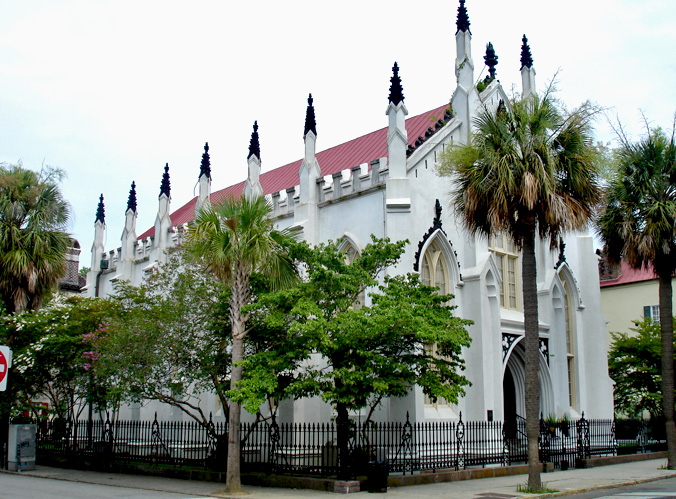
Today, there are some Reformed communities around the world that still retain their Huguenot identity. In France, Calvinists in the United Protestant Church of France and also some in the Protestant Reformed Church of Alsace and Lorraine consider themselves Huguenots. A rural Huguenot community in the Cevennes that rebelled in 1702 is still called Camisards, especially in historical contexts. Huguenot exiles in the United Kingdom, the United States, South Africa, Australia, and a number of other countries still retain their identity.
Emigration and diaspora
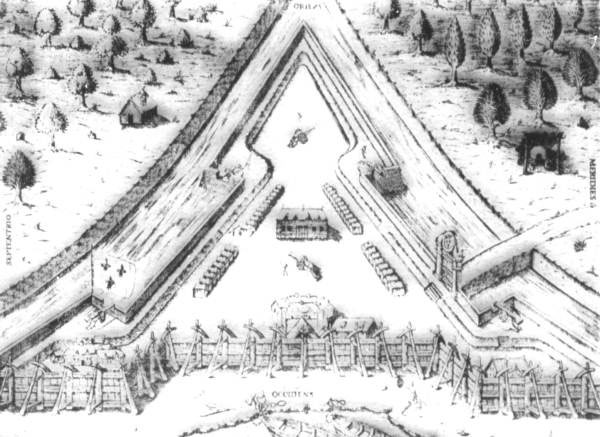
As a final destination, most of the Huguenot émigrés moved to Protestant states such as the Dutch Republic, England and Wales (prominently in Kent and London), Protestant-controlled Ireland, the Channel Islands, Scotland, Denmark, Sweden, Switzerland, the electorates of Brandenburg and the Palatinate in the Holy Roman Empire, and the Duchy of Prussia. Some fled as refugees to the Dutch Cape Colony, the Dutch East Indies, various Caribbean colonies, and several of the Dutch and English colonies in North America. A few families went to Orthodox Russia and Catholic Quebec.
Today most Huguenots have assimilated into the various societies and cultures where they have settled. Remnant communities of Camisards in the Cévennes, most Reformed members of the United Protestant Church of France, French members of the largely German Protestant Reformed Church of Alsace and Lorraine, and the Huguenot diaspora in England and Australia, all still retain their beliefs and Huguenot designation.
History
Origins
The availability of the Bible in vernacular languages was important to the spread of the Protestant movement and development of the Reformed Church in France. The country had a long history of struggles with the papacy (see the Avignon Papacy, for example) by the time the Protestant Reformation finally arrived. Around 1294, a French version of the scriptures was prepared by the Roman Catholic priest, Guyard des Moulins. A two-volume illustrated folio paraphrase version based on his manuscript, by Jean de Rély, was printed in Paris in 1487.
The first known translation of the Bible into one of France's regional languages, Arpitan or Franco-Provençal, had been prepared by the pre-Protestant reformer Peter Waldo (c. 1140 – c. 1205). The Waldensians created fortified areas, as in Cabrières, perhaps attacking an abbey. They were suppressed by Francis I in 1545 in the Massacre of Mérindol.
Other predecessors of the Reformed church included the pro-reform and Gallican Roman Catholics, such as Jacques Lefevre (c. 1455–1536). The Gallicans briefly achieved independence for the French church, on the principle that the religion of France could not be controlled by the Bishop of Rome, a foreign power. During the Protestant Reformation, Lefevre, a professor at the University of Paris, published his French translation of the New Testament in 1523, followed by the whole Bible in the French language in 1530. William Farel was a student of Lefevre who went on to become a leader of the Swiss Reformation, establishing a Protestant republican government in Geneva. Jean Cauvin (John Calvin), another student at the University of Paris, also converted to Protestantism. Long after the sect was suppressed by Francis I, the remaining French Waldensians, then mostly in the Luberon region, sought to join Farel, Calvin and the Reformation, and Olivétan published a French Bible for them. The French Confession of 1559 shows a decidedly Calvinistic influence.
Although usually Huguenots are lumped into one group, there were actually two types of Huguenots that emerged. Since the Huguenots had political and religious goals, it was commonplace to refer to the Calvinists as "Huguenots of religion" and those who opposed the monarchy as "Huguenots of the state", who were mostly nobles.
The Huguenots of religion were influenced by John Calvin's works and established Calvinist synods. They were determined to end religious oppression.
The Huguenots of the state opposed the monopoly of power the Guise family had and wanted to attack the authority of the crown. This group of Huguenots from southern France had frequent issues with the strict Calvinist tenets that are outlined in many of John Calvin's letters to the synods of the Languedoc.
Reformation and growth
Early in his reign, Francis I (r. 1515–1547) persecuted the old, pre-Protestant movement of Waldensians in southeastern France. Francis initially protected the Huguenot dissidents from Parlementary measures seeking to exterminate them. After the 1534 Affair of the Placards, however, he distanced himself from Huguenots and their protection.
Huguenot numbers grew rapidly between 1555 and 1561, chiefly amongst nobles and city dwellers. During this time, their opponents first dubbed the Protestants Huguenots; but they called themselves reformés, or "Reformed". They organised their first national synod in 1558 in Paris.
By 1562, the estimated number of Huguenots peaked at approximately two million, concentrated mainly in the western, southern, and some central parts of France, compared to approximately sixteen million Catholics during the same period. Persecution diminished the number of Huguenots who remained in France.
Wars of religion
As the Huguenots gained influence and displayed their faith more openly, Roman Catholic hostility towards them grew, even though the French crown offered increasingly liberal political concessions and edicts of toleration.
Following the accidental death of Henry II in 1559, his son succeeded as King Francis II along with his wife, the Queen Consort, also known as Mary, Queen of Scots. During the eighteen months of the reign of Francis II, Mary encouraged a policy of rounding up French Huguenots on charges of heresy and putting them in front of Catholic judges, and employing torture and burning as punishments for dissenters. Mary returned to Scotland a widow, in the summer of 1561.
In 1561, the Edict of Orléans declared an end to the persecution, and the Edict of Saint-Germain of January 1562 formally recognised the Huguenots for the first time. However, these measures disguised the growing tensions between Protestants and Catholics.
Civil wars
These tensions spurred eight civil wars, interrupted by periods of relative calm, between 1562 and 1598. With each break in peace, the Huguenots' trust in the Catholic throne diminished, and the violence became more severe, and Protestant demands became grander, until a lasting cessation of open hostility finally occurred in 1598. The wars gradually took on a dynastic character, developing into an extended feud between the Houses of Bourbon and Guise, both of which—in addition to holding rival religious views—staked a claim to the French throne. The crown, occupied by the House of Valois, generally supported the Catholic side, but on occasion switched over to the Protestant cause when politically expedient.
The French Wars of Religion began with the Massacre of Vassy on 1 March 1562, when dozens (some sources say hundreds) of Huguenots were killed, and about 200 were wounded. It was in this year that some Huguenots destroyed the tomb and remains of Saint Irenaeus (d. 202), an early Church father and bishop who was a disciple of Polycarp. The Michelade by Huguenotes against Catholics was later on 29 September 1567.
St. Bartholomew's Day massacre
In what became known as the St. Bartholomew's Day massacre of 24 August to 3 October 1572, Catholics killed thousands of Huguenots in Paris and similar massacres took place in other towns in the following weeks. The main provincial towns and cities experiencing massacres were Aix, Bordeaux, Bourges, Lyon, Meaux, Orléans, Rouen, Toulouse, and Troyes.
Although the exact number of fatalities throughout the country is not known, on 23 or 24 August, between 2,000 and 3,000 Protestants were killed in Paris and a further 3,000 to 7,000 more in the French provinces. By 17 September, almost 25,000 Protestants had been massacred in Paris alone. Beyond Paris, the killings continued until 3 October. An amnesty granted in 1573 pardoned the perpetrators. Following the killings many Protestants fled to the Kentish coast among other places.
Edict of Nantes
The pattern of warfare, followed by brief periods of peace, continued for 25 years. The warfare was definitively quelled in 1598, when Henry of Navarre, having succeeded to the French throne as Henry IV, and having recanted Protestantism in favour of Roman Catholicism in order to obtain the French crown, issued the Edict of Nantes. The Edict reaffirmed Roman Catholicism as the state religion of France, but granted the Protestants equality with Catholics under the throne and a degree of religious and political freedom within their domains. The Edict simultaneously protected Catholic interests by discouraging the founding of new Protestant churches in Catholic-controlled regions.
With the proclamation of the Edict of Nantes, and the subsequent protection of Huguenot rights, pressures to leave France abated. However, enforcement of the Edict grew increasingly irregular over time, making life so intolerable that many fled the country. The Huguenot population of France dropped to 856,000 by the mid-1660s, of which a plurality lived in rural areas. The greatest concentrations of Huguenots at this time resided in the regions of Guienne, Saintonge-Aunis-Angoumois and Poitou.
Montpellier was among the most important of the 66 villes de sûreté ('cities of protection' or 'protected cities') that the Edict of 1598 granted to the Huguenots. The city's political institutions and the university were all handed over to the Huguenots. Tension with Paris led to a siege by the royal army in 1622. Peace terms called for the dismantling of the city's fortifications. A royal citadel was built and the university and consulate were taken over by the Catholic party. Even before the Edict of Alès (1629), Protestant rule was dead and the ville de sûreté was no more.
By 1620, the Huguenots were on the defensive, and the government increasingly applied pressure. A series of three small civil wars known as the Huguenot rebellions broke out, mainly in southwestern France, between 1621 and 1629 in which the Reformed areas revolted against royal authority. The uprising occurred a decade following the death of Henry IV, who was assassinated by a Catholic fanatic in 1610. His successor Louis XIII, under the regency of his Italian Catholic mother Marie de' Medici, was more intolerant of Protestantism. The Huguenots responded by establishing independent political and military structures, establishing diplomatic contacts with foreign powers, and openly revolting against central power. The rebellions were implacably suppressed by the French crown.
Edict of Fontainebleau
Louis XIV inherited the throne in 1643 and acted increasingly aggressively to force the Huguenots to convert. At first he sent missionaries, backed by a fund to financially reward converts to Roman Catholicism. Then he imposed penalties, closed Huguenot schools and excluded them from favoured professions. Escalating, he instituted dragonnades, which included the occupation and looting of Huguenot homes by military troops, in an effort to forcibly convert them. In 1685, he issued the Edict of Fontainebleau, revoking the Edict of Nantes and declaring Protestantism illegal.
The revocation forbade Protestant services, required education of children as Catholics, and prohibited emigration. It proved disastrous to the Huguenots and costly for France. It precipitated civil bloodshed, ruined commerce, and resulted in the illegal flight from the country of hundreds of thousands of Protestants, many of whom were intellectuals, doctors and business leaders whose skills were transferred to Britain as well as Holland, Switzerland, Prussia, South Africa and other places they fled to. 4,000 emigrated to the Thirteen Colonies, where they settled, especially in New York, the Delaware River Valley in Eastern Pennsylvania, New Jersey, and Virginia. The English authorities welcomed the French refugees, providing money from both government and private agencies to aid their relocation. Those Huguenots who stayed in France were subsequently forcibly converted to Roman Catholicism and were called "new converts".
After this, the Huguenots (with estimates ranging from 200,000 to 1,000,000) fled to Protestant countries: England, the Netherlands, Switzerland, Norway, Denmark, and Prussia—whose Calvinist Great Elector Frederick William welcomed them to help rebuild his war-ravaged and underpopulated country. Following this exodus, Huguenots remained in large numbers in only one region of France: the rugged Cévennes region in the south. There were also some Calvinists in the Alsace region, which then belonged to the Holy Roman Empire. In 1702 a regional group known as the Camisards (who were Huguenots of the mountainous Massif Central region) rioted against the Catholic Church, burning churches and killing the clergy. It took French troops years to hunt down and destroy all the bands of Camisards, between 1702 and 1709.
End of persecution
By the 1760s Protestantism was no longer a favourite religion of the elite. By then, most Protestants were Cévennes peasants. It was still illegal, and, although the law was seldom enforced, it could be a threat or a nuisance to Protestants. Calvinists lived primarily in the Midi; about 200,000 Lutherans accompanied by some Calvinists lived in the newly acquired Alsace, where the 1648 Treaty of Westphalia effectively protected them.
Persecution of Protestants diminished in France after 1724, finally ending with the Edict of Versailles, commonly called the Edict of Tolerance, signed by Louis XVI in 1787. Two years later, with the Declaration of the Rights of Man and Citizen of 1789, Protestants gained equal rights as citizens.