
The Commonwealth of Nations, often referred to as the British Commonwealth or simply the Commonwealth, is an international association of 56 member states, the vast majority of which are former territories of its predecessor, the British Empire. They are connected through their use of the English language and their cultural and historical ties. Its chief institutions are the Commonwealth Secretariat, focusing on intergovernmental relations, and the Commonwealth Foundation, focusing on non-governmental relations between member nations. Additionally, numerous intergovernmental and civil organisations are officially recognised by the Secretariat.
The Commonwealth dates back to the first half of the 20th century, with the decolonisation of the Empire through the increased self-governance of its territories. It was created as the British Commonwealth of Nations through the Balfour Declaration at the 1926 Imperial Conference, and formalised by the United Kingdom through the Statute of Westminster in 1931. In 1949, the London Declaration allowed India to remain in the association as a republic, with others following.
Commonwealth citizens enjoy benefits in some member countries, particularly in the United Kingdom, and Commonwealth countries are represented to one another by high commissions rather than embassies. Member states have no legal obligations to one another, though various economic, judicial and military arrangements exist between countries. The Commonwealth Charter defines their shared values of democracy, human rights, and the rule of law, as promoted by the quadrennial Commonwealth Games.

The head of the Commonwealth is Charles III. He is king of 15 member states, known as the Commonwealth realms, while 36 other members are republics, and five have different monarchs. Although he became head upon the death of his mother, Elizabeth II, the position is not technically hereditary. A majority of Commonwealth countries are small states, with small island developing states constituting almost half its membership.
History
Conceptual origins
Queen Elizabeth II, in her address to Canada on Dominion Day in 1959, pointed out that the Confederation of Canada on 1 July 1867 had been the birth of the "first independent country within the British Empire". She declared: "So, it also marks the beginning of that free association of independent states which is now known as the Commonwealth of Nations." As long ago as 18 January 1884 Lord Rosebery, while visiting Adelaide, South Australia, had described the changing British Empire, as some of its colonies became more independent, as a "Commonwealth of Nations". Conferences of British and colonial prime ministers occurred periodically from the first one in 1887, leading to the creation of the Imperial Conferences in 1911.
The Commonwealth developed from the imperial conferences. A specific proposal was presented by Jan Smuts in 1917 when he coined the term "the British Commonwealth of Nations" and envisioned the "future constitutional relations and readjustments in essence" at the Paris Peace Conference of 1919, attended by delegates from the Dominions as well as the United Kingdom. The term first received imperial statutory recognition in the Anglo-Irish Treaty of 1921, when the term British Commonwealth of Nations was substituted for British Empire in the wording of the oath taken by members of parliament of the Irish Free State.

Adoption and formalisation
In the Balfour Declaration at the 1926 Imperial Conference, the United Kingdom and its dominions agreed that they were "autonomous Communities within the British Empire, equal in status, in no way subordinate one to another in any aspect of their domestic or external affairs, though united by a common allegiance to the Crown, and freely associated as members of the British Commonwealth of Nations." The term 'Commonwealth' was officially adopted to describe the community.
These aspects of the relationship were formalised by the Statute of Westminster in 1931, which applied to Canada, the Irish Free State and South Africa without the need for ratification, but Australia, New Zealand and Newfoundland had to ratify the statute for it to take effect. Newfoundland never did as due to economic hardship and the need for financial assistance from London, Newfoundland voluntarily accepted the suspension of self-government in 1934 and governance reverted to direct control from London. Newfoundland later joined Canada as its tenth province in 1949. Australia and New Zealand ratified the statute in 1942 and 1947 respectively.
Although the Union of South Africa was not among the Dominions that needed to adopt the Statute of Westminster for it to take effect, two laws — the Status of the Union Act, 1934, and the Royal Executive Functions and Seals Act, 1934 — were passed by the Parliament of South Africa to confirm South Africa's status as a sovereign state, and to incorporate the Statute of Westminster into the law of South Africa.

Second World War
The Commonwealth and Empire were involved in every major theatre of the Second World War. This included the establishment of the British Commonwealth Air Training Plan by the governments of the United Kingdom, Canada, Australia and New Zealand for pilots from across the Empire and its Dominions. Immediately after the war, troops from Australia, Britain, India and New Zealand made up the British Commonwealth Occupation Force in Japan. It was subsequently the basis of the British Commonwealth forces in Korea.
Decolonisation and self-governance
After the Second World War ended, the British Empire was gradually dismantled. Most of its components have become independent countries, whether Commonwealth realms or republics, and members of the Commonwealth. There remain the 14 mainly self-governing British Overseas Territories which retain some political association with the United Kingdom. In April 1949, following the London Declaration, the word "British" was dropped from the title of the Commonwealth to reflect its changing nature.
Burma (officially Myanmar since 1989) and Aden (now part of Yemen) are the only states that were British colonies at the time of the war not to have joined the Commonwealth upon independence. Former British protectorates and mandates that did not become members of the Commonwealth are Egypt (independent in 1922), Iraq (1932), Transjordan (1946), Mandatory Palestine (part of which became the State of Israel in 1948), Sudan (1956), British Somaliland (which united with the former Italian Somaliland in 1960 to form the Somali Republic), Kuwait (1961), Bahrain (1971), Oman (1971), Qatar (1971) and the United Arab Emirates (1971).
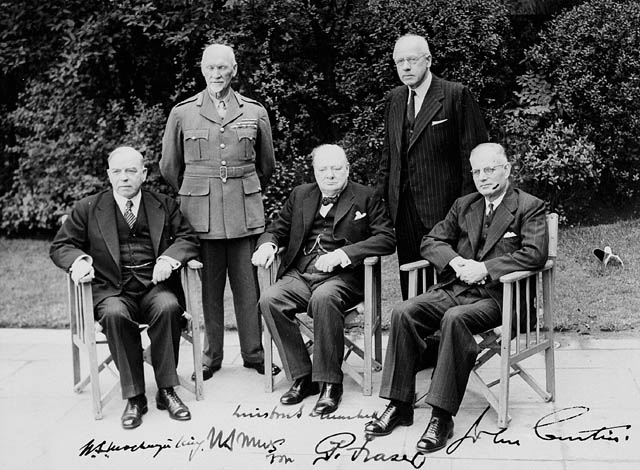
The post-war Commonwealth was given a fresh mission by Queen Elizabeth II in her Christmas Day 1953 broadcast, in which she envisioned the Commonwealth as "an entirely new conception – built on the highest qualities of the Spirit of Man: friendship, loyalty, and the desire for freedom and peace". However, the British treasury was so weak that it could not operate independently of the United States. Furthermore, the loss of defence and financial roles undermined Joseph Chamberlain's early 20th-century vision of a world empire that could combine Imperial Preference, mutual defence and social growth. In addition, the United Kingdom's cosmopolitan role in world affairs became increasingly limited, especially with the independence of India and Singapore. While British politicians at first hoped that the Commonwealth would preserve and project British influence, they gradually lost their enthusiasm, argues Krishnan Srinivasan. Early enthusiasm waned as British policies came under fire at Commonwealth meetings. Public opinion became troubled as immigration from non-white member states became large-scale (see also: Commonwealth diaspora).
The term "New Commonwealth" gained usage in the UK, especially in the 1960s and 1970s, to refer to recently decolonised countries, predominantly non-white and developing countries. It was often used in debates regarding immigration from these countries. The United Kingdom and the pre-1945 dominions became informally known as the "Old Commonwealth", or more pointedly as the "white Commonwealth", in reference to what had been known as the "White Dominions".
Commonwealth republics
On 18 April 1949, Ireland formally became a republic in accordance with the Republic of Ireland Act 1948 passed by its parliament; in doing so, it also formally left the Commonwealth. While Ireland had not actively participated in the Commonwealth since the early 1930s, other dominions wished to become republics without losing Commonwealth ties. The issue came to a head in April 1949 at a Commonwealth prime ministers' meeting in London. Under the London Declaration, as drafted by V. K. Krishna Menon, India agreed, when it became a republic in January 1950, it would remain in the Commonwealth and accept the British Sovereign as a "symbol of the free association of its independent member nations and as such the Head of the Commonwealth". Upon hearing this, King George VI told Menon: "So, I've become 'as such'." Some other Commonwealth countries that have since become republics have chosen to leave, while others, such as Guyana, Mauritius and Dominica, have remained members.

India's inaugural prime minister Jawaharlal Nehru declared on 16 May 1949, shortly following the Declaration, during the Constituent Assembly Debates that:
We join the Commonwealth obviously because we think it is beneficial to us and to certain causes in the world that we wish to advance. The other countries of the Commonwealth want us to remain there because they think it is beneficial to them. It is mutually understood that it is to the advantage of the nations in the Commonwealth and therefore they join. At the same time, it is made perfectly clear that each country is completely free to go its own way; it may be that they may go, sometimes go so far as to break away from the Commonwealth...Otherwise, apart from breaking the evil parts of the association, it is better to keep a co-operative association going which may do good in this world rather than break it.The London Declaration is often seen as marking the beginning of the modern Commonwealth. Following India's precedent, other nations became republics, or constitutional monarchies with their own monarchs. While some countries retained the same monarch as the United Kingdom, their monarchies developed differently and soon became (or had already become) essentially independent of the British monarchy. The monarch is regarded as a separate legal personality in each realm, even though the same person is monarch of each realm.
Proposals to include Europe
At a time when Germany and France, together with Belgium, Italy, Luxembourg, and the Netherlands, were planning what later became the European Union, and newly independent African countries were joining the Commonwealth, new ideas were floated to prevent the United Kingdom from becoming isolated in economic affairs. British trade with the Commonwealth was four times larger than its trade with Europe. In 1956 and 1957, the British government, under Prime Minister Anthony Eden, considered a "Plan G" to create a European free trade zone while also protecting the favoured status of the Commonwealth.

At the time of the Suez Crisis in 1956, and in the face of colonial unrest and international tensions, French prime minister Guy Mollet proposed to British prime minister Anthony Eden that their two countries be joined in a "union". When that proposal was turned down, Mollet suggested that France join the Commonwealth, possibly with "a common citizenship arrangement on the Irish basis". These ideas faded away with the end of the Suez Crisis.
Expansion and global engagement
The first member admitted without any constitutional link to the British Empire was Mozambique – a former Portuguese colony – in 1995 following its first democratic elections. Its entry preceded the Edinburgh Declaration and the current membership guidelines. In 2009, Rwanda became the second country admitted to the Commonwealth without any constitutional links to Britain. It was a Belgian trust territory that had been a district of German East Africa until World War I.
In 2022, Togo (a former French mandate territory) and Gabon (a former French colony) joined the Commonwealth, despite having never been under British rule. Togolese foreign minister Robert Dussey foresaw opportunities for Togolese citizens to learn English, and to benefit from access to education and culture. The country sought closer ties with the Anglophone world. In 2024 alone, trade between Togo and Britain increased by 94 per cent; the country also sought to expand trade with India. Meanwhile, Gabon was partially suspended from the Commonwealth in September 2023 following a military coup, with two years given by the Commonwealth Ministerial Action Group for the country to hold new elections before a full suspension would be considered. Gabon's partial suspension was lifted in July 2025, following a presidential election.
Commonwealth linkages became the subject of renewed interest during the second term of United States president Donald Trump. In 2025 — during Russia's invasion of Ukraine — Australia, Canada, Cyprus and New Zealand aligned themselves with the pro-Ukraine "coalition of the willing" spearheaded by British prime minister Keir Starmer. During the 2025 Liberal Party leadership contest in Canada, in light of aggressive actions taken by America, the ultimate victor Mark Carney expressed support for deepening relations with Britain, Australia and New Zealand. Trump expressed interest in the United States becoming a member or "associate" member of the association, following tabloid reporting that this would be offered by Britain.
Writing about America's shirking of global responsibility and the supposed ineffectiveness of the United Nations, Australian-British lawyer Geoffrey Robertson opined that "Europe and the Commonwealth countries, plus Japan and Brazil and Indonesia, might together have more impact than the Security Council – if for example China moved to invade Taiwan." Amidst the Gaza war, Britain, Australia, Canada and New Zealand imposed sanctions on two Israeli government ministers, alongside Norway. In 2026, as Carney sought to unify middle powers, Antigua and Barbuda prime minister Gaston Browne argued in a Daily Telegraph opinion piece that the Commonwealth was ideal for that purpose.
Structure
Head of the Commonwealth
Under the formula of the London Declaration, Charles III is the Head of the Commonwealth. However, when the monarch dies, the successor to the crown does not automatically become the new head of the Commonwealth. Despite this, at their meeting in April 2018, Commonwealth leaders agreed that Prince Charles should succeed his mother Elizabeth II as head after her death. The position is symbolic, representing the free association of independent members, the majority of which (36) are republics, and five have monarchs of different royal houses (Brunei, Eswatini, Lesotho, Malaysia and Tonga).
Commonwealth Heads of Government Meeting
The main decision-making forum of the organisation is the biennial Commonwealth Heads of Government Meeting (CHOGM), where Commonwealth Heads of Government, including (among others) prime ministers and presidents, assemble for several days to discuss matters of mutual interest. CHOGM is the successor to the Commonwealth Prime Ministers Meetings and, earlier, the Imperial Conferences and Colonial Conferences, dating back to 1887. There are also regular meetings of finance ministers, law ministers, health ministers and others. Members in arrears, as special members before them, are not invited to send representatives to either ministerial meetings or CHOGMs.
The head of government hosting the CHOGM is called the chair-in-office (CIO) and retains the position until the following CHOGM.
Commonwealth Secretariat
The Commonwealth Secretariat, established in 1965, is the main intergovernmental agency of the Commonwealth, facilitating consultation and co-operation among member governments and countries. It is responsible to member governments collectively. The Commonwealth of Nations is represented in the United Nations General Assembly by the Secretariat as an observer. The secretariat organises Commonwealth summits, meetings of ministers, consultative meetings and technical discussions; it assists policy development and provides policy advice, and facilitates multilateral communication among the member governments. It also provides technical assistance to help governments in the social and economic development of their countries and in support of the Commonwealth's fundamental political values.
The secretariat is headed by the Commonwealth secretary-general, who is elected by the CHOG for no more than two four-year terms. Two deputy secretaries-general assist. The present secretary-general is Shirley Ayorkor Botchwey, from Ghana, succeeding Patricia Scotland. The first secretary-general was Arnold Smith of Canada (1965–1975), followed by Sir Shridath Ramphal of Guyana (1975–1990), Chief Emeka Anyaoku of Nigeria (1990–1999), Don McKinnon of New Zealand (2000–2008), and Kamalesh Sharma of India (2008–2016).
Commonwealth citizenship and high commissioners
Some member states grant particular rights to Commonwealth citizens. The United Kingdom and several others, mostly in the Caribbean, grant the right to vote to resident Commonwealth citizens. Some countries, including the United Kingdom, have preferential citizenship acquisition or residency policies for Commonwealth citizens. Initially, Commonwealth countries were not considered to be "foreign" to each other as their citizens were British subjects. Citizenship laws evolved as the Commonwealth developed from the Empire. In Australia, for the purpose of considering certain constitutional and legal provisions in the High Court case of Sue v Hill, the United Kingdom was held to be a "foreign power". Similarly, in Nolan v Minister for Immigration and Ethnic Affairs, the nationals of other Commonwealth realms were held to be "aliens" though they were subjects of the Queen.
Commonwealth citizens may receive consular assistance from other Commonwealth countries. In particular, British embassies and consulates may provide assistance to Commonwealth nationals in non-Commonwealth countries if their own country is not represented. Commonwealth citizens are eligible to apply for British emergency passports. Australia issues Documents of Identity in exceptional circumstances to resident Commonwealth citizens who are unable to obtain valid travel documents from their countries of origin and must travel urgently.
The close association among Commonwealth countries is reflected in their diplomatic protocols. For example, when engaging bilaterally with one another, Commonwealth governments exchange high commissioners instead of ambassadors.
Judicial
The Judicial Committee of the Privy Council is the supreme court of 14 Commonwealth countries, including the Cook Islands and Niue which are under the Realm of New Zealand (though New Zealand itself does not make appeals to the Privy Council).
Pacific Island states often appoint judges from other Commonwealth countries. For instance, Commonwealth nationals are eligible to serve on the High Court of Fiji.
Military
Commonwealth citizens are eligible to serve in the British Armed Forces. According to the British Army, "Commonwealth soldiers are, and always will be, an important and valued part" of its fabric. Visa fees for Commonwealth personnel seeking to settle in Britain were scrapped in 2022.
The Five Power Defence Arrangements is a defence partnership between Commonwealth countries Australia, Malaysia, New Zealand, Singapore and Britain.
Gurkhas
Gurkha soldiers from Nepal, a non-Commonwealth country, have long served in the British Army and the forces of several Commonwealth countries. They are employed by the British Army (Brigade of Gurkhas), Indian Army (Gorkha regiments) and Royal Brunei Armed Forces (Gurkha Reserve Unit), as well the Gurkha Contingent of the Singapore Police Force. Most members of Brunei's Gurkha Reserve Unit are veterans from the British Army and Singaporean police.
Membership
Criteria
The criteria for membership of the Commonwealth of Nations have developed over time from a series of separate documents. The Statute of Westminster 1931, as a fundamental founding document of the organisation, laid out that membership required dominionhood. The 1949 London Declaration ended this, allowing republican and indigenous monarchic members on the condition that they recognised King George VI as "Head of the Commonwealth". In the wake of the wave of decolonisation in the 1960s, these constitutional principles were augmented by political, economic, and social principles. The first of these was set out in 1961, when it was decided that respect for racial equality would be a requirement for membership, leading directly to the withdrawal of South Africa's re-application (which they were required to make under the formula of the London Declaration upon becoming a republic). The 14 points of the 1971 Singapore Declaration dedicated all members to the principles of world peace, liberty, human rights, equality, and free trade.
These criteria were unenforceable for two decades, until, in 1991, the Harare Declaration was issued, dedicating the leaders to applying the Singapore principles to the completion of decolonisation, the end of the Cold War, and the end of apartheid in South Africa. The mechanisms by which these principles would be applied were created, and the manner clarified, by the 1995 Millbrook Commonwealth Action Programme, which created the Commonwealth Ministerial Action Group (CMAG), which has the power to rule on whether members meet the requirements for membership under the Harare Declaration. Also in 1995, an Inter-Governmental Group was created to finalise and codify the full requirements for membership. Upon reporting in 1997, as adopted under the Edinburgh Declaration, the Inter-Governmental Group ruled that any future members would "as a rule" have to have a direct constitutional link with an existing member.
In addition to this new rule, the former rules were consolidated into a single document. These requirements are that members must accept and comply with the Harare principles, be fully sovereign states, recognise King Charles III as head of the Commonwealth, accept the English language as the means of Commonwealth communication, and respect the wishes of the general population with regard to Commonwealth membership. These requirements had undergone review, and a report on potential amendments was presented by the Committee on Commonwealth Membership at the 2007 Commonwealth Heads of Government Meeting. New members were not admitted at this meeting, though applications for admission were considered at the 2009 CHOGM.
New members must "as a general rule" have a direct constitutional link to an existing member. In most cases, this is due to being a former colony of the United Kingdom, but some have links to other countries, either exclusively or more directly (e.g., Bangladesh to Pakistan, Samoa to New Zealand, Papua New Guinea to Australia, and Singapore to Malaysia). Mozambique, in 1995, was the first country to join without such a constitutional connection, leading to the Edinburgh Declaration and the current membership guidelines.
In 2009, Rwanda, formerly under Belgian and German rule, joined. Consideration for Rwanda's admission was considered an "exceptional circumstance" by the Commonwealth Secretariat. Rwanda was permitted to join despite the Commonwealth Human Rights Initiative (CHRI) finding that "the state of governance and human rights in Rwanda does not satisfy Commonwealth standards", and that it "does not therefore qualify for admission". The CHRI commented that: "It does not make sense to admit a state that already does not satisfy Commonwealth standards. This would tarnish the reputation of the Commonwealth and confirm the opinion of many people and civic organisations that the leaders of its governments do not really care for democracy and human rights, and that its periodic, solemn declarations are merely hot air."
In 2022, the former French territories of Togo and Gabon joined the Commonwealth.