
The Salem witch trials were a series of hearings and prosecutions of people accused of witchcraft in colonial Massachusetts between February 1692 and May 1693. More than 200 people were accused. Thirty people were found guilty, nineteen of whom were executed by hanging (fourteen women and five men). One other man, Giles Corey, died under torture for refusing to enter a plea, and at least five people died in the disease-ridden jails without trial.
Although the accusations began in Salem Village (known today as Danvers), accusations and arrests were made in numerous towns beyond the village notably in Andover and Topsfield. The residency of many of the accused is now unknown; around 151 of those people are able to be traced back to twenty-five different New England communities. The grand juries and trials for this capital crime were conducted by a Court of Oyer and Terminer in 1692 and by a Superior Court of Judicature in 1693, both held in Salem Town (the regional center for Salem Village), where the hangings also took place. It was the deadliest witch hunt in the history of colonial North America. Fourteen other women and two men were executed in Massachusetts and Connecticut during the 17th century. The Salem witch trials only came to an end when serious doubts began to arise among leading clergymen about the validity of the spectral evidence that had been used to justify so many of the convictions, and due to the sheer number of those accused, "including several prominent citizens of the colony".
In the years after the trials, "several of the accusers – mostly teen-age girls – admitted that they had fabricated their charges." In 1702, the General Court of Massachusetts declared the trials "unlawful", and in 1711 the colonial legislature annulled the convictions, passing a bill "mentioning 22 individuals by name" and reversing their attainders.

The episode is one of colonial America's most notorious cases of mass hysteria. It was not entirely unique, but a colonial manifestation of the much broader phenomenon of witch trials in the early modern period, which took the lives of tens of thousands in Europe. In America, Salem's events have been used in political rhetoric and popular literature as a vivid cautionary tale about the dangers of isolation, religious extremism, false accusations, and lapses in due process. Many historians consider the lasting effects of the trials to have been highly influential in the history of the United States. According to historian George Lincoln Burr, "the Salem witchcraft was the rock on which the [New England] theocracy shattered."
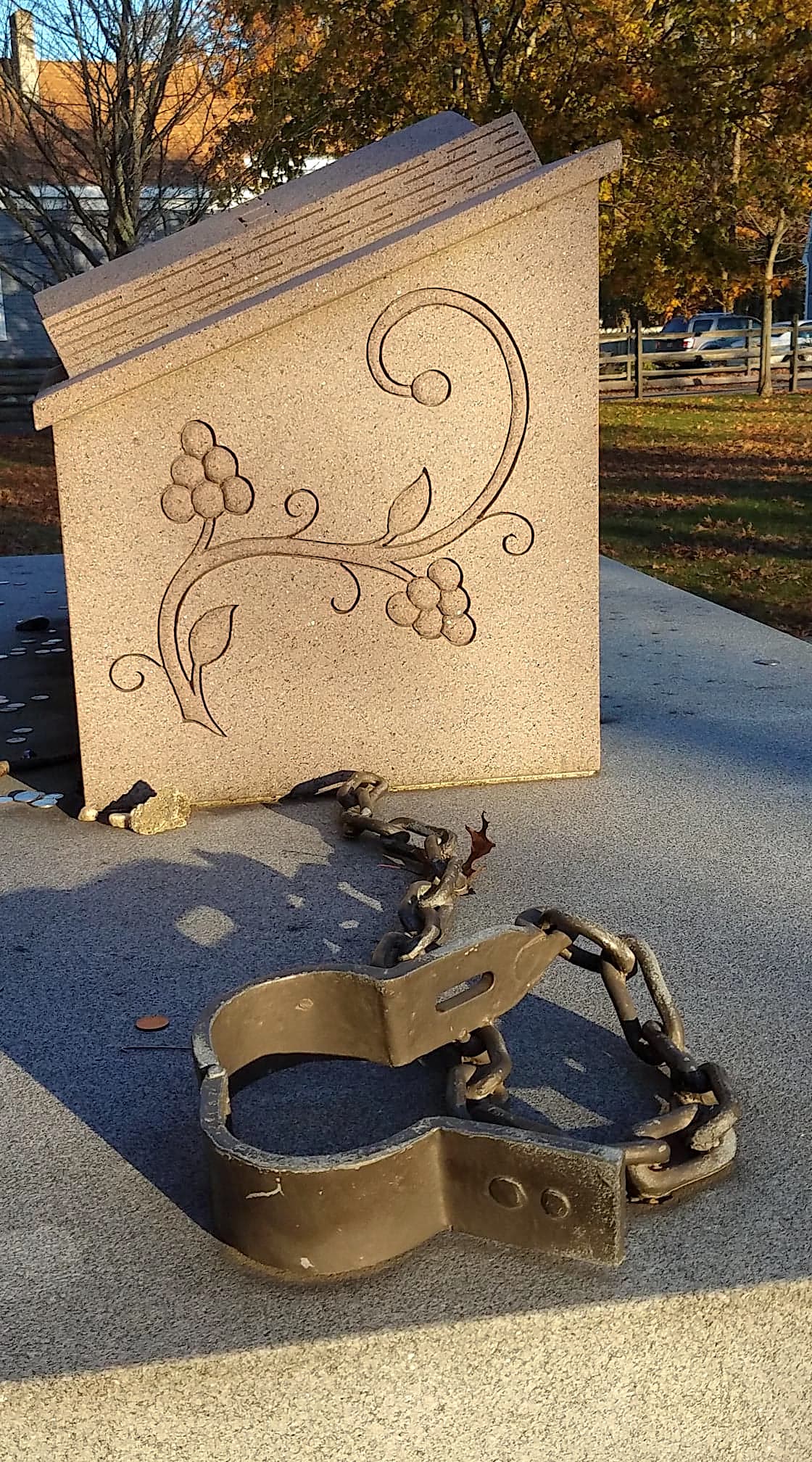
At the 300th anniversary events held in 1992 to commemorate the victims of the trials, a park was dedicated in Salem and a memorial in Danvers. In 1957, an act passed by the Massachusetts legislature absolved six people, while another one, passed in 2001, absolved five other victims. As of 2004, there was still talk about exonerating or pardoning all of the victims. In 2022, the last convicted Salem witch, Elizabeth Johnson Jr., was officially exonerated, 329 years after she had been found guilty.
In January 2016, the University of Virginia announced its Gallows Hill Project team had determined the execution site in Salem, where the 19 "witches" had been hanged. The city dedicated the Proctor's Ledge Memorial to the victims there in 2017.

Background
While witch trials had begun to fade out across much of Europe by the mid-17th century, they continued on the fringes of Europe and in the American Colonies. The events in 1692–1693 in Salem became a brief outburst of a sort of hysteria in the New World, while the practice was already waning in most of Europe.
In 1668, in Against Modern Sadducism, English clergyman and philosopher Joseph Glanvill claimed that he could prove the existence of witches and ghosts of the supernatural realm. Glanvill wrote about the "denial of the bodily resurrection, and the [supernatural] spirits."
In his treatise, Glanvill claimed that ingenious men should believe in witches and apparitions; if they doubted the reality of spirits, they not only denied demons but also the almighty God. Glanvill wanted to prove that the supernatural could not be denied; those who did deny apparitions were considered heretics, for it also disproved their beliefs in angels. Works by men such as Glanvill and Cotton Mather tried to prove that "demons were alive".

Accusations
The trials began after a few local women in Salem Village were accused of witchcraft by four young girls, Betty Parris (9), Abigail Williams (11), Ann Putnam Jr. (12), and Elizabeth Hubbard (17). The accusations centered around the concept of "affliction", and the women accused of having caused physical and mental harm to the girls through witchcraft.
Recorded witchcraft sentencing in New England
The earliest recorded witchcraft execution was that of Alse Young in 1647 in Hartford, Connecticut, the start of the Connecticut Witch Trials which lasted until 1663. Historian Clarence F. Jewett included a list of other people executed in New England in his 1881 book.
Elizabeth Morse had been accused and placed on house arrest in the early 1680s in Newbury, Massachusetts. She had been found guilty of witchcraft because seventeen witnesses testified.

Political context
New England had been settled by religious dissenters seeking to build a Bible-based society according to their own chosen discipline. The original 1629 Royal Charter of the Massachusetts Bay Colony was vacated in 1684, after which King James II installed Sir Edmund Andros as the governor of the Dominion of New England. Andros was ousted in 1689 after the "Glorious Revolution" in England replaced the Catholic James II with the Protestant co-rulers William and Mary.
Simon Bradstreet and Thomas Danforth, the colony's last leaders under the old charter, resumed their posts as governor and deputy governor, but lacked constitutional authority to rule because the old charter had been vacated. At the same time, tensions erupted between English colonists settling in "the Eastward" (the present-day coast of Maine) and French-supported Wabanaki people of that territory in what came to be known as King William's War. This was 13 years after the devastating King Philip's War with the Wampanoag and other indigenous tribes in southern and western New England. In October 1690, Sir William Phips led an unsuccessful attack on French-held Quebec. Between 1689 and 1692, Native Americans continued to attack many English settlements along the Maine coast, leading to the abandonment of some of the settlements and resulting in a flood of refugees into areas like Essex County.
A new charter for the enlarged Province of Massachusetts Bay was given final approval in England on October 16, 1691. Increase Mather had been working on obtaining the charter for four years, with William Phips often joining him in London and helping him gain entry to Whitehall. Increase Mather had published a book on witchcraft in 1684 and his son Cotton Mather published one in 1689. Increase Mather brought out a London edition of his son's book in 1690. Increase Mather claimed to have picked all the men to be included in the new government. News of Mather's charter and the appointment of Phips as the new governor had reached Boston by late January, and a copy of the new charter reached Boston on February 8, 1692. Phips arrived in Boston on May 14 and was sworn in as governor two days later, along with Lieutenant Governor William Stoughton. One of the first orders of business for the new governor and council on May 27, 1692, was the formal nomination of county justices of the peace, sheriffs, and the commission of a Special Court of Oyer and Terminer to handle the large numbers of people who were "thronging" the jails.
Local context
Salem Village (present-day Danvers, Massachusetts) was known for its fractious population, which not only suffered from many internal disputes, but also had a strained relationship with Salem Town (present-day Salem). Arguments about property lines, grazing rights, and church privileges were rife, and neighbors considered the population to be "quarrelsome". In 1672, the villagers had voted to hire a minister of their own, apart from Salem Town. The first two ministers, James Bayley, who served from 1673 to 1679, and George Burroughs, who served from 1680 to 1683, stayed only a few years each, departing after the congregation failed to pay their full rate. Burroughs was subsequently arrested at the height of the witchcraft hysteria and was hanged as a witch in August 1692.
Despite the ministers' rights being upheld by the General Court and the parish being admonished, each of the two ministers still chose to leave. The third minister, Deodat Lawson, who served from 1684 to 1688, stayed for a short time, leaving after the church in Salem refused to ordain him rather than over issues with the congregation. The parish disagreed about Salem Village's choice of Samuel Parris as its first ordained minister. On June 18, 1689, the villagers agreed to hire Parris for £66 annually, "one third part in money and the other two third parts in provisions", and use of the parsonage.
On October 10, 1689, however, they raised Parris' benefits, voting to grant him the deed to the parsonage and two acres (0.8 hectares) of land. This conflicted with a 1681 village resolution which stated that "it shall not be lawful for the inhabitants of this village to convey the houses or lands or any other concerns belonging to the Ministry to any particular persons or person: not for any cause by vote or other ways".

Though the prior ministers' fates and the level of contention in Salem Village were valid reasons for caution in accepting the position, Rev. Parris increased the village's divisions by delaying his acceptance. He did not seem able to settle his new parishioners' disputes: by deliberately seeking out "iniquitous behavior" in his congregation and making church members in good standing suffer public penance for small infractions, he contributed significantly to the tension within the village. Its bickering increased unabated. Historian Marion Starkey suggests that, in this atmosphere, serious conflict may have been inevitable.
Religious context
Prior to the constitutional turmoil of the 1680s, the Massachusetts government had been dominated by conservative Puritan leaders. While Puritans and the Church of England both shared a common influence in Calvinism, Puritans had opposed many of the traditions of the Church of England, including use of the Book of Common Prayer, the use of clergy vestments during services, the use of the sign of the cross at baptism, and kneeling to receive communion, all of which they believed constituted popery. King Charles I was hostile to this viewpoint, and Anglican church officials tried to repress these dissenting views during the 1620s and 1630s. Some Puritans and other religious minorities had sought refuge in the Netherlands but ultimately many made a major migration to colonial North America to establish their own society.
These immigrants, who were mostly constituted of families, established several of the earliest colonies in New England, of which the Massachusetts Bay Colony was the largest and most economically important. They intended to build a society based on their religious beliefs. Colonial leaders were elected by the freemen of the colony, those individuals who had had their religious experiences formally examined and had been admitted to one of the colony's Puritan congregations. The colonial leadership were prominent members of their congregations and regularly consulted with the local ministers on issues facing the colony.
In the early 1640s, England erupted in civil war. The Puritan-dominated Parliamentarians emerged victorious, and the Crown was supplanted by the Protectorate of Oliver Cromwell in 1653. Its failure led to restoration of the old order under Charles II. Immigration of Puritans to New England slowed significantly in these years. In Massachusetts, a successful merchant class began to develop that was less religiously motivated than the colony's early settlers.
Gender context
A majority of people accused and convicted of witchcraft were women (about 78%). Overall, the Puritan belief and prevailing New England culture was that women were inherently sinful and more susceptible to damnation than men were. Throughout their daily lives, Puritans, especially Puritan women, actively attempted to thwart attempts by the Devil to overtake them and their souls. Indeed, Puritans held the belief that men and women were equal in the eyes of God, but not in the eyes of the Devil. Women's souls were seen as unprotected in their so-called "weak and vulnerable bodies". Several factors may explain why women were more likely to admit guilt of witchcraft than men. Historian Elizabeth Reis asserts that some likely believed they had truly given in to the Devil, and others might have believed they had done so temporarily. However, because those who confessed were reintegrated into society, some women might have confessed in order to spare their own lives.
Quarrels with neighbors often incited witchcraft allegations. One example of this is Abigail Faulkner, who was accused in 1692. Faulkner admitted she was "angry at what folk said", and the Devil may have temporarily overtaken her, causing harm to her neighbors. Women who did not conform to the norms of Puritan society were more likely to be the target of an accusation, especially those who were unmarried or did not have children.
Publicising witchcraft
Cotton Mather, a minister of Boston's North Church, was a prolific publisher of pamphlets, including some that expressed his belief in witchcraft. In his book Memorable Providences Relating to Witchcrafts and Possessions (1689), Mather describes his "oracular observations" and how "stupendous witchcraft" had affected the children of Boston mason John Goodwin.
Mather illustrates how the Goodwins' eldest child had been tempted by the devil and had stolen linen from the washerwoman Goody Glover. Glover, of Irish Catholic descent, was characterized as a disagreeable old woman and described by her husband as a witch; this may have been why she was accused of casting spells on the Goodwin children. After the event, four out of six Goodwin children began to have strange fits, or what some people referred to as "the disease of astonishment". The manifestations attributed to the disease quickly became associated with witchcraft. Symptoms included neck and back pains, tongues being drawn from their throats, and loud random outcries; other symptoms included having no control over their bodies such as becoming limber, flapping their arms like birds, or trying to harm others as well as themselves. These symptoms fueled the craze of 1692.
Timeline
Initial events
In Salem Village in February 1692, Betty Parris (age 9) and her cousin Abigail Williams (age 11), the daughter and the niece, respectively, of Reverend Samuel Parris, began to have fits described as "beyond the power of epileptic fits or natural disease to effect" by John Hale, the minister of the nearby town of Beverly. The girls screamed, threw things about the room, uttered strange sounds, crawled under furniture, and contorted themselves into peculiar positions, according to the eyewitness account of Reverend Deodat Lawson, a former minister in Salem Village.
The girls complained of being pinched and pricked with pins. A doctor, historically assumed to be William Griggs, could find no physical evidence of any ailment. Other young women in the village began to exhibit similar behaviors. When Lawson preached as a guest in the Salem Village meetinghouse, he was interrupted several times by the outbursts of the afflicted.
The first three people accused and arrested for allegedly afflicting Betty Parris, Abigail Williams, 12-year-old Ann Putnam, Jr., and Elizabeth Hubbard, were Sarah Good, Sarah Osborne, and Tituba. Some historians believe that the accusation by Ann Putnam Jr. suggests that a family feud may have been a major cause of the witch trials. At the time, a vicious rivalry was underway between the Putnam and Porter families, one which deeply polarized the people of Salem. Citizens would often have heated debates, which escalated into full-fledged fighting, based solely on their opinion of the feud. Some of the physical symptoms resembled convulsive ergot poisoning, proposed 284 years later.
Sarah Good was a destitute woman accused of witchcraft because of her reputation. At her trial, she was accused of rejecting Puritan ideals of self-control and discipline when she chose to torment and "scorn [children] instead of leading them towards the path of salvation".
Sarah Osborne rarely attended church meetings. She was accused of witchcraft because the Puritans believed that Osborne had her own self-interests in mind following her remarriage to an indentured servant. The citizens of the town disapproved of her trying to control her son's inheritance from her previous marriage.
Tituba, an enslaved South American Kalina woman from the West Indies, likely became a target because of her ethnic differences from most of the other villagers. She was accused of attracting girls like Abigail Williams and Betty Parris with stories of enchantment from Malleus Maleficarum. These tales about sexual encounters with demons, swaying the minds of men, and fortune-telling were said to stimulate the imaginations of girls and made Tituba an obvious target of accusations.
Each of these women was a kind of outcast and exhibited many of the character traits typical of the "usual suspects" for witchcraft accusations; they were left to defend themselves. Brought before the local magistrates on the complaint of witchcraft, they were interrogated for several days, starting on March 1, 1692, then sent to jail.
In March, others were accused of witchcraft: Martha Corey, child Dorothy Good, and Rebecca Nurse in Salem Village, and Rachel Clinton in nearby Ipswich. Martha Corey had expressed skepticism about the credibility of the girls' accusations and thus drawn attention. The charges against her and Rebecca Nurse deeply troubled the community because Martha Corey was a full covenanted member of the Church in Salem Village, as was Rebecca Nurse in the Church in Salem Town. If such upstanding people could be witches, the townspeople thought, then anybody could be a witch, and church membership was no protection from accusation. Dorothy Good, the daughter of Sarah Good, was only four years old but was not exempted from questioning by the magistrates; her answers were construed as a confession that implicated her mother. In Ipswich, Rachel Clinton was arrested for witchcraft at the end of March on independent charges unrelated to the afflictions of the girls in Salem Village.
The initial examinations included physical exams where the accused were examined for unique markings such as moles, birth marks that were commonly believed to be associated with the Devil's influence. It was thought that those markings represented the Devil drinking the accused women's blood.
Accusations and examinations before local magistrates
When Sarah Cloyce (Nurse's sister) and Elizabeth (Bassett) Proctor were arrested in April, they were brought before John Hathorne and Jonathan Corwin at a meeting in Salem Town. The men were both local magistrates and also members of the Governor's Council. Present for the examination were Deputy Governor Thomas Danforth, and Assistants Samuel Sewall, Samuel Appleton, James Russell and Isaac Addington. During the proceedings, objections by Elizabeth's husband, John Proctor, resulted in his arrest that day.
Within a week, Giles Corey (Martha's husband and a covenanted church member in Salem Town), Abigail Hobbs, Bridget Bishop, Mary Warren (a servant in the Proctor household and sometime accuser), and Deliverance Hobbs (stepmother of Abigail Hobbs), were arrested and examined. Abigail Hobbs, Mary Warren, and Deliverance Hobbs all confessed and began naming additional people as accomplices. More arrests followed: Sarah Wildes, William Hobbs (husband of Deliverance and father of Abigail), Nehemiah Abbott Jr., Mary Eastey (sister of Cloyce and Nurse), Edward Bishop Jr. and his wife Sarah Bishop, and Mary English.
On April 30, Reverend George Burroughs, Lydia Dustin, Susannah Martin, Dorcas Hoar, Sarah Morey, and Philip English (Mary's husband) were arrested. Nehemiah Abbott Jr. was released because the accusers agreed he was not the person whose specter had afflicted them. Mary Eastey was released for a few days after her initial arrest because the accusers failed to confirm that it was she who had afflicted them; she was arrested again when the accusers reconsidered. In May, accusations continued to pour in, but some of the suspects began to evade apprehension. Multiple warrants were issued before John Willard and Elizabeth Colson were apprehended; George Jacobs Jr. and Daniel Andrews were not caught. Until this point, all the proceedings were investigative, but on May 27, 1692, William Phips ordered the establishment of a Special Court of Oyer and Terminer for Suffolk, Essex and Middlesex counties to prosecute the cases of those in jail. Warrants were issued for more people. Sarah Osborne, one of the first three persons accused, died in jail on May 10, 1692.
Warrants were issued for 36 more people, with examinations continuing to take place in Salem Village: Sarah Dustin (daughter of Lydia Dustin), Ann Sears, Bethiah Carter Sr. and her daughter Bethiah Carter Jr., George Jacobs Sr. and his granddaughter Margaret Jacobs, John Willard, Alice Parker, Ann Pudeator, Abigail Soames, George Jacobs Jr. (son of George Jacobs Sr. and father of Margaret Jacobs), Daniel Andrew, Rebecca Jacobs (wife of George Jacobs Jr. and sister of Daniel Andrew), Sarah Buckley and her daughter Mary Witheridge.Also included were Elizabeth Colson, Elizabeth Hart, Thomas Farrar Sr. Roger Toothaker, Sarah Proctor (daughter of John and Elizabeth Proctor), Sarah Bassett (sister-in-law of Elizabeth Proctor), Susannah Roots, Mary DeRich (another sister-in-law of Elizabeth Proctor), Sarah Pease, Elizabeth Cary, Martha Carrier, Elizabeth Fosdick, Wilmot Redd, Sarah Rice, Elizabeth Howe, Capt. John Alden (son of John Alden and Priscilla Mullins), William Proctor (son of John and Elizabeth Proctor), John Flood, Mary Toothaker (wife of Roger Toothaker and sister of Martha Carrier) and her daughter Margaret Toothaker, and Arthur Abbott. When the Court of Oyer and Terminer convened at the end of May, the total number of people in custody was 62.
Cotton Mather wrote to one of the judges, John Richards, a member of his congregation, on May 31, 1692, expressing his support of the prosecutions, but cautioning him:
[D]o not lay more stress on pure spectral evidence than it will bear [...] It is very certain that the Devils have sometimes represented the Shapes of persons not only innocent, but also very virtuous. Though I believe that the just God then ordinarily provides a way for the speedy vindication of the persons thus abused.
Formal prosecution: The Court of Oyer and Terminer
The Court of Oyer and Terminer convened in Salem Town on June 2, 1692, with William Stoughton, the new Lieutenant Governor, as Chief Magistrate, Thomas Newton as the Crown's Attorney prosecuting the cases, and Stephen Sewall as clerk. Bridget Bishop's case was the first brought to the grand jury, who endorsed all the indictments against her. Bishop was described as not living a Puritan lifestyle, for she wore black clothing and odd costumes, which was against the Puritan code. When she was examined before her trial, Bishop was asked about her coat, which had been awkwardly "cut or torn in two ways".
This, along with her "immoral" lifestyle, affirmed to the jury that Bishop was a witch. She went to trial the same day and was convicted. On June 3, the grand jury endorsed indictments against Rebecca Nurse and John Willard, but they did not go to trial immediately, for reasons which are unclear. Bishop was executed by hanging on June 10, 1692.
Immediately following this execution, the court adjourned for 20 days (until June 30) while it sought advice from New England's most influential ministers "upon the state of things as they then stood." Their collective response came back dated June 15 and composed by Cotton Mather:
The afflicted state of our poor neighbours, that are now suffering by molestations from the invisible world, we apprehend so deplorable, that we think their condition calls for the utmost help of all persons in their several capacities.
We cannot but, with all thankfulness, acknowledge the success which the merciful God has given unto the sedulous and assiduous endeavours of our honourable rulers, to detect the abominable witchcrafts which have been committed in the country, humbly praying, that the discovery of those mysterious and mischievous wickednesses may be perfected.
We judge that, in the prosecution of these and all such witchcrafts, there is need of a very critical and exquisite caution, lest by too much credulity for things received only upon the Devil's authority, there be a door opened for a long train of miserable consequences, and Satan get an advantage over us; for we should not be ignorant of his devices.
As in complaints upon witchcrafts, there may be matters of inquiry which do not amount unto matters of presumption, and there may be matters of presumption which yet may not be matters of conviction, so it is necessary, that all proceedings thereabout be managed with an exceeding tenderness towards those that may be complained of, especially if they have been persons formerly of an unblemished reputation.