
Palestinians (Arabic: الفلسطينيون, romanized: al-Filasṭīniyyūn) are an Arab national group native to the region of Palestine, descended from those who have inhabited the area over the millennia. They represent a highly homogenized community who share a cultural and ethnic identity, and close linguistic and cultural ties with other Levantine Arabs.
In 1919, Palestinian Muslims and Christians constituted 90 percent of the population of Palestine, just before the third wave of Jewish immigration and the setting up of British Mandatory Palestine after World War I. Opposition to Jewish immigration spurred the consolidation of a unified national identity, though Palestinian society was still fragmented by regional, class, religious, and family differences. The history of the Palestinian national identity is a disputed issue amongst scholars. For some, the term "Palestinian" is used to refer to the nationalist concept of a Palestinian people by Palestinian Arabs from the late 19th century and in the pre-World War I period, while others assert the Palestinian identity encompasses the heritage of all eras from pre-biblical times up to the Ottoman period. After the Israeli Declaration of Independence, the 1948 Palestinian expulsion, and more so after the 1967 Palestinian exodus, the term "Palestinian" evolved into a sense of a shared future in the form of aspirations for a Palestinian state. Though the concept of Palestinian citizenship for the purpose of international law has been revived, the in fieri realization of self-determination is still insufficient, thus Palestinians remain over the threshold of eligibility to receive international protection as refugees and stateless persons.
Founded in 1964, the Palestine Liberation Organization is an umbrella organization for groups that represent the Palestinian people before international states. The Palestinian National Authority, officially established in 1994 as a result of the Oslo Accords, is an interim administrative body nominally responsible for governance in Palestinian population centres in the West Bank and the Gaza Strip. Since 1978, the United Nations has observed an annual International Day of Solidarity with the Palestinian People.

Despite various wars and exoduses, roughly one half of the world's Palestinian population continues to reside in the territory of former Mandatory Palestine, now encompassing Israel and the occupied Palestinian territories of the West Bank and Gaza Strip. In Israel proper, Palestinians constitute almost 21 percent of the population as part of its Arab citizens. Many are Palestinian refugees or internally displaced Palestinians, including over 1.4 million in the Gaza Strip, over 870,000 in the West Bank, and around 250,000 in Israel proper. Of the Palestinian population who live abroad, known as the Palestinian diaspora, more than half are stateless, lacking legal citizenship in any country. 2.3 million of the diaspora population are registered as refugees in neighboring Jordan, most of whom hold Jordanian citizenship; over 1 million live between Syria and Lebanon, and about 750,000 live in Saudi Arabia, with Chile holding the largest Palestinian diaspora concentration (around half a million) outside of the Arab world.
Etymology
The Greek toponym Palaistínē (Παλαιστίνη), which is the origin of the Arabic Filasṭīn (فلسطين), first occurs in the work of the 5th century BCE Greek historian Herodotus, where it denotes generally the coastal land from Phoenicia down to Egypt. Herodotus also employs the term as an ethnonym, as when he speaks of the "Syrians of Palestine" or "Palestinian-Syrians", an ethnically amorphous group he distinguishes from the Phoenicians. Herodotus makes no distinction between the inhabitants of Palestine.
The Greek word reflects an ancient Eastern Mediterranean-Near Eastern word which was used either as a toponym or ethnonym. In Ancient Egyptian Peleset/Purusati has been conjectured to refer to the "Sea Peoples", particularly the Philistines. Among Semitic languages, Akkadian Palaštu (variant Pilištu) is used of 7th-century Philistia and its, by then, four city states. Biblical Hebrew's cognate word Plištim, is usually translated Philistines.

When the Romans conquered the region in the first century BCE, they used the name Judaea for the province that covered most of the region. At the same time, the name Syria Palestina continued to be used by historians and geographers to refer to the area between the Mediterranean Sea and the Jordan River, as in the writings of Philo, Josephus and Pliny the Elder. During the early 2nd century CE, Syria Palaestina became the official administrative name in a move viewed by scholars as an attempt by emperor Hadrian to disassociate Jews from the land as punishment for the Bar Kokhba revolt. Jacobson suggested the change to be rationalized by the fact that the new province was far larger. The name was thenceforth inscribed on coins, and beginning in the fifth century, mentioned in rabbinic texts. The Arabic word Filastin has been used to refer to the region since the time of the earliest medieval Arab geographers. It appears to have been used as an Arabic adjectival noun in the region since as early as the 7th century (see for example Al-Maqdisi and Mujir al-Din).
In modern times, the first person to self-describe Palestine's Arabs as "Palestinians" was Khalil Beidas in 1898, followed by Salim Quba'in and Najib Nassar in 1902. After the 1908 Young Turk Revolution, which eased press censorship laws in the Ottoman Empire, dozens of newspapers and periodicals were founded in Palestine, and the term "Palestinian" expanded in usage. Among those were the Al-Quds, Al-Munadi, Falastin, Al-Karmil and Al-Nafir newspapers, which used the term "Filastini" more than 170 times in 110 articles from 1908 to 1914. They also made references to a "Palestinian society", "Palestinian nation", and a "Palestinian diaspora". Article writers included Christian and Muslim Arab Palestinians, Palestinian emigrants, and non-Palestinian Arabs. The Palestinian Arab Christian newspaper Falastin had addressed its readers as Palestinians since its inception in 1911 during the Ottoman period.
During the Mandatory Palestine period, the term "Palestinian" was used to refer to all people residing there, regardless of religion or ethnicity, and those granted citizenship by the British Mandatory authorities were granted "Palestinian citizenship". Other examples include the use of the term Palestine Regiment to refer to the Jewish Infantry Brigade Group of the British Army during World War II, and the term "Palestinian Talmud", which is an alternative name of the Jerusalem Talmud, used mainly in academic sources.

Following the 1948 establishment of Israel, the use and application of the terms "Palestine" and "Palestinian" by and to Palestinian Jews largely dropped from use. For example, the English-language newspaper The Palestine Post, founded by Jews in 1932, changed its name in 1950 to The Jerusalem Post. The term Arab Jews can include Jews with Palestinian heritage and Israeli citizenship, although some Arab Jews prefer to be called Mizrahi Jews. Non-Jewish Arab citizens of Israel with Palestinian heritage identify themselves as Arabs or Palestinians. These non-Jewish Arab Israelis thus include those that are Palestinian by heritage but Israeli by citizenship.
The Palestinian National Charter, as amended by the PLO's Palestinian National Council in July 1968, defined "Palestinians" as "those Arab nationals who, until 1947, normally resided in Palestine regardless of whether they were evicted from it or stayed there. Anyone born, after that date, of a Palestinian father – whether in Palestine or outside it – is also a Palestinian." Note that "Arab nationals" is not religious-specific, and it includes not only the Arabic-speaking Muslims of Palestine but also the Arab Christians and other religious communities of Palestine who were at that time Arabic-speakers, such as the Samaritans and Druze. Thus, the Jews of Palestine were/are also included, although limited only to "the [Arabic-speaking] Jews who had normally resided in Palestine until the beginning of the [pre-state] Zionist invasion." The Charter also states that "Palestine with the boundaries it had during the British Mandate, is an indivisible territorial unit."
Origins
Historic records and genetic studies suggest that the Palestinian people are descendants of ancient Levantine populations. Palestinians are sometimes described as indigenous. According to International Work Group for Indigenous Affairs, the "Indigenous Peoples of Palestine are the Bedouin Jahalin, al-Kaabneh, al-Azazmeh, al-Ramadin and al-Rshaida".
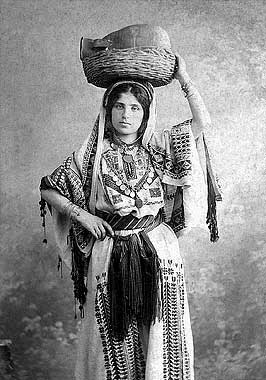
Palestine has undergone many demographic and religious upheavals throughout history. During the 2nd millennium BCE, it was inhabited by the Canaanites, Semitic-speaking peoples who practiced the Canaanite religion. Most Palestinians share a strong genetic link to the ancient Canaanites. Israelites later emerged as an outgrowth of southern Canaanite civilization, with Jews and Israelite Samaritans eventually forming the majority of the population in Palestine during classical antiquity, However, the Jewish population in Jerusalem and its surroundings in Judea, and Samaritan population in Samaria, never fully recovered as a result of the Jewish-Roman Wars and Samaritan revolts respectively.
In the centuries that followed, the region experienced political and economic unrest and the religious persecution of minorities. Mass conversions to Christianity (and the subsequent Christianization of the Roman Empire), along with the emigration of pagans, Jews and Samaritans, contributed to a Christian majority forming in Late Roman and Byzantine Palestine.
In the 7th century, the Arab Rashiduns conquered the Levant; they were later succeeded by other Arab Muslim dynasties, including the Umayyads, Abbasids and the Fatimids. Over the following several centuries, the population of Palestine drastically decreased, from an estimated 1 million during the Roman and Byzantine periods to about 300,000 by the early Ottoman period. Over time, the existing population adopted Arab culture and language and much converted to Islam. The settlement of Arabs before and after the Muslim conquest is thought to have played a role in accelerating the Islamization process. Some scholars suggest that by the arrival of the Crusaders, Palestine was already overwhelmingly Muslim, while others claim that it was only after the Crusades that the Christians lost their majority, and that the process of mass Islamization took place much later, perhaps during the Mamluk period. According to Palestinian historian Nazmi Al-Ju'beh, as with in other Arab nations, the Arab identity of Palestinians is largely based on linguistic and cultural affiliation, and is independent of the existence of any actual Arabian origins.
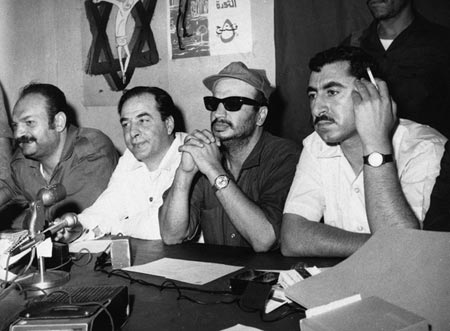
For several centuries during the Ottoman period the population in Palestine declined and fluctuated between 150,000 and 250,000 inhabitants, and it was only in the 19th century that a rapid population growth began to occur. This growth was aided by the immigration of Egyptians (during the reigns of Muhammad Ali and Ibrahim Pasha) and Algerians (following the French conquest of Algeria) in the first half of the 19th century, and the subsequent immigration of Algerians, Bosniaks, and Circassians during the second half of the century. Between 1871 and 1945, around a dozen villages were established by immigrants.
Many Palestinian villagers claim ancestral ties to Arab tribes from the Arabian Peninsula that settled in Palestine during or after the Muslim conquest of the Levant. Some Palestinian families, notably in the Hebron and Nablus regions, claim Jewish and Samaritan ancestry respectively, preserving associated cultural customs and traditions.
Genetics
genetic studies indicate that the Palestinian people descend mostly from ancient Levantines extending back to Bronze Age inhabitants of the Levant. They also note a genetic relationship between Palestinians and other Arab and Semitic groups in the Middle East and North Africa as well as a genetic relationship between Palestinians and various jewish groups.

Levantine origins
A 2015 study by Verónica Fernandes and others concluded that Palestinians have a "primarily indigenous origin".
In a 2016 study by Scarlett Marshall and others published in Nature, the study concluded that the biogeographical affinities of "both Syrians and Palestinians are highly localised to the Levant", the authors also noted that the biogeographical affinity of Palestinians goes in agreement with historical records and previous studies on their uniparental markers, which all suggest that Palestinians at least in part descend from local Israelite converts to Islam after the Islamic expansion.
According to a study published in June 2017 by Ranajit Das, Paul Wexler, Mehdi Pirooznia, and Eran Elhaik in Frontiers in Genetics, in a principal component analysis, Natufians, together with a Neolithic Levantine sample, "clustered predominantly with modern-day Palestinians" and that Palestinians have a "predominant" ancient Levantine origin and residual Iranian origin, with some Eastern Hunter-Gatherer and smaller amounts of Anatolian admixture.
In a study published in August 2017 by Marc Haber et al. in The American Journal of Human Genetics, the authors concluded that: "The overlap between the Bronze Age and present-day Levantines suggests a degree of genetic continuity in the region". later in 2024 Haber also commented that all modern Levantine Arabs descend from Canaanite-like ancestors, and later migrations' impact on their population ancestry was slight.
A 2020 study on human remains from Middle Bronze Age Southern Levantine(2100–1550 BC) populations suggests a significant degree of genetic continuity in Arabic-speaking Levantine populations, as well as several Jewish groups. Palestinians, among other Levantine groups, were found to derive 81–87% of their ancestry from Bronze age Levantines, relating to Canaanites as well as Kura–Araxes culture impact from before 2400 BCE (4400 years before present); 8–12% from an East African source and 5–10% from Bronze age Europeans. Results show that a significant European component was added to the region since the Bronze Age (on average ~8.7%), seemingly related to the Sea Peoples, excluding Ashkenazi and Moroccan Jews who harbour greater European-related ancestry, both populations having a history in Europe.
A 2021 study by the New York Genome Center found that the predominant component of the DNA of modern Palestinians matches that of Bronze Age Canaanites who lived around 2500–1700 BCE.
A 2023 study, which looked at the whole genomes of modern-day ethnic groups around the world, found that the Palestinian samples clustered in the "Middle Eastern genomic group". This group included samples from populations such as Samaritans, Bedouins, Jordanians, Iraqi Jews and Yemenite Jews.
Haplogroups
A 2013 study by Badro et al. analyzed haplogroups of modern Palestinians as well as other groups from the Middle East. The study found that mtDNA distribution of Palestinians, Lebanese, Jordanians, and Syrians clustered together separate from Yemenis, Saudis, and Egyptians, and that the Arabian peninsula population clusters were differentiated from Levantine populations.
In a genetic study of Y-chromosomal STRs in two populations from Israel and the Palestinian Territories, the Y-haplogroup frequency of Palestinian Christians was E1b1b(31.82%), followed by G2a (11.36%), and J-M267 (9.09%), and that of Palestinian Muslims was J-M267 (37.82%) followed by E1b1b (19.33%), and T(5.88%). The study sample consisted of 44 Palestinian Christians and 119 Palestinian Muslims.
A study found that the Palestinians, like Jordanians, Lebanese, and Syrians, have what appears to be female-mediated gene flow in the form of maternal DNA haplogroups from Sub-Saharan Africa. 15 percent of the 117 Palestinian individuals tested carried such maternal haplogroups, consistent with female migration from eastern Africa into Near Eastern communities within the last few thousand years. It is likely this ancestry traces back to women brought from Africa as part of the Arab slave trade.
Identity
Emergence of a distinct identity
The timing and causes behind the emergence of a distinctively Palestinian national identity among the Arabs of Palestine are matters of scholarly disagreement. Some argue that it can be traced as far back as the peasants' revolt in Palestine in 1834 (or even as early as the 17th century), while others argue that it did not emerge until after the Mandatory Palestine period. Legal historian Assaf Likhovski states that the prevailing view is that Palestinian identity originated in the early decades of the 20th century, when an embryonic desire among Palestinians for self-government in the face of generalized fears that Zionism would lead to a Jewish state and the dispossession of the Arab majority crystallised among most editors, Christian and Muslim, of local newspapers. The term itself Filasṭīnī was first introduced by Khalīl Beidas in a translation of a Russian work on the Holy Land into Arabic in 1898. After that, its usage gradually spread so that, by 1908, with the loosening of censorship controls under late Ottoman rule, a number of Muslim, Christian and Jewish correspondents writing for newspapers began to use the term with great frequency in referring to the 'Palestinian people' (ahl/ahālī Filasṭīn), 'Palestinians' (al-Filasṭīnīyūn), the 'sons of Palestine' (abnā' Filasṭīn) or to 'Palestinian society' (al-mujtama' al-filasṭīnī).
Whatever the differing viewpoints over the timing, causal mechanisms, and orientation of Palestinian nationalism, by the early 20th century strong opposition to Zionism and evidence of a burgeoning nationalistic Palestinian identity is found in the content of Arabic-language newspapers in Palestine, such as Al-Karmil (est. 1908) and Filasteen (est. 1911). Filasteen initially focused its critique of Zionism around the failure of the Ottoman administration to control Jewish immigration and the large influx of foreigners, later exploring the impact of Zionist land-purchases on Palestinian peasants (Arabic: فلاحين, fellahin), expressing growing concern over land dispossession and its implications for the society at large.
Historian Rashid Khalidi's 1997 book Palestinian Identity: The Construction of Modern National Consciousness is considered a "foundational text" on the subject. He notes that the archaeological strata that denote the history of Palestine – encompassing the Biblical, Roman, Byzantine, Umayyad, Abbasid, Fatimid, Crusader, Ayyubid, Mamluk and Ottoman periods – form part of the identity of the modern-day Palestinian people, as they have come to understand it over the last century. Noting that Palestinian identity has never been an exclusive one, with "Arabism, religion, and local loyalties" playing an important role, Khalidi cautions against the efforts of some extreme advocates of Palestinian nationalism to "anachronistically" read back into history a nationalist consciousness that is in fact "relatively modern".
Khalidi argues that the modern national identity of Palestinians has its roots in nationalist discourses that emerged among the peoples of the Ottoman empire in the late 19th century that sharpened following the demarcation of modern nation-state boundaries in the Middle East after World War I. Khalidi also states that although the challenge posed by Zionism played a role in shaping this identity, that "it is a serious mistake to suggest that Palestinian identity emerged mainly as a response to Zionism."
Conversely, historian James L. Gelvin argues that Palestinian nationalism was a direct reaction to Zionism. In his book The Israel-Palestine Conflict: One Hundred Years of War he states that "Palestinian nationalism emerged during the interwar period in response to Zionist immigration and settlement." Gelvin argues that this fact does not make the Palestinian identity any less legitimate: "The fact that Palestinian nationalism developed later than Zionism and indeed in response to it does not in any way diminish the legitimacy of Palestinian nationalism or make it less valid than Zionism. All nationalisms arise in opposition to some 'other.' Why else would there be the need to specify who you are? And all nationalisms are defined by what they oppose."
David Seddon writes that "[t]he creation of Palestinian identity in its contemporary sense was formed essentially during the 1960s, with the creation of the Palestine Liberation Organization." He adds, however, that "the existence of a population with a recognizably similar name ('the Philistines') in Biblical times suggests a degree of continuity over a long historical period (much as 'the Israelites' of the Bible suggest a long historical continuity in the same region)."
Baruch Kimmerling and Joel S. Migdal consider the 1834 Peasants' revolt in Palestine as constituting the first formative event of the Palestinian people. From 1516 to 1917, Palestine was ruled by the Ottoman Empire save a decade from the 1830s to the 1840s when an Egyptian vassal of the Ottomans, Muhammad Ali, and his son Ibrahim Pasha successfully broke away from Ottoman leadership and, conquering territory spreading from Egypt to as far north as Damascus, asserted their own rule over the area. The so-called Peasants' Revolt by Palestine's Arabs was precipitated by heavy demands for conscripts. The local leaders and urban notables were unhappy about the loss of traditional privileges, while the peasants were well aware that conscription was little more than a death sentence. Starting in May 1834 the rebels took many cities, among them Jerusalem, Hebron and Nablus and Ibrahim Pasha's army was deployed, defeating the last rebels on 4 August in Hebron. Benny Morris argues that the Arabs in Palestine nevertheless remained part of a larger national pan-Arab or, alternatively, pan-Islamist movement. Walid Khalidi argues otherwise, writing that Palestinians in Ottoman times were "[a]cutely aware of the distinctiveness of Palestinian history ..." and "[a]lthough proud of their Arab heritage and ancestry, the Palestinians considered themselves to be descended not only from Arab conquerors of the seventh century but also from indigenous peoples who had lived in the country since time immemorial, including the ancient Hebrews and the Canaanites before them."
Bernard Lewis argues it was not as a Palestinian nation that the Arabs of Ottoman Palestine objected to Zionists, since the very concept of such a nation was unknown to the Arabs of the area at the time and did not come into being until very much later. Even the concept of Arab nationalism in the Arab provinces of the Ottoman Empire, "had not reached significant proportions before the outbreak of World War I." Tamir Sorek, a sociologist, submits that, "Although a distinct Palestinian identity can be traced back at least to the middle of the nineteenth century (Kimmerling and Migdal 1993; Khalidi 1997b), or even to the seventeenth century (Gerber 1998), it was not until after World War I that a broad range of optional political affiliations became relevant for the Arabs of Palestine."
Israeli historian Efraim Karsh takes the view that the Palestinian identity did not develop until after the 1967 war because the Palestinian exodus/expulsion had fractured society so greatly that it was impossible to piece together a national identity. Between 1948 and 1967, the Jordanians and other Arab countries hosting Arab refugees from Palestine/Israel silenced any expression of Palestinian identity and occupied their lands until Israel's conquests of 1967. The formal annexation of the West Bank by Jordan in 1950, and the subsequent granting of its Palestinian residents Jordanian citizenship, further stunted the growth of a Palestinian national identity by integrating them into Jordanian society.
The idea of a unique Palestinian state distinct from its Arab neighbors was at first rejected by Palestinian representatives. The First Congress of Muslim-Christian Associations (in Jerusalem, February 1919), which met for the purpose of selecting a Palestinian Arab representative for the Paris Peace Conference, adopted the following resolution: "We consider Palestine as part of Arab Syria, as it has never been separated from it at any time. We are connected with it by national, religious, linguistic, natural, economic and geographical bonds."
Rise of Palestinian nationalism
An independent Palestinian state has not exercised full sovereignty over the land in which the Palestinians have lived during the modern era. Palestine was administered by the Ottoman Empire until World War I, and then overseen by the British Mandatory authorities. Israel was established in parts of Palestine in 1948, and in the wake of the 1948 Arab–Israeli War, the West Bank was ruled by Jordan, and the Gaza Strip by Egypt, with both countries continuing to administer these areas until Israel occupied them in the Six-Day War. Historian Avi Shlaim states that the Palestinians' lack of sovereignty over the land has been used by Israelis to deny Palestinians their rights
to self-determination.
Today, the right of the Palestinian people to self-determination has been affirmed by the United Nations General Assembly, the International Court of Justice and several Israeli authorities. A total of 158 states recognize Palestine as a state. However, Palestinian sovereignty over the areas claimed as part of the Palestinian state remains limited, and the boundaries of the state remain a point of contestation between Palestinians and Israelis.
British Mandate (1917–1947)
The first Palestinian nationalist organizations emerged at the end of the World War I. Two political factions emerged. al-Muntada al-Adabi, dominated by the Nashashibi family, militated for the promotion of the Arabic language and culture, for the defense of Islamic values and for an independent Syria and Palestine. In Damascus, al-Nadi al-Arabi, dominated by the Husayni family, defended the same values.
Article 22 of The Covenant of the League of Nations conferred an international legal status upon the territories and people which had ceased to be under the sovereignty of the Ottoman Empire as part of a 'sacred trust of civilization'. Article 7 of the League of Nations Mandate required the establishment of a new, separate, Palestinian nationality for the inhabitants. This meant that Palestinians did not become British citizens, and that Palestine was not annexed into the British dominions. The Mandate document divided the population into Jewish and non-Jewish, and Britain, the Mandatory Power considered the Palestinian population to be composed of religious, not national, groups. Consequently, government censuses in 1922 and 1931 would categorize Palestinians confessionally as Muslims, Christians and Jews, with the category of Arab absent.
The articles of the Mandate mentioned the civil and religious rights of the non-Jewish communities in Palestine, but not their political status. At the San Remo conference, it was decided to accept the text of those articles, while inserting in the minutes of the conference an undertaking by the Mandatory Power that this would not involve the surrender of any of the rights hitherto enjoyed by the non-Jewish communities in Palestine. In 1922, the British authorities over Mandatory Palestine proposed a draft constitution that would have granted the Palestinian Arabs representation in a Legislative Council on condition that they accept the terms of the mandate. The Palestine Arab delegation rejected the proposal as "wholly unsatisfactory", noting that "the People of Palestine" could not accept the inclusion of the Balfour Declaration in the constitution's preamble as the basis for discussions. They further took issue with the designation of Palestine as a British "colony of the lowest order." The Arabs tried to get the British to offer an Arab legal establishment again roughly ten years later, but to no avail.
After the British general, Louis Bols, read out the Balfour Declaration in February 1920, some 1,500 Palestinians demonstrated in the streets of Jerusalem.
A month later, during the 1920 Nebi Musa riots, the protests against British rule and Jewish immigration became violent and Bols banned all demonstrations. In May 1921 however, further anti-Jewish riots broke out in Jaffa and dozens of Arabs and Jews were killed in the confrontations.
After the 1920 Nebi Musa riots, the San Remo conference and the failure of Faisal to establish the Kingdom of Greater Syria, a distinctive form of Palestinian Arab nationalism took root between April and July 1920. With the fall of the Ottoman Empire and the French conquest of Syria, coupled with the British conquest and administration of Palestine, the formerly pan-Syrianist mayor of Jerusalem, Musa Qasim Pasha al-Husayni, said "Now, after the recent events in Damascus, we have to effect a complete change in our plans here. Southern Syria no longer exists. We must defend Palestine".
Conflict between Palestinian nationalists and various types of pan-Arabists continued during the British Mandate, but the latter became increasingly marginalized. Two prominent leaders of the Palestinian nationalists were Mohammad Amin al-Husayni, Grand Mufti of Jerusalem, appointed by the British, and Izz ad-Din al-Qassam. After the killing of sheikh Izz ad-Din al-Qassam by the British in 1935, his followers initiated the 1936–39 Arab revolt in Palestine, which began with a general strike in Jaffa and attacks on Jewish and British installations in Nablus. The Arab Higher Committee called for a nationwide general strike, non-payment of taxes, and the closure of municipal governments, and demanded an end to Jewish immigration and a ban of the sale of land to Jews. By the end of 1936, the movement had become a national revolt, and resistance grew during 1937 and 1938. In response, the British declared martial law, dissolved the Arab High Committee and arrested officials from the Supreme Muslim Council who were behind the revolt. By 1939, 5,000 Arabs had been killed in British attempts to quash the revolt; more than 15,000 were wounded.
War (1947–1949)
In November 1947, the United Nations General Assembly adopted the Partition Plan, which divided the mandate of Palestine into two states: one majority Arab and one majority Jewish. The Palestinian Arabs rejected the plan and attacked Jewish civilian areas and paramilitary targets. Following Israel's declaration of independence in May 1948, five Arab armies (Lebanon, Egypt, Syria, Iraq, and Transjordan) came to the Palestinian Arabs' aid against the newly founded State of Israel.
The Palestinian Arabs suffered such a major defeat at the end of the war, that the term they use to describe the war is Nakba (the "catastrophe"). Israel took control of much of the territory that would have been allocated to the Arab state had the Palestinian Arabs accepted the UN partition plan. Along with a military defeat, hundreds of thousands of Palestinians fled or were expelled from what became the State of Israel. Israel did not allow the Palestinian refugees of the war to return to Israel.