The National Guard is a military reserve organization of the United States Armed Forces. It is composed of reserve components of the United States Army and the United States Air Force: the Army National Guard and the Air National Guard, respectively. It is based in each of the 50 U.S. states, the District of Columbia, and three U.S. territories. Guard components are part of the U.S. Army and the U.S. Air Force when activated for federal missions.
The legal basis of the National Guard is Congress's Article I, Section 8 enumerated power to "raise and support Armies". All members of the National Guard are also members of the organized militia of the United States as defined by 10 U.S.C. § 246. National Guard units are under the dual control of U.S. state or territorial governments and the U.S. federal government.
Most National Guard soldiers and airmen serve part-time while holding a full-time civilian job. These part-time guardsmen are augmented by a full-time cadre of Active Guard and Reserve (AGR) personnel in both the Army National Guard and Air National Guard, plus Army Reserve Technicians in the Army National Guard and Air Reserve Technicians (ART) in the Air National Guard. Service was previously represented by the recruitment slogan "One weekend a month, two weeks a year", which was dropped after 2004 as many National Guard soldiers were deployed to active service at the Iraq War.

Colonial militias were formed during the British colonization of the Americas from the 17th century onward. The first colony-wide militia was formed by Massachusetts in 1636 by merging small, older local units, and several National Guard units can be traced back to this militia. The various colonial militias became state militias when the United States became independent. The title "National Guard" was used in 1824 by some New York State militia units, named after the French National Guard in honor of the Marquis de Lafayette. "National Guard" became a standard nationwide militia title in 1903, and has specifically indicated reserve forces under mixed state and federal control since 1933. In the 21st century, state-level Defend the Guard legislation has been proposed that would require a formal congressional declaration of war before National Guard units can be deployed in overseas combat.
Origins
On December 13, 1636, the first militia regiments in North America were organized in Massachusetts. Based upon an order of the Massachusetts Bay Colony's General Court, the colony's militia was organized into three permanent regiments to better defend the colony. Today, the descendants of these first regiments – the 181st Infantry, the 182nd Infantry, the 101st Field Artillery, and the 101st Engineer Battalion of the Massachusetts Army National Guard – share the distinction of being the oldest units in the U.S. military. December 13, 1636, thus marks the beginning of the organized militia, and the birth of the National Guard's oldest organized units is symbolic of the founding of all the state, territory, and District of Columbia militias that collectively make up today's National Guard.
Previous to this, unregulated militias were mustered sporadically in Spanish and English colonies. On September 16, 1565, in the newly established Spanish town of St. Augustine, militia were assigned to guard the expedition's supplies while their leader, Pedro Menéndez de Avilés, took the regular troops north to attack the French settlement at Fort Caroline on the St. Johns River. This Spanish militia tradition and the tradition that was established in England's North American colonies provided the basic nucleus for Colonial defense in the New World.
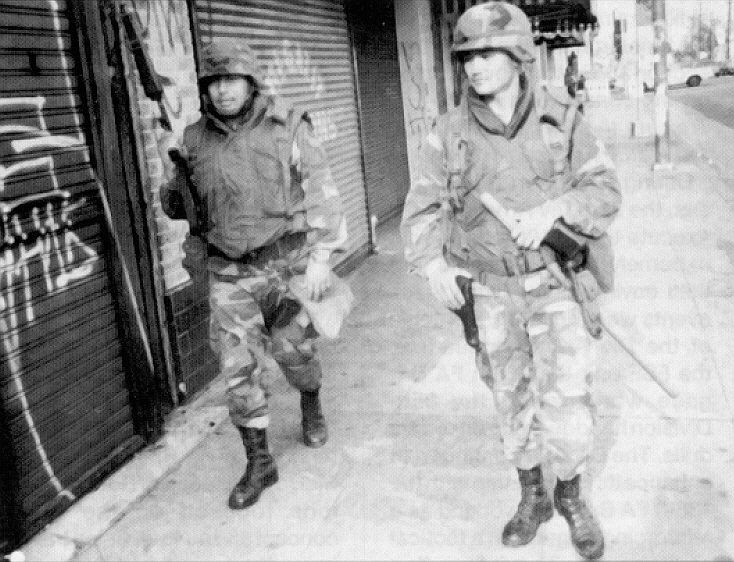
The militia tradition continued with the New World's first permanent English settlements. Jamestown Colony (established in 1607) and Plymouth Colony (established in 1620) both had militia forces, which initially consisted of every able-bodied adult male. By the mid-1600s every town had at least one militia company (usually commanded by an officer with the rank of captain), and the militia companies of a county formed a regiment (usually commanded by an officer with the rank of major in the 1600s or a colonel in the 1700s). The first federal laws regulating the militia were the Militia acts of 1792.
From the nation's founding through the early 1900s, the United States maintained only a minimal army and relied on state militias, directly related to the earlier Colonial militias to supply the majority of its troops. As a result of the Spanish–American War, Congress was called upon to reform and regulate state militias' training and qualification.
U.S. Senator Charles W. F. Dick, a Major General in the Ohio National Guard and the chair of the Committee on the Militia, sponsored the 1903 Dick Act towards the end of the 57th U.S. Congress. Under this legislation, passed January 21, 1903, the organized militia of the states were given federal funding and required to conform to Regular Army organization within five years. The act also required National Guard units to attend twenty four drills and five days annual training a year, and, for the first time, provided for pay for annual training. In return for the increased federal funding which the act made available, militia units were subject to inspection by Regular Army officers, and had to meet certain standards.
It required the states to divide their militias into two sections. The law recommended the title "National Guard" for the first section, known as the organized militia, and "Reserve Militia" for all others.
During World War I, Congress passed the National Defense Act of 1916, which required the use of the term "National Guard" for the state militias and further regulated them. Congress also authorized the states to maintain Home Guards, which were reserve forces outside the National Guards deployed by the federal government.
In 1933, with the passage of the National Guard Mobilization Act, Congress finalized the split between the National Guard and the traditional state militias by mandating that all federally funded soldiers take a dual enlistment/commission and thus enter both the state National Guard and the National Guard of the United States, a newly created federal reserve force. The National Defense Act of 1947 created the Air Force as a separate branch of the Armed Forces and concurrently created the Air National Guard of the United States as one of its reserve components, mirroring the Army's structure.

Organization
Territorial organization
The National Guard of the several states, territories, and the District of Columbia serves as part of the first line of defense for the United States. The state National Guard is organized into units stationed in each of the 50 states, three territories, and the District of Columbia, and operates under their respective state or territorial governor, except in the instance of Washington, D.C., where the National Guard operates under the president of the United States or their designee. The governors exercise control through the state adjutants general. Governors may call up the National Guard for active duty to help respond to domestic emergencies and disasters, such as hurricanes, floods, and earthquakes.
National Guard Bureau
The National Guard is administered by the National Guard Bureau, a joint activity of the Army and Air Force under the Department of Defense. The National Guard Bureau provides a communication channel for state National Guards to the DoD. The National Guard Bureau also provides policies and requirements for training and funds for state Army National Guard and state Air National Guard units, the allocation of federal funds to the Army National Guard and the Air National Guard, and other administrative responsibilities prescribed under 10 U.S.C. § 10503. The National Guard Bureau is headed by the Chief of the National Guard Bureau (CNGB), who is a four-star general in the Army or Air Force and is a member of the Joint Chiefs of Staff.
The National Guard Bureau is headquartered in Arlington County, Virginia, and is a joint activity of the Department of Defense to conduct all the administrative matters pertaining to the Army National Guard and the Air National Guard. The chief is either an Army or an Air Force four-star general officer, and is the senior uniformed National Guard officer, and is a member of the Joint Chiefs of Staff. In this capacity, he serves as a military adviser to the president, the secretary of defense, the National Security Council and is the Department of Defense's official channel of communication to the governors and to State Adjutants General on all matters pertaining to the National Guard. He is responsible for ensuring that the more than half a million Army and Air National Guard personnel are accessible, capable, and ready to protect the homeland and to provide combat resources to the Army and the Air Force. He is appointed by the president in his capacity as Commander in Chief.

Constitutional basis
The respective state National Guards are authorized by the Constitution of the United States. As originally drafted, the Constitution recognized the existing state militias, and gave them vital roles to fill: "to execute the Laws of the Union, suppress Insurrections and repel Invasion." (Article I, Section 8, Clause 15). The Constitution distinguished "militias," which were state entities, from "Troops," which were unlawful for states to maintain without Congressional approval. (Article I, Section 10, Clause 3). Under current law, the respective state National Guards and the State Defense Forces are authorized by Congress to the states and are referred to as "troops." 32 U.S.C. § 109.
Although originally state entities, the Constitutional "Militia of the Several States" were not entirely independent because they could be federalized. According to Article I, Section 8; Clause 15, the United States Congress is given the power to pass laws for "calling forth the Militia to execute the Laws of the Union, suppress Insurrections and repel Invasions." Congress is also empowered to come up with the guidelines "for organizing, arming, and disciplining, the Militia, and for governing such Part of them as may be employed in the Service of the United States, reserving to the States respectively, the Appointment of the Officers, and the Authority of training the Militia according to the discipline prescribed by Congress" (clause 16). The president of the United States is the commander-in-chief of the state militias "when called into the actual Service of the United States." (Article II, Section 2).
The traditional state militias were redefined and recreated as the "organized militia"—the National Guard, via the Militia Act of 1903. They were now subject to an increasing amount of federal control, including having arms and accoutrements supplied by the central government, federal funding, and numerous closer ties to the Regular Army.
Proposed Space National Guard
Proposals for the establishment of a National Guard component for the United States Space Force has existed for years, even as early as 2018.
A report by the Congressional Budget Office indicated that the creation of a Space National Guard, as proposed by the National Guard Bureau, would cost an additional $100 million per year in operations and support costs, with a onetime cost of $20 million in the construction of new facilities. This report directly contradicted the statement by the National Guard Bureau that a Space National Guard would only have a onetime cost at creation, and then be cost-neutral.
The report also analyzed the cost of the creation of a larger Space National Guard, which would be ~33% of the Space Force, calculating that the annual operating cost would be $385 million to $490 million per year.
However, several states already have existing National Guard space operations, including Alaska, California, Colorado, Florida, New York, Arkansas, and Ohio; there is also a space component in the Guam Air National Guard.
Standards
Both the Army National Guard and Air National Guard are expected to adhere to the same moral and physical standards as their "full-time" active duty and "part-time" reserve federal counterparts. The same ranks and insignia of the U.S. Army and U.S. Air Force are used by the Army National Guard and the Air National Guard, respectively, and National Guard members are eligible to receive all United States military awards. The respective state National Guards also bestow state awards for services rendered both at home and abroad. Under Army and Air Force regulations, these awards may be worn while in state, but not federal, duty status. Regular Army and Army Reserve soldiers are also authorized to accept these awards, but are not authorized to wear them.
Other organizations
State defense forces
Many states also maintain their own state defense forces. Although not federal entities like the National Guard of the United States, these forces are components of the state militias like the individual state National Guards.
These forces were created by Congress in 1917 as a result of the state National Guards' being deployed and were known as Home Guards. In 1940, with the onset of World War II and as a result of its federalizing the National Guard, Congress amended the National Defense Act of 1916, and authorized the states to maintain "military forces other than National Guard." This law authorized the War Department to train and arm the new military forces that became known as State Guards. In 1950, with the outbreak of the Korean War and at the urging of the National Guard, Congress reauthorized the separate state military forces for a time period of two years. These state military forces were authorized military training at federal expense, and "arms, ammunition, clothing, and equipment," as deemed necessary by the Secretary of the Army. In 1956, Congress finally revised the law and authorized "State defense forces" permanently under Title 32, Section 109, of the United States Code.
Naval militias
Although there are no Naval or Marine Corps components of the National Guard of the United States, there is a Naval Militia authorized under federal law, 10 U.S.C. § 8901. Like the soldiers and airmen in the National Guard of the United States, members of the Naval Militia are authorized federal appointments or enlistments at the discretion of the Secretary of the Navy.10 U.S.C. § 7852. To receive federal funding and equipment, a state naval militia must be composed of at least 95% of Navy, Coast Guard, or Marine Corps Reservists. As such, some states maintain such units. Some states also maintain naval components of their State Defense Force. Recently, Alaska, California, New Jersey, New York, South Carolina, Texas and Ohio have had or currently maintain naval militias. Other states have laws authorizing them but do not currently have them organized. To receive federal funding, as is the case in the National Guard, a state must meet specific requirements such as having a set percentage of its members in the federal reserves.10 U.S.C. § 7851.
Duties and administrative organization
National Guard units can be mobilized for federal active duty to supplement regular armed forces during times of war or national emergency declared by Congress, the president or the secretary of defense. They can also be activated for service in their respective states upon declaration of a state of emergency by the governor of the state or territory where they serve, or in the case of Washington, D.C., by the Commanding General. Unlike U.S. Army Reserve members, National Guard members cannot be mobilized individually, except through voluntary transfers and Temporary Duty Assignments (TDY). The types of activation are as follows:
National Guard active duty character
The term "activated" simply means that a unit or individual of the reserve components has been placed on orders. The purpose and authority for that activation determine limitations and duration of the activation. The Army and Air National Guard may be activated in a number of ways as prescribed by public law. Broadly, under federal law, there are two titles in the United States Code under which units and troops may be activated: as federal soldiers or airmen under Title 10 ("Armed Forces") and as state soldiers or airmen performing a federally-funded mission under Title 32 ("National Guard"). Outside federal activation, the Army and Air National Guard may be activated under state law. This is known as state active duty (SAD).
State and territory duty
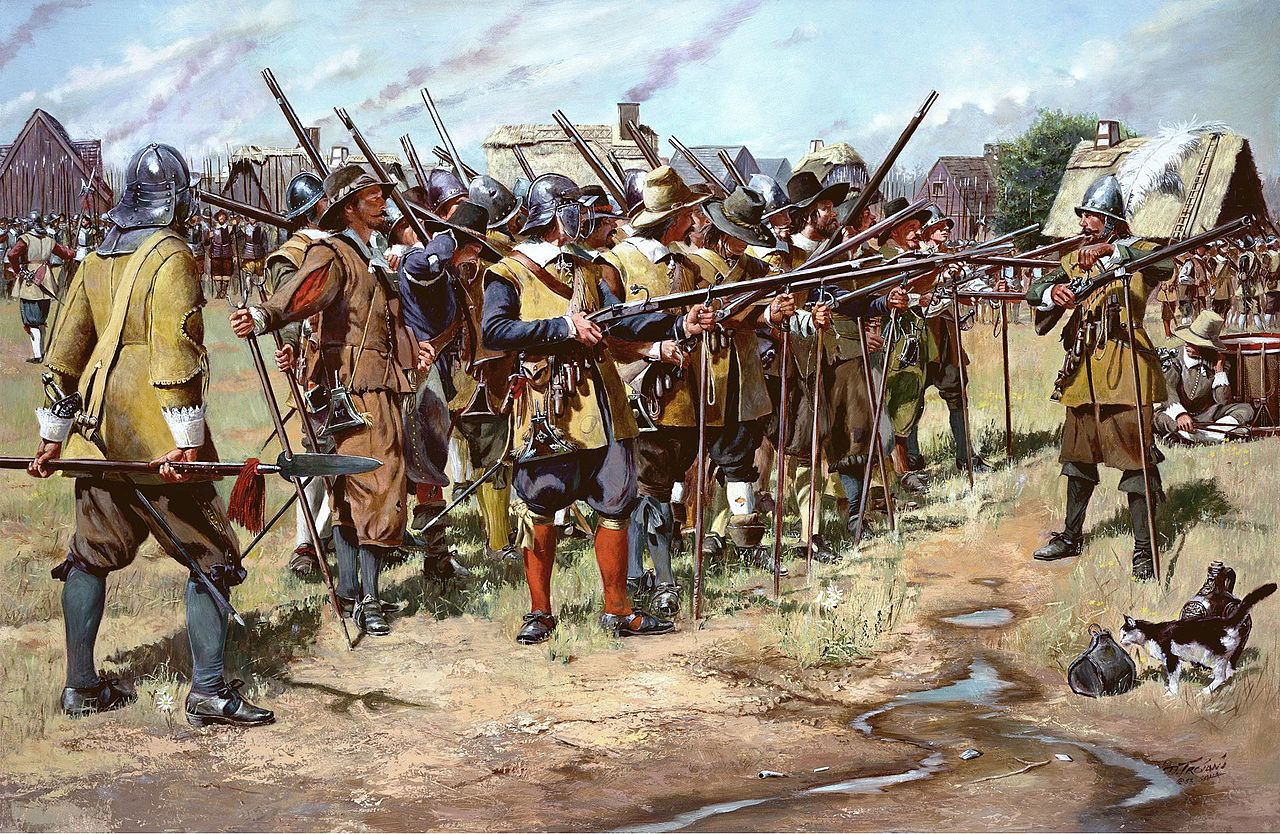
When National Guard units are not under federal control, the governor is the commander-in-chief of the units of his or her respective state or territory (such as Puerto Rico, Guam and the Virgin Islands). The president of the United States commands the District of Columbia National Guard, though this command is routinely delegated to the Commanding General of the DC National Guard. States are free to employ their National Guard forces under state control for state purposes and at state expense as provided in the state's constitution and statutes. In doing so, governors, as commanders-in-chief, can directly access and utilize the Guard's federally assigned aircraft, vehicles and other equipment so long as the federal government is reimbursed for the use of fungible equipment and supplies such as fuel, food stocks, etc. This is the authority under which governors activate and deploy National Guard forces in response to natural disasters. It is also the authority under which governors deploy National Guard forces in response to human-made emergencies such as riots and civil unrest, or terrorist attacks.
The governor can activate National Guard personnel to "State Active Duty" in response to natural or human-made disasters or Homeland Defense missions. State Active Duty is based on State statute and policy and on State funds. Soldiers and Airmen remain under the command and control of the governor. The federal Posse Comitatus Act (PCA) does not apply under state active duty status or Title 32 status.
Title 32 Full-Time National Guard Duty. (Federally funded, but command and control remains with the state governor through his Adjutant General.) Title 32 activation can only be done by the president or SECDEF with the approval and consent of the state governor.
Federal duty
Title 10 service means full-time duty in the active military service of the United States. The term used is federalized. Federalized National Guard forces have been ordered by the president to active duty either in their reserve component status or by calling them into Federal service in their militia status.
There are several forms:
Voluntary Order to Active Duty.
Federalized with the soldier's or airman's consent and the consent of their governor.
Partial Mobilization.
In time of national emergency declared by the president for any unit or any member for not more than 24 consecutive months.
Presidential Reserve Call Up.
When the president determines that it is necessary to augment the active forces for any operational mission for any unit or any member for not more than 270 days.
Federal Aid for State Governments.
Whenever an insurrection occurs in any state against its government, the president may, upon the request of its legislature or of its governor call into Federal service such of the militia of the other states. This is a statutory exception to the PCA.
Use of Militia and Armed Forces to Enforce Federal Authority.
Whenever the president considers that unlawful obstructions, assemblages, or rebellion make it impracticable to enforce the laws of the United States in any state or territory, he may call into Federal service such of the militia of any state. This is another statutory exception to the PCA.
Interference with State and Federal law.
The president, by using the militia or the armed forces, or both, or by any other means, shall take such measures as he considers necessary to suppress, in a state, any insurrection, domestic violence, unlawful combination, or conspiracy.
Air and Army National Guard.