
Leicester City Football Club ( LES-tər) is a professional football club based in Leicester, East Midlands, England. The club competes in EFL League One, the third tier of English football, following relegation from the EFL Championship.
The club was founded in 1884 as Leicester Fosse F.C, before they became known as Leicester City in 1919, coinciding with the city of Leicester gaining official city status. They moved to Filbert Street in 1891, were elected to the Football League in 1894, and moved to the nearby Walkers Stadium in 2002. The stadium was renamed to the present day King Power Stadium in 2011.
Leicester City have won seven prominent trophies within the English football league system, including one Premier League, one FA Cup, three League Cups, and two FA Community Shields. They are currently the sixth most successful team in English football since the turn of the century, as one of only five clubs to have won all three major domestic trophies since 2000. The club's 2015–16 Premier League title win attracted global attention, and they became one of seven clubs to have won the Premier League since its inception in 1992. Prior to 2015–16, Leicester's highest league finish was second place in the 1928–29 First Division.

The club's longest period of time spent at the top level of English football came between 1957 and 1969. During these years, Leicester reached three FA Cup finals, competed in European football for the first time, and recorded their third highest ever league finish. The club have since participated in a further six European campaigns and two FA Cup finals, reaching the UEFA Champions League quarter-finals in 2016–17, winning the FA Cup in 2021, and reaching the UEFA Europa Conference League semi-finals in 2021–22. Leicester won the League Cup in 1964, 1997, and 2000 respectively, and were finalists in 1964–65 and 1998–99.
History
Founding and early years (1884–1949)
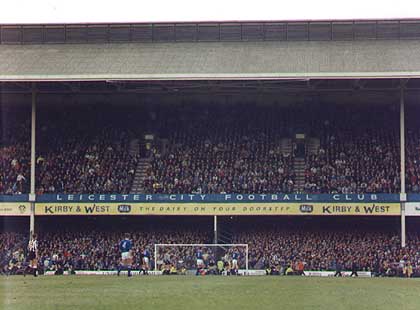
Formed in 1884 by a group of old boys of Wyggeston School as "Leicester Fosse", the club joined The Football Association (FA) in 1890. Before moving to Filbert Street in 1891, the club played at five different grounds, including Victoria Park south-east of the city centre and the Belgrave Road Cycle and Cricket Ground. The club also joined the Midland League in 1891, and were elected to Division Two of the Football League in 1894 after finishing second. Leicester's first match in the Football League was a 4–3 defeat at Grimsby Town, with a first league win the following week, against Rotherham United at Filbert Street. The same season also saw the team's largest win to date, a 13–0 victory over Notts Olympic in an FA Cup qualifying match. In 1907–08, the club finished as Second Division runners-up, gaining promotion to the First Division, the highest level of English football. However, the club was relegated after a single season which included the team's record defeat, a 12–0 loss against Nottingham Forest.
In 1919, when league football resumed after World War I, Leicester Fosse ceased trading due to financial difficulties. The club was reformed as "Leicester City Football Club" which was particularly appropriate as the borough of Leicester had recently been given city status. Following the name change, the club enjoyed moderate success in the 1920s under the management of Peter Hodge, who won the Division Two title in 1924–25. Hodge left in May 1926 and was replaced two months later by Willie Orr. In 1928–29, the club recorded their second highest ever league finish, finishing as runners-up by a single point to The Wednesday. However, the 1930s saw a downturn in fortunes, with the club relegated in 1934–35. After promotion in 1936–37, another relegation in 1938–39 would see them finish the decade in Division Two.
Post-World War II (1949–2000)
Leicester reached the FA Cup final for the first time in their history in 1949, losing 3–1 to Wolverhampton Wanderers. The club, however, was celebrating a week later when a draw on the last day of the season ensured survival in Division Two. In 1954, Leicester won the Division Two championship, with the help of Arthur Rowley, one of the club's most prolific ever strikers. Despite relegation in the previous season, under the management of Dave Halliday, Leicester returned to Division One in 1957, with Rowley scoring a club record 44 goals in one season. Leicester remained in Division One for 12 years until 1969, their longest period to date in the top division of English football. Halliday left the club in October 1958.
Under the management of Matt Gillies, who was appointed on 8 November 1958, and his assistant Bert Johnson, Leicester reached the FA Cup final on another two occasions, but were defeated in both 1961 and 1963. As they lost to double winners Tottenham Hotspur in 1961, Leicester were England's representatives in the 1961–62 European Cup Winners' Cup. For much of the 1962–63 season, the club led the First Division and became nicknamed the "Ice Kings" due to their remarkable run of form on icy and frozen pitches. Leicester eventually finished in 4th place, the club's best post-war finish. Gillies guided Leicester to their first piece of silverware in 1964, when they beat Stoke City 4–3 on aggregate to win the League Cup. Leicester also reached the League Cup final in the following year, but lost 3–2 on aggregate to Chelsea. Gillies and Johnson received praise for their version of the "whirl" and the "switch" system, a system that had previously been used by the Austrian and Hungarian national teams. After a poor start to the season, Matt Gillies resigned as manager in November 1968. His successor Frank O'Farrell was unable to prevent relegation, but the club reached the FA Cup final again in 1969, losing 1–0 to Manchester City.
In 1971, Leicester were promoted back to the First Division, and won the FA Charity Shield for the first time. Due to double winners Arsenal's commitments in European competition, Second Division winners Leicester were invited to play FA Cup runners-up Liverpool. Leicester won the match 1–0 with Steve Whitworth the winning goalscorer. Jimmy Bloomfield was appointed as the club's new manager in June 1971, and the team remained in the First Division throughout his tenure. Leicester also reached the FA Cup semi-final in 1973–74. Frank McLintock, a notable former player of seven years in a successful period from the late 1950s to the mid-1960s, succeeded Bloomfield in 1977.
On 19 March 1977, Winston White became Leicester's first black player to feature for the club, in an away match at Stoke City. The club was relegated at the end of the 1977–78 season and McLintock resigned. Jock Wallace resumed the tradition of successful Scottish managers (after Peter Hodge and Matt Gillies) by steering Leicester to the Second Division championship in 1980. Wallace was unable to keep Leicester in the First Division, but they reached the FA Cup semi-final in 1982. Under Wallace, one of Leicester City's most famous home-grown players, Gary Lineker, emerged into the first-team squad.
Leicester's next manager was Gordon Milne, who was appointed in August 1982. He achieved promotion with the club a year later in 1983. Lineker helped Leicester maintain their place in the First Division, but was sold to Everton in 1985. Two years later, Leicester were relegated, having failed to find a suitable replacement to partner Alan Smith, who was then sold to Arsenal after Leicester went down. Milne left in 1986 and was replaced in 1987 by David Pleat, who managed the club until January 1991. Gordon Lee succeeded Pleat and was put in charge until the end of the 1990–91 season, guiding Leicester clear of relegation to the third tier of English football.
Brian Little took over in May 1991 and by the end of the 1991–92 season, Leicester had reached the play-off final for a place in the new Premier League. They lost to Blackburn Rovers by way of a penalty from former Leicester striker Mike Newell. The club also reached the play-off final the following year, but lost 4–3 to Swindon Town. In the 1993–94 season, Leicester were promoted from the play-offs at the third attempt under Brian Little, beating East Midlands rivals Derby County 2–1 in the final. Little quit as Leicester manager in the following November to take charge at Aston Villa, and his successor Mark McGhee was unable to save Leicester from finishing second bottom of the 1994–95 Premier League.

McGhee left the club unexpectedly in December 1995, while Leicester were top of the Second Division, to take charge of Wolverhampton Wanderers. McGhee was replaced by Martin O'Neill. Under O'Neill, Leicester reached the play-off final in 1996 and gained promotion to the Premier League. Following promotion, Leicester established themselves in the Premier League with four successive top 10 finishes. O'Neill also ended Leicester's 33-year wait for a major trophy, winning the League Cup in 1997 and again in 2000. Thus, the club qualified for the UEFA Cup in 1997–98 and 2000–01, which was their first participation in European football since 1961. In June 2000, O'Neill left Leicester City to take over as manager of Celtic.
Decline in the early 21st century (2000–2008)
Martin O'Neill was replaced by former England under-21 coach Peter Taylor. During this time, one of Leicester's European campaigns ended in a 3–1 defeat to Red Star Belgrade on 28 September 2000 in the UEFA Cup. Leicester began well under Taylor's management, topping the Premier League for two weeks in the autumn and remaining in contention for a European place for most of the season, before a late-season collapse following an FA Cup semi-final defeat to Wycombe Wanderers, dragged them down to a 13th-place finish. Taylor was dismissed by the club after a poor start to the 2001–02 season, and his successor Dave Bassett lasted just six months. Bassett was replaced by his assistant Micky Adams – the change of management being announced just before relegation was confirmed. Leicester won just five league matches all season.
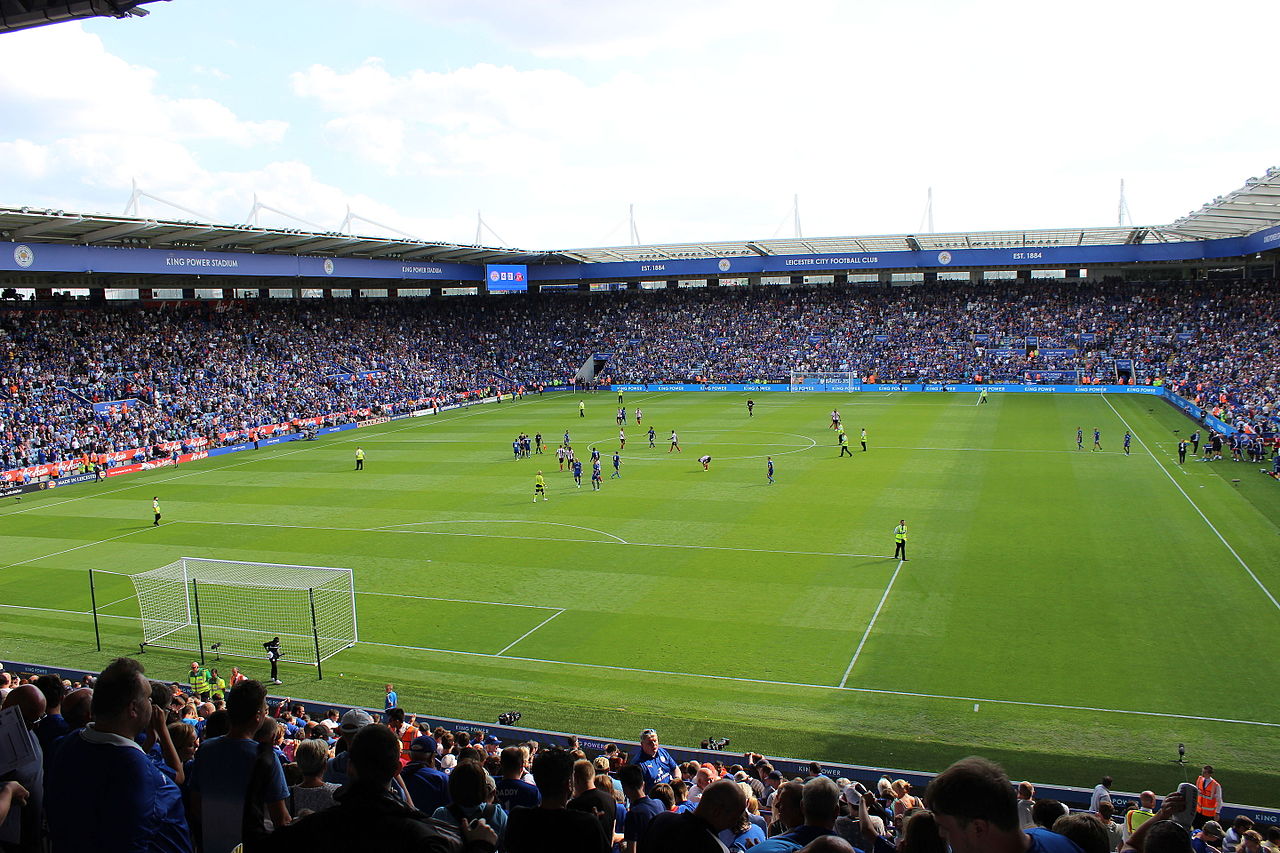
The club moved into the new 32,314-seat Walkers Stadium at the start of the 2002–03 season, ending 111 years at Filbert Street. Walkers, the Leicester-based crisp manufacturers, acquired the naming rights for a ten-year period. In October 2002, the club went into administration with debts of £30 million. The key attributing factors were the loss of TV money (ITV Digital, itself in administration, had promised money to First Division clubs for TV rights), the large wage bill, lower-than-expected fees for players transferred to other clubs and the cost of building the new stadium. The manager, Micky Adams, was banned from the transfer market for most of the season, even after the club was rescued with a takeover by a Gary Lineker-led consortium. In the club's first season at the new stadium, they gained automatic promotion back to the Premier League (then known as the FA Barclaycard Premiership) with more than 90 points, recording only two home defeats throughout the campaign. However, Leicester were relegated in the following season (2003–04), to the newly labelled Championship (previously known as Division One).
In September 2003, as a direct response to Leicester's promotion earlier that year, football authorities introduced new regulations aiming to prevent clubs from gaining a competitive sporting advantage through financial insolvency. This notably included the introduction of a points deduction for any club who enters administration in the future. In October 2004, Micky Adams resigned as manager, and Craig Levein was appointed as his replacement. The club parted company with Levein after 15 months in charge on 25 January 2006. Assistant manager Rob Kelly took over as caretaker manager, and was subsequently appointed to see out the rest of the 2005–06 season, ater winning three out of his first four matches in charge. Kelly steered Leicester to safety and in April 2006, was given the manager's job on a permanent basis.
In October 2006, ex-Portsmouth chairman Milan Mandarić was quoted as saying he was interested in buying the club, reportedly at a price of around £6 million, with the current playing squad valued at roughly £4.2 million. The takeover was formally announced on 13 February 2007. On 11 April 2007, the club parted ways with Rob Kelly, and Nigel Worthington was appointed as caretaker manager until the end of the 2006–07 season. Worthington saved the club from a first-ever relegation to the third tier, but was not offered the job on a permanent basis. On 25 May 2007, the club announced former Milton Keynes Dons manager Martin Allen as their new manager on a three-year contract. Allen's relationship with Mandarić quickly became so fractured that after only four matches, he left the club by mutual consent on 29 August 2007. On 13 September 2007, Mandarić announced Gary Megson as Leicester's new manager, citing his "wealth of experience" as a deciding factor in the appointment. However, Megson left on 24 October 2007 after only six weeks in charge, following an approach made for his services by Bolton Wanderers. Mandarić placed Frank Burrows and former player Gerry Taggart in the shared position as caretaker managers until a permanent manager was appointed.
On 22 November 2007, Ian Holloway was appointed as the club's new manager, and he became the first Leicester manager in over 50 years to win his first league match in charge. However, this proved to be an unsuccessful appointment, as Leicester were relegated from the Championship at the end of the 2007–08 season. Holloway left by mutual consent after less than a season at the club, and was replaced by Nigel Pearson.
Rise back to Premier League and change of ownership (2008–2015)
Following relegation, the 2008–09 League One campaign was Leicester's first season outside the top two levels of English football, but they hit this nadir only seven years before becoming the 2015–16 Premier League champions – one of the fastest ever rises to the top of the English football league system. Leicester returned to the Championship at the first attempt in 2008–09, finishing as champions of League One after a 2–0 win at Southend United, with two matches still to play. The 2009–10 season saw Leicester's revival under manager Nigel Pearson continue. The club finished in 5th place and reached the Championship play-offs in their first season back in the second tier. In the first leg match at home to Cardiff City, they lost 0–1. In the second leg match away from home, though coming from 2–0 down on aggregate to briefly lead 3–2, they eventually lost to a penalty shoot-out. At the end of the season, Pearson left Leicester to become the manager of Hull City, claiming he felt the club seemed reluctant to keep him, and citing that Paulo Sousa's appearance at both play-off games hinted at a possible replacement. On 7 July 2010, Sousa was confirmed as Pearson's successor.
In August 2010, after securing a three-year shirt sponsorship agreement with the Thai duty-free retailer King Power, Mandarić sold the club to Asian Football Investments (AFI), a Thai-led consortium headed by King Power owner Vichai Srivaddhanaprabha (then known as Vichai Raksriaksorn) and his son, Aiyawatt. Mandarić, who remained an investor in AFI, continued to serve as the club's chairman.
On 1 October 2010, after a poor start to the season which saw the club bottom of the Championship with only one win from their first nine league matches, Leicester parted company with Paulo Sousa with immediate effect. Two days later on 3 October 2010, Sven-Göran Eriksson, who had been approached by the club after a 6–1 defeat to bottom-of-the-table Portsmouth two weeks earlier, was appointed as Sousa's replacement on a two-year contract. On 10 February 2011, Vichai Srivaddhanaprabha, representing the Thai-based Asian Football Investments (AFI) consortium, was appointed chairman of the club following Mandarić's departure in November 2010 to take over at Sheffield Wednesday.
Leicester were viewed as one of the favourites for promotion in the 2011–12 season, but on 24 October 2011, following an inconsistent start with just 5 wins from the first 13 matches, Eriksson left the club by mutual consent. Three weeks later, on 15 November 2011, Nigel Pearson returned to the club as Eriksson's successor. Pearson would go on to lead Leicester to a 6th-place finish in the 2012–13 season, after guiding the club to a 5th-place finish four seasons earlier in 2009–10. Leicester won the first leg match against Watford 1–0, but were defeated 3–2 on aggregate over both matches. In the second leg at Vicarage Road, Manuel Almunia made a double save from an Anthony Knockaert late penalty, before Troy Deeney scored at the other end in dramatic fashion to send Watford to Wembley at Leicester's expense.
In May 2014, Leicester's march up the league system hit a breakthrough. The 2–1 home win over Sheffield Wednesday, combined with losses by Queens Park Rangers and Derby County, allowed Leicester City to clinch promotion to the Premier League after a ten-year absence. Later that month, a win at Bolton Wanderers saw Leicester become champions of the 2013–14 Championship, which was a joint-record 7th second-tier title. Upon conclusion of the season, chairman Vichai Srivaddhanaprabha outlined his ambition for the club to achieve a top five finish in the Premier League within three years.
Leicester started their first season back in the Premier League since 2004 with a 2–2 draw at home to Everton on the opening day. The club then claimed their first Premier League win since May 2004 four weeks later, on 13 September 2014, in a 1–0 away victory at Stoke City. On 21 September 2014, Leicester went on to produce one of the greatest comebacks in Premier League history, winning 5–3 against Manchester United at the King Power Stadium. The club made Premier League history by becoming the first team since the league's launch in 1992 to overcome Manchester United by a two-goal deficit.
During the 2014–15 season, Leicester slipped to the bottom of the league table after picking up just 19 points from 29 matches. By 3 April 2015, they were seven points adrift from safety. This could have brought a sudden end to Leicester's seven-year rise up the league system, but seven wins from their final nine league matches ensured they finished the season in 14th place on 41 points. They concluded the season with a 5–1 win over relegated Queens Park Rangers on the final day, and Leicester's upturn in results was described as one of the Premier League's greatest ever escapes from relegation. They also became only the third team in Premier League history to survive after being bottom at Christmas (the other two being West Bromwich Albion in 2005 and Sunderland in 2014), and no team with fewer than 20 points from 29 matches had previously stayed up.
On 30 June 2015, the club took the surprise decision to part company with manager Nigel Pearson, after four years in charge. The decision was taken after Pearson's son, James Pearson, was involved in a "racist sex tape" during a post-season goodwill tour in Thailand. Pearson's departure was also linked to a number of public relations issues involving him throughout the season. On 13 July 2015, the club appointed Claudio Ranieri as their new manager ahead of the 2015–16 Premier League season. Despite an initially sceptical reaction to Ranieri's appointment, Leicester made an exceptional start to the season. Striker Jamie Vardy scored 13 goals over 11 consecutive matches from August to November, breaking the record held by Ruud van Nistelrooy of scoring in 11 consecutive Premier League matches. On 19 December 2015, Leicester defeated Everton 3–2 at Goodison Park to top the Premier League on Christmas Day, having been bottom of the table exactly 12 months earlier.
The club's most successful era (2016–2021)
The club qualified for the UEFA Champions League for the first time in their history on 10 April 2016, as a result of a 2–0 away win at Sunderland and Tottenham Hotspur's 3–0 win over Manchester United. The 2016–17 Champions League campaign would also be the club's first season in European football for 15 years.
On 2 May 2016, Leicester City won the Premier League, after Chelsea came from two goals down at Stamford Bridge to draw 2–2 with Tottenham Hotspur, in a match that was labelled "The Battle Of The Bridge." Bookmakers thought Leicester's title win was so unlikely that Ladbrokes and William Hill offered odds of 5,000–1 for it at the start of the season, which subsequently resulted in the largest payout in British sporting history, with total winnings of £25 million. Multiple newspapers described Leicester's title success as the greatest sporting shock ever; a number of bookmakers (including Ladbrokes and William Hill) had never paid out at such long odds for any sport. The scale of the surprise title victory attracted global attention for the club and the city of Leicester. The Economist declared it would be "pored over for management lessons." Several commentators viewed it as transformative to the expectations faced by clubs outside of the league's traditional 'Big Six.' On 16 May 2016, over 240,000 supporters lined the streets of Leicester to celebrate the club's historic title win.
During the 2015–16 campaign, Leicester became known for their counterattacking style of play, "incredible pace in the areas it is most essential" and defensive solidity. Former manager Nigel Pearson was widely credited as having laid the foundations for Leicester's major success. In reaction to the title triumph, executive chairman of the Premier League Richard Scudamore said:
"If this was a once in every 5,000-year event, then we've effectively got another 5,000 years of hope ahead of us."
Leicester, while performing well in the UEFA Champions League, struggled domestically during 2016–17, spending much of the first few months in the bottom half of the Premier League table. In December 2016, Ranieri was awarded coach of the year, and Leicester were awarded team of the year, at the BBC Sports Personality of the Year awards. However, on 23 February 2017, Ranieri was controversially dismissed by the club, due to the team's continuing poor form which resulted in them being only one point above the relegation zone. Ranieri's departure was met with significant upset and anger from sections of the media, with famous former player Gary Lineker calling it "very sad" and "inexplicable", while Manchester United manager José Mourinho blamed it on "selfish players". Rumours began emerging some days later that players had been meeting with the owners to discuss the removal of Ranieri without him knowing, which sparked widespread outrage over social media, but these claims were never proven. Craig Shakespeare took over as caretaker manager, and in his first match in charge, he led Leicester to a 3–1 victory over 5th place Liverpool. In his second match as caretaker, Shakespeare led Leicester to another 3–1 victory, this time over Hull City. Following these two results, it was decided on 12 March 2017 that Shakespeare would become manager until the end of the season.
Leicester were placed in Group G of the 2016–17 UEFA Champions League, alongside Porto, Copenhagen and Club Brugge. In their inaugural Champions League campaign, they went undefeated in their first five matches to progress to the knockout stages as group winners. Leicester then faced La Liga club Sevilla in the round of 16 and were defeated 2–1 in the first leg at the Vicente Calderon Stadium. In the second leg at the King Power Stadium, Leicester won 2–0 on the night, and 3–2 on aggregate, to advance to the quarter-finals. They then faced Atlético Madrid, and lost 1–0 away in the first leg, before drawing 1–1 at home in the second leg. This put an end to Leicester's first European campaign in 15 years, after losing 2–1 on aggregate, exiting the competition as quarter-finalists. Leicester did however, maintain an unbeaten home record throughout their 2016–17 UEFA Champions League campaign.
Craig Shakespeare, having impressed during his caretaker spell, was appointed full-time on a three-year contract. However, following a poor start to the season, he was dismissed as manager in October 2017 after four months officially in charge, with Leicester in 18th place in the table. He was subsequently replaced by Claude Puel on 25 October 2017. By Christmas, Leicester were in 8th place in the Premier League and finished 9th at the end of the season. On 21 February 2018, it was widely reported that the club had reached a settlement with the English Football League, to pay £3.1 million for a Financial Fair Play (FFP) dispute relating to the 2013–14 season. The EFL stated that Leicester "did not make any deliberate attempt to infringe the rules or to deceive, and that the dispute arose out of genuine differences of interpretation of the rules between the parties."
On 27 October 2018, following a home match against West Ham United, a Leonardo AW169 helicopter carrying chairman Vichai Srivaddhanaprabha and four others malfunctioned and crashed outside the club's stadium. This happened shortly after takeoff from the pitch, and all five people on board the helicopter died. One year later, The Vichai Srivaddhanaprabha Memorial Garden opened on 27 October 2019, before The Khun Vichai Srivaddhanaprabha Statue was unveiled on 4 April 2022, which would have been Srivaddhanaprabha's 64th birthday.
During the early months of 2019, Leicester went on a seven match winless run, which included four successive home defeats. Following a 1–4 home defeat to Crystal Palace, the club parted company with manager Claude Puel on 24 February 2019, with the club in 12th place. Former Liverpool manager Brendan Rodgers was appointed as his replacement, and the club finished the season again in 9th place.
The 2019–20 season under Rodgers started with the team picking up 38 points from their first 16 matches, which included a record eight-match winning streak from 19 October to 8 December 2019. On 25 October 2019, Leicester recorded a 0–9 away win at Southampton, the joint-largest win in Premier League history and the largest away win in English top-flight history. During the same season, the club reached the semi-final stage of the League Cup but lost out to Aston Villa over two legs. Despite competing in the top four for most of the season, Leicester suffered a drop-off in form at the end of the season, winning only two of their nine games following the resumption of play due to the coronavirus pandemic. Three defeats in their last four matches saw them slide into 5th place, which was the club's second-highest Premier League finish in their history, ensuring them a place in the UEFA Europa League for the following season.
The club's finances were heavily impacted by the COVID pandemic, with the parent company King Power International Group being in the travel retail sector. Despite this, the club spent £57 million on transfer fees in the summer of 2020, which came in at a net spend of £10 million, with £46 million generated from player sales. In December 2020, the club moved to a new £100m state-of-the-art training facility. Leicester finished in 5th place again in the 2020–21 Premier League season, and therefore qualified for the UEFA Europa League for the second consecutive year. On 15 May 2021, Leicester City won the FA Cup for the first time, having lost four previous finals in 1949, 1961, 1963 and 1969, securing a second major trophy in the space of five years. Youri Tielemans scored the only goal against Chelsea at Wembley Stadium. The club subsequently became the 6th most successful team in English football since the turn of the century, as one of only five clubs to have won all three major domestic trophies since 2000.
Post-success and downfall (2021–present)
During the 2021 summer transfer window, Leicester again spent more than £50 million on new signings, but this time did not sell any key players for high profit, which went against the club's model from previous years. The summer of 2021 dramatically increased Leicester's wages-to-turnover ratio, but the club subsequently failed to qualify for European football in the Premier League season which followed (2021–22), finishing in 8th place. On 7 August 2021, Leicester won the FA Community Shield for the second time in their history. In their 2021–22 UEFA Europa League campaign, Leicester came third in their group and were transferred to the newly established UEFA Europa Conference League. They went on to reach their first European semi-final, losing out to eventual winners AS Roma over two legs. Leicester's spending during the 2022 summer transfer window was heavily restricted, amid concerns over breaching Financial Fair Play regulations. At the same time however, the club were reportedly prioritising investment in infrastructure, to better compete with the Premier League's 'Big Six' in the long term.
Brendan Rodgers left the club on 2 April 2023, after four years in charge, with ten games remaining and the team in the relegation zone. Dean Smith was appointed as his replacement until the end of the season. On 28 May 2023, despite a 2–1 home win over West Ham United, Leicester City were relegated as a consequence of Everton's 1–0 home victory over AFC Bournemouth. The club went down with the highest ever squad value and wage bill outside of the Premier League's traditional 'big-six' clubs, and the 2022–23 season ended the club's nine-year stint in the Premier League. This made Leicester only the second former Premier League champions to be relegated from the league since it began in 1992–93, following Blackburn Rovers in 1998–99.
On 16 June 2023, Enzo Maresca was appointed as the club's new manager ahead of the 2023–24 EFL Championship season. During this record-breaking campaign, Leicester made their best start to a league season, and the best start since the league became known as the Championship in 2004–05. The club went on to gain promotion back to the Premier League as champions at the first attempt, registering 31 wins, 4 draws and 11 defeats. This was also Leicester's 8th second-tier title which is currently a record for the division.
In March 2024, the club were referred to an independent commission by the Premier League over an alleged breach of Profit and Sustainability Rules (PSR) for the 2022–23 season. In September 2024, the club successfully appealed the PSR case relating to the 2022–23 season, arguing the Premier League did not lawfully have jurisdiction to apply any sanction, after ceasing to become a member of the league at the end of the season. On 3 June 2024, Enzo Maresca left the club to join Chelsea ahead of the 2024–25 Premier League season. Leicester appointed Steve Cooper as his replacement on 20 June 2024, but the club parted company with Cooper after five months on 25 November 2024. Five days later on 29 November 2024, Ruud van Nistelrooy was named as Leicester's new manager.
On 20 April 2025, the club was relegated from the Premier League for the second time in three years, with five matches remaining in the season. On 20 May 2025, Leicester were charged by the Premier League with three separate breaches of PSR rules. On 27 June 2025, the club terminated van Nistelrooy's contract with immediate effect. On 15 July 2025, the club appointed Martí Cifuentes as manager on a three-year contract.
On 2 October 2025, it was announced that Susan Whelan had stepped down as CEO at the club after 15 years, following "a mutual decision" with owner and chairman Aiyawatt Srivaddhanaprabha. On 14 November 2025, it was reported that the club would be overhauling its football operations, including the appointment of a Technical Director for the first time. The club announced the appointment of Kamonthip Netthanomsak as Interim Managing Director on the same day. On 25 January 2026, the club announced that it had parted company with manager Marti Cifuentes, which was the third managerial change in the space of 14 months. At this time, Srivaddhanaprabha conducted several media interviews for the first time since the club's title success of 2016.
On 5 February 2026, it was announced that the club had been hit with a six-point deduction for breaching the EFL's profit and sustainability rules by £20.8 million, over the three-year period up to and including the 2023–24 season. Leicester were also found to have been in breach of Premier League rules by not providing their annual accounts to the league by the specified deadline. This consequently moved the club's league position down from 17th to 20th place in the 2025–26 EFL Championship, which put them above the relegation zone only on goal difference. In the three years leading up to 30 June 2024, Leicester made combined losses of more than £200 million, exceeding the maximum limit of £81 million in losses over a three-year rolling period.
The PSR case against Leicester and subsequent points deduction, although officially enacted by the English Football League, was initiated by the Premier League in May 2025, with the independent commission handling the case also appointed by the Premier League. This was therefore the first time ever that a sporting sanction had been imposed by the EFL on behalf of the Premier League, following a rule change which previously allowed the club to win a legal challenge relating to a separate alleged PSR breach in the 2022–23 season. On 18 February 2026, Gary Rowett was announced as the club's new manager on a short-term contract until the end of the 2025–26 season. On 19 February 2026, it was announced that both Leicester City and the Premier League had officially lodged appeals against the recent six point deduction.
On 3 March 2026, the club announced a "new executive leadership structure", which included the appointments of Kevin Davies as Chief Executive Officer, James McCarron as Sporting Director, and Russell Jones as Commercial Director. Jon Rudkin, the existing Director of Football, was appointed to the role of Chief Football Officer. The club's statement also confirmed Interim Managing Director Kamonthip Netthanomsak would continue in her role, and that recruitment for a new Finance Director was underway, a role held by Kevin Davies (the newly appointed CEO) since May 2023. On 8 April 2026, it was announced that both the Premier League and Leicester City were unsuccessful in their appeals against the six point deduction, which was handed to the club on 5 February 2026.
On 21 April 2026, following a 2–2 draw at home to Hull City, Leicester were relegated to EFL League One, the third level of the English football league system, for only the second time in their history with two matches remaining in the season. The club's player wage bill was the highest to ever get relegated from the second tier of English football. They became one of five clubs to suffer back-to-back relegations in the Premier League era, and 2025–26 was the club's lowest ever points return (46 points) and lowest ever final league position (23rd) in the Championship era. During the course of the season, Leicester also went 30 league matches without keeping a clean sheet, which was their worst run outside of the top level of English football since 1948.
Club identity
The club's traditional home colours of royal blue shirts, white shorts and either white or blue socks have been used for the team's kits throughout most of their history. Since the 2015–16 season, the club has played in an all-blue strip with the exception of the 2019–20 and 2021–22 seasons, where they reverted to wearing white shorts. In 1948, an image of a fox was first incorporated into the club's crest. Since 1992, the club's badge has featured a fox's head overlaid onto a cinquefoil, which represents the city of Leicester's coat of arms. This was the first time that the cinquefoil and the fox were incorporated together on the club's crest.
The club's stadium move in 2002 prompted some changes to the crest, and the updated design was incorporated into the new stadium, with the emblem used as the main feature on the outside of the West Stand. For the 2009–10 season, the club's 125th anniversary year, a special edition badge was worn on the home and away kits. For this season's away kit, there was also a return to the first colours worn by the club (originally Leicester Fosse), albeit with black shorts as opposed to the original white. This kit returned once again for the 2023–24 season, having also featured during the 2004–05 season. The club's current crest has been in use since 2010.
In 1941, the club adopted the playing of the "Post Horn Galop" at home matches, to signal both teams entering the pitch. To the present day, the tune is usually played live on the pitch for the first half, while a modern version of the tune is played over the PA system for the second half. The club also play a modern version of their anthem "When You're Smiling" before kick-off on home matchdays, with the connection to the song dating back to the late 1970s. Foxes Never Quit is the club's motto, with these words placed above the tunnel inside the stadium.
Kit suppliers and shirt sponsors
Source: