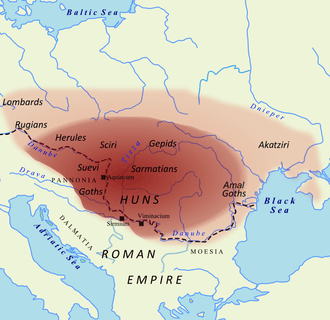
The Huns were a nomadic people who lived in Central Asia, the Caucasus, and Eastern Europe between the 4th and 6th centuries CE. According to European tradition, they were first reported living east of the Volga River, in an area that was part of Scythia at the time. By 370 CE, the Huns had arrived on the Volga, causing the westwards movement of Goths and Alans. By 430, they had established a vast, but short-lived, empire on the Danubian frontier of the Roman empire in Europe. Either under Hunnic hegemony, or fleeing from it, several central and eastern European peoples established kingdoms in the region, including not only Goths and Alans, but also Vandals, Gepids, Heruli, Suebians and Rugians.
Key Facts
| Subject | Huns |
| Category | Extinct nomadic people in Eurasia (4th–6th centuries) |
| Reading time | 1 min · Advanced |
| Key date | 370 CE |
People Mentioned
Reading level
Audio Summary
Played with your browser's voice. Studio-quality audio can be added with a text-to-speech service.
Ask about this article
📝 Quick Quiz1 / 3
What is "Huns" primarily known for?
Vocix Daily — In Your Inbox
Top stories, deep-dive articles, and "On This Day" history — one crisp digest delivered every morning.
Sources & references
Reference material for this entry is drawn from the open encyclopedic record, including Wikipedia , available under the CC BY-SA 4.0 license. Images are credited individually beside each photo.