
The Hundred Years' War (French: Guerre de Cent Ans; 1337–1453 [116 years]) was a conflict between the kingdoms of England and France and a civil war in France during the late Middle Ages. It emerged from feudal disputes over the Duchy of Aquitaine and was triggered by a claim to the French throne made by Edward III of England. The war grew into a broader military, economic, and political struggle involving factions from across Western Europe, fuelled by emerging nationalism on both sides. The periodisation of the war typically charts it as taking place over 116 years. However, it was an intermittent conflict which was frequently interrupted by external factors, such as the Black Death, and several years of truces.
The Hundred Years' War was a significant conflict in the Middle Ages. During the war, five generations of kings from two rival dynasties fought for the throne of France, then the wealthiest and most populous kingdom in Western Europe. The war had a lasting effect on European history: both sides produced innovations in military technology and tactics, including professional standing armies and artillery, that permanently changed European warfare. Chivalry reached its height during the conflict and subsequently declined. Stronger national identities took root in both kingdoms, which became more centralized and gradually emerged as global powers.
The term "Hundred Years' War" was adopted by later historians and included dynastically related conflicts in Spain and Belgium, resulting in the longest military conflict in European history. The war is commonly divided into three phases, separated by truces: the Edwardian War (1337–1360), the Caroline War (1369–1389), and the Lancastrian War (1415–1453). Each side drew many allies into the conflict, with English forces initially prevailing; however, the French forces under the House of Valois ultimately retained control over the Kingdom of France. The French and English monarchies thereafter remained separate, despite the monarchs of England and Great Britain styling themselves as sovereigns of France until 1802.
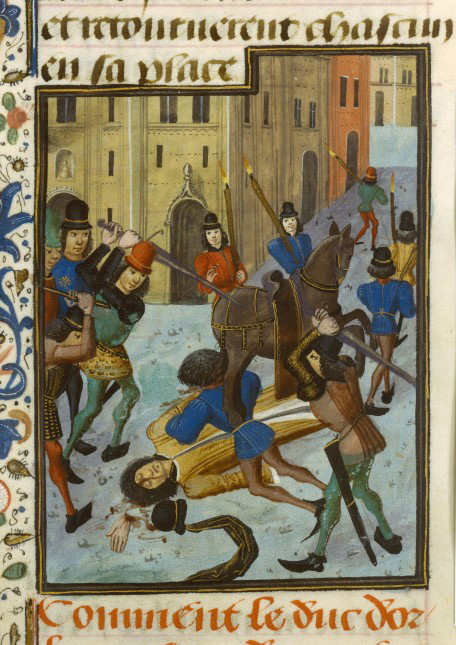
Overview
Origins
The root causes of the conflict can be traced to the crisis of 14th-century Europe. The outbreak of war was motivated by a gradual rise in tension between the kings of France and England over territory; the official pretext was the interruption of the direct male line of the Capetian dynasty.
Tensions between the French and English crowns had gone back centuries, since the Norman Conquest of 1066 had put a king of (Norman) French origins, William II, Duke of Normandy, on the throne of England. Since that time, English monarchs had held titles and lands within France, which made them vassals to the kings of France. The status of the English king's French fiefs was a significant source of conflict between the two monarchies throughout the Middle Ages. According to military historian and author Michael Livingston, the conflict began in 1337, when Philippe VI of France claimed that France controlled English holdings in France.
In 1328, Charles IV of France died without any sons or brothers, initiating a succession crisis. A similar crisis in 1316 had resulted in the Estates-General in 1317 deciding that "Women do not succeed in the kingdom of France". Charles's closest male relative was his nephew Edward III of England, whose mother Isabella was Charles's sister. Isabella claimed the throne of France for her son by the rule of proximity of blood, but the French nobility rejected this on the basis of the 1317 decision, declaring that Isabella could not transmit a right she did not possess. An assembly of French barons decided that a native Frenchman should receive the crown rather than Edward.
The throne passed to Charles's patrilineal cousin instead, Philip, Count of Valois who had been made regent on the death of Charles IV. Edward protested but ultimately submitted and did homage for Gascony. Further French disagreements with Edward induced Philip during May 1337 to meet with his Great Council in Paris. It was agreed that Gascony should be taken back into Philip's hands, which prompted Edward to renew his claim for the French throne, this time by force of arms.
Edwardian phase
In the early years of the war, the English, led by King Edward III and his son Edward the Black Prince, saw resounding successes, notably at the battles of Crécy (1346) and Poitiers (1356), where King John II of France, having succeeded his father Philip from 1350, was taken prisoner.
Caroline phase and Black Death
By 1378, under King Charles V the Wise and the leadership of Bertrand du Guesclin, the French had reconquered most of the lands ceded to King Edward in the Treaty of Brétigny (signed in 1360), notably reducing English control on the continent, leaving them with few cities.

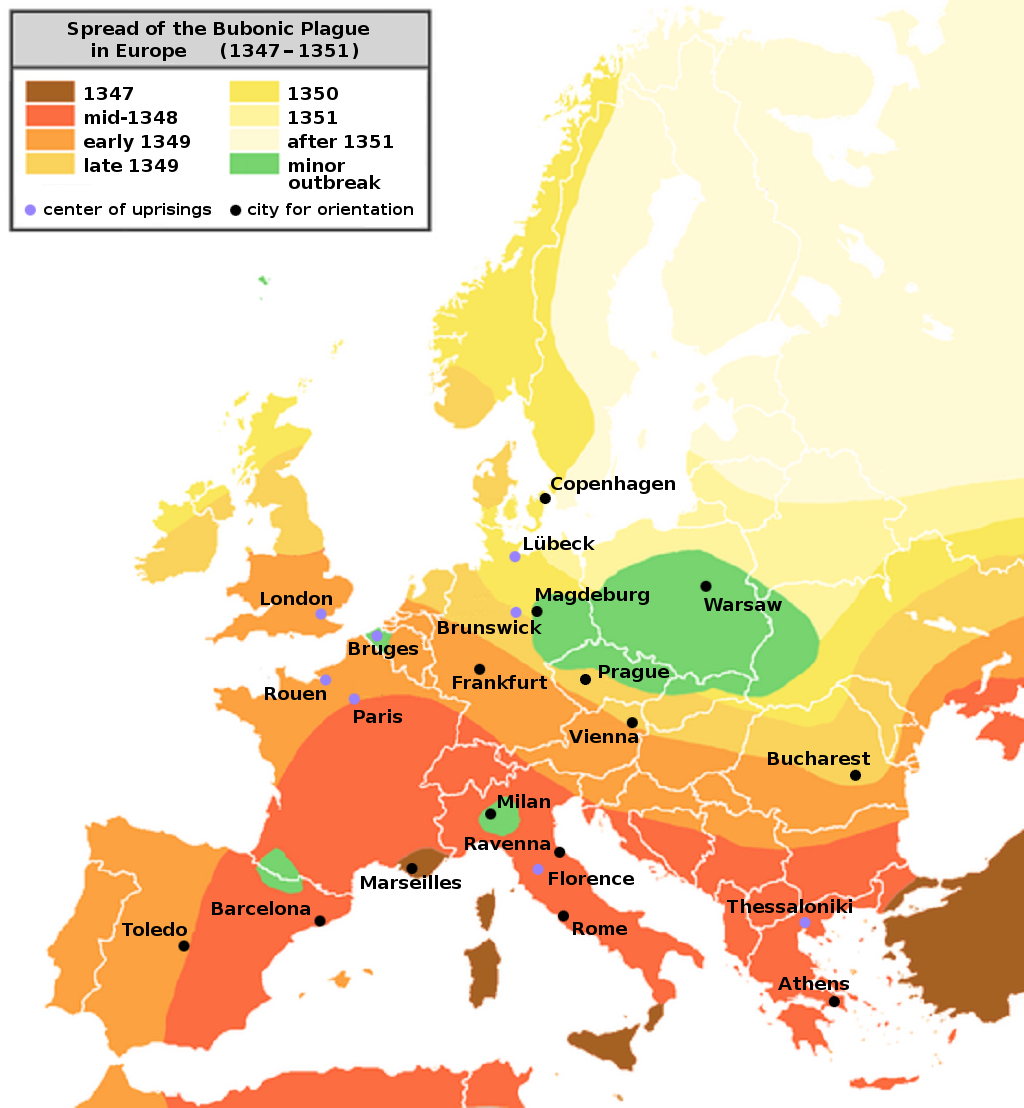
However, both countries faced challenges and problems. The Black Death, a deadly plague that spread through Europe between 1347 and 1351 caused catastrophic widespread damage. In France, 6 to 12 million people died, 30% to 60% of the population, resulting in major labour shortages, economic collapse, and widespread social dislocation. England also suffered from the Black Death, but to a lesser extent, with roughly 2–3 million deaths. Economic consequences of the plague and the war led to major unrest in both kingdoms, widespread poverty, and a weakening of royal authority. These crises were resolved in England earlier than in France.
Lancastrian phase and after
King Henry V of England seized the opportunity presented by the mental illness of King Charles VI of France and the French civil war between Armagnacs and Burgundians to revive the conflict. Overwhelming victories at the battles of Agincourt (1415) and Verneuil (1424)—as well as an alliance with the Burgundians—raised the prospects of an ultimate English triumph and persuaded the English to continue the war over many decades. A variety of factors prevented this, however. Notable influences include the deaths of both Henry and Charles in 1422, the emergence of Joan of Arc (which boosted French morale), and the loss of Burgundy as an ally (concluding the French civil war).
The Siege of Orléans (1429) made English aspirations for conquest all but unreal. Despite Joan's capture by the Burgundians and her subsequent execution in 1431, a series of crushing French victories concluded the siege, favouring the Valois dynasty. Notably, the battles of Patay (1429), Formigny (1450), and Castillon (1453) proved decisive in ending the war. England permanently lost most of its continental possessions, with only the Pale of Calais remaining under its control on the continent until the Siege of Calais in 1558.
Related conflicts and after-effects
Local conflicts in neighbouring areas, which were contemporarily related to the war, including the War of the Breton Succession (1341–1364), the Castilian Civil War (1366–1369), the War of the Two Peters (1356–1369) in Aragon, and the 1383–1385 crisis in Portugal, were used by the parties to advance their agendas.
By the war's end, feudal armies had mainly been replaced by professional troops, and aristocratic dominance had yielded to a democratization of the manpower and weapons of armies. Although primarily a dynastic conflict, the war inspired French and English nationalism. The broader introduction of weapons and tactics supplanted the feudal armies where heavy cavalry had dominated, and artillery became important. The war precipitated the creation of the first standing armies in Western Europe since the Western Roman Empire and helped change their role in warfare.
Civil wars, deadly epidemics, famines, and bandit free-companies of mercenaries reduced the population drastically in France. But at the end of the war, the French had the upper hand with their better weapon supply, such as small hand-held cannons. In England, political forces over time came to oppose the costly venture. After the war England was left insolvent, leaving the conquering French in complete control of all of France except Calais. The dissatisfaction of English nobles, resulting from the loss of their continental landholdings as well as the general shock at losing a war in which investment had been so significant, helped lead to the Wars of the Roses (1455–1487). The economic consequences of the Hundred Years' War produced a decline in trade and led to a high collection of taxes from both countries, which played a significant role in civil disorder.

Causes and prelude
Dynastic turmoil in France: 1316–1328
The question of female succession to the French throne was raised after the death of Louis X in 1316. Louis left behind a young daughter, Joan II of Navarre, and a son, John I of France, although he only lived for five days. However, Joan's paternity was in question, as her mother, Margaret of Burgundy, was accused of being an adulterer in the Tour de Nesle affair. Given the situation, Philip, Count of Poitiers and brother of Louis X, positioned himself to take the crown, advancing the stance that women should be ineligible to succeed to the French throne. He won over his adversaries through his political sagacity and succeeded to the French throne as Philip V. When he died in 1322, leaving only daughters behind, the crown passed to his younger brother, Charles IV.
Charles IV died in 1328, leaving behind his young daughter and pregnant wife, Joan of Évreux. He decreed that he would become king if the unborn child were male. If not, Charles left the choice of his successor to the nobles. Joan gave birth to a girl, Blanche of France (later Duchess of Orleans). With Charles IV's death and Blanche's birth, the main male line of the House of Capet was rendered extinct.
By proximity of blood, the nearest male relative of Charles IV was his nephew, Edward III of England. Edward was the son of Isabella, the sister of the dead Charles IV, but the question arose whether she could transmit a right to inherit that she did not possess. Moreover, the French nobility balked at the prospect of being ruled by an Englishman, especially one whose mother, Isabella, and her lover, Roger Mortimer, were widely suspected of having murdered the previous English king, Edward II. The French barons, prelates, and the University of Paris assemblies decided that males who derive their right to inheritance through their mother should be excluded from consideration. Therefore, excluding Edward, the nearest heir through the male line was Charles IV's first cousin, Philip, Count of Valois, and it was decided that he should take the throne. He was crowned Philip VI in 1328. In 1340, the Avignon papacy confirmed that, under Salic law, males would not be able to inherit through their mothers.
Eventually, Edward III reluctantly recognized Philip VI and paid him homage for the duchy of Aquitaine and Gascony in 1329. He made concessions in Guyenne but reserved the right to reclaim territories arbitrarily confiscated. After that, he expected to be left undisturbed while he made war on Scotland.
Dispute over Guyenne: a problem of sovereignty
Tensions between the French and English monarchies can be traced back to the 1066 Norman Conquest of England, in which the English throne was seized by the Duke of Normandy, a vassal of the King of France. As a result, the crown of England was held by a succession of nobles who already owned lands in France, which put them among the most influential subjects of the French king, as they could now draw upon the economic power of England to enforce their interests in the mainland. To the kings of France, this threatened their royal authority, and so they would constantly try to undermine English rule in France, while the English monarchs would struggle to protect and expand their lands. This clash of interests was the root cause of much of the conflict between the French and English monarchies throughout the medieval era.
The Anglo-Norman dynasty that had ruled England since the Norman conquest of 1066 was brought to an end when Henry, the son of Geoffrey of Anjou and Empress Matilda, and great-grandson of William the Conqueror, became the first of the Angevin kings of England in 1154 as Henry II. The Angevin kings ruled over what was later known as the Angevin Empire, which included more French territory than that under the kings of France. The Angevins still owed homage to the French king for these territories. From the 11th century, the Angevins had autonomy within their French domains, neutralizing the issue.
King John of England inherited the Angevin domains from his brother Richard I. However, Philip II of France acted decisively to exploit the weaknesses of John, both legally and militarily, and by 1204 had succeeded in taking control of much of the Angevin continental possessions. Following John's reign, the Battle of Bouvines (1214), the Saintonge War (1242), and finally the War of Saint-Sardos (1324), the English king's holdings on the continent, as Duke of Aquitaine, were limited roughly to provinces in Gascony (and Bordeaux).
The dispute over Guyenne is even more important than the dynastic question in explaining the outbreak of the war. Guyenne posed a significant problem to the kings of France and England: Edward III was a vassal of Philip VI of France because of his French possessions and was required to recognize the suzerainty of the King of France over them. In practical terms, a judgment in Guyenne might be subject to an appeal to the French royal court. The King of France had the power to revoke all legal decisions made by the King of England in Aquitaine, which was unacceptable to the English. Therefore, sovereignty over Guyenne was a latent conflict between the two monarchies for several generations.
During the War of Saint-Sardos, Charles of Valois, father of Philip VI, invaded Aquitaine on behalf of Charles IV and conquered the duchy after a local insurrection, which the French believed had been incited by Edward II of England. Charles IV grudgingly agreed to return this territory in 1325. Edward II had to compromise to recover his duchy: he sent his son, the future Edward III, to pay homage.
The King of France agreed to restore Guyenne, minus Agen, but the French delayed the return of the lands, which helped Philip VI. On 6 June 1329, Edward III finally paid homage to the King of France. However, at the ceremony, Philip VI had it recorded that the homage was not due to the fiefs detached from the duchy of Guyenne by Charles IV (especially Agen). For Edward, the homage did not imply the renunciation of his claim to the extorted lands.
Gascony under the King of England
In the 11th century, Gascony in southwest France had been incorporated into Aquitaine (also known as Guyenne or Guienne) and formed with it the province of Guyenne and Gascony (French: Guyenne-et-Gascogne). The Angevin kings of England became dukes of Aquitaine after Henry II married the former Queen of France, Eleanor of Aquitaine, in 1152, from which point the lands were held in vassalage to the French crown. By the 13th century, the terms Aquitaine, Guyenne and Gascony were virtually synonymous.
At the beginning of Edward III's reign on 1 February 1327, the only part of Aquitaine that remained in his hands was the Duchy of Gascony. The term Gascony came to be used for the territory held by the Angevin (Plantagenet) kings of England in southwest France, although they still used the title Duke of Aquitaine.
For the first 10 years of Edward III's reign, Gascony had been a significant friction point. The English argued that, as Charles IV had not acted properly towards his tenant, Edward should be able to hold the duchy free of French suzerainty. The French rejected this argument, so in 1329, the 17-year-old Edward III paid homage to Philip VI. Tradition demanded that vassals approach their liege unarmed, with heads bare. Edward protested by attending the ceremony wearing his crown and sword. Even after this pledge of homage, the French continued to pressure the English administration.
Gascony was not the only sore point. One of Edward's influential advisers was Robert III of Artois. Robert was an exile from the French court, having fallen out with Philip VI over an inheritance claim. He urged Edward to start a war to reclaim France, and was able to provide extensive intelligence on the French court.
Franco-Scot alliance
France was an ally of the Kingdom of Scotland as English kings had tried to subjugate the country for some time. In 1295, a treaty was signed between France and Scotland during the reign of Philip the Fair, known as the Auld Alliance. Charles IV formally renewed the treaty in 1326, promising Scotland that France would support the Scots if England invaded their country. Similarly, France would have Scotland's support if its own kingdom were attacked. Edward could not succeed in his plans for Scotland if the Scots could count on French support.
Philip VI had assembled a large naval fleet off Marseilles as part of an ambitious plan for a crusade to the Holy Land. However, the plan was abandoned and the fleet, including elements of the Scottish navy, moved to the English Channel off Normandy in 1336, threatening England. To deal with this crisis, Edward proposed that the English raise two armies, one to deal with the Scots "at a suitable time" and the other to proceed at once to Gascony. At the same time, ambassadors were to be sent to France with a proposed treaty for the French king.
History
Beginning of the war: 1337–1360
End of homage
At the end of April 1337, Philip of France was invited to meet the delegation from England but refused. The arrière-ban, a call to arms, was proclaimed throughout France starting on 30 April 1337. Then, in May 1337, Philip met with his Great Council in Paris. It was agreed that the Duchy of Aquitaine, effectively Gascony, should be taken back into the King's hands because Edward III was in breach of his obligations as a vassal and had sheltered the King's "mortal enemy" Robert d'Artois. Edward responded to the confiscation of Aquitaine by challenging Philip's right to the French throne.
When Charles IV died, Edward claimed the succession of the French throne through the right of his mother, Isabella (Charles IV's sister), daughter of Philip IV. His claim was considered invalidated by Edward's homage to Philip VI in 1329. Edward revived his claim and in 1340 formally assumed the title "King of France and the French Royal Arms".
On 26 January 1340, Edward III formally received homage from Guy, half-brother of the Count of Flanders. The civic authorities of Ghent, Ypres, and Bruges proclaimed Edward King of France. Edward aimed to strengthen his alliances with the Low Countries. His supporters could claim that they were loyal to the "true" King of France and did not rebel against Philip. In February 1340, Edward returned to England to try to raise more funds and also deal with political difficulties.
Relations with Flanders were also tied to the English wool trade since Flanders' principal cities relied heavily on textile production, and England supplied much of the raw material they needed. Edward III had commanded that his chancellor sit on the woolsack in council as a symbol of the pre-eminence of the wool trade. At the time there were about 110,000 sheep in Sussex alone. The great medieval English monasteries produced large wool surpluses sold to mainland Europe. Successive governments were able to make large amounts of money by taxing it. France's sea power led to economic disruptions for England, shrinking the wool trade to Flanders and the wine trade from Gascony.
Outbreak, the English Channel and Brittany
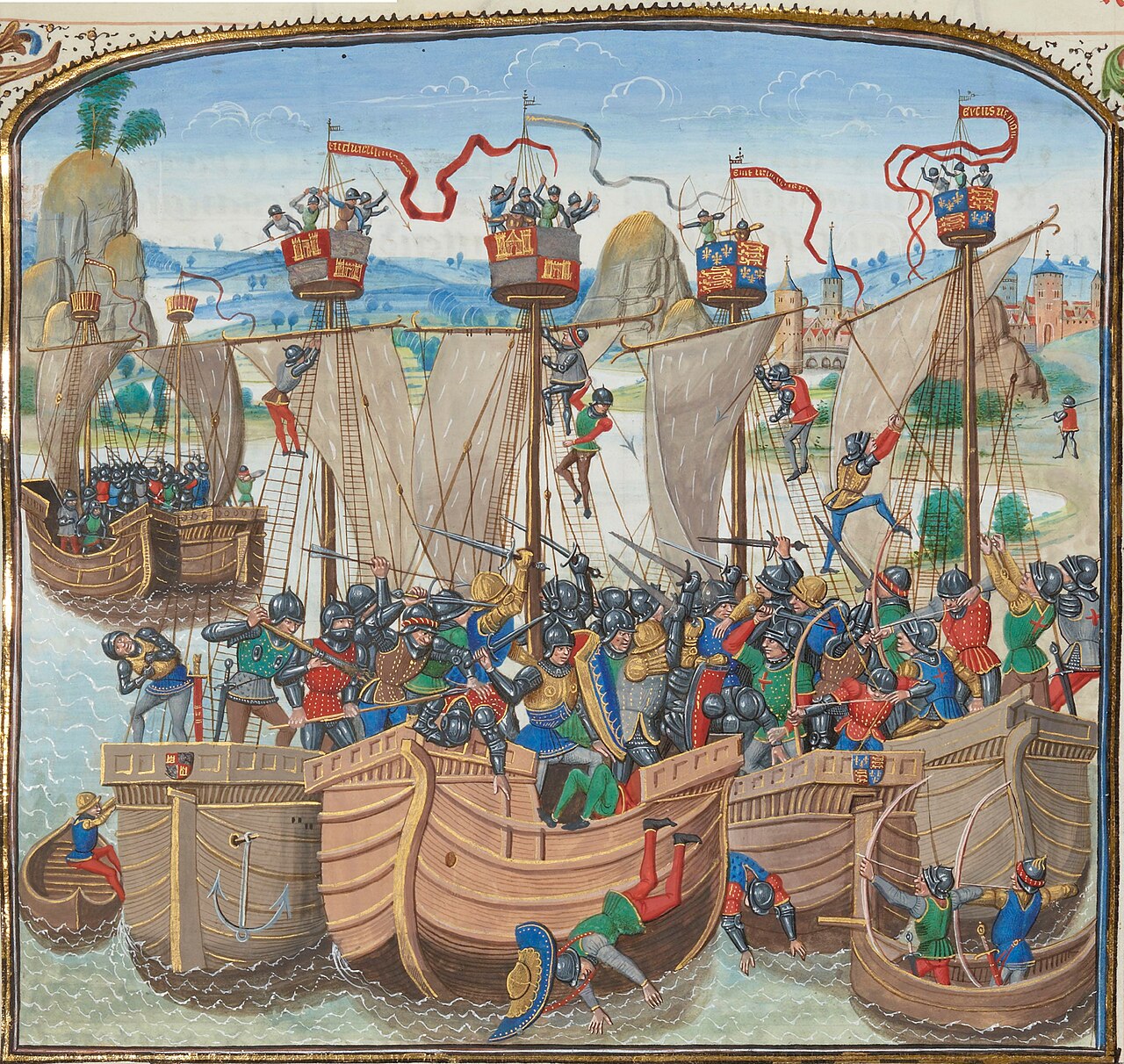
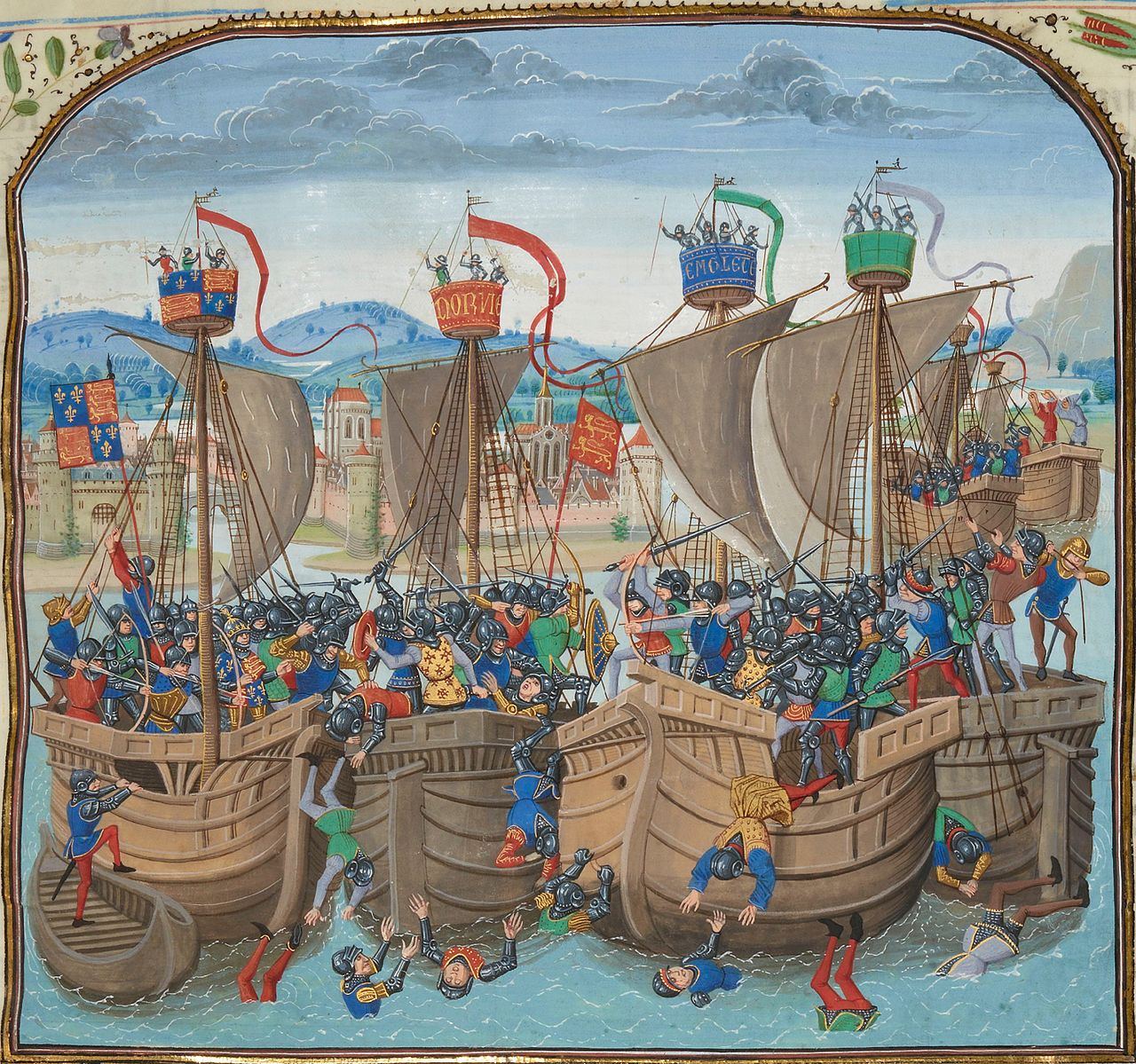
On 22 June 1340, Edward and his fleet sailed from England and arrived off the Zwin estuary the next day. The French fleet assumed a defensive formation off the port of Sluis. The English fleet deceived the French into believing they were withdrawing. When the wind turned in the late afternoon, the English attacked with the wind and sun behind them. The French fleet was almost destroyed in what became known as the Battle of Sluys.
England dominated the English Channel for the rest of the war, preventing French invasions. At this point, Edward's funds ran out and the war probably would have ended were it not for the death of the Duke of Brittany in 1341 precipitating a succession dispute between the duke's half-brother John of Montfort and Charles of Blois, nephew of Philip VI.
In 1341, this inheritance dispute over the Duchy of Brittany set off the War of the Breton Succession, in which Edward backed John of Montfort and Philip backed Charles of Blois. Action for the next few years focused on a back-and-forth struggle in Brittany. The city of Vannes in Brittany changed hands several times, while further campaigns in Gascony met with mixed success for both sides. The English-backed Montfort finally took the duchy but not until 1364.
Battle of Crécy and the taking of Calais
In July 1346, Edward mounted a major invasion across the channel, landing on Normandy's Cotentin Peninsula at St Vaast. The English army captured the city of Caen in just one day, surprising the French. Philip mustered a large army to oppose Edward, who chose to march northward toward the Low Countries, pillaging as he went. He reached the river Seine to find most of the crossings destroyed. He moved further south, worryingly close to Paris until he found the crossing at Poissy. This had only been partially destroyed, so the carpenters within his army were able to fix it. He then continued to Flanders until he reached the river Somme. The army crossed at a tidal ford at Blanchetaque, stranding Philip's army. Edward, assisted by this head start, continued on his way to Flanders once more until, finding himself unable to outmaneuver Philip, Edward positioned his forces for battle, and Philip's army attacked.
The Battle of Crécy of 1346 was a complete disaster for the French, largely credited to the English longbowmen and the French king, who allowed his army to attack before it was ready. Philip appealed to his Scottish allies to help with a diversionary attack on England. King David II of Scotland responded by invading northern England, but his army was defeated, and he was captured at the Battle of Neville's Cross on 17 October 1346. This greatly reduced the threat from Scotland.
In France, Edward proceeded north unopposed and besieged the city of Calais on the English Channel, capturing it in 1347. This became an important strategic asset for the English, allowing them to keep troops safely in northern France. Calais would remain under English control, even after the end of the Hundred Years' War, until the successful French siege in 1558.
Battle of Poitiers
The Black Death, which had just arrived in Paris in 1348, ravaged Europe. In 1355, after the plague had passed and England was able to recover financially, King Edward's son and namesake, the Prince of Wales, later known as the Black Prince, led a chevauchée from Gascony into France, during which he pillaged Avignonet, Castelnaudary, Carcassonne, and Narbonne. The next year during another chevauchée he ravaged Auvergne, Limousin, and Berry but failed to take Bourges. He offered terms of peace to King John II of France (known as John the Good), who had outflanked him near Poitiers but refused to surrender himself as the price of their acceptance.
This led to the Battle of Poitiers (19 September 1356) where the Black Prince's army routed the French. During the battle, the Gascon noble Jean de Grailly, captal de Buch led a mounted unit that was concealed in a forest. The French advance was contained, at which point de Grailly led a flanking movement with his horsemen, cutting off the French retreat and successfully capturing King John and many of his nobles. With John held hostage, his son the Dauphin (later to become Charles V) assumed the powers of the king as regent.