Human rights are universally recognized moral principles or norms that establish standards of human behavior and are often protected by both national and international laws. These rights are considered inherent and inalienable, meaning they belong to every individual simply by virtue of being human. They encompass a broad range of civil, political, economic, social, and cultural rights, such as the right to life, freedom of speech, protection against enslavement, and right to education.
While ideas related to human rights predate modernity, the modern concept of human rights gained significant prominence after World War II, particularly in response to the atrocities of the Holocaust, leading to the adoption of the Universal Declaration of Human Rights (UDHR) by the United Nations General Assembly in 1948. This document outlined a comprehensive framework of rights that countries are encouraged to protect, setting a global standard for human dignity, freedom, and justice. The Universal Declaration of Human Rights (UDHR) has since inspired numerous international treaties and national laws aimed at promoting and protecting human rights worldwide.
While the principle of universal human rights is widely accepted, debates persist regarding which rights should take precedence, how they should be implemented, and their applicability in different cultural contexts. Criticisms often arise from perspectives like cultural relativism, which argue that individual human rights are inappropriate for societies that prioritize a communal or collectivist identity, and may conflict with certain cultural or traditional practices.

Nonetheless, human rights remain a central focus in international relations and legal frameworks, supported by institutions such as the United Nations, various non-governmental organizations, and national bodies dedicated to monitoring and enforcing human rights standards worldwide.
History
Many of the basic ideas that animated the human rights movement developed in the aftermath of the Second World War and the events of the Holocaust, culminating in the adoption of the Universal Declaration of Human Rights in Paris by the United Nations General Assembly in 1948.
Ancient peoples did not have the same modern-day conception of universal human rights. However, the concept has in some sense existed for centuries, although not in the same way as today. In the West, Jewish and Christian scriptures provided some conceptual foundations for discourse on rights along with Roman law providing legal foundations on what implementation may look like.
The true forerunner of human rights discourse was the concept of natural rights, which first appeared as part of the medieval natural law tradition. It developed in new directions during the European Enlightenment with such philosophers as John Locke, Francis Hutcheson, and Jean-Jacques Burlamaqui, and featured prominently in the political discourse of the American Revolution and the French Revolution. From this foundation, the modern human rights arguments emerged over the latter half of the 20th century, possibly as a reaction to slavery, torture, genocide, and war crimes.
The medieval natural law tradition was heavily influenced by the writings of St Paul's early Christian thinkers such as St Hilary of Poitiers, St Ambrose, and St Augustine. Augustine was among the earliest to examine the legitimacy of the laws of man, and attempt to define the boundaries of what laws and rights occur naturally based on wisdom and conscience, instead of being arbitrarily imposed by mortals, and if people are obligated to obey laws that are unjust.
The Kouroukan Fouga was the constitution of the Mali Empire in West Africa. It was composed in the 13th century, and was one of the very first charters on human rights. It included the "right to life and to the preservation of physical integrity" and significant protections for women.

Spanish scholasticism insisted on a subjective vision of law during the 16th and 17th centuries: Luis de Molina, Domingo de Soto and Francisco Vitoria, members of the School of Salamanca, defined law as a moral power over one's own. Although they maintained at the same time, the idea of law as an objective order, they stated that there are certain natural rights, mentioning both rights related to the body (right to life, to property) and to the spirit (right to freedom of thought, dignity). The jurist Vázquez de Menchaca, starting from an individualist philosophy, was decisive in the dissemination of the term iura naturalia. This natural law thinking was supported by contact with American civilizations and the debate that took place in Castile about the just titles of the conquest and, in particular, the nature of the indigenous people. In the Castilian colonization of America, it is often stated, measures were applied in which the germs of the idea of Human Rights are present, debated in the well-known Valladolid Debate that took place in 1550 and 1551. The thought of the School of Salamanca, especially through Francisco Vitoria, also contributed to the promotion of European natural law.
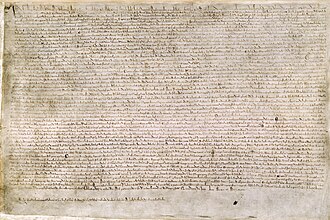
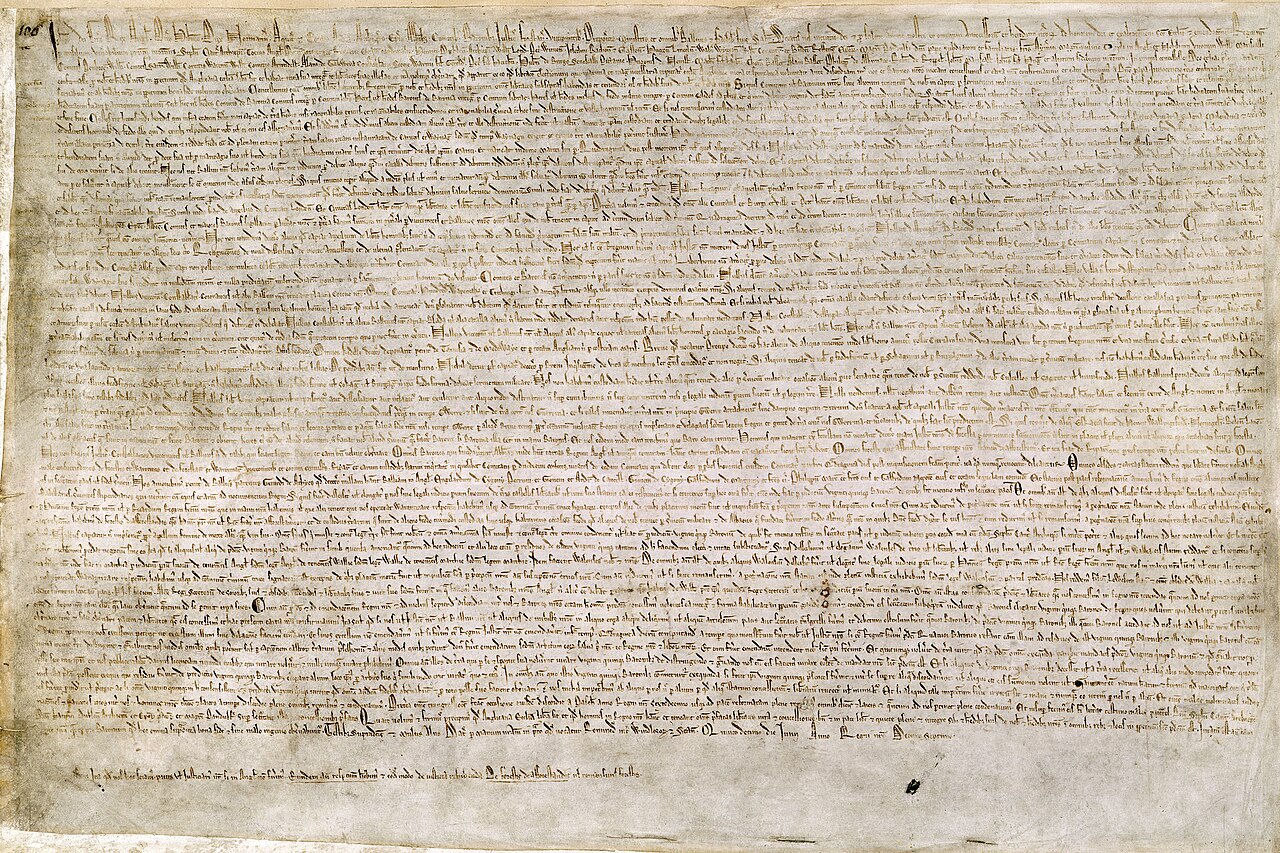
From this foundation, the modern human rights arguments emerged over the latter half of the 20th century. Magna Carta is an English charter originally issued in 1215 which influenced the development of the common law and many later constitutional documents related to human rights, such as the 1689 English Bill of Rights, the 1789 United States Constitution, and the 1791 United States Bill of Rights.
17th century English philosopher John Locke discussed natural rights in his work, identifying them as being "life, liberty, and estate (property)", and argued that such fundamental rights could not be surrendered in the social contract. In Britain in 1689, the English Bill of Rights and the Scottish Claim of Right each made a range of oppressive governmental actions, illegal. Two major revolutions occurred during the 18th century, in the United States (1776) and in France (1789), leading to the United States Declaration of Independence and the French Declaration of the Rights of Man and of the Citizen respectively, both of which articulated certain human rights. Additionally, the Virginia Declaration of Rights of 1776 encoded into law a number of fundamental civil rights and civil freedoms.

We hold these truths to be self-evident, that all men are created equal, that they are endowed by their Creator with certain unalienable Rights, that among these are Life, Liberty and the pursuit of Happiness.
1800 to World War I
Philosophers such as Thomas Paine, John Stuart Mill, and Hegel expanded on the theme of universality during the 18th and 19th centuries. In 1831, William Lloyd Garrison wrote in a newspaper called The Liberator that he was trying to enlist his readers in "the great cause of human rights", so the term human rights probably came into use sometime between Paine's The Rights of Man and Garrison's publication. In 1849 a contemporary, Henry David Thoreau, wrote about human rights in his treatise On the Duty of Civil Disobedience which was later influential on human rights and civil rights thinkers. United States Supreme Court Justice David Davis, in his 1867 opinion for Ex Parte Milligan, wrote "By the protection of the law, human rights are secured; withdraw that protection and they are at the mercy of wicked rulers or the clamor of an excited people."
Many groups and movements have managed to achieve profound social changes over the course of the 20th century in the name of human rights. In Western Europe and North America, labour unions brought about laws granting workers the right to strike, establishing minimum work conditions and forbidding or regulating child labour. The women's rights movement succeeded in gaining for many women the right to vote. National liberation movements in many countries succeeded in driving out colonial powers. One of the most influential was Mahatma Gandhi's leadership of the Indian independence movement. Movements by long-oppressed racial and religious minorities succeeded in many parts of the world, among them the civil rights movement, and more recent diverse identity politics movements, on behalf of women and minorities in the United States.

The foundation of the International Committee of the Red Cross, the 1864 Lieber Code and the first of the Geneva Conventions in 1864 laid the foundations of International humanitarian law, to be further developed following the two World Wars.
Between World War I and World War II
The League of Nations was established in 1919 at the negotiations over the Treaty of Versailles following the end of World War I. The League's goals included disarmament, preventing war through collective security, settling disputes between countries through negotiation, diplomacy and improving global welfare. Enshrined in its Charter was a mandate to promote many of the rights which were later included in the Universal Declaration of Human Rights. The League of Nations had mandates to support many of the former colonies of the Western European colonial powers during their transition from colony to independent state. Established as an agency of the League of Nations, and now part of United Nations, the International Labour Organization also had a mandate to promote and safeguard certain of the rights later included in the Universal Declaration of Human Rights (UDHR):
the primary goal of the ILO today is to promote opportunities for women and men to obtain decent and productive work, in conditions of freedom, equity, security and human dignity.
After World War II
Universal Declaration of Human Rights
The Universal Declaration of Human Rights (UDHR) is a non-binding declaration adopted by the United Nations General Assembly in 1948, partly in response to the events of World War II. The UDHR urges member states to promote a number of human, civil, economic and social rights, asserting these rights are part of the "foundation of freedom, justice and peace in the world". The declaration was the first international legal effort to limit the behavior of states and make sure they did their duties to their citizens following the model of the rights-duty duality.
... recognition of the inherent dignity and of the equal and inalienable rights of all members of the human family is the foundation of freedom, justice and peace in the world
The UDHR was framed by members of the Human Rights Commission, with Eleanor Roosevelt as chair, who began to discuss an International Bill of Rights in 1947. The members of the Commission did not immediately agree on the form of such a bill of rights, and whether, or how, it should be enforced. The Commission proceeded to frame the UDHR and accompanying treaties, but the UDHR quickly became the priority. Canadian law professor John Humphrey and French lawyer René Cassin were responsible for much of the cross-national research and the structure of the document respectively, where the articles of the declaration were interpretative of the general principle of the preamble. The document was structured by Cassin to include the basic principles of dignity, liberty, equality and brotherhood in the first two articles, followed successively by rights pertaining to individuals; rights of individuals in relation to each other and to groups; spiritual, public and political rights; and economic, social and cultural rights. The final three articles place, according to Cassin, rights in the context of limits, duties and the social and political order in which they are to be realized. Humphrey and Cassin intended the rights in the UDHR to be legally enforceable through some means, as is reflected in the third clause of the preamble:
Whereas it is essential, if man is not to be compelled to have recourse, as a last resort, to rebellion against tyranny and oppression, that human rights should be protected by the rule of law.
Some of the UDHR was researched and written by a committee of international experts on human rights, including representatives from all continents and all major religions, and drawing on consultation with leaders such as Mahatma Gandhi. The inclusion of both civil and political rights and economic, social, and cultural rights was predicated on the assumption that basic human rights are indivisible and that the different types of rights listed are inextricably linked. Although this principle was not opposed by any member states at the time of adoption (the declaration was adopted unanimously, with the abstention of the Soviet bloc, apartheid South Africa, and Saudi Arabia), this principle was later subject to significant challenges. On the issue of the term universal, the declarations did not apply to domestic discrimination or racism. Henry J. Richardson III argued:
All major governments at the time of drafting the U.N. charter and the Universal declaration did their best to ensure, by all means known to domestic and international law, that these principles had only international application and carried no legal obligation on those governments to be implemented domestically. All tacitly realized that for their own discriminated-against minorities to acquire leverage on the basis of legally being able to claim enforcement of these wide-reaching rights would create pressures that would be political dynamite.
The onset of the Cold War soon after the UDHR was conceived brought to the fore divisions over the inclusion of both economic and social rights and civil and political rights in the declaration. Capitalist states tended to place strong emphasis on civil and political rights (such as freedom of thought, freedom of speech, and freedom of association), and were reluctant to include economic and social rights (such as the right to work and the right to join a union). Socialist states placed much greater importance on economic and social rights and argued strongly for their inclusion. Because of the divisions over which rights to include and because some states declined to ratify any treaties including certain specific interpretations of human rights, and despite the Soviet bloc and a number of developing countries arguing strongly for the inclusion of all rights in a Unity Resolution, the rights enshrined in the UDHR were split into two separate covenants, allowing states to adopt some rights and derogate others. Although this allowed the covenants to be created, it denied the proposed principle that all rights are linked, which was central to some interpretations of the UDHR. Although the UDHR is a non-binding resolution, it is now considered to be a central component of international customary law which may be invoked under appropriate circumstances by state judiciaries and other judiciaries.
In 2021 the United Nations Human Rights Council officially recognized "having a clean, healthy and sustainable environment" as a human right. In April 2024, the European Court of Human Rights ruled, for the first time in history, that the Swiss government had violated human rights by not acting strongly enough to stop climate change. In 2025, the International Court of Justice (ICJ) has said in an advisory opinion, a "clean, healthy and sustainable environment" is a human right, and that failing to protect the planet from the impacts of climate change may be a violation of international law.
Human Rights Treaties
In 1966, the International Covenant on Civil and Political Rights (ICCPR) and the International Covenant on Economic, Social and Cultural Rights (ICESCR) were adopted by the United Nations, between them making the rights contained in the UDHR binding on all states. They came into force only in 1976, when they were ratified by a sufficient number of countries (despite achieving the ICCPR, a covenant including no economic or social rights, the US only ratified the ICCPR in 1992). The ICESCR commits 155 state parties to work toward the granting of economic, social, and cultural rights (ESCR) to individuals.
Numerous other treaties (pieces of legislation) have been offered at the international level. They are generally known as human rights instruments. Some of the most significant are:
Convention on the Prevention and Punishment of the Crime of Genocide (adopted 1948, entry into force: 1951) unhchr.ch
Convention on the Elimination of All Forms of Racial Discrimination (CERD) (adopted 1966, entry into force: 1969) unhchr.ch
Convention on the Elimination of All Forms of Discrimination Against Women (CEDAW) (entry into force: 1981) Convention on the Elimination of All Forms of Discrimination against Women
United Nations Convention Against Torture (CAT) (adopted 1984, entry into force: 1984)
Convention on the Rights of the Child (CRC) (adopted 1989, entry into force: 1989) Convention on the Rights of the Child | UNICEF Archived 26 April 2019 at the Wayback Machine
International Convention on the Protection of the Rights of All Migrant Workers and Members of their Families (ICRMW) (adopted 1990)
Rome Statute of the International Criminal Court (ICC) (entry into force: 2002)
Promotion strategies
Paradigms of implementation
Charles Beitz proposes a typology of six paradigms of action that agents, such as human rights agencies, international organizations, individual states, and NGOs, could use to enforce human rights: (1) accountability, (2) inducement, (3) assistance, (4) domestic contestation and engagement, (5) compulsion, and (6) external adaptation.
Accountability refers to the process of examining and evaluating reports to ensure that states adhering to treaties are meeting their obligations. Inducement consists of the use of incentive systems, including the threat of sanctions, to deter violations and promote adherence to human rights standards. Assistance means providing support to societies that lack the resources or capabilities to meet human rights commitments. Domestic contestation and engagement refers to the notion that external actors can impact a state's behavior by participating in its internal political and social processes. Compulsion is the most extreme method of enforcing human rights through external action involves the use of coercive measures. External adaptation as a paradigm of implementation recognizes that human rights compliance may require not only domestic efforts but also reforming external factors like trade policies or international laws that hinder a government's ability to uphold rights.
Military force
Responsibility to protect refers to a doctrine for United Nations member states to intervene to protect populations from atrocities. It has been cited as justification in the use of recent military interventions. An example of an intervention that is often criticized is the 2011 military intervention in the First Libyan Civil War by NATO and Qatar where the goal of preventing atrocities is alleged to have taken upon itself the broader mandate of removing the target government.
Economic actions
Economic sanctions are often levied upon individuals or states who commit human rights violations. Sanctions are often criticized for its feature of collective punishment in hurting a country's population economically in order dampen that population's view of its government. It is also argued that, counterproductively, sanctions on offending authoritarian governments strengthen that government's position domestically as governments would still have more mechanisms to find funding than their critics and opposition, who become further weakened.
The risk of human rights violations increases with the increase in financially vulnerable populations. Girls from poor families in non-industrialized economies are often viewed as a financial burden on the family and marriage of young girls is often driven in the hope that daughters will be fed and protected by wealthier families. Female genital mutilation and force-feeding of daughters is argued to be similarly driven in large part to increase their marriage prospects and thus their financial security by achieving certain idealized standards of beauty. In certain areas, girls requiring the experience of sexual initiation rites with men and passing sex training tests on girls are designed to make them more appealing as marriage prospects. Measures to help the economic status of vulnerable groups in order to reduce human rights violations include girls' education and guaranteed minimum incomes and conditional cash transfers, such as Bolsa familia which subsidize parents who keep children in school rather than contributing to family income, has successfully reduced child labor.
Informational strategies
Human rights abuses are monitored by United Nations committees, national institutions and governments and by many independent non-governmental organizations, such as Amnesty International, Human Rights Watch, World Organisation Against Torture, Freedom House, International Freedom of Expression Exchange and Anti-Slavery International. These organisations collect evidence and documentation of human rights abuses and apply pressure to promote human rights. Educating people on the concept of human rights has been argued as a strategy to prevent human rights abuses.
Legal instruments
Many examples of legal instruments at the international, regional and national level described below are designed to enforce laws securing human rights.
Protection at the international level
United Nations
The United Nations (UN) is the only multilateral governmental agency with universally accepted international jurisdiction for universal human rights legislation. All UN organs have advisory roles to the United Nations Security Council and the United Nations Human Rights Council, and there are numerous committees within the UN with responsibilities for safeguarding different human rights treaties. The most senior body of the UN with regard to human rights is the Office of the High Commissioner for Human Rights. The United Nations has an international mandate to:
... achieve international co-operation in solving international problems of an economic, social, cultural, or humanitarian character, and in promoting and encouraging respect for human rights and for fundamental freedoms for all without distinction as to race, sex, language, or religion.
Human Rights Council
The UN Human Rights Council, created in 2005, has a mandate to investigate alleged human rights violations. 47 of the 193 UN member states sit on the council, elected by simple majority in a secret ballot of the United Nations General Assembly. Members serve a maximum of six years and may have their membership suspended for gross human rights abuses. The council is based in Geneva, and meets three times a year; with additional meetings to respond to urgent situations. Independent experts (rapporteurs) are retained by the council to investigate alleged human rights abuses and to report to the council. The Human Rights Council may request that the Security Council refer cases to the International Criminal Court (ICC) even if the issue being referred is outside the normal jurisdiction of the ICC.