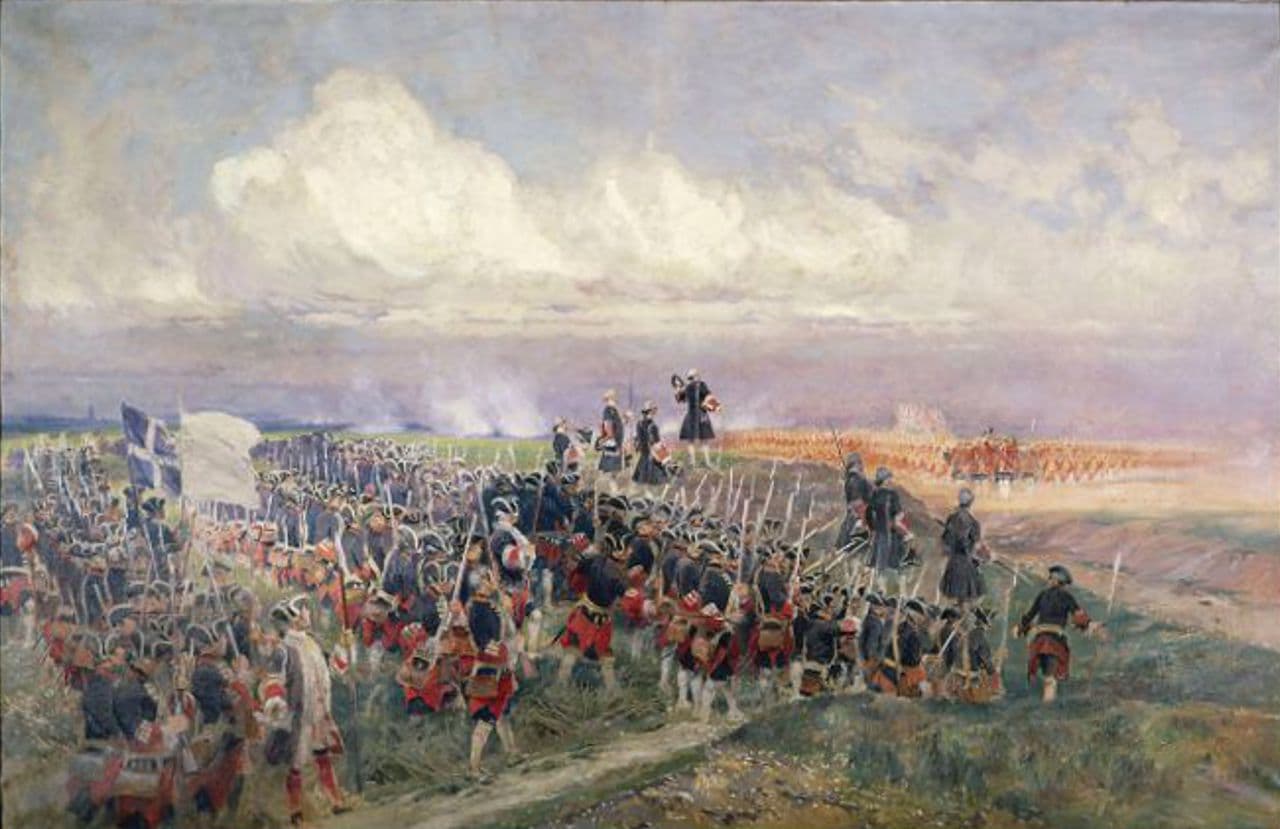
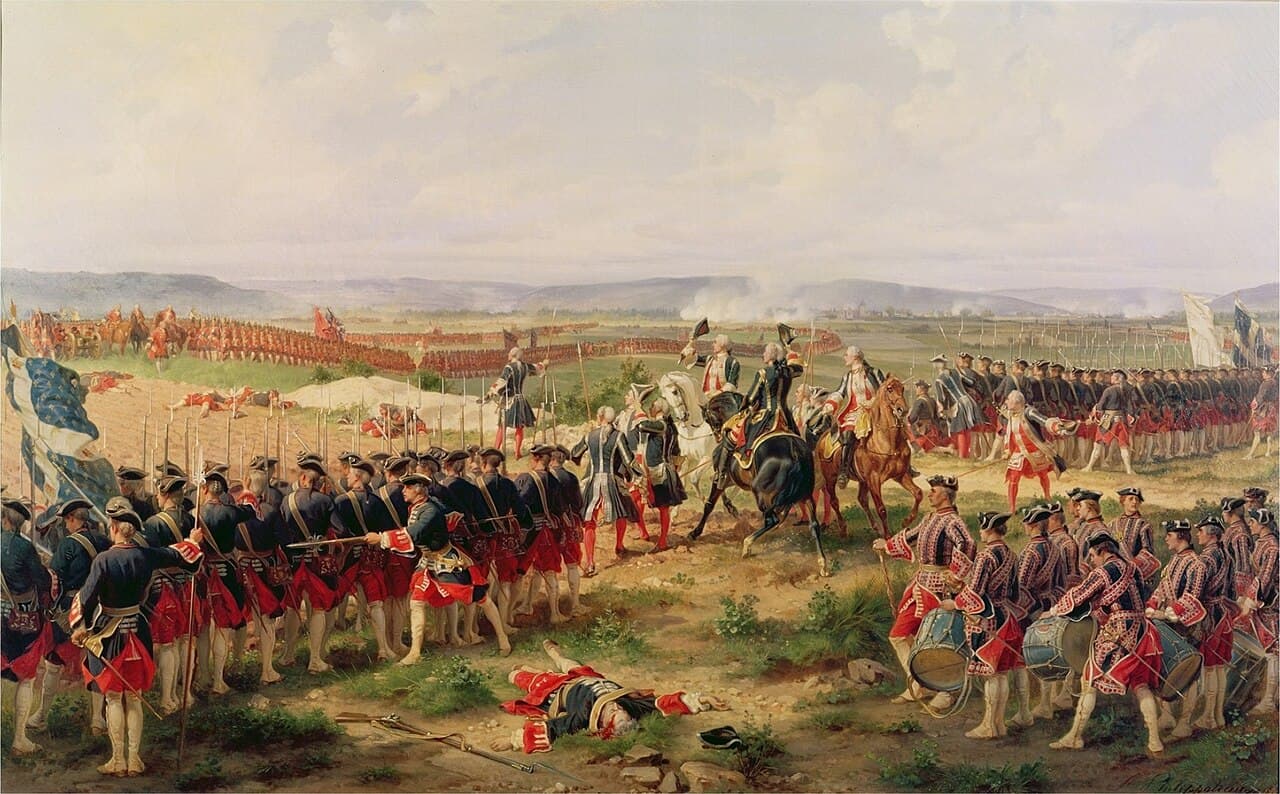
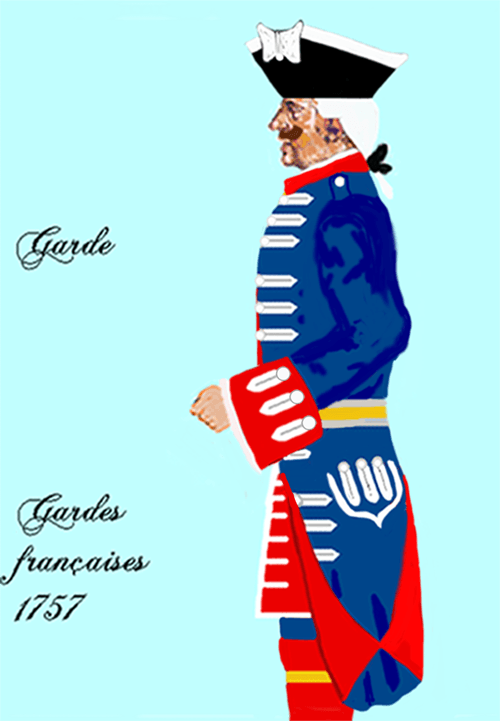
The French Guards (French: Régiment des Gardes françaises, pronounced [ʁeʒimɑ̃ de ɡaʁd fʁɑ̃sɛːz]) were an elite infantry regiment of the French Royal Army. They formed a constituent part of the maison militaire du roi de France ("military household of the king of France") under the Ancien Régime.
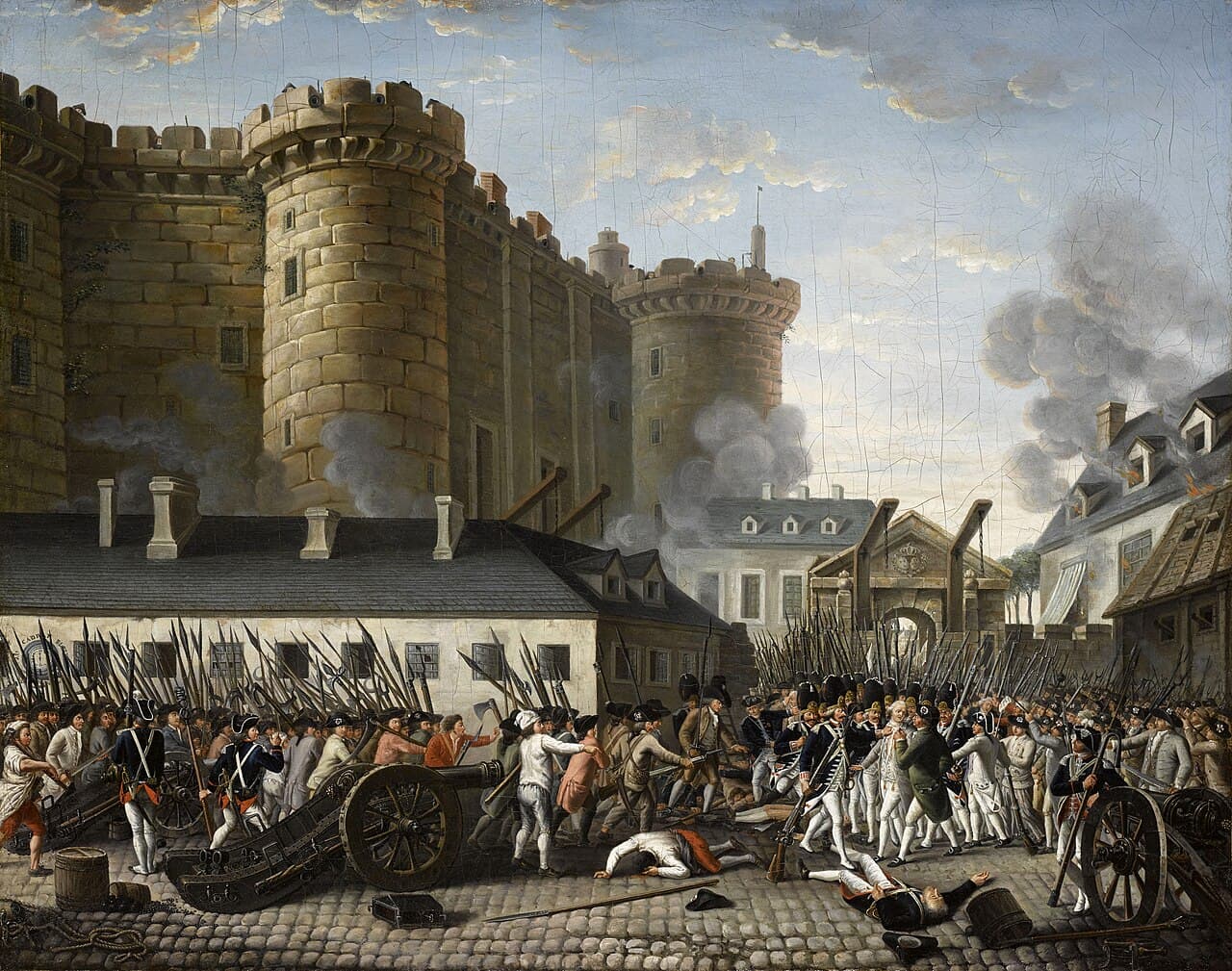
The French Guards, who were located in Paris, played a major part in the French Revolution as most of the guardsmen defected to the revolutionary cause and ensured the collapse of absolute monarchy in France. French Guards led the Storming of the Bastille and formed the cadre for the National Guard.
History
The regiment was created in 1563 by Charles IX. It was composed of 9,000 men in 30 companies in 1635 with 300 fusiliers per company. They were armed with a form of musket ("fusils") or steel-handled pikes, and were allowed to conduct a normal civilian life in times of peace. In practice this meant that they could undertake civilian employment when not required on duty.
At Catherine de' Medici's insistence, they were at first spread over several garrisons, but after the attempted kidnapping of King Charles IX near Meaux by Huguenots, the Gardes were brought back together specifically to protect the monarch.
Privileges, role and organisation
In times of war the Gardes Françaises had the privilege of choosing their own battle positions (usually in the centre of the first line of infantry). Other privileges included leading the assault when a wall was breached during a siege, the first choice of barracks and special rights of trial. When on parade, they took precedence over all other regiments in the Royal Army.
They shared responsibility for guarding the exterior of the Palace of Versailles with the Gardes Suisses. In addition, the French Guards had responsibility for maintaining public order in Paris, in support of the various police forces of the capital.