
Egypt, officially the Arab Republic of Egypt, is a country spanning the northeast corner of Africa and southwest corner of Asia via the Sinai Peninsula. It is bordered by the Mediterranean Sea to the north, Palestine and Israel to the northeast, the Red Sea to the east, Sudan and the Sahara to the south, and Libya to the west. The Gulf of Aqaba in the northeast separates Egypt from Jordan and Saudi Arabia. Cairo is the capital, largest city, and leading cultural centre, while Alexandria is the second-largest city and an important hub of industry and tourism. With over 107 million inhabitants, Egypt is the most populous country in the Arab world, third-most populous country in Africa, and 15th-most populated in the world.
Egypt has one of the longest histories of any country, tracing its heritage along the Nile Delta back to the 6th–4th millennia BCE. Considered a cradle of civilisation, Ancient Egypt saw some of the earliest developments of writing, agriculture, urbanisation, organised religion and central government. Following nearly three millennia of pharaonic rule, Egypt came under foreign rule beginning in the 6th century BC. Egypt was an early and important centre of Christianity, later adopting Islam from the seventh century onwards. Alexandria, Egypt's former capital and currently second largest city, was a hub of global knowledge through its Library. Cairo became the capital of the Fatimid Caliphate in the tenth century and of the subsequent Mamluk Sultanate in the 13th century. Egypt then became part of the Ottoman Empire in 1517, until its local ruler Muhammad Ali established modern Egypt as an autonomous Khedivate in 1867. The country was then occupied by the British Empire along with Sudan and gained independence in 1922 as a monarchy.
Following the 1952 revolution, Egypt declared itself a republic. Between 1958 and 1961, Egypt merged with Syria to form the United Arab Republic. Egypt fought several armed conflicts with Israel in 1948, 1956, 1967 and 1973, and occupied the Gaza Strip intermittently until 1967. In 1978, Egypt signed the Camp David Accords, which recognised Israel in exchange for the latter's withdrawal from the occupied Sinai. After the Arab Spring, which led to the 2011 Egyptian revolution and overthrow of Hosni Mubarak, the country faced a protracted period of political unrest; its first democratic election in 2012 resulted in the short-lived, Muslim Brotherhood-aligned government of Mohamed Morsi, which was overthrown by the military after mass protests in 2013. The current government is a semi-presidential republic led by Abdel Fattah el-Sisi, who was elected in 2014 but is widely regarded as authoritarian.
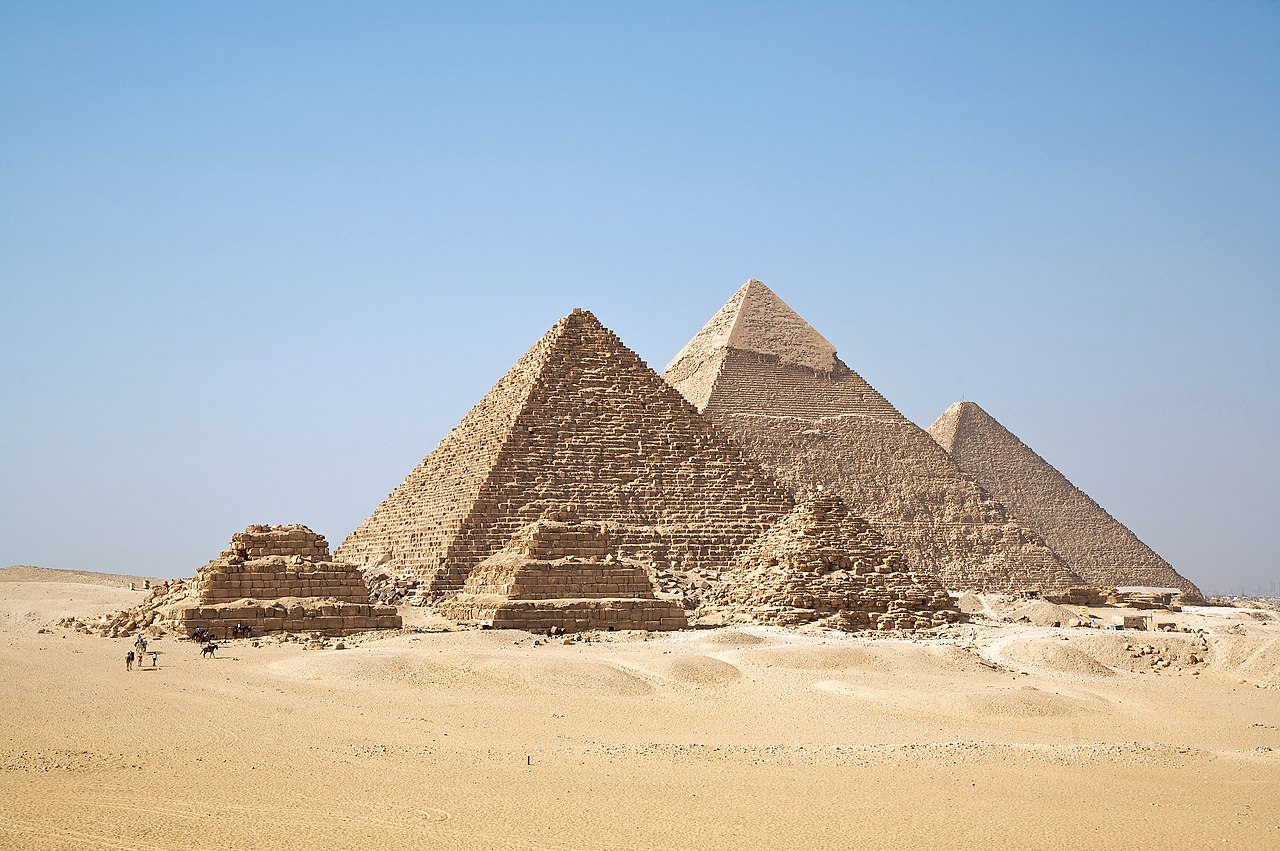
Egypt is a developing country with the second-largest economy in Africa. It is considered to be a regional power in the Middle East, North Africa and the Muslim world, and a middle power worldwide. Islam is the official religion and Arabic its official language. Egypt is a founding member of the United Nations, the Non-Aligned Movement, the Arab League, the African Union, Organisation of Islamic Cooperation, World Youth Forum, and a member of BRICS.
Names
Ancient Egypt had several names; one of them was (𓆎 𓅓 𓏏𓊖) km.t, which is formed from 𓆎 𓅓, meaning black. This likely refers to the fertile black soils of the Nile floodplains, distinct from the deshret ⟨dšṛt⟩, or "red land" of the desert. This name is commonly vocalised as Kemet [kɛmɛt], but was pronounced differently in Ancient Egyptian. Scholars reconstruct its Old Egyptian pronunciation as [ˈkuːmat], its Middle Egyptian pronunciation as [ˈkuːmaʔ], and its Late Egyptian pronunication as [ˈkeːmə]. The name is realised as K(h)ēmə (Bohairic: ⲭⲏⲙⲓ, Sahidic: ⲕⲏⲙⲉ) in Egyptian Coptic, and appeared in Early Greek as Χημία (Khēmía). Another name was ⟨tꜣ-mry⟩ "land of the riverbank".
The names of Upper and Lower Egypt were Ta-Sheme'aw (⟨tꜣ-šmꜥw⟩) "sedgeland" and Ta-Mehew (⟨tꜣ mḥw⟩) "northland", respectively. They were also collectively called "tꜣwy" (tāwy), meaning The Two Lands, referring to both Lower Egypt and Upper Egypt after unification.

The English name "Egypt" is derived from the Ancient Greek "Aígyptos" ("Αἴγυπτος"), via Middle French "Egypte" and Latin "Aegyptus". It is reflected in early Greek Linear B tablets as "a-ku-pi-ti-yo". The ancient Greek geographer Strabo provided a folk etymology stating that "Αἴγυπτος" (Aigýptios) had originally evolved as a compound from "Aἰγαίου ὑπτίως" (Aegaeou huptiōs), meaning "Below the Aegean". Another tradition claims that it was named after the legendary king Aegyptus. The actual derivation is thought to be from ḥwt-kꜣ-ptḥ (Hutkaptah, Late Egyptian pronunciation [ħəjˌkojpəˈtaħ]), "Temple of the Ka of Ptah," a term for the city of Memphis.
Greco-Roman writers report that Egypt was sometimes called Aeria (Ἀερία). Stephanus of Byzantium derives the name from aer (ἀήρ, "air"), explaining that Egypt was a "misty land". From this name, the ethnic form Aerioi (Ἀέριοι) is also recorded for its inhabitants. Thomas George Tucker suggested that Aeria could derive not only from "misty" or "hazy air", but also be understood in the sense of "far-off" or "dimly seen".
"Miṣr" (Arabic pronunciation: [misˤɾ]; "مِصر") is the Classical Quranic Arabic and modern official name of Egypt, while "Maṣr" (Egyptian Arabic pronunciation: [mɑsˤɾ]; مَصر) is the local pronunciation in Egyptian Arabic. The current name of Egypt, Misr/Misir/Misru, stems from the Ancient Semitic name for it. The term originally connoted "Civilisation" or "Metropolis". Classical Arabic Miṣr (Egyptian Arabic Maṣr) is directly cognate with the Biblical Hebrew Miṣráyīm (מִצְרַיִם / מִצְרָיִם), meaning "the two straits", a reference to the predynastic separation of Upper and Lower Egypt. Also mentioned in several Semitic languages as Mesru, Misir and Masar. The oldest attestation of this name for Egypt is the Akkadian "mi-iṣ-ru" ("miṣru") related to miṣru/miṣirru/miṣaru, meaning "border" or "frontier". The Neo-Assyrian Empire used the derived term , Mu-ṣur. In Egyptian colloquial speech, Egypt is used to refer to wealthy Egyptians, while Masr is used to refer to working class Egyptians.

History
Prehistoric Egypt
Evidence of rock carvings along the Nile and in surrounding oases indicates early habitation. In the 10th millennium BCE, a culture of hunter-gatherers and fishers was replaced by a grain-grinding culture. Climate changes or overgrazing around 8000 BCE began to desiccate the pastoral lands of Egypt, forming the Sahara. Early tribal peoples migrated to the Nile River where they developed a settled agricultural economy and more centralised society.
By about 6000 BCE, a Neolithic culture took root in the Nile Valley. During the Neolithic era, several predynastic cultures developed independently in Upper and Lower Egypt. The Badarian culture and the successor Naqada series are generally regarded as precursors to dynastic Egypt. The earliest known Lower Egyptian site, Merimda, predates the Badarian by about seven hundred years. Contemporaneous Lower Egyptian communities coexisted with their southern counterparts for more than two thousand years, remaining culturally distinct, but maintaining frequent contact through trade. The earliest known evidence of Egyptian hieroglyphic inscriptions appeared during the predynastic period on Naqada III pottery vessels, dated to about 3200 BCE.
Ancient Egypt (3150 BCE–305 BCE)
Around c. 3150 BCE, King Menes unified Egypt, establishing a succession of dynasties that ruled for three millennia. Egyptian civilisation thrived with distinctive achievements in religion, art, and writing. The Old Kingdom (c. 2700–2200 BCE) saw the construction of the pyramids, including those at Giza. A brief interregnum followed, succeeded by the Middle Kingdom (c. 2040 BCE), a phase of renewed stability and prosperity under rulers such as Amenemhat III.

After the Second Intermediate Period and the Hyksos occupation, Egypt was reunified by Ahmose I, founder of the Eighteenth Dynasty and the New Kingdom (c. 1550–1070 BCE). This era marked Egypt's height as a major power in the region, extending influence into Nubia and the Levant. It produced many of Egypt's most renowned Pharaohs, Hatshepsut, Thutmose III, Akhenaten, Tutankhamun, and Ramesses II, and witnessed the rise of Atenism, one of the earliest forms of monotheism. Despite later invasions by Libyans, Nubians, and Assyrians, native dynasties eventually reasserted control.
In 525 BCE, Cambyses II of Persia conquered Egypt, beginning the Achaemenid satrapy period (the Twenty-seventh Dynasty). Although several revolts occurred, Egypt remained under Persian control until briefly regaining independence before falling again in 343 BCE. The Thirtieth Dynasty was the last native royal house. Following renewed Persian domination, Alexander the Great conquered Egypt in 332 BCE, after which his general Ptolemy I Soter established the Ptolemaic dynasty.
Ptolemaic and Roman Egypt (305 BCE–641 CE)
The Ptolemaic Kingdom was a Hellenistic state from southern Syria to Cyrene and south to Nubia, with Alexandria as its capital and a centre of Greek culture and trade. The Ptolemies adopted pharaonic traditions to legitimise their rule, appearing on monuments in Egyptian style and participating in local religious life. The Lighthouse of Alexandria, built c. 280 BCE, was one of the Seven Wonders of the Ancient World, later destroyed by earthquakes. The last ruler, Cleopatra VII, committed suicide after Octavian captured Alexandria, ending the dynasty and paving the way for Roman annexation. Native rebellions and dynastic disputes weakened the kingdom, facilitating its annexation by Rome.
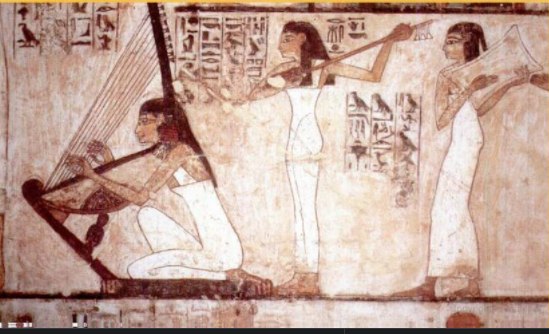
Egypt was a wealthy imperial province of the Roman Empire, supplying grain and hosting the major city of Alexandria. Governed with Roman administration and Hellenistic culture, its population primarily spoke Greek in major cities and Coptic Egyptian in rural areas. Christianity reached Egypt in the 1st century, brought by Saint Mark the Evangelist. During Diocletian's reign (284–305 CE), the New Testament had been translated into Egyptian and many Egyptian Christians were persecuted. By CE 451, a distinct Coptic Church was firmly established.
Medieval Egypt (641–1517)
The Byzantines regained control of Egypt after a brief Sasanid Persian invasion early in the 7th century, until 639–42, when the country was conquered by Arab Muslim forces under Amr ibn al-As during the Early Muslim conquests. The Arabs defeated the Byzantine armies, bringing Islam to Egypt. Alexandria briefly returned to Byzantine control in 645 but fell again to the Arabs in 646. In 654, an invasion fleet sent by Constans II was repulsed. The Arabs founded Fustat, later replaced by Cairo in 969.
Under the Abbasid caliphate, Egypt was governed through deputies residing in Baghdad. Revolts occurred frequently, including the Egyptian revolt of 828 and the uprising of 831 when Copts joined Muslims against the government. Semi-independent dynasties arose, including the Tulunid dynasty (868–905) and Ikhshidid dynasty (935–969), which maintained Abbasid allegiance while exercising local authority.

The Fatimid Caliphate ruled Egypt from the 10th century, with Cairo as their capital. After the Fatimids, the Ayyubid dynasty governed until 1250, when the Mamluks, a military caste of Turco-Circassian origin, took control. The Mamluks ruled Egypt for the next three centuries and maintained control over parts of the Levant. By the late 13th century, Egypt linked trade routes connecting the Red Sea with India, Malaya, and the East Indies. The mid-14th century Black Death killed about 40% of Egypt's population.
Ottoman Egypt (1517–1867)
Egypt was conquered by the Ottomans in 1517, following the defeat of the Mamluk Sultanate, and became a province of the Ottoman Empire. The Mamluks, who had dominated Egypt's military and political life for centuries, retained influence under Ottoman rule, creating a semi-autonomous power structure. The Ottomans faced repeated challenges in maintaining control, while plagues and famines weakened the economy and civil society. Between 1687 and 1731, Egypt experienced six major famines, including the 1784 famine that killed roughly one-sixth of the population.
In 1798, Napoleon Bonaparte invaded Egypt, defeating the Mamluks at the Battle of the Pyramids. The French occupation was short-lived, but it destabilised the region and set the stage for Muhammad Ali Pasha's rise. After the French were expelled, power struggles ensued between the Ottomans, the Mamluks, and Albanian mercenaries in Ottoman service, leaving Egypt politically fragmented.
In 1805, Muhammad Ali Pasha seized power, massacring the remaining Mamluks and establishing a dynasty that would rule Egypt until 1952. He reorganised the army along European lines, introduced conscription, and developed a centralised administration. At the same time, he promoted cash-crop agriculture, especially long-staple cotton, to integrate Egypt into global markets. His successors, including Ibrahim Pasha, Abbas I, Sa'id, and Isma'il Pasha, continued reforms in agriculture, science, and industry, and abolished slavery.
Muhammad Ali expanded Egypt's control over Northern Sudan (1820–1824), Syria (1833), and parts of Arabia and Anatolia, but European powers intervened in 1841, forcing him to relinquish most of his conquests. He modernised Egypt's infrastructure, built factories and irrigation networks, and strengthened the military, while broader education remained largely limited to military and technical training. The centralisation of power and focus on military and economic modernisation laid the foundation for Egypt's transformation into a regional power.
Monarchical Egypt (1867–1952)
In 1867, Egypt was formally granted autonomous status as a vassal state of the Ottoman Empire. The Suez Canal, completed in 1869 with French assistance, became a key strategic and commercial asset. Financial mismanagement and mounting debts led Isma'il Pasha to sell Egypt's shares in the canal to Britain in 1875, increasing European influence. Rising discontent culminated in the Urabi revolt, after which Britain occupied Egypt in 1882, establishing a de facto protectorate while maintaining nominal Ottoman sovereignty. The Anglo-Egyptian Condominium Agreement of 1899 placed Sudan under joint Egyptian and British administration, though Britain retained real control. Incidents such as the Denshawai incident in 1906 intensified nationalist sentiment, laying the groundwork for political movements that challenged both Ottoman and European dominance.
In 1914, as the Ottoman Empire joined World War I alongside the Central Powers, Khedive Abbas II declared support for the Ottoman side. In response, the British deposed him and installed his brother Hussein Kamel, who assumed the title of Sultan of Egypt. Egypt was formally declared independent from the Ottoman Empire but remained under British protection.
After World War I, nationalist sentiments surged. Saad Zaghloul and the Wafd Party secured popular support, but the British exiled Zaghloul and his colleagues to Malta on 8 March 1919, prompting the first modern revolution. This uprising pressured the UK to issue a declaration of independence on 22 February 1922. Sultan Fuad I then assumed the title of King of Egypt. Despite nominal independence, Britain retained military presence and political influence.
In 1923, a new constitution established a parliamentary government. The Wafd Party won a decisive victory in the 1923–24 elections, with Saad Zaghloul becoming prime minister. The 1936 treaty led to British troop withdrawal from most of Egypt, except the Suez Canal. The treaty left the status of Sudan unresolved, as real control remained with Britain.
During World War II, Egypt served as a strategic base for Allied operations, particularly in North Africa. Although Egypt declared martial law and severed diplomatic relations with Axis powers, the Egyptian army did not engage directly. Political tensions persisted, highlighted by the 1942 Abdeen Palace Incident, in which British forces pressured King Farouk to install a Wafd-coalition government.
After the war, nationalist and anti-British sentiments intensified. British troops largely withdrew in 1947, leaving a residual presence around the Suez Canal. Egypt's defeat in the First Arab-Israeli War fuelled anti-monarchy feeling. The Wafd Party's 1950 election victory forced King Farouk to appoint Mostafa El-Nahas as prime minister. In 1951, Egypt unilaterally renounced the 1936 treaty and demanded British troop withdrawal. The situation around the Suez Canal escalated, culminating in violent confrontations that led to the killing of 43 Egyptian policemen in 1952 by British troops. The Ismailia incident outraged Egypt and led to the subsequent Black Saturday anti-British riots, which saw widespread destruction in Cairo.
These events precipitated the Free Officers Movement coup on 22–23 July 1952, led by Muhammad Naguib and Gamal Abdel Nasser. King Farouk abdicated in favour of his infant son, Fuad II, but real power rested with the Egyptian Revolutionary Command Council. By 18 June 1953, the monarchy was formally abolished, the 1923 constitution suspended, and Egypt was declared a republic, with Naguib as president and Nasser as prime minister.
Republican Egypt under Nasser (1952–1970)
Following the 1952 Revolution led by the Free Officers Movement, Egypt came under military control, and all political parties were banned. On 18 June 1953, the Republic of Egypt was officially declared, with Muhammad Naguib serving as the first President. His presidency lasted less than a year and a half, as Gamal Abdel Nasser, a Pan-Arabist and the principal architect of the 1952 movement, gradually consolidated power. Naguib was forced to resign in 1954 and placed under house arrest. The presidency remained vacant until Nasser was formally elected in 1956.
In October 1954, Egypt and the United Kingdom agreed to end the Anglo-Egyptian Condominium Agreement of 1899, granting Sudan full independence, which came into effect on 1 January 1956. In June 1956, Nasser assumed the presidency and immediately became the central figure in Egypt's domestic and foreign policy. British forces completed their withdrawal from the Suez Canal Zone on 13 June 1956. Later that year, on 26 July, Nasser nationalised the Suez Canal, provoking the Suez Crisis when Israel, with support from France and the United Kingdom, invaded the Sinai Peninsula and targeted the Canal. The conflict ended following diplomatic pressure from the United States and the Soviet Union, restoring the pre-war status quo.
In 1958, Egypt formed a political union with Syria, creating the United Arab Republic. The union, also loosely connected with North Yemen in the United Arab States, was short-lived; Syria seceded in 1961. During this period, Egypt became heavily involved in the North Yemen Civil War, with military interventions and peace conferences ultimately leading to a prolonged stalemate. In May 1967, tensions with Israel escalated after warnings from the Soviet Union, deployment of Egyptian forces to Sinai, expulsion of UN peacekeepers, and closure of the Straits of Tiran. These measures precipitated the Six-Day War, during which Israel captured the Sinai Peninsula and the Gaza Strip. In response to the conflict, an Emergency Law was enacted, greatly expanding police powers, restricting constitutional rights, and legalising censorship; it remained in force until 2012, except for a brief break in 1980–81.
Socially and economically, Nasser's policies transformed Egypt. At the time of the monarchy's fall, less than half a million Egyptians were considered upper class, four million were middle class, and seventeen million were lower class or poor. Education was expanded, with school enrolment more than doubling from 1953 to 1966. Land reforms, industrial support, and growth in public-sector employment created a larger middle class, including doctors, engineers, teachers, lawyers, and journalists. However, by the late 1960s, the Egyptian economy faced stagnation, political freedoms had declined, and Nasser's personal popularity began to wane.
Egypt under Sadat and Mubarak (1970–2011)
After the death of Gamal Abdel Nasser in 1970, Anwar Sadat assumed the presidency of Egypt. Sadat consolidated his power by marginalising Nasserist and leftist factions, while controlling opposition both secular and religious. He shifted Egypt's Cold War alignment from the Soviet Union to the United States, expelling Soviet advisors in 1972, and renamed the country the Arab Republic of Egypt in 1971. Sadat launched the Infitah ("open door") economic reforms. Some measures of this economic liberalisation caused social tensions, most notably the removal of food subsidies in 1977 which sparked widespread bread riots.
In 1973, Sadat coordinated with Syria in the Fourth Arab-Israeli War to reclaim the Sinai Peninsula from Israeli occupation. Though militarily mixed, the war restored Arab morale and strengthened Sadat's domestic legitimacy. His historic 1977 visit to Jerusalem led to the 1979 Egypt-Israel peace treaty, with Israel withdrawing from Sinai and Egypt recognising Israel as a sovereign state. This initiative provoked widespread controversy across the Arab world, resulting in Egypt's temporary expulsion from the Arab League, but remained popular domestically. Sadat was assassinated in 1981 by an Islamic extremist opposed to his domestic policies and peace initiative.
Hosni Mubarak succeeded Sadat in a 1981 referendum in which he was the sole candidate. He maintained Egypt's peace treaty with Israel and improved relations with Arab neighbours. Domestically, he faced widespread poverty, high unemployment, and urban overcrowding. The 1986 Security Police riots, sparked by reports of extended military service, led to violent protests, destruction of businesses, and 107 deaths.
Terrorist attacks, particularly by Islamist groups like Al-Gama'a al-Islamiyya, targeted government officials, foreigners, and Christian Copts, devastating tourism, Egypt's primary source of hard currency. The political scene was dominated by the NDP, which curtailed freedoms of association, expression, and political participation through laws such as the 1993 Syndicates Law, 1995 Press Law, and 1999 NGOs Law.
In 1997, the Luxor massacre left 62 dead, mostly tourists, highlighting the continuing threat to security and the economy. In 2005, limited reforms allowed multi-candidate presidential elections, but restrictions on candidates and alleged government interference ensured Mubarak's easy reelection. Voter turnout was less than 25%, and opposition leader Ayman Nour was subsequently imprisoned.
Human Rights Watch and Amnesty International reported widespread human rights abuses, including torture, arbitrary detention, and the use of Egypt as an international "torture hub" in the context of the war on terror. Constitutional changes in 2007 further expanded presidential powers, restricted religious parties, and broadened police authority. Egypt remained under strong military influence, described by officials as a "pharaonic" system, with democracy as a distant aspiration.
Contemporary (2011–present)
On 25 January 2011, widespread protests erupted against President Hosni Mubarak's government, triggered by demands for political freedom, social justice, and the end of long-standing corruption. Demonstrations rapidly spread across major cities, particularly in Cairo's Tahrir Square, capturing global attention. After 18 days of escalating unrest, Mubarak resigned on 11 February 2011 and fled Cairo. The Egyptian military assumed control, with Mohamed Hussein Tantawi, chairman of the Supreme Council of the Armed Forces, acting as interim head of state. On 13 February, the military dissolved parliament and suspended the constitution. A constitutional referendum followed on 19 March 2011. Later that year, Egypt held its first parliamentary elections since the previous regime, with high voter turnout and no major reported irregularities.
Mohamed Morsi, affiliated with the Muslim Brotherhood, won the presidency on 24 June 2012 and was sworn in on 30 June. His cabinet, announced in August 2012, included significant representation from the Muslim Brotherhood, prompting liberal and secular groups to withdraw from the Constituent Assembly of Egypt over concerns of imposing strict Islamic law. In November 2012, Morsi issued a decree granting immunity to his decisions and protecting the constituent assembly's work, sparking mass protests and violent clashes across the country. Tensions escalated, with the largest confrontations between Islamist supporters and opponents since the 2011 revolution occurring on 5 December 2012. Morsi refused to cancel the December 2012 constitutional referendum.
Following growing public discontent, the military removed Morsi on 3 July 2013, dissolved the Shura Council, and installed Adly Mansour, chief justice of the Supreme Constitutional Court, as interim president. Authorities cracked down on the Muslim Brotherhood, jailing thousands and conducting mass trials. Violence during dispersals of pro-Morsi camps left hundreds dead. A new constitution was approved by referendum on 18 January 2014 with 98.1% voting in favour.
Abdel Fattah el-Sisi won the presidential elections in June 2014 with 96.1% of the vote and was sworn in on 8 June. Under his rule, Egypt intensified security on the Gaza border, dismantled tunnels between Sinai and Gaza, and consolidated political power. Presidential terms were extended to six years in 2019, allowing El-Sisi to run for a third term in 2024. Parliamentary elections in 2020 confirmed a pro-El-Sisi majority for the Mostaqbal Watan Party. The constitutional reforms and strengthened military authority under El-Sisi have been described as a return to authoritarianism. In December 2023, El-Sisi won the elections that gave him a third six-year term.
Geography
Egypt lies primarily between latitudes 22° and 32°N, and longitudes 25° and 35°E. At 1,001,450 square kilometres (386,660 sq mi), it is the world's 29th largest country. Due to the extreme aridity of Egypt's climate, population centres are concentrated along the narrow Nile Valley and Delta, meaning that about 99% of the population uses about 5.5% of the total land area. 98% of Egyptians live on 3% of the territory.
Egypt is bordered by Libya to the west, the Sudan to the south, and the Gaza Strip and Israel to the east. A transcontinental nation, it possesses a land bridge (the Isthmus of Suez) between Africa and Asia, traversed by a navigable waterway (the Suez Canal) that connects the Mediterranean Sea with the Indian Ocean by way of the Red Sea.
Apart from the Nile Valley, the majority of Egypt's landscape is desert, with a few oases scattered about. Winds create prolific sand dunes that peak at more than 30 metres (100 ft) high. Egypt includes parts of the Sahara desert and of the Libyan Desert.
Sinai peninsula hosts the highest mountain in Egypt, Mount Catherine at 2,642 metres. The Red Sea Riviera, on the east of the peninsula, is renowned for its wealth of coral reefs and marine life.