
An earthquake, also called a quake, tremor, or temblor, is the shaking of the Earth's surface resulting from a sudden release of energy in the lithosphere that creates seismic waves. Earthquakes can range in intensity, from those so weak they cannot be felt, to those violent enough to propel objects and people into the air, damage critical infrastructure, and wreak destruction across entire cities. The seismic activity of an area is the frequency, type, and size of earthquakes experienced over a particular time. The seismicity at a particular location in the Earth is the average rate of seismic energy released per unit volume.
In its most general sense, the word earthquake is used to describe any seismic event that generates seismic waves. Earthquakes can occur naturally or be induced by human activities, such as mining, fracking, and nuclear weapons testing. The initial point of rupture is called the hypocenter or focus, while the ground level directly above it is the epicenter. Earthquakes are primarily caused by geological faults, but also by volcanism, landslides, and other seismic events.
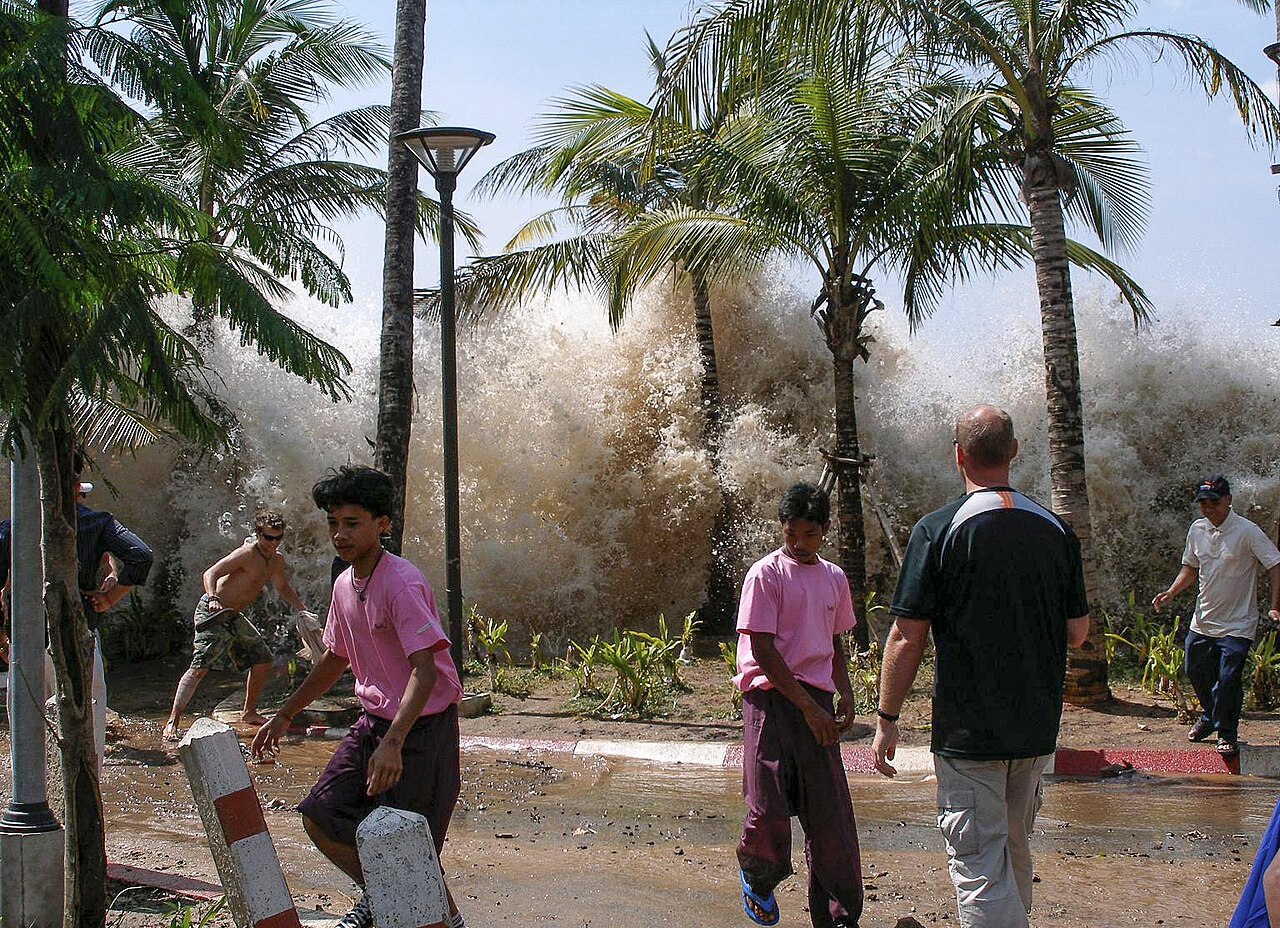
Significant historical earthquakes include the 1976 Tangshan earthquake in China, with over 300,000 fatalities, and the 1960 Valdivia earthquake in Chile, the largest ever recorded at 9.5 magnitude. Earthquakes result in various effects, such as ground shaking and soil liquefaction, leading to significant damage and loss of life. When the epicenter of a large earthquake is located offshore, the seabed may be displaced sufficiently to cause a tsunami. Earthquakes can trigger landslides. The occurrence of earthquakes is influenced by tectonic movements along faults, including normal, reverse (thrust), and strike-slip faults, with energy release and rupture dynamics governed by the elastic-rebound theory.
Efforts to manage earthquake risks involve prediction, forecasting, and preparedness, including seismic retrofitting and earthquake engineering to design structures that withstand shaking. The cultural impact of earthquakes spans myths, religious beliefs, and modern media, reflecting their profound influence on human societies. Similar seismic phenomena, known as marsquakes and moonquakes, have been observed on other celestial bodies, indicating the universality of such events beyond Earth.
Terminology
An earthquake is the shaking of the surface of Earth resulting from a sudden release of energy in the lithosphere that creates seismic waves. Earthquakes may also be referred to as quakes, tremors, or temblors. The word tremor is also used for non-earthquake seismic rumbling.
In its most general sense, an earthquake is any seismic event—whether natural or caused by humans—that generates seismic waves. Earthquakes are caused mostly by the rupture of geological faults but also by other events such as volcanic activity, landslides, mine blasts, fracking and nuclear tests. An earthquake's point of initial rupture is called its hypocenter or focus. The epicenter is the point at ground level directly above the hypocenter.
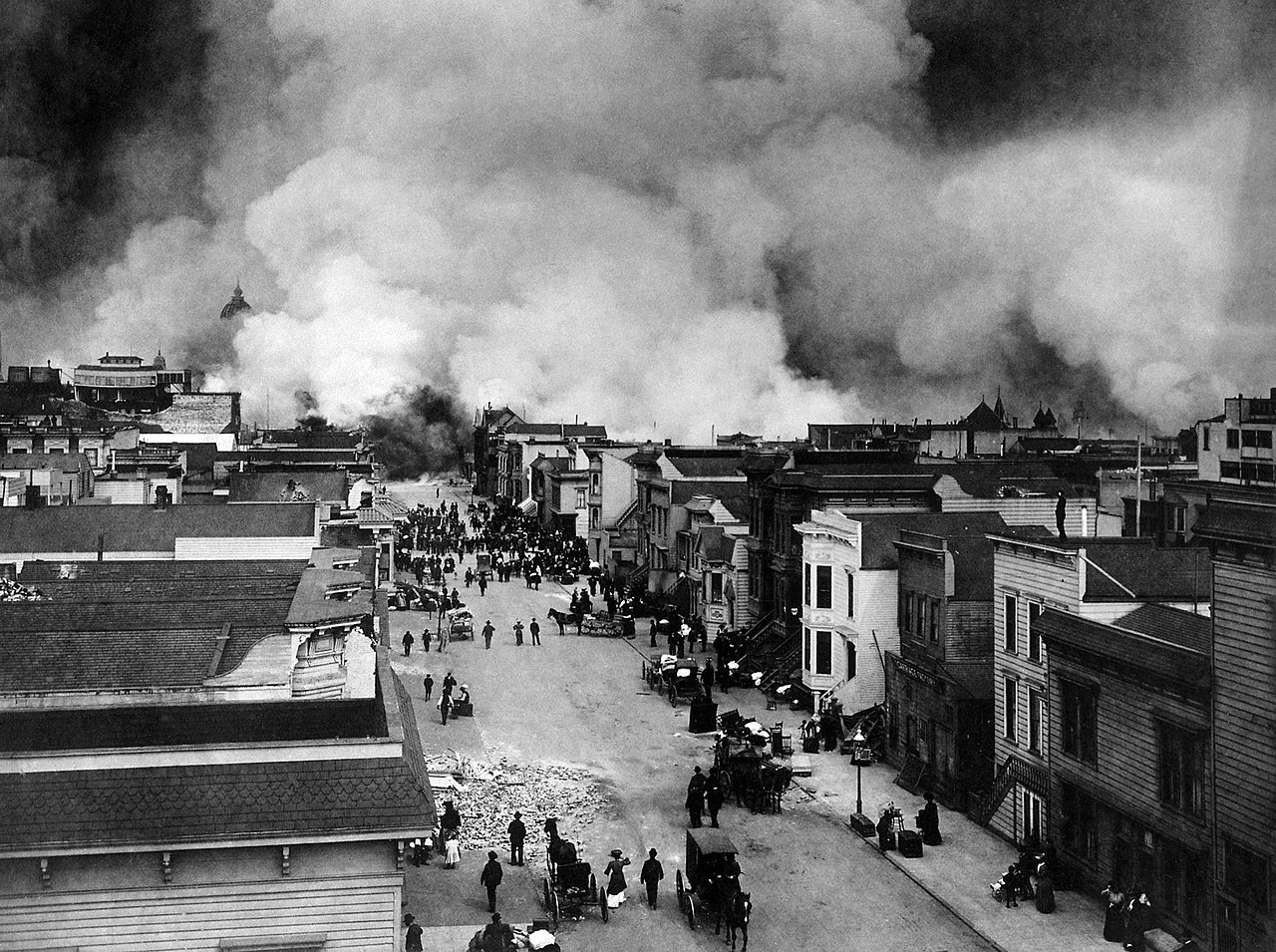
The seismic activity of an area is the frequency, type, and size of earthquakes experienced over a particular time. The seismicity at a particular location in the Earth is the average rate of seismic energy release per unit volume.
Major examples
One of the most devastating earthquakes in recorded history was the 1556 Shaanxi earthquake, which occurred on 23 January 1556 in Shaanxi, China. More than 100,000 people died, with the region losing up to 730,000 people afterwards due to emigration, plague, and famine. Most houses in the area were yaodongs—dwellings carved out of loess hillsides—and many victims were killed when these structures collapsed. The 1976 Tangshan earthquake, which killed between 240,000 and 655,000 people, was the deadliest of the 20th century.
The 1960 Chilean earthquake is the largest earthquake that has been measured on a seismograph, reaching 9.5 magnitude on 22 May 1960. Its epicenter was near Cañete, Chile. The energy released was approximately twice that of the next most powerful earthquake, the Good Friday earthquake (27 March 1964), which was centered in Prince William Sound, Alaska. The ten largest recorded earthquakes have all been megathrust earthquakes; however, of these ten, only the 2004 Indian Ocean earthquake is simultaneously one of the deadliest earthquakes in history.

Earthquakes that caused the greatest loss of life, while powerful, were deadly because of their proximity to either heavily populated areas or the ocean, where earthquakes often create tsunamis that can devastate communities thousands of kilometers away. Regions most at risk for great loss of life include those where earthquakes are relatively rare but powerful, and poor regions with lax, unenforced, or nonexistent seismic building codes.
Occurrence
Tectonic earthquakes occur anywhere on the earth where there is sufficient stored elastic strain energy to drive fracture propagation along a fault plane. The sides of a fault move past each other smoothly and aseismically only if there are no irregularities or asperities along the fault surface that increases the frictional resistance. Most fault surfaces do have such asperities, which leads to a form of stick-slip behavior. Once the fault has locked, continued relative motion between the plates leads to increasing stress and, therefore, stored strain energy in the volume around the fault surface. This continues until the stress has risen sufficiently to break through the asperity, suddenly allowing sliding over the locked portion of the fault, releasing the stored energy. This energy is released as a combination of radiated elastic strain seismic waves, frictional heating of the fault surface, and cracking of the rock, thus causing an earthquake.
This process of gradual build-up of strain and stress punctuated by occasional sudden earthquake failure is referred to as the elastic-rebound theory. It is estimated that only 10 percent or less of an earthquake's total energy is radiated as seismic energy. Most of the earthquake's energy is used to power the earthquake fracture growth or is converted into heat generated by friction. Therefore, earthquakes lower the Earth's available elastic potential energy and raise its temperature, though these changes are negligible compared to the conductive and convective flow of heat out from the Earth's deep interior.
Fault types
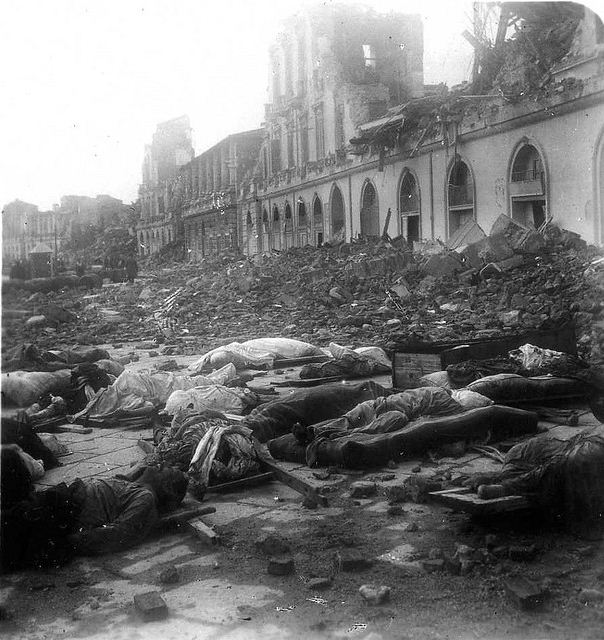
There are three main types of fault, all of which may cause an interplate earthquake: normal, reverse (thrust), and strike-slip. Normal and reverse faulting are examples of dip-slip, where the displacement along the fault is in the direction of dip and where movement on them involves a vertical component. Many earthquakes are caused by movement on faults that have components of both dip-slip and strike-slip; this is known as oblique slip.
The topmost, brittle part of the Earth's crust, and the cool slabs of the tectonic plates that are descending into the hot mantle, are the only parts of our planet that can store elastic energy and release it in fault ruptures. Rocks hotter than about 300 °C (572 °F) flow in response to stress; they do not rupture in earthquakes. The maximum observed lengths of ruptures and mapped faults (which may break in a single rupture) are approximately 1,000 km (620 mi). Examples are the earthquakes in Alaska (1957), Chile (1960), and Sumatra (2004), all in subduction zones. The longest earthquake ruptures on strike-slip faults, like the San Andreas Fault (1857, 1906), the North Anatolian Fault in Turkey (1939), and the Denali Fault in Alaska (2002), are about half to one third as long as the lengths along subducting plate margins, and those along normal faults are even shorter.
Normal faults
Normal faults occur mainly in areas where the crust is being extended such as a divergent boundary. Earthquakes associated with normal faults are generally less than magnitude 7. Maximum magnitudes along many normal faults are even more limited because many of them are located along spreading centers, as in Iceland, where the thickness of the brittle layer is only about six kilometres (3.7 mi).

Reverse faults
Reverse faults occur in areas where the crust is being shortened such as at a convergent boundary. Reverse faults, particularly those along convergent boundaries, are associated with the most powerful earthquakes (called megathrust earthquakes) including almost all of those of magnitude 8 or more. Megathrust earthquakes are responsible for about 90% of the total seismic moment released worldwide.
Strike-slip faults
Strike-slip faults are steep structures where the two sides of the fault slip horizontally past each other; transform boundaries are a particular type of strike-slip fault. Strike-slip faults, particularly continental transforms, can produce major earthquakes up to about magnitude 8. Strike-slip faults tend to be oriented near vertically, resulting in an approximate width of 10 km (6.2 mi) within the brittle crust. Thus, earthquakes with magnitudes much larger than 8 are not possible.
In addition, there exists a hierarchy of stress levels in the three fault types. Thrust faults are generated by the highest, strike-slip by intermediate, and normal faults by the lowest stress levels. This can easily be understood by considering the direction of the greatest principal stress, the direction of the force that "pushes" the rock mass during the faulting. In the case of normal faults, the rock mass is pushed down in a vertical direction, thus the pushing force (greatest principal stress) equals the weight of the rock mass itself. In the case of thrusting, the rock mass "escapes" in the direction of the least principal stress, namely upward, lifting the rock mass, and thus, the overburden equals the least principal stress. Strike-slip faulting is intermediate between the other two types described above. This difference in stress regime in the three faulting environments can contribute to differences in stress drop during faulting, which contributes to differences in the radiated energy, regardless of fault dimensions.

Energy released
For every unit increase in seismic magnitude, there is a roughly thirty-fold increase in the energy released. For instance, an earthquake of magnitude 6.0 releases approximately 32 times as much energy as an earthquake of magnitude 5.0, and a 7.0 magnitude earthquake releases about 1,000 times as much energy as a 5.0 magnitude earthquake. An 8.6-magnitude earthquake releases the same amount of energy as 10,000 atomic bombs of the size used in World War II.
This is so because the energy released in an earthquake, and thus its magnitude, is proportional to the area of the fault that ruptures and the stress drop. Therefore, the greater the length and width of the faulted area, the greater the resulting magnitude. The most important parameter controlling the maximum earthquake magnitude on a fault, however, is not the maximum available length, but the available width because the latter varies by a factor of 20. Along converging plate margins, the dip angle of the rupture plane is very shallow, typically about 10 degrees. Thus, the width of the plane within the top brittle crust of the Earth can reach 50–100 km (31–62 mi) (such as in Japan, 2011, or in Alaska, 1964), making the most powerful earthquakes possible.
Focus
The majority of tectonic earthquakes originate in the Ring of Fire at depths not exceeding tens of kilometers. Earthquakes occurring at depths less than 70 km (43 mi) are classified as "shallow-focus" earthquakes, while those with focal depths between 70 and 300 km (43 and 186 mi) are commonly termed "mid-focus" or "intermediate-depth" earthquakes.
In subduction zones, where older and colder oceanic crust descends beneath another tectonic plate, deep-focus earthquakes may occur at much greater depths (ranging from 300 to 700 km (190 to 430 mi)). These seismically active areas of subduction are known as Wadati–Benioff zones. Deep-focus earthquakes occur at depths where the subducted lithosphere should no longer be brittle, due to the high temperature and pressure. A possible mechanism for the generation of deep-focus earthquakes is faulting caused by olivine undergoing a phase transition into a spinel structure.
Volcanic activity
Earthquakes often occur in volcanic regions and are caused there, both by tectonic faults and the movement of magma in volcanoes. Such earthquakes can serve as an early warning of volcanic eruptions, as during the 1980 eruption of Mount St. Helens. Earthquake swarms can serve as markers for the location of the flowing magma throughout the volcanoes. These swarms can be recorded by seismometers and tiltmeters (a device that measures ground slope) and used as sensors to predict imminent or upcoming eruptions.
Rupture dynamics
A tectonic earthquake begins as an area of initial slip on the fault surface that forms the focus. Once the rupture has been initiated, it begins to propagate away from the focus, spreading out along the fault surface. Lateral propagation will continue until either the rupture reaches a barrier, such as the end of a fault segment, or a region on the fault where there is insufficient stress to allow continued rupture. For larger earthquakes, the depth extent of rupture will be constrained downwards by the brittle-ductile transition zone and upwards by the ground surface. The mechanics of this process are poorly understood because it is difficult either to recreate such rapid movements in a laboratory or to record seismic waves close to a nucleation zone due to strong ground motion.
In most cases, the rupture speed approaches, but does not exceed, the shear wave (S wave) velocity of the surrounding rock. There are a few exceptions to this:
Supershear earthquakes
Supershear earthquake ruptures are known to have propagated at speeds greater than the S wave velocity. These have so far all been observed during large strike-slip events. The unusually wide zone of damage caused by the 2001 Kunlun earthquake has been attributed to the effects of the sonic boom developed in such earthquakes.
Slow earthquakes
Slow earthquake ruptures travel at unusually low velocities. A particularly dangerous form of slow earthquake is the tsunami earthquake, observed where the relatively low felt intensities, caused by the slow propagation speed of some great earthquakes, fail to alert the population of the neighboring coast, as in the 1896 Sanriku earthquake.
Co-seismic overpressuring and effect of pore pressure
During an earthquake, high temperatures can develop at the fault plane, increasing pore pressure and consequently vaporization of the groundwater already contained within the rock. In the coseismic phase, such an increase can significantly affect slip evolution and speed, in the post-seismic phase it can control the Aftershock sequence because, after the main event, pore pressure increase slowly propagates into the surrounding fracture network. From the point of view of the Mohr-Coulomb strength theory, an increase in fluid pressure reduces the normal stress acting on the fault plane that holds it in place, and fluids can exert a lubricating effect. As thermal overpressurization may provide positive feedback between slip and strength fall at the fault plane, a common opinion is that it may enhance the faulting process instability. After the mainshock, the pressure gradient between the fault plane and the neighboring rock causes a fluid flow that increases pore pressure in the surrounding fracture networks; such an increase may trigger new faulting processes by reactivating adjacent faults, giving rise to aftershocks. Analogously, artificial pore pressure increase, by fluid injection in Earth's crust, may induce seismicity.
Tidal forces
Tides may trigger some seismicity.
Clusters
Most earthquakes form part of a sequence, related to each other in terms of location and time. Most earthquake clusters consist of small tremors that cause little to no damage, but there is a theory that earthquakes can recur in a regular pattern. Earthquake clustering has been observed, for example, in Parkfield, California where a long-term research study is being conducted around the Parkfield earthquake cluster.
The quantitative analysis of these sequences is the primary focus of statistical seismology.
Aftershocks
An aftershock is an earthquake that occurs after a previous earthquake, the mainshock. Rapid changes of stress between rocks, and the stress from the original earthquake are the main causes of these aftershocks, along with the crust around the ruptured fault plane as it adjusts to the effects of the mainshock. An aftershock is in the same region as the main shock but always of a smaller magnitude, however, they can still be powerful enough to cause even more damage to buildings that were already previously damaged from the mainshock. If an aftershock is larger than the mainshock, the aftershock is redesignated as the mainshock and the original main shock is redesignated as a foreshock. Aftershocks are formed as the crust around the displaced fault plane adjusts to the effects of the mainshock.
Swarms
Earthquake swarms are sequences of earthquakes striking in a specific area within a short period. They are different from earthquakes followed by a series of aftershocks by the fact that no single earthquake in the sequence is the main shock, so none has a notably higher magnitude than another. An example of an earthquake swarm is the 2004 activity at Yellowstone National Park. In August 2012, a swarm of earthquakes shook Southern California's Imperial Valley, showing the most recorded activity in the area since the 1970s.
Sometimes a series of earthquakes occur in what has been called an earthquake storm, where the earthquakes strike a fault in clusters, each triggered by the shaking or stress redistribution of the previous earthquakes. Similar to aftershocks but on adjacent segments of fault, these storms occur over the course of years, with some of the later earthquakes as damaging as the early ones. Such a pattern was observed in the sequence of about a dozen earthquakes that struck the North Anatolian Fault in Turkey in the 20th century and has been inferred for older anomalous clusters of large earthquakes in the Middle East.
Frequency
It is estimated that around 500,000 earthquakes occur each year, detectable with current instrumentation. About 100,000 of these can be felt. Minor earthquakes occur very frequently around the world in places like California and Alaska in the U.S., as well as in El Salvador, Mexico, Guatemala, Chile, Peru, Indonesia, the Philippines, Iran, Pakistan, the Azores in Portugal, Turkey, New Zealand, Greece, Italy, India, Nepal, and Japan. Larger earthquakes occur less frequently, the relationship being exponential; for example, roughly ten times as many earthquakes larger than magnitude 4 occur than earthquakes larger than magnitude 5. In the (low seismicity) United Kingdom, for example, it has been calculated that the average recurrences are:
an earthquake of 3.7–4.6 every year, an earthquake of 4.7–5.5 every 10 years, and an earthquake of 5.6 or larger every 100 years. This is an example of the Gutenberg–Richter law.
The number of seismic stations has increased from about 350 in 1931 to many thousands today. As a result, many more earthquakes are reported than in the past, but this is because of the vast improvement in instrumentation, rather than an increase in the number of earthquakes. The United States Geological Survey (USGS) estimates that, since 1900, there have been an average of 18 major earthquakes (magnitude 7.0–7.9) and one great earthquake (magnitude 8.0 or greater) per year, and that this average has been relatively stable. In recent years, the number of major earthquakes per year has decreased, though this is probably a statistical fluctuation rather than a systematic trend. More detailed statistics on the size and frequency of earthquakes is available from the United States Geological Survey. A recent increase in the number of major earthquakes has been noted, which could be explained by a cyclical pattern of periods of intense tectonic activity, interspersed with longer periods of low intensity. However, accurate recordings of earthquakes only began in the early 1900s, so it is too early to categorically state that this is the case.
Most of the world's earthquakes (90%, and 81% of the largest) take place in the 40,000-kilometre-long (25,000 mi), horseshoe-shaped zone called the circum-Pacific seismic belt, known as the Pacific Ring of Fire, which for the most part bounds the Pacific plate. Massive earthquakes tend to occur along other plate boundaries too, such as along the Himalayan Mountains. On top of that, under certain conditions, mountains have been shown to amplify seismic activity on ridges due to their ground surface topography.
With the rapid growth of mega-cities such as Mexico City, Tokyo, and Tehran in areas of high seismic risk, some seismologists are warning that a single earthquake may claim the lives of up to three million people.
Induced seismicity
While most earthquakes are caused by the movement of the Earth's tectonic plates, human activity can also produce earthquakes. Activities both above ground and below may change the stresses and strains on the crust, including building reservoirs, extracting resources such as coal or oil, and injecting fluids underground for waste disposal or fracking. Most of these earthquakes have small magnitudes. The 5.7 magnitude 2011 Oklahoma earthquake is thought to have been caused by disposing wastewater from oil production into injection wells, and studies point to the state's oil industry as the cause of other earthquakes in the past century. A Columbia University paper suggested that the 8.0 magnitude 2008 Sichuan earthquake was induced by loading from the Zipingpu Dam, though the link has not been conclusively proved.