The Democratic Party is a liberal political party in the United States, sitting on the center to center-left of the political spectrum. Founded in 1828, it is the world's oldest active political party. Its main rival is the Republican Party, and since the 1850s both have dominated American politics.
The Democratic Party initially supported Jacksonian democracy, agrarianism, and geographical expansionism, while opposing a national bank and high tariffs. Democrats won six of the eight presidential elections from 1828 to 1856, losing twice to the Whigs. In 1860, the party split into Northern and Southern factions over slavery. The party remained dominated by agrarian interests, contrasting with Republican support for the big business of the Gilded Age. Democratic candidates won the presidency only twice between 1860 and 1908, although they won the popular vote two more times in that period. During the Progressive Era, some factions of the party supported progressive reforms, with Woodrow Wilson being elected president in 1912 and 1916.
In 1932, Franklin D. Roosevelt was elected president after campaigning on a strong response to the Great Depression. His New Deal programs created a broad Democratic coalition that united white Southerners, Northern workers, labor unions, African Americans, Catholic and Jewish communities, progressives, and liberals. From the late 1930s, a conservative minority in the party's Southern wing joined with Republicans to slow and stop further progressive domestic reforms. After the civil rights movement and Great Society era of progressive legislation under Lyndon B. Johnson, who was often able to overcome the conservative coalition in the 1960s, many white Southerners switched to the Republican Party as the Northeastern states became more reliably Democratic. The party's labor union element has weakened since the 1970s amid deindustrialization, and during the 1980s it lost many white working-class voters to the Republicans under Ronald Reagan. The election of Bill Clinton in 1992 marked a shift for the party toward centrism and the Third Way, shifting its economic stance toward market-based policies. Barack Obama oversaw passage of the Affordable Care Act in 2010, which passed along party lines.
On social issues, it advocates for abortion rights, gun control, LGBTQ rights, action on climate change, the legalization of marijuana, and a pathway to citizenship for undocumented immigrants. On economic issues, the party favors healthcare reform, paid sick leave, paid family leave and supporting unions. In foreign policy, the party supports liberal internationalism and aid to Ukraine, as well as tough stances against China and Russia.
History
Democratic Party officials often trace its origins to the Democratic-Republican Party, founded by Thomas Jefferson, James Madison, and other influential opponents of the conservative Federalists in 1792. That party died out before the modern Democratic Party was organized; the Jeffersonian party also inspired the Whigs and modern Republicans. Historians argue that the modern Democratic Party was first organized in the late 1820s with the election of war hero Andrew Jackson of Tennessee, making it the world's oldest active political party. It was predominately built by Martin Van Buren who assembled a wide cadre of politicians in every state behind Jackson.
Since the nomination of William Jennings Bryan in 1896, the party has generally positioned itself to the left of the Republican Party on economic issues. Democrats have been more liberal on civil rights since 1948, although conservative factions within the Democratic Party that opposed them persisted in the South until the 1960s. On foreign policy, both parties have changed positions several times.

Background
The Democratic Party evolved from the Democratic-Republican Party organized by Thomas Jefferson and James Madison in opposition to the Federalist Party. The Democratic-Republican Party favored republicanism, a weak federal government, states' rights, agrarian interests (especially Southern planters), and strict adherence to the Constitution. The party opposed a national bank and Great Britain. After the War of 1812, the Federalists virtually disappeared and the only national political party left was the Democratic-Republicans, which was prone to splinter along regional lines. The era of one-party rule in the United States, known as the Era of Good Feelings, lasted from 1816 until 1828, when Andrew Jackson became president. Jackson and Martin Van Buren worked with allies in each state to form a new Democratic Party on a national basis. In the 1830s, the Whig Party coalesced into the main rival to the Democrats.
When exactly the Democratic Party formed is still debated among historians, with many putting forth the 1828 date of the creation of a federal structure for the various Jacksonian movements as the foundation date, however, it could also be argued that the foundation of these Jacksonian groups could be the foundation date. In that case, the Democratic Party would be formed on December 23, 1823, when the Greensburg Committee read the Greensburg Resolution outside the Westmoreland County Courthouse in Greensburg, Pennsylvania. The committee consisted of five of Greensburg's most prominent political figures, the brothers Jacob M. Wise (state senator), John H. Wise (state representative and brigadier general), and Frederick A. Wise (owner and editor of the Westmoreland Republican), alongside David Marchand (state representative), and James Clarke (state representative). The Greensburg Resolution was the first published call for Jackson to run for president with the committee being the first overtly "Jacksonian" organization, dubbed the 'origin' of the Jackson movement that turned into the Democratic Party.
The event that transformed the Jacksonians from just another faction of the Democratic-Republican party into a divergent political force would be the so-called "corrupt bargain" of 1824, where, despite winning the most popular and electoral votes, the House of Representatives did not confirm Jackson as the newly elected president, instead Henry Clay, who was both a candidate and the speaker of the house, whipped his supporters in congress to vote for the runner-up, John Quincy Adams, in exchange for Adams's naming Clay the Secretary of State. Jackson and his followers began to coalesce more seriously into a structured party for the next election in 1828, and the party's birth is most often marked as Jackson's campaign launch on January 8 of that year, or sometimes as four years later at the inaugural 1832 Democratic National Convention.

Before 1860, the Democratic Party supported expansive presidential power, the interests of slave states, agrarianism, and expansionism, while opposing a national bank and high tariffs.
19th century
Jacksonian Era
The Democratic-Republican Party split over the choice of a successor to President James Monroe. The faction that supported many of the old Jeffersonian principles, led by Andrew Jackson and Martin Van Buren, became the modern Democratic Party. Historian Mary Beth Norton explains the transformation in 1828: Jacksonians believed the people's will had finally prevailed. Through a lavishly financed coalition of state parties, political leaders, and newspaper editors, a popular movement had elected the president. The Democrats became the nation's first well-organized national party ... and tight party organization became the hallmark of nineteenth-century American politics.
Behind the platforms issued by state and national parties stood a widely shared political outlook that characterized the Democrats: The Democrats represented a wide range of views but shared a fundamental commitment to the Jeffersonian concept of an agrarian society. They viewed the central government as the enemy of individual liberty. The 1824 "corrupt bargain" had strengthened their suspicion of Washington politics. ... Jacksonians feared the concentration of economic and political power. They believed that government intervention in the economy benefited special-interest groups and created corporate monopolies that favored the rich. They sought to restore the independence of the individual—the artisan and the ordinary farmer—by ending federal support of banks and corporations and restricting the use of paper currency, which they distrusted. Their definition of the proper role of government tended to be negative, and Jackson's political power was largely expressed in negative acts. He exercised the veto more than all previous presidents combined. ... Nor did Jackson share reformers' humanitarian concerns. He had no sympathy for American Indians, initiating the removal of the Cherokees along the Trail of Tears.

Opposing factions led by Henry Clay helped form the Whig Party. The Democratic Party had a small yet decisive advantage over the Whigs until the 1850s when the Whigs fell apart over the issue of slavery. In 1854, angry with the Kansas–Nebraska Act, anti-slavery Democrats left the party and joined Northern Whigs to form the Republican Party. Martin van Buren also helped found the Free Soil Party to oppose the spread of slavery, running as its candidate in the 1848 presidential election, before returning to the Democratic Party and staying loyal to the Union.
American Civil War
The Democrats split over slavery, with Northern and Southern tickets in the election of 1860, in which the Republican Party gained ascendancy. The radical pro-slavery Fire-Eaters led walkouts at the two conventions when the delegates would not adopt a resolution supporting the extension of slavery into territories even if the voters of those territories did not want it. These Southern Democrats nominated the pro-slavery incumbent vice president, John C. Breckinridge of Kentucky, for president and General Joseph Lane, of Oregon, for vice president. The Northern Democrats nominated Senator Stephen A. Douglas of Illinois for president and former Georgia Governor Herschel V. Johnson for vice president. This fracturing of the Democrats led to a Republican victory and Abraham Lincoln was elected the 16th president of the United States.
As the American Civil War broke out, Northern Democrats were divided into War Democrats and Peace Democrats. The Confederate States of America deliberately avoided organized political parties. Most War Democrats rallied to Republican president Abraham Lincoln and the Republicans' National Union Party in the election of 1864, which featured Andrew Johnson on the Union ticket to attract fellow Democrats. Johnson replaced Lincoln in 1865, but he stayed independent of both parties.

Reconstruction and Redemption
The Democrats benefited from white Southerners' resentment of Reconstruction after the war and consequent hostility to the Republican Party. After Redeemers ended Reconstruction in the 1870s, and following the often extremely violent disenfranchisement of African Americans led by such white supremacist Democratic politicians as Benjamin Tillman of South Carolina in the 1880s and 1890s, the South, voting Democratic, became known as the "Solid South". Although Republicans won all but two presidential elections, the Democrats remained competitive. The party was dominated by pro-business Bourbon Democrats led by Samuel J. Tilden and Grover Cleveland, who represented mercantile, banking, and railroad interests; opposed imperialism and overseas expansion; fought for the gold standard; opposed bimetallism; and crusaded against corruption, high taxes and tariffs. Cleveland was elected to non-consecutive presidential terms in 1884 and 1892.
20th century
Progressive era
Agrarian Democrats demanding free silver, drawing on Populist ideas, overthrew the Bourbon Democrats in 1896 and nominated William Jennings Bryan for the presidency (a nomination repeated by Democrats in 1900 and 1908). Bryan waged a vigorous campaign attacking Eastern moneyed interests, but he lost to Republican William McKinley.
The Democrats took control of the House in 1910, and Woodrow Wilson won election as president in 1912 (when the Republicans split) and 1916. Wilson effectively led Congress to put to rest the issues of tariffs, money, and antitrust, which had dominated politics for 40 years, with new progressive laws. He failed to secure Senate passage of the Versailles Treaty (ending the war with Germany and joining the League of Nations). The weakened party was deeply divided by issues such as the KKK and prohibition in the 1920s. However, it did organize new ethnic voters in Northern cities.

After World War I ended and continuing through the Great Depression, the Democratic and Republican Parties both largely believed in American exceptionalism over European monarchies and state socialism that existed elsewhere in the world.
1930s–1960s and the rise of the New Deal coalition
The Great Depression in 1929 that began under Republican president Herbert Hoover and the Republican Congress set the stage for a more liberal government as the Democrats controlled the House of Representatives nearly uninterrupted from 1930 until 1994, the Senate for 44 of 48 years from 1930, and won most presidential elections until 1968. Franklin D. Roosevelt, elected to the presidency in 1932, came forth with federal government programs called the New Deal. New Deal liberalism meant the regulation of business (especially finance and banking) and the promotion of labor unions as well as federal spending to aid the unemployed, help distressed farmers, and undertake large-scale public works projects. It marked the start of the American welfare state. The opponents, who stressed opposition to unions, support for business and low taxes, started calling themselves "conservatives".
Until the 1980s, the Democratic Party was a coalition of two parties divided by the Mason–Dixon line: liberal Democrats in the North and culturally conservative voters in the South, who, though benefiting from many of the New Deal public-works projects, opposed increasing civil rights initiatives advocated by Northeastern liberals. The polarization grew stronger after Roosevelt died. Southern Democrats formed a key part of the bipartisan conservative coalition in an alliance with most of the Midwestern Republicans. The economically activist philosophy of Franklin D. Roosevelt, which has strongly influenced American liberalism, shaped much of the party's economic agenda after 1932. From the 1930s to the mid-1960s, the liberal New Deal coalition usually controlled the presidency while the conservative coalition usually controlled Congress.
1960s–1980s and the collapse of the New Deal coalition
Issues facing parties and the United States after World War II included the Cold War and the civil rights movement. Republicans attracted conservatives and, after the 1960s, white Southerners from the Democratic coalition with their use of the Southern strategy and resistance to New Deal and Great Society liberalism. Until the 1950s, African Americans had traditionally supported the Republican Party because of its anti-slavery civil rights policies. Following the passage of the Civil Rights Act of 1964 and Voting Rights Act of 1965, the Southern states became more reliably Republican in presidential politics, while Northeastern states became more reliably Democratic. Studies show that Southern whites, who were a core constituency in the Democratic Party, shifted to the Republican Party due to racial backlash and social conservatism.
The election of President John F. Kennedy from Massachusetts in 1960 partially reflected this shift. In the campaign, Kennedy attracted a new generation of younger voters. In his agenda dubbed the New Frontier, Kennedy introduced a host of social programs and public works projects, along with enhanced support of the space program, proposing a crewed spacecraft trip to the moon by the end of the decade. He pushed for civil rights initiatives and proposed the Civil Rights Act of 1964, but with his assassination in November 1963, he was not able to see its passage.
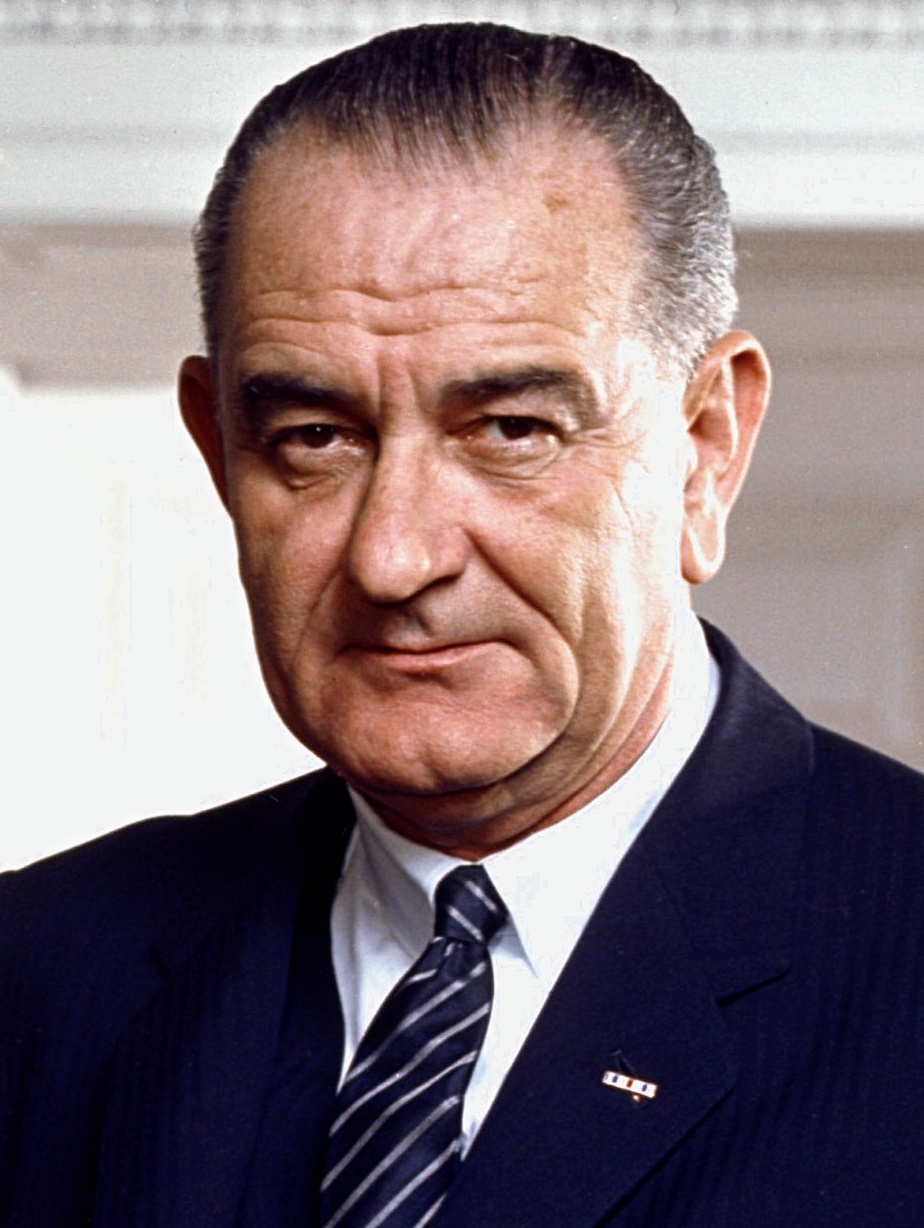
Kennedy's successor Lyndon B. Johnson was able to persuade the largely conservative Congress to pass the Civil Rights Act of 1964, and with a more progressive Congress in 1965 passed much of the Great Society, including Medicare and Medicaid, which consisted of an array of social programs designed to help the poor, sick, and elderly. Kennedy and Johnson's advocacy of civil rights further solidified black support for the Democrats but had the effect of alienating Southern whites who would eventually gravitate toward the Republican Party, particularly after the election of Ronald Reagan to the presidency in 1980. Many conservative Southern Democrats defected to the Republican Party, beginning with the passage of the Civil Rights Act of 1964 and the general leftward shift of the party.
The United States' involvement in the Vietnam War in the 1960s was another divisive issue that further fractured the fault lines of the Democrats' coalition. After the Gulf of Tonkin Resolution in 1964, President Johnson committed a large contingency of combat troops to Vietnam, but the escalation failed to drive the Viet Cong from South Vietnam, resulting in an increasing quagmire, which by 1968 had become the subject of widespread anti-war protests in the United States and elsewhere. With increasing casualties and nightly news reports bringing home troubling images from Vietnam, the costly military engagement became increasingly unpopular, alienating many of the kinds of young voters that the Democrats had attracted in the early 1960s. The protests that year along with assassinations of Martin Luther King Jr. and Democratic presidential candidate Senator Robert F. Kennedy (younger brother of John F. Kennedy) climaxed in turbulence at the hotly-contested Democratic National Convention that summer in Chicago (which among the ensuing turmoil inside and outside of the convention hall nominated Vice President Hubert Humphrey) in a series of events that proved to mark a significant turning point in the decline of the Democratic Party's broad coalition.
Republican presidential nominee Richard Nixon was able to capitalize on the confusion of the Democrats that year and won the 1968 election to become the 37th president. He won re-election in a landslide in 1972 against Democratic nominee George McGovern, who like Robert F. Kennedy, reached out to the younger anti-war and counterculture voters, but unlike Kennedy, was not able to appeal to the party's more traditional white working-class constituencies. During Nixon's second term, his presidency was rocked by the Watergate scandal, which forced him to resign in 1974. He was succeeded by vice president Gerald Ford, who served a brief tenure.
Watergate offered the Democrats an opportunity to recoup, and their nominee Jimmy Carter won the 1976 presidential election. With the initial support of evangelical Christian voters in the South, Carter was temporarily able to reunite the disparate factions within the party, but inflation and the Iran Hostage Crisis of 1979–1980 took their toll, resulting in a landslide victory for Republican presidential nominee Ronald Reagan in 1980, which shifted the political landscape in favor of the Republicans for years to come. The influx of conservative Democrats into the Republican Party is often cited as a reason for the Republican Party's shift further to the right during the late 20th century as well as the shift of its base from the Northeast and Midwest to the South.
1990s and Third Way centrism
With the ascendancy of the Republicans under Ronald Reagan, the Democrats searched for ways to respond yet were unable to succeed by running traditional candidates, such as former vice president and Democratic presidential nominee Walter Mondale and Massachusetts governor Michael Dukakis, who lost to Reagan and George H. W. Bush in the 1984 and 1988 presidential elections, respectively. Many Democrats attached their hopes to the future star of Gary Hart, who had challenged Mondale in the 1984 primaries running on a theme of "New Ideas"; and in the subsequent 1988 primaries became the de facto front-runner and virtual "shoo-in" for the Democratic presidential nomination before a sex scandal ended his campaign. The party nevertheless began to seek out a younger generation of leaders, who like Hart had been inspired by the pragmatic idealism of John F. Kennedy.
Arkansas governor Bill Clinton was one such figure, who was elected president in 1992 as the Democratic nominee. The Democratic Leadership Council was a campaign organization connected to Clinton that advocated a realignment and triangulation under the re-branded "New Democrat" label. The party adopted a synthesis of neoliberal economic policies with cultural liberalism, with the voter base after Reagan having shifted considerably to the right. In an effort to appeal both to liberals and to fiscal conservatives, Democrats began to advocate for a balanced budget and market economy tempered by government intervention (mixed economy), along with a continued emphasis on social justice and affirmative action. The economic policy adopted by the Democratic Party, including the former Clinton administration, has been referred to as "Third Way".
The Democrats lost control of Congress in the 1994 elections to the Republicans. However, in 1996, Clinton was re-elected; he was the first Democratic president since Franklin D. Roosevelt to win a second full term. In December 1998, Republicans in the House of Representatives impeached Clinton for his role in the Clinton–Lewinsky scandal, but was acquitted by the Senate in February 1999. Clinton's vice president Al Gore ran to succeed him as president, and won the popular vote, but after a controversial election dispute over a Florida recount settled by the U.S. Supreme Court (which ruled 5–4 in favor of Bush), he lost the 2000 election to Republican opponent George W. Bush in the Electoral College.
21st century
In the wake of the September 11 attacks and the growing concern over global warming, some of the party's key issues in the early 21st century have included combating terrorism while preserving human rights, expanding access to health care, labor rights, and environmental protection.
In the 2006 elections, Democrats regained majority control of both the House and the Senate, and in 2008, Barack Obama won the Democratic Party's nomination and was elected as the first African-American president. Under the Obama presidency, the party moved forward with reforms including an economic stimulus package, the Dodd–Frank financial reform act, and, in its biggest impact, reshaped U.S. healthcare with the Affordable Care Act.
2000s–2010s and the Obama era
In the 2010 midterm elections, the Democratic Party lost control of the House as well as its majorities in several state legislatures and governorships. The 2010 elections also marked the end of the Democratic Party's electoral dominance in the Southern United States.
In the 2012 elections, President Obama was re-elected, but the party remained in the minority in the House of Representatives and lost control of the Senate in the 2014 midterm elections. After the 2016 election of Donald Trump, who lost the popular vote to Democratic nominee Hillary Clinton, the Democratic Party transitioned into the role of an opposition party and held neither the presidency nor Congress for two years. However, the party won back the House in the 2018 midterm elections under the leadership of Nancy Pelosi.
Democrats were extremely critical of President Trump, particularly his policies on immigration, healthcare, as well as his response to the COVID-19 pandemic. In December 2019, Democrats in the House of Representatives impeached Trump, although he was acquitted in the Republican-controlled Senate.
2020s and opposition to Trumpism
In November 2020, Democratic candidate Joe Biden defeated Trump to win the 2020 presidential election. Biden's running mate, Kamala Harris, was the first female and person of African and South Asian descent to become vice president in history. He began his term with extremely narrow Democratic majorities in the U.S. House and Senate. During the Biden presidency, the party was characterized as adopting an increasingly progressive economic agenda. In 2022, Biden appointed Ketanji Brown Jackson, the first black woman on the Supreme Court. However, she was replacing liberal justice Stephen Breyer, thus she did not alter the court's 6–3 split between conservatives (the majority) and liberals. After Dobbs v. Jackson (decided June 24, 2022), which led to abortion bans in much of the country, the Democratic Party rallied behind abortion rights.
In the 2022 midterm elections, Democrats dramatically outperformed historical trends and a widely anticipated red wave did not materialize. The party only narrowly lost its majority in the U.S. House and expanded its majority in the U.S. Senate, along with several gains at the state level.
In July 2024, after a series of age and health concerns, Biden withdrew from the presidential election, becoming the first incumbent president since Lyndon B. Johnson in 1968 to withdraw from running for reelection, the first since the 19th century to withdraw after serving only one term, and the only one to ever withdraw after already winning the primaries.
Vice President Kamala Harris—who became Biden's replacement on the ballot after his withdrawal from the race—became the first black woman to be nominated by a major party, but she was defeated in the 2024 election by Donald Trump. Harris lost the electoral college 312–226 (including all seven of the anticipated swing states) as well as the popular vote, becoming the first Democratic candidate to do so since John Kerry in 2004, amid what was a global anti-incumbent backlash.
Current status
As of 2026, Democrats hold 24 state governorships, 17 state legislatures, 16 state government trifectas, and the mayorships in the majority of the country's major cities. Three of the nine current U.S. Supreme Court justices were appointed by Democratic presidents. By registered members, the Democratic Party is the largest party in the U.S. and the third largest in the world. All totaled, 16 Democrats have served as president of the United States.
Name and symbols
The Democratic-Republican Party splintered in 1824 into the short-lived National Republican Party and the Jacksonian movement which in 1828 became the Democratic Party. During the Jacksonian era, the term "The Democracy" was in use by the party, but the name "Democratic Party" was eventually settled upon and became the official name in 1844. Members of the party are called "Democrats" or "Dems".
The most common mascot symbol for the party has been the donkey, or jackass. Andrew Jackson's enemies twisted his name to "jackass" as a term of ridicule regarding a stupid and stubborn animal. However, the Democrats liked the common-man implications and picked it up too, therefore the image persisted and evolved. Its most lasting impression came from the cartoons of Thomas Nast from 1870 in Harper's Weekly. Cartoonists followed Nast and used the donkey to represent the Democrats and the elephant to represent the Republicans.
In the early 20th century, the traditional symbol of the Democratic Party in Indiana, Kentucky, Oklahoma, and Ohio was the rooster, as opposed to the Republican eagle. The rooster was also adopted as an official symbol of the national Democratic Party. In 1904, the Alabama Democratic Party chose, as the logo to put on its ballots, a rooster with the motto "White supremacy – For the right." The words "White supremacy" were replaced with "Democrats" in 1966. In 1996, the Alabama Democratic Party dropped the rooster, citing racist and white supremacist connotations linked with the symbol. The rooster symbol still appears on Oklahoma, Kentucky, Indiana, and West Virginia ballots. In New York, the Democratic ballot symbol is a five-pointed star.
Although both major political parties (and many minor ones) use the traditional American colors of red, white, and blue in their marketing and representations, since the election night 2000 blue has become the identifying color for the Democratic Party while red has become the identifying color for the Republican Party. That night, for the first time all major broadcast television networks used the same color scheme for the electoral map: blue states for Al Gore (Democratic nominee) and red states for George W. Bush (Republican nominee). Since then, the color blue has been widely used by the media to represent the party. This is contrary to common practice outside of the United States where blue is the traditional color of the right and red the color of the left.