Democracy is a form of government in which political power is vested in the people or the population of a state. Under a minimalist definition of democracy, rulers are elected through competitive elections while more expansive or maximalist definitions link democracy to guarantees of civil liberties and human rights in addition to competitive elections.
In a direct democracy, the people have the direct authority to deliberate and decide legislation. In a representative democracy, the people choose governing officials through elections to do so. The definition of "the people" and the ways authority is shared among them or delegated by them have changed over time and at varying rates in different countries. Features of democracy often include freedom of assembly, association, personal property, freedom of religion and speech, citizenship, consent of the governed, voting rights, freedom from unwarranted governmental deprivation of the right to life and liberty, and minority rights.
The notion of democracy has evolved considerably over time. Throughout history, one can find evidence of direct democracy, in which communities make decisions through popular assembly. Today, the dominant form of democracy is representative democracy, where citizens elect government officials to govern on their behalf such as in a parliamentary or presidential democracy. In the common variant of liberal democracy, the powers of the majority are exercised within the framework of a representative democracy, but a constitution and supreme court limit the majority and protect the minority—usually through securing the enjoyment by all of certain individual rights, such as freedom of speech or freedom of association.
The term appeared in the 5th century BC in Greek city-states, notably Classical Athens, to mean "rule of the people", in contrast to aristocracy (ἀριστοκρατία, aristokratía), meaning "rule of an elite". In virtually all democratic governments throughout ancient and modern history, democratic citizenship was initially restricted to an elite class, which was later extended to all adult citizens. In most modern democracies, this was achieved through the suffrage movements of the 19th and 20th centuries.
Democracy contrasts with forms of government where power is not vested in the general population of a state, such as authoritarian systems. Historically a rare and vulnerable form of government, democratic systems of government have become more prevalent since the 19th century, in particular with various waves of democratization. Democracy garners considerable legitimacy in the modern world, as public opinion across regions tends to strongly favor democratic systems of government relative to alternatives, and as even authoritarian states try to present themselves as democratic. Democracy more consistently results in improved health, education and economic outcomes. According to the V-Dem Democracy indices and The Economist Democracy Index, less than half the world's population lives in a democracy as of 2022. At the same time, while representative democracy is widely valued, Pew Research Center found that dissatisfaction with democratic performance is common even in many established democracies.
Characteristics
In purely representative democracies, democracy is understood to be defined by free voting. No consensus exists on a precise definition of democracy

(see also In the search of common understanding below),
and many approaches have been taken to define it. A study identified 2,234 adjectives used to describe democracy in the English language.
Yet, there is a profound understanding of its meaning – like that of Abraham Lincoln:

"Government of the people, by the people, for the people"
or of Karl Popper saying that the "classical" view of democracy is, "in brief, the theory that:
democracy is the rule of the people and that the people have a right to rule.

Democratic principles are reflected in all eligible citizens being equal before the law and having equal access to legislative processes, even if not every vote cast elects someone.
For example, in a representative democracy, every vote has (in theory) equal weight, and the freedom of eligible citizens is secured by legitimised rights and liberties which are typically enshrined in a constitution, while other uses of "democracy" may encompass direct democracy, in which citizens vote on issues directly. According to the United Nations, democracy "provides an environment that respects human rights and fundamental freedoms, and in which the freely expressed will of people is exercised."
One theory holds that democracy requires three fundamental principles: upward control (sovereignty residing at the lowest levels of authority), political equality, and social norms by which individuals and institutions only consider acceptable acts that reflect the first two principles of upward control and political equality. Legal equality, political freedom and rule of law are often identified by commentators as foundational characteristics for a well-functioning democracy.

In some countries, notably in the United Kingdom (which originated the Westminster system), the dominant principle is that of parliamentary sovereignty, while maintaining judicial independence. In India, parliamentary sovereignty is subject to the Constitution of India which includes judicial review. Though the term "democracy" is typically used in the context of a political state, the principles also are potentially applicable to private organisations, such as clubs, societies and firms.
Democracies may use many different decision-making methods, but majority rule is the dominant form. Without compensation, like legal protections of individual or group rights, political minorities can be oppressed by the "tyranny of the majority". Majority rule involves a competitive approach, opposed to consensus democracy, creating the need that elections, and generally deliberation, be substantively and procedurally "fair", i.e., just and equitable. In some countries, freedom of political expression, freedom of speech, and freedom of the press are considered important to ensure that voters are well informed, enabling them to vote according to their own interests and beliefs.
It has also been suggested that a basic feature of democracy is the capacity of all voters to participate freely and fully in the life of their society. With its emphasis on notions of social contract and the collective will of all the voters, democracy can also be characterised as a form of political collectivism because it is defined as a form of government in which all eligible citizens have an equal say in lawmaking.
Republics, though often popularly associated with democracy because of the shared principle of rule by consent of the governed, are not necessarily democracies, as republicanism does not specify how the people are to rule. Classically the term "republic" encompassed both democracies and aristocracies and their mixtures. In a modern sense the republican form of government is a form of government without a monarch. Because of this, democracies can be republics or constitutional monarchies, such as the United Kingdom, where the monarch is not a ruler.
History
Democratic assemblies are as old as the human species and are found throughout human history, but up until the nineteenth century, major political figures have largely opposed democracy. Republican theorists linked democracy to small size: as political units grew in size, the likelihood increased that the government would turn despotic. At the same time, small political units were vulnerable to conquest. Montesquieu wrote, "If a republic be small, it is destroyed by a foreign force; if it is large, it is ruined by an internal imperfection." According to Johns Hopkins University political scientist Daniel Deudney, the creation of the United States, with its large size and its system of checks and balances, was a solution to the dual problems of size. Forms of democracy occurred organically in societies around the world that had no contact with each other.
Origins
Greece and Rome
The term democracy first appeared in ancient Greek political and philosophical thought in the city-state of Athens during classical antiquity. The word comes from dêmos '(common) people' and krátos 'force/might'. Under Cleisthenes, what is generally held as the first example of a type of democracy in the sixth-century BC (508–507 BC) was established in Athens. Cleisthenes is referred to as "the father of Athenian democracy". The first attested use of the word democracy is found in prose works of the 430s BC, such as Herodotus' Histories, but its usage was older by several decades, as two Athenians born in the 470s were named Democrates, a new political name—likely in support of democracy—given at a time of debates over constitutional issues in Athens. Aeschylus also strongly alludes to the word in his play The Suppliants, staged in c.463 BC, where he mentions "the demos's ruling hand" [demou kratousa cheir]. Before that time, the word used to define the new political system of Cleisthenes was probably isonomia, meaning political equality.
Athenian democracy took the form of direct democracy, and it had two distinguishing features: the random selection of ordinary citizens to fill the few existing government administrative and judicial offices, and a legislative assembly consisting of all Athenian citizens. All eligible citizens were allowed to speak and vote in the assembly, which set the laws of the city-state. However, Athenian citizenship excluded women, slaves, foreigners (μέτοικοι / métoikoi), and youths below the age of military service. Effectively, only 1 in 4 residents in Athens qualified as citizens. Owning land was not a requirement for citizenship. The exclusion of large parts of the population from the citizen body is closely related to the ancient understanding of citizenship. In most of antiquity the benefit of citizenship was tied to the obligation to fight war campaigns.
Athenian democracy was not only direct in the sense that decisions were made by the assembled people, but also the most direct in the sense that the people through the assembly, boule and courts of law controlled the entire political process and a large proportion of citizens were involved constantly in the public business. Even though the rights of the individual were not secured by the Athenian constitution in the modern sense (the ancient Greeks had no word for "rights"), those who were citizens of Athens enjoyed their liberties not in opposition to the government but by living in a city that was not subject to another power and by not being subjects themselves to the rule of another person.
Range voting appeared in Sparta as early as 700 BC. The Spartan ecclesia was an assembly of the people, held once a month, in which every male citizen of at least 20 years of age could participate. In the assembly, Spartans elected leaders and cast votes by range voting and shouting (the vote is then decided on how loudly the crowd shouts). Aristotle called this "childish", as compared with the stone voting ballots used by the Athenian citizenry. Sparta adopted it because of its simplicity, and to prevent any biased voting, buying, or cheating that was predominant in the early democratic elections.
In addition, the overthrow of the Roman Kingdom created a system with a democratic element in the form of many different popular assamblies.
Even though the Roman Republic contributed significantly to many aspects of democracy, only a fraction of Romans were citizens with votes in elections for magistrates. The votes of the powerful were given more weight through a system of weighted voting, so most high officials, including members of the Senate, came from a few wealthy and noble families. The Roman model of governance inspired many political thinkers over the centuries.
Ancient India
Vaishali, capital city of the Vajjika League (Vrijji mahajanapada) of India, is considered one of the first examples of a republic around the 6th century BC.
Americas
Other cultures, such as the Iroquois in the Americas also developed a form of democratic society between 1450 and 1660 (and possibly in 1142), well before contact with the Europeans. This democracy continues to the present day and is the world's oldest standing representative democracy.
Africa
Middle Ages
While most regions in Europe during the Middle Ages were ruled by clergy or feudal lords, there existed various systems involving elections or assemblies, although often only involving a small part of the population. In Scandinavia, bodies known as things consisted of freemen presided by a lawspeaker. These deliberative bodies were responsible for settling political questions, and variants included the Althing in Iceland and the Løgting in the Faeroe Islands. The veche, found in Eastern Europe, was a similar body to the Scandinavian thing. In the Roman Catholic Church, the pope has been elected by a papal conclave composed of cardinals since 1059. The first documented parliamentary body in Europe was the Cortes of León. Established by Alfonso IX in 1188, the Cortes had authority over setting taxation, foreign affairs and legislating, though the exact nature of its role remains disputed. The Republic of Ragusa, established in 1358 and centered around the city of Dubrovnik, provided representation and voting rights to its male aristocracy only. Various Italian city-states and polities had republic forms of government. For instance, the Republic of Florence, established in 1115, was led by the Signoria whose members were chosen by sortition. In the 10th–15th century Frisia, a distinctly non-feudal society, the right to vote on local matters and on county officials was based on land size. The Kouroukan Fouga divided the Mali Empire into ruling clans (lineages) that were represented at a great assembly called the Gbara. However, the charter made Mali more similar to a constitutional monarchy than a democratic republic.
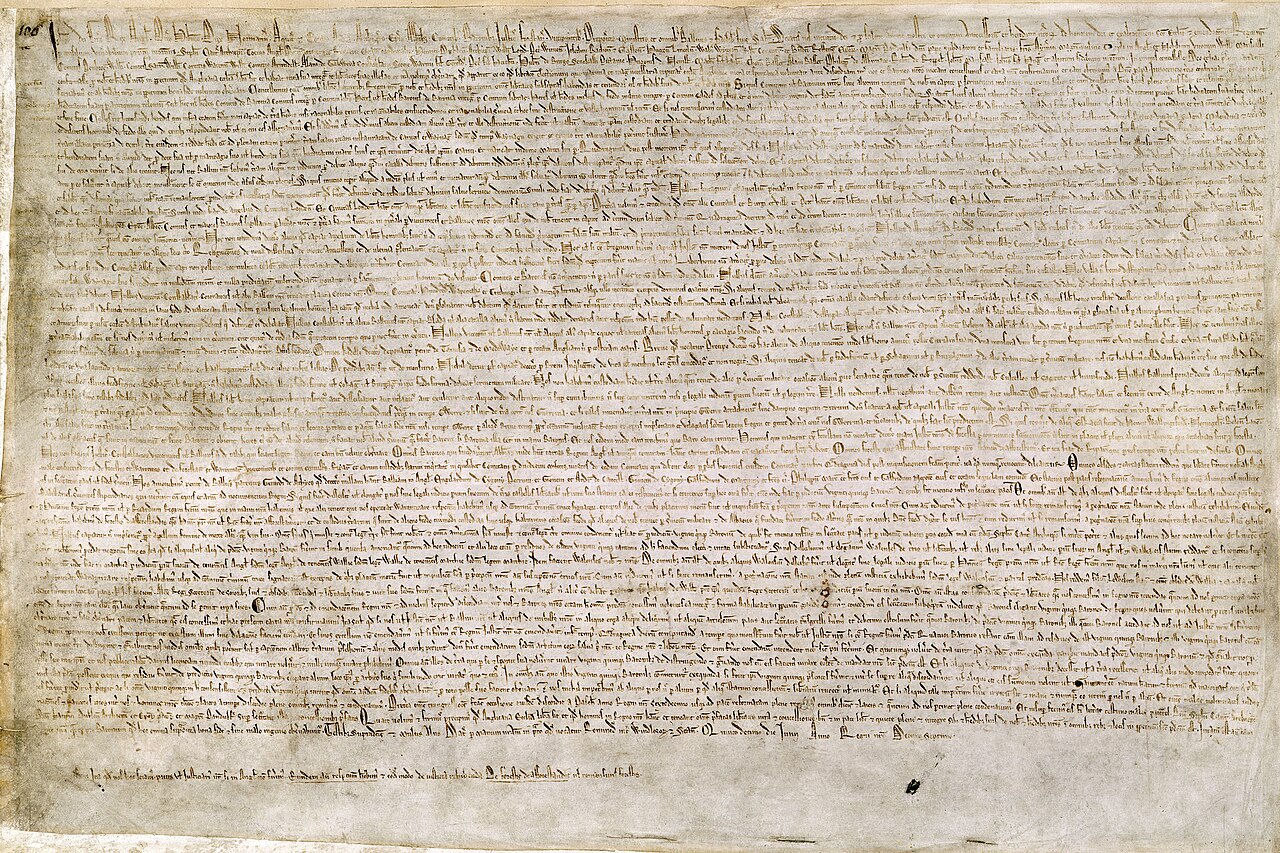
The Parliament of England had its roots in the restrictions on the power of kings written into Magna Carta (1215), which explicitly protected certain rights of the King's subjects and implicitly supported what became the English writ of habeas corpus, safeguarding individual freedom against unlawful imprisonment with the right to appeal. The first representative national assembly in England was Simon de Montfort's Parliament in 1265. The emergence of petitioning is some of the earliest evidence of parliament being used as a forum to address the general grievances of ordinary people. However, the power to call parliament remained at the pleasure of the monarch.
Studies have linked the emergence of parliamentary institutions in Europe during the medieval period to urban agglomeration and the creation of new classes, such as artisans, as well as the presence of nobility and religious elites. Scholars have also linked the emergence of representative government to Europe's relative political fragmentation. Political scientist David Stasavage links the fragmentation of Europe, and its subsequent democratization, to the manner in which the Roman Empire collapsed: Roman territory was conquered by small fragmented groups of Germanic tribes, thus leading to the creation of small political units where rulers were relatively weak and needed the consent of the governed to ward off foreign threats.
In Poland, noble democracy was characterized by an increase in the activity of the middle nobility, which wanted to increase their share in exercising power at the expense of the magnates. Magnates dominated the most important offices in the state (secular and ecclesiastical) and sat on the royal council, later the senate. The growing importance of the middle nobility had an impact on the establishment of the institution of the land sejmik (local assembly), which subsequently obtained more rights. During the fifteenth and first half of the sixteenth century, sejmiks received more and more power and became the most important institutions of local power. In 1454, Casimir IV Jagiellon granted the sejmiks the right to decide on taxes and to convene a mass mobilization in the Nieszawa Statutes. He also pledged not to create new laws without their consent.
Modern era
Early modern period
In 17th century England, there was renewed interest in Magna Carta. The Parliament of England passed the Petition of Right in 1628 which established certain liberties for subjects. The English Civil War (1642–1651) was fought between the King and an oligarchic but elected Parliament, during which the idea of a political party took form with groups debating rights to political representation during the Putney Debates of 1647. Subsequently, the Protectorate (1653–59) and the English Restoration (1660) restored more autocratic rule, although Parliament passed the Habeas Corpus Act in 1679 which strengthened the convention that forbade detention lacking sufficient cause or evidence. After the Glorious Revolution of 1688, the Bill of Rights was enacted in 1689 which codified certain rights and liberties and is still in effect. The Bill set out the requirement for regular elections, rules for freedom of speech in Parliament and limited the power of the monarch, ensuring that, unlike much of Europe at the time, royal absolutism would not prevail. Economic historians Douglass North and Barry Weingast have characterized the institutions implemented in the Glorious Revolution as a resounding success in terms of restraining the government and ensuring protection for property rights.
Renewed interest in the Magna Carta, the English Civil War, and the Glorious Revolution in the 17th century prompted the growth of political philosophy on the British Isles. Thomas Hobbes was the first philosopher to articulate a detailed social contract theory. Writing in the Leviathan (1651), Hobbes theorized that individuals living in the state of nature led lives that were "solitary, poor, nasty, brutish and short" and constantly waged a war of all against all. In order to prevent the occurrence of an anarchic state of nature, Hobbes reasoned that individuals ceded their rights to a strong, authoritarian power. In other words, Hobbes advocated for an absolute monarchy which, in his opinion, was the best form of government. Later, philosopher and physician John Locke would posit a different interpretation of social contract theory. Writing in his Two Treatises of Government (1689), Locke posited that all individuals possessed the inalienable rights to life, liberty and estate (property). According to Locke, individuals would voluntarily come together to form a state for the purposes of defending their rights. Particularly important for Locke were property rights, whose protection Locke deemed to be a government's primary purpose. Furthermore, Locke asserted that governments were legitimate only if they held the consent of the governed. For Locke, citizens had the right to revolt against a government that acted against their interest or became tyrannical. Although they were not widely read during his lifetime, Locke's works are considered the founding documents of liberal thought and profoundly influenced the leaders of the American Revolution and later the French Revolution. His liberal democratic framework of governance remains the preeminent form of democracy in the world.
In the Cossack republics of Ukraine in the 16th and 17th centuries, the Cossack Hetmanate and Zaporizhian Sich, the holder of the highest post of Hetman was elected by the representatives from the country's districts.
In North America, representative government began in Jamestown, Virginia, with the election of the House of Burgesses (forerunner of the Virginia General Assembly) in 1619. English Puritans who migrated from 1620 established colonies in New England whose local governance was democratic; the hard power of these local assemblies varied greatly throughout the colonial time period however officially they held only small amounts of devolved power, as ultimate authority belonged to the Crown and Parliament. The Puritans (Pilgrim Fathers), Baptists, and Quakers who founded these colonies applied the democratic organisation of their congregations also to the administration of their communities in worldly matters.
18th and 19th centuries
The first Parliament of Great Britain was established in 1707, after the merger of the Kingdom of England and the Kingdom of Scotland under the Acts of Union. Two key documents of the UK's uncodified constitution, the English Declaration of Right, 1689 (restated in the Bill of Rights 1689) and the Scottish Claim of Right 1689, had both cemented Parliament's position as the supreme law-making body and said that the "election of members of Parliament ought to be free". However, Parliament was only elected by male property owners, which amounted to 3% of the population in 1780. The first known British person of African heritage to vote in a general election, Ignatius Sancho, voted in 1774 and 1780.
During the Age of Liberty in Sweden (1718–1772), civil rights were expanded and power shifted from the monarch to parliament. The taxed peasantry was represented in parliament, although with little influence, but commoners without taxed property had no suffrage.
The creation of the short-lived Corsican Republic in 1755 was an early attempt to adopt a democratic constitution (all men and women above age of 25 could vote). This Corsican Constitution was the first based on Enlightenment principles and included female suffrage, something that was not included in most other democracies until the 20th century.
Colonial America had similar property qualifications as Britain, and in the period before 1776 the abundance and availability of land meant that large numbers of colonists met such requirements with at least 60 per cent of adult white males able to vote. The great majority of white men were farmers who met the property ownership or taxpaying requirements. With few exceptions, no blacks or women could vote. Vermont, which, on declaring independence of Great Britain in 1777, adopted a constitution modelled on Pennsylvania's citizenship and democratic suffrage for males with or without property. The United States Constitution of 1787 is the oldest surviving, still active, governmental codified constitution. The Constitution provided for an elected government and protected civil rights and liberties, but did not end slavery nor extend voting rights in the United States, instead leaving the issue of suffrage to the individual states. Generally, states limited suffrage to white male property owners and taxpayers. At the time of the first Presidential election in 1789, about 6% of the population was eligible to vote. The Naturalization Act of 1790 limited U.S. citizenship to whites only. The Bill of Rights in 1791 set limits on government power to protect personal freedoms but had little impact on judgements by the courts for the first 130 years after ratification.
In 1789, Revolutionary France adopted the Declaration of the Rights of Man and of the Citizen and, although short-lived, the National Convention was elected by all men in 1792. The Polish-Lithuanian Constitution of 3 May 1791 sought to implement a more effective constitutional monarchy, introduced political equality between townspeople and nobility, and placed the peasants under the protection of the government, mitigating the worst abuses of serfdom. In force for less than 19 months, it was declared null and void by the Grodno Sejm that met in 1793. Nonetheless, the 1791 Constitution helped keep alive Polish aspirations for the eventual restoration of the country's sovereignty over a century later.
In the United States, the 1828 presidential election was the first in which non-property-holding white males could vote in the vast majority of states. Voter turnout soared during the 1830s, reaching about 80% of the adult white male population in the 1840 presidential election. North Carolina was the last state to abolish property qualification in 1856 resulting in a close approximation to universal white male suffrage (however tax-paying requirements remained in five states in 1860 and survived in two states until the 20th century). In the 1860 United States census, the slave population had grown to four million, and in Reconstruction after the Civil War, three constitutional amendments were passed: the 13th Amendment (1865) that ended slavery; the 14th Amendment (1869) that gave black people citizenship, and the 15th Amendment (1870) that gave black males a nominal right to vote. Full enfranchisement of citizens was not secured until after the civil rights movement gained passage by the US Congress of the Voting Rights Act of 1965.
The voting franchise in the United Kingdom was expanded and made more uniform in a series of reforms that began with the Reform Act 1832 and continued into the 20th century, notably with the Representation of the People Act 1918 and the Equal Franchise Act 1928. Universal male suffrage was established in France in March 1848 in the wake of the French Revolution of 1848. During that year, several revolutions broke out in Europe as rulers were confronted with popular demands for liberal constitutions and more democratic government.
In 1876, the Ottoman Empire transitioned from an absolute monarchy to a constitutional one, and held two elections the next year to elect members to her newly formed parliament. Provisional Electoral Regulations were issued, stating that the elected members of the Provincial Administrative Councils would elect members to the first Parliament. Later that year, a new constitution was promulgated, which provided for a bicameral Parliament with a Senate appointed by the Sultan and a popularly elected Chamber of Deputies. Only men above the age of 30 who were competent in Turkish and had full civil rights were allowed to stand for election. Reasons for disqualification included holding dual citizenship, being employed by a foreign government, being bankrupt, employed as a servant, or having "notoriety for ill deeds". Full universal suffrage was achieved in 1934.
In 1893, the self-governing colony New Zealand became the first country in the world (except for the short-lived 18th-century Corsican Republic) to establish active universal suffrage by recognizing women as having the right to vote.
20th and 21st centuries
20th-century transitions to liberal democracy have come in successive "waves of democracy", variously resulting from wars, revolutions, decolonisation, and religious and economic circumstances. Global waves of "democratic regression" reversing democratization, have also occurred in the 1920s and 30s, in the 1960s and 1970s, and in the 2010s.
World War I and the dissolution of the autocratic Ottoman and Austro-Hungarian empires resulted in the creation of new nation-states in Europe, most of them at least nominally democratic. In the 1920s democratic movements flourished and women's suffrage advanced, but the Great Depression brought disenchantment and most of the countries of Europe, Latin America, and Asia turned to strong-man rule or dictatorships. Fascism and dictatorships flourished in Nazi Germany, Italy, Spain and Portugal, as well as non-democratic governments in the Baltics, the Balkans, Brazil, Cuba, China, and Japan, among others.
World War II brought a definitive reversal of this trend in Western Europe. The democratisation of the American, British, and French sectors of occupied Germany (disputed), Austria, Italy, and the occupied Japan served as a model for the later theory of government change. However, most of Eastern Europe, including the Soviet sector of Germany fell into the non-democratic Soviet-dominated bloc.