
Osama bin Muhammad bin 'Awad bin Laden (Arabic: أسامة بن محمد بن عوض بن لادن, romanized: ʾUsāmah bin Muḥammad bin ʿAwaḍ bin Lādin; 10 March 1957 – 2 May 2011) was the founder and first general emir of al-Qaeda from 1988 until his death in 2011. A Salafi jihadist, bin Laden worked to establish a pan-Islamist caliphate by using al-Qaeda to organize and fund jihadist militants and terrorists worldwide. Al-Qaeda's terrorist attacks against the United States on 11 September 2001 directly killed 2,977 victims, and caused the global war on terror.
Bin Laden was raised into Sunni Islam by his wealthy family in Saudi Arabia. He left the country during the Soviet–Afghan War (1979–1989) to help the Afghan mujahideen fight the Soviet Union's occupation of Afghanistan. In 1984, he co-founded Maktab al-Khidamat, which recruited foreigners into the Afghan mujahideen while funding and arming them. In 1988, bin Laden founded al-Qaeda. After the Soviets left Afghanistan in 1989, he commanded a mujahideen force in the 1989–1992 Afghan Civil War. Upon returning to Saudi Arabia, he publicly promoted anti-Western causes and opposed the Saudi royal family, leading to his expulsion from the country by its government in 1991. He went back to Afghanistan, then moved to Sudan later that year.
In Sudan, bin Laden led al-Qaeda and its allies' efforts in the 1992–1996 Afghan Civil War, the Algerian Civil War (1992–2002), and the Bosnian War (1992–1995). In 1993, al-Qaeda bombed the World Trade Center in New York City, injuring a thousand people. In 1996, Sudan expelled bin Laden, and he again moved to Afghanistan, which came under Taliban control later that year. Al-Qaeda allied with the Taliban, and they collaborated in the 1996–2001 Afghan Civil War. In 1996 and 1998, bin Laden declared holy war on Americans, both military and civilians. Al-Qaeda bombed U.S. embassies in East Africa in 1998, causing the U.S. and United Nations to officially declare him a terrorist. That year, al-Qaeda also began an ongoing insurgency in Yemen.

The attacks on 9/11 were mainly planned by bin Laden and Khalid Sheikh Mohammed, and their operation was possibly funded by Saudi Arabia, despite bin Laden's prior expulsion. In the attacks, 19 al-Qaeda members hijacked four American passenger planes so they could be crashed into U.S. landmarks. One hit the Pentagon in Virginia, one crashed in Pennsylvania before ever reaching the hijackers' unknown target in Washington, D.C., and the others hit the World Trade Center, causing it to collapse—resulting in over 6,000 deaths from inhalation exposure so far. 25,000 were injured overall. The attacks led to the passage of stringent anti-terrorism legislation worldwide, while an international manhunt for bin Laden began. The U.S. invaded Afghanistan and deposed the Taliban, forcing him to move to Pakistan.
While bin Laden hid, al-Qaeda fought the U.S. and its allies in the War in Afghanistan (2001–2021) and the Iraq War (2003–2011), while continuing to enact major terrorist attacks around the world. In 2010, U.S. intelligence discovered bin Laden's compound in Abbottabad, Pakistan. A team of U.S. Navy SEALs raided the compound and killed him inside it in 2011. His deputy Ayman al-Zawahiri succeeded him as al-Qaeda's emir. Polls show that Muslims at large have a negative view of bin Laden, while many Islamists consider him heroic. Elsewhere, he is overwhelmingly seen as a symbol of terrorism and mass murder.
Name and terms
Bin Laden's name is most commonly romanized from Arabic as Osama bin Laden, but can also be spelled with the names Usama and bin Ladin. Generally, during his life, U.S. intelligence internally referred to him as Usama bin Laden, and used the acronym 'UBL'. He was named after Usama ibn Zayd, one of the companions of Muhammad; Usama means 'lion'. Bin, also spelled ibn, means 'son of'; bin Laden's full name, as spelled here, is Osama bin Muhammad bin 'Awad bin Laden—Osama, son of Muhammad, son of Awad, son of Laden. Muhammad, his father, is spelled here as Muhammad bin Ladin.

The Arabic linguistic convention would be to refer to Osama as 'Osama', 'Osama bin Laden', or similar romanizations, not bin Laden alone, as bin Laden is a patronymic surname, not a surname in the Western manner. In the West, he is nonetheless nicknamed bin Laden, which often begins sentences about him ("Bin Laden was..."), although, being at the start of a sentence, ibn would be more accurate to Arabic ("Ibn Laden was...").
Bin Laden also went by Osama bin Muhammad bin Laden; Sheikh Osama bin Laden; Mujahid Sheikh; the Prince; the Emir; Hajj; the Director; and Abu Abdallah. Sheikh (or shaykh) and emir are Islamic titles for a government or military leader. A mujahid, plural mujahideen, is a participant in jihad—struggle in the name of Islam (peaceful or violent). Hajj is the traditional pilgrimage of Muslims to the holy city of Mecca. Abu Abdallah is a kunya, a parent's name based on their child's; Abu means 'father of', and Abdallah is his son.
Early life
Osama bin Laden was born on 10 March 1957 in Saudi Arabia. Researchers generally agree that his birthplace was Riyadh, which he himself claimed, though FBI and Interpol documents once listed it as Jeddah. Osama's father Muhammad was born in modern Yemen, and his mother, at the time named Alia Ghanem—later, Hamida al-Attas—was born in Syria. She was Muhammad's tenth wife. Osama was the 17th of Muhammad's approximately 52 children, and the only one of Muhammad's marriage to al-Attas.

The bin Laden family originated from 'Sheikh Mohammed bin Laden', a Sunni Muslim from modern Yemen who moved to modern Saudi Arabia in the early 20th century. From the 1950s to 70s, the family became immensely wealthy from the Saudi Binladin Group, a construction company owned by Osama's father. Its clients included the Saudi royal family, the House of Saud. The royals eventually gave it the exclusive right to construct religious buildings in Saudi Arabia, and eventually, the company became the royal family's official construction contractor. As the two families grew ties, Muhammad's sons started going to the same schools as the royal sons.Six months after Osama was born, he and his parents moved to the Saudi region of Hejaz, the location of Islam's two holiest cities, Mecca (#1) and Medina (#2). He lived there until adulthood. His parents divorced in 1960, and in the early 1960s, his mother married Mohammed al-Attas, an employee of the Saudi Binladin Group. The two had four children, and raised them alongside Osama in a new house. Muhammad bin Ladin died in 1967. In USD, without adjusting for inflation, Osama's inheritance from him was estimated in 2000 to have been about $300 million, and in 2001, at about $50 to 60 million. Currently, the bin Laden family still owns the Saudi Binladin Group, and still has ties to the House of Saud.
From 1968 to 1976, Osama attended the prestigious Al-Thager Model School in Jeddah, and then an English-language course in Oxford, England, in 1971. In the late 1970s, he started studying economics and business administration at King Abdulaziz University in Jeddah. One source claims that bin Laden left university during his third year without attaining a degree. Others say that he either earned a degree in civil engineering in 1979, or in public administration in 1981. In university, bin Laden's main interest was Islam. He studied the Quran and jihad, and did charity work.
Religious and political views
Bin Laden was raised into Sunni Islam, and he subscribed to the Athari school of Islamic theology, which interprets the Quran literally, rather than figuratively. For religious reasons, he was against gambling, homosexuality, intoxicants, masturbation, music, premarital sex, and usury.
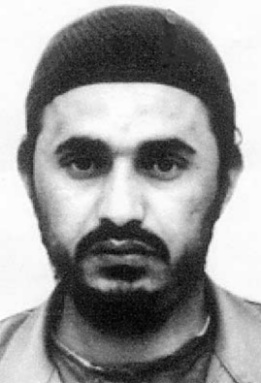
He was reportedly an avid reader, and often quoted Bernard Montgomery and Charles de Gaulle. He once wrote a letter to the American public (released posthumously) urging them to work with then-United States president Barack Obama's administration to prevent further climate change, and "save humanity" from the greenhouse gas emissions "that threaten its destiny".
The Islamic world and systems of government
Western sources consider bin Laden an Islamic extremist. The German intelligence agency BfV writes:"Islamist extremism [believes that] Islam is not only a personal or private affair, but that it should also rule social life and the political order or regulate at least part of it. This is in clear contradiction to the principles of the sovereignty of the people, the separation of state and religion, freedom of expression and general equal rights".The latter secularist ideas were adopted by much of the Islamic world over the 20th century. Thus, fewer Muslims stopped strictly following Islamic morality-based social rules, like those of Sharia (Islamic law), and this has been condemned by Islamic fundamentalism. Advocates for Islamic fundamentalist reform in politics are Islamists. In university, bin Laden read the works of multiple Islamists, including Abdullah Yusuf Azzam, his then-teacher; Sayyid Qutb; and several Muslim Brotherhood leaders.
Bin Laden was raised into Wahhabism, a branch of the Salafi movement of Sunni Islamic fundamentalists. Salafis follow a strict form of Sharia based on a literal interpretation of the Quran. Wahhabism was the dominant form of Islam in Saudi Arabia during bin Laden's adult life. Wahhabi beliefs, including the holiness of violence against non-Salafis, were directly taught to bin Laden and other students in Saudi schools from around the 1970s to 2010s.
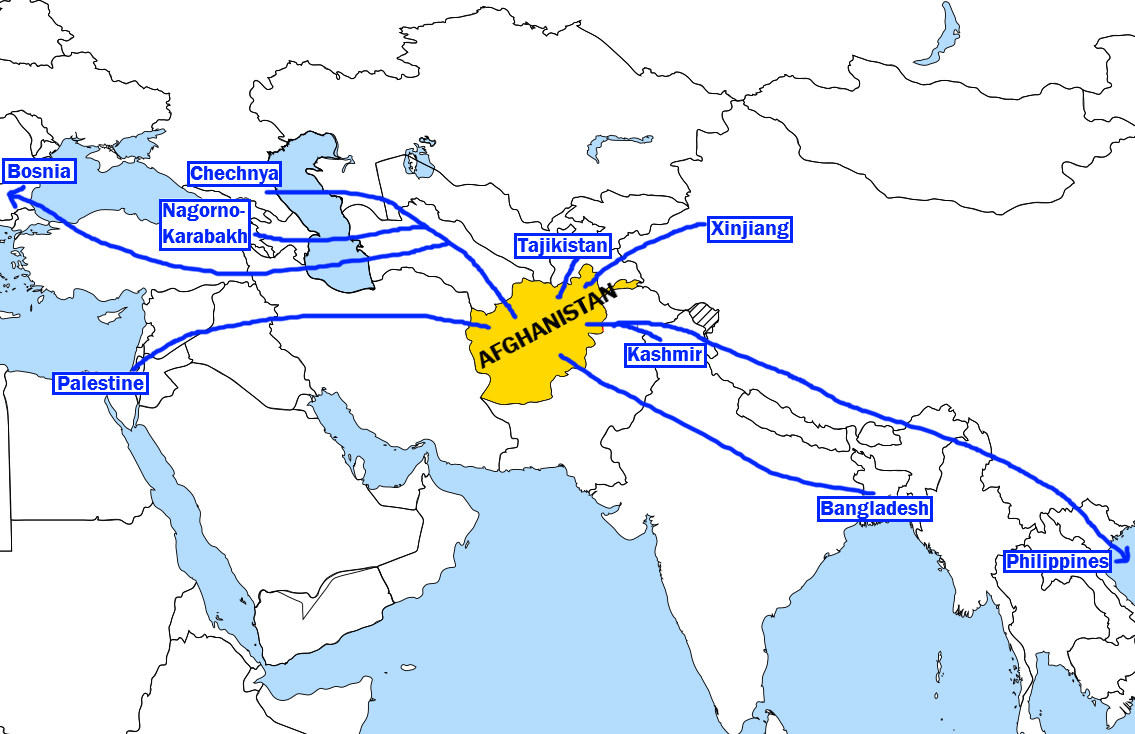
Bin Laden promoted Islamism through his militant organization al-Qaeda, which has committed numerous terrorist attacks worldwide. Its attacks against the U.S. on 11 September 2001 led the "threat of militant Islamic terrorism [to take] center stage" in Middle Eastern politics. While bin Laden led al-Qaeda, it organized ideology classes that listed four principal enemies of Islam: Shia Islam, heretics of Islam, the U.S., and Israel. Bin Laden believed the Islamic world was in crisis due to being influenced by these enemies, and that only the complete restoration of Sharia within that world would correct it. He rejected other types of government as possible solutions to this perceived crisis, such as pan-Arabist, socialist, communist, and democratic systems.
He once denounced democracy as a "religion of ignorance" that violates Islam by issuing man-made laws, instead of those made by God; journalist Max Rodenbeck wrote that bin Laden avoided "theological justifications for democracy, [which are] based on the notion that the will of the people must necessarily reflect the will of an all-knowing God." Bin Laden also once favorably compared Spain's democratic system to certain non-democracies in the Muslim world, praising both as allowing for their rulers to be held accountable by the law.
Attacking the United States
Bin Laden did not unambiguously take responsibility for 9/11 until a 2004 video, but implied his motives for the attacks before then. His views on the U.S. were detailed in two fatwas (non-binding rulings on Sharia matters) that he issued in 1996 and 1998, in both of which he declared war on the U.S.; his 1998 interview with American journalist John Miller; a video released in December 2001; his 2002 Letter to the American People; and his 2004 video, among other statements.

Bin Laden took the indefinite stationing of Christian and Jewish American troops in Saudi Arabia during Operation Southern Watch (1992–2003) as a provocation to all Muslims, as he interpreted Muhammad as having banned the "permanent presence of infidels in Arabia". His 1996 fatwa was issued for mainly this reason. Bin Laden also wanted to respond to U.S. policies regarding the Middle East that had killed and oppressed Muslims in the region, especially those that had killed women and children; he particularly condemned America's funding and arming of Israel, which has historically killed and oppressed Muslims in Palestine. He believed violent jihad was needed to right these actions. In his 2001 video, he said:
"It has become clear that the West in general and America in particular have an unspeakable hatred for Islam. [...] It is the hatred of crusaders. Terrorism against America deserves to be praised because it was a response to injustice, aimed at forcing America to stop its support for Israel, which kills our people."
He believed that the U.S. and United Kingdom were being directed by Israel to kill as many Muslims as possible. He alleged that Israel, having already invaded and occupied multiple Muslim-majority countries, was striving towards a "Greater Israel" by annexing the whole Middle East and then enslaving the annexed population. In his 2002 letter, he described the 1948 formation of the State of Israel as "a crime which must be erased".
In his 1998 fatwa, bin Laden claimed the duty of every Muslim was to "liberate" two Islamic holy sites "from their [America's and Israel's] grip": Al-Aqsa in East Jerusalem, and Masjid al-Haram in Mecca; West Jerusalem has been controlled by Israel since 1948, while East Jerusalem was controlled by Jordan from 1948 until 1967, when an ongoing Israeli occupation of the West Bank began during the Six-Day War.
The fatwa also condemned the concurrent international sanctions against Iraq, which the U.S. participated in. Lasting from 1990 to 2003, the sanctions largely damaged Iraq's economy, creating a humanitarian crisis. Bin Laden often referenced the resulting child deaths, which numbered at least ~227,000 by 1999.
In his 2002 letter, bin Laden implied multiple motives for 9/11, including U.S. support of 1) Israel, against Lebanon during the Israeli occupation of Southern Lebanon (1982–2000), and against Palestinians during the Second Intifada (2000–2005); 2) Russia, against Muslim militants in the Second Chechen War (1999–2009), and 3) India's oppression of Muslims in Kashmir. He also listed the former U.S.-led intervention against Muslim militants in Somalia; pollution caused by the U.S.; and the U.S.' refusal to ratify the Kyoto Protocol, which focused on reducing greenhouse gas emissions. Additionally, he called upon Americans to convert to Islam.
Before 9/11, bin Laden believed that sending a message to the U.S. through al-Qaeda's attacks could ultimately deter the U.S. military from targeting Muslims in the future. After 9/11, when the U.S. declared its global 'war on terror' and began hunting al-Qaeda members in Afghanistan and other Muslim countries, bin Laden tried to lure the U.S. military into long wars of attrition in those places by attracting large numbers of jihadists that would never surrender. He predicted this would lead to the economic collapse of the U.S. by "bleeding America to the point of bankruptcy". He noted in 2004 that this was essentially how his soldiers had helped force the Soviet Union to withdraw from Afghanistan at the end of the Soviet–Afghan War (1979–1989). Similar to what bin Laden intended, the U.S.' war in Afghanistan lasted for 20 years.
Attacking civilians on 9/11
In his 1996 fatwa, bin Laden mentioned that his war against the U.S. would "not differentiate between [Americans] dressed in military uniforms, and civilians; they are all targets of this fatwa". In his 1998 interview, he said:"American history does not distinguish between civilians and military, not even women and children. They are the ones who used [a nuclear bomb] against Nagasaki. Can these bombs distinguish between infants and military? America does not have a religion that will prevent it from destroying all people."
Bin Laden believed that all Americans, even civilians, are responsible for the U.S.' actions, as the country is a democracy, and because Americans pay taxes that fund their military. In contrast, he once stated that American democracy was "the law of the rich and wealthy".
On 9/11, al-Qaeda targeted the World Trade Center, a business complex in New York City, and the Pentagon in Virginia, the headquarters of the U.S. Department of Defense. Afterwards, bin Laden claimed that the women and children who died in the attacks were not al-Qaeda's intended targets, saying Muhammad condemned the killing of women and children; instead, "the main targets were the symbol of the United States: their economic and military power". In 2004, bin Laden said he was inspired to target the World Trade Center's Twin Towers (1 and 2 WTC) as revenge for the destruction of towers in Beirut by U.S.-backed Israeli troops in the Siege of Beirut, during the 1982 Lebanon War:"God knows it did not cross our minds to attack the towers [at first], but after [witnessing] the destroyed towers in Lebanon, it occurred to me punish the unjust the same way: to destroy towers in America, so it could taste some of what we are tasting, and to stop killing our children and women."
Judaism
Bin Laden was heavily anti-Semitic. He stated that most of the negative events that occurred in the world were the direct result of Jewish actions, and that Jews and Muslims could never get along, as war was "inevitable" between them. In his 2002 letter, he stated that Jews controlled American media outlets, politics, and economic institutions. The U.S. and U.K.'s governments were also alleged to be under their control, and he claimed Operation Desert Fox—the two countries' 1998 bombing of Iraq—was proof of this. Bin Laden once described the Jews in this supposed conspiracy as "masters of usury [and] treachery, [who] will leave you nothing, either in this world or the next." He said in his 1998 interview:
"So we tell the Americans as people, [...] that if they value their lives and the lives of their children, to find a nationalistic government that will look after their interests and not the interests of the Jews."
Deaths of Muslim civilians
Al-tatarrus is an Islamic doctrine which denies, in certain circumstances, that Muslims engaged in war whose actions unintentionally caused civilian deaths had acted immorally. In 2010, bin Laden wrote a letter criticizing followers of his, such al-Qaeda's ally, Tehrik-i-Taliban Pakistan, who had interpreted al-tatarrus to justify routine massacres of Muslim civilians, which had turned away many Muslims previously supportive of Islamist jihadism. He then created a code of conduct constraining his allies' military activities to avoid civilian deaths, and instructed his global followers to focus on persuading hesitant Islamic political parties to follow Islamist jihadism, instead of fighting them. He urged his allies in Yemen to negotiate an end to their conflict with other Muslims, or at least demonstrate peaceful intentions to Yemeni Muslims, and he urged his allies in the Somalian group al-Shabaab (an al-Qaeda affiliate after 2012) to pursue economic development and reduce Somalia's extreme poverty caused by constant warfare there.
Militant and political career, 1979–2001
Soviet–Afghan War
In 1979, Muslim-majority Afghanistan was occupied by the mostly non-Muslim Soviet Union; as socialists, the Soviets backed the Democratic Republic of Afghanistan, a socialist national government which was installed in a military coup in 1978, and opposed by many Afghan Muslims. Leaving college, bin Laden went to Pakistan with Abdullah Yusuf Azzam to help the Afghan mujahideen resist against the Soviets. Bin Laden later recalled: "I felt outraged that an injustice had been committed against the people of Afghanistan." He likely moved there with the knowledge and support of the Saudi government, which opposed the Soviet occupation.In 1984, bin Laden and Azzam founded Maktab al-Khidamat (MaK), which recruited fighters from across the Arab world into the Afghan mujahideen, while funneling those fighters arms and money; this included paying for their flights or other modes of travel to the country. Bin Laden funded MaK with his inheritance of his family's fortune. During the war, he also helped build cave complexes in the Afghan mountains for mujahideen to use as fortifications. He moved to Afghanistan construction machinery that had been used by the Saudi Binladin Group. Furthermore, he established militant camps in Pakistan's Khyber Pakhtunkhwa province.
From 1979 to 1992, the U.S. (via the CIA's Operation Cyclone program), Saudi Arabia, and China provided between $6–12 billion USD worth of financial aid and weapons to tens of thousands of Afghan mujahideen fighters through Pakistan's Inter-Services Intelligence (ISI). Although the U.S. provided money and weapons, the fighters' training was entirely done by the ISI and the Pakistan Armed Forces.
Contrary to popular belief, the U.S. did not train or fund bin Laden's fighters directly, as according to Mohammad Yousaf, then-head of ISI's Afghanistan operations, Pakistan had a strict policy to prevent any American funding, arming, or training of mujahideen. However, bin Laden himself was trained by U.S. Special Forces commando and double agent Ali Mohamed.
In this period, bin Laden became acquainted with Hamid Gul, a Pakistani general and head of the ISI. According to some CIA officers, starting in early 1980, bin Laden also acted as a liaison between the Saudi General Intelligence Presidency (GIP) and Afghan mujahideen warlords. Journalist Steve Coll states that while bin Laden was likely not a salaried GIP agent, "it seems clear [that they] did have a substantial relationship."
Between 1986 and 1987, bin Laden set up a base in eastern Afghanistan for several dozen of his own soldiers. There, he commanded them to victory against the Soviets at the 1987 Battle of Jaji. Despite the battle's little significance to the mujahideen war effort, it was lionized in the Arab press. It was around this time that bin Laden became idolized by many Arabs.
Soviet withdrawal and the founding of al-Qaeda
Bin Laden split from MaK by 1988. This was largely due to him wanting the Arab fighters in the Afghan mujahideen to form a military force independent from the rest of the mujahideen, whereas Azzam wanted to integrate the groups. The Soviets began withdrawing from Afghanistan in May 1988, and al-Qaeda formed sometime that year. It may have been founded at an 11 August meeting between bin Laden, Azzam, and leaders of the Egyptian Islamic Jihad (EIJ) terrorist group, where the parties are known to have agreed on combining bin Laden's money with the EIJ's experience to move the jihadist cause out of Afghanistan after the withdrawal finished. On 20 August, notes were taken on a meeting involving bin Laden that mention "an organized Islamic faction, [whose] goal is to lift the word of God, to make his religion victorious." To keep its existence a secret, al-Qaeda did not state its name in its early public announcements.
Another topic which bin Laden and Azzam disagreed on was the use of MaK's military force following the withdrawal. They both wanted to use the force MaK had built to defend any oppressed Muslims around the world. Bin Laden then publicly urged the soldiers to wage jihad through terrorism; Azzam issued a fatwa condemning this approach, saying Islamic law condemns the killing of women and children.
The Soviets finished withdrawing in February 1989. The Democratic Republic government, now lacking physical Soviet protection, fought a war from 1988 to 1992 against continuing mujahideen resistance. Concurrently, various anti-Republic mujahideen groups waged internecine combat against each other, which angered bin Laden; in the new war, he stayed working with the GIP and ISI, while they continued to arm those and other Afghan mujahideen groups. In March 1989, bin Laden commanded 800 Arab foreign fighters against the Republic during the Battle of Jalalabad. He moved his men to immobilize the Republic's 7th Sarandoy Regiment, but this caused massive casualties on his side, who lost the battle.
Alleged involvement in the 1988 Gilgit massacre
In May 1988, large numbers of Shia civilians in and around Gilgit, Pakistan, were massacred and raped by Sunni militants. This came after a local dispute between Sunni and Shia civilians over the latter's celebrations of the Islamic holiday Eid al-Fitr, which marks the end of the holy month of Ramadan. The militants, who were still fasting for Ramadan, had attacked the Shias, already celebrating; the Shias claimed to have made their first sighting of the crescent moon, which commences Eid al-Fitr, and the Sunnis did not believe them. A contingent of Sunni militants and armed tribesmen from various other places in Pakistan then came to Gilgit, reportedly sent by the Pakistani government to "teach [the Shias] a lesson". Indian intelligence official B. Raman alleged in 2003 that bin Laden had led one of the tribes during the march.
Return to Saudi Arabia
Upon bin Laden's return to Saudi Arabia after the Soviet withdrawal, he was widely praised by Saudis as a hero of jihad, as many viewed his mujahideen force as responsible for defeating the Soviet superpower. He then worked for the Saudi Binladin Group, even after he began engaging in Saudi opposition movements against the House of Saud.
In November 1989, Abdullah Yusuf Azzam was assassinated in a land mine attack in Pakistan; it is unknown if bin Laden was a perpetrator. With this, he took full control of MaK, which he absorbed into al-Qaeda. From then on, he was radicalized further by EIJ leader Ayman al-Zawahiri. In 1990, bin Laden funded a coup attempt led by extremist communist general Shahnawaz Tanai to overthrow the Republic, which failed. In 1991, as the Soviet Union collapsed, it ended its remaining support to the Republic.
Bin Laden became involved in countries' politics outside of Saudi Arabia and Afghanistan. He lobbied the Parliament of Pakistan to carry out an motion of no confidence against Prime Minister Benazir Bhutto; the motion was unsuccessful. He also offered the House of Saud to send al-Qaeda to overthrow the Soviet-aligned Yemeni Socialist Party (YSP) government in the country of South Yemen, but this was rejected by Prince Turki Al-Faisal. Bin Laden then organized the assassinations of YSP leaders in an attempt to disrupt North and South Yemen's process of unifying into one country; he was forced to stop by Saudi Interior Minister Prince Nayef bin Abdulaziz, after North Yemeni president Ali Abdullah Saleh, a leader in the unification process, complained to the Saudi King Fahd. The unification occurred in 1990, forming the modern Republic of Yemen, first led by Saleh.
Gulf War
The 1990 Iraqi invasion of Kuwait under Iraqi president Saddam Hussein started the Gulf War (1990–1991). Soon, Iraqi forces deployed to the Saudi–Iraqi border. The House of Saud became worried that their control over Saudi Arabia was unstable, as Saddam publicly supported pan-Arabism—the royals were worried he aimed to incite internal dissent against them. Fahd agreed to the U.S. government's offer of military assistance; a week later, bin Laden met with Fahd and Saudi Defense Minister Sultan bin Abdulaziz, telling them not to depend on non-Muslim assistance. Bin Laden offered to help defend Saudi Arabia with a mujahideen force of his. The offer was denied, and the Saudis ultimately accepted 500,000 U.S troops into their territory.Bin Laden publicly denounced the decision, and tried to convince the Saudi ulama to issue a fatwa condemning it, but senior clerics refused out of fear of government repression. His continued criticism of the royals led them to put him under house arrest, which he remained under until he was exiled from the country in 1991. After the war, the royals allowed U.S. troops to have a continuous presence there, in Operation Southern Watch, for the purpose of controlling air space in Iraq.
Move to Sudan
After his expulsion, bin Laden and his followers moved first to Afghanistan, then relocated to Sudan in a deal brokered by Ali Mohamed. Bin Laden established a new base for mujahideen operations in Khartoum. He bought a house on Al-Mashtal Street in the affluent Al-Riyad neighborhood, and a retreat at Soba on the Blue Nile. He personally selected the bodyguards in his security detail, who carried Strela-2s, AK-47s, PK machine guns, rocket-propelled grenades (RPGs), and Stinger missiles. He invested heavily in various businesses, notably in infrastructure and agriculture. Al-Zawahiri followed bin Laden to Sudan, where the EIJ and al-Qaeda collaborated.