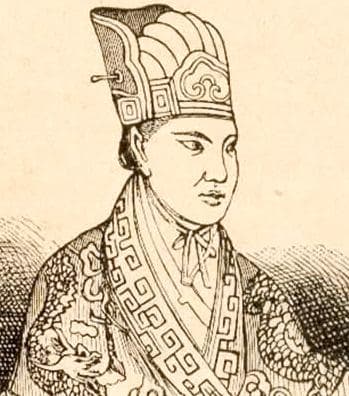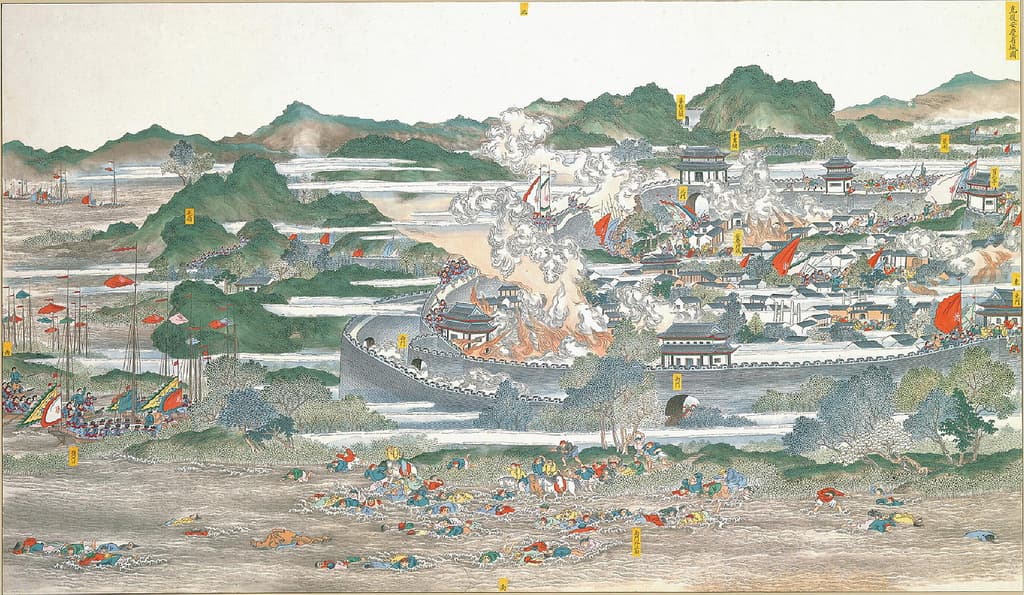
The Taiping Rebellion (1850–1864) was the deadliest civil war in recorded history, claiming between 20 and 30 million lives across southern and central China. It was ignited by Hong Xiuquan, a failed civil-service candidate who believed himself to be the younger brother of Jesus Christ, and it engulfed the Qing dynasty in a 14-year struggle for survival. At its peak, the Taiping Heavenly Kingdom controlled a territory home to roughly 30 million people, with Nanjing as its capital.
What Were the Root Causes of the Taiping Rebellion?
The rebellion did not spring from a single grievance but from a convergence of deep structural crises in mid-19th-century China. The Qing dynasty, ruled by the Manchu ethnic minority, was already weakened by the catastrophic First Opium War (1839–1842), which had forced China to cede Hong Kong to Britain and open five treaty ports, exposing the government's military impotence. The resulting Treaty of Nanking (1842) flooded Chinese markets with cheap British goods, devastating domestic textile and handicraft industries and throwing millions out of work across Guangdong and Guangxi provinces. Population pressure compounded the crisis: China's population had grown from roughly 200 million in 1700 to over 400 million by 1850, straining food supplies and making land increasingly scarce. Ethnic tensions between the Han Chinese, indigenous Hakka communities, and the ruling Manchu elite simmered constantly. Corruption within the imperial bureaucracy was pervasive, and local officials routinely extorted peasants. Into this volatile environment stepped Hong Xiuquan, whose personal religious revelation fused Protestant Christianity — absorbed through pamphlets distributed by American missionary Edwin Stevens — with traditional Chinese millenarianism to produce a combustible new ideology.
Who Was Hong Xiuquan, the Leader of the Taiping Movement?
Hong Xiuquan was born on January 1, 1814, in Fuyuanshui village, Guangdong province, into a Hakka farming family. Extraordinarily gifted, he pursued the prestigious Imperial Civil Service Examinations (keju) in Guangzhou but failed repeatedly — in 1828, 1836, 1837, and 1843. After his third failure in 1837, Hong suffered a nervous breakdown and experienced a prolonged hallucination in which he met an elderly man (God the Father) and a middle-aged man (Jesus) who commanded him to slay demons and save humanity. He recovered but initially did not understand the vision. Only in 1843, after reading Christian missionary tracts given to him years earlier by Liang Afa, did Hong reinterpret his hallucination through a Christian lens: he concluded he was the second Son of God, Christ's younger brother, chosen to establish a Heavenly Kingdom on earth. This conviction, however delusional, gave him extraordinary charisma and drew thousands of converts from among the Hakka poor and dispossessed. By 1847 he had studied briefly with American Baptist missionary Issachar Jacox Roberts in Guangzhou, deepening — if idiosyncratically — his theological framework. Hong founded the God Worshippers Society (Bai Shangdi Hui) in 1843, and by 1850 it had attracted some 20,000 followers in Guangxi province alone.
How Did the Rebellion Start and Spread So Rapidly?
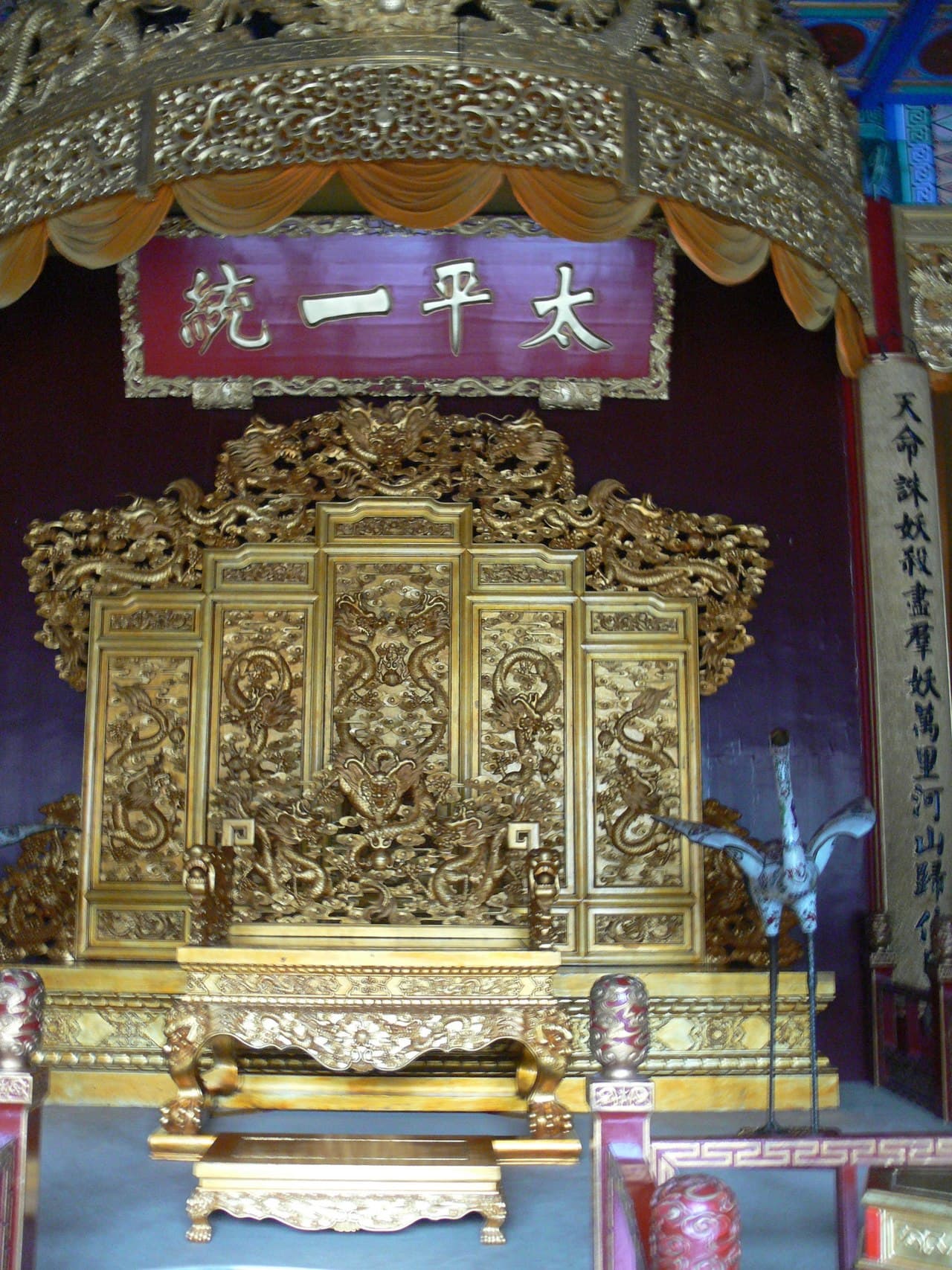
On January 11, 1851, Hong Xiuquan officially proclaimed the Taiping Heavenly Kingdom (Taiping Tianguo) at Jintian village in Guangxi province, declaring himself the Heavenly King (Tiānwáng). The movement's early military successes were stunning. The Taiping army, disciplined by strict religious codes that banned opium, alcohol, gambling, and prostitution, swept northward through Hunan and Hubei. By March 1853, they captured Nanjing — China's former imperial capital — renaming it Tianjing (Heavenly Capital) and making it their base of operations. At its height in the mid-1850s, the Taiping Heavenly Kingdom controlled six provinces across the Yangtze River valley, encompassing roughly 2 million square kilometers and a population of 30 million people. The speed of their conquest shocked the Qing court in Beijing. Several factors drove this rapid expansion: the Taiping offered genuine social reforms, including the abolition of slavery, prohibition of foot-binding, equal land distribution (the Land System of the Heavenly Dynasty, 1853), and official positions open to women — policies that resonated powerfully with the rural poor and ethnic minorities. Their military was also organized into a highly motivated quasi-religious corps. The Taiping simultaneously inspired related uprisings, including the Nian Rebellion in the north (1853–1868) and the Red Turban Revolt in Guangdong (1854–1856), which further stretched Qing resources.
What Was Life Like Inside the Taiping Heavenly Kingdom?
The Taiping state was a theocratic utopia in theory and an often brutal autocracy in practice. Hong Xiuquan issued the Land System of the Heavenly Dynasty in 1853, calling for equal distribution of land according to family size and communal granaries — a proto-socialist blueprint centuries ahead of later Chinese land reform movements. Men and women were separated into gender-segregated camps and battalions, forbidden from cohabitation even if married, though this rule was enforced inconsistently. Women were permitted to serve as civil and military officials, and female examination candidates were accepted — a radical departure from Confucian tradition. The kingdom produced its own calendar, abolished traditional Chinese religious practices (burning temples and ancestral halls), and mandated Sunday worship. Bible study was compulsory, and Hong produced his own annotated scriptures. Yet governance deteriorated badly after the 'Incident at the Heavenly Gate' (Tianjing Incident) of 1856, a catastrophic internal power struggle in which the Second King Yang Xiuqing was murdered along with an estimated 20,000 of his followers by rival factions. This fratricidal purge gutted the Taiping military command structure and fatally undermined their capacity to expand further.
How Did the Qing Dynasty Defeat the Taiping Rebellion?
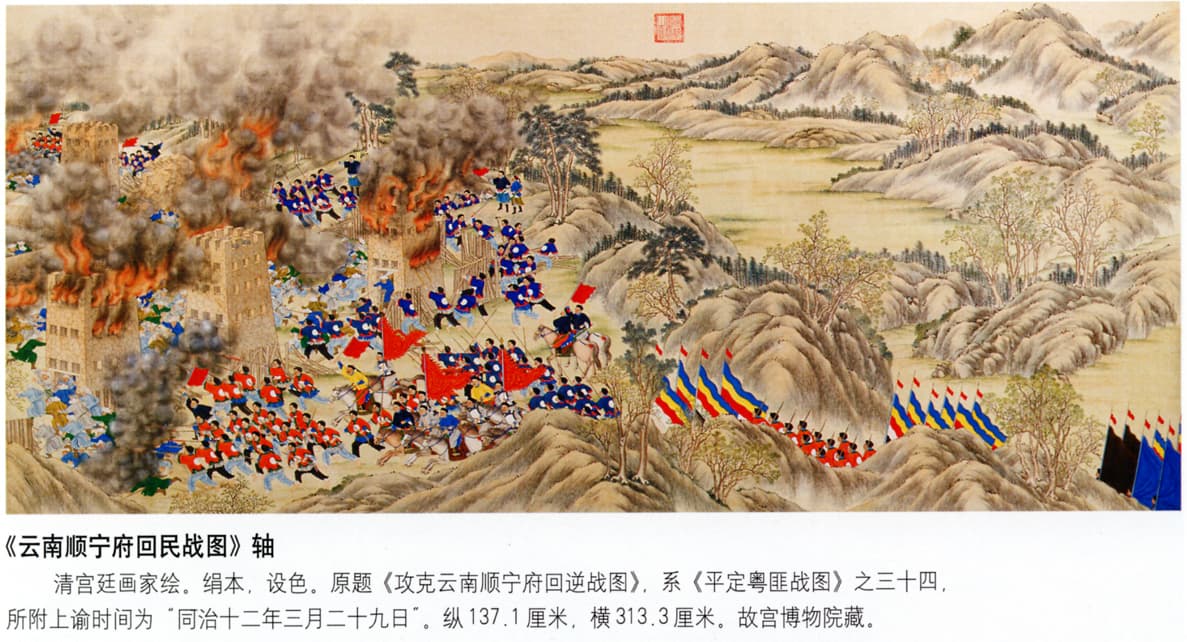
The Qing dynasty's salvation came not from the regular Banner and Green Standard armies, which proved woefully inadequate, but from newly raised regional militia forces (xiang yong) and the intervention of foreign-led mercenary units. The pivotal figure on the Qing side was Zeng Guofan, a Confucian scholar-official from Hunan who built the Xiang Army from scratch after 1852 — a personally loyal, ideologically motivated force funded by local gentry rather than imperial coffers. Zeng's methodical strategy of constructing fortified stockades, cutting Taiping supply lines along the Yangtze River, and slowly strangling the Heavenly Capital proved decisive. His protégé Li Hongzhang created the Huai Army, another formidable regional force. Foreign intervention also proved critical. Western powers initially maintained neutrality but gradually aligned with the Qing after the 1860 Second Opium War, deciding that Qing stability better served their commercial interests. American adventurer Frederick Townsend Ward organized the Ever-Victorious Army in 1860, a mercenary force of foreign officers commanding Chinese troops, which was later commanded by British officer Charles George Gordon ('Chinese Gordon') from 1863. Gordon's Ever-Victorious Army systematically captured Taiping-held cities around Shanghai and Suzhou. By 1862, Zeng Guofan's forces had besieged Nanjing. On July 19, 1864, the city fell after Qing forces tunneled under its walls and detonated massive explosive charges. Hong Xiuquan had died on June 1, 1864 — likely from food poisoning after reportedly eating wild grass during the siege — just weeks before the city's fall. His teenage son Hong Tianguifu briefly assumed leadership but was captured and executed in November 1864. Mopping-up operations continued until 1871.
| Factor | Taiping Heavenly Kingdom | Qing Dynasty |
|---|---|---|
| Leadership | Hong Xiuquan (theocratic king) | Emperor Xianfeng, then regents for Tongzhi |
| Peak military strength | ~500,000 troops | ~800,000 (Banner + regional armies) |
| Capital | Nanjing (renamed Tianjing) | Beijing |
| Foreign support | None (limited missionary sympathy) | Ever-Victorious Army; British/French alignment post-1860 |
| Territory at peak (1856) | ~6 provinces, ~2M km² | Remaining 12+ provinces |
| Key commanders | Yang Xiuqing, Li Xiucheng | Zeng Guofan, Li Hongzhang, Charles Gordon |
| Fatal weakness | 1856 Tianjing Incident (internal purge) | Corrupt Banner armies; needed Xiang/Huai Armies to survive |
| Outcome | Destroyed by 1864 | Survived; entered 'Tongzhi Restoration' period |
How Many People Died in the Taiping Rebellion?
Casualty estimates for the Taiping Rebellion are staggering and remain contested by historians. The most widely cited figures range from 20 million to 30 million deaths, though some scholars push the upper bound to 70 million when famine, disease, and population displacement are fully accounted for. For context, the First World War killed approximately 17 million people. The provinces of Jiangxi, Anhui, Zhejiang, and Jiangsu bore the heaviest losses: the population of Anhui province alone fell from an estimated 37 million before the rebellion to around 15 million by 1865. Nanjing, which had been one of China's most populous cities with perhaps one million inhabitants in 1850, was reduced to near-emptiness by the siege's end. The human cost was amplified by concurrent famines triggered by the destruction of agricultural infrastructure, and by epidemic disease spreading through displaced refugee populations. The Yangtze River delta, historically China's most productive agricultural and commercial heartland, required decades to recover. Some historians, including R.J. Rummel, classify the Taiping Rebellion as one of the greatest democides in human history.
What Was the Legacy of the Taiping Rebellion for China and the World?
The Taiping Rebellion left an ambiguous but enormous legacy. In the short term, it accelerated the decentralization of Qing power: because regional commanders like Zeng Guofan and Li Hongzhang had saved the dynasty using their own armies, they emerged as powerful autonomous figures whose authority Beijing could not easily dismiss. This devolution of military and fiscal power to provincial strongmen planted seeds that would bear fruit in the warlordism of the early 20th century. The Tongzhi Restoration (1861–1875) that followed attempted to modernize the Qing state through the Self-Strengthening Movement, investing in arsenals, shipyards, and Western-style schools — a direct response to the vulnerabilities exposed by the rebellion and the concurrent Opium Wars. Internationally, the rebellion deepened Western powers' conviction that Chinese sovereignty was fragile and exploitable. The destruction of the Yangtze valley economy temporarily disrupted the global tea and silk trades. In terms of ideological legacy, Sun Yat-sen, the father of modern China, explicitly identified with the Taiping movement, calling Hong Xiuquan his 'predecessor' and seeing the rebellion as an early nationalist uprising against Manchu rule. The Chinese Communist Party later canonized the Taiping as proto-revolutionary peasant heroes struggling against feudalism and foreign imperialism. Hong's egalitarian land policies and the role of women in the Taiping state have attracted considerable scholarly interest as precursors to 20th-century social reforms. The rebellion also demonstrated that Christianity, filtered through indigenous Chinese cultural frameworks, could generate movements of world-historical consequence — a lesson of enduring relevance for the sociology of religion.
Why Does the Taiping Rebellion Still Matter Today?
Despite its scale — arguably the most destructive conflict of the 19th century — the Taiping Rebellion remains far less known in the West than contemporaneous events like the American Civil War (1861–1865), which killed approximately 620,000 people by comparison. Historians such as Stephen Platt (author of Autumn in the Heavenly Kingdom, 2012) and Jonathan Spence (God's Chinese Son, 1996) have done much to bring the rebellion to English-language audiences, but it remains underrepresented in global historical consciousness. Its lessons resonate powerfully: the rebellion illustrates how economic dislocation, ethnic marginalization, failed state institutions, and charismatic religious ideology can combine to produce catastrophic violence. It also raises enduring questions about Western interventionism — Charles Gordon's Ever-Victorious Army was, in effect, a foreign military force helping suppress a domestic uprising, a dynamic with obvious modern parallels. For China itself, the rebellion is a reminder of the fragility of political order and the explosive potential of social inequality — themes that the Chinese Communist Party treats with acute sensitivity, which partly explains why it remains a politically managed rather than freely debated subject in contemporary China.