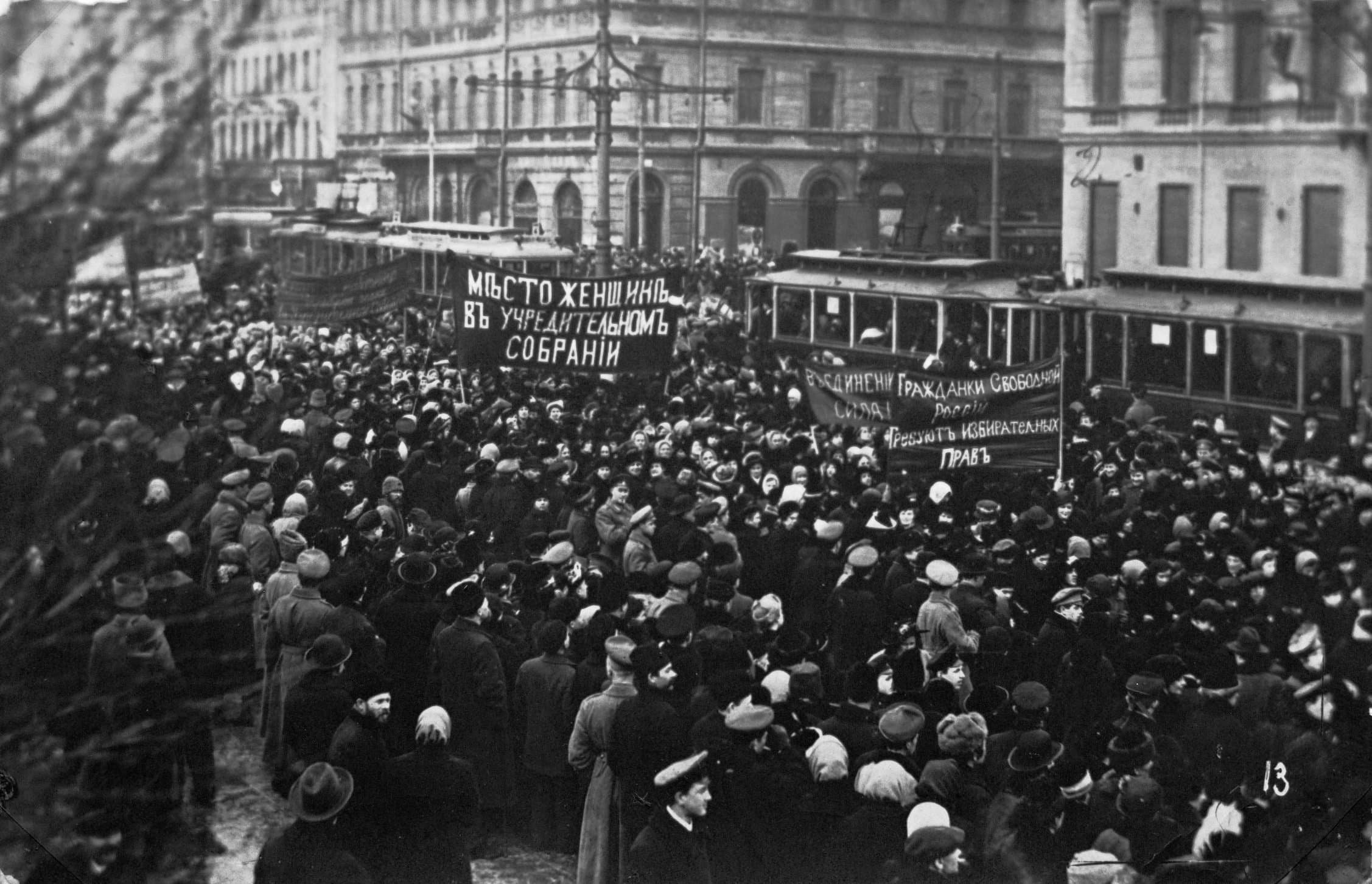
The Russian Revolution of 1917 was a pair of seismic political upheavals that destroyed three centuries of Romanov rule and replaced it with the world's first Marxist-Leninist government. The February Revolution of March 1917 (Old Style: February) forced Tsar Nicholas II to abdicate, while the October Revolution of November 1917 brought Vladimir Lenin's Bolshevik Party to power. Together, these events reshaped global politics for the rest of the twentieth century, directly producing the Soviet Union, the Cold War, and the spread of communist ideology across dozens of nations.
What Were the Deep Causes of the Russian Revolution?
Russia in the early twentieth century was a powder keg of structural tensions. Economically, it remained overwhelmingly agrarian: roughly 80 percent of the population were peasants, many still working land under near-feudal conditions even decades after the Emancipation Reform of 1861. Industrial workers, concentrated in St. Petersburg and Moscow, endured 12-to-16-hour workdays, poverty wages, and dangerous factory conditions with virtually no legal right to organise. Politically, Tsar Nicholas II ruled as an autocrat, dismissing the elected Duma — the limited parliament introduced after the 1905 Revolution — whenever it challenged him. The Fundamental Laws of 1906 formally preserved his absolute veto. Socially, a tiny aristocratic elite controlled most land and wealth while famine recurred across the countryside. The humiliating defeat in the Russo-Japanese War (1904–05) had already demonstrated the regime's military incompetence and triggered the Revolution of 1905, which Nicholas suppressed with troops and managed by issuing the October Manifesto — concessions he quickly clawed back. Underground political movements — Socialist Revolutionaries, Mensheviks, and Lenin's Bolsheviks — spent the years between 1905 and 1917 building networks, smuggling newspapers, and waiting for the next crack in the tsarist wall.
How Did World War One Destabilise the Tsarist Regime?
No single factor accelerated the collapse of Romanov Russia more catastrophically than the First World War. Nicholas II mobilised roughly 15 million men between 1914 and 1917. By early 1917, Russia had suffered an estimated 1.7 million military deaths and over 5 million wounded — the highest Allied casualty figures of the war. The army was chronically under-supplied: soldiers reported sharing rifles, running out of artillery shells within weeks of fighting, and marching without boots. Defeat at the Battle of Tannenberg in August 1914, where two entire Russian armies were destroyed by Germany, set a pattern of catastrophic losses that shattered morale. At home, the war drained the economy: inflation rose sharply, bread rationing was introduced in Petrograd (as St. Petersburg had been renamed in 1914), and by February 1917 the capital's bakeries had run out of flour entirely. Nicholas compounded the crisis in September 1915 by personally assuming supreme military command, directly associating the monarchy with every subsequent defeat. His absence from Petrograd also left effective government in the hands of Empress Alexandra, who was under the controversial influence of the faith healer Grigori Rasputin — a situation that scandalized even royalist circles. When Rasputin was murdered by aristocrats in December 1916, it was a measure of how far elite confidence in the dynasty had collapsed.
What Happened During the February Revolution of 1917?
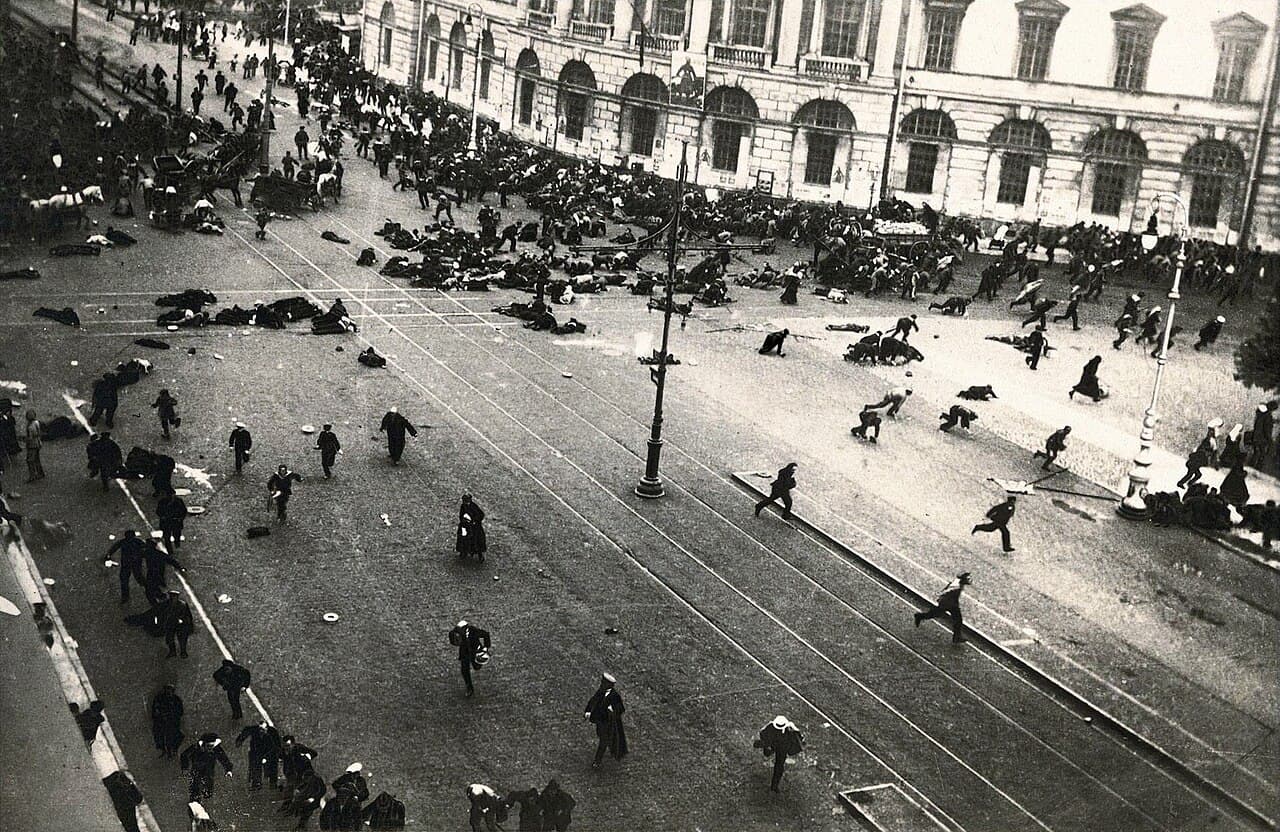
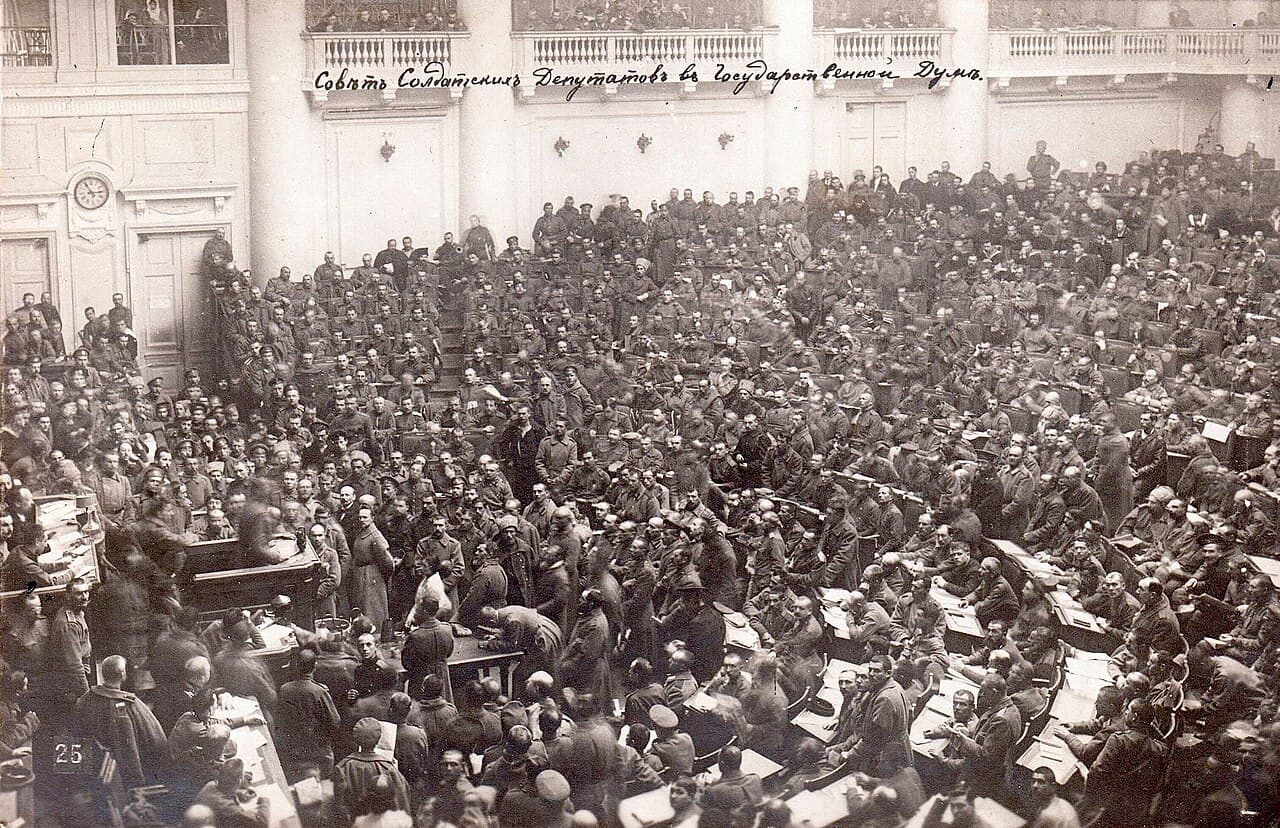
On 23 February 1917 (8 March in the modern calendar — International Women's Day), female textile workers in Petrograd walked out to protest bread shortages and the war. Within days, roughly 200,000 workers had joined a general strike, and crowds flooded Nevsky Prospekt chanting 'Down with the Tsar!' and 'Down with the War!' Nicholas ordered the Petrograd garrison to fire on demonstrators; critically, by 27 February, regiment after regiment refused orders and instead fraternised with or joined the protesters. The Duma, under pressure, formed a Provisional Committee, which on 2 March 1917 became the Provisional Government under Prince Georgy Lvov. On the same day, Nicholas II abdicated in favour of his brother Grand Duke Michael, who refused the throne the following day, effectively ending the Romanov dynasty after 304 years. Power now sat awkwardly between the liberal Provisional Government — committed to continuing the war and delaying radical reform until a Constituent Assembly could be elected — and the Petrograd Soviet of Workers' and Soldiers' Deputies, which commanded the loyalty of the city's armed men. This 'dual power' arrangement was inherently unstable.
Who Were the Key Figures in the Russian Revolution?
Vladimir Ilyich Lenin (1870–1924) was the revolution's intellectual architect and political mastermind. A professional revolutionary since his brother Alexander was hanged for plotting against Tsar Alexander III in 1887, Lenin had developed the concept of a tightly disciplined 'vanguard party' capable of seizing power on behalf of the working class. Exiled in Switzerland in February 1917, he was transported in a sealed train through Germany — with Berlin's enthusiastic cooperation, since they hoped he would knock Russia out of the war — arriving at Petrograd's Finland Station on 3 April 1917. His 'April Theses' immediately repudiated cooperation with the Provisional Government and demanded 'All power to the Soviets.' Leon Trotsky (1879–1940), a brilliant orator and organiser who joined the Bolsheviks in mid-1917, became chairman of the Petrograd Soviet in September and was the primary military planner of the October insurrection. Alexander Kerensky (1881–1970) led the Provisional Government from July 1917 but fatally undermined his own position by launching the disastrous Kerensky Offensive in June 1917 — a last attempt to prosecute the war that collapsed within weeks and cost an additional 400,000 casualties. General Lavr Kornilov's attempted coup in August 1917, which Kerensky was forced to arm the Bolsheviks to repel, handed Lenin's party both weapons and enormous popular legitimacy.
How Did the Bolsheviks Seize Power in October 1917?
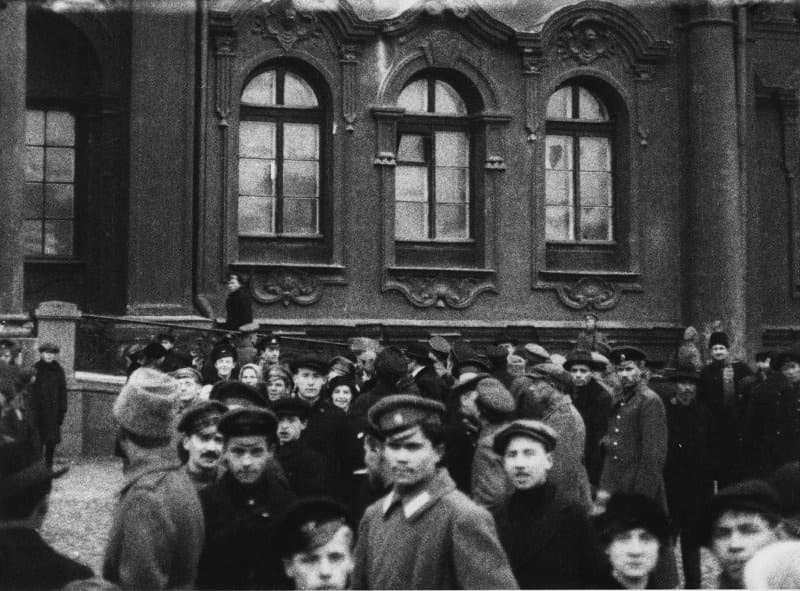
By October 1917, the Provisional Government had lost nearly all credibility. It had continued an unpopular war, failed to redistribute land to the peasantry, and postponed the Constituent Assembly elections indefinitely. Bolshevik support surged: the party grew from roughly 24,000 members in February to over 350,000 by October. Lenin, who had fled to Finland after a failed Bolshevik uprising in July (the 'July Days'), returned secretly to Petrograd in early October to press the party's Central Committee for immediate insurrection. Trotsky, as chairman of the Military Revolutionary Committee of the Petrograd Soviet, coordinated the actual takeover. On the night of 24–25 October 1917 (6–7 November, New Style), Red Guard units and pro-Bolshevik soldiers occupied Petrograd's key infrastructure — railway stations, telegraph offices, bridges, the State Bank — with minimal resistance. The cruiser Aurora fired a blank shot at 9:45 p.m. on 25 October as a signal; Bolshevik forces stormed the Winter Palace, seat of the Provisional Government, arresting its ministers by 2 a.m. Lenin announced Soviet power the following morning at the Second All-Russia Congress of Soviets, declaring 'We shall now proceed to construct the Socialist order!'
| Event | Date (New Style) | Key Figure | Outcome |
|---|---|---|---|
| International Women's Day strikes begin | 8 March 1917 | Petrograd factory workers | General strike spreads city-wide |
| Garrison troops mutiny | 12 March 1917 | Petrograd regiments | Military backbone of tsarism collapses |
| Nicholas II abdicates | 15 March 1917 | Tsar Nicholas II | 304-year Romanov dynasty ends |
| Lenin arrives at Finland Station | 16 April 1917 | Vladimir Lenin | 'April Theses' radicalise Bolshevik agenda |
| Kerensky Offensive fails | July 1917 | Alexander Kerensky | Provisional Government loses mass support |
| Kornilov Coup attempt | August 1917 | General Lavr Kornilov | Bolsheviks rearmed; Kerensky weakened |
| October Revolution / Winter Palace stormed | 7 November 1917 | Leon Trotsky / Lenin | Bolsheviks seize state power |
| Treaty of Brest-Litovsk signed | 3 March 1918 | Leon Trotsky / Germany | Russia exits WWI at enormous territorial cost |
| Russian Civil War ends | 1922 | Red Army / Trotsky | Soviet Union formally established December 1922 |
What Was the Russian Civil War and Why Did the Bolsheviks Win?
Seizing power was only the beginning. From 1918 to 1922, the Bolshevik 'Reds' fought a brutal civil war against the loosely allied 'White' forces — monarchists, liberals, Socialist Revolutionaries, and foreign interventionist armies from Britain, France, the United States, and Japan. The Whites were fatally disunited: they had no common political programme, fought on widely separated fronts (Siberia, the Caucasus, Ukraine, the Baltic), and could not agree on the land question that peasants cared about most. Trotsky built the Red Army from scratch, conscripting 5 million men by 1920 and deploying former tsarist officers under political commissars. The Bolsheviks also controlled Russia's heartland — the central rail network, the major cities, and the arms factories. During the war, they implemented 'War Communism': forced grain requisitioning, nationalisation of industry, and strict rationing. Famine in 1921–22 killed an estimated 5 million people. By 1922, the Reds had defeated all significant opposition. On 30 December 1922, the Union of Soviet Socialist Republics was formally proclaimed. Nicholas II and his family had been shot by Bolshevik guards in Yekaterinburg on 17 July 1918, eliminating any monarchist focal point for resistance.
What Were the Immediate Consequences of the Revolution?
The Bolsheviks' first decrees, issued within hours of seizing power, revealed their priorities. The Decree on Peace called for an immediate armistice without annexations or indemnities. The Decree on Land abolished private land ownership and transferred estates to peasant committees — satisfying the countryside's deepest demand. The Treaty of Brest-Litovsk (3 March 1918) ended Russian participation in World War One at an enormous price: Russia ceded Finland, Estonia, Latvia, Lithuania, Poland, Belarus, and Ukraine — territory comprising roughly 34 percent of the empire's European population and 54 percent of its industrial capacity. The Orthodox Church was stripped of its legal status and property. Banks were nationalised. Freedom of the press was curtailed almost immediately, and opposition parties were progressively banned. The secret police, the Cheka (founded December 1917 under Felix Dzerzhinsky), launched the 'Red Terror' in September 1918 following an assassination attempt on Lenin, executing thousands of alleged counter-revolutionaries within weeks.
What Was the Long-Term Legacy of the Russian Revolution?
The Russian Revolution's legacy is impossible to overstate. It produced the Soviet Union, which by the 1950s controlled a bloc of nations covering roughly one-sixth of the earth's land surface and possessed nuclear weapons capable of destroying civilisation. It directly inspired communist revolutions in China (1949), Cuba (1959), Vietnam, Korea, and across Africa and Latin America — reshaping the lives of over a billion people. The spectre of Soviet communism drove Western democracies into the Cold War, the nuclear arms race, the Marshall Plan, the formation of NATO (1949), and decades of proxy conflicts from Korea to Afghanistan. Domestically, Stalin's consolidation of power after Lenin's death in 1924 transformed the revolutionary state into a totalitarian dictatorship; the Gulag system ultimately imprisoned an estimated 18 million people between 1930 and 1953, and collectivisation caused the Ukrainian Holodomor famine of 1932–33, which killed between 3.5 and 7.5 million people. The Soviet Union itself collapsed in 1991, but the revolution's consequences — Russian nationalism, authoritarian political culture, contested post-Soviet borders from Ukraine to the South Caucasus — continue to shape twenty-first-century geopolitics in profound ways.
Why Does the Russian Revolution Still Matter Today?
The Russian Revolution remains the single most consequential political event of the twentieth century. It demonstrated that a disciplined revolutionary minority could capture a modern state, a lesson absorbed by leaders from Mao Zedong to Fidel Castro. It posed — and never satisfactorily answered — the central question of whether socialist ideals can be implemented without terror and authoritarianism. The archives opened after 1991 have deepened historical understanding while intensifying debate: revisionist historians such as Orlando Figes ('A People's Tragedy', 1996) and Robert Service ('Lenin', 2000) have documented the revolution's human cost in granular detail, while others like Sheila Fitzpatrick emphasise the genuine social mobility and mass literacy the Soviet system produced in its early decades. In Russia today, official memory of the revolution remains contested: Vladimir Putin's government tends to emphasise the Civil War's chaos and foreign intervention over the revolution's emancipatory aspirations, while the Communist Party continues to celebrate 7 November as a public holiday of sorts. For historians worldwide, 1917 remains an inexhaustible laboratory for understanding how empires collapse, how radical ideologies gain mass followings, and how the distance between utopian promise and violent reality can shrink to nothing in the space of a single year.