In the year 31 BC, a young general named Octavian defeated his last rival, Mark Antony, at the naval Battle of Actium off the coast of Greece. With that single engagement, nearly a century of Roman civil war ended, and the stage was set for one of the most consequential political transformations in human history. Within four years, Octavian would accept the honorific title 'Augustus' from a grateful Senate, becoming the first Roman Emperor. What followed was an empire that would shape the language, law, religion, architecture, and governance of virtually every civilization that came after it.
From Republic to Empire: A Seismic Shift
Rome had not always been an empire. For nearly five centuries before Augustus, the city was governed as a Republic, with elected magistrates, a powerful Senate, and a deep-seated cultural suspicion of kings. The word 'rex' — king — was practically a slur in Republican Rome. Julius Caesar, Augustus's great-uncle and adoptive father, was assassinated in 44 BC partly because his critics feared he sought a crown. Yet the Republic had been straining under its own contradictions for generations. Vast wealth flowing in from conquered territories created obscene inequality. Landless soldiers became loyal to their generals rather than to Rome itself. When Augustus finally consolidated power, he was shrewd enough not to call himself king or dictator. He was merely the 'Princeps' — the first citizen — a careful fiction that preserved the outward forms of the Republic while hollowing out its substance.
The Machinery of Roman Power
At its height under Emperor Trajan around 117 AD, the Roman Empire covered approximately 5 million square kilometers and governed an estimated 70 million people — roughly 21 percent of the world's population at the time. This vast domain was held together by a remarkable infrastructure: over 400,000 kilometers of roads, engineered with such precision that many of their routes are still followed by modern highways. The famous Latin phrase 'all roads lead to Rome' was literally true — every milestone in the empire was measured from the Golden Milestone (Milliarium Aureum) in the Roman Forum. Aqueducts carried millions of liters of fresh water daily to cities across three continents. Roman concrete, a mixture of volcanic ash and seawater, produced structures so durable that the Pantheon's dome — unreinforced — remains the world's largest of its kind nearly 2,000 years after its construction.
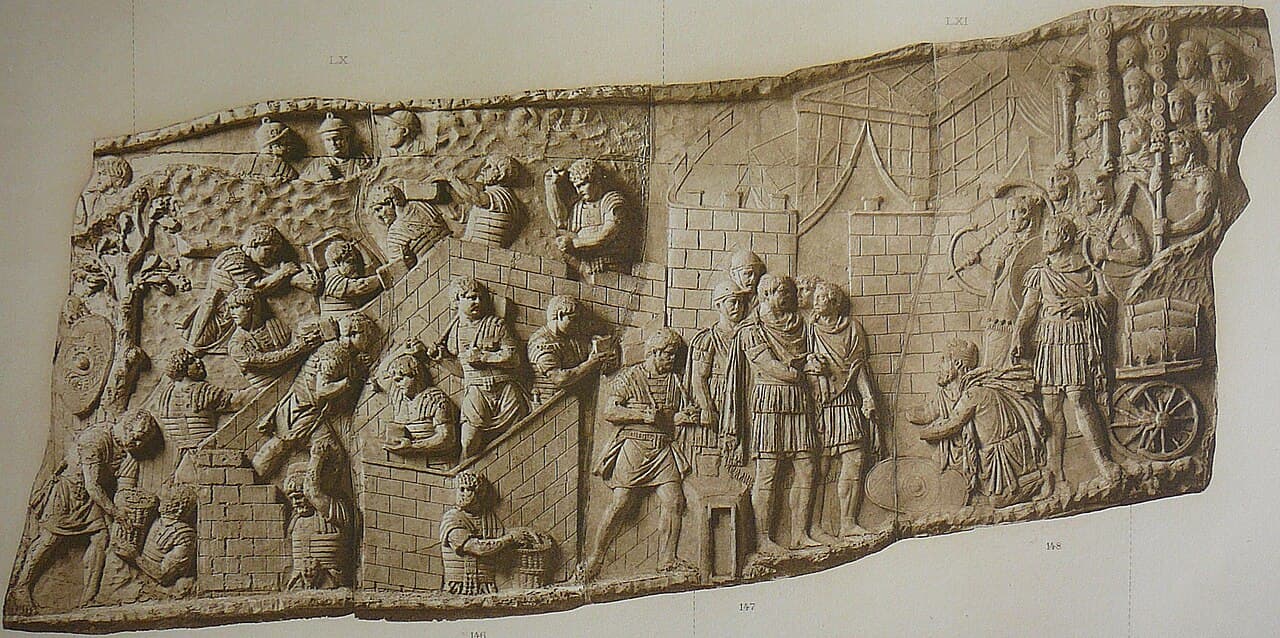
The Roman legions were the sinew of this power. A professional standing army of roughly 300,000 soldiers at peak strength, organized into disciplined legions of approximately 5,000 men each, the Roman military was not merely a fighting force but a civilizing engine. Legionary soldiers built roads, bridges, and fortifications. Upon discharge after 25 years of service, a soldier received land or a cash payment and, eventually, Roman citizenship — a powerful incentive that drew recruits from across the empire's diverse populations.
The Pax Romana: Two Centuries of Relative Peace
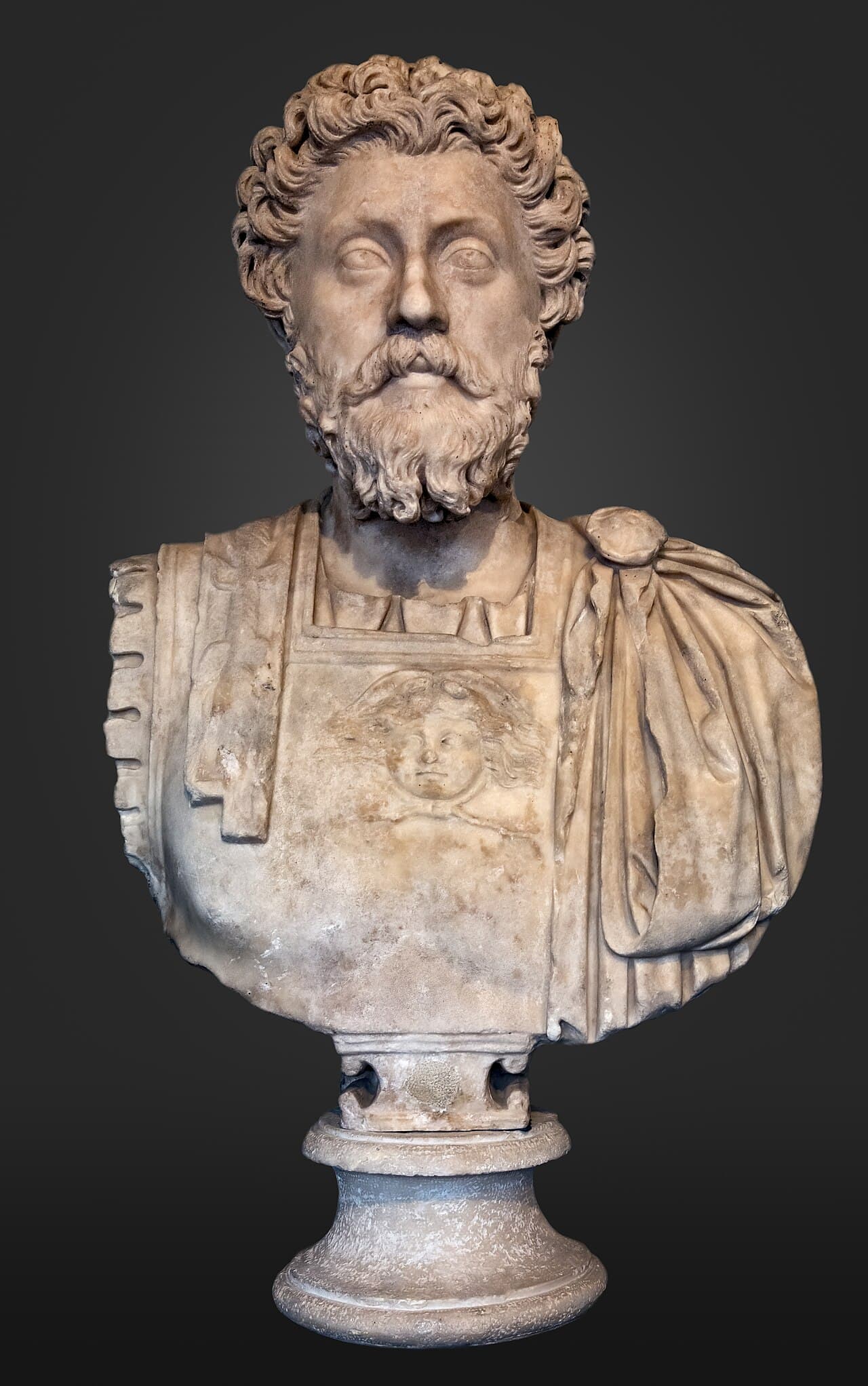
The period from the reign of Augustus (27 BC) to the death of Marcus Aurelius (180 AD) is known as the Pax Romana — the Roman Peace. For roughly 200 years, the Mediterranean world experienced an era of unprecedented stability, trade, and cultural flourishing. Merchants moved freely from Britain to the Persian Gulf. Ideas, religions, and artistic styles crossed borders with ease. The great Stoic philosopher and emperor Marcus Aurelius wrote his 'Meditations' while commanding legions on the Danube frontier, a testament to the intellectual culture that Roman civilization could sustain even under pressure. Cities like Alexandria, Carthage, Antioch, and Rome itself grew into cosmopolitan metropolises of hundreds of thousands of inhabitants, with public baths, theaters, libraries, and complex sewage systems.
| Emperor | Reign | Notable Achievement |
|---|---|---|
| Augustus | 27 BC – 14 AD | Founded the Principate; initiated the Pax Romana |
| Claudius | 41–54 AD | Conquered Britain; expanded the bureaucracy |
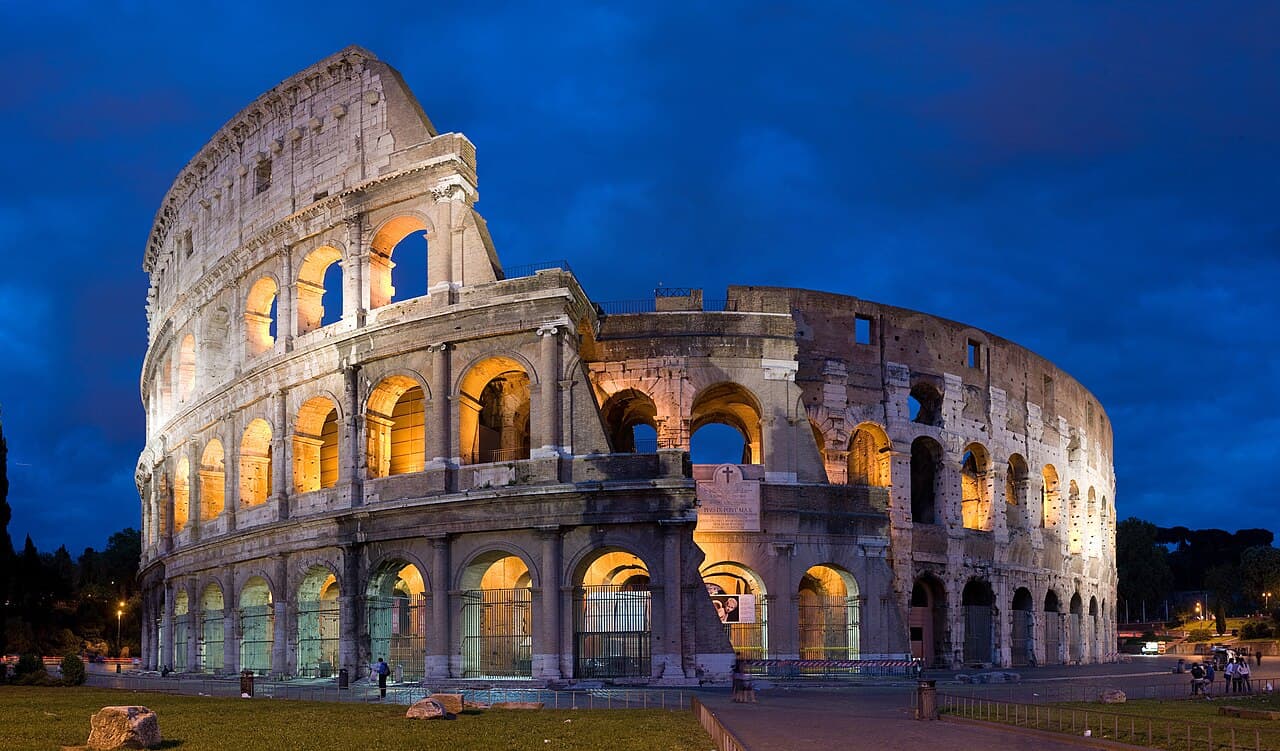
| Vespasian | 69–79 AD | Commissioned the Colosseum; restored order after civil war |
| Trajan | 98–117 AD | Empire reached its greatest territorial extent |
| Hadrian | 117–138 AD | Built Hadrian's Wall; consolidated borders |
| Marcus Aurelius | 161–180 AD | Last of the 'Five Good Emperors'; Stoic philosopher |
| Diocletian | 284–305 AD | Reformed the empire; introduced the Tetrarchy |
| Constantine I | 306–337 AD | Legalized Christianity; founded Constantinople |
Christianity, Crisis, and the Turning Point
Among the many ideas that traveled Rome's roads, none proved more transformative than Christianity. Born in the Roman province of Judaea in the first century AD, the new faith spread along trade routes and through urban networks, initially persecuted and then, in a stunning reversal, embraced. Emperor Constantine I, after his victory at the Battle of Milvian Bridge in 312 AD — which he attributed to divine Christian intervention — issued the Edict of Milan in 313 AD, granting religious tolerance throughout the empire. By the end of the 4th century, Christianity had become the official state religion under Emperor Theodosius I. The old Roman gods retreated into mythology, and the Pope in Rome would eventually inherit much of the city's spiritual authority long after the emperors had gone.
The 3rd century had already brought severe shocks. Between 235 and 284 AD — the so-called Crisis of the Third Century — some 50 emperors claimed the purple, most dying violently. Plague, economic disruption, and external pressure from Germanic tribes and the Persian Sassanid Empire stretched the imperial system to breaking point. Diocletian's revolutionary response was to split the empire into two administrative halves, a division that would become permanent after 395 AD when Emperor Theodosius divided it between his two sons.
The Fall of Rome: A Slow Unraveling
The traditional date of Rome's fall — 476 AD, when the Germanic chieftain Odoacer deposed the last Western Emperor Romulus Augustulus — is more a symbolic marker than a sudden collapse. Historians today emphasize that Rome did not fall so much as transform. The Eastern Roman Empire, centered on Constantinople, continued as a sophisticated civilization for another thousand years, until the Ottoman conquest of 1453 AD. In the West, Roman institutions, Latin language, legal traditions, and the Catholic Church served as the foundations on which medieval Europe was built. The barbarian kings who succeeded Roman emperors in the West often saw themselves not as destroyers but as heirs and imitators of Roman civilization.
Rome's Enduring Legacy
Few civilizations have cast as long a shadow. Roman law forms the backbone of legal systems across continental Europe, Latin America, and beyond. The Romance languages — French, Spanish, Italian, Portuguese, Romanian — are daughters of Latin. The calendar we use was reformed by Julius Caesar and refined under Augustus. The concept of a written constitution, the separation of powers, and republican government trace their intellectual lineage directly to Roman theory and practice, inspiring the founders of the United States and the architects of the French Republic alike. Every time a Western nation builds a courthouse with columns, passes a law in Latin-derived language, or organizes a military into hierarchical units, it echoes Rome. As the historian Mary Beard observed, Rome is not just an interesting episode in the past — it is the story we are still telling about ourselves.