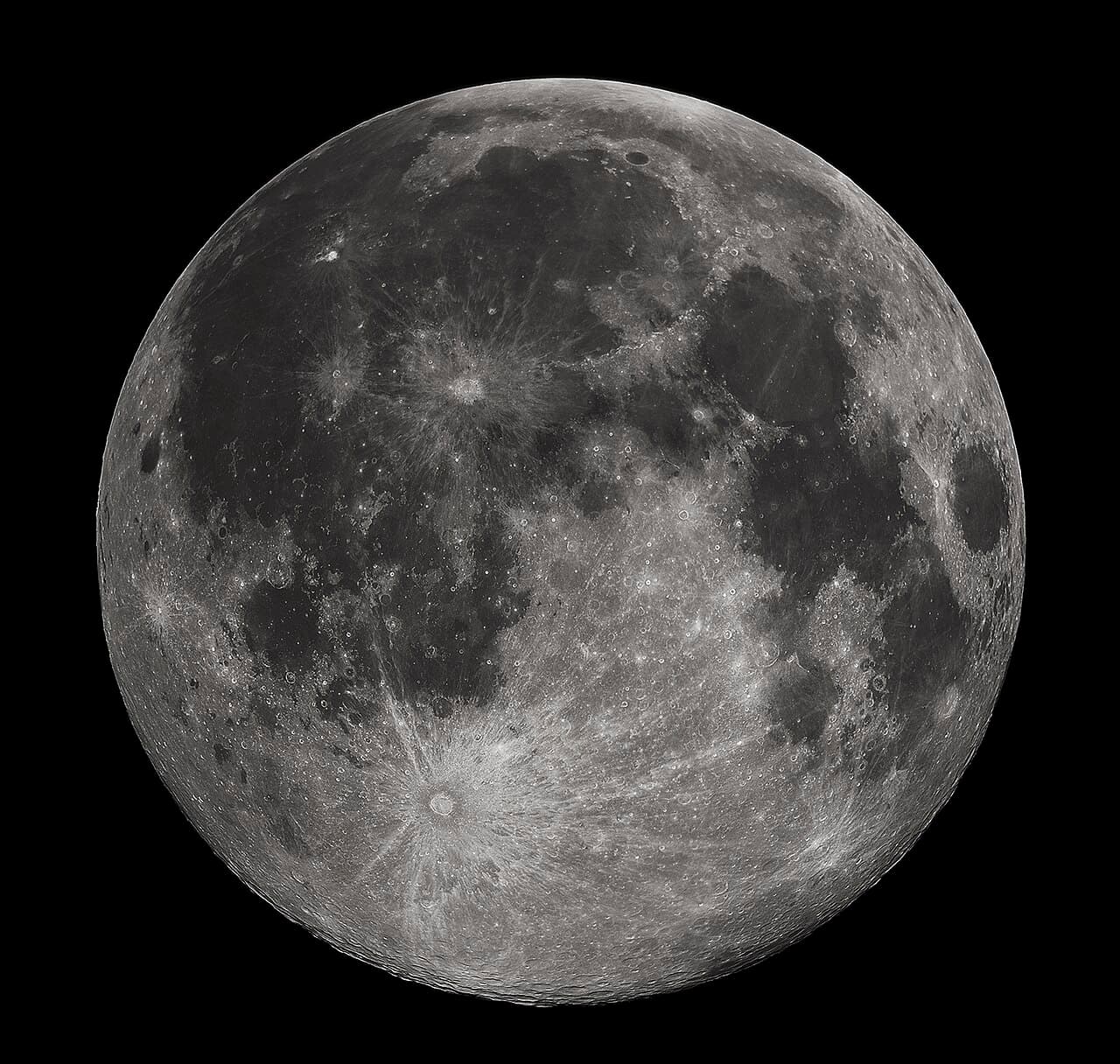
At 10:56 PM Eastern Time on July 20, 1969, a 38-year-old former test pilot from Wapakoneta, Ohio, placed his left boot onto the powdery grey surface of the Moon and uttered one of the most quoted sentences in human history: 'That's one small step for man, one giant leap for mankind.' Neil Armstrong's words — slightly garbled by the transmission, the article 'a' swallowed by static — reached an estimated 600 million people on Earth watching on grainy black-and-white television sets. The Apollo 11 mission had done what many had called impossible: it had carried human beings from Earth to another world and brought them home alive.
The Space Race: A Cold War Rivalry That Reached the Stars
The Moon landing did not emerge from a vacuum. It was the culmination of a fierce ideological and technological competition between the United States and the Soviet Union that had been escalating since the late 1950s. The Soviets drew first blood: in October 1957, they launched Sputnik 1, the world's first artificial satellite, shocking the American public and government alike. A month later, they sent Laika the dog into orbit. In April 1961, cosmonaut Yuri Gagarin became the first human in space, completing a full orbit of Earth aboard Vostok 1. The United States, humiliated and alarmed, felt the pressure to respond decisively.
President John F. Kennedy provided the answer on May 25, 1961, in a bold address to Congress. 'I believe that this nation should commit itself to achieving the goal, before this decade is out, of landing a man on the Moon and returning him safely to the Earth,' Kennedy declared. It was an audacious promise — at the time, the U.S. had only 15 minutes of human spaceflight experience, courtesy of Alan Shepard's suborbital hop just weeks earlier. But the pledge set in motion one of the greatest engineering and organizational efforts in human history.
Building Apollo: Engineering the Impossible
NASA's Apollo program absorbed roughly $25.4 billion — equivalent to approximately $180 billion today — and at its peak employed more than 400,000 engineers, scientists, and technicians. The program faced devastating setbacks. In January 1967, a cabin fire during a launch rehearsal killed astronauts Gus Grissom, Ed White, and Roger Chaffee aboard Apollo 1, grounding the program for nearly two years while engineers redesigned the spacecraft. The tragedy, while heartbreaking, ultimately produced a safer, more reliable vehicle.
The Saturn V rocket, designed under the direction of German-born engineer Wernher von Braun, remains the most powerful rocket ever successfully flown. Standing 363 feet tall and generating 7.6 million pounds of thrust at liftoff, it could carry 130 tons to low Earth orbit. Its five F-1 engines burned a combined 20 tons of propellant per second. Apollo 8, in December 1968, became the first crewed mission to orbit the Moon, providing a critical confidence boost. Apollo 10 served as a full dress rehearsal, descending to within 8.4 nautical miles of the lunar surface before returning to orbit.
The Mission: Eight Days That Changed Everything
Apollo 11 lifted off from Kennedy Space Center's Launch Complex 39A at 9:32 AM on July 16, 1969, carrying Commander Neil Armstrong, Command Module Pilot Michael Collins, and Lunar Module Pilot Edwin 'Buzz' Aldrin. After a three-day transit, the spacecraft entered lunar orbit. On July 20, Armstrong and Aldrin descended in the lunar module Eagle while Collins orbited above in Columbia, alone and out of radio contact for 48 minutes at a time — the most isolated human being in history.
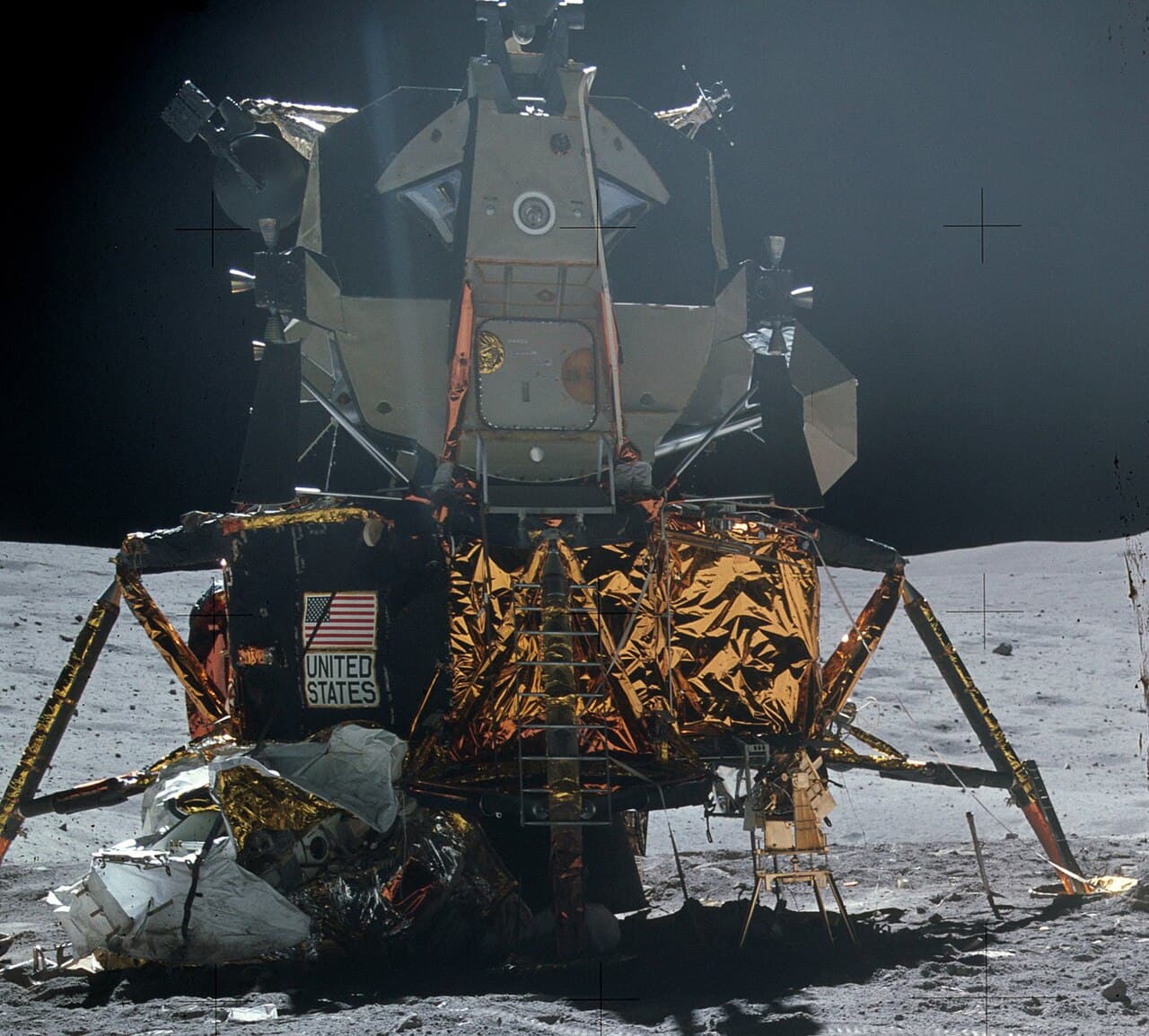
The descent was not without drama. With less than two minutes of fuel remaining and the onboard computer throwing unexpected '1202' program alarm codes — indicating an overloaded processor — Armstrong took manual control and guided Eagle past a boulder-strewn crater to a safe landing in the Sea of Tranquility. 'Houston, Tranquility Base here. The Eagle has landed,' he radioed. At Mission Control, flight controller Charlie Duke's reply barely concealed the room's relief: 'Roger, Tranquility. We copy you on the ground. You've got a bunch of guys about to turn blue. We're breathing again.'
Armstrong and Aldrin spent approximately two and a half hours on the surface, collecting 47.5 pounds of lunar rocks and soil, planting an American flag, deploying scientific instruments, and speaking briefly with President Richard Nixon. Aldrin later described the landscape as 'magnificent desolation.' They departed the lunar surface on July 21, docked with Collins, and splashed down safely in the Pacific Ocean on July 24, 1969 — eight days, three hours, and 18 minutes after launch.
Legacy: What the Moon Landings Left Behind
Apollo 11 was only the beginning. Five more missions successfully landed on the Moon between 1969 and 1972, with Apollo 13 famously aborting its landing after an oxygen tank explosion but returning its crew safely. In total, 12 human beings walked on the lunar surface. The program yielded 842 pounds of lunar samples that continue to be studied today, fundamentally shaping our understanding of the Moon's formation — likely the result of a giant impact with early Earth some 4.5 billion years ago.
Beyond science, Apollo's cultural and technological footprint is vast. Spinoff technologies from the program include memory foam, scratch-resistant lenses, water filtration systems, and advances in integrated circuits that helped accelerate the digital revolution. The missions also produced some of the most powerful imagery of the 20th century, including the 'Earthrise' photograph taken during Apollo 8, which many credit with galvanizing the modern environmental movement.
Decades later, no human has returned to the Moon. NASA's Artemis program, initiated in the early 2020s, aims to change that — with plans to land the first woman and the next man on the lunar surface, establishing a sustainable presence as a stepping stone toward Mars. The Moon, it seems, is not yet finished with us.
Apollo Missions at a Glance
| Mission | Date | Crew | Outcome |
|---|---|---|---|
| Apollo 1 | Jan 1967 | Grissom, White, Chaffee | Launchpad fire; crew lost |
| Apollo 8 | Dec 1968 | Borman, Lovell, Anders | First crewed lunar orbit |
| Apollo 10 | May 1969 | Stafford, Young, Cernan | Lunar module descent rehearsal |
| Apollo 11 | Jul 1969 | Armstrong, Collins, Aldrin | First crewed lunar landing |
| Apollo 13 | Apr 1970 | Lovell, Swigert, Haise | Aborted; crew returned safely |
| Apollo 17 | Dec 1972 | Cernan, Evans, Schmitt | Last crewed lunar landing |