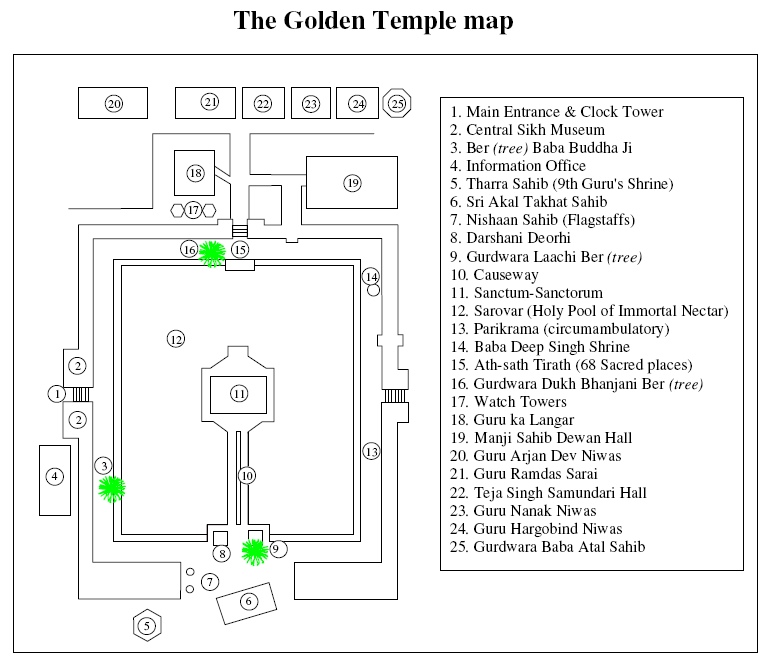
The Golden Temple, formally known as Harmandir Sahib ('Abode of God'), is the holiest shrine in Sikhism, located in Amritsar, Punjab, India. Built between 1581 and 1604 under the guidance of the fourth and fifth Sikh Gurus, it draws over 100,000 pilgrims and visitors every single day — more than the Taj Mahal — making it one of the most visited religious sites on Earth. Its shimmering gold facade, reflected in the sacred Amrit Sarovar ('Pool of Immortal Nectar'), stands as a symbol of equality, humility, and devotion.
What Is the History and Origin of the Golden Temple?
The origins of the Golden Temple trace back to 1577, when the fourth Sikh Guru, Guru Ram Das, founded the city of Amritsar and excavated the sacred pool. His successor, Guru Arjan Dev, oversaw construction of the central shrine between 1588 and 1604, placing the Adi Granth — the Sikh holy scripture — inside it upon its completion. Crucially, Guru Arjan invited the Muslim Sufi saint Mian Mir of Lahore to lay the foundation stone, a gesture that embedded interfaith harmony into the temple's very foundations. The complex was repeatedly destroyed by Afghan invaders in the 18th century, most catastrophically by Ahmad Shah Durrani in 1762, but was rebuilt each time by the Sikh community. It was Maharaja Ranjit Singh, founder of the Sikh Empire, who in 1830 gave the shrine its iconic appearance by covering the upper floors with approximately 750 kg of gold leaf — hence the name the world now uses.
How Was the Golden Temple Designed and Built?
The architecture of Harmandir Sahib is a deliberate blend of Hindu and Mughal styles, reflecting the Sikh philosophy of unity. The shrine sits at the centre of the 150-metre-wide Amrit Sarovar and is connected to the marble causeway called the Guru's Bridge (Darshani Deori). Unlike most temples built on elevated ground to signify power, the Golden Temple was constructed below the level of the surrounding land — visitors descend steps to enter, symbolising humility. The complex has four entrances, one on each cardinal direction, signifying that people of all castes, creeds, and religions are welcome. The upper two stories are covered in gilded copper plates, while the interior is adorned with intricate pietra dura inlay work and frescoes. Surrounding the pool is the parikarma (circumambulatory walkway), paved in white marble and stretching nearly 400 metres.
| Feature | Detail |
|---|---|
| Official Name | Harmandir Sahib / Sri Darbar Sahib |
| Location | Amritsar, Punjab, India |
| Founded | 1577 (pool); shrine completed 1604 |
| Gold Applied | ~750 kg by Maharaja Ranjit Singh, 1830 |
| Daily Visitors | Over 100,000 |
| Langar (free meals) served daily | Approximately 100,000 people |
Why Is the Golden Temple Significant to Sikhs — and to the World?
Beyond its architectural splendour, Harmandir Sahib is a living institution. The Langar — a free community kitchen operating 24 hours a day — serves roughly 100,000 free meals daily regardless of religion, caste, or status, making it one of the largest free kitchens in the world. Hundreds of volunteers, called sevadars, prepare and serve simple vegetarian meals as an act of spiritual service. The temple is also the site of immense historical trauma: in June 1984, Indian Prime Minister Indira Gandhi ordered Operation Blue Star, a military assault on the complex to remove Sikh separatist militants led by Jarnail Singh Bhindranwale. The operation killed an estimated 500–3,000 people (figures remain disputed), damaged the Akal Takht — the seat of Sikh temporal authority — and sent shockwaves through the global Sikh community. Two months later, Gandhi was assassinated by her Sikh bodyguards. Today, the restored Harmandir Sahib receives pilgrims from across the world and remains an enduring beacon of the Sikh values of seva (selfless service), equality, and devotion.