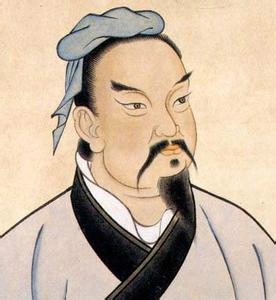
Sun Tzu was a Chinese military general, strategist, and philosopher who lived during the late Spring and Autumn period of ancient China, roughly 544–496 BC. He served the state of Wu under King Helü and is credited with writing The Art of War, a 13-chapter treatise on military strategy that remains the most influential tactical text ever written. Translated into dozens of languages and studied by generals, CEOs, and world leaders alike, his ideas on deception, adaptability, and knowing one's enemy have proved timeless.
Who Was Sun Tzu? Life and Historical Background
Sun Tzu was born Sun Wu in the state of Qi (modern Shandong province, China) around 544 BC. He later adopted the honorific 'Tzu' meaning 'Master.' The primary historical source for his life is the Shiji (Records of the Grand Historian), compiled by Sima Qian around 100 BC. According to Sima Qian, Sun Wu traveled to the state of Wu and presented his manuscript on the art of war to King Helü. To prove his methods, he famously drilled the king's 180 concubines into disciplined soldiers — executing two lead concubines who defied orders to demonstrate that military command supersedes royal favoritism. Impressed, Helü appointed him general. Sun Tzu's campaigns helped Wu defeat the powerful state of Chu in 506 BC, capturing the Chu capital of Ying and briefly reducing Chu to a vassal state. Some modern historians debate whether Sun Tzu was a single historical person or a composite figure, but most scholars accept he was real.
What Are the Core Ideas of The Art of War?
The Art of War consists of 13 short chapters, each focused on a distinct aspect of conflict: planning, waging war, strategic attack, terrain, intelligence, and more. Its most celebrated principle is strategic deception: 'All warfare is based on deception.' Sun Tzu argued that the supreme victory is to defeat the enemy without fighting — through superior positioning, intelligence, and psychological pressure. He stressed the importance of flexibility, famously comparing a great army to water that shapes itself to the terrain. He also emphasized knowing both yourself and your enemy: 'If you know the enemy and know yourself, you need not fear the result of a hundred battles.' Written on bamboo strips, the original text is remarkably concise — fewer than 6,000 Chinese characters — yet its strategic depth has never been surpassed.

The Legacy and Modern Influence of Sun Tzu
The Art of War was first translated into French by Jesuit missionary Father Jean Joseph Marie Amiot in 1772, introducing Sun Tzu to Europe. Napoleon is said to have studied it. In the 20th century, Mao Zedong cited Sun Tzu's principles in his guerrilla warfare strategy, and General Vo Nguyen Giap credited Sun Tzu when designing Vietnam's campaigns against the United States. Today, The Art of War is required reading at the U.S. Marine Corps, the British military's staff colleges, and countless business schools. Corporate leaders apply its lessons to competitive strategy, negotiation, and market positioning. It remains one of the best-selling books in the world over 2,500 years after it was written.
| Chapter | Title | Core Principle |
|---|---|---|
| 1 | Laying Plans | Calculate advantages before acting |
| 3 | Strategic Attack | Win without fighting if possible |
| 6 | Weak Points and Strong | Strike where the enemy is unprepared |
| 10 | Terrain | Adapt tactics to the environment |
| 13 | The Use of Spies | Intelligence is the foundation of victory |
