In the entire sweep of Western history, few figures have compressed so much ambition, brilliance, and catastrophe into a single lifetime as Napoleon Bonaparte. Born on the periphery of France, he died in exile on the edge of the known world — and in between, he fought more than sixty battles, reordered the map of Europe, reformed its legal systems, and left a legacy so profound that nations are still arguing about it two centuries later.
A Corsican Outsider Finds His Stage
Napoleone di Buonaparte was born on August 15, 1769, in Ajaccio, Corsica — just fourteen months after France purchased the island from the Republic of Genoa. His father, Carlo, was a minor nobleman of Italian descent; his mother, Letizia Ramolino, was a woman of iron resolve who would outlive most of her famous son's empire. Napoleon spoke French with a Corsican accent well into his teens and was mocked at the military academy at Brienne for his origins. He channeled the humiliation into obsessive study and a ferocious competitive drive.
He graduated from the École Militaire in Paris in 1785, ranked 42nd out of 58 in his class — respectable, but hardly prophetic. He was commissioned as a second lieutenant in the artillery at the age of sixteen. What set him apart was not pedigree but intellect: he read voraciously, studied the campaigns of Alexander, Hannibal, and Caesar, and developed an intuitive grasp of terrain, logistics, and the psychology of both soldiers and enemies.
The Revolutionary Crucible
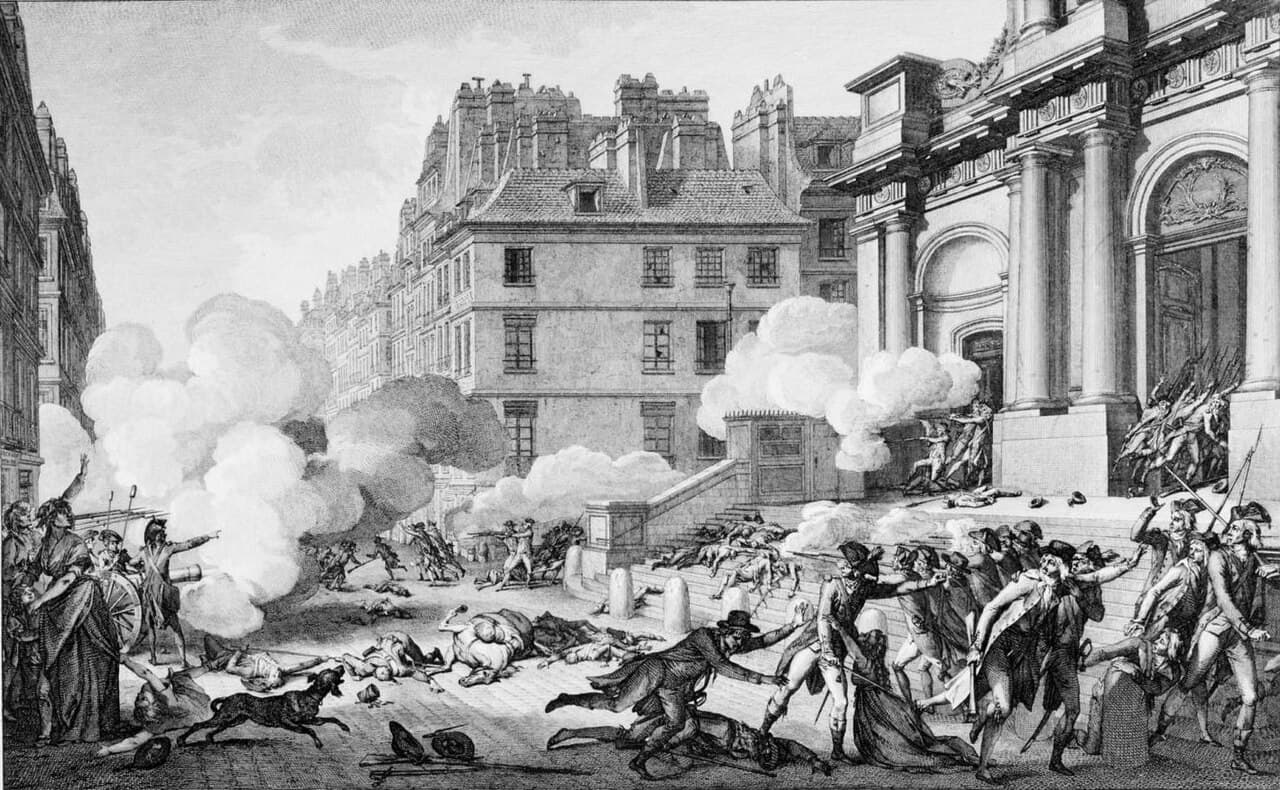
The French Revolution opened a door that the old aristocratic order had kept firmly shut. As noble-born officers fled into exile, talent rather than birth began to determine advancement. Napoleon seized the moment. At the siege of Toulon in 1793, he devised the artillery strategy that dislodged a British-supported Royalist garrison from the port, and was promoted to brigadier general at age twenty-four. When a Royalist uprising threatened the new Directory government in Paris in October 1795, he dispersed the crowd with his infamous 'whiff of grapeshot,' earning the gratitude of the regime and the nickname 'the little general.'
His Italian campaign of 1796–97 was a revelation. Given command of the ragged Army of Italy, he transformed demoralized, undersupplied troops into a lightning force that outmaneuvered and defeated Austrian and Piedmontese armies in rapid succession. In less than a year he had won fourteen battles, seized territory stretching to the Adriatic, and negotiated the Treaty of Campo Formio — effectively conducting foreign policy independently of the Directory. He was twenty-seven years old.
Emperor of the French
After a strategically mixed but propagandistically brilliant Egyptian campaign (1798–99), Napoleon returned to France and participated in the Coup of 18 Brumaire in November 1799, dismantling the Directory and establishing the Consulate with himself as First Consul. Within five years, through a carefully managed referendum, he crowned himself Emperor of the French on December 2, 1804 — famously placing the crown on his own head in Notre-Dame Cathedral, in front of a helpless Pope Pius VII, to signal that his power derived from himself alone.
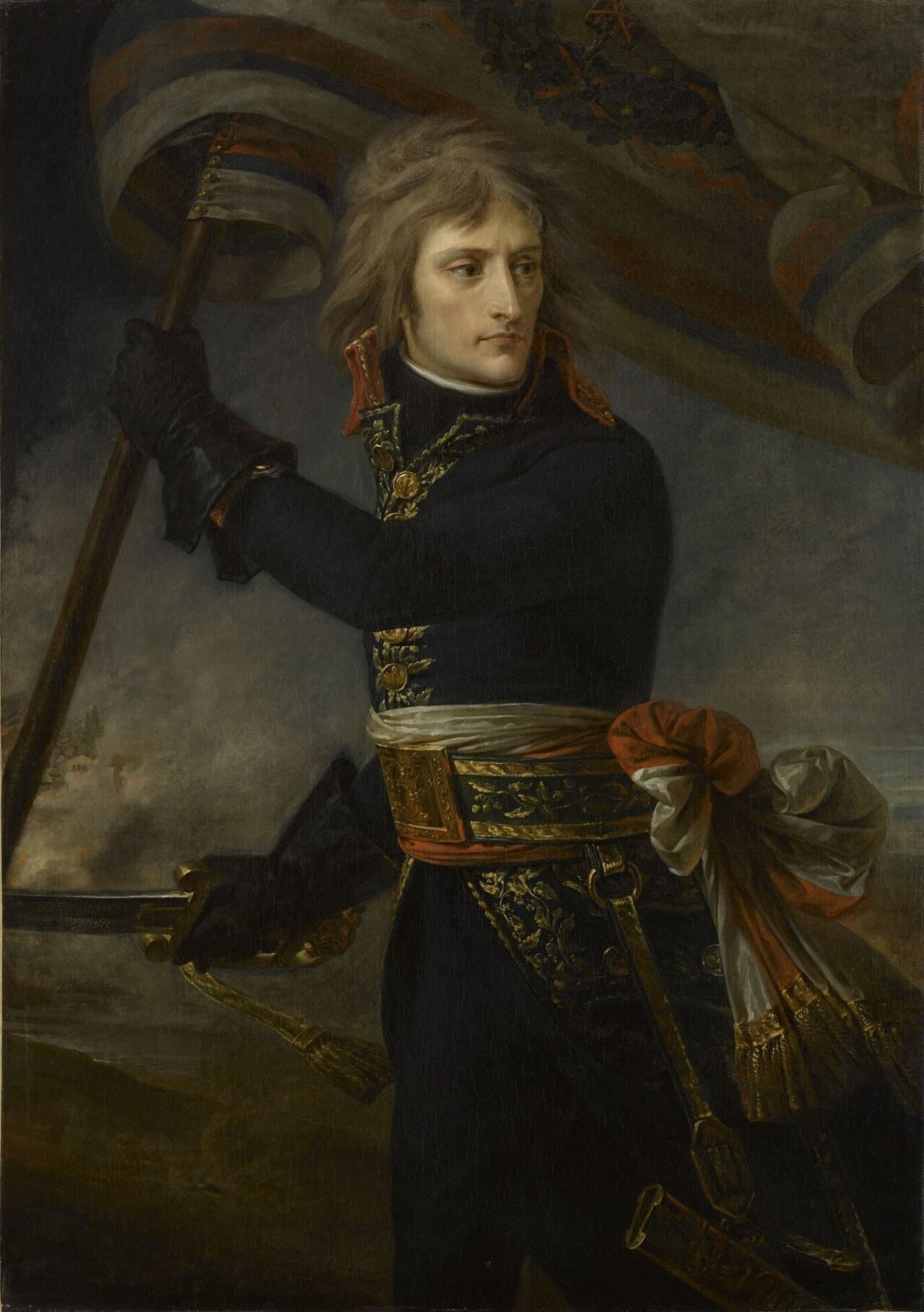
The years between 1805 and 1807 represent the zenith of his military career. At Austerlitz on December 2, 1805 — the first anniversary of his coronation — he lured a larger Austro-Russian army into attacking his deliberately weakened right flank, then smashed their center with a devastating blow. It is widely considered the most tactically perfect battle in history. Jena-Auerstedt (1806) shattered the Prussian army in a single day; Friedland (1807) forced Russia to the peace table. At the Treaties of Tilsit, Napoleon was master of continental Europe from Lisbon to the borders of Russia.
The Napoleonic Code and the Reformer's Legacy
Napoleon's impact extended far beyond the battlefield. The Napoleonic Code, promulgated in 1804, standardized French civil law, enshrined equality before the law, protected property rights, and established religious tolerance. It became the template for legal systems across Europe, Latin America, and Louisiana. He reorganized the French educational system, establishing lycées and the grandes écoles that still anchor French intellectual life. The Bank of France, the prefectural administrative system, and the Legion of Honor all date from his rule. Wherever his armies marched, they carried — sometimes at bayonet point — the abolition of feudalism and the principles of meritocracy.
The Fatal Overreach
Hubris, geography, and economics conspired to undo him. The Continental System, his attempt to strangle Britain economically by closing European ports to British goods, proved self-defeating — it hurt France's allies more than Britain and triggered the very conflicts it sought to prevent. The Peninsular War, begun in 1808 when Napoleon placed his brother Joseph on the Spanish throne, became a grinding, six-year guerrilla conflict that drained French manpower and treasure while Wellington's British forces honed their skills in the Iberian hills.
The catastrophic invasion of Russia in 1812 sealed his fate. With nearly 685,000 men — the largest army ever assembled in European history to that point — Napoleon crossed into Russia in June. The Russians refused to stand and fight decisively, drawing him ever deeper into a scorched and starving landscape. Moscow was taken in September but offered no political resolution; Tsar Alexander refused to negotiate. The retreat from Moscow in the killing winter of 1812 destroyed the Grande Armée. Perhaps 100,000 men returned from a force that had numbered hundreds of thousands.
Exile, Return, and Final Defeat
The coalition powers closed in. After defeats at Leipzig in October 1813 — the 'Battle of Nations' — and a brilliant but ultimately futile defensive campaign in France itself, Napoleon abdicated in April 1814 and was exiled to the island of Elba. He escaped in March 1815, landing in southern France and marching north, gathering his old soldiers as he went in what became known as the Hundred Days. Europe mobilized once more. At Waterloo on June 18, 1815, his final gamble was broken by Wellington's tenacity and the timely arrival of Prussian forces under Blücher. He surrendered to the British, who exiled him to the remote South Atlantic island of Saint Helena. He died there on May 5, 1821, aged fifty-one, most likely from stomach cancer, though conspiracy theories of arsenic poisoning have never been entirely extinguished.
A Legacy Written in Law and Blood
Napoleon's legacy is irreducibly complex. He ended the Revolution's chaos but also its most radical democratic possibilities, substituting authoritarian efficiency for popular sovereignty. He spread Enlightenment principles across Europe while doing so through conquest and coercion. He reimposed slavery in French colonies in 1802, a decision that stands as an indelible stain on his record. Yet the world his wars created — nationalist movements awakening from Madrid to Warsaw to Berlin, a Europe that would be reorganized at the Congress of Vienna and never truly return to the old order — is recognizably the world that led to modernity. As Wellington himself said of Waterloo: 'It was the nearest run thing you ever saw in your life.' The margin between a Napoleonic Europe and the one we inherited was, in the end, remarkably thin.
| Battle | Year | Outcome | Significance |
|---|---|---|---|
| Toulon | 1793 | French Victory | Napoleon's first major success; promoted to general |
| Lodi | 1796 | French Victory | Cemented his legend with troops; 'the little corporal' |
| Austerlitz | 1805 | French Victory | Considered his masterpiece; ended Third Coalition |
| Jena-Auerstedt | 1806 | French Victory | Crushed Prussia in a single engagement |
| Borodino | 1812 | Pyrrhic French Victory | Bloodiest day of Napoleonic Wars; Russia unbroken |
| Leipzig | 1813 | Coalition Victory | Largest battle in Europe before WWI; sealed Napoleon's fate |
| Waterloo | 1815 | Coalition Victory | Napoleon's final defeat; second and permanent exile |