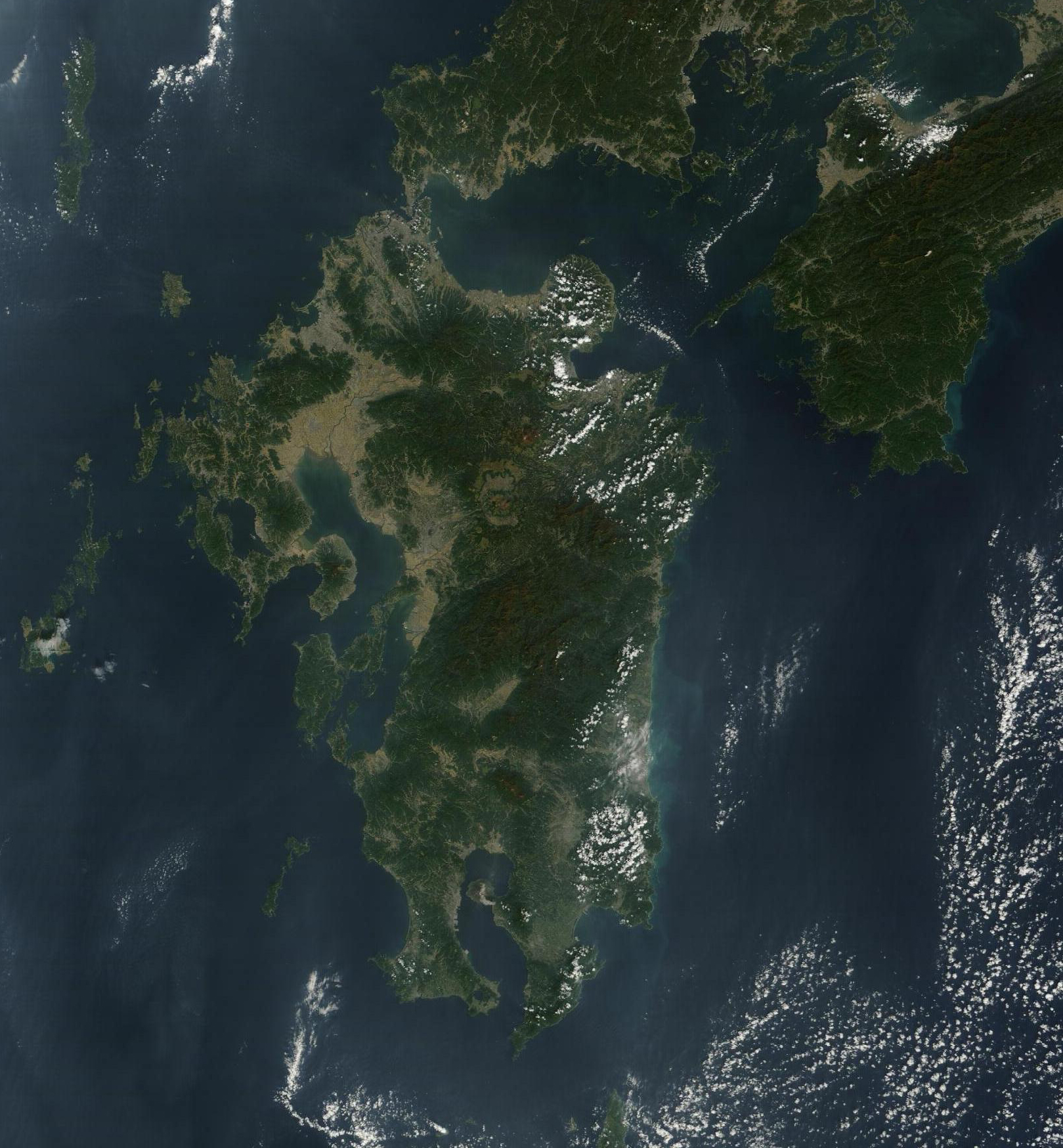
Kyushu is Japan's third-largest and southwesternmost main island, covering approximately 36,782 square kilometres and home to around 13 million people across seven prefectures. It has served as Japan's primary gateway to continental Asia for over two millennia, making it the birthplace of rice cultivation in Japan, the first point of contact with Chinese civilisation, and the landing site of two Mongol invasion fleets in 1274 and 1281. Today it is celebrated for active volcanoes, distinctive regional cuisines, and a manufacturing economy that produces everything from semiconductors to automobiles.
What Is the Ancient and Feudal History of Kyushu?
Kyushu's recorded history begins with the Yayoi period (roughly 300 BCE–300 CE), when wet-rice agriculture arrived from the Korean Peninsula and spread northward across Japan from northern Kyushu. The semi-mythical state of Na, centred near modern Fukuoka, sent envoys to the Han dynasty court of Emperor Guangwu in 57 CE and received a gold seal — still preserved in Fukuoka today — as proof of diplomatic recognition. During the feudal era, powerful clans including the Shimazu of Satsuma domain (modern Kagoshima) dominated southern Kyushu for centuries. The Shimazu famously invaded the Ryukyu Kingdom in 1609, extending their influence into what is now Okinawa. Nagasaki, on Kyushu's western coast, became the sole legal port for foreign trade during Japan's sakoku isolation policy (1635–1853), making it the only window through which Western science, medicine, and technology entered Japan for over two centuries.
How Did the Mongol Invasions of Kyushu Shape Japanese History?
In 1274, Kublai Khan dispatched roughly 23,000 Mongol and Korean troops to Hakata Bay (present-day Fukuoka). Japanese samurai, unaccustomed to massed arrow volleys and explosive projectiles, were pushed back before a sudden storm forced the fleet to withdraw. Khan launched a far larger second invasion in 1281 — an estimated 140,000 troops aboard 4,400 vessels — but a catastrophic typhoon, later mythologised as the kamikaze or 'divine wind,' destroyed most of the fleet, killing tens of thousands. These events reinforced Japanese beliefs in divine protection and left a lasting cultural legacy, including the concept of kamikaze that was revived as a military tactic in World War II.

| Invasion | Year | Force Size | Outcome |
|---|---|---|---|
| First Mongol Invasion | 1274 | ~23,000 troops | Storm forced withdrawal |
| Second Mongol Invasion | 1281 | ~140,000 troops | Typhoon destroyed fleet |
| Western Contact (Portuguese) | 1543 | Small trading mission | Guns introduced to Japan |
| Sakoku Isolation Begins | 1635 | National policy | Nagasaki sole trade port |
Why Is Kyushu Important for Japan's Modern Economy and Culture?
Modern Kyushu punches well above its geographic weight. The island is nicknamed 'Silicon Island' because it produces approximately 40% of Japan's semiconductors, with major fabrication plants operated by companies including TSMC, which opened a landmark chip factory in Kumamoto in 2024. The automotive sector is equally significant: Toyota, Honda, and Nissan all operate major assembly plants on the island. Culturally, Kyushu is the origin of Hakata ramen (a rich tonkotsu pork broth style now eaten worldwide), Arita porcelain (exported to Europe since the 17th century), and shochu distilling traditions in Kagoshima. The island's volcanic geography — anchored by Mount Aso, one of the world's largest active calderas — draws millions of tourists annually and provides abundant geothermal energy. The 1945 atomic bombing of Nagasaki, which killed an estimated 40,000–80,000 people, remains the island's most sombre historical marker and a global symbol of nuclear devastation.

