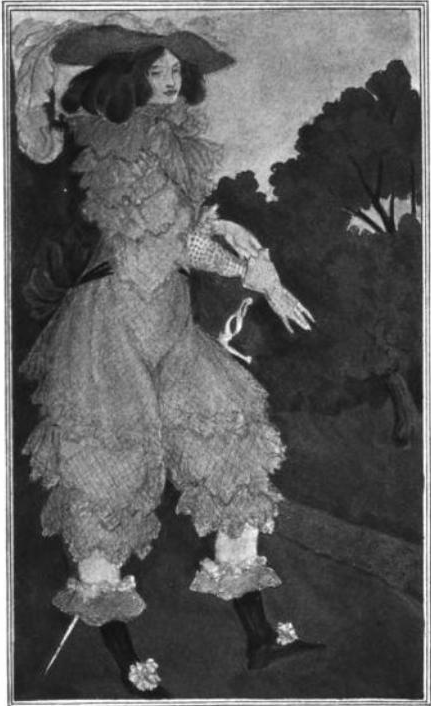
Julie d'Aubigny (c. 1670–1707), also known as La Maupin, was a French opera singer and swordswoman who became one of the most scandalous and celebrated figures of Louis XIV's France. Trained in fencing by her father, a secretary to the King's Master of Horse, she fought multiple duels, performed at the Paris Opéra, and lived openly as a bisexual woman at a time when such defiance could mean imprisonment or death. Her life was so extraordinary that it reads like fiction — yet it is almost entirely documented fact.
How Did Julie d'Aubigny Become a Master Swordswoman and Opera Star?
Born around 1670 in Paris, Julie was raised in the stables of Versailles, where her father, Gaston d'Aubigny, trained pages for the court of Louis XIV. He taught his daughter alongside the royal pages, giving her an education in riding, fencing, and Latin — skills virtually unheard of for women of any class. By her teenage years she was already a formidable fencer. She became the mistress of the Comte d'Armagnac and later ran away with a fencing master named Sérannes to Marseille, where the two performed street spectacles to survive. Recognising her powerful contralto voice, she trained seriously and debuted at the Marseille opera around 1689. By 1690, she had secured a position at the Académie Royale de Musique — the Paris Opéra — where she performed leading roles for over a decade, praised by contemporaries for a voice of rare depth and dramatic intensity.
What Were Julie d'Aubigny's Most Famous Scandals and Duels?
D'Aubigny's personal life was as dramatic as her stage roles. In 1695, at a society ball in Paris, she kissed a young woman on the dance floor and was challenged by three noblemen simultaneously. She defeated all three in rapid succession — an act technically punishable by death under French law. She obtained a royal pardon from Louis XIV, reportedly because the king found the story too amusing to punish. Earlier, in 1689, she had broken a young woman she loved out of a convent in Avignon, stealing a nun's corpse to place in the girl's bed to fake her death — a crime for which she was condemned to death in absentia and burned in effigy. She was later pardoned after the charges were dropped. Her affairs with both men and women were widely known, and she made no effort to conceal them.

| Year | Event |
|---|---|
| c. 1670 | Born in Paris; raised at Versailles stables |
| c. 1689 | Convent scandal in Avignon; condemned in absentia |
| 1690 | Débuts at the Paris Opéra |
| 1695 | Defeats three noblemen in duels at a Paris ball; pardoned by Louis XIV |
| 1698 | Travels to Brussels; affair with Elector of Bavaria |
| 1705 | Retires from the Opéra and enters a convent |
| 1707 | Dies in a convent, aged approximately 37 |
What Is Julie d'Aubigny's Legacy?
D'Aubigny died around 1707, likely in a convent she had entered after the death of her great love, the Comte d'Albert. She was approximately 37 years old. Despite her fame in her own era, she was largely forgotten for two centuries before being rediscovered by historians and popular culture in the late 20th century. Today she is celebrated as an icon of gender nonconformity, personal freedom, and artistic brilliance. Her life has inspired novels, video games, and ongoing cultural fascination as a woman who fought — literally and figuratively — on her own terms in one of history's most rigidly hierarchical societies.