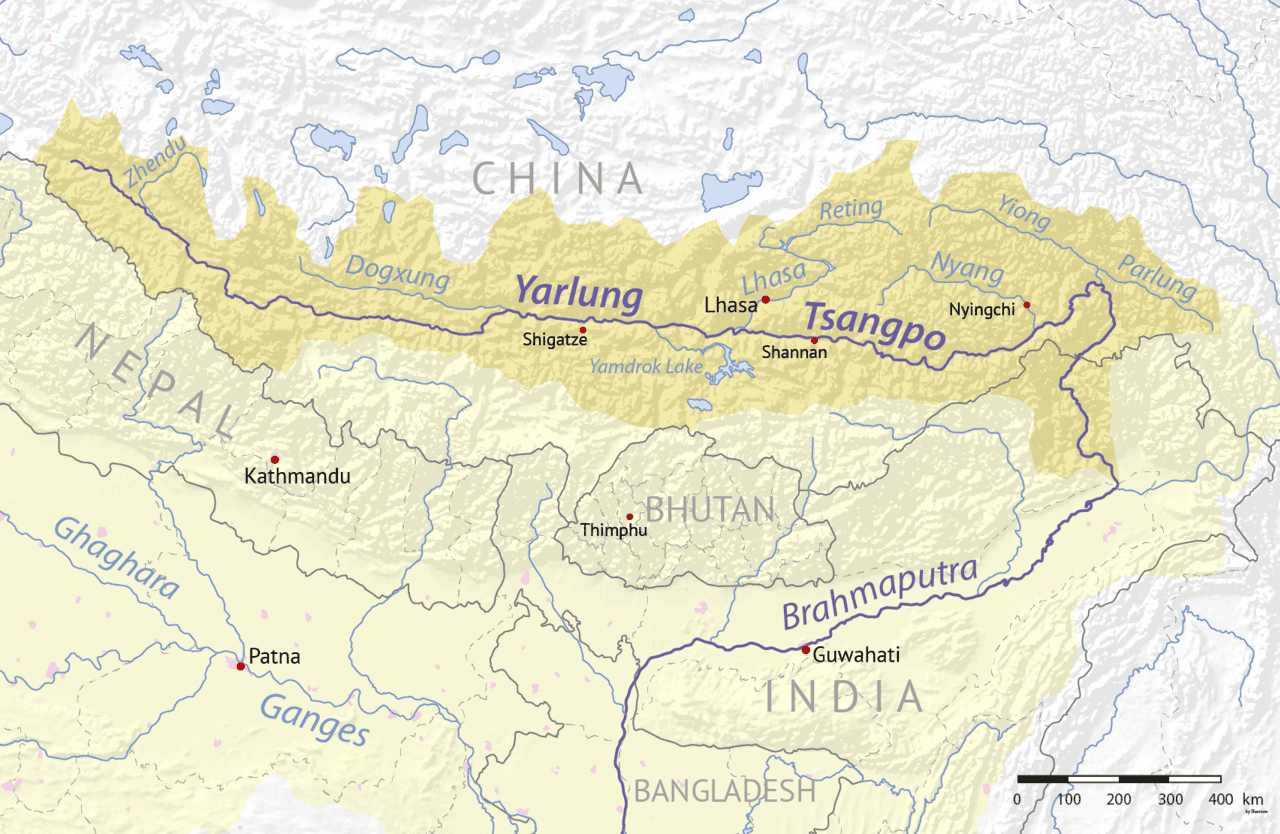
The Yarlung Tsangpo, also called Yarlung Zangbo (Tibetan: ཡར་ཀླུངས་གཙང་པོ་, Wylie: yar kLungs gTsang po, ZWPY: Yarlung Zangbo) and Yalu Zangbu River (Chinese: 雅鲁藏布江; pinyin: Yǎlǔzàngbù Jiāng), is the upper course of Brahmaputra River. It flows through the Tibet Autonomous Region of China and Arunachal Pradesh state of India. It is the longest river of Tibet and the fifth longest in China. The upper section is also called Dangque Zangbu meaning "Horse River".
Originating from the Angsi Glacier in western Tibet, southeast of Mount Kailash and Lake Manasarovar, it later forms the South Tibet Valley. When leaving the Tibetan Plateau, the river forms the world's largest and deepest canyon, Yarlung Tsangpo Grand Canyon. before passing into Arunachal Pradesh where it gets far wider and is called the Siang. After reaching Assam, the river becomes known as the Brahmaputra.
Description
The Yarlung Tsangpo River is the highest major river in the world. Its longest tributary is the Nyang River. Major tributaries of Yarlung Tsangpo include Nyangchu River, Lhasa River, Nyang River, and Parlung Tsangpo.
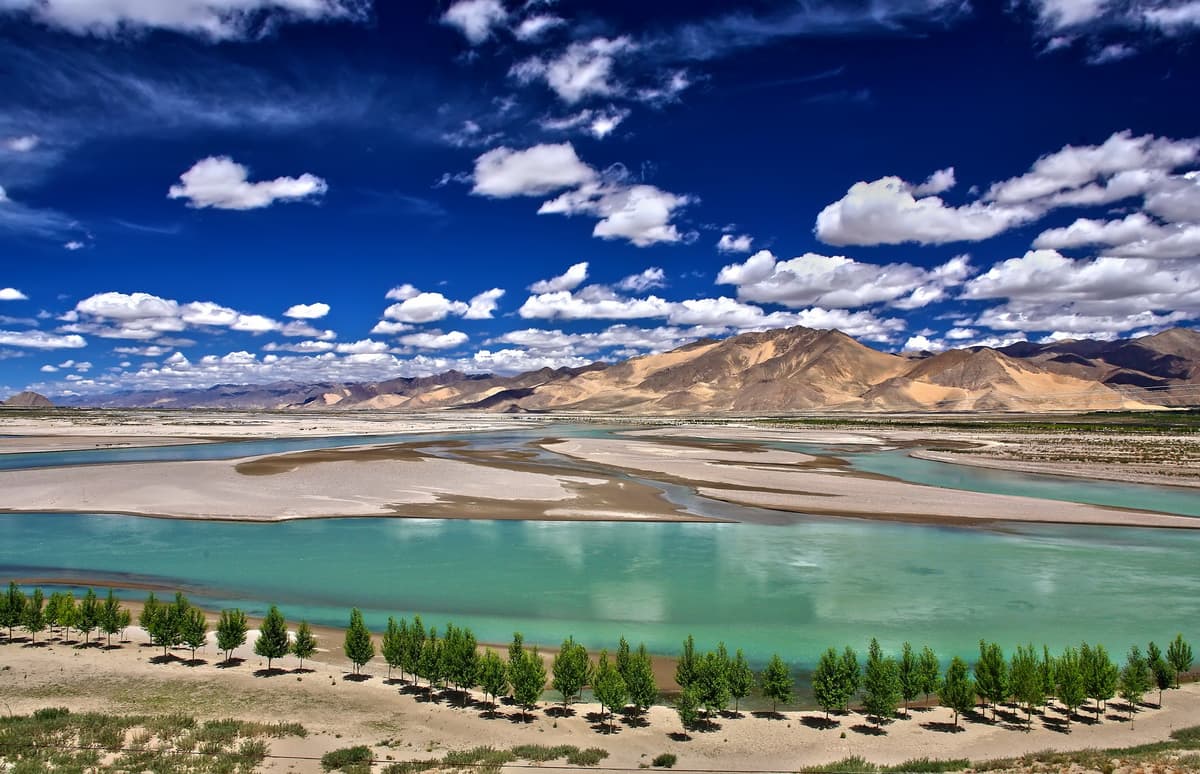
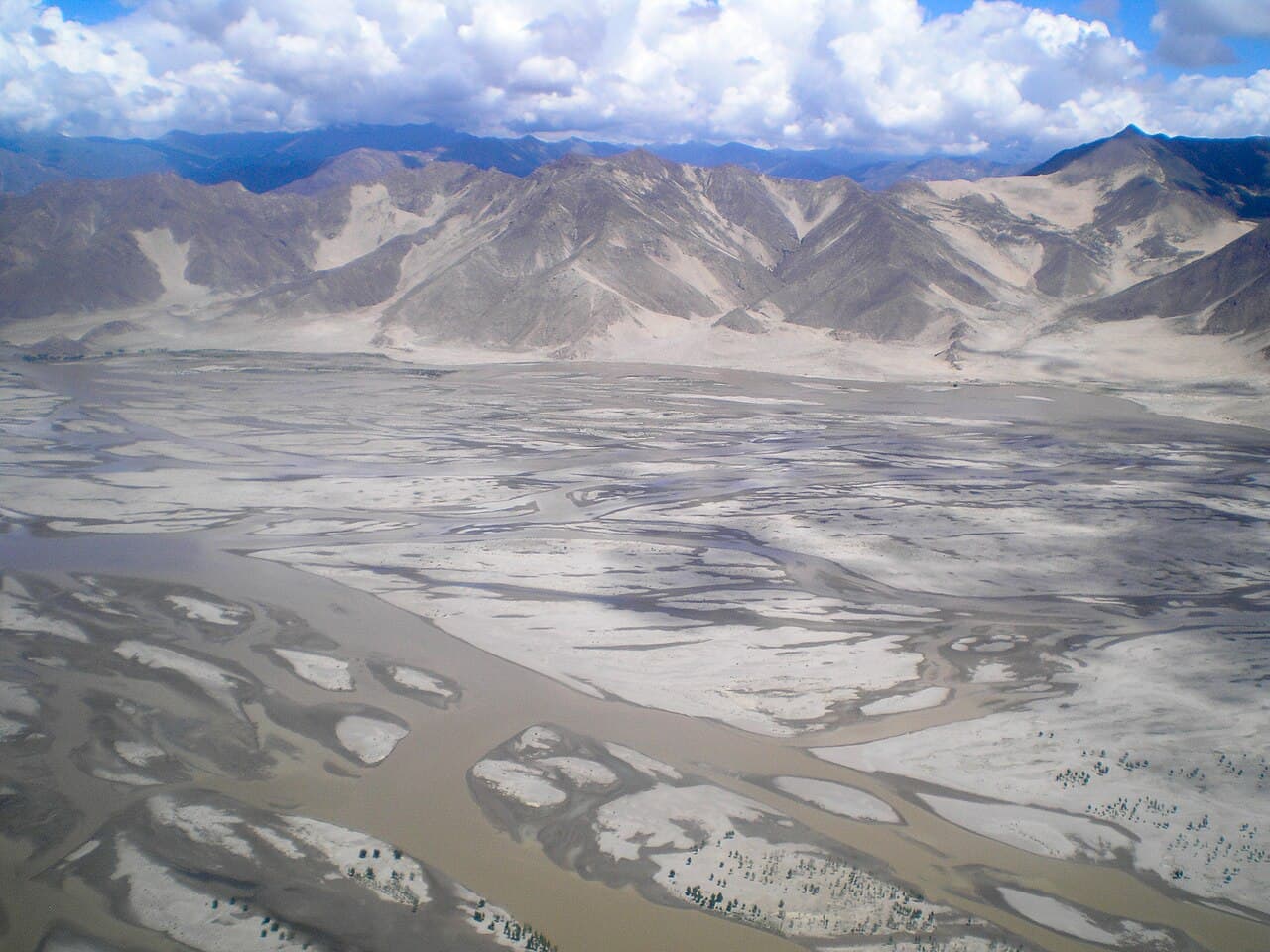
In Tibet the river flows through the South Tibet Valley, which is approximately 1,200 kilometres (750 mi) long and 300 kilometres (190 mi) wide. The valley descends from 4,500 metres (14,800 ft) above sea level to 3,000 metres (9,800 ft). As it descends, the surrounding vegetation changes from cold desert to arid steppe to deciduous scrub vegetation. It ultimately changes into conifer and rhododendron forest. The tree line is approximately at 3,200 metres (10,500 ft). Sedimentary sandstone rocks found near the Tibetan capital of Lhasa contain grains of magnetic minerals that record the Earth's alternating magnetic field current.
The basin of the Yarlung River, bounded by the Himalayas in the south and Kang Rinpoche and Nyenchen Tanglha Mountains in the north, has less severe climate than the adjacent northern (and higher-altitude) parts of Tibet, and is home to most of the population of the Tibetan Autonomous Region.
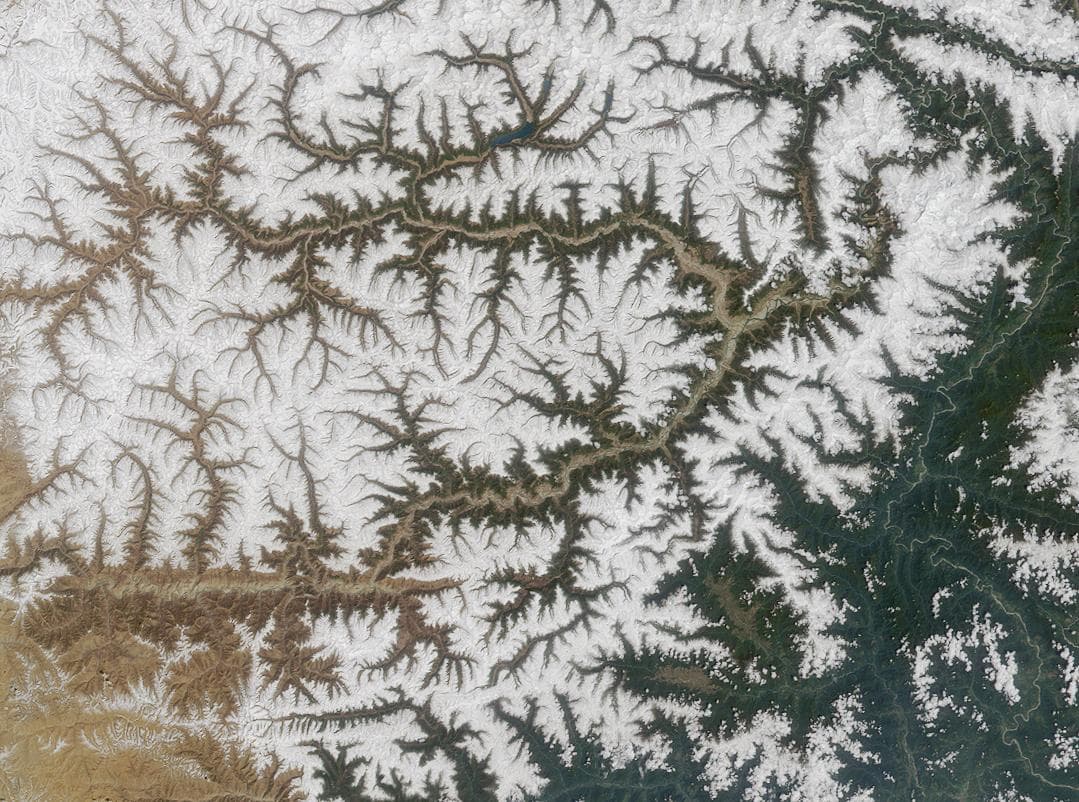
The Yarlung Tsangpo Grand Canyon, formed by a horse-shoe bend in the river where it leaves the Tibetan Plateau and flows around Namcha Barwa, is the deepest, and possibly longest canyon in the world.