
Wilhelm Reich (; Austrian German: [ˈvɪlhɛlm ˈraɪç]; 24 March 1897 – 3 November 1957) was an Austrian doctor of medicine and a psychoanalyst, a member of the second generation of analysts after Sigmund Freud. The author of several influential books, The Impulsive Character (1925), The Function of the Orgasm (1927), Character Analysis (1933), and The Mass Psychology of Fascism (1933), he became one of the most radical figures in the history of psychiatry.
Reich's work on character contributed to the development of Anna Freud's The Ego and the Mechanisms of Defence (1936), and his idea of muscular armour—the expression of the personality in the way the body moves—shaped innovations such as body psychotherapy, Gestalt therapy, bioenergetic analysis and primal therapy. His writing influenced generations of intellectuals; he coined the phrase "the sexual revolution" and according to one historian acted as its midwife. During the 1968 student uprisings in Paris and Berlin, students scrawled his name on walls and threw copies of The Mass Psychology of Fascism at police.
After graduating in medicine from the public University of Vienna in 1922, Reich became deputy director of Freud's outpatient clinic, the Vienna Ambulatorium. During the 1930s, he was part of a general trend among younger analysts and Frankfurt sociologists that tried to reconcile psychoanalysis with Marxism. He established the first sexual advisory clinics in Vienna, along with Marie Frischauf. He said he wanted to "attack the neurosis by its prevention rather than treatment".

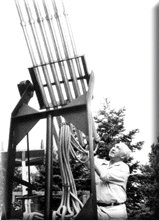
Reich moved to Oslo, Norway in 1934. He then moved on to New York in 1939, after having accepted a position as Assistant Professor at the New School for Social Research. During his five years in Oslo, he had coined the term "orgone energy"—from "orgasm" and "organism"—for the notion of life energy. In 1940 he started building orgone accumulators, modified Faraday cages that he claimed were beneficial for cancer patients. He claimed that his laboratory cancer mice had had remarkable positive effects from being kept in a Faraday cage, so he built human-size versions, where one could sit inside. This led to newspaper stories about "sex boxes" that cured cancer.
Following two critical articles about him in The New Republic and Harper's in 1947, the U.S. Food and Drug Administration obtained an injunction against the interstate shipment of orgone accumulators and associated literature, calling them "fraud of the first magnitude". Charged with contempt in 1956 for having violated the injunction, Reich was sentenced to two years imprisonment, and that summer over six tons of his publications were burned by order of the court. He died in prison of heart failure just over a year later.
Early life
Childhood
Reich was born on 24 March 1897, the first of two sons to Leon Reich, a farmer, and his wife Cäcilie (née Roniger) in Dobzau, Galicia, then part of Austria-Hungary, now in Ukraine, into a Jewish family. Wilhelm Reich's parents were married by Rabbi Schmelkes on June 4, 1895. Wilhelm was circumcised four days after his birth. He had a sister, born one year after Reich, but she died in infancy. Shortly after his birth, the family moved to Jujinetz, a village in Bukovina, where his father ran a cattle farm leased by his mother's uncle, Josef Blum.
Death of parents
Reich was taught at home until he was 12, when his mother was discovered having an affair with his live-in tutor. Reich wrote about the affair in 1920 in his first published paper, "Über einen Fall von Durchbruch der Inzestschranke" (German: "About a Case of Breaching the Incest Taboo"), presented in the third person as though about a patient. He wrote that he would follow his mother when she went to the tutor's bedroom at night, feeling ashamed and jealous, and wondering if they would kill him if they found out that he knew. He briefly thought of forcing her to have sex with him on the threat of telling his father. In the end, he did tell his father, and after a protracted period of beatings, his mother committed suicide on October 1, 1910, for which Reich blamed himself.
With the tutor ordered out of the house, Reich was sent to an all-male gymnasium in Czernowitz. It was during this period that a skin condition appeared, diagnosed as psoriasis, that plagued him for the rest of his life, leading several commentators to remark on his ruddy complexion. His father died of tuberculosis on May 3, 1914, and because of rampant inflation the father's insurance was worthless, so no money was forthcoming for the brothers. Reich managed the farm and continued with his studies, graduating in 1915 with Stimmeneinhelligkeit (German: "unanimous approval"). The Russians invaded Bukovina that summer and the Reich brothers fled, losing everything. Reich wrote in his diary: "I never saw either my homeland or my possessions again. Of a well-to-do past, nothing was left."
1919–1930: Vienna
Undergraduate studies
Reich joined the Austro-Hungarian Army during the First World War, serving from 1915 to 1918, for the last two years as a lieutenant at the Italian front with 40 men under his command. When the war ended he headed for Vienna, enrolling in law at the University of Vienna, but found it dull and switched to medicine after the first semester. He arrived with nothing in a city with little to offer; the overthrow of the Austria-Hungarian empire a few weeks earlier had left the newly formed Republic of German-Austria in the grip of famine. Reich lived on soup, oats and dried fruit from the university canteen, and shared an unheated room with his brother and another undergraduate, wearing his coat and gloves indoors to stave off the cold. He fell in love with another medical student, Lia Laszky, with whom he was dissecting a corpse, but it was largely unrequited.

Myron Sharaf, his biographer, wrote that Reich loved medicine but was caught between a reductionist/mechanistic and vitalist view of the world. Reich wrote later of this period:
The question, "What is Life?" lay behind everything I learned. ... It became clear that the mechanistic concept of life, which dominated our study of medicine at the time, was unsatisfactory ... There was no denying the principle of creative power governing life; only it was not satisfactory as long as it was not tangible, as long as it could not be described or practically handled. For, rightly, this was considered the supreme goal of natural science.
Introduction to Freud
Reich first met Sigmund Freud in 1919, when he asked Freud for a reading list for a seminar concerning sexology. It seems they left a strong impression on each other. Freud allowed him to start meeting with analytic patients in September that year, although Reich was just 22 years old and still an undergraduate, which gave him a small income. He was accepted as a guest member of the Vienna Psychoanalytic Association, becoming a regular member in October 1920, and began his own analysis with Isidor Sadger. He lived and worked out of an apartment on Berggasse 7, the street on which Freud lived at no. 19, in the Alsergrund area of Vienna.

One of Reich's first patients was Lore Kahn, a 19-year-old young woman with whom he had an affair. Freud had warned analysts not to involve themselves with their patients, but in the early days of psychoanalysis the warnings went unheeded. According to Reich's diaries, Kahn became ill in November 1920 and died of sepsis after sleeping in a bitterly cold room she had rented as a place for her and Reich to meet secretly, since his landlady, and her parents, had forbidden them to meet.
First marriage, graduation
Two months after Kahn's death, Reich accepted her friend, Annie Pink (1902–1971), as an analysand. Pink was Reich's fourth female patient, a medical student three months shy of her 19th birthday. He had an affair with her too, and married her in March 1922 at her father's insistence, with psychoanalysts Otto Fenichel and Edith Buxbaum as witnesses. Annie Reich became a well-known psychoanalyst herself. The marriage produced two daughters, Eva (1924–2008) and Lore (1928–2024), both of whom became physicians; Lore Reich Rubin also became a psychiatrist and psychoanalyst.
Because he was a war veteran, Reich was allowed to complete a combined bachelor's and M.D. in four years, instead of six, and graduated in July 1922. After graduating, he worked in internal medicine at the city's University Hospital, and studied neuropsychiatry from 1922 to 1924 at the hospital's neurological and psychiatric clinic under Professor Julius Wagner von Jauregg, who won the Nobel Prize in Medicine in 1927.

Vienna Ambulatorium
In 1922, Reich began working in Freud's psychoanalytic outpatient clinic, known as the Vienna Ambulatorium, which was opened on May 22 that year at Pelikangasse 18 by Eduard Hitschmann. Reich became the assistant director under Hitschmann in 1924 and worked there until his move to Berlin in 1930.
Between 1922 and 1932, the clinic offered free or reduced-cost psychoanalysis to 1,445 men and 800 women, many suffering from shell shock after World War I. It was the second such clinic to open under Freud's direction; the first was the Poliklinik in Berlin, set up in 1920 by Max Eitingon and Ernst Simmel.
Sharaf writes that working with labourers, farmers and students allowed Reich to move away from treating neurotic symptoms to observing chaotic lifestyles and anti-social personalities. Reich argued that neurotic symptoms such as obsessive–compulsive disorder were an unconscious attempt to gain control of a hostile environment, including poverty or childhood abuse. They were examples of what he called "character armour" (Charakterpanzer), repetitive patterns of behaviour, speech and body posture that served as defence mechanisms. According to Danto, Reich sought out patients at the Ambulatorium who had been diagnosed as psychopaths, believing that psychoanalysis could free them of their rage.
Reich joined the faculty of the Psychoanalytic Institute in Vienna in 1924 and became its director of training. According to Danto, he was well-regarded for the weekly technical seminars he chaired at the Ambulatorium, where he gave papers on his theory of character structure, arguing that psychoanalysis should be based on the examination of unconscious character traits, later known as ego defences. The seminars were attended, from 1927, by Fritz Perls, who went on to develop Gestalt therapy with his wife, Laura Perls. Several commentators remarked on how captivating the seminars were and how eloquently Reich spoke. According to a Danish newspaper in 1934:
The moment he starts to speak, not at the lectern, but walking around it on cat's paws, he is simply enchanting. In the Middle Ages, this man would have been sent into exile. He is not only eloquent, he also keeps his listeners spellbound by his sparking personality.
Der triebhafte Charakter
Reich's first book, Der triebhafte Charakter: eine psychoanalytische Studie zur Pathologie des Ich ("The Impulsive Character: A Psychoanalytic Study of the Pathology of the Self"), was published in 1925. It was a study of the anti-social personalities he had encountered in the Ambulatorium, and argued the need for a systematic theory of character. The book won him professional recognition, including from Freud, who in 1927 arranged for his appointment to the executive committee of the Vienna Psychoanalytic Society. The appointment was made over the objection of Paul Federn, who had been Reich's second analyst in 1922 and who, according to Sharaf, regarded Reich as a psychopath. Reich found the society dull and wrote that he behaved "like a shark in a pond of carps".
Orgastic potency
Beginning in 1924, Reich published a series of papers on the idea of "orgastic potency", the ability to release the emotions from the muscles and lose the self in an uninhibited orgasm, an idea that Freud came to call Reich's "Steckenpferd" (hobby horse). Reich argued that psychic health and the ability to love depended on orgastic potency, the full discharge of the libido: "Sexual release in the sex act must correspond to the excitement which leads up to it." He wrote: "It is not just to fuck ... not the embrace in itself, not the intercourse. It is the real emotional experience of the loss of your ego, of your whole spiritual self." He argued that orgastic potency was the goal of character analysis.
Whereas Reich's work on character was well received by the psychoanalytic community, Sharaf writes, his work on orgastic potency was unpopular from the start and later ridiculed or criticized. He came to be known as the "prophet of the better orgasm" and the "founder of a genital utopia", sharply characterized by Andreas Dorschel as "a source of sexual misery": "Whenever women did not reach orgasm, Reich's orgasmocracy branded them as immature, neurotic or lifeless."
Rest cure in Switzerland
Reich's brother died of tuberculosis (TB) in 1926, which had also killed their father. Christopher Turner writes in his biography of Reich that a quarter of deaths in Vienna were caused by TB in the 1920s. Reich himself contracted it in 1927 and spent several weeks in the winter of that year in a sanitorium in Davos, Switzerland, where TB patients went for rest cures and fresh air before antibiotics became widely available around 1945. Turner writes that Reich underwent a political and existential crisis in Davos; he returned home in the spring angry and paranoid, according to Annie Reich. Some months later he and Annie were on the streets during the July Revolt of 1927 in Vienna, when 84 workers were shot and killed by police and another 600 were injured. It seems that the experience changed Reich; he wrote that it was his first encounter with human irrationality. He began to doubt everything, and in 1928 joined the Communist Party of Austria:
As if struck by a blow, one suddenly recognizes the scientific futility, the biological senselessness, and the social noxiousness of views and institutions, which until that moment had seemed altogether natural and self-evident. It is a kind of eschatological experience so frequently encountered in a pathological form in schizophrenics. I might even voice the belief that the schizophrenic form of psychic illness is regularly accompanied by illuminating insight into the irrationalism of social and political mores.
Sex-pol movement
Partly in response to the shooting he had witnessed in Vienna, Reich, then 30, opened six free sex-counseling clinics in the city in 1927 for working-class patients. Each clinic was overseen by a physician, with three obstetricians and a lawyer on call, and offered what Reich called Sex-Pol counseling. Sex-Pol stood for the German Society of Proletarian Sexual Politics. Reich offered a mixture of "psychoanalytic counseling, Marxist advice and contraceptives", Danto writes, and argued for a sexual permissiveness, including for young people and the unmarried, that unsettled other psychoanalysts and the political left. The clinics were immediately overcrowded by people seeking help.
He also took to the streets in a mobile clinic, driving to parks and out to the suburbs with other psychoanalysts and physicians. Reich would talk to the teenagers and men, while a gynaecologist fitted the women with contraceptive devices, and Lia Laszky, the woman Reich fell in love with at medical school, spoke to the children. They also distributed sex-education pamphlets door to door.
Die Funktion des Orgasmus
Reich published Die Funktion des Orgasmus ("The Function of the Orgasm") in 1927, dedicating it to Freud. He had presented a copy of the manuscript to Freud on the latter's 70th birthday on 6 May 1926. Freud had not appeared impressed. He replied, "That thick?" when Reich handed it to him, and took two months to write a brief but positive letter in response, which Reich interpreted as a rejection. Freud's view was that the matter was more complicated than Reich suggested, and that there was no single cause of neurosis. He wrote in 1928 to another psychoanalyst, Dr. Lou Andreas-Salomé:
We have here a Dr. Reich, a worthy but impetuous young man, passionately devoted to his hobby-horse, who now salutes in the genital orgasm the antidote to every neurosis. Perhaps he might learn from your analysis of K. to feel some respect for the complicated nature of the psyche.
Visit to the Soviet Union
In 1929, Reich and his wife visited the Soviet Union on a lecture tour, leaving the two children in the care of the psychoanalyst Berta Bornstein. Sharaf writes that he returned even more convinced of the link between sexual and economic oppression, and of the need to integrate Marx and Freud. In 1929 his article "Dialectical Materialism and Psychoanalysis" was published in Unter dem Banner des Marxismus, the German Communist Party journal. The article explored whether psychoanalysis was compatible with historical materialism, class struggle and proletarian revolution. Reich concluded that they were compatible if dialectical materialism was applied to psychology. This was one of the central theoretical statements of his Marxist period, which included The Imposition of Sexual Morality (1932), The Sexual Struggle of Youth (1932), The Mass Psychology of Fascism (1933), "What is Class Consciousness?" (1934) and The Sexual Revolution (1936).
1930–1934: Germany, Denmark, Sweden
Verlag für Sexualpolitik
Reich and his wife moved to Berlin in November 1930, where he set up clinics in working-class areas, taught sex education and published pamphlets. He joined the Communist Party of Germany, but grew impatient over their delay in publishing one of his pamphlets, Der sexuelle Kampf der Jugend (1932) – later published in English as The Sexual Struggle of Youth (1972) – and so set up his own publishing house, Verlag für Sexualpolitik, to produce the pamphlet himself.
His subsequent involvement in a conference promoting adolescent sexuality caused the party to announce that it would no longer publish his material. On 24 March 1933 Freud told him that his contract with the International Psychoanalytic Publishers to publish Character Analysis had been cancelled. Sharaf writes that this was almost certainly because of Reich's stance on teenage sex.
Character Analysis
Reich published what Robert Corrington called his masterpiece, Charakteranalyse: Technik und Grundlagen für studierende und praktizierende Analytiker, in 1933. It was revised and published in English in 1946 and 1949 as Character Analysis. The book sought to move psychoanalysis toward a reconfiguration of character structure.
For Reich, character structure was the result of social processes, in particular a reflection of castration and Oedipal anxieties playing themselves out within the nuclear family. Les Greenberg and Jeremy Safran write that Reich proposed a functional identity between the character, emotional blocks, and tension in the body, or what he called character (or muscular/body) armour (Charakterpanzer).
Reich proposed that muscular armour was a defence that contained the history of the patient's traumas. For example, he blamed Freud's jaw cancer on his muscular armour, rather than his smoking: Freud's Judaism meant he was "biting down" impulses, rather than expressing them. Dissolving the armour would bring back the memory of the childhood repression that had caused the blockage in the first place.
End of first marriage
Reich had several affairs during his marriage to Annie Reich, which ended in 1933 after he began a serious relationship in May 1932 with Elsa Lindenberg, a dancer and pupil of Elsa Gindler. He was living with Lindenberg in Germany when Hitler became Chancellor in January 1933. On March 2 that year, the Nazi newspaper Völkischer Beobachter published an attack on Der Sexuelle Kampf der Jugend. Reich and Lindenberg left for Vienna the next day. They moved from there to Denmark, where Reich was excluded from the Danish Communist Party in November 1933 (without ever having joined it) because of his promotion of teenage sex and the publication that year of The Mass Psychology of Fascism, which they regarded as "counterrevolutionary". There were multiple complaints about his promotion of abortion, sex education, and the attempted suicide of a teenage patient. According to Turner, when Reich's visa expired, it was not renewed.
He tried to find support among psychoanalysts in the UK so that he could settle there, and was interviewed in London by Ernest Jones, Melanie Klein, Joan Riviere and James Strachey. They decided that he had been "insufficiently analysed" and had an unresolved hostility toward Freud. Anna Freud, Freud's daughter—whom Jones had contacted about Reich's desire to relocate to England—wrote in 1938: "There is a wall somewhere where he stops to understand the other person's point of view and flies off into a world of his own ... He is an unhappy person ... and I am afraid this will end in sickness."
Reich and Lindenberg moved instead to Malmö in Sweden, which Reich described as "better than a concentration camp", but he was placed under surveillance when police suspected that the hourly visits of patients to his hotel room meant he was running a brothel, with Lindenberg as the prostitute. The government declined to extend his visa, and the couple had to move briefly back to Denmark, Reich under an assumed name.
Vegetotherapy
From 1930 onwards, Reich began to treat patients outside the limits of psychoanalysis's restrictions. He would sit opposite them, rather than behind them as they lay on a couch (the traditional psychoanalyst's position), and begin talking to them and answering their questions, instead of offering the stock, "Why do you ask?" analyst's response. He had noticed that after a successful course of psychoanalysis his patients would hold their bodies differently, so he began to try to communicate with the body using touch. He asked his male patients to undress down to their shorts, and sometimes entirely, and his female patients down to their underclothes, and began to massage them to loosen their body armour. He would also ask them to simulate physically the effects of certain emotions in the hope of triggering them.
He first presented the principles of what he called character-analytic vegetotherapy in August 1934, in a paper entitled "Psychischer Kontakt und vegetative Strömung" ("Psychological Contact and Vegetative Current") at the 13th International Congress of Psychoanalysis at Lucerne, Switzerland. His second wife, Ilse Ollendorf, said vegetotherapy replaced the psychoanalytic method of never touching a patient with "a physical attack by the therapist".
The method eliminated the psychoanalytic doctrine of neutrality. Reich argued that the psychoanalytic taboos reinforced the neurotic taboos of the patient, and that he wanted his patients to see him as human. He would press his thumb or the palm of his hand hard (and painfully) on their jaws, necks, chests, backs, or thighs, aiming to dissolve their muscular, and thereby characterological, rigidity. He wrote that the purpose of the massage was to retrieve the repressed memory of the childhood situation that had caused the repression. If the session worked, he would see waves of pleasure move through their bodies, which he called the "orgasm reflex". According to Sharaf, the twin goals of Reichian therapy were the attainment of this orgasm reflex during sessions and orgastic potency during intercourse. Reich briefly considered calling it "orgasmotherapy", but thought better of it.